Through policy advocacy, workforce development, indigenous innovation, and global collaboration, TAI aims to position India as a world-class hub for tunnelling expertise, capable of delivering cutting-edge and sustainable underground infrastructure.
Shri. RK Dhiman, President

Hon’ble Minister Shri Nitin Gadkari has announced government plans to invest over ₹3 lakh crore in the next five years for tunnels across transportation, power, and irrigation projects. How does TAI view this opportunity, and how is it preparing to support the government in accelerating the projects?
This announcement marks a paradigm shift toward sustainable, safe, and all-weather connectivity across the Himalayas, the Western Ghats, and urban corridors. An investment of this magnitude will not only revolutionize surface and subsurface connectivity but also enhance national integration, defence preparedness, and balanced regional development. It aligns closely with India’s long-term vision for multimodal logistics efficiency, renewable energy transition, and climate-resilient infrastructure.TAI advocates a multi-pronged approach to strengthen the national tunnelling ecosystem. It is actively contributing to the development of updated tunnelling codes and standards, model tender provisions, and transparent prequalification systems for contractors, consultants, and suppliers. The Association has also proposed the establishment of a National Tunnelling Centre — envisioned to integrate safety, sustainability, digital innovation, and knowledge-sharing from the earliest stages of project conception and design.
To build the human and institutional capacity necessary for this expansion, TAI continues to organize nationwide seminars, regional workshops, and joint programs with the International Tunnelling and Underground Space Association (ITA-AITES) and other global bodies. Through these initiatives, TAI is ensuring that India’s unprecedented investment in underground infrastructure brings resilient, efficient, and sustainable tunnelling solutions — setting new global benchmarks and reinforcing India’s leadership among emerging tunnelling nations.
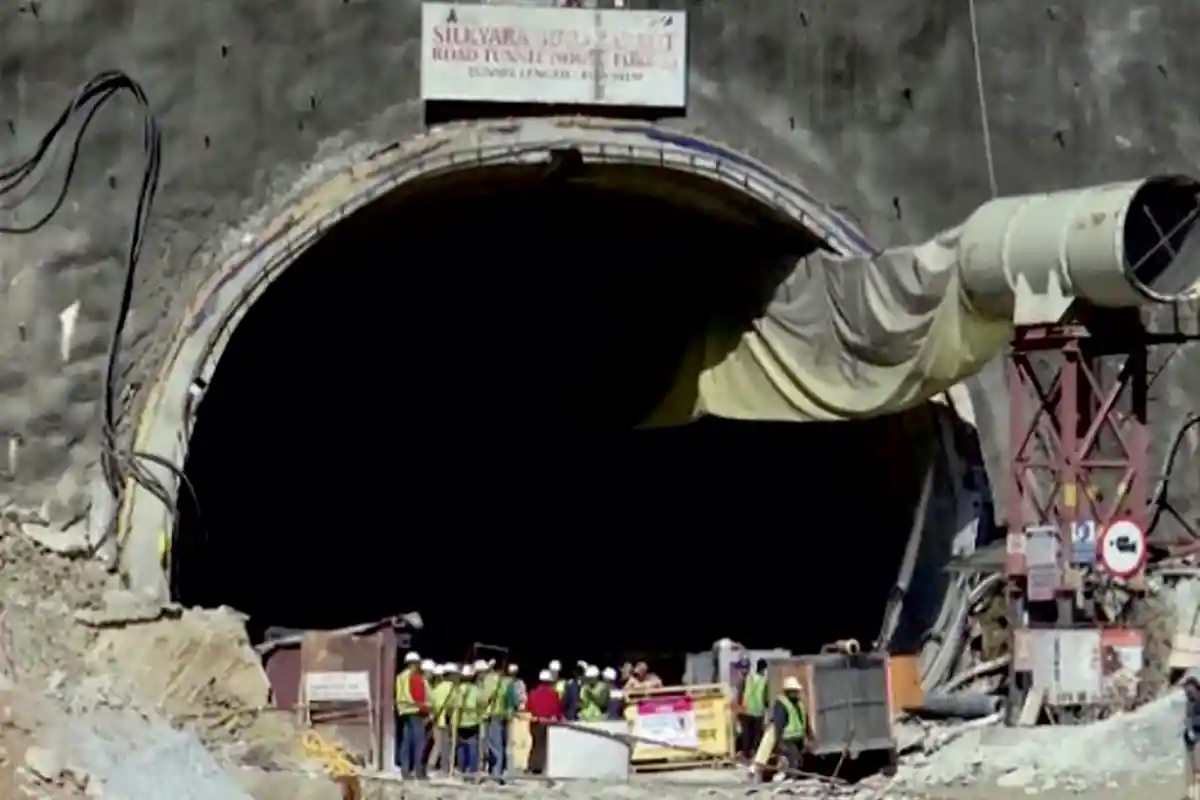 Silkyara tunnel
Are Indian contractors well equipped to handle such large and complex tunnelling projects, or should India consider international expertise—through joint ventures or global competitive bidding—to ensure safety, quality, and efficient execution?
Indian tunnelling contractors have achieved remarkable technical maturity over the past two decades. From hand-excavated and drill-and-blast tunnels to sophisticated mechanized excavation systems, Indian firms have successfully executed some of the most challenging road and rail tunnels in Jammu & Kashmir, Himachal Pradesh, Uttarakhand, West Bengal, Manipur, and Maharashtra, alongside metro projects in Delhi, Mumbai, and Bengaluru. Hydroelectric and other utility tunnels are also progressing rapidly across the country. These accomplishments underscore India’s growing capability to plan, design, and deliver complex underground works across diverse geological and climatic conditions.As India now advances toward longer twin-tube tunnels, large-diameter TBM drives, and integrated MEP and safety systems, there is a clear need for higher specialization. This calls for a strategic blend of domestic expertise and global technological collaboration. International partnerships, through joint ventures, technology licensing, or structured knowledge-sharing, can accelerate India’s ability to manage large-scale projects with enhanced safety, efficiency, and quality.
However, the model should emphasize mutual capacity enhancement rather than dependency. Technology-transfer-based collaborations, where global experts work alongside Indian teams in areas such as real-time geotechnical monitoring, risk management, waterproofing, and TBM operation and maintenance, can foster indigenous competence in design and equipment fabrication.
Government agencies, while structuring tenders, should therefore encourage partnerships that ensure both technical excellence and domestic skill development. Bid evaluation frameworks could include provisions for mandatory knowledge transfer, local material utilization, and mentoring of Indian engineers. Encouragingly, Indian firms are already demonstrating strong progress in these domains. Over time, such balanced collaboration will help position India as a globally competitive tunnelling hub, capable of exporting its expertise to other developing and emerging economies.
Considering tunnelling projects are highly capital-and technology-intensive, should the government re-evaluate the current L1 bidding system and introduce stricter contractor selection criteria based on technical competence, past experience, and proposed mechanization and innovation?
Reforming the existing L1 (lowest bidder) system—which often prioritizes cost over competence—would indeed be a progressive step toward improving the quality, safety, and sustainability of tunnelling projects in India. Unlike conventional surface construction, tunnelling involves high capital intensity, complex geotechnical uncertainties, and significant safety obligations. Awarding contracts solely on the basis of the lowest financial offer has, in several instances, led to time and cost overruns, compromised safety, and quality deviations.A gradual transition toward a Quality-and Cost-Based Selection (QCBS) framework, successfully practiced in several advanced tunnelling nations, would ensure that technical capability, mechanization level, and innovation carry substantial weight in tender evaluation. The criteria could include:
- proven experience in similar geotechnical and geological conditions
- mechanization strength, including ownership and performance record of TBMs and specialized equipment
- availability of trained and certified technical manpower
- demonstrated innovations in design, monitoring, digital documentation, and risk management.
Ultimately, improving procurement practices is not merely an administrative reform; it is the cornerstone of safer, more resilient, and globally competitive tunnelling infrastructure in India.
What strategic roadmap should India’s tunnelling community adopt to align with long-term sustainability, technological advancement, and global best practices?
Tunnelling and underground construction inherently support sustainability by minimizing surface disruption, conserving land, and reducing travel distances and fuel consumption. For a rapidly urbanizing nation like India, where developmental imperatives intersect with fragile ecosystems, tunnels offer an environmentally compatible alternative to surface alignments.Recent projects across India have demonstrated how all-weather connectivity can be achieved while preserving sensitive landscapes and biodiversity. In this context, tunnelling is poised to become a key enabler of India’s green mobility transition, particularly across hilly terrains, congested urban centres, and inter-basin water transfer corridors.
TAI envisions a sustainability roadmap built on four core pillars: design efficiency, construction sustainability, operational energy reduction, and circular economy integration. TAI advocates that all major underground projects undergo a Life Cycle Assessment (LCA) to quantify embodied carbon and prioritize low-carbon construction materials such as fly ash–based concrete, recycled steel, and shotcrete incorporating mineral admixtures.
During construction, adopting electric and hybrid equipment, renewable-powered site operations, and optimized ventilation systems can significantly reduce greenhouse gas emissions. In the operational phase, energy-efficient lighting, intelligent ventilation controls, and digital twin–based maintenance will further lower long-term energy consumption.
Through these coordinated initiatives, India’s tunnelling community—guided by TAI—aims to ensure that every tunnel contributes not only to connectivity and resilience but also to the nation’s broader commitment to net-zero emissions by 2070.
 SLBC irrigation tunnel
Tunnelling consumes significant energy and carbon-intensive materials. What sustainable materials, energy-efficient construction methods, recycling practices, or alternative technologies can be adopted to reduce carbon footprints during design, construction, and operation?
Tunnelling projects inherently involve significant consumption of concrete, steel, shotcrete, and heavy machinery—all of which contribute to greenhouse gas emissions. However, with strategic material selection, process optimization, and technological innovation, the carbon footprint of underground infrastructure can be substantially reduced.At the material level, a systematic transition toward low-carbon cements—including Portland Pozzolana Cement (PPC), Portland Slag Cement (PSC), and blended cements incorporating fly ash and silica fume—can lower embodied carbon. Use of fiber-reinforced shotcrete not only enhances lining strength but also reduces rebound loss and overall material consumption. Recycled steel and supplementary cementitious materials further contribute to sustainable construction.
From a process perspective, contractors should adopt energy-efficient batching plants, high-efficiency compressors and pumps, and variable-frequency drive (VFD) ventilation systems. Construction equipment, including loaders, excavators, and haulage vehicles, should progressively shift toward electric or hybrid models, especially for urban or short-drive tunnels with grid accessibility. Implementation of environmental management systems (EMS) with continuous monitoring of dust, CO2, and noise emissions ensures compliance with sustainability benchmarks.
Sustainability considerations extend into the operational phase. Intelligent ventilation and lighting systems, responsive to real-time traffic and air quality sensors, can reduce energy consumption by up to 40%. Furthermore, adopting circular economy practices, such as processing excavation muck into aggregates, bricks, or embankment material—reduces both embodied carbon and the need for landfill disposal.
Through these integrated approaches, tunnelling projects in India can achieve significant carbon reduction, enhanced energy efficiency, and alignment with global sustainable infrastructure standards, positioning underground construction as a climate-conscious solution for the future.
Advanced tunnelling equipment—such as TBMs, shotcreting machines, and other mechanized systems—along with BIM, digital twins, and AI-driven design optimization, play a crucial role in sustainable tunnelling by reducing emissions, improving operational efficiency, and enhancing What are the key technical, financial, or regulatory barriers to their wider adoption in India?
Modern mechanized tunnelling is central to India’s ambition of developing faster, safer, and more sustainable underground infrastructure. Tunnel Boring Machines (TBMs), robotic shotcreting systems, and automated survey and monitoring technologies significantly reduce human exposure to hazardous conditions while enhancing precision in excavation and lining. By controlling excavation accuracy and minimizing overbreak, TBMs reduce material wastage, shorten construction schedules, and lower overall energy consumption.Digital technologies such as Building Information Modelling (BIM), digital twins, and AI-driven design optimization further strengthen sustainability outcomes. These tools allow engineers to simulate geological responses, optimize design parameters, forecast maintenance requirements, and enhance lifecycle efficiency. Integrating mechanized precision with digital intelligence enables substantial productivity gains, improved safety, and embedded sustainability throughout project execution.
Despite their benefits, adoption in India faces technical, financial, and regulatory challenges. High capital costs, limited domestic manufacturing of advanced TBMs and automation systems, and gaps in skilled manpower constrain widespread mechanization. Regulatory frameworks for mechanized tunnelling, including safety certifications, environmental clearances, and standardized equipment approval processes, remain underdeveloped. Addressing these barriers through technology transfer partnerships, capacity building, and updated regulatory guidelines will be critical to fully leverage smart tunnelling solutions and achieve global best-practice outcomes.
Excavation produces large volumes of muck and can impact groundwater and ecosystems. What engineering or treatment methods, and onsite processing can manage, reuse, or recycle muck efficiently while minimizing the environmental impact? Please highlight international best practices that could be applied in India?
Muck management during tunnel construction is one of the most environmentally sensitive aspects of underground works. Uncontrolled spoil disposal can occupy large land areas, disrupt drainage systems, and impact groundwater and aquatic ecosystems.In India, where tunnelling often occurs in the fragile Himalayan and Western Ghats regions, sustainable muck utilization must be integrated into project planning. Consequently, every tunnelling DPR and contract should include a Comprehensive Muck Management Plan (CMMP), detailing estimated volumes, classification, reuse potential, and environmental safeguards.
On-site processing technologies, such as mobile crushers, screens, and blending units, can convert excavated muck into aggregates for road sub-bases, gabion filling, and concrete works. Where geological conditions permit, stabilization using lime or cement can produce embankment or construction fill. Fine-grained material can be utilized for landscaping, slope stabilization, or bioengineering interventions. In urban tunnelling with limited space, dedicated muck recycling yards, managed jointly by contractors and local authorities, enable systematic recovery and long-term reuse.
International best practices demonstrate the effectiveness of structured muck management. In Switzerland and Japan, up to 90% of tunnel spoil is reused through segregated handling and mandatory reuse regulations. The Swiss approach links contractor payments to verified reuse percentages—a model that India could adapt by incorporating financial incentives for high reuse ratios. At the Atal Tunnel, for instance, muck was effectively repurposed to prepare a skating ground near Solang Nallah in Himachal Pradesh, exemplifying how project-specific planning can turn spoil into a resource.
By treating muck as a valuable material rather than waste, India can not only minimize environmental impacts but also embed circular economy principles into tunnelling, transforming one of the industry’s biggest challenges into a sustainability success story.
In setting up TBM manufacturing units in India, what technical and operational advantages would local manufacturing bring—such as customization for India’s geology, performance optimization, maintenance efficiency, and cost savings, and what challenges would need to be addressed to ensure successful technology transfer?
TAI welcomes the establishment of indigenous Tunnel Boring Machine (TBM) manufacturing and refurbishment facilities as a transformative step for India’s tunnelling sector. Currently, TBMs are imported from global manufacturers, leading to higher project costs, procurement delays, and limited options for mid-life refurbishment. Local production would allow machines to be customized for India’s diverse geological conditions—ranging from the weak phyllites and schists of the Himalayas to basaltic formations in the Deccan Plateau and alluvial soils of the Gangetic plains.Domestically manufactured TBMs could be optimized for variable pressure control, adaptable cutter heads, efficient muck handling, and energy-efficient operations, tailored to Indian site-specific requirements. Local manufacturing would enhance maintenance efficiency, reduce lead times, and lower overall project costs, while supporting mid-life refurbishment and modernization of existing machines.
Successful implementation will require addressing technical and operational challenges, including establishing quality standards, ensuring technology transfer, building skilled workforce capabilities, and fostering research and development collaborations. With the right institutional ecosystem—supported by fiscal incentives, industry-academia partnerships, and structured capacity-building programs—India has the potential not only to achieve self-reliance in TBM manufacturing but also to position itself as a global exporter of high-performance tunnelling equipment, contributing to the international tunnelling community.
With increasing use of advanced tunnelling equipment, how can the industry and TAI strengthen training programs, certification, and capacity-building initiatives to ensure a skilled workforce capable of operating these machines safely and efficiently?
Bridging the gap between advanced mechanization and workforce capability is critical; this requires structured, industry-led skill development programs since operating and maintaining TBMs, robotic shotcreting systems, ventilation networks, and digital monitoring platforms demands not only engineering knowledge but also expertise in real-time data interpretation, safety compliance, and environmental management.Currently, certified roles such as TBM operators, instrumentation officers, and tunnel safety supervisors are trained through experience gained across ongoing projects. TAI advocates making short-term certification courses mandatory for supervisory-level staff, focusing on MEP systems, ventilation control, and tunnel emergency management. To ensure international equivalence, these programs are aligned with ITA-AITES competency frameworks.
TAI also encourages the use of virtual simulation labs, augmented reality tools, and digital twin–based training, allowing operators to practice fault diagnosis and emergency response without exposure to real hazards. Partnerships with industry leaders, such as TAI’s recent collaboration with L&T for accreditation of engineer training courses, further strengthen practical learning pathways.
By building a skilled and certified ecosystem, India can ensure that its tunnelling growth is not only rapid and technologically advanced but also safe, sustainable, and globally benchmarked, supported by a workforce capable of using cutting-edge equipment and smart construction technologies.
Do current government policies and incentives adequately support sustainable tunnelling practices? What policy interventions could encourage greener underground infrastructure?
Current government policies provide a supportive foundation for sustainable infrastructure, yet there is significant scope to integrate environmental performance benchmarks directly into tunnelling frameworks. TAI believes that embedding sustainability into policy is timely and essential, as green tunnelling not only contributes to India’s net-zero 2070 targets but also enhances long-term project durability, operational efficiency, and cost-effectiveness.Policy interventions could include specific incentives, such as accelerated approvals, financial bonuses, or preferential scoring in tenders for projects that achieve verified reductions in embodied carbon or meet defined thresholds for muck reuse and recycling. Environmental Impact Assessments (EIA) for tunnelling projects could incorporate quantifiable sustainability metrics, including carbon intensity per meter of tunnel constructed, percentage of recycled materials utilized, and the extent of on-site renewable energy deployment. Contractors demonstrating compliance with these metrics would be rewarded, creating a clear link between policy and practical outcomes.
By systematically embedding sustainability into regulatory and procurement frameworks, India can ensure that environmentally responsible tunnelling becomes the norm rather than the exception, positioning underground infrastructure development in line with global best practices and emerging international green standards.
What global tunnelling experiences can be adapted in India and how can TAI promote collaboration and knowledge exchange with international experts and organizations?
TAI maintains active engagement with ITA-AITES, drawing extensively from global experience to adapt best practices for Indian conditions. From Scandinavia, India can learn the integration of energy recovery systems, where heat and air from tunnels are reused for district heating. Japan’s approach to muck recycling, where nearly all excavated material is processed into aggregates or soil conditioners, provides a replicable model for India’s Himalayan and ecologically sensitive projects. Switzerland and Austria offer lessons in geological risk-sharing mechanisms and the deployment of high-precision monitoring systems to ensure worker safety in complex ground conditions.To translate these lessons into Indian practice, TAI is promoting structured collaboration between Indian agencies and international tunnelling organizations. Annual forums, such as the TAI International Symposium, now include technical sessions co-chaired by ITA members, focusing on digitalization, sustainability, and risk management. TAI also facilitates hands-on training programs, where young Indian engineers are seconded to international tunnelling projects, gaining exposure to mechanized operations, advanced monitoring, and innovative construction methodologies.
These collaborations support the creation of joint R&D labs, exchange of standards, and pilot projects that apply international sustainability techniques under Indian conditions. Through such initiatives, TAI aims not only to import global best practices but also to project India’s growing tunnelling expertise internationally, contributing to a shared vision of safe, resilient, and sustainable underground infrastructure worldwide.
How is TAI working with BIS, MoRTH, and other agencies to develop or update standards and codes of practice to ensure safety, standardization, and regulatory compliance in tunnelling?
TAI plays a proactive role in knowledge dissemination and standardization for tunnel design, construction, and safety. Recognizing India’s vast geological diversity—from soft-soil urban metro tunnels to high-altitude Himalayan projects—TAI has established an expert group drawn from its membership, whose services are leveraged for technical guidance, crisis mitigation, and advisory support. The Association aims to develop an adaptable yet unified framework of specifications and best practices for tunnelling projects nationwide.TAI experts actively contribute to Bureau of Indian Standards (BIS) committees, drafting codes on tunnel lining design, waterproofing, rock classification, and shotcrete application. A major milestone has been TAI’s input to the revision of IRC:SP-91 ‘Guidelines for Road Tunnel Design, Construction, Operation, and Maintenance’, advocating the inclusion of mechanized tunnelling standards, digital instrumentation protocols, and MEP (Mechanical, Electrical, and Plumbing) system requirements. These recommendations reference international norms such as NFPA-502 and PIARC guidelines, optimizing safety, efficiency, and lifecycle costs. The updated guidelines are currently under review for integration into India’s next-generation tunnelling standards.
TAI also proposes mandatory peer review at the DPR stage and third-party safety audits at predefined construction milestones, ensuring accountability and continuous improvement.
Recent incidents at projects such as Silkyara and SLBC tunnels underscore the need for rigorous safety planning and micro-level safety drills prior to excavation. The IRC 91 code also emphasizes critical operational requirements for safety, including buried large diameter pipe placement during tunnel advancement to act medium for communication and feeding air supply in case of any blockages. Through sustained engagement with BIS, MoRTH, and other regulatory agencies, TAI seeks to institutionalize uniformity, safety, and professional accountability, ensuring India’s tunnelling sector grows efficiently and responsibly.
Given the technical complexities and financial risks of tunnelling, is there a need for specialized financing mechanisms or risk-mitigation frameworks—such as insurance models, public-private partnerships, or viability gap funding—to support large-scale underground projects?
TAI strongly advocates for specialized financing mechanisms and risk-mitigation frameworks to sustain India’s ambitious tunnelling programs. Unlike conventional surface infrastructure, tunnels involve high upfront capital costs, long gestation periods, and significant geotechnical uncertainties, which can deter private sector participation.Implementing geological risk-sharing models within contract structures is essential. This includes the preparation of Geotechnical Baseline Reports (GBRs) as part of tender documents, which define realistic ground conditions and clearly delineate responsibilities between clients and contractors. Such measures protect both parties from unforeseen geological or hydrostatic challenges, thereby reducing disputes, delays, and cost overruns.
How is TAI fostering research and development, and collaborating with academic and research institutions to develop indigenous tunnelling technologies, equipment design improvements, and innovative construction materials suited for India’s diverse geological conditions?
Research and innovation are central to India’s long-term goal of self-reliance in tunnelling technology. TAI has initiated collaborative efforts with academic and research institutions to address region-specific challenges, including weak rock stabilization, groundwater ingress control, and low-temperature concrete behaviour in Himalayan conditions. These initiatives generate valuable data and prototype solutions aimed at enhancing design efficiency, cost-effectiveness, and safety in Indian projects.A flagship initiative is the proposed National Tunnelling Centre (NTC)—envisioned as a national-level facility for applied research, testing, and technology incubation. The NTC will focus on developing indigenous shotcrete formulations, steel-fibre composites, waterproofing membranes, and smart monitoring devices equipped with IoT sensors. It will also serve as a repository of geological and project data, forming the foundation for predictive modelling, digital twin applications, and AI-driven risk assessment for future tunnelling projects.
Prototype testing in collaboration with industry and research agencies is planned to validate locally developed designs under field conditions. By fostering a continuous cycle of research, testing, and field application, TAI aims to position India not merely as a consumer but as an innovator in tunnelling science and technology, capable of exporting solutions to other developing nations facing similar geotechnical challenges. Partnerships with premier institutions across the country will further strengthen this ecosystem and accelerate the adoption of indigenous, high-performance technologies tailored to India’s diverse geological environments.
What is TAI’s broader vision and strategic roadmap for the next decade to make India a global hub for tunnelling expertise, technology, and sustainable underground infrastructure development?
India envisions the coming decade as a period of transformational growth, during which the country aspires to emerge as a global leader in tunnelling technology, expertise, and sustainable underground infrastructure development. To realize this ambition, TAI has formulated its Strategic Roadmap 2035, built upon six foundational pillars:Policy Reform: Advocating regulatory and procurement frameworks that prioritize safety, quality, sustainability, and lifecycle cost optimization.
Capacity Building: Establishing regional training centers, university-level programs on tunnel engineering and underground space utilization, and certification courses to ensure a steady pipeline of skilled engineers, operators, and safety professionals.
Indigenous Technology Development: Promoting domestic manufacturing of TBMs, digital monitoring systems, low-carbon construction materials, and smart tunnelling solutions through industry-academia partnerships.
Sustainability Integration: Embedding environmental performance metrics, low-carbon construction practices, muck recycling, and energy-efficient operations into every stage of tunnelling projects.
International Collaboration: Strengthening ties with ITA-AITES and global centers of excellence to facilitate knowledge exchange, joint R&D, and benchmarking against global best practices.
Digital Transformation: Leveraging BIM, digital twins, AI-driven design, and real-time monitoring for predictive maintenance, risk mitigation, and optimized project delivery.
This strategic vision seeks to institutionalize excellence across the entire tunnelling lifecycle, from concept to construction, operation, and maintenance.
How can trade events like EXCON help the industry modernize, adopt sustainable practices, capacity building, and set standards?
Exhibitions like EXCON serve as critical catalysts for modernization, knowledge transfer, and workforce development. Such platforms provide a direct interface between policymakers, manufacturers, engineers, and contractors, facilitating the translation of innovation into practical application. Participation in EXCON allows Indian stakeholders to experience cutting-edge tunnelling technologies firsthand—including TBMs, robotic shotcreting systems, digital geotechnical instruments, and sustainable lining materials, bringing technology awareness and accelerating the adoption of best practices. Such events also play a pivotal role in capacity building and standard-setting.TAI has proposed integrating live technical sessions on mechanized tunnelling, digital safety management, and environmental sustainability. Dedicated demonstration zones can provide hands-on training for operators under the guidance of global experts, forming the foundation for short-term certification programs.
By combining policy dialogue, technical presentations, and live demonstrations, EXCON and similar platforms can serve as incubators for innovation, sustainability, and skill enhancement, enabling the Indian tunnelling ecosystem to modernize efficiently while aligning with international standards and global best practices.