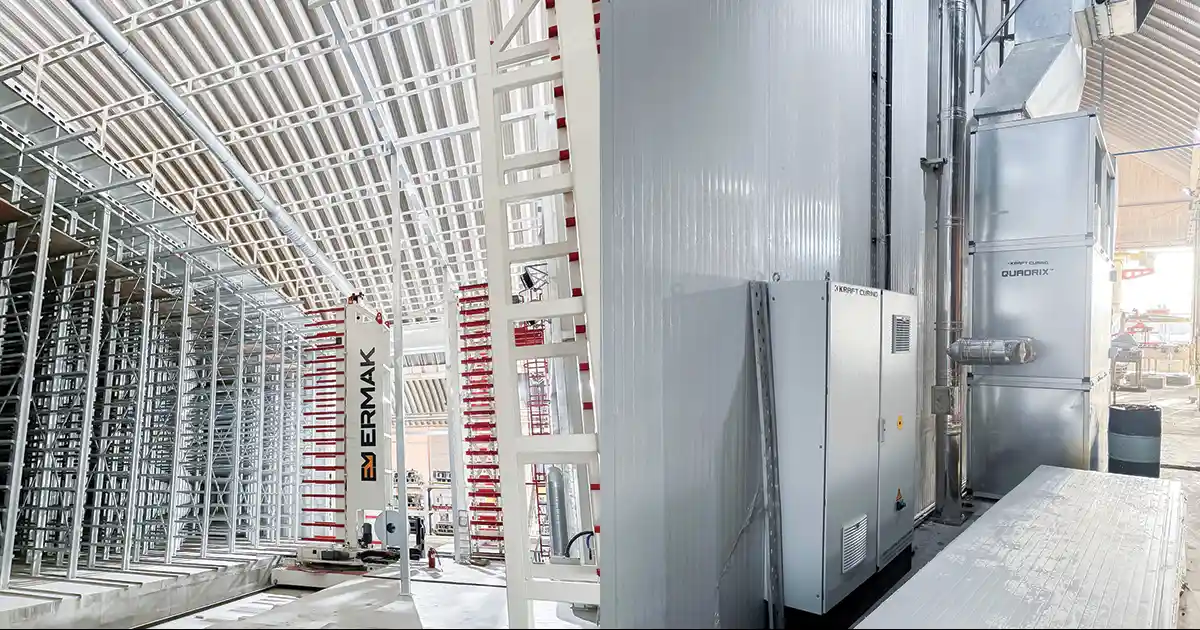
Advanced curing systems, automated controls, and management of temperature, humidity, and airflow, reduce variability, ensure uniform curing, and result in high-quality blocks.
April Kraft
Marketing Manager
Kraft Curing Systems GmbH

What are the common challenges faced by manufacturers in India in maintaining proper curing conditions?
Curing remains one of the most critical yet least controlled processes in many Indian drycast paver operations. The primary challenge stems from highly variable climatic conditions like high ambient temperatures, seasonal humidity swings, and monsoon exposure – all of directly impact the curing environment, particularly in plants that rely on open or semi-controlled systems. As a result, manufacturers often struggle to maintain consistent temperature and relative humidity throughout the curing cycle.Within traditional curing racks, another major issue is climate inconsistency from top to bottom and front to back. Due to natural heat stratification, products at the top of the rack can experience significantly higher temperatures than those at the bottom, leading to variations in strength, color, and surface density. Additionally, high humidity environments without proper temperature control can lead to condensation, which contributes to efflorescence, corrosion of equipment, and operational disruptions.
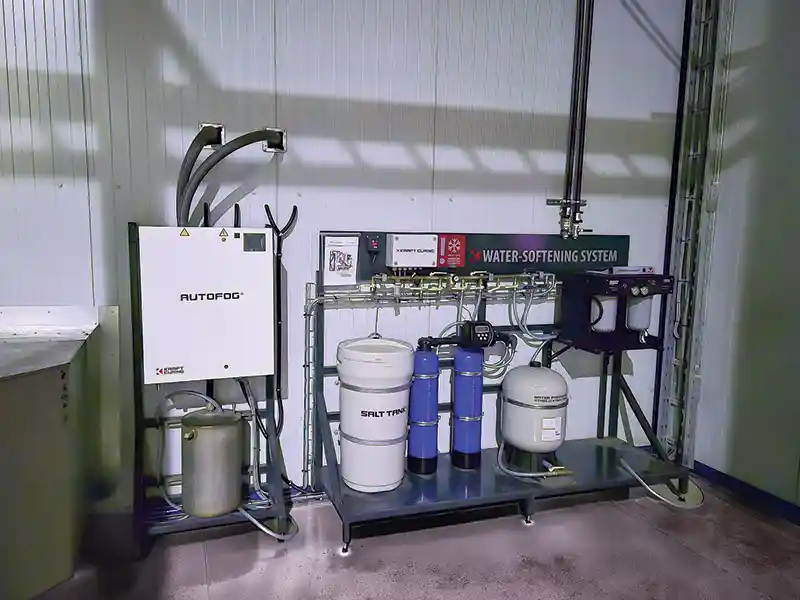
Water quality is another overlooked factor in India. Hard water and high total dissolved solids can negatively impact vapor generation and humidity control systems, leading to maintenance issues and inconsistent curing conditions. Ultimately, many of these challenges arise not from the concrete mix itself, but from the inability to create and maintain a stable, repeatable curing environment.
How are advanced curing systems improving process control, curing uniformity, and consistency in large-scale production of concrete block paving blocks?
Advanced curing systems are transforming curing from a variable, operator dependent process into a controlled and repeatable manufacturing step. Modern systems such as Quadrix® and Nautilus™, combined with automated controls like AutoCure®, allow producers to precisely manage curing temperature, relative humidity, and airflow within enclosed chambers.These systems are engineered to maintain highly consistent curing conditions, with temperature controlled within approximately ±1°C and relative humidity within ±3%. This level of control ensures that every product, regardless of its position in the curing chamber is exposed to the same curing environment. Engineered air distribution systems, particularly those delivering conditioned air at floor level, eliminate temperature stratification and ensure uniform heat transfer throughout the rack.
What is the importance of optimized curing?
Optimized curing has a direct and measurable impact on the key performance characteristics of concrete paver blocks. Proper control of temperature and humidity ensures that the cement hydration process proceeds efficiently, resulting in a denser and more uniform product.Maintaining high relative humidity during curing prevents premature moisture loss, which is essential for achieving higher compressive strength and improved abrasion resistance. At the same time, consistent curing conditions across all pallets ensure uniform surface density, reducing variability in product appearance and mechanical performance.
In practical terms, this translates to harder edges, reduced breakage during handling, and improved longterm durability in service. It also minimizes common quality issues such as efflorescence and color variation, which are often linked to inconsistent curing environments. For producers targeting higher value architectural or heavy-duty paving applications, optimized curing is a fundamental requirement for meeting performance expectations.
How do modern curing solutions help manufacturers improve productivity, reduce cycle time, and achieve energy efficiency in large-scale production?
Modern curing solutions are designed not only to improve quality but also to enhance overall plant productivity and operational efficiency. Systems such as Vapor Curing, Quadrix®, and Nautilus® accelerate the curing process through controlled addition of heat and humidity, enabling faster strength development and earlier handling of products.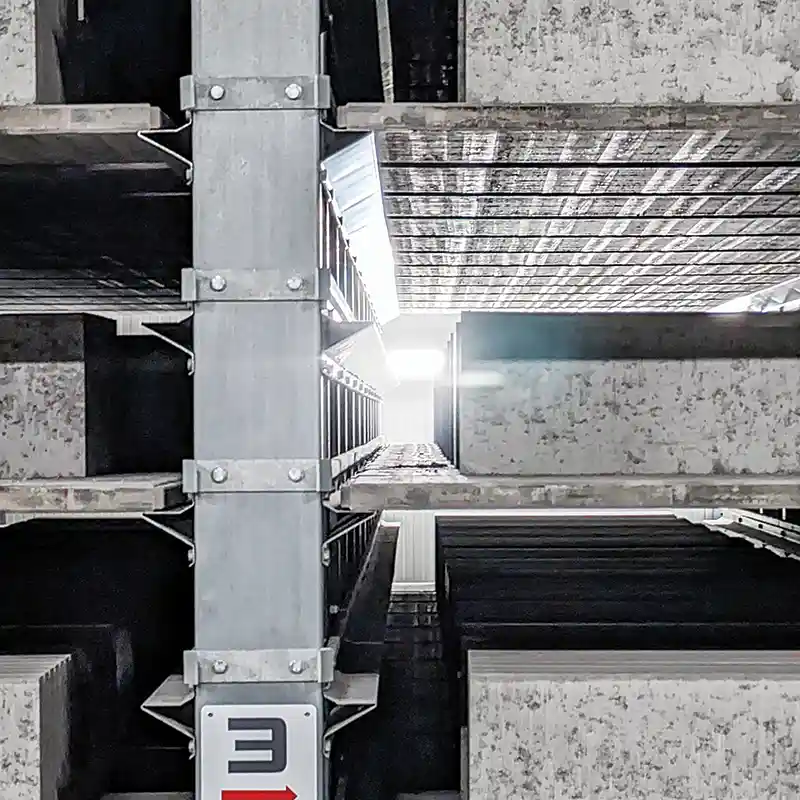
What best practices and quality control measures should manufacturers adopt to ensure consistent curing outcomes across different climatic conditions in India?
To achieve consistent curing results across India’s diverse climatic conditions, manufacturers must focus on controlling the curing environment rather than reacting to it. The first step is the use of fully-enclosed and properly insulated curing chambers, which isolate the curing process from external temperature and humidity fluctuations. Uniform air distribution is equally critical. Engineered airflow systems that eliminate temperature gradients within the chamber ensure that all products cure under identical conditions. This is particularly important in high capacity rack systems, where even small variations can lead to significant quality differences.Automation and monitoring are essential components of modern curing operations. Systems like AutoCure® provide realtime control of temperature and humidity, while technologies such as Match-Cure allow producers to monitor actual concrete strength development and optimize curing cycles accordingly.
Water quality management should also be prioritized. Installing water treatment systems ensures reliable operation of vapor and humidification equipment, preventing scale buildup and maintaining consistent moisture delivery. Finally, producers should adopt a data-driven approach to curing, using recorded curing parameters to continuously refine and standardize their processes.