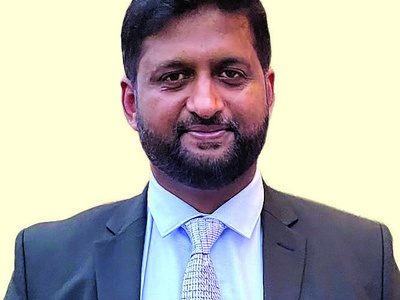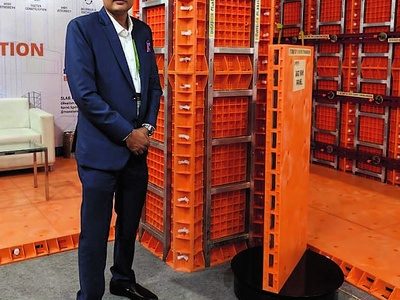
Shakir Ahmed, Managing Director, Fujitec India, gives insights into the modernization of elevators, with technology making them intelligent and connected when integrated into a building’s management system –– right at the planning and design stage.
You have spent more than two decades in the elevator industry and have held multiple leadership roles within Fujitec. How do you perceive the current industry and the end-user expectations that have led to its modernization?
Spending years across field operations, technical roles, projects, and commercial leadership gives you a very grounded view of the business. One thing becomes clear early on –– vertical transportation isn’t just another building component –– it’s the backbone of how a space actually functions.Earlier, elevators were often treated as an afterthought. Today, that’s completely changed. With global architects and more informed clients involved, elevator planning now begins at the design stage. That shift has changed how we look at scalability, safety, and overall performance.
For us, growth is guided by a few clear priorities. Getting the balance right between product and service, staying ahead on technology, and strengthening our manufacturing presence in India. We’re moving beyond simply supplying equipment. The goal is to build intelligent, connected systems that are designed around safety and efficiency.
Developers today want solutions that fit seamlessly into their building’s digital ecosystem and deliver consistently. In fact, one of the biggest shifts in the industry is early collaboration with architects, developers, and infrastructure planners to ensure that their vertical transportation systems are effectively integrated into the building design at the planning stage.
Hence, vertical transportation is now part of the design conversation from the start. We work closely with architects and planners during the conceptual stage. This includes traffic simulations, shaft planning, and system configuration. Because poor planning cannot be fixed later.
What key trends are shaping the elevator market in terms of technology and safety regulations in modern elevators?
Urbanization in India is moving fast, and vertical transportation has shifted from being a convenience to something essential. As cities become denser and mixed-use developments grow, demand for elevators and escalators will expand significantly across both metros and emerging cities.
Technology, safety, and user experience are all coming together. Connected systems, predictive maintenance, and remote diagnostics are no longer premium features; they are becoming standard.
At the same time, developers want faster execution and minimal downtime. The challenge is skilled manpower. That’s why we’ve invested heavily in training and in-house teams, combining classroom learning with real-world exposure. New safety regulations are also raising the bar, pushing the industry toward more reliable and globally aligned systems.
"Our local manufacturing set to global standards is strengthening both capability and speed of execution, enabling more reliable and performance-driven vertical mobility solutions."
To what would you attribute Fujitec’s strong presence in India over the years?
Our journey in India has been shaped by a few important decisions: investing early in local manufacturing, building strong technical capabilities, and maintaining a disciplined service culture.Setting up manufacturing early gave us a strong foundation. Strategic expansion strengthened our reach across both real estate and infrastructure segments.
Today, we are positioned in the mid to premium space, known for reliable systems that manage traffic efficiently and require fewer callbacks. Our order pipeline reflects a good balance of high-rise residential and commercial developments on one side, and large infrastructure projects on the other. That mix keeps us adaptable while also pushing our technical strengths.
How does local production strengthen the company’s ability to serve the domestic market while also driving export?
Our manufacturing facility in Tamil Nadu is an integrated hub for engineering and innovation. A strong local base allows us to respond faster to project timelines, adapt to specific site requirements, and maintain global quality standards. We are serving multiple international markets, and global exposure strengthens our local ecosystem. It feeds into research, supplier development, and talent building. Over time, this creates a strong cycle of growth and capability.What are some of the latest innovations Fujitec is introducing in its products to improve elevator performance, reliability, and lifecycle management?
Our focus is on enabling smarter mobility, better energy efficiency, and a strong user experience. Connected elevators are central to this. With AI and IoT integration, systems can monitor themselves and flag potential issues early. Even in standard models, features like group control and load optimization are becoming common.In high-traffic environments, destination dispatch and touchless controls help manage movement more smoothly and reduce waiting time. On the design side, we are making cabins more comfortable with better space, lighting, and openness. Features like infotainment panels and air purification are also becoming an integral part of the experience.
Digital technology is changing how elevators are maintained and operated. With IoT-based monitoring and predictive maintenance, we are moving from reactive service to proactive care. Platforms like Fujitec Connect give customers real-time visibility into system performance and service activity. At the same time, AI-driven diagnostics and smart tools help technicians respond faster and more accurately.
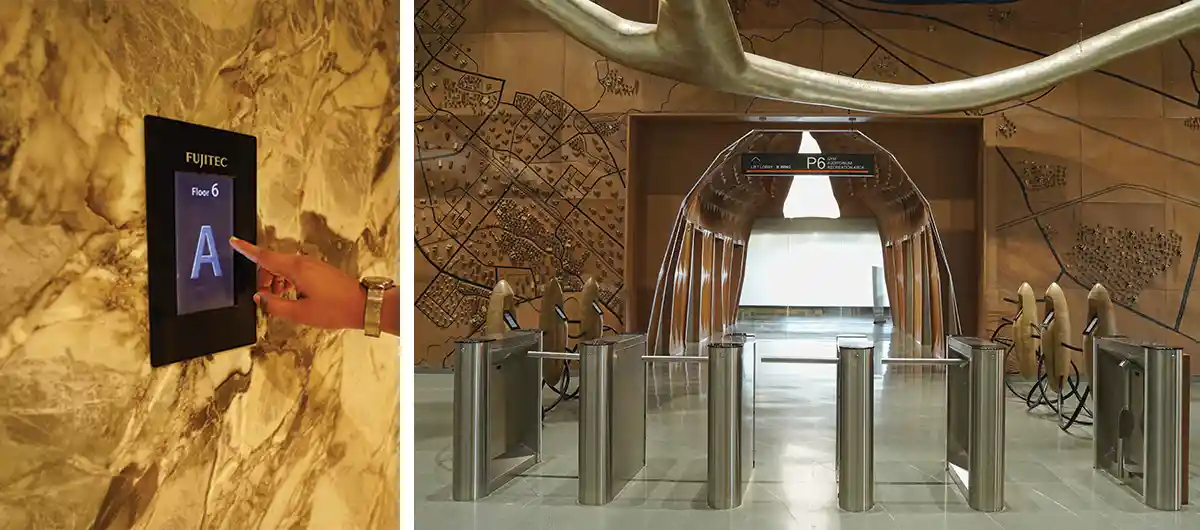
The outcome is reduced downtime, longer equipment life, and a more reliable experience overall. Today, these digital layers matter just as much as the mechanical design.
What are the key technical and operational considerations when designing elevators and escalators for high-traffic public infrastructure?
Infrastructure projects operate at a very different scale. It’s not just about moving people between floors: it’s about handling large volumes of passengers efficiently and consistently.Designing for these environments involves traffic simulations, systems that can withstand continuous use, and strong integration with the surrounding infrastructure. Everything from platforms to emergency systems needs to work together.
Real estate still makes up a larger share of our business, but infrastructure is growing quickly. It also brings a higher level of technical discipline, which strengthens the organization overall.
How is Fujitec preparing its products and systems to meet the new elevator safety standard IS 17900 aligned with ISO 8100?
India’s new elevator safety standard IS 17900, aligned with ISO 8100 and European EN 81 20/50, is a watershed moment for the industry. They introduce stricter requirements across several areas, including movement control, door safety, and emergency systems.Our approach is to align early and go beyond basic compliance. Systems are being redesigned and tested to meet these expectations. More importantly, it builds confidence. Customers in India expect global levels of safety and reliability, and that is exactly what we aim to deliver.
Is Fujitec undertaking modernization and maintenance of older elevators and escalators in India?
Modernization today is less about replacement and more about upgrading intelligently. A large part of India’s building stock still runs on legacy systems that weren’t designed for current traffic, safety expectations, or uptime demands.Our approach is flexible: in many cases, we upgrade what matters most. Controllers, drives, door systems, and safety components are brought up to current standards, while the existing structure is retained. This keeps disruption low but delivers a strong improvement in performance and reliability.
At the same time, we also take on full-scale modernization where needed. In buildings where systems are too outdated or where the expectation is a complete upgrade in performance and aesthetics, we do full replacements. That includes everything from new equipment to redesigned cabins and finishes, essentially giving the elevator a new identity.
Technology ties it all together. With digital monitoring and predictive maintenance layered in, even modernized systems operate like connected assets. For building owners, it comes down to choice. Whether it’s a smart upgrade or a full transformation, the goal is the same. Better safety, better performance, and a much stronger user experience.