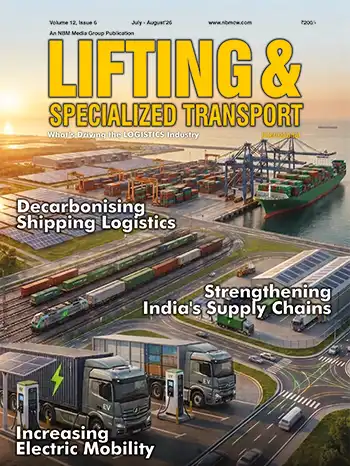

India’s construction equipment (CE) industry is entering a decisive phase, not merely as a fast-growing manufacturing sector, but as a complex, interlinked ecosystem where sustainability is increasingly shaped by responsible material sourcing, component manufacturing, logistics efficiency, and the way machines are designed, operated, and eventually recycled. With annual sales crossing ~1.4 lakh units and India ranked as the world’s third-largest CE market, the sector engages over 3 million workers, hundreds of suppliers, and a logistics and export network generating nearly $10 billion in turnover. As India accelerates infrastructure creation at an unprecedented scale, the push to lower carbon intensity particularly across the equipment value chain has emerged as one of the sector’s most critical challenges and opportunities.
Traditionally, sustainability discussions in the CE sector centred on cleaner engines, emission norms, and fuel efficiency at the machine level. Today, that perspective has expanded significantly. Industry leaders increasingly recognise that the largest share of emissions arises beyond factory gates, across raw materials, steel and castings, component production, hydraulics, energy sourcing, on-site equipment usage, transportation, vendor operations, and end-of-life recovery.
This highlights why decarbonisation must extend across the entire supply chain, not just within assembly plants or engine design Sustainability, therefore, is no longer a manufacturing objective alone; it is an ecosystem-wide responsibility.
According to ICEMA, India’s largest construction equipment association with over 130 OEM members, the organised CE industry is estimated at around $9.5 billion in 2025.When factoring in more than 200 additional manufacturers outside ICEMA’s fold, the unorganised segment is estimated to contribute over $2 billion (NBM Media estimates), taking the current industry valuation close to $12 billion.
Looking ahead, the organised segment is projected to reach $17.4 billion by 2033, while the unorganised market could expand to nearly $5 billion, together creating a $22.5 billion industry. This growth is being driven by large-scale public investments under initiatives such as the National Infrastructure Pipeline, PM Gati Shakti, Bharatmala, Sagarmala, and the Smart Cities Mission.However, the real test lies in whether this expansion entrenches carbon-intensive practices or enables a shift toward cleaner, smarter, and more resilient systems.
The CE sector is already witnessing a multi-dimensional transformation from diesel-powered machines to equipment running on electricity, biofuels, and hydrogen; from manual controls to AI-enabled systems; and from linear production models to more circular value networks. Industry experts agree that how effectively these transitions are managed will determine the sector’s contribution to India’s Net Zero 2070 vision.


Across the board, global OEMs and Indian manufacturers are investing in renewable energy, digitalisation, and workforce upskilling to create a new generation of efficient, connected machines. Importantly, this shift goes well beyond product design. It is reshaping how energy is sourced, materials are selected, logistics are optimised, and equipment is managed throughout its lifecycle, enabling a cleaner, smarter way of building.
As the CE industry prepares for its next phase of growth, sustainability, technology, and self-reliance are emerging as the three pillars of progress. Increasingly, environmental responsibility is extending beyond factory floors into the networks that support them from raw material sourcing and component manufacturing to logistics, packaging, and recycling. The race is no longer just to build faster, but to build responsibly, intelligently, and sustainably.
Greening the Supply Chain
With decarbonisation now firmly embedded in corporate strategy, construction equipment manufacturers are turning their focus to execution, redesigning supply chains to cut emissions, improve operational efficiency, and strengthen resilience. The emphasis is shifting toward measurable actions across supplier networks, logistics flows, energy use, and material recovery, where the largest carbon reductions can realistically be achieved.
He explained that companies like JCB are actively supporting vendors in transitioning to cleaner manufacturing and energy use. “We’re working with hundreds of suppliers to adopt solar power, improve energy efficiency, and reduce logistics-related emissions. Our suppliers must be partners in our decarbonisation journey, because their performance defines ours.”


Shridhar added that CNH works closely with suppliers to measure performance across parameters such as water usage, power consumption, manpower efficiency, and scrap generation. “The objective is to encourage partners to embed efficiency and innovation into their processes,” he said, noting that localisation plays a critical role in reducing transport emissions, improving packaging efficiency, and minimising waste. “This is how sourcing becomes a powerful lever for sustainability.”


Saxena added that packaging optimisation is another critical focus area. “We collaborate with suppliers to reduce material usage through optimised packaging designs, greater use of reusable pallets and crates, and a gradual shift toward recyclable and eco-friendly packaging materials. For last-mile delivery, particularly for heavy equipment and components, we prioritise consolidated dispatch planning, localised sourcing, and nearby warehousing to reduce travel distances and associated emissions.”
He further noted that sustainability considerations are increasingly embedded into supplier engagement frameworks. “Sustainability expectations are now an integral part of our discussions with suppliers and logistics partners, reinforcing our commitment to responsible and low-carbon logistics practices across the value chain,” Saxena said.



He added that sustainability is now a key criterion in both new supplier onboarding and ongoing evaluations. “For all new sourcing, ESG compliance is the first filter. We have also set defined KPIs and targets for our top 100 supplier partners this year, ensuring that sustainability is implemented not only at our end but across the value chain.”

While acknowledging the cost challenges involved, Singh noted that collaboration is key to balancing sustainability and efficiency. “Transitioning to greener operations comes with challenges. We are encouraging suppliers not just to monitor performance, but to actively improve—by adopting energy-efficient processes, increasing recyclability, and reducing waste. Although new technologies may involve initial costs, we are working collaboratively to offset these through efficiency gains and reduced material waste. The objective is to make our supplier ecosystem sustainable while neutralising long-term cost pressures,” he said.


Mathur also highlighted packaging and logistics reforms, including eliminating paper use and adopting recyclable bins. He noted that GPS-based logistics visibility and improved infrastructure are already reducing transit times and emissions. “There’s a lot to be done on the logistics front. But in the last three to four years, technology has helped us gain visibility on truck movements through GPS and electronic tracking systems, both inbound and outbound. With better roads and infrastructure coming up, we expect transit times to reduce drastically in the next few years. That will improve both efficiency and cost-effectiveness across the value chain.”

Datta informed that AM/NS has established two large-scale scrap recycling facilities and commissioned 1 GW of renewable energy capacity. “We’ve reduced our CO2 emissions by 34% in the last decade. Cleaner supply chains are not a dream; they are a deliverable. We’re making ourselves future-ready and helping our downstream partners, construction equipment makers, to be globally competitive,” he said. “Greening the supply chain is not a single company’s effort; it’s collective accountability. Only when every supplier, transporter, and manufacturer moves in sync can the CE sector truly claim sustainability.”
Promoting Circularity
Circularity is increasingly shaping decarbonisation across the CE supply chain. OEMs and suppliers are adopting remanufacturing, recycling, and reuse to extend product life and reduce material intensity.Anand Kumar, Executive Vice President, Tata Hitachi – Construction Equipment Division, shared how the company is rebuilding used machines and remanufacturing high-value aggregates. “We have established a used equipment business vertical focused on buying and rebuilding used machines. It’s still a small but growing segment for us, with clear targets and direction. We’re also remanufacturing aggregates such as pumps, control valves, and other high-value components. About 70 to 80% of the value remains after reconditioning, giving them a new lease of life.”

He also described repurposing paint sludge as fuel for cement plants. “In our factory, we’ve gone a step further by repurposing paint sludge. Earlier, it was disposed of through third parties, but now we dry and bag it before sending it to cement factories, where it’s used as fuel due to its high calorific value. These initiatives show how OEMs can drive sustainability through circular operations.”

“Our approach is driven by the need to address the high embodied carbon of conventional concrete production. By enabling the reuse of construction waste, we reduce the demand for fresh aggregates, conserve water, and minimise disposal costs.”
He informed that Schwing Stetter’s RA series concrete recycling plants separate surplus or washout concrete from transit mixers into gravel, sand, and cement-laden water, all of which can be reused in new concrete production or for site applications. In addition, the company offers crushers to process hard C&D waste into usable aggregates, along with high-efficiency pumps for handling sludge and waste on construction sites.
Taking a broader view of circularity, Sakthikumar added, “Circularity isn’t just about recycling, it’s about keeping materials in continuous use. Integrated solutions like our FBP 29 truck mixer pump combine transport, mixing, and placement, reducing the number of machines on-site and lowering logistics-related emissions.”
Expanding the discussion around material recovery and waste utilisation, Sooraj Cherukat, Head – Sales and BDM, Hailstone Innovations, shared how circularity is shaping their approach to the aggregates and mining equipment ecosystem. “Hailstone is actively promoting circularity across its supply chain ecosystem by strengthening initiatives around recycling, remanufacturing, and responsible scrap utilisation—ensuring sustainability without compromising performance or reliability. A key focus area is the wear parts and critical components. We encourage structured programs for collection and recovery of used liners, crusher wear parts, and metal scrap, enabling high-value recycling through authorised recyclers and approved processing channels. In parallel, we are working toward remanufacturing-ready designs, where selected assemblies and sub-components can be refurbished, tested, and reused—reducing raw material dependency and lifecycle emissions.”
He added, “Within our manufacturing ecosystem, we optimise scrap segregation and utilisation, especially in steel fabrication, by improving yield planning and partnering with local scrap processors to ensure closed-loop recycling wherever possible.
Additionally, we promote circularity through durable product engineering, extended equipment life, and improved service practices that reduce frequent replacements—supporting a sustainable and resource-efficient future for the crushing and screening industry.”
Reinforcing the growing emphasis on circular supply chains, Sanjay Saxena, COO, Sany India, said that promoting circularity is a key pillar of the company’s supply chain strategy. “We actively encourage recycling and responsible scrap utilisation by working with authorised recyclers and suppliers to ensure that metal scrap, packaging waste, and consumables are recovered and reused wherever possible,” he said.
Saxena added that remanufacturing and refurbishment are gaining increasing importance, particularly for high-value components. “Several components and assemblies, especially service parts and high-value aggregates, are being evaluated for remanufacturing to extend product life and reduce raw material consumption. In parallel, we collaborate with suppliers to increase the use of recycled content in select materials without compromising quality or performance.”
He further noted that circularity is being embedded internally across manufacturing operations. “Process scrap is segregated and channelled back into the recycling loop, while continuous improvement initiatives focus on yield optimisation and waste reduction at the manufacturing stage. Together, these efforts help strengthen a circular supply chain ecosystem that balances operational efficiency with environmental responsibility,” Saxena said.

He added, “The construction sector can accelerate India’s approach to sustainability by adopting fuel-efficient machines, electric machines, and hybrid machines, enhancing fleet utilisation rates through telematics, and recycling materials. We are proud to be the first to drive this change and collaborate with our customers and partners to create a cleaner, more energy-efficient infra construction ecosystem.”

Reinforcing the shift toward resource recovery, Manish Bhartia, Promoter & Managing Director, CFlo, said, “Circularity is at the core of CFlo’s technology. All our equipment is designed for long service life, easy refurbishment, and redeployment across sites. Manufacturing scrap in our factories is carefully segregated and sent to recyclers, while reclaimed steel is reused in non-critical in-house applications. Our processing systems convert quarry fines, mining overburden, and C&D waste into usable construction materials, helping extend the value of existing resources.”
Abhijeet Pai, Founder, Puzzolana, informed that circularity is being integrated into the company’s manufacturing processes. “Puzzolana is advancing circular economy integration across its supply chain by implementing structured recycling, scrap recovery, and material reuse in its manufacturing. The company reintegrates reprocessed in-house metal scrap into production, expands remanufacturing through component refurbishment, and collaborates with suppliers to enable closed-loop material flows using recycled inputs. Optimized reusable and recyclable packaging further improve resource efficiency, reduce waste to landfill, and embed circular economy principles across the supply chain.”
Circularity is also reshaping the secondary market for equipment. Moses Eddy, Director, Kobelco Construction Equipment India, informed, “Our Special Solutions division promotes circularity by offering certified used machines that are thoroughly inspected, refurbished, and validated to meet performance standards. This extends machine life, reduces material waste, and provides customers with reliable alternatives, while supporting responsible resource use across the equipment lifecycle.”


Transition to Green Equipment with Alternative Fuels & Electrification
As India advances toward Net Zero 2070, the CE industry is embracing hydrogen, electrification, and hybrid technologies. According to Sunil Khurana, COO, JCB India, sustainability has now become central to business strategy. “It has to be a way of life. At JCB, our carbon footprint comes primarily from Scope 3 emissions – from the machines that we sell and operate. We have developed a hydrogen-powered backhoe loader, which is ready for launch. By 2026, 60% of JCB’s energy will come from solar and wind and we’ll keep striving to reach 100%.”He noted that India’s CE industry already meets the world’s highest emission standards and is progressing rapidly toward renewable operations. “The challenge lies in infrastructure, affordability, and supply chain readiness. But India will scale faster than Europe, just as we did with emission norms.”
Hydrogen, he said, represents a major leap in green innovation. “Hydrogen engines are the future; they have the same performance and power density as diesel, but with zero tailpipe emissions. The key now is creating hydrogen ecosystems, from production to refueling, to make large-scale deployment possible.”

B.D. Mathur, Vice President – Materials, Action Construction Equipment, shared that the company is actively contributing to India’s electrification roadmap. “We launched our first electric construction equipment at bauma 2024. It’s a 15-ton pick-and-carry electric crane that’s currently undergoing validation trials and will be production-ready in the next few months.”



He added, “Hydrogen holds great promise for the future of clean energy and sustainability. We have done extensive work and are ready with hydrogen technologies, which we’ve showcased across multiple forums and exhibitions. While infrastructure is still developing, we believe process industries will lead the way in adopting green hydrogen, followed by the construction equipment industry.”
All these innovations mark a decisive step in the CE Industry’s transition to low-carbon, high-performance construction equipment. Whether through battery-electric or hydrogen-powered engines, the industry is proving that sustainability and profitability can go hand in hand.
Digital & AI Transformation
As digital transformation accelerates across the construction value chain, companies are realizing that automation is no longer optional; it is fundamental to achieving decarbonisation, improving productivity, and staying globally competitive.Sunil Khurana, COO, JCB India, informed that JCB is taking digitalisation beyond machines and into factories, “We’ve extended our telematics from mobile equipment to production floors. Additive manufacturing has reduced development time dramatically, what took six months now takes three days.”
Elaborating on how JCB’s LiveLink system is used by both customers and dealers, Ajit Yadav, Head – Product Engineering, JCB India, said, “Fleet managers can track every machine, fuel use, idling time, productivity, through a mobile dashboard. It even alerts owners about sudden fuel drops or upcoming service intervals. We ensure dealers have spare parts ready because our machines don’t come to workshops; workshops go to them.” He added that data-driven optimization also reduces fuel theft and downtime. “Technology has become a tool not just for monitoring but for trust and transparency.”

He highlighted Tata Hitachi’s pioneering work in electrification and smart monitoring. “When most people think of EVs, they think of cars. Tata Hitachi imagined a 20-ton electric excavator, the EX210, built in Dharwad, tested in real Indian cities, and already operational in metro zones where pollution and noise limits are strict. This machine sends continuous data to smart dashboards, predicting motor issues before they happen. It’s part of Tata Hitachi’s vision of zero breakdowns and zero emissions, an indigenously built answer to sustainable infrastructure,” he said.
“In Australia, autonomous mining trucks, some 240-ton beasts, now haul iron ore uphill with no one in the cab. The driver sits 1,200 kilometers away, sipping coffee in a control room. Caterpillar’s Cat Command system is revolutionizing equipment control, reducing site injuries to zero and improving night shift productivity by nearly 40%. Similar advancements by Komatsu and Caterpillar’s AI fleet systems in the U.S. are optimizing everything from fuel use to operator behavior, and machines are practically being told to 'stop idling and get to work',” he added.
Looking ahead, Davar sees AI as the next major leap. “Drones combined with AI are now mapping job sites in hours instead of days. Predictive maintenance enables machines to warn of an impending breakdown. Safety cameras and AI vision systems can detect humans, obstacles, and even unsafe decisions. It’s like Siri, but with a hard hat,” he quipped.
“Automation,” said Sujeeth Pai, Director, Industrial Market, India and Head Commercial Excellence, ISEA, SKF India Limited, “must balance cost with utilization. The question isn’t whether we can automate, it’s when it makes sense. Fully automated systems look great, but they’re not always cost-effective unless fully loaded. However, for precision areas like vibration testing, 100% automation ensures zero human error.”
He added that Indian MSMEs are increasingly adopting low-cost automation. “Many smaller firms replicate high-end automated systems for a fraction of the price. They want to become global suppliers and meet international audit standards, and this drive is transforming the supply base.”

The Indian Government’s transformative initiatives such as NIP, Gati Shakti, Bharatmala, and Sagarmala are reshaping infrastructure creation. Crediting policy stability as a key enabler, Soumyadeep Datta, Head – Plate Sales, ArcelorMittal Nippon Steel India Limited (AM/NS), said, “When the government stays the course and backs it with funding, industries respond. We’ve seen unprecedented public investment, ₹111 lakh crore under NIP, and every sector is aligning itself to meet the Vision 2047 roadmap. The steel industry, for example, aims to reach 250 million tons by 2040, which is double the current output. It’s this clarity of direction that’s driving the private sector to invest with confidence.”
He cautioned that land acquisition and environmental clearance delays remain persistent roadblocks. “The Gujarat section of the Bullet Train project moved fast, but Maharashtra’s faced hurdles. Policy execution at the state level needs to match the Center’s ambition.”
Sujeeth Pai, SKF India Limited, added that long-term policy visibility allows companies to plan capacity years in advance. “For example, steel producers are expanding to meet 2040 targets, and that gives suppliers like us clarity on where to invest,” he said. “Short-term issues are inevitable, but directionally, India’s manufacturing future is secure.”
Yogesh Arora, General Manager, Kansai Nerolac Paints, observed that policy-driven infrastructure growth has lifted allied industries as well. “In the last ten years, India’s railways and road networks have been completely transformed. Today, expressways and modern corridors are cutting travel times drastically, and that’s enabling factories, logistics, and exports to thrive. Without this momentum, industrialization would have stagnated.”
Conclusion
India’s construction equipment industry stands at an inflection point. Decarbonisation is no longer about regulatory compliance alone; it is about culture, collaboration, and long-term intent across the ecosystem, where machines are cleaner, smarter, and kinder to the planet.Decarbonisation also demands a system-wide transformation that extends far beyond the factory gate—into the supply chains that sustain the industry. This includes greener supplier ecosystems, low-carbon materials such as green steel and eco-friendly coatings, greater localisation to reduce transport emissions, optimised logistics networks, and an emphasis on circularity through remanufacturing, reuse, and recycling. Equally critical is the ability to digitally track and measure emissions across the value chain, enabling transparency, accountability, and continuous improvement.
Then there is the challenge of execution across the deeply interconnected equipment value and supply chain. In heavy equipment and infrastructure sectors, Scope 3 emissions account for nearly 70–90% of total lifecycle emissions, making it clear that OEMs cannot meet net zero commitments by focusing solely on cleaner engines, alternative fuels, or factory-level efficiencies, now that the onus also lies in making their supply chains sustainable.
The choices being made across equipment supply chains will determine whether the sector delivers cleaner, smarter, and more resilient infrastructure. For OEMs, decisions around sourcing, energy use, vendor partnerships, and lifecycle management will increasingly define competitiveness, resilience, and global market access, just as cost and scale once did.