Terex India
With real-time monitoring, AI-enabled diagnostics and remote visibility through Connec-T, our machines identify issues early and maintain performance with consistent output quality.
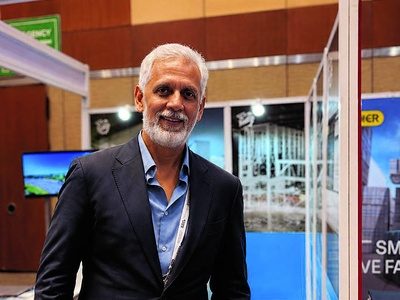
Jaideep Shekhar, Managing Director

How are customers’ evaluating the Total Cost of Ownership before making a buying decision?
In recent years, quarry owners and contractors have changed the way they evaluate equipment. Price is no longer the deciding factor. Crushing and screening plants are now viewed as long-term productivity assets, where uptime, reliability, and total cost of ownership matter more than the initial purchase value.At Terex India, our discussions with customers increasingly revolve around lifecycle performance. Quarry owners and contractors carefully assess fuel efficiency, wear life, service intervals, digital visibility, and even resale value before making an investment. The focus has shifted to cost per tonne over the full operating life of the plant, reflecting a more mature and data-driven market. In practical terms, this means customers are prioritising equipment that delivers sustained uptime, predictable operating costs, and confidence in long-term returns rather than short-term savings.
Since infrastructure growth continues to require higher output, fleet modernisation is emerging as a stronger investment trend. Many operators are replacing older machines as part of expansion plans instead of simply adding more units. Higher fuel costs, stricter environmental and safety norms, labour shortage, and the need for consistent product quality are key reasons behind this shift.
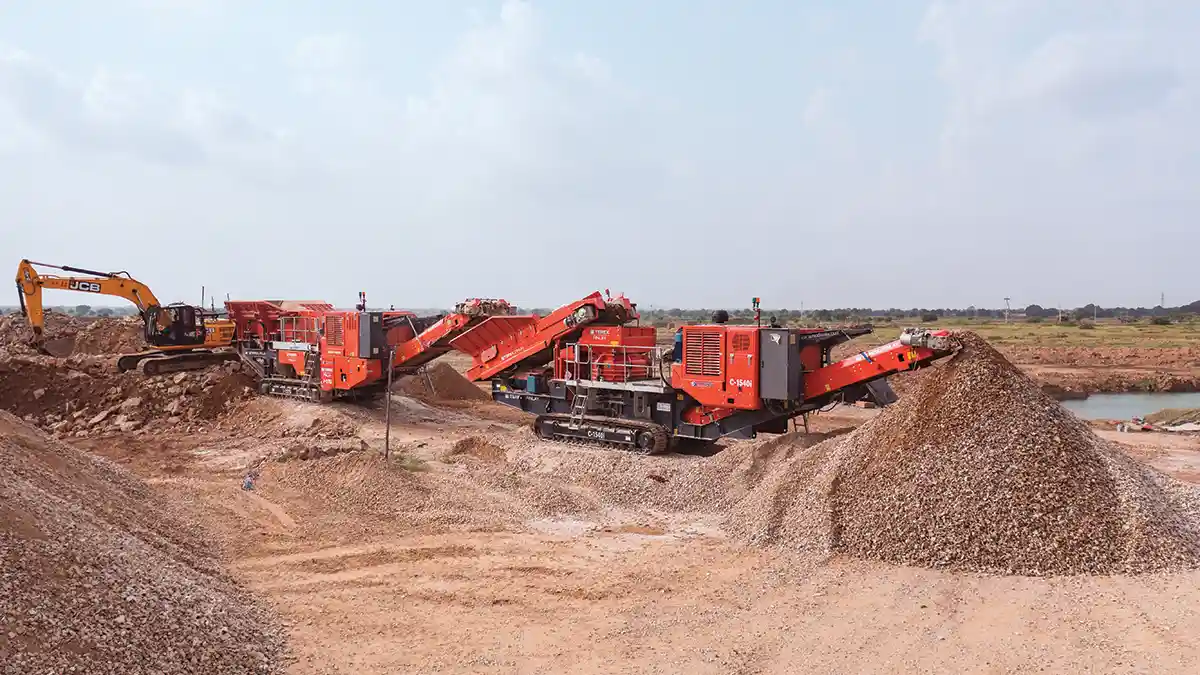
Older equipment struggles to meet these expectations and often leads to higher downtime and operating costs. As a result, customers are investing in larger, fuel-efficient plants that consolidate production and simplify maintenance. The focus is now on smarter capacity and better efficiency rather than just increasing the number of machines.
What design and engineering improvements has Terex introduced in its plants to enhance uptime, durability, and crushing efficiency?
At Terex, uptime is engineered into the machine from the start. Our latest crushing plants use heavy-duty fabricated structures built for continuous operation in harsh quarry environments. Optimised load paths reduce stress across the frame, improving long-term durability. These refinements come from ongoing feedback from Terex India’s installed base and application engineering teams working with quarry operators across varied conditions.Critical components are protected through advanced sealing systems that prevent dust ingress, a common challenge in Indian applications. Maintenance accessibility has also been improved with purpose-designed service platforms, simplified layouts, and faster access to routine service points, reducing service time and unplanned stoppages. Together, these features maintain high availability even in round-the-clock operations.
A key efficiency improvement is the integration of anti-spin technology in the Terex MPS Cedarapids MVPX Series cone crushers. This prevents head spin during low- or no-load conditions, protecting liners and internal parts from premature wear, and reducing the risk of mechanical damage. Chamber geometries have also been refined to improve reduction efficiency and maintain consistent gradation. Updated feed opening profiles minimise bridging, while engineered internal flow distributes forces evenly, reducing recirculation and internal stress. The result is stable power draw, uniform wear, higher throughput, and lower wear cost per ton.
How is automation in Terex plants reducing maintenance downtime and improving safety?
Reducing maintenance downtime requires more than stronger components, it requires smarter systems. At Terex India, we have focused on mechanical simplification combined with intelligent automation. PLC-based automation and CANbus architecture provide real-time visibility into machine functions, enabling faster fault identification and simpler troubleshooting.A key shift has been toward direct drive systems, which can be significantly more fuel-efficient than conventional hydraulic systems, while also reducing system complexity. Direct drives reduce system complexity, eliminate multiple hydraulic components, and lower maintenance requirements, while also improving safety during servicing.
We were amongst the first to introduce telematics on track-mounted machines in India, giving customers real-time insights into machine performance and vital operating parameters. Alongside this, electric and hybrid solutions use advanced controls to reduce operating costs and carbon footprint, while offering a cleaner and safer maintenance environment.
What automation and AI tools is Terex using in its plants to improve operational efficiency and maintenance planning?
Automation is central to the design of modern Terex plants. Intelligent control systems continuously monitor crusher load, feed rate, power consumption, and machine settings, automatically adjusting operations to maintain consistent output while protecting the equipment from overload and unnecessary stress.Terex also applies AI through digital support tools that improve access to information and diagnostics. One example is Ask Terex, an intelligent assistant trained in technical documentation and operational data. It provides quick, contextual answers to operator and service queries, enabling faster troubleshooting and more informed decisions at the jobsite. This helps reduce downtime and support safer operation.
For lifecycle management, Terex offers remote monitoring through its Connec-T app, which gives real-time visibility into machine health, utilisation, and operating parameters. Currently available on hybrid machines and Franna cranes, it will expand to additional product lines. Early identification of potential issues allows maintenance teams to plan interventions instead of reacting to failures, improving availability, extending component life, and enhancing overall efficiency.
Looking ahead, what innovations will define the next generation of crushing and screening plants?
The next generation of crushing and screening plants will be shaped by intelligent automation, energy efficiency, modular design, and sustainability-driven engineering. The recent Union Budget reiterated a long-term push on manufacturing and infrastructure, including new schemes to strengthen domestic capital goods and construction equipment manufacturing, which will support demand for higher-spec, technology-enabled machines.Mechanical innovations such as enhanced chamber dynamics, hybrid and direct power solutions, and simplified service architectures will continue to evolve alongside digital intelligence. AI-driven optimisation, advanced analytics, and connected ecosystems will enable plants to self-adjust for maximum efficiency while minimising wear and unplanned downtime. Design philosophies will increasingly focus on reducing lifecycle costs, improving environmental performance, and enhancing safety.
By combining robust mechanical engineering with digital innovation and market-specific design, Terex India is well positioned to support infrastructure- and manufacturing-led growth with solutions that deliver productivity, sustainability, and long-term operational confidence. Our focus is to help customers lower lifecycle costs while delivering consistent performance across the full operating life of the plant.