
Through our proprietary formulations and rigorous in-house processes, we are delivering high-performance lubricants worldwide, ensuring efficiency and compliance in every market that we serve.
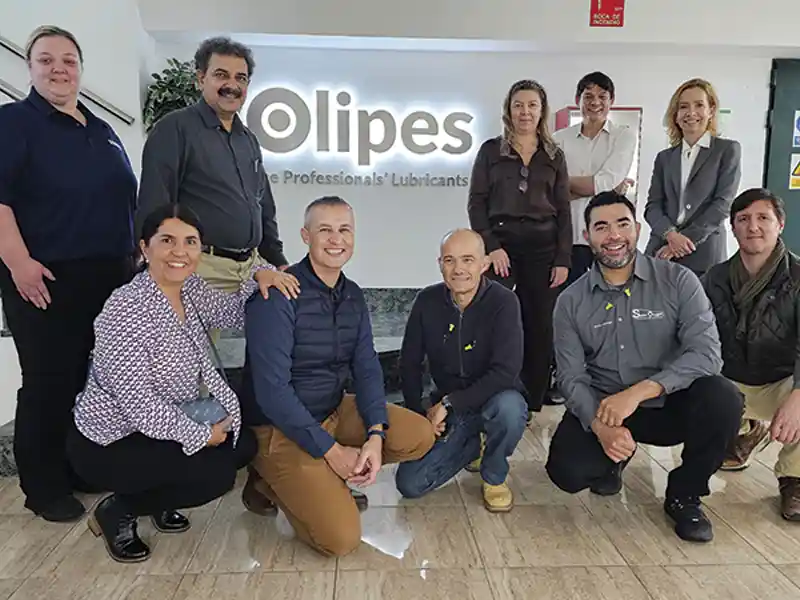
Andrei Bocsa, Export Area Manager, and Roberto Gonzalez Tristan, Technical Support Engineer, OLIPES
What gives Olipes’ proprietary formulations and in-house chemical processes a competitive edge in the market?
Our proprietary formulations and in-house chemical processes are central to Olipes’ global competitive edge. We purchase raw materials, develop our own formulations, and perform all mixing and chemical reactions internally—especially for greases. While many manufacturers rely on ready-made formulations and simply blend them, we create our own reactions in-house. This makes our formulations 100% proprietary, ensuring that our products remain unique in the market.Our competitive advantage is further strengthened by an exhaustive quality control process. We consistently strive for the highest performance standards, strictly adhering to OEM specifications from leaders such as Caterpillar and Komatsu. We are currently building a new facility with upgraded infrastructure to enhance both production capacity and efficiency.
Our laboratory is truly the heart of the company. It is equipped with advanced instruments to test raw materials and finished products, and we even conduct used-oil analyses for some customers—although highly specialized labs often handle that portion. We also operate a pilot plant where small-batch trials are conducted before moving to industrial-scale production. This step ensures that every formulation is fully validated prior to mass manufacturing.
These capabilities directly support our global footprint. Olipes is currently active in nearly 50 countries, with rapid expansion in South America, a strong presence in Europe and West Africa, and we are steadily growing in Brazil, Mexico, and Colombia. Although Latin America presents challenges—such as intense competition in automotive lubricants and exchange rate fluctuations between the Euro and the Dollar—we continue to strengthen our position by building long-term partnerships.
Together, our proprietary formulations, in-house chemical processes, rigorous validation, and strong global network give us a competitive edge that drives Olipes’ success worldwide.
How diverse is your lubricant portfolio across different market segments?
Our lubricant portfolio is highly diverse, covering a broad spectrum of products and market segments. We manufacture a wide range of lubricants, including greases, industrial oils, hydraulic oils, compressor oils, engine oils, as well as coolants and brake fluids.Our business operates across two major sectors: automotive and industrial. Some products, such as hydraulic oils, are used in both segments, while others are sector specific. For example, heat transfer oils are exclusively industrial, whereas engine oils are primarily used in vehicles or power-generation engines.
Our portfolio further adapts to the needs of each market we enter. The product mix depends greatly on the specialization of the local distributor. If they focus on the marine sector, we begin with marine-engine lubricants and hydraulic products; if they serve workshops, we start with automotive oils. In countries like Brazil, our distributor operates purely in the industrial segment, so we supply products such as food-grade oils, compressor oils, and turbine lubricants. This flexibility ensures that our portfolio effectively meets the requirements of multiple market segments across the globe.
What key innovations are you developing to enhance lubricant efficiency, reduce emissions, and support performance?
Today’s market demands lubricants that are more efficient, environmentally responsible, and capable of delivering longer drain intervals—from 500 hours up to 1,000–1,500 hours. In response, we are developing advanced greases for electric motors that help reduce energy losses. Even a small efficiency gain of 2–3% results in significant electricity savings in high-kWh applications.Our focus is on extending drain intervals, reducing the quantity of lubricant required, and lowering overall power consumption. We are achieving this through synthetic formulations, reduced-viscosity lubricants, and new grease technologies, particularly those based on calcium sulfonates. Much of this work is aligned with OEM requirements, as manufacturers strive to meet stricter emission standards and need lubricants with lower viscosities that still provide strong protection and wear resistance.
To further reduce emissions and improve efficiency, we are researching new base oils and, more importantly, advanced friction modifiers that allow for lower CO2 emissions and reduced fuel or energy consumption in industrial applications. One challenge, however, is that while synthetic oils deliver excellent efficiency benefits, their manufacturing footprint is higher. To counter this, we also produce biodegradable lubricants using synthetic esters and vegetable oils, and we are committed to oil regeneration—collecting used oils, distilling them, and creating regenerated base oils.
We are also addressing the challenges posed by biofuels, which can cause engine deposits. Our engine oils are specifically formulated to remain compatible with and protect engines operating on biofuel blends.
As mobility evolves, our innovations extend to fully electric vehicles, which still require gear oils, brake fluids, and significant quantities of coolant—each formulated differently from conventional vehicles. To address this, we are launching a new EV-specific brand and product portfolio, including gear oils, specialized coolants, brake fluids, and greases for bearings and electric motors.
How do you ensure your lubricants meet strict OEM specifications?
Our innovations are tightly aligned with OEM and governmental emission goals, ensuring our lubricants actively support the next generation of sustainable, energy-efficient technologies. We collaborate with OEMs including Chinese manufacturers, MG, and even Tesla to co-develop lubricants that lower power consumption and friction. For instance, if Caterpillar specifies that a particular engine must use an ECF-3 engine oil, we formulate the product precisely to that specification—nothing more, nothing less. Our R&D process is entirely focused on full compliance.In this industry, it is not about creating an entirely new formulation but about precision and strict adherence. Whether the segment is passenger vehicles or heavy mining equipment, the automotive sector operates within very tight specifications. There may be minimum and maximum tolerance ranges, but the formulation must stay strictly within those limits.
So, if Caterpillar requires a grease to contain at least 3% molybdenum disulfide, we cannot replace or modify that component—we must include it exactly as specified. This level of precision and compliance is fundamental to how we operate.
Countries like India experience extreme temperature variations from –30°C in the north to +50°C in the south. How do you ensure viscosity stability and consistent lubricant performance across such climates?
Extreme temperature variations are similar to markets like North America, where the Arctic regions of Canada contrast with the much warmer climates elsewhere. Hence, our formulation is adjusted depending on the climate. For example, to produce an ECF-3 lubricant for Arctic conditions, we use a pure synthetic base oil, such as polyalphaolefin (PAO), which allows the lubricant to perform at temperatures as low as –40°C to –50°C. However, for warmer regions like Mexico, PAO is unnecessary, and we may use a high-quality mineral base oil or another synthetic base such as esters.The same principle applies to greases: in extremely cold environments, we reduce the grease’s consistency, so it remains pumpable and flows properly.
Ultimately, we design lubricants around three key parameters: temperature, load, and speed. These variables determine the optimal formulation for each application and climate. Additionally, the materials and operating environment influence the choice of lubricant.
While in the automotive and heavy equipment sectors OEMs specifications are extremely strict with precise requirements, leaving very little room for deviation; the industrial sector allows greater flexibility. For instance, an air compressor may follow an international standard like VDL, which accommodates multiple formulation approaches.
With automotive equipment, everything is standardized and tightly regulated, so innovation is possible but within narrow boundaries. For large industrial machines—such as mining excavators or shovels, especially those with open gears—there is more freedom to develop specialized products tailored to the application.
Simply put, the more automotive the product, the stricter the specifications; the more industrial the application, the greater the scope for innovation. This approach ensures reliable performance across a wide range of climates and applications.
Is India part of your long-term manufacturing expansion plans?
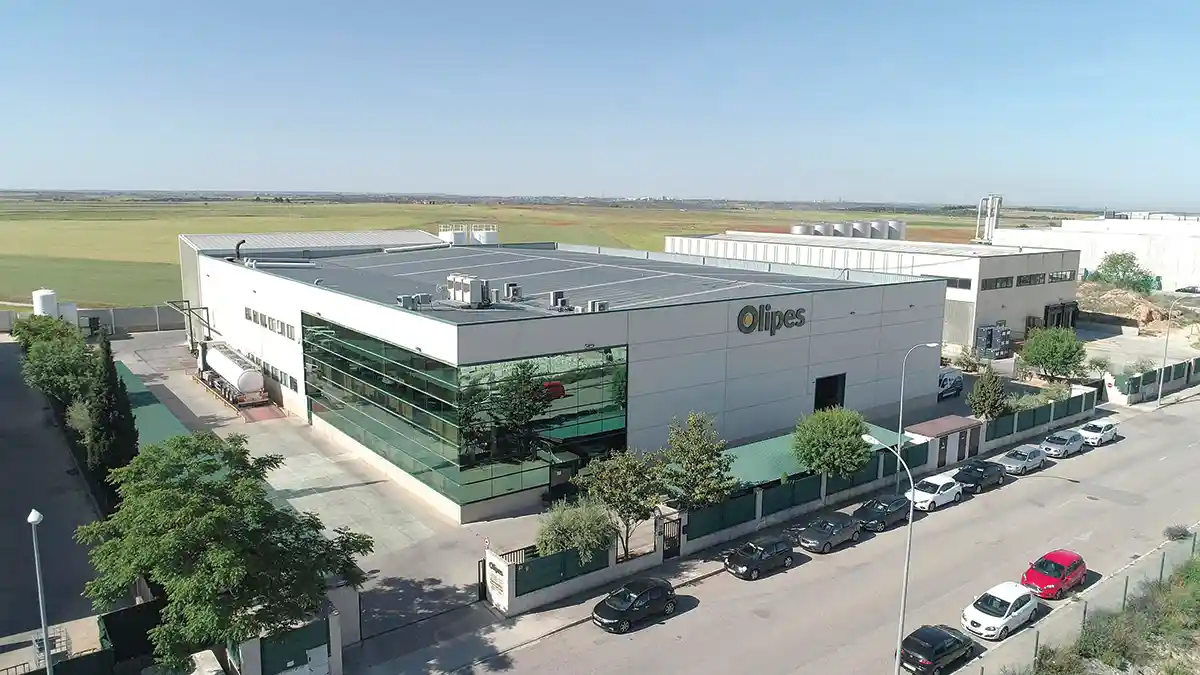
Currently, we manufacture in Spain and are developing new plants in Algeria to serve Africa and in Mexico to support the South American market. As for India, it is a market we would love to be present in. India is dynamic, growing rapidly, and very exciting for us. While there are no immediate plans, it is definitely on our long-term expansion roadmap.How has Olipes’ long-term commitment to innovation shaped its global success?
Olipes’ long-term commitment to innovation has been the cornerstone of its global success. For more than 30 years, we have been growing and supporting our customers’ progress, backed by a production capacity of over 100,000 tons of lubricating oils and greases per year and a level of process flexibility that few companies can match. This continuous advancement is driven by a highly qualified team of professionals who ensure product quality and work tirelessly on research, development, and technological innovation.Our dedication to applying the latest technologies to create increasingly efficient lubricants is one of our greatest challenges—and our biggest strength. In fact, we reinvest 75% of our profits into innovation. Today, Olipes is a recognized benchmark in the international petrochemical sector. We operate across four continents, offering more than 2,500 product references used across over 75 industrial sectors.