
Said Vinesh Babaria, Director, “Our complete in-house manufacturing capability for all our products enables us to have complete quality control over their production. This makes them reliable and efficient when operating at jobsites. We use only high-end, quality materials in our products, which prove to be very cost effective for our customers to own and operate.”
“And since we manufacture products as per the orders from the end-users, we ensure their superior quality, so much so that we attract both new and repeat orders from esteemed contractors like L&T and other companies.”
“Our mainstay concrete and road making equipment is driving business, however, to expand our scope, we are now promoting new product verticals like the concrete recycling plant. Recycling plants are finding increasing usage for processing of concrete demolition waste,” informed Babaria.
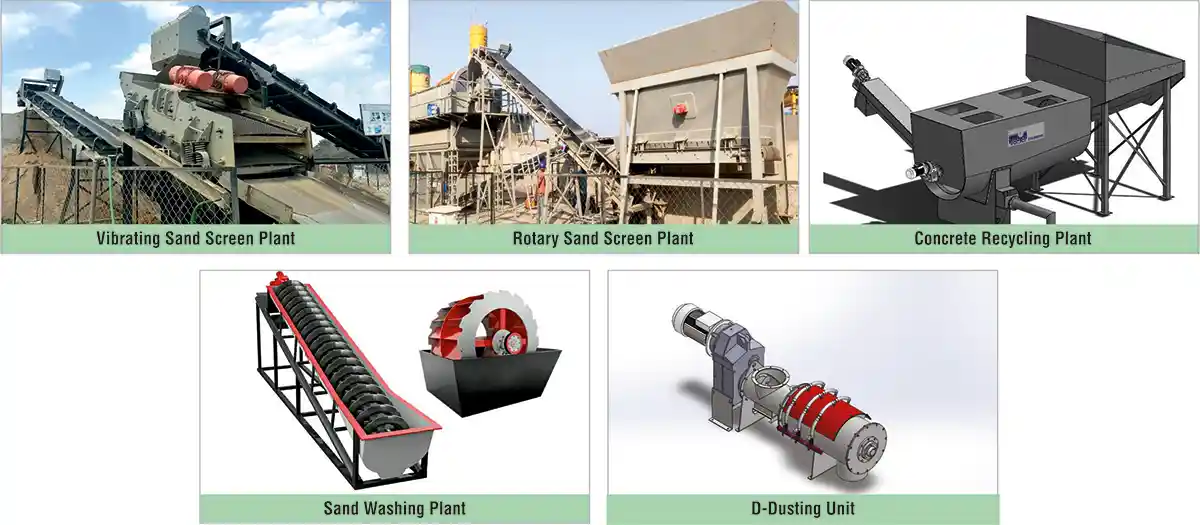
The company’s recycling plant with a 15 cum /hr recycling capacity, delivers almost 4 to 5% aggregate recovery and 35 to 45% water recovery with reduced washout time. It has a 750x1400 mm hopper loading dimension, loading height of 1700 mm, discharge height of 2000 mm, and length of the screw conveyor is 5100 with hopper.
Vatsal’s new sand washing plant, currently available in two variants: spiral with a capacity of 30 - 100 tph and the bucket wheel sand washer with a capacity of 20 to 120 tph, is finding application in industries like building materials, sand and gravel.
He informed that their rotary and vibrating sand screen plants, available from 10-100 tph, give trouble-free performance across vibrating screens, conveyor belts, hoppers, and stockpiles, and deliver improved quality of sand, higher productivity, reduced operating costs, and require less maintenance.
Vatsal Engineers’ other products include sand screen plants and the D-dusting units. “The latter is being promoted to contractors for right air flow management at project sites to prevent dust and airborne materials generated during construction from being released into the atmosphere. This contributes towards maintaining a clean and safe working environment, protecting workers and employees from respiratory issues while complying with environmental regulations,” said Babaria.