
How are you addressing the application-specific lubricant and fluid-management needs of OEMs and equipment owners to improve machine uptime and reduce operating costs?
For construction equipment owners and operators, one of their key priorities is increasing uptime, which has a direct bearing on their profitability. Hence, our products under the Velvex brand are formulated to meet the required specifications and international standards that help ensure engine durability and maintain machine uptime. We are also developing more fuel-efficient lubricants that help customers reduce their operating costs.We undertake significant research to develop newer products. For both OEMs and construction equipment customers, we offer an entire solution around fluid management. This includes checking that the fluids being used in the equipment meet the required specifications.
CEV Stage V engines brought more stringent emission requirements and corresponding changes in lubricant specifications. Based on field experience and customer feedback, have you made any changes or enhancements to further improve your lubricants’ performance?
Whenever emission norms change, the specifications for lubricants also evolve. Accordingly, we formulated and manufactured products that meet the requisite specifications. Every litre that we manufacture and dispatch from our factories meets the specifications 100%, supported by our strong quality systems. So far, we have not received any market feedback that has required us to go back and change the formulation. We have ensured that we remain abreast of the latest specifications required to meet the CEV Stage V emission norms.How are you advancing sustainability through fuel-efficient and recycled lubricants, and what is limiting their wider adoption?
The first aspect of sustainability that we are focusing on is improving the fuel economy of vehicles through our specially formulated products. When fuel economy improves, diesel consumption automatically comes down, which, in turn, reduces the carbon footprint.Product circularity is also being mandated by the government for finished lubricants, and we are aligned with these requirements. We are working on finished lubricants based on re-refined base oil (RRBO), which are yet to go mainstream, largely because of the limited availability of good-quality RRBO today. The infrastructure for producing RRBO is gradually increasing and as the availability of good-quality re-refined base oil increases, we believe that RRBO will be increasingly adopted across the industry.
In high-utilisation environments such as mining sites where large fleets and other heavy equipment operate simultaneously, what solutions or services are you offering to customers for on-site oil condition monitoring and analysis?
We have our own used-oil testing mechanism through which we collect used-oil samples and send them to our affiliated laboratory, where we conduct a complete physicochemical analysis. Based on the analysis, we advise the customer whether the oil is fit for further use or whether it needs to be replaced with fresh oil. We take a solution-based approach to support our mining customers as part of our overall services.How are you managing the impact of the ongoing Middle East disruptions on base-oil supply, logistics and prices, while ensuring supply continuity for customers?
There are two aspects to the current disruption: availability and pricing: Since we have a global base-oil supply chain, we have been able to ensure availability for our customers.However, ensuring availability has also come at a cost. As supply chains have been disrupted and crude-oil prices have increased, base-oil prices have risen significantly by 120–130%. We have absorbed a part of this increase and passed on a portion of it to our customers.
Although companies may use similar base oils, formulation plays a crucial role, making R&D and an understanding of operating conditions extremely important. How can formulations be developed to maintain the required viscosity and performance across diverse conditions?
The view that all companies use the same base oil is not entirely accurate. There are different types and specifications of base oils, and the refinery source also makes a significant difference. These factors have a major impact on the formulation and performance of the finished product.The use of the right-quality base oil, along with robust additive packages and components, is essential for developing high-performance lubricants. Products are formulated to be suitable for a wide range of weather conditions—from Ladakh to Kanyakumari and from Kashmir to Odisha, and deliver consistent performance across diverse and extreme operating conditions.
When a product is manufactured, its exact end-use location is not necessarily known. Therefore, it is not practical to have completely different formulations for every weather condition.
Base oils are broadly classified into three major categories: Group I, Group II and Group III. High-specification products, particularly those designed for CEV Stage V applications, largely use a combination of Group II and Group III base oils. Some formulations use only Group III base oil which are highly refined and offer better performance when compared with Groups I and II.
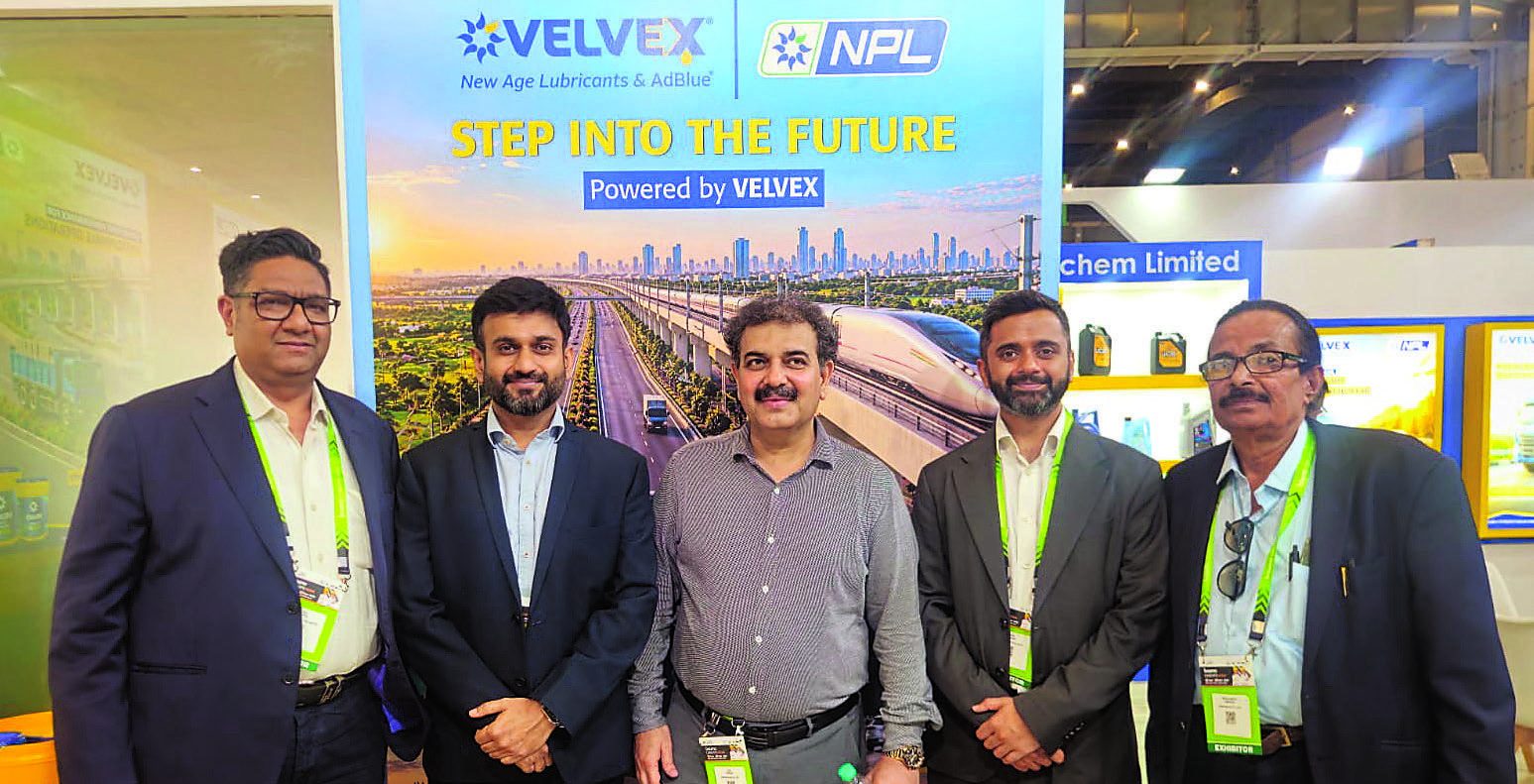
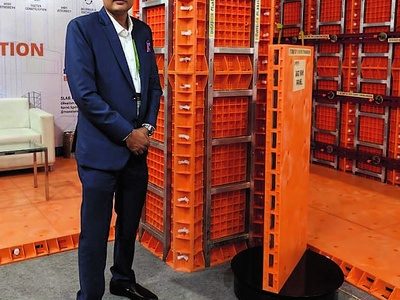
At Velvex Booth in Bauma Conexpo India 26. (From L-R): Vikas Gupta, CEO-Nandan Petrochem Nandan S Agrawaal, MD-Nandan Petrochem, S.A.Faridi, MD - NBM Media, Varun Agrawal, Executive Director-Nandan Petrochem & Neelkanth Menon, GM-Marketing-NBM Media.
For both OEMs and construction equipment customers, we offer an entire solution around fluid management. This includes checking that the fluids being used in the equipment meet the required specifications.
How do you collaborate with OEMs in developing lubricant formulations?
Some equipment manufacturers follow international lubricant specifications and mandate a particular specification for a particular engine. We formulate the product according to their specifications.Some OEMs may require a degree of customisation. In such a case, we collaborate with them to understand their specific requirement and formulate the product accordingly. This is followed by a validation on their engines though field testing, after which we may consider placing it in the market.
How are you strengthening your distribution network to expand your presence in deeper and rural markets, and increase awareness of your Velvex brand?
Market reach is a key priority and an ongoing responsibility for our sales and marketing teams. We have divided our markets into core and non-core areas. In our core markets, where we already have a strong presence, we are investing in expanding our reach. In markets where our distribution network is relatively weaker, we are strengthening our presence.Over the past year, we have appointed more than 50 new distributors and strengthened our sales team by bringing in senior industry professionals. A wider distribution network has helped us navigate volatile market conditions and given us access to new markets and customer segments.
From a marketing perspective, it is important to ensure that consumers know and recognise our Velvex brand. To give an instance, the company aligned with and sponsored the Lucknow Super Giants in the IPL, which helped increase consumer awareness and visibility of the Velvex brand.
The lubricant industry is a derived-demand industry, so it will continue to grow as the economy grows. The key, however, is to grow faster than the economy and increase market share in the segments in which the company operates.