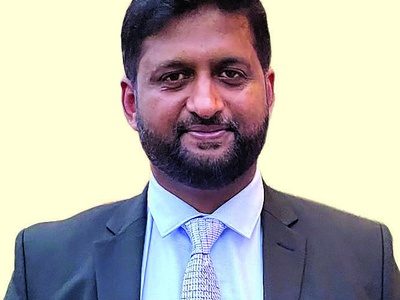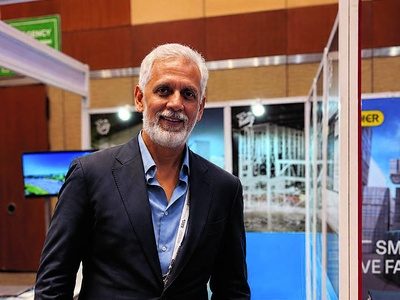
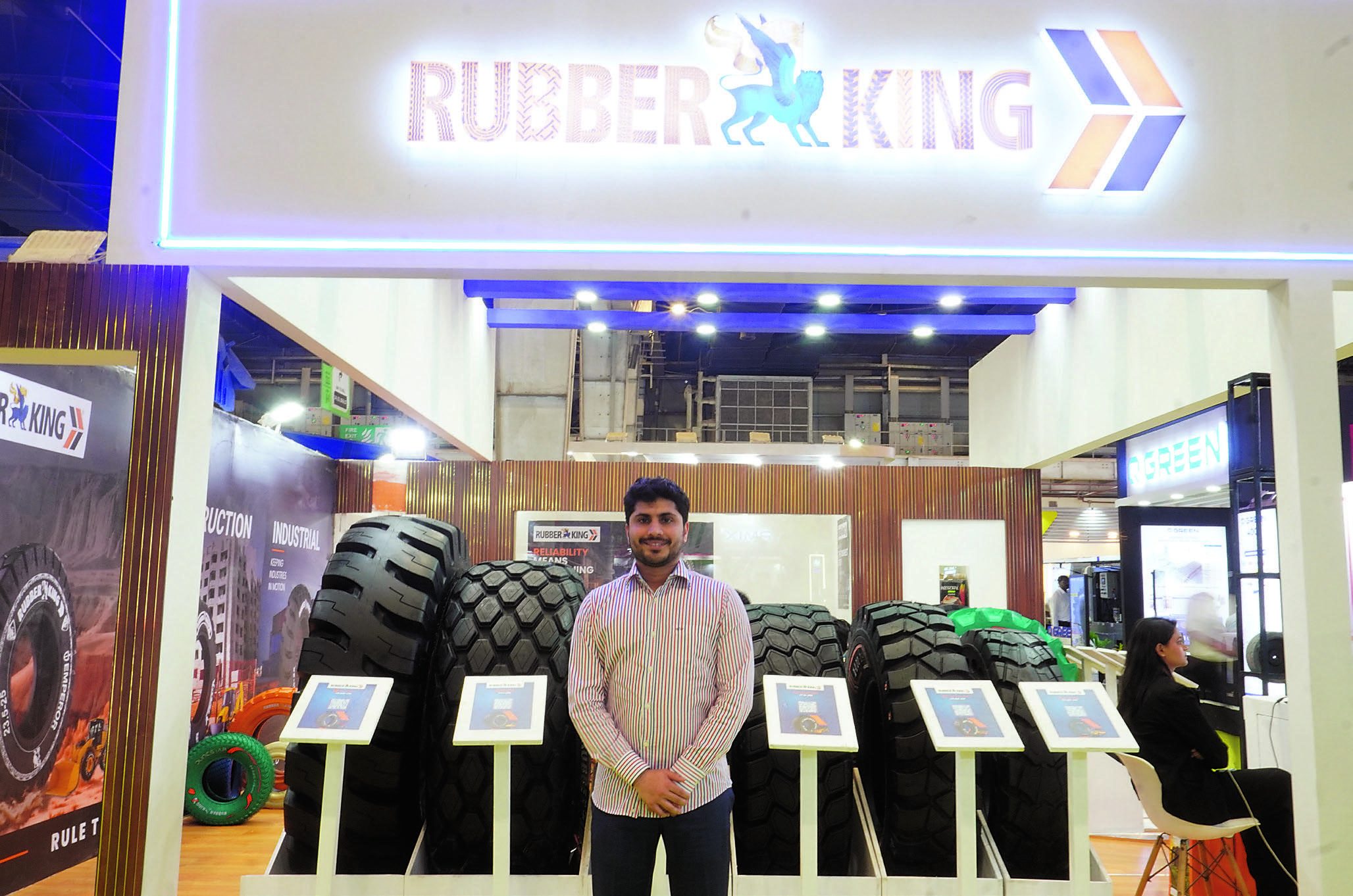
Devin Gawarvala Entrepreneurial Founder & Director Rubber King Tyre
What new variants is Rubber King adding to its product range and for which user segments?
We've been manufacturing solid tyres for over a decade and are one of the market leaders in this segment. A few years ago, we expanded into pneumatic tyres as well. Our largest solid tyre size is 12.00-24, and we're now expanding into other sizes for equipment like Backhoe Loaders and larger machinery. In pneumatics, our range-topping size is 18.00-33, and in the farm segment, we manufacture Radial tyres up to 42 Inches Bead Dia and Bias tyres up to 38 inches.Rubber King has a strong technology and R&D team that studies every application of various category of tyre in detail. Our technical and product teams go to quarries, cement factories, smelters, bottling plants, and steel factories to understand why a tyre might be underperforming and based on the feedback we develop tailor-made solutions.
Our products are designed and produced with precision and finesse. We aim for consistent warranty and performance standards across the board, while also developing specialized variants, with features that include anti-static, oil- and abrasion-resistance, non-marking, and cut, heat, and chip-resistant tyres, which are particularly suited for mining and construction. We also offer heavy-duty and ultra-premium tyres for range-topping vehicles operating in extremely demanding conditions.
Are you seeing a shift from solid to pneumatic tyres by the end-users?
Before we entered the market with India's first solid tyre for boom lifts where stability is utmost important, the segment was dominated by pneumatic tyres, largely from foam-filling players. We are now offering better-performing tyres in the L3, L4, and L5 categories (TRA codes based on tread depth, rubber mass, and NSD). These tyres now outperform competition on both dimension stability and consistent performance.We have also seen a broader shift from solid to pneumatic across our customer base, in segments like skid steers, tippers, and telehandlers. Customers who previously bought only solid tyres from us are now buying pneumatic tyres as well, and vice versa. We now offer around 300 SKUs in pneumatic tyres and several hundred in solid tyres.
What scope do you see for radial tyres in the Indian market?
Radialization has certainly been on our radar, but in the Indian market, pricing plays a major role in purchasing decisions. Radial tyres can cost around 30% to 40% more than bias tyres, depending on the tyre category. While the cost-per-hour may be better with radials, most of our regular customers currently find it difficult to justify the higher upfront cost. Only large mining operations, major construction firms, or port companies can afford radials, while a significant portion of the Indian market remains predominantly bias-oriented.That said, we do offer radial tyres in select segments, such as telehandlers, but when market demand crosses 30 to 40%, we will scale up production.
What is the biggest challenge in ensuring customers get the right tyre for their application, and what support does Rubber King offer them?
The right solution depends on the usage, gradient, and other parameters specific to each industry, customer, or vehicle type. In underground mining heat buildup in tyres is higher. In surface mining, if the compound and tread pattern aren't engineered to withstand the harsh conditions, the tyre will fail. So, it is very important to provide the right tyre for any application.But the challenge extends beyond the product. For instance, we worked with an equipment manufacturer whose existing tyre supply was underperforming. We provided a better product and also introduced just-in-time (JIT) delivery, which is typically seen only in the commercial vehicle segment.
We have 10 warehouses across India, allowing us to provide quick delivery to our dealers and end-users. We ensure that our customers do not face downtime, because no matter how good a tyre brand is, if it isn't fitted on time, the damage is done.
When working with equipment manufacturers, we start by offering an all-round solution, since we often don't know in advance which industry a forklift, telehandler, or other vehicle will be operating. Then, based on specific customer needs, we develop enhanced variants, oil-resistant, anti-static, cut-and-chip resistant, or a combination of properties tailored to their requirements.
Our process always starts with understanding the actual requirement as our R&D team doesn't believe in a one-size-fits-all tyre. Once we know exactly what's needed, we deliver a solution which could be better fuel economy or a longer-lasting product.
How do you help customers track tyre performance and cost efficiency, for instance, cost per hour or cost per kilometer?
Cost per hour (CPH) and cost per kilometer (CPK) tracking matter a great deal to customers, especially those operating under annual rate contracts (ARC). While TPMS (tyre pressure monitoring systems) is typically expected for this, Rubber King currently relies heavily on our ground service staff. Our team tracks vehicle usage through hour meters, allowing us to estimate tyre life accurately, alongside regular periodic monitoring and checks.Our field staff also educates operators directly on best practices for using their tyres and vehicles to maximize tyre life. Even with TPMS in place, human oversight remains essential as we still need to monitor, track, and guide customers on how to minimize downtime.
How is the growing variety of equipment in India, boom lifts, scissor lifts, higher-horsepower tractors, shaping demand for new tyre sizes?
A lot of vehicles that weren't common in India a few years ago are now part of the mainstream fleet, and equipment manufacturers are pushing both end users and tyre companies to expand their offerings accordingly.We're seeing a shift toward higher-horsepower tractors, along with growing adoption of boom lifts, scissor lifts, new-generation telehandlers, and heavy articulated dump trucks. These vehicles are reshaping how mining and earth-moving operations work in India, and we're glad to accommodate these new sizes as customer needs evolve.
What is Rubber King's roadmap for the next five years?
Over the next five years, we will be expanding into new segments, including truck and bus, passenger vehicles, and two- and three-wheelers. It's a natural progression, as the Indian market gradually moves towards radialisation, Rubber King intends to build capabilities in steel-belted, all-steel and large OTR radial tyres in line with evolving customer requirements, and while we may have entered pneumatics earlier than most, I expect the coming years to bring radialization in steel-belted, all-steel, and large OTR tyres, as well as expansion into solid tyres for wheel loaders and other categories.Mining, earthmoving, and especially the truck and bus segment remain the largest and most enduring markets in India, and the truck and bus segment is particularly close to my heart. My grandfather has serviced these tyres decades ago, when he worked as a service engineer for the west division of India's first tyre company. So that segment holds personal significance for me, and we intend to make an impact there too.
Our focus is to build Rubber King into a trusted tyre solutions partner by combining product innovation, application engineering, customer support and consistent performance. This drive and an excellent team has brought us this far and we will continue to produce tyres that give market-leading performance.
We will continue investing in technology, products and people to develop tyre solutions that help customers improve productivity and reduce operating costs.