
Timken, which is known as a bearing supplier, has now expanded its portfolio to include customised bearing solutions, lubrication systems, and other complementary products. What is the company’s strategy to become an integrated solution supplier for OEMs and equipment users?
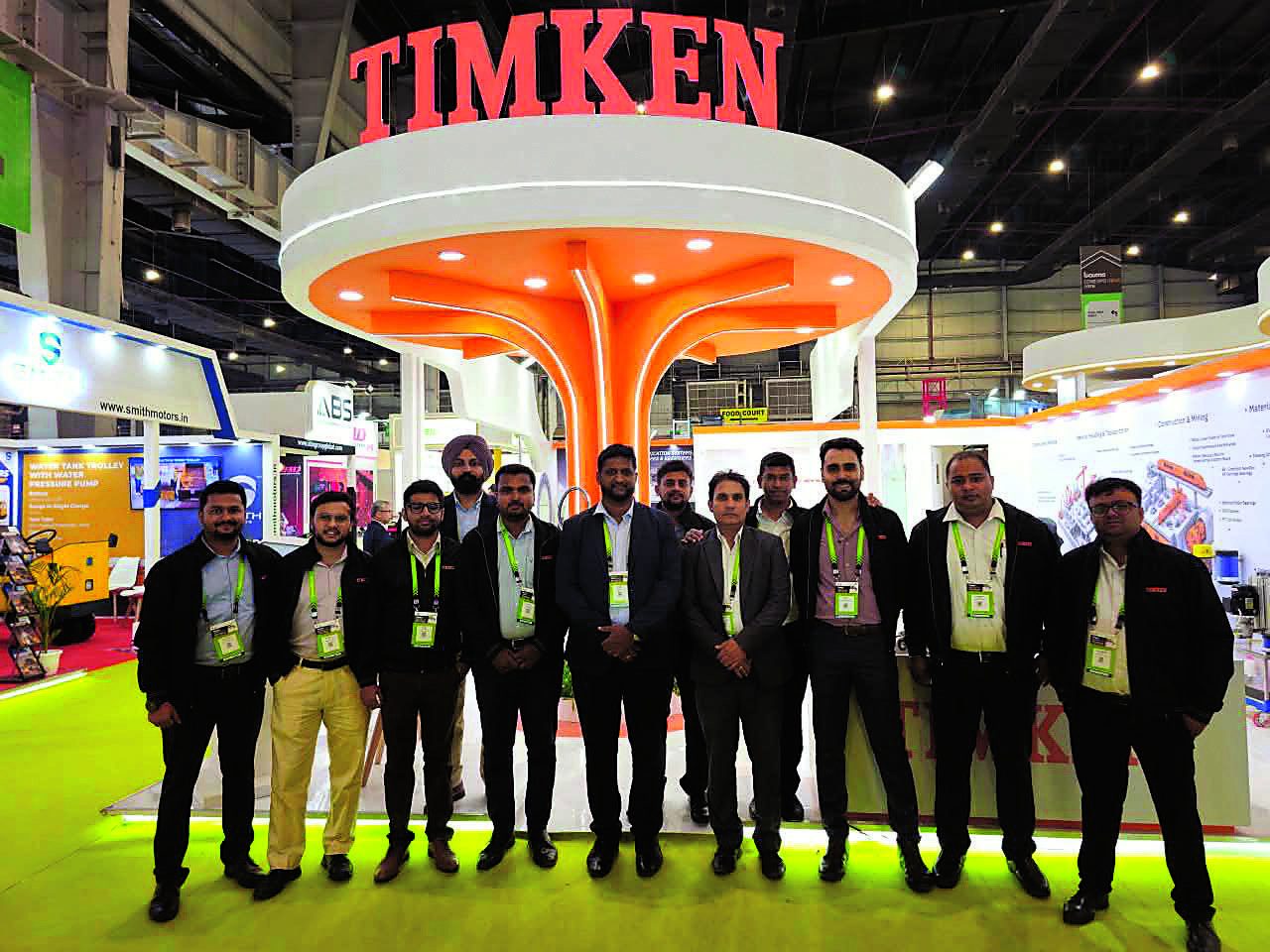
Timken is traditionally known as a bearing supplier, but our portfolio today goes beyond bearings. The Timken brand is our flagship, but we have also displayed different brands and technologies related to construction, aggregate, mining and infrastructure industries.Along with bearings, we have an entire portfolio of complementary products such as lubrication system, which we have been offering for the last eight to ten years through Groeneveld and BEKA and now With the recent acquisition of Bijur Delimon, we now also have a plant in India that manufactures automated lubrication systems for the industry. We also have friction bearings products such as bushes and different types of composite materials.
Our objective now is to bring different technologies and products required by these sectors so that we can cater to different customer requirements and thereby reduce customers’ buying and validation efforts. Once a customer validates a Timken product, we can offer multiple complementary products along with it.
How does this broader portfolio translate into an integrated solution for customers?
It opens more doors for us and gives customers greater flexibility. Some customers may be buying our bearings but sourcing lubrication from someone else. There are also customers who do not buy our bearings but purchase lubrication products from us. So, it works both ways.Our aim is to offer integrated solutions comprising bearing, lubrication and other complementary products such as seals, clutches and other bolt-on products.
There are two important benefits here: first is the technical responsibility. If we supply the bearing and the lubrication system together, we can take responsibility for the overall system. If a bearing fails because of a lubrication problem, it can otherwise become difficult to determine whether the issue is with the bearing or the lubrication being supplied by another company.
The second benefit is reduced buying and validation effort. Instead of separately identifying, validating and purchasing different products, customers can obtain complementary solutions from us.
We are now trying to scale and consolidate this business model. Earlier, these businesses were being conducted by individual teams in India, or directly with customers from the US or Europe. Under the new leadership, we are consolidating these efforts in India.
Please name some of the brands and complementary technologies within this portfolio.
Groeneveld-BEKA is primarily a lubrication company with a manufacturing plant in Europe and China. Rollon is a liner motion bearing company that also offers spherical plain bearings, which are complementary to Timken’s portfolio.We also have PT Tech’s hydraulic take-off units which act as couplings for power transmission applications using hydraulic systems. Torsion Control provides caliper disc brakes and braking systems, while GGB offers bushes and plain bearings.
So, these are complementary products / technologies. So, an excavator manufacturer, for instance, may require all of these products in addition to bearings. At present, most of these products are imported, although we are exploring opportunities for greater localisation.
What makes your bearing technologies particularly suited to demanding applications such as construction and mining?
For challenging and critical applications, we apply our specialised bearing technologies. One of the unique value propositions of our bearings is our case-carburised heat-treatment process that enables the bearings to withstand shock loads and stress better than bearings using other heat-treatment processes.This is particularly important in construction and mining because the operating environment can be extremely dusty, and debris can enter the bearings. Plus our sealing solutions under the GGB brand are designed to prevent debris and environmental hazards from entering the bearings.
For even more severe operating conditions, we offer specialised bearings such as AquaSpexx and Dura Spexx, and other temperature-resistant solutions which are tailor-made for different operating environments. When these technologies are combined with a superior lubrication system, they further improve bearing life.
How can your lubrication and condition-monitoring technologies help improve machine uptime and prevent unexpected failures?
We provide value-added services for end-users, including online condition monitoring, along with vibration sensors, temperature sensors, and other sensors that can be incorporated into the equipment or bearing package.These sensors provide real-time feedback on vibration, temperature and other changes taking place in the equipment. If an abnormality is detected, the system can provide feedback to the customer so that corrective action can be taken.
These are value-added services that we offer when required. They are becoming increasingly relevant as Industry 4.0 and the Internet of Things gain momentum. Customers are becoming more digitally connected and are looking at ways to predict when maintenance may be required. When such solutions are required, we are well equipped to provide them.
We are bringing together bearings, lubrication systems and other complementary technologies to help customers reduce buying and validation efforts, improve reliability and address their application requirements more comprehensively.We also customise our bearings and lubrication solutions as per customers’ requirements and operating conditions. We help them select the right bearings, supporting technologies, and lubrication systems.
With increasing adoption of electric equipment are you seeing changes in bearing requirements?
That has not happened significantly yet but in many cases, customers are changing the drive system. They are taking out the internal-combustion engine and replacing it with an electric motor to drive the equipment. From the bearing point of view, they have not asked us to make significant changes so far. But this could become important in the future.Our bearings are designed to enhance energy efficiency, which we do by improving the surface finish of the bearing so that the effort required to drive it is reduced. This reduces friction and enhances efficiency, plus, optimising lubrication can further reduce friction.
We have been advising the industry to use more fuel-efficient bearings, better lubricants, and more advanced lubrication systems. But because of cost considerations and limited awareness, customers often opt for a cost-based solution rather than taking a solution-based approach.
However, with electric equipment, this is changing. When equipment is electrically driven, energy consumption and battery utilisation become much more important. Earlier, customers could put more diesel into a machine and continue operating it. With electric equipment, energy conservation becomes a key consideration. Our advice to customers is to reduce energy losses through friction and improve power efficiency.