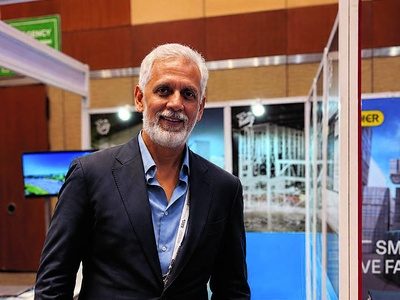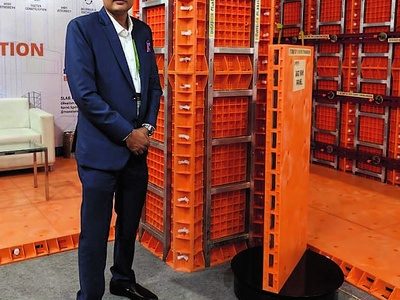
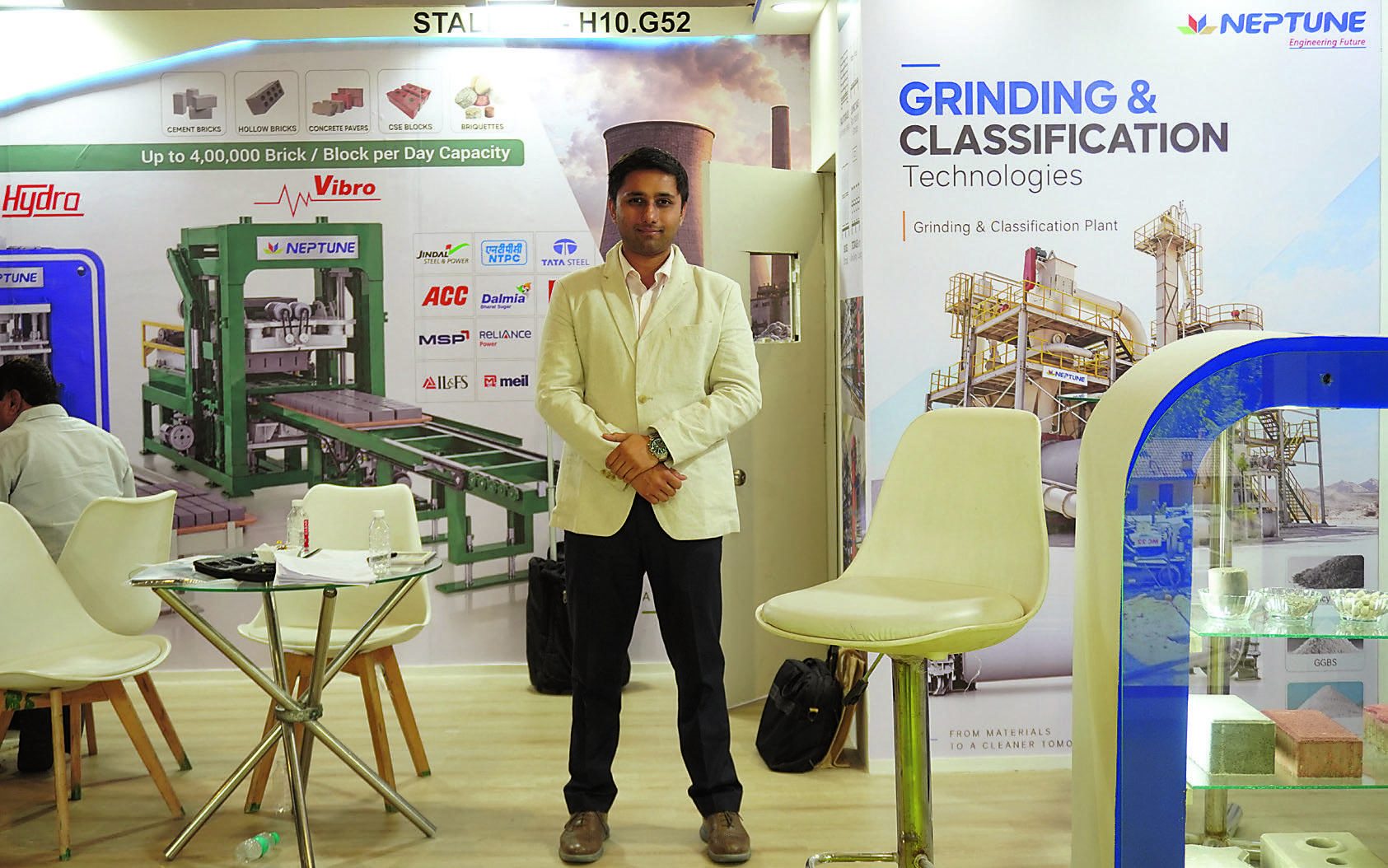
Soham Panchal Director - Operations Neptune Industries
What products and technologies is Neptune Industries currently offering and what are your core areas of expertise?
We manufacture brick and block machines for concrete blocks, fly ash bricks, and fly ash lime silicate bricks. We also have a dry mix mortar line for tile adhesives, grouts, and plaster sand, and we recently introduced new technology for the grinding and classification of minerals, including silica, fly ash, and GGBS.At Neptune, we've spent the last 30 years striving to make our machines more efficient and productive. We're one of the key partners to major companies in India in utilizing their downstream waste, such as fly ash or GGBS, to produce bricks and blocks, and our newer technologies, kinematics, and special drives are making production even more efficient.
How is the industry evolving in terms of plant size and automation, and how is Neptune adapting to the shift?
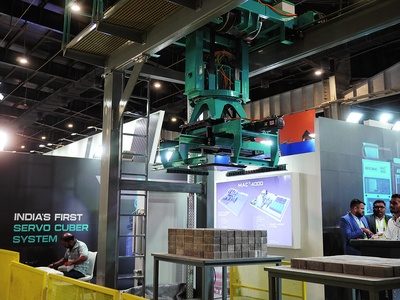
As we move into newer, larger-scale projects, we're introducing fully automatic plants capable of producing [X] bricks a day with only 14 people on site. Many processes like packing, stacking, curing, and cubing can now be automated in the newer models.As India's infrastructure economy booms and matures, there's growing demand for much larger-scale projects, where fully automatic plants matter more than ever. Earlier, plants were semi-automatic and labour-intensive, but as we move toward larger projects, I believe fully automatic plants will be the only viable option going forward.
How can customers scale up to full automation?
The approach is typically modular. As a customer's needs grow, they can add new equipment like integrating cubers and curing systems to eventually make the complete plant fully automatic.We're also moving toward higher-density presses so that more material can be compacted. We now offer 800-ton and 1,600-ton brick presses, with cement consumption dropping further with each iteration.
Many of our wear-and-tear parts can be replaced by operators themselves, without needing the help of specialized technicians. Our dedicated support and service team ensures that any service or spare part reaches the customer within 72 hours.
How much of your manufacturing is localized in India, and how is Neptune positioned in international markets?
We've localized a significant part of our manufacturing in India, with our German partners helping us design India-specific solutions. We're also researching further localization of components such as molds, liners, and other wear-and-tear parts, so they can be sourced and delivered from within India.Neptune has always had a robust international customer base, and with the "China Plus One" strategy gaining traction, we are seeing strong growth in shipments of products and projects to North America, the Middle East, and South America. Our customer base in these regions is growing.