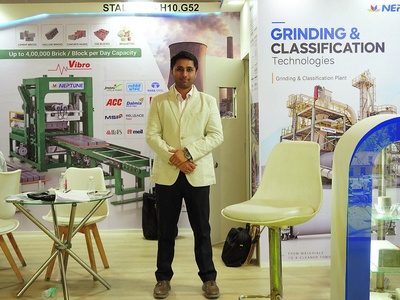
Jigar Patel Director Revomac Industries
Please tell us about your latest product, the Servo Cuber System, and its impact on production.
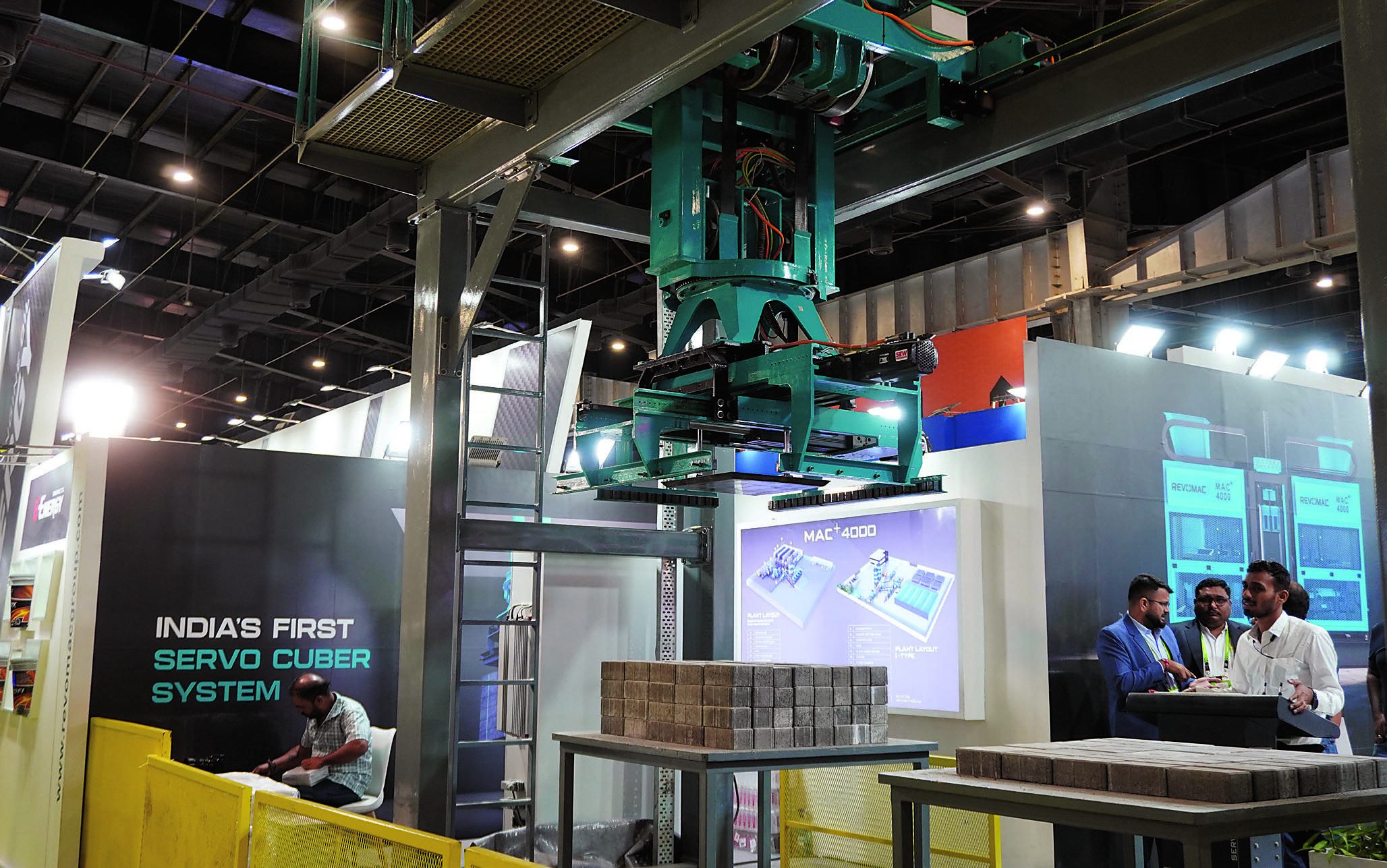
The Servo Cuber System is an automatic block handling system, which we have developed in response to the shortage of labor and manpower. It automatically lifts the blocks from the production boards and converts them into a cube format. The cubes are then automatically lifted from the machine and moved to the stockyard. Essentially, this system is designed for cubing while significantly reducing the manpower and labor required.The Indian market now wants fully automatic machines that don't require extensive manual labor, and this system is one of the best solutions for reducing manpower and human effort in the manufacturing process.
Besides reducing operating costs, the Cuber system doubles the production capacity as it can work in double shifts. As a result, the customer’s ROI and payback time can be cut roughly in half.
For large plants and high-ticket-size machinery, this is a key advantage: profit margins improve, and customers can recover their investment in about half the time compared to manual operations.
How has customer mindset around automation shifted in the Indian market?
Today, the Indian market is largely driven by demand for automation. Earlier, customers focused primarily on project cost, but now they're equally aware of operational costs. Once they see the value, they're willing to make a larger upfront investment, as long as it allows them to run their business more efficiently. In fact, automation has become central to business decision-making. Investment cost is now a secondary consideration compared to long-term operational ease.Is this shift reflected in how you present your machinery to customers?
Yes. Rather than showcasing individual machines, we showcase the entire layout, from raw materials to the end-product, to demonstrate how much of the process is automated versus manual. When customers see this complete, automated setup, they become interested, and even when we tell them the investment cost is significant, they're generally willing to commit. That's the shift I've observed: customers are increasingly drawn to a more "autopilot," business-first approach.Liners and other wear parts strongly affect uptime and product quality. How are you improving their lifespan, and what service response and spare parts delivery times do you offer customers?
After a plant is set up, after-sales service, including spare parts, becomes critical. We provide two types of support. First, phone-based troubleshooting, where many issues can be resolved directly over a call, or remotely by connecting to the customer's system online. Second, for hardware issues that require physical parts, timely delivery becomes essential, since a plant worth Rs. 10 to 12 crores cannot run on a single missing part, and delays can create serious operational problems.Since, it is not practical to maintain a spare parts warehouse in every state, we guide customers on which spare parts they're likely to need over the course of a year so that they can maintain their own inventory accordingly.
How does Revomac differentiate itself from other manufacturers in the industry?
In our industry, many manufacturers import components from countries like China or Turkey, assemble the complete unit, and then dispatch or deliver the plant. These are typically large installations built from multiple smaller assembled units.Revomac is different because we manufacture everything in-house, from raw materials through to the finished product. We don't operate as an assembly unit; we build everything within our own manufacturing facility. This gives us a significant advantage. Since we design, develop, and manufacture under one roof with our own R&D team, we can control costs more effectively and offer stronger technical support to our clients, without dependency on third-party suppliers.
Sometimes, customers who base their decision purely on project cost opt for Chinese equipment or semi-manufactured, imported plants. But for durability, consistency, and long-term sustainability, working with a company that manufactures everything in-house is a better choice.
What are Revomac's expansion plans going forward?
We've already added two new units this year, but based on the demand we're seeing, both within India and internationally, we're currently planning to expand our manufacturing capacity, which will span 8 to 10 bighas.For exports, we're appointing dealers in different countries. Having a local dealer in each market is important since they understand regional demand, market conditions, and local standards, and they coordinate with us based on those requirements. So, our export strategy is built entirely around a dealership network.