At CSIR-CRRI, we are working toward developing a science-to-policy pipeline, where every research finding directly informs sustainable road codes and practices. India has the potential to emerge as a global model for circular road construction, where innovation, affordability, and environmental responsibility converge.
Dr. Ambika Behl, Senior Principal Scientist, CSIR-CRRI

What motivated you to explore the potential of waste materials (such as plastic/steel slag/red mud, C&D, MSW etc) in road construction?
My motivation to explore the use of waste materials in road construction stemmed from two key realizations: first, India’s infrastructure growth is happening at an unprecedented scale, and with it comes a tremendous demand for natural aggregates and binders — materials whose extraction is depleting our environment. At the same time, we are facing a parallel crisis of waste generation. Plastic, steel slag, red mud, construction and demolition debris, municipal solid waste are all posing serious disposal challenges.I started thinking “why can’t one problem become the solution to the other?” As an engineer and researcher, I’ve always believed sustainability has to be practical. Materials like plastic waste, steel slag, or C&D debris — if properly processed — can perform just as well, sometimes even better than conventional aggregates. It’s about designing intelligently and using what we already have. And on a personal note, I feel responsible as part of this generation of engineers to make sure that our roads don’t just connect places, but also connect innovation with environmental responsibility.
What research methodology, laboratory techniques, and field performance monitoring tools does CRRI use to evaluate the suitability and long-term sustainability of waste-based materials in road construction? What environmental or resource-saving benefits have you observed or projected through their use?
At CSIR-CRRI, we approach every innovation with a science-backed, multi-stage research methodology to ensure that waste-based materials are not only technically sound but also environmentally beneficial and scalable. We begin with comprehensive material characterization in the laboratory — studying the physical, chemical, and rheological properties of waste materials such as plastic, steel slag, C&D debris, or bio-bitumen. Techniques like Scanning Electron Microscopy (SEM), Fourier Transform Infrared Spectroscopy (FTIR), X-Ray Diffraction (XRD), and Thermal Analysis (TGA/DSC) help us understand material behavior and compatibility with conventional aggregates or binders.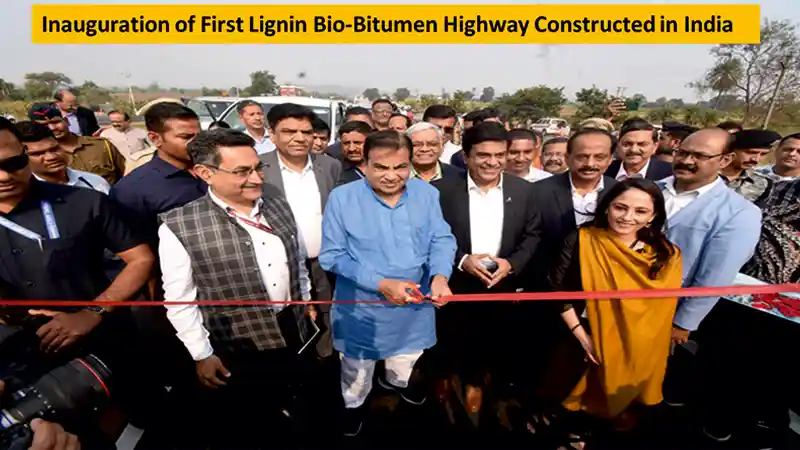
Next, we design bituminous and non-bituminous mix formulations using these materials and test them for Marshall Stability, rutting resistance, moisture susceptibility, and fatigue life, using equipment like the Wheel Tracking Device and Four-Point Bending Fatigue Tester. Only materials that meet or exceed performance benchmarks move to the field stage.
For field validation, we construct instrumented test sections across diverse climatic zones and monitor them under real traffic loads. We employ Falling Weight Deflectometers (FWD), Ground Penetrating Radar (GPR), laser profilometers, and IoT-based sensors to continuously assess structural response, surface condition, and distress development over time. On the environmental front, the use of these waste-based materials has demonstrated substantial reductions in carbon emissions, virgin aggregate consumption, and landfill burden. For example, plastic-modified bitumen and steel slag mixes have shown 15–30% improved durability and extended service life, directly translating to lower maintenance frequency and resource savings.
So, our approach is holistic, integrating laboratory science, field engineering, and environmental assessment to ensure that every alternative material we recommend is truly sustainable in both performance and impact.
We approach every innovation with a science-backed, multi-stage research methodology to ensure that waste-based materials are not only technically sound but also environmentally beneficial and scalable and that every innovation we recommend stands the test of both performance and sustainability.
How does the selected waste material compare to conventional materials in terms of durability, cost-efficiency, and ease of construction?
The first thing people usually ask is: “Can waste materials really perform as well as conventional ones?” And the answer is yes, provided they’re scientifically processed and engineered for the intended use. In terms of durability, many of these materials actually perform remarkably well. For example, plastic-modified bitumen enhances resistance to rutting and cracking; addition of waste plastic improves the moisture resistance, as well of the pavement; steel slag improves strength and skid resistance; and processed C&D waste, when graded properly, is effective as a granular sub-base. We’ve seen field sections performing successfully for several years now.From a cost-efficiency perspective, the savings come not just from reduced raw material costs, but also from lower transportation and disposal expenses. Using locally available waste materials can cut project costs by 10–20% in some cases.
And when it comes to ease of construction, the idea is to ensure compatibility with existing equipment and practices. That’s why our research focuses on developing blends that can be adopted without any major change in machinery or methods. So, it’s about achieving sustainability without compromising on practicality or performance.
What measures does CRRI take to ensure that roads built with these alternative materials meet critical performance standards such as rutting resistance and fatigue durability under India’s diverse traffic loads and climatic conditions?
This is a very important aspect of our work at CRRI. Whenever we use alternative or waste-derived materials, we never compromise on performance validation. Our approach follows a complete laboratory-to-field framework. First, in the laboratory, every material undergoes detailed characterization and mix design. We evaluate its physical, chemical, and rheological properties to ensure it meets or exceeds the specifications for bituminous or granular layers. Advanced tests like the Hamburg Wheel Tracking Test and Four-Point Bending Beam Fatigue Test are conducted to assess rutting resistance and fatigue life.Next, we move to pilot field trials under actual traffic and climatic conditions across different regions of India, from the hot, dry plains to high-rainfall or cold areas. We instrument these test sections with sensors to monitor performance in real time.
Finally, CRRI works closely with agencies like NHAI, MoRTH, and state PWDs to develop performance-based specifications. This ensures that once a material is proven in research, it can be safely scaled up in national road projects. After the completion of detailed laboratory evaluation of simulative tests, we lay the trial sections with authorities like NHAI, BRO, NHIDCL, MoRTH and confirm the field performance before bringing such materials and technologies to the mainstream.
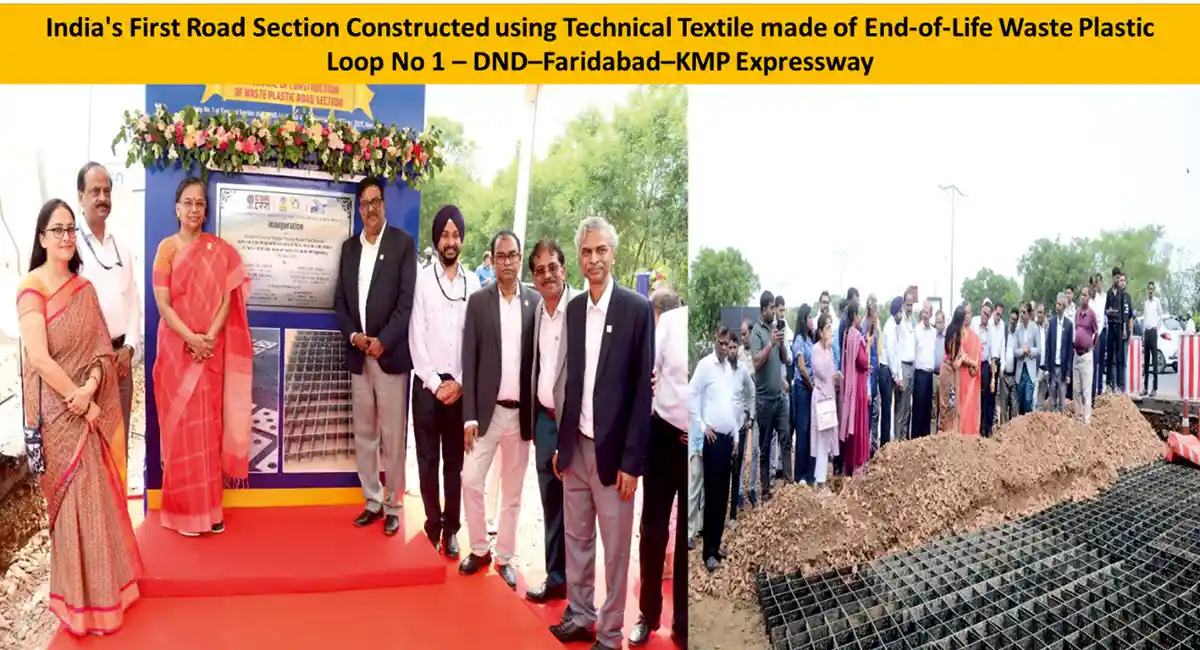
Several of our technologies have moved well beyond the laboratory stage. CRRI has successfully implemented plastic waste modified bituminous roads in states like Delhi, Himachal Pradesh, and Tamil Nadu, and even on sections of National Highways under NHAI. These stretches have performed very well — especially in terms of rutting and cracking resistance, even under high traffic loads. The field feedback has been quite encouraging as engineers have observed better strength, reduced deformation, and smoother riding quality. Once the technology is developed and tested, we transfer the technology to the construction industry for wider implementation.
What’s most satisfying is that these technologies are now being mainstreamed — MoRTH has issued guidelines and IRC codes that incorporate our research outcomes. So, it’s no longer just an experiment; it’s becoming part of the new normal for sustainable road construction in India.
Roads constructed with plastic-modified bitumen showed up to 30–40% improvement in rutting resistance and better surface durability, particularly in high-temperature regions.
What were the major technical and logistical challenges faced during lab testing or field trial phases of the project? Please share some key learnings/results from demonstration projects, such as plastic/ steel slag road trials, or the Ghazipur landfill embankment?
Challenges were definitely part of the journey — both in the lab and on the ground. In the lab phase, one of the biggest technical challenges was the inherent variability of waste materials. Plastic waste, for instance, comes in different polymer types, levels of contamination, and melting behaviors. Getting uniform quality for repeatable results took a lot of effort. We had to develop pre-processing and segregation protocols before blending it with bitumen.With bio-bitumen, the challenge was to achieve the right balance between workability and performance. Many bio-binders soften or age differently than conventional bitumen, so we optimized formulations to ensure they still met rutting and fatigue criteria under Indian climatic conditions.
On the field side, logistics were another hurdle. Coordinating with municipal bodies for steady waste supply, transporting and shredding materials at scale, and convincing contractors to modify mixing practices took patience and training. But once they saw that the process could fit into their existing equipment, acceptance grew quickly.
As for key learnings, the demonstration projects were eye-opening. Roads constructed with plastic-modified bitumen showed up to 30–40% improvement in rutting resistance and better surface durability, particularly in high-temperature regions.
Similarly, bio-bitumen blends reduced the carbon footprint of pavement construction while maintaining comparable performance to VG-30 grade bitumen. Making bio-bitumen from agricultural waste is a very promising idea since it tackles two big challenges at once: reducing dependence on fossil-based bitumen and finding value for surplus biomass. But the journey from concept to commercial-scale production has its hurdles.
The first major challenge is feedstock variability. Agricultural residues differ widely — rice husk, sugarcane bagasse, mustard stalks, or groundnut shells all have different lignin and cellulose contents. This affects the yield and properties of the resulting bio-oil, so maintaining consistency in quality is tough.
The second issue is process optimization. Converting biomass into a stable, bitumen-like binder requires controlled pyrolysis or liquefaction. The process needs to produce oil with suitable viscosity, adhesive properties, and aging behaviour, all without making it too expensive or energy-intensive. Getting that balance right takes a lot of R&D.
Then there’s the scalability and supply chain challenges and we are still working on that with the industry. Collecting, transporting, and storing agricultural waste, especially seasonally available residues is logistically complex. Ensuring feedstock availability year-round for continuous production is a real challenge.
Finally, standardization and certification are still evolving. We need performance-based specifications and field validation data to build confidence among road agencies and contractors for use of bio-bitumen instead of petroleum-based conventional bitumen.
Despite these challenges, the potential is enormous. If we can streamline the process and develop region-specific bio-bitumen formulations, India with its vast biomass base, could truly pioneer a carbon-neutral binder technology for sustainable roads.
We have done two NH field trails with bio-bitumen and these trials reinforced one important lesson, sustainability isn’t about compromise; it’s about designing smarter. If the engineering is sound, the material’s origin, whether waste or bio-based, doesn’t limit its potential.
How is CSIR-CRRI addressing concerns related to leachate, microplastics, or toxicity associated with these waste-based materials?

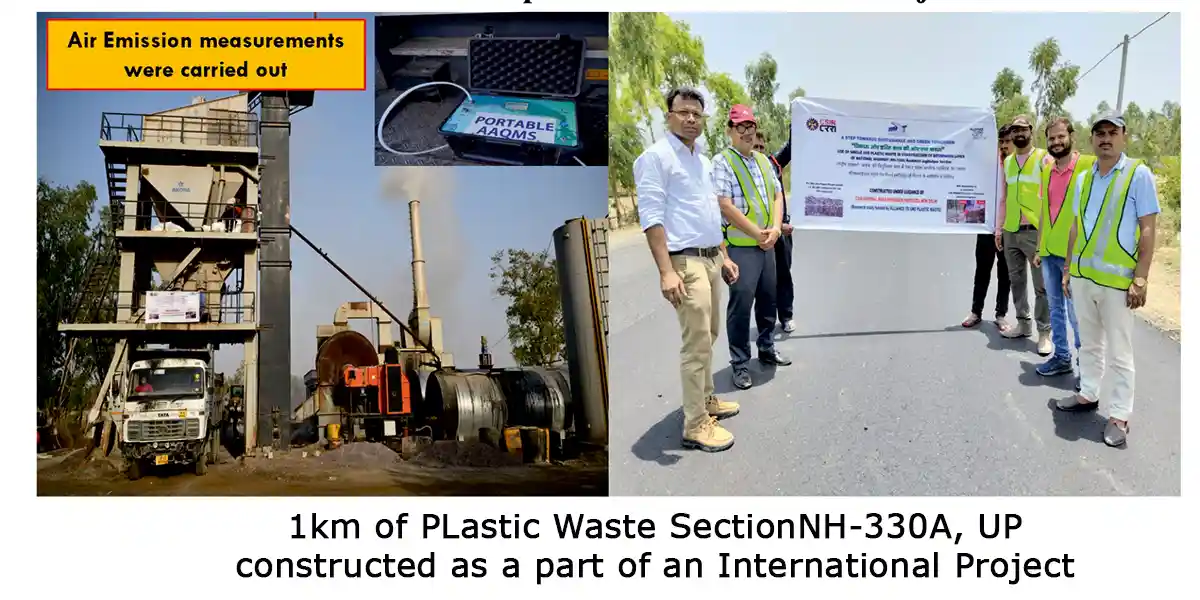
For materials like steel slag or red mud, we stabilize or neutralize them chemically before incorporation into pavement layers. For plastic-based materials, we focus on controlled processing — ensuring the plastic is completely melted and uniformly coated with bitumen, leaving no loose fragments that could form microplastics. Post-construction, we shall monitor the pavement surface and runoff water to confirm there’s no microplastic release during weathering.
Additionally, CRRI collaborates with our environmental laboratories like NEERI to carry out life-cycle and ecotoxicological assessments. This scientific validation gives confidence that the materials, once engineered properly, remain environmentally safe throughout their service life. So, our philosophy is clear: innovation should never come at the cost of environmental or human health. Every solution we promote must be both technically sound and ecologically responsible.
What long-term monitoring frameworks or performance evaluation systems has CRRI implemented to validate the structural integrity, durability, and environmental safety of roads built with waste materials under real-world conditions?
At CSIR-CRRI, we carry out monitoring and evaluation on all the trial sections we construct to ensure that roads constructed using waste-derived materials are structurally sound, durable, and environmentally safe over time. We follow a multi-tiered performance monitoring system. On various sections different protocols are being followed, in some sections during construction, we install instrumented test sections with embedded sensors to continuously record parameters like strain, stress, moisture, and temperature. This helps us understand how different layers behave under real traffic and climatic loads.Then at periodic intervals, we conduct field performance evaluations — measuring rut depth, surface distress, skid resistance, and roughness using advanced tools like the Falling Weight Deflectometer (FWD) and Laser Profilometers. For bituminous layers, we also extract core samples for laboratory re-testing to assess aging and binder stability.
In parallel, environmental monitoring is carried out, like checking for any leachate contamination or microplastic release in nearby soil and water. This ensures that the materials remain safe throughout their service life. So, in essence, we don’t just build experimental roads — we build living laboratories that continuously generate evidence. That’s how CRRI ensures every innovation we recommend stands the test of both performance and sustainability.
From a researcher's perspective, what policy or regulatory changes do you believe would accelerate the adoption of waste-derived materials in both highway and rural road construction?
Technology alone can’t bring transformation — it needs to be supported by the right policy ecosystem. From a researcher’s perspective, I’d say there are three key areas where policy and regulation can really accelerate the adoption of waste-derived materials.First, we need clear, performance-based specifications that formally recognize these alternative materials in national and state standards. Once materials like plastic waste, steel slag, red mud, or C&D waste are codified in IRC and MoRTH guidelines with defined testing protocols, engineers and contractors gain the confidence to use them routinely rather than experimentally.
Second, there’s a need for incentive-linked procurement policies — for example, giving weightage or credits to projects that demonstrate measurable reductions in virgin material use or carbon footprint. This can be a big driver, especially for contractors working under tight budgets.
Third, the creation of a robust supply chain and certification framework is essential. Local governments can facilitate collection and processing of waste materials, while accredited laboratories can certify their quality and environmental safety before use. This would streamline approvals and ensure consistency across projects.
Finally, I’d emphasize capacity building and awareness — engineers at the field level should be trained to design and construct using these materials confidently. In short, when research, regulation, and real-world execution move together, sustainability stops being a pilot idea and becomes a standard practice — even in rural and low-volume roads. That’s the shift we require in India.
What is your long-term vision for sustainable and circular road construction using waste materials and other industrial by-products?
My long-term vision is to see India transition from being a resource-intensive road builder to a resource-responsible infrastructure leader. Roads are among the most visible symbols of development and if we can make them sustainable, it sends a strong message that progress and environmental care can go hand-in-hand.Road Construction is one of the biggest environment polluters and I wish to see carbon credit system implemented in road construction in India. I envision a future where waste materials become mainstream construction resources — not exceptions used in pilot projects, but integral components of national and rural roads alike. Materials like waste plastic, steel slag, red mud, and bio-bitumen have immense potential to not only reduce our dependence on virgin aggregates and bitumen but also help us achieve circularity within the construction ecosystem. The goal is to create closed-loop systems where industrial and municipal waste flows seamlessly into infrastructure applications, supported by standardized testing, digital traceability, and performance monitoring frameworks.
Dr. Ambika Behl is a Senior Principal Scientist at CSIR Central Road Research Institute (CRRI), New Delhi. She holds a PhD from Indian Institute of Technology Roorkee (IIT Roorkee) in the area of Warm Mix Asphalt. Her experience spans over 20 years in the highway engineering / pavement materials domain. Her expertise and research focus is on Flexible pavement materials: polymer-modified asphalt, warm mix asphalt technology, use of waste materials (plastic waste, industrial by-products) in road construction, recycling of pavements, bio-bitumen and development of rejuvenators, and sustainable road construction practices. Her work includes developing indigenous technology for road materials and contributing to national standards (BIS / IRC) for highway materials. She has 4 patents to her credit. She is recipient of several awards including:
- Bitumen India Award (2017)
- CIDC Vishwakarma Achievement Award (2021)
- First woman to receive the IRC Pandit Jawaharlal Nehru Birth Centenary Award (2022) for contributions to Highway Engineering.
- Build India Infra Award 2025
Dr. Behl’s work bridges fundamental research and practical application — ensuring that road materials are technically robust, environmentally responsible, and aligned with India’s infrastructure scale and climate diversity. She champions the idea that “waste” can become a resource and helps translate that into real roads, standards, and industrial uptake.