
Harnessing Industrial By-Products for Sustainable Roads
Dr. A.K. Sinha, Chief Scientist at CSIR-CRRI’s Geotechnical Engineering Division, discusses the potential, suitability, and usability of industrial by-products in road construction. Based on extensive research and field trials, he highlights how waste materials such as red mud, C&D waste, MSW, steel slag, biomass etc can be effectively transformed into sustainable road-building resources, tackling both environmental challenges and the depletion of conventional materials.

What potential do you see in the utilization of waste materials like red mud, C&D, MSW, slag, biomass etc. in road construction?
Due to large road infrastructure development in the country, conventional materials like soil and aggregates are depleting. On the other hand, huge quantity (million tons) of waste materials are being generated by various industries, which are being dumped on costly land tracts, creating an environmental concern.Over the years, CSIR-CRRI has carried out studies on waste materials like zinc slag, copper slag, steel slag, ground granulated blast furnace slag, chrome slag, coal ash, cinder, tailing (zinc, coal, copper), jarofix, jarosite, red mud, phosphogypsum, kimberlite, marble dust, foundry sand, MSW, biomass (parali), and on different overburden waste. These waste by-products have the potential to be used in road construction as studied by the geotechnical engineering division of CSIR-CRRI.
However, it is necessary to ensure that roads built with these alternative materials meet critical performance standards such as rutting resistance and fatigue durability under diverse traffic loads and climatic conditions. For this, a section is constructed using waste material and another section constructed using conventional material. The structural and functional performance of both types are measured against parameters like development of cracks, potholes, settlement, deflection, rut, roughness, etc.
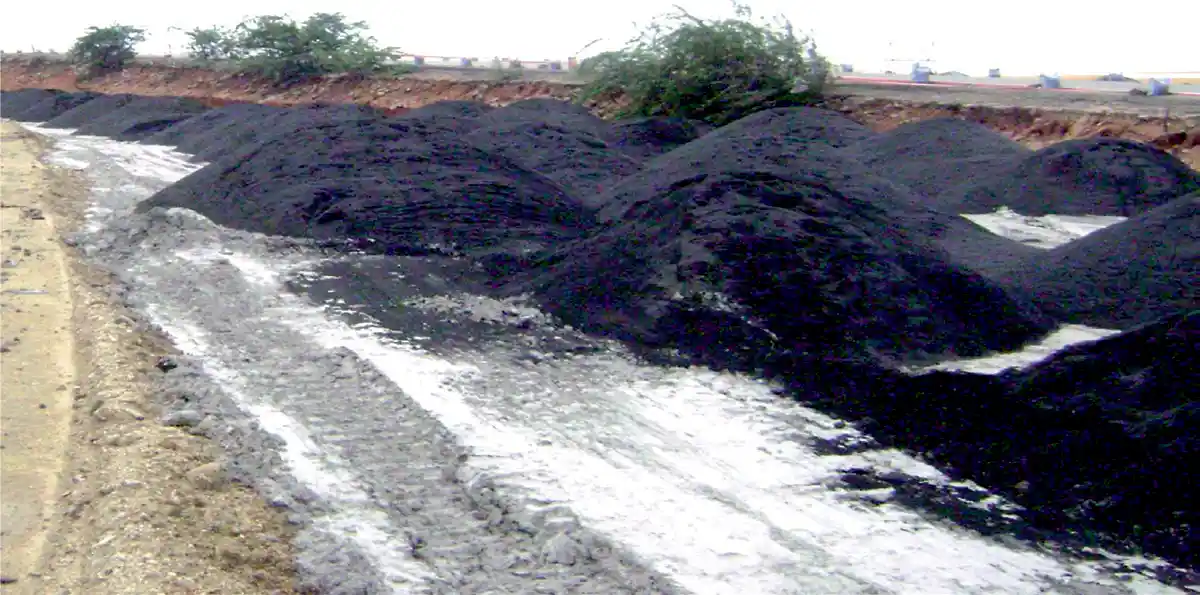
Copper slag experimental road along 45-A Madurai-Kanyakumari Expressway
What research methodology, laboratory techniques, and field trials does CSIR-CRRI use to evaluate the structural performance and long-term sustainability of waste-based materials in road construction?
CSIR-CRRI follows a systematic, step-by-step approach to assess the suitability and sustainability of waste-based materials: 1. Environmental feasibility studies, 2. Determination of material properties, 3. Design of embankment, subgrade, granular sub-base (GSB), and bituminous layers (BC), 4. Laboratory performance evaluation, 5. Construction of experimental road sections, 6. Field performance monitoring, 7. Development of construction methodology, 8. Economic analysis and 9. Preparation of guidelines.Before application, a TCLP (Toxicity Characteristic Leaching Procedure) test is carried out to examine hazardous potential, comparing heavy metal and inorganic concentrations against MEFCC (2016) standards. Non-hazardous materials can be used after IRC accreditation, while hazardous materials are stabilized and only used after proper evaluation. Post-construction, leachate is collected for TCLP testing to ensure environmental safety, addressing concerns such as toxicity.
Material properties are determined according to standard procedures and compared with MoRTH specifications. If specifications are not met, properties are improved via mechanical or chemical stabilization. Pilot road sections, typically about 1 km in length, are constructed and monitored over 2–3 monsoon seasons to evaluate long-term performance.
While there is limited information and no standardized codes or guidelines on the properties, performance, and hazardous nature of waste materials, rigorous research and field trials can unlock their safe and effective use in sustainable road construction.
How does the selected waste material compare with conventional materials in terms of durability, cost-efficiency, and ease of construction?
Durability is evaluated through both laboratory and field tests, including breakage of particles, settlement, Proctor tests, post-rolling assessments, and total station measurements.Economic analysis is conducted by comparing costs with conventional materials using state-wise rate lists, while ease of construction is verified through the pilot road section. This ensures that waste-based roads meet critical standards for strength, durability, and cost-effectiveness, while demonstrating practical feasibility for broader implementation.
How are roads built with waste-based materials validated to meet critical performance standards, including rutting resistance and fatigue durability, under India’s diverse traffic and climatic conditions?
At CRRI, we follow a rigorous, comparative approach to validate the performance of roads constructed with alternative or waste-derived materials. Typically, two sections of a road are constructed side by side one using the waste-based material under study, and the other using conventional materials. This allows us to directly compare their structural and functional performance under identical traffic and environmental conditions.We then conduct comprehensive evaluations using multiple parameters, including crack formation, potholes, settlement, deflection, rutting, roughness, and overall durability. These measurements are carried out both during and after construction, and are complemented by laboratory tests to assess material behavior under controlled conditions.
This integrated methodology ensures that any alternative material used not only meets rutting resistance and fatigue durability requirements, but also performs reliably under India’s diverse traffic loads and climatic conditions. By continuously monitoring both short-term and long-term performance, we can recommend safe, cost-effective, and durable solutions for sustainable road construction.
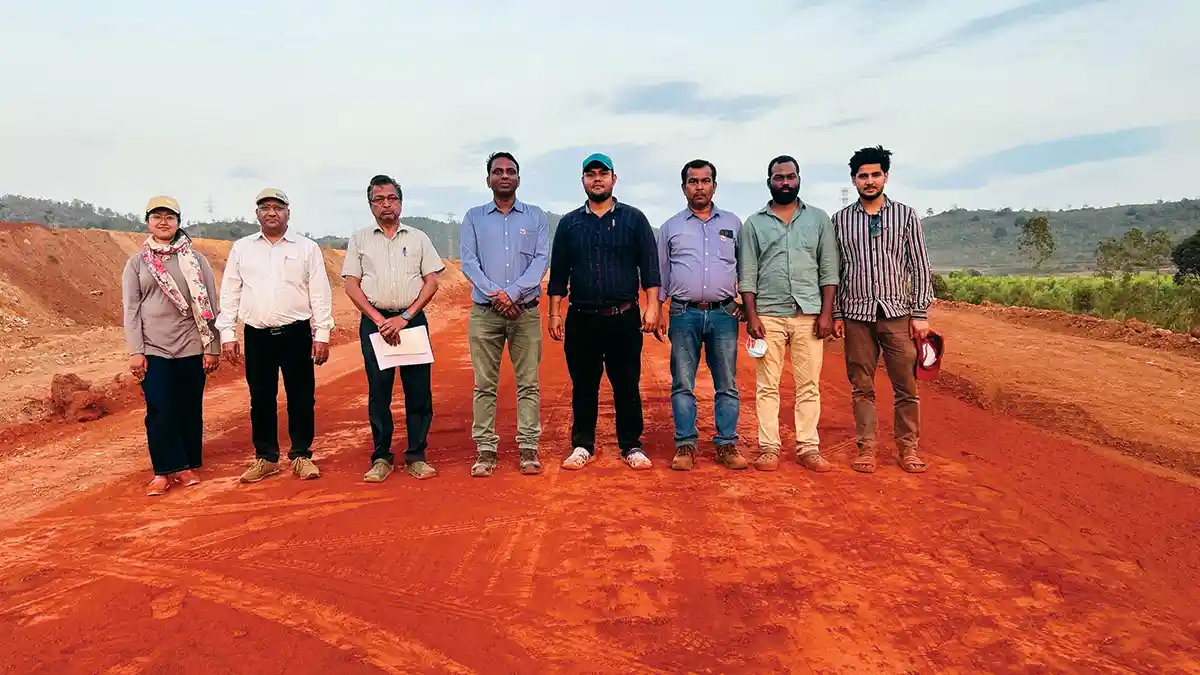
Experimental Red Mud Road at Koraput, Odisha
What are the challenges faced during lab testing or field trials?
The biggest challenge is the unavailability of a standard code or guidelines. There is no information available regarding the properties, performance, or hazardous nature of the waste products as they have varying mineral compositions, plus the process of metal extraction, plant efficiency, etc. pose difficulties during construction trials.We have studied the MSW in a laboratory from the Ghazipur landfill in Delhi and in the Ramana landfill in Varanasi, but have not found a place to conduct a pilot study even after 4-5 years as no officials are coming forward to help us in conducting a pilot project.
What measures are taken to ensure that roads built with waste-based materials are environmentally safe, including managing leachate, toxicity risks etc?
Environmental safety is a priority. CSIR-CRRI conducts pre- and post-construction TCLP tests to assess hazardous potential, leachate, toxicity etc. These measures ensure that any waste material recommended for road construction is safe for both the environment and public health, enabling bulk utilization without risk.Every ton of industrial waste we repurpose for roads is a step toward sustainable infrastructure and a circular economy.
What policy or regulatory changes could accelerate adoption of waste-derived materials in both highway and rural road constructions?
First and foremost, there is a need to conduct awareness programs for all key stakeholders—NHAI, BRO, NRRDA, state PWDs, contractors, and industries generating waste—so they understand the potential of these materials and how to use them safely and effectively. The government should also allocate dedicated funds for research and pilot studies, encouraging institutions like IITs, NITs, CSIR, DST, and ISRO to explore all possible applications of various industrial and municipal wastes.Currently, only limited studies and pilot trials have been carried out in India, so expanding pilot projects across different regions and road conditions is critical to demonstrate feasibility and performance. Finally, to ensure widespread adoption, the government should issue a gazette notification, similar to the one for fly ash, enabling contractors to incorporate these materials into road construction projects legally and confidently. Such coordinated policy support, combined with rigorous research, would go a long way in promoting sustainable and circular road infrastructure across the country.
Dr. Anil Kumar Sinha is an expert in geotechnical engineering and sustainable road construction, focusing on turning industrial by-products and waste materials into durable road-building resources. His work, involving research, lab experiments, and field trials, has shaped IRC guidelines and supports India’s drive toward circular, sustainable infrastructure. He also advocates for policy and regulatory support, awareness programs, and government notifications to scale up use of waste materials in road construction. He highlights challenges such as the lack of standard codes, variable waste composition, and limited pilot sites, while emphasizing solutions through material stabilization, pilot testing, and field monitoring.
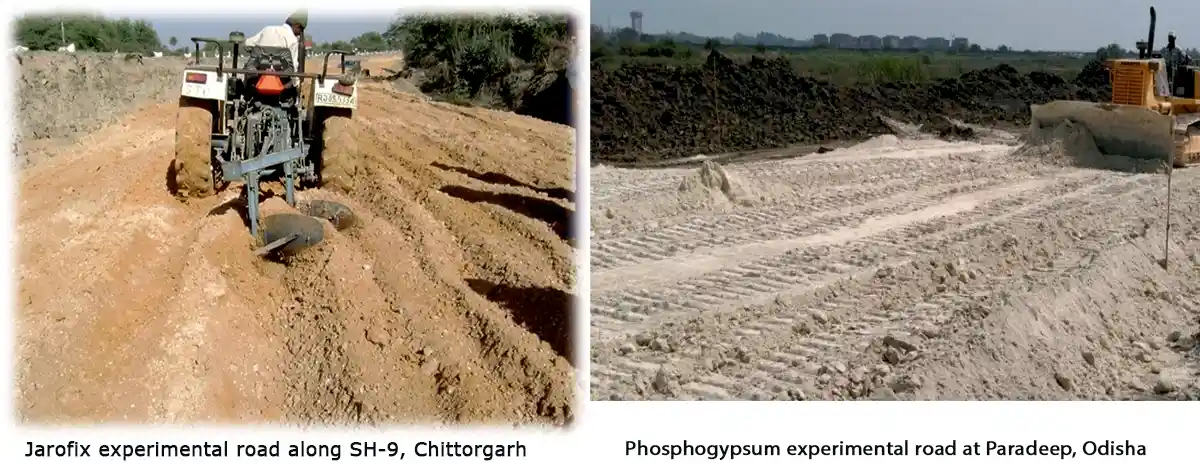
He has carried out several pilot studies such as recycle of Jarofix waste material for embankment and subgrade construction along SH-9 Chittorgarh to Udaipur; copper slag experimental road construction along 45-A expressway from Madurai to Kanyakumari at Tuticorin; Phosphogypsum experimental road construction at Paradeep, Odisha; Jarofix-zinc slag as retained fill along NH-76 from Udaipur to Bhilwara, Rajasthan; and Jarofix waste as embankment construction along NH-80 near Kota, Rajasthan.
Published on:
13 November 2025
Published in: NBM&CW NOVEMBER 2025
Share:
We Value Your Comment