India’s rapid road infrastructure growth has spurred economic expansion and connectivity, but the environmental toll has been severe. Dr. Manoranjan Parida, Director of CSIR-CRRI, explains how the Institute’s scientific inputs and policy collaboration are turning sustainability from a concept into a codified national practice—pioneering waste-based materials, low-carbon technologies, and climate-resilient road solutions that are defining the future of India’s transport infrastructure.

India’s road infrastructure has seen massive growth over the past two decades. In your view, what has been the environmental cost of this development, and how urgently do we need to address it?
The unchecked use of natural resources, high energy consumption and large-scale emissions have strained ecosystems and contributed to climate change. The need to address this is extremely urgent. The challenge now is not just to build more roads, but to build them responsibly with reduced environmental impact and greater long-term resilience. The primary costs include:Resource Depletion: Massive consumption of virgin natural aggregates, bitumen, and cement, leading to unsustainable quarrying and mining, and stress on natural resources.
Greenhouse Gas (GHG) Emissions: High carbon footprint from manufacturing conventional materials (especially cement and bitumen) and energy-intensive hot-mix processes. For example, our work shows that cold-mix and warm-mix technologies significantly reduce these emissions.
Waste Generation: Road construction, maintenance, and reconstruction contribute to significant Construction and Demolition (C&D) waste, and the sector's current practices don't adequately address the national solid waste challenge.
Land Use and Ecosystem Impact: Fragmentation of habitats, soil erosion, and increased run-off.
The transition from a linear “take–make–dispose” model to a circular economy is urgently needed. Sustainability must become an inherent part of every road project from design to execution to secure India’s infrastructure future.
How is CSIR-CRRI evolving to develop sustainable materials and technologies for the road sector?
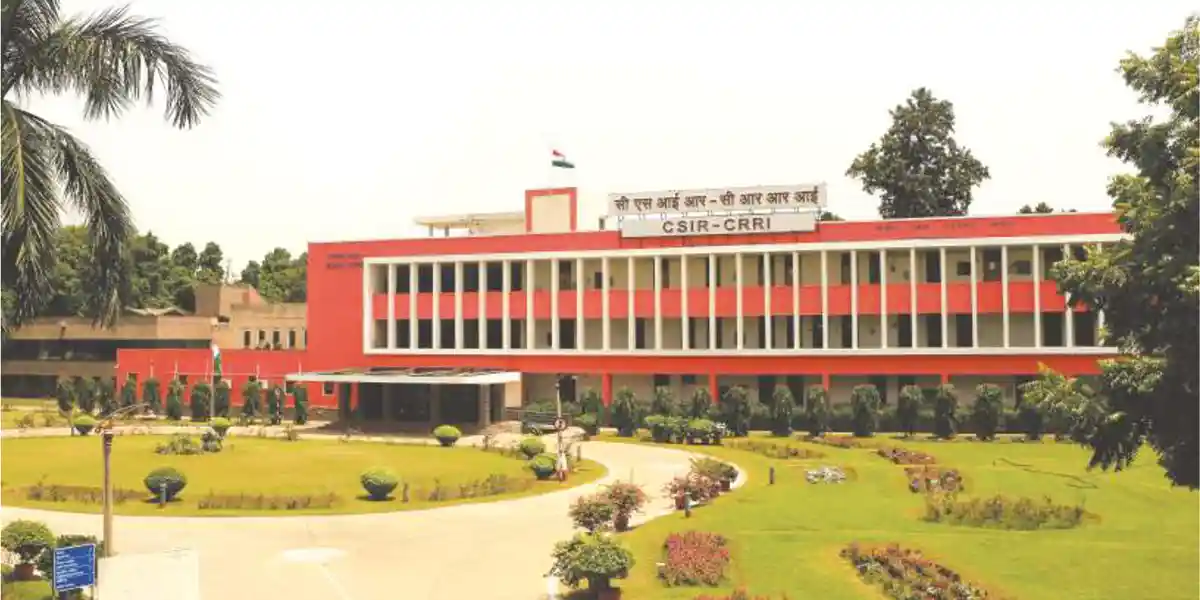
The CSIR-Central Road Research Institute (CSIR-CRRI), established in 1952 under the Council of Scientific & Industrial Research (CSIR), Ministry of Science and Technology is the premier national research institution for Roads and Transportation Sector. Our mandate covers the entire spectrum from materials and pavement engineering to traffic safety, bridge engineering, transport planning, and infrastructure management.In recent years, our focus has evolved toward developing sustainable, waste-based, and high-performance materials and technologies to support India’s vision of a low-carbon, resource-efficient transport infrastructure. The thrust, therefore, is squarely on sustainable and resilient infrastructure, which involves the following roles:
Translational Research: Developing and implementing sustainable materials and green technologies that are ready for field application, like our MSS+ cold-mix technology, developed and deployed REJUPAVE, a technology tailored for constructing bituminous roads in high-altitude, sub-zero temperature conditions.
Standardization: Working closely with agencies like the Indian Road Congress (IRC) and MoRTH to formalize the use of waste and alternative materials through codes and specifications.
Climate Resilience: Researching materials and designs that can withstand the effects of climate change, such as extreme heat and rainfall.
How significant is CRRI’s role in the context of India's goals for circular economy, carbon reduction, and sustainable infrastructure development?
CRRI’s research is vital to achieving India’s sustainability goals, directly advancing the circular economy, carbon reduction, and infrastructure resilience. By turning waste into valuable resources and promoting energy-efficient technologies, CRRI is helping to redefine how India builds its roads. The work done by the institute is pivotal to India's national goals by directly enabling:Circular Economy: Our research facilitates the high-volume utilization of waste materials such as steel slag, plastic waste, and fly ash in road construction, transforming them from environmental liabilities into valuable construction resources. This closes the loop and reduces landfill dependency.
Carbon Reduction: By pioneering and promoting technologies like cold-mix, warm-mix, and pavement recycling (RAP), we significantly reduce the energy consumption and associated GHG emissions of conventional hot-mix asphalt construction.
Sustainable Infrastructure Development: We provide the science-backed technical foundation for building more durable, economical, and environmentally friendly road networks, ensuring that infrastructure growth is sustainable in the long run.
CRRI’s innovations form the backbone of India’s transition to a low-carbon, circular, and sustainable road infrastructure system. This aligns with India’s broader goal of achieving sustainable infrastructure while ensuring long-term resilience.
How is CRRI leading the research and application of alternative materials like plastic waste, steel slag, fly ash, and C&D waste in road construction, and how scalable are innovations such as plastic geocells, MSW embankments, and hybrid pavements for widespread adoption by contractors and agencies?
CRRI is at the forefront of research and application for the following waste-based road materials:Alternative Materials Application: Conducting extensive laboratory and field research to establish the performance, durability, and safety protocols for materials like:
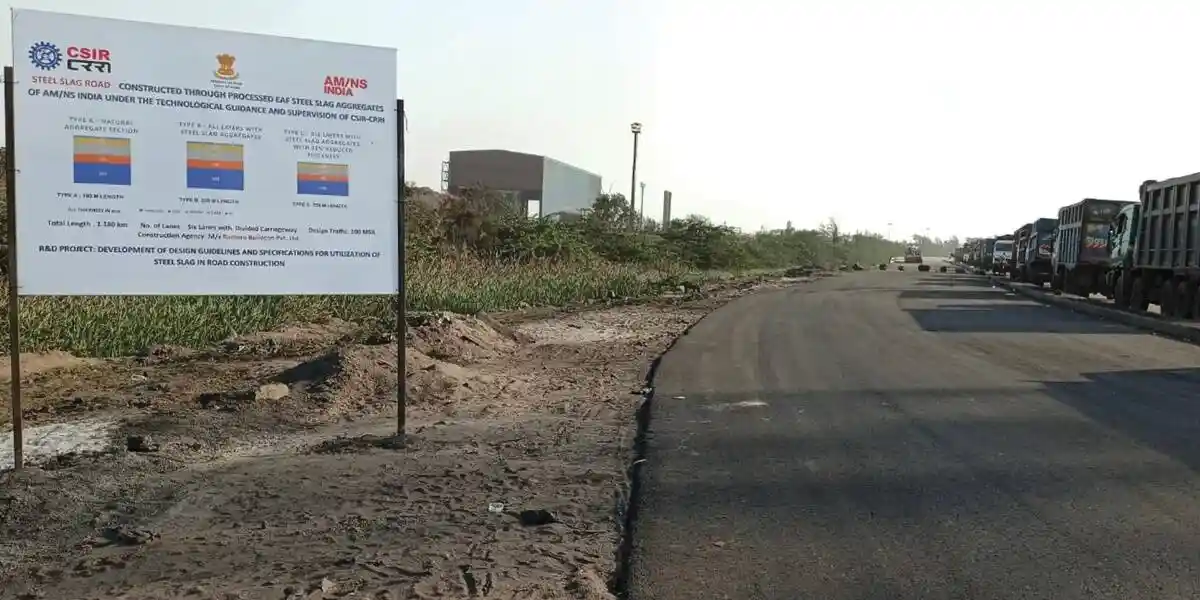
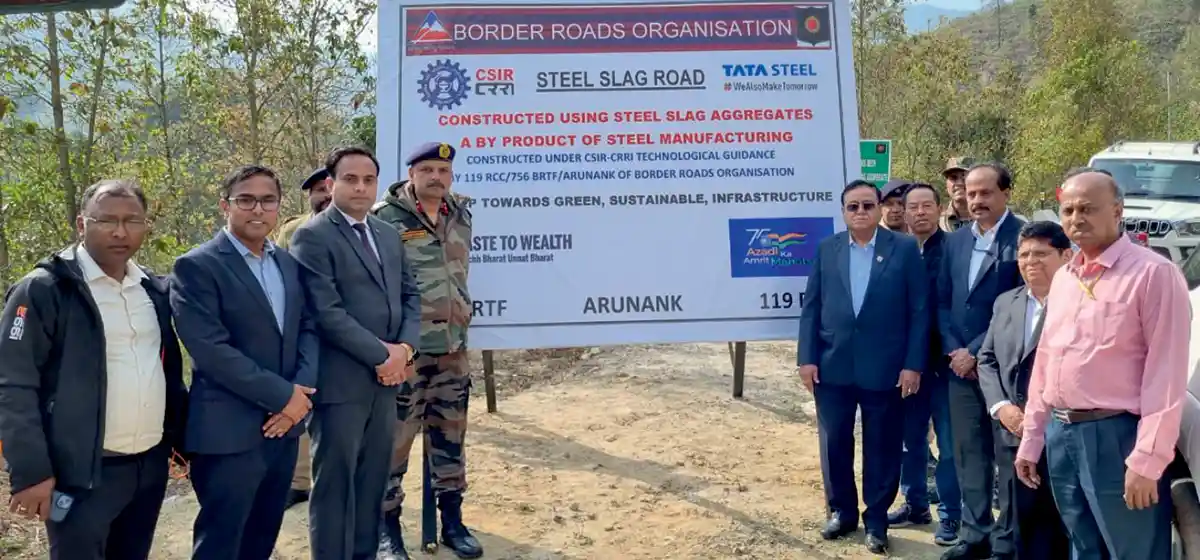
Steel Slag: Providing technical expertise for demonstration projects, like the India’s first 100% steel slag road in Surat, which has shown superior strength and reduced thickness compared to natural aggregate roads.
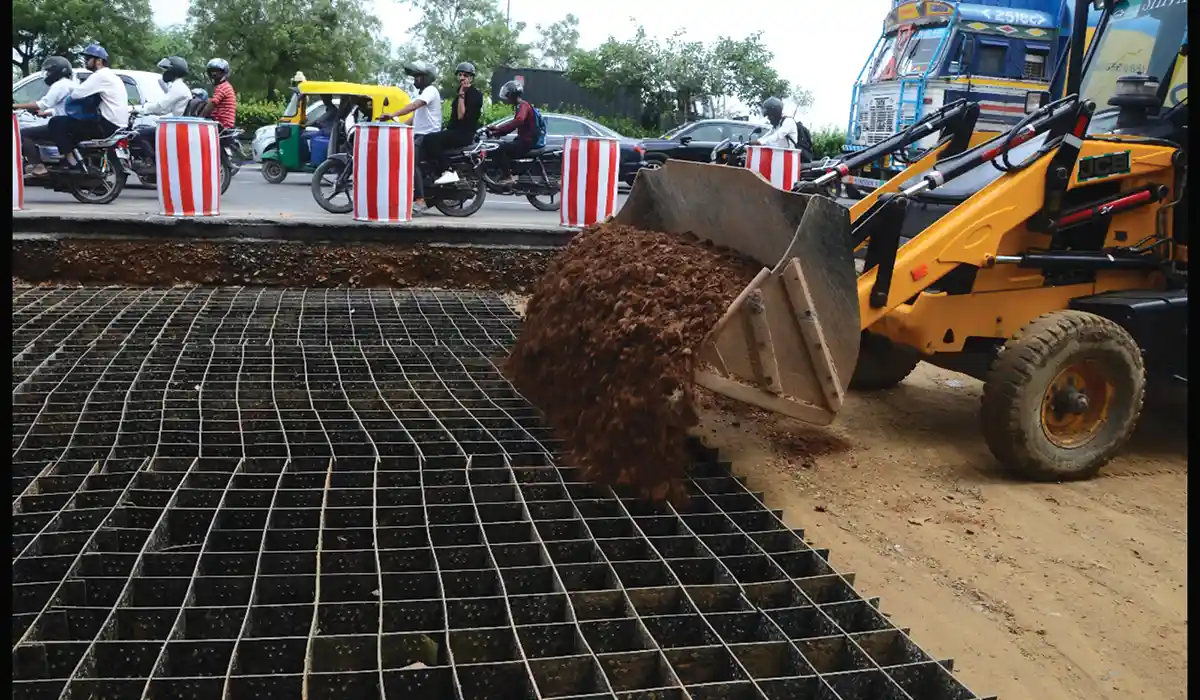
Plastic Waste: Developing protocols for using shredded plastic in bituminous mixes to enhance pavement performance. CRRI along with BSPCL has also developed the first of a kind plastic waste geo cell which can be used to improve the strength, stability, and performance of weak or problematic soils.
Fly Ash & C&D Waste: Developing specifications and mix designs for their high-volume use in sub-bases, embankments, and lower pavement layers.
Scalability of Innovations:
Plastic Geocells/Reinforcement: While promising for soil stabilization, especially in soft soil areas, their scalability depends on robust manufacturing supply chains and cost-benefit analysis being institutionalized.
MSW Embankments: We have demonstrated that using processed, segregated Municipal Solid Waste (MSW) for embankment construction is technically viable and environmentally safe (based on leachate studies). Scalability requires synchronized waste processing infrastructure at the source.
Hybrid/Green Pavements: Technologies like the MSS+ cold-mix technology are highly scalable as they are less dependent on energy-intensive central plants, making them ideal for rapid and widespread adoption, especially in rural and remote areas.
CRRI has been pioneering research on utilizing plastic waste, steel slag, fly ash, and other secondary materials in pavements for over a decade. We have developed design guidelines, pilot projects, and field demonstrations across multiple states. Technologies such as plastic-modified bitumen, steel slag base layers, and MSW embankments have proven both technically viable and scalable. The focus now is on wider adoption through collaboration with implementing agencies and contractors.
Sustainable roads are not just environmentally responsible, they are economically smarter. Lifecycle costs are lower due to enhanced durability and reduced maintenance.
What challenges remain in scaling up the use of these waste materials, particularly in terms of material uniformity, regulatory approvals, and contractor adoption?
The key challenges lie in ensuring consistent material quality, establishing reliable supply chains, and standardizing testing protocols. The limitations to scaling up the use of waste materials are:Material Uniformity: Waste streams like C&D and MSW are inherently heterogeneous. Ensuring consistent material quality and performance requires stringent processing, quality control protocols, and certified material processing facilities.
Regulatory Approvals: While CRRI contributes to new codes, the speed of regulatory acceptance and formal incorporation of waste-based materials into tender documents can be slow, hindering contractor confidence.
Contractor Adoption: There is a general risk aversion among contractors regarding new, non-conventional materials. This is exacerbated by a lack of specialised equipment, the need for new skill sets, and perceived liability issues concerning long-term performance guarantees. Incentivisation and mandatory quotas are often necessary.
Despite clear benefits, scaling up the use of waste-based materials faces several technical, institutional, and behavioural hurdles. Regulatory approvals and lack of familiarity among contractors also slow adoption. CRRI is working closely with MoRTH, NHAI, and BIS to address these gaps through updated specifications, training, and large-scale demonstration projects.
Through multi-level partnerships with MoRTH, NHAI, state PWDs, industry partners, and international agencies CRRI aims to mainstream sustainable materials via policy, capacity building, training, and field validation.
How is CRRI collaborating with MoRTH, NHAI, state PWDs, industry partners, and international agencies to develop technical specifications, codes of practice, and policy frameworks that support large-scale adoption of sustainable, waste-based materials in road construction?
CRRI acts as the technical arm and thought leader for various key national and international agencies:MoRTH & NHAI: We execute numerous R&D and consultancy projects for the Ministry of Road Transport & Highways (MoRTH) and the National Highways Authority of India (NHAI), directly contributing to the development of new technical specifications and circulars on the use of alternative materials.
IRC/ BIS: Our scientists are active members, conveners, and chairs of various technical committees of the Indian Roads Congress (IRC) and BIS, where the national standards and codes of practice are formulated.
State PWDs & Industry: We collaborate to conduct pilot projects and field trials across different climatic and traffic conditions, gathering performance data crucial for standardisation.
International Agencies: We collaborate with international bodies for knowledge exchange and benchmarking of best practices in areas like pavement recycling and environmental performance monitoring.
Through multi-level partnerships, CRRI bridges science, policy, and field practice, accelerating the adoption of sustainable construction nationwide. These collaborations aim to mainstream sustainable materials through policy, capacity building, and field validation.
What contributions has CRRI made toward the revision of IRC, BIS, or MoRTH standards to accommodate waste-based and sustainable construction practices?CRRI’s research forms the foundation for modern revisions to national road standards, enabling formal acceptance of waste-based and sustainable materials. The contribution is fundamental to the modernization of Indian road standards. We provide the scientific basis and field data necessary to revise and introduce new standards by IRC, BIS, and MoRTH.
Some recent contributions include the following:
- Development of IRC guidelines for the use of waste plastic in bituminous road construction.
- Providing input for MoRTH and IRC documents on the utilization of fly ash and Ground Granulated Blast Furnace Slag (GGBS) in sub-bases and cement-bound materials.
- Developing specifications for the use of Recycled Asphalt Pavement (RAP) and cold-mix technologies in rehabilitation works.
- Instrumental in bringing out guidelines for Cement Treated Bases/Sub-bases (CTB/CTSB) which utilize marginal and waste materials.
Is CRRI involved in capacity building, training, or technical handholding programs for engineers, road agencies, or contractors to encourage correct implementation?
Yes, capacity building is a core mandate. We regularly conduct:- Structured courses and workshops, often in collaboration with MoRTH, NHAI, and State PWDs, focusing on 'New Technology Initiatives including Waste Materials in Road Construction' for engineers and practitioners.
- We provide on-site technical supervision and consultancy to contractors and agencies for the correct implementation of new technologies, ensuring quality assurance and addressing implementation hurdles in real-time.
- We offer specialized certifications in areas like Road Safety Audit and implementation of sustainable pavement solutions.
By turning waste into valuable resources and promoting energy-efficient technologies, CRRI is driving the development of low-carbon, climate-resilient pavements that enable smart, sustainable mobility across India.
What kind of cost savings, lifecycle benefits, or operational efficiencies have been observed in projects that utilized these alternative materials?
Sustainable road technologies developed by CRRI have shown clear economic and operational advantages over conventional methods. Projects utilizing alternative materials have demonstrated significant benefits:Cost Savings: Technologies like our RAP and cold-mix methods have shown up to 30% savings in material costs (aggregates and bitumen) and energy costs, especially for rural and maintenance works. Pothole repair solutions developed by CRRI, such as Patch-fill, also offer substantial cost advantages over conventional methods.
Lifecycle Benefits: The incorporation of materials like plastic and steel slag often results in enhanced durability, better rutting resistance, and higher strength, which translates to reduced maintenance frequency and lower overall lifecycle cost. For instance, the reduced thickness of the 100% steel slag road demonstrates potential for extended service life and material saving.
Operational Efficiencies: Technologies like the MSS+ (cold-mix) eliminate the need for aggregate heating, allowing for faster construction and work in varied weather conditions, thus accelerating project completion.
Sustainability is not just environmentally sound; it’s economically smart, delivering better value over the pavement’s entire lifecycle.
How does CRRI plan to integrate environmental performance monitoring such as leachate control and emission reduction into its long-term research on material sustainability?
CRRI is embedding environmental monitoring into all its long-term research to ensure that sustainability is measurable and verifiable. In our long-term research, we are making environmental performance monitoring integral in the following areas:Leachate Control: Specifically for high-volume waste applications like MSW embankments, we conduct rigorous leachate studies to ensure that heavy metal concentrations are within permissible limits, confirming their non-hazardous nature. Monitoring protocols for long-term leachate generation will be standardized.
Emission Reduction: We use Life Cycle Assessment (LCA) tools developed in-house to quantify and benchmark the carbon footprint and energy consumption of alternative materials versus conventional ones. Future research will focus on optimizing mix designs to further reduce embodied carbon.
Smart Infrastructure: We are integrating sensors and monitoring systems in experimental sections to track material performance and environmental parameters (temperature, water quality, and structural integrity) over the entire service life.
We aim to establish benchmarks for environmental sustainability in road projects and use digital tools for continuous performance tracking. This approach will guide future policy and technology adoption.
From a national policy standpoint, what changes or incentives do you believe are most critical to accelerate mainstream adoption of sustainable road technologies in India?
To mainstream sustainable technologies, India’s road sector needs decisive policy interventions and incentive structures. To accelerate this transition, the following national policy changes are most critical:Mandatory Quotas: Introducing mandatory targets or quotas for the use of locally available waste materials (like steel slag, fly ash, and C&D waste) in all publicly funded road projects (MoRTH/NHAI/PWD), similar to the successful mandate for fly ash use in cement.
Performance-Based Specifications: Shifting from Prescriptive Specifications (dictating exact materials and methods) to Performance-Based Specifications (defining the required end-product performance), which allows contractors the flexibility to use certified alternative materials and innovative designs.
Green Procurement and Incentives: Implementing green procurement policies that favour contractors using sustainable and waste-based materials through preferential bidding, tax breaks, or an accelerated approval process for payment.
Integrated Waste-to-Resource Logistics: Developing a national policy framework to ensure a reliable, quality-controlled, and cost-effective supply chain for processed waste aggregates, making it easier for contractors to source these materials.
A combination of policy mandates, fiscal incentives, and awareness is essential. Inclusion of sustainability criteria in tendering, performance-based specifications, and preferential use of certified waste materials can drive adoption. Incentivizing innovation and facilitating start-ups in green construction will further strengthen this transition.
Finally, what is your long-term vision for CSIR-CRRI in shaping the future of India’s green and resilient road infrastructure over the next 10–15 years?
My long-term vision for CSIR-CRRI over the next 10–15 years is to position the Institute as the Global Hub for Green and Resilient Road Infrastructure Technology. We aim to:Pioneer 'Roads of the Future': Develop fully optimized, carbon-neutral pavement solutions using 100% recycled or geo-synthetically engineered materials that require minimal maintenance.
Lead Smart Mobility: Be the central scientific advisory body for Integrated Multi-modal Transport Systems, including the technical aspects of E-mobility corridors, Intelligent Transport Systems (ITS), and smart road safety.
Ensure Climate Resilience: Design and standardize climate-resilient infrastructure capable of withstanding extreme weather events, particularly in vulnerable terrains (Himalayas, coastal regions).
National Knowledge Repository: Function as the trusted National Knowledge Repository for all data, standards, and training in highway engineering, driving India’s journey toward a truly green and resilient transport network.
Ultimately, we envision roads that are not just conduits of mobility, but enablers of sustainability and inclusive growth.
How economically viable is sustainability in road construction?
Sustainability in road construction is not a choice, but a necessity, and it is economically viable. There is a common misconception that "green roads" are more expensive. Our research conclusively proves that while the initial material cost might sometimes be marginally higher, the lifecycle cost is significantly lower due to enhanced durability, reduced maintenance, and the huge societal benefit of avoiding environmental pollution.We urge all stakeholders including engineers, policymakers, and contractors to adopt a lifecycle thinking approach and recognize that investing in sustainable, waste-based road technologies is ultimately an investment in India's long-term economic and environmental security.
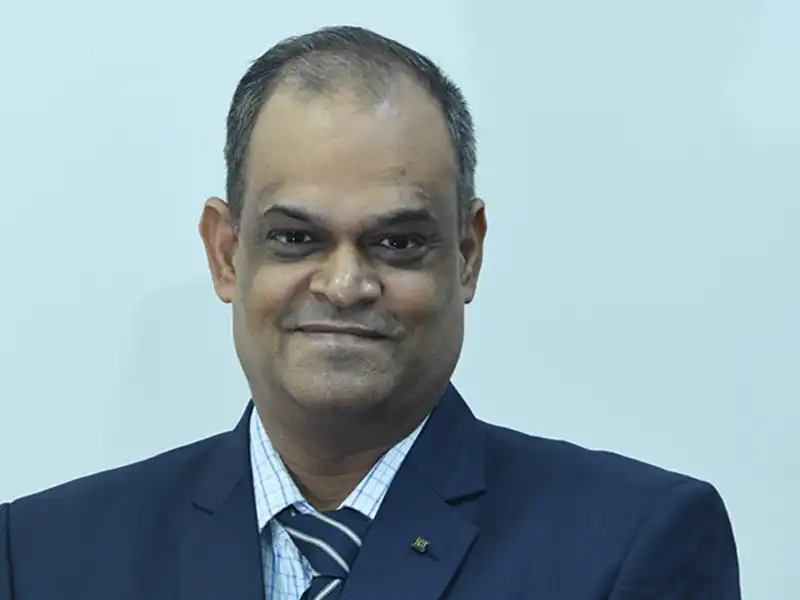
Prof. Manoranjan Parida is presently the Director of CSIR-Central Road Research Institute and the President of Indian Roads Congress, New Delhi. He was Deputy Director at IIT Roorkee before joining CSIR-CRRI. He served as the MoRTH Chair Professor on Development of Highway System in India at IIT Roorkee from 2013-2017. Design and Development of Noise Barrier for Flyovers in Delhi is an innovative contribution by him. He has provided substantial inputs for third party quality audit of 1700 km. of State Highway in the State of Bihar (during 2007-2013) under the RSVY Project. He has supervised 33 PhD Theses and published more than 550 papers in Journals/Conferences. As a Director of CRRI, he has played a crucial role in the development of Steel Slag Road Technology. AI based Road Safety Solutions for Nagpur (iRASTE), Third Party Quality Evaluation of Dwarka Expressway, Promotion of Usage of Industrial Waste in Road Construction and providing solutions to road infrastructure development in border areas. He was honoured with Pt. Jawaharlal Nehru Birth Centenary Award in 2004 from Indian Road Congress. He also received the Outstanding Teacher Award of IIT Roorkee. He is currently serving as the Convener of Transport Planning & Traffic Engineering Committee (H-1) of Indian Roads Congress, New Delhi. He is the convener of PCD6 (Bitumen, Tar & Other Products) Committee of Bureau of Indian Standards.