What is the significance of SDLG’s participation in bauma CONEXPO INDIA 2026?
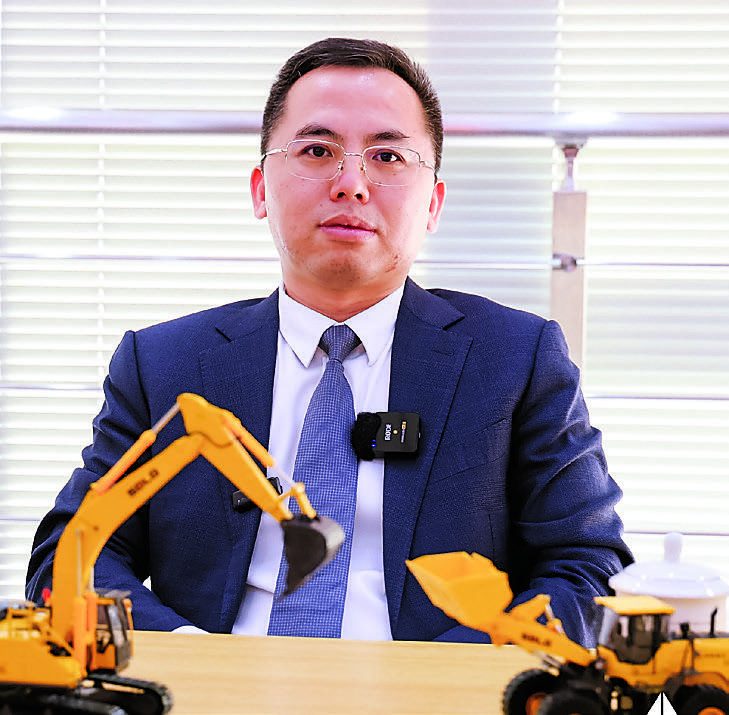
SDLG has a significant presence in the Indian market. We have been participating in bauma India since 2006. Last year, we decided to operate the business independently, and the Lingong Group has strengthened its ownership and involvement in the business. This time, we have used the opportunity to demonstrate our full range of products that can offer contractors improved equipment choices and solutions throughout their operations.We are not only providing diesel-powered machines but also electric machines knowing that rising oil prices are creating challenges for customers and increasing operating costs. We already have electric machines operating in different countries for which we have received a lot of positive feedback from customer s as the machines have performed well and have demonstrated good quality and high availability.
By presenting both electric equipment and our broader range of construction equipment our aim was to give customers greater confidence in the SDLG brand and demonstrate that the brand continues to have a strong presence and product capability.
We are also inviting local companies and employees to work with us and become part of our local operations. This is part of our effort to strengthen our local presence and demonstrate the benefits of working with SDLG.
What does SDLG’s technology and product roadmap look like, particularly in electrification and intelligentisation?
Electrification is unstoppable, and intelligentisation will be the next dividing line. SDLG’s electric product lineup already covers key models of wheel loaders and excavators, and these products have already been delivered in batches to overseas markets.We have independently developed multiple core technologies and established full-scenario solutions covering pure electric, battery-swapping and cable-powered applications. At the same time, we are investing in intelligent driving and AI technologies.
In recent years, under our strategy of “specialising in traditional lines while expanding emerging ones” we have developed new product lines, including skid steer loaders, bulldozers, and all-terrain vehicles. For India, we will bring more electric and mining products, expanding our portfolio in line with the evolving requirements of the Indian market.
The higher initial cost of electric equipment and availability of charging infrastructure are key concerns of contractors. How does SDLG see these as a challenge in the transition to electric equipment in India?
These challenges are closely related to the availability and structure of the power supply.Regarding charging infrastructure, there are certainly challenges, particularly in areas where power supply, power stations or charging stations are not yet fully developed. Mining operations may have better infrastructure, but when it comes to core infrastructure applications such as roads and highways, the infrastructure for electric power supply is still developing.
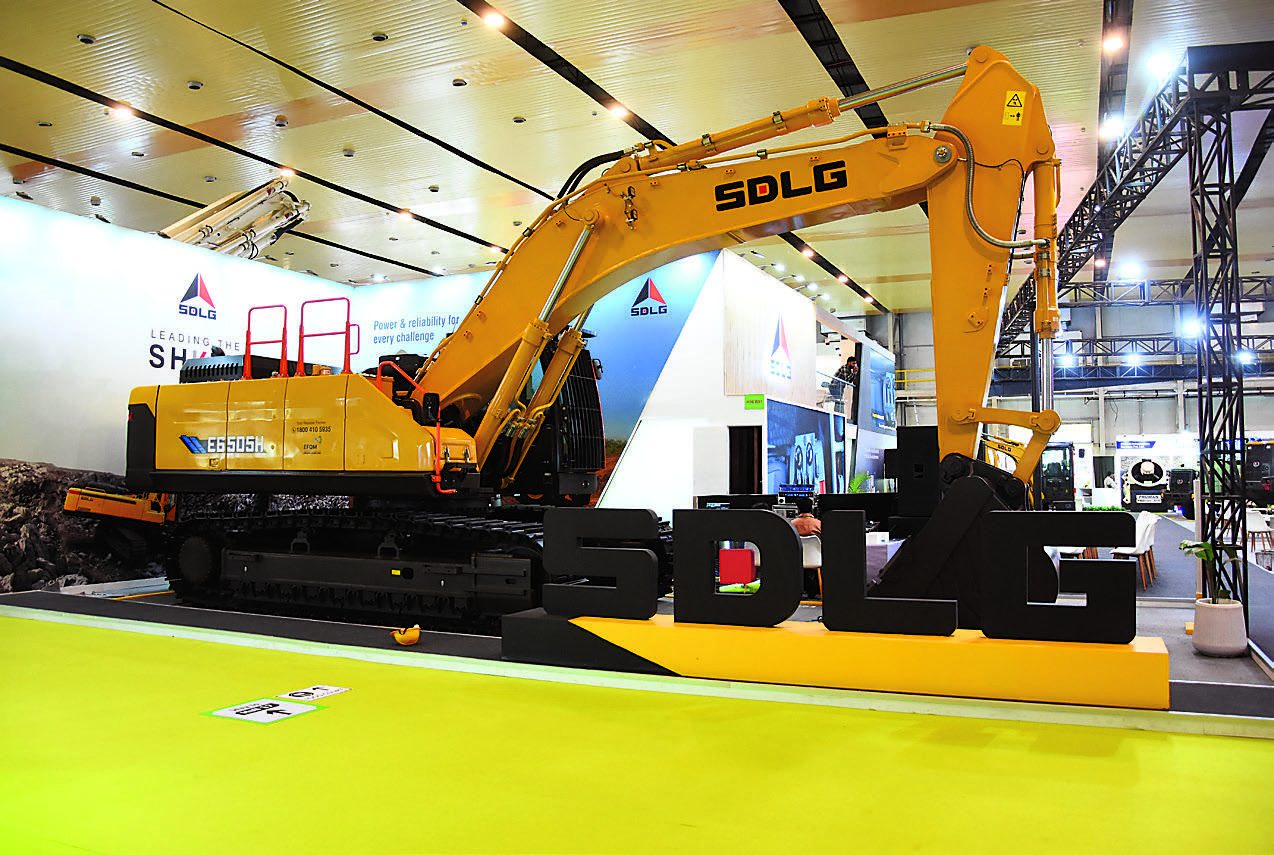
So, we are not only supplying electric machines; we are also providing charging stations. The charging-station solution is based on the machine’s application and the customer’s requirements.
It is not simply a matter of providing one electric machine and one charging station. We need to understand the overall requirement and available resources. For example, if a customer wants to use an electric machine, we can send our technical team to the customer’s job site or working area to assess the situation. We look at whether there is sufficient power supply, what the required power conditions are, and whether there is a continuous or stable power supply for the electric equipment.
Based on the information we collect, we can propose an overall solution. For example, a customer may require 150 meters of infrastructure for one charging station, while another application may require one kilometer. The requirement depends on the specific job site. This allows the customer to understand the complete charging solution required for the application rather than looking at the machine and charging infrastructure separately.
At the same time, we understand that customers are concerned about the higher upfront investment associated with electric equipment. The overall business case therefore needs to consider not only the initial purchase price but also the operating economics and the application for which the machine will be used.
We believe the Indian market is changing, and customer requirements are also changing. The technology available today may be sufficient for some applications, but we also need to understand what customers will require in the future.
India is a key market in SDLG’s global growth strategy. We see strong long-term potential here and are committed to bringing our global technology, product expertise, and sustainable solutions to support India’s rapidly evolving construction and infrastructure sector.
What is SDLG’s approach to localisation and building its presence in India?
Localisation is an important part of our strategy. We are not looking at India simply as a market where we produce machines and export them elsewhere. Our approach is to produce products that are feasible and relevant for the Indian market and meet the requirements of Indian customers.Our internationalisation is not simply about selling products overseas, but about building local system capabilities. We focus on long-term commitment and localised operations through what we call the “five localisations” — production, logistics, finance, talent, and channels & services.
Today, SDLG has more than 10 overseas warehouses, over 20 subsidiaries and offices, 170+ channels globally and a localised team of more than 4,000 people. Our approach is to deepen markets through long-term commitment, take root through localisation and build competitiveness through system capabilities.
In India, we are focusing on localisation, particularly for wheel loaders. We are also strengthening our presence over the long term and rebuilding our dealer network across the Indian territory to stay closer to our customers and provide the support they require.
We have been in India for more than 19 years, and India is one of our most important markets in South Asia. With independent operations, we can respond faster and make more focused investments.
Our CKD plant in India is scheduled to start production in Q4 this year. This will help shorten delivery times, reduce costs and better meet local requirements. We want India to become a benchmark market for SDLG and for customers to feel that choosing SDLG means choosing a long-term partner.
How is SDLG ensuring timely parts supply and service support to its customers?
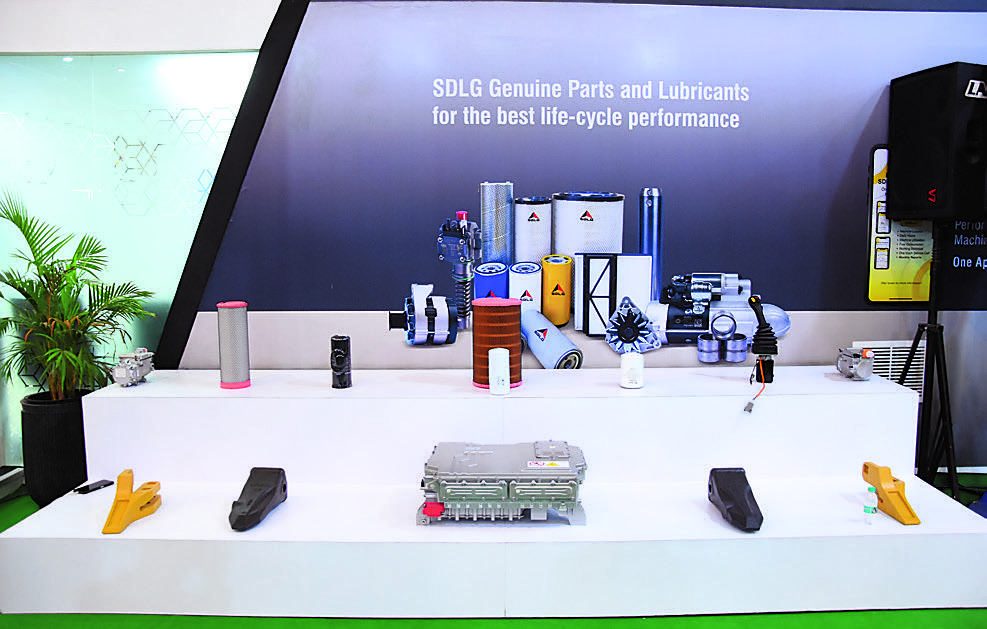
No doubt, parts availability and service support are important concerns for customers. We already have more than RMB 20 million worth of parts stocked in India and are now working towards a 95% parts availability target. Our objective is to improve customer feedback, strengthen our support and reduce response times.The key message I would like to give to our dealers and customers is that customer challenges should not be faced by the dealer alone. We will work together with our dealers to address customer problems. We have built local Indian teams and Chinese teams that work together. We visit customers together, understand their requirements, solve their problems and guide them.
How do you see the potential of the equipment rental market in India, particularly as customer preferences and business models continue to change?
Business models need to develop step by step. We understand that customers’ business models are changing, and we want to meet their requirements. It should not be limited to one business model. We need to understand the market and respond to changing requirements.Rental is a significant business model globally, although its development depends on the level of market adaptation and how feasible the model is in each local market. Rental is much more popular in Western countries, including Europe and the United States, as well as Latin America and Australia. It is also becoming popular in China and emerging markets. Therefore, I believe rental has significant potential as a business model in India.
For us, there are two important points to consider: the overall cost structure for rental businesses and the residual value of the machine. For a rental company, one of the major concerns is how much value the machine will retain after three or five years. Western brands have traditionally had an advantage because rental companies have experience with their residual values.
However, as Chinese brands increase their sales volumes and market presence, the gap with Western brands can gradually reduce and thus create greater opportunities for Chinese brands in the rental business.
How do you see SDLG’s position in the global market, and how do you view the opportunity in India as customers become more open to Chinese construction equipment brands?
The global market is quite challenging, but we also see a lot of positive signs. One important area is electric technology and the transition towards cleaner energy. The second is autonomous or automated driving technology, which can help reduce operating costs and the cost associated with drivers, particularly in markets such as Australia and Latin America. These are important technology trends.Another important point is the increasing participation of Chinese brands in the global construction equipment market. Chinese brands now account for more than 50% of the total market in some regions, such as Southeast Asia, Africa and the Middle East. In Latin America, the share is around 20–25%.
In the Indian market, the presence of Chinese construction equipment brands is also increasing. In the past, customers were sometimes hesitant to try Chinese brands because of concerns about quality and operating performance. But now, customers are increasingly willing to try Chinese brands. This market structure creates opportunities for companies such as SDLG.
For us, the opportunity is to participate in more job-site applications and demonstrate that Chinese brands are not simply about lower prices or lower quality. We want to demonstrate that we can also offer higher quality and machines capable of operating for more than 15,000 hours, or even 20,000 hours, in demanding applications such as highway projects.
We are not afraid of competition. India is a very exciting market with a lot of opportunities. It is one of the most populous countries in the world, and there are many opportunities for us to participate in the market and grow together with India.
How is SDLG strengthening full-lifecycle support globally, and what does this mean for customers in demanding segments such as mining?
We are working to become much closer to customers at the global level. We have established many branches globally. At present, we have 14 branches already operating, along with more than 17 parts warehouses, including regional warehouses and facilities in different locations. The objective is to be much closer to customers and provide the support they require.The mining segment is also becoming increasingly important, and its share of our overall product business is growing. For mining customers, the requirement is not simply to purchase one or two machines. They are looking at the complete lifecycle operating cost.
We have experience from China, India and Latin America, where operating conditions and costs can vary from country to country. We collect data from different markets and use that information for analysis. Based on the customer’s planning and the requirements of a particular job site, we can provide an assessment of the complete lifecycle cost. This includes the initial purchasing cost, operating cost and maintenance cost. We can help the customer understand the total cost, how much they are actually paying and over what period they will get value from the machine.This is the lifecycle cost approach that we offer to customers.
In addition, customers are concerned about parts availability over seven or eight years and may also require longer warranty periods. We offer our standard warranty and can also offer extended warranty arrangements where required.
With SDLG strengthening its local presence and localisation in India, what message would you like to give Indian customers evaluating the brand alongside established equipment manufacturers?
The message is very clear: we are staying in India, we are working for India, and we are producing for the Indian market. We are strengthening our local presence, developing our dealer network, working on localisation and bringing our global experience and technology to the Indian market.We want customers to have confidence in the SDLG brand and understand that we are committed to India for the long term. We are not looking at India simply as an export market. We want to develop our business together with Indian customers and partners and provide products and solutions that meet their requirements.
Our objective is to contribute to India’s development, not simply through technology and products, but also through local operations, partnerships and customer support.