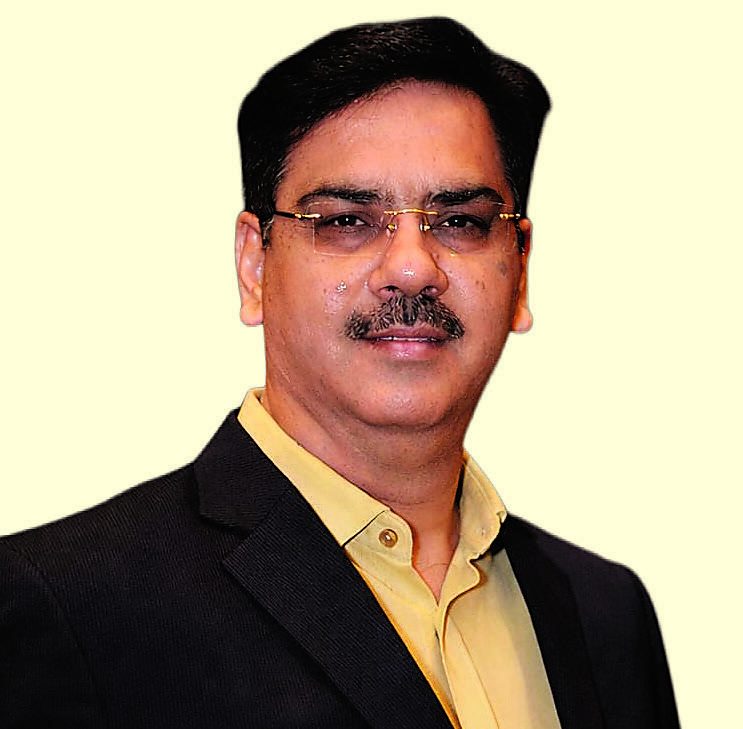
To begin, please tell us about ENSO Oils and Lubricants, its association with Gazprom Neft, and the opportunity it sees in the Indian market.
ENSO Oils and Lubricants is a relatively new organisation, established around two years ago. However, the ENSO Group is more than 20 years old and has diverse business interests in India and in several other countries. Its businesses include IT, real estate, precious metals trading, and gas exploration, among others. ENSO has been associated with Gazprom (one of Russia’s largest energy companies) in the exploration and development of gas fields.Gazprom Neft is the Group’s lubricants business. Historically, Gazprom’s lubricants business had a presence across Russia and Europe, with several blending plants, including one in Italy. Following the Russia-Ukraine conflict and the resulting sanctions, its European business reduced significantly. At the same time, India’s growth story presented a significant opportunity. Against this backdrop, ENSO was appointed as Gazprom’s exclusive partner for lubricants in India.
What are ENSO’s key business verticals in India, and how will local manufacturing and expansion into the B2C and aftermarket segments support its growth and brand-building strategy?
ENSO Oils and Lubricants currently has three primary business verticals in India, viz, finished lubricants, base-oil trading, and bitumen and allied products. Initially, our lubricants business was largely based on imported products, but our aim was to understand the specific requirements of the Indian market and gradually move towards manufacturing in India.India is very different from Europe in terms of product requirements. To build our business effectively, we need to manufacture products locally. So, we are expanding our portfolio through local manufacturing, and are also preparing for a major entry into the B2C.
B2C is important for us because it helps create brand awareness and establish brand value in the market. In industrial applications, the lubricant may be consumed within the equipment without the wider market necessarily knowing which brand is being used.
But when you enter the B2C market, consumers see the brand at retail outlets and become familiar with it. So, we are building visibility and awareness of the G-Energy - A Gazpromneft group brand in India as an important part of our strategy.
In which sectors do you see the greatest potential for ENSO products?
When we look at industrial growth in India, we have to identify the sectors offering the greatest potential. Construction, mining and infrastructure are among the fastest-growing segments, and no lubricant company can afford to overlook them.We are therefore discussing with Gazprom how we can bring its range of products developed for construction and mining applications to India. Mining is also a major industry in Russia, and Gazprom has products that have performed under extremely severe operating conditions, including temperatures as low as -40°C to +55°C.
We are evaluating how that technology can be adapted to support the Indian construction and mining industry. We have already conducted product trials and have started working with a few customers.
As customers become more knowledgeable and value-conscious, how are you moving beyond product selling to provide lubricant solutions that improve equipment performance and reduce the total cost of ownership?
Today's customers are much more knowledgeable. It is no longer a situation where an oil company simply dictates what product should be used. It is a dialogue between the customer and the lubricant supplier.Our intention is to understand the customer's exact requirements: we discuss what product the customer is currently using, its specifications and performance, and whether we can offer an alternative that can improve drain intervals, reduce operating costs, or improve overall equipment efficiency.
Our objective is not necessarily to offer a cheaper product. Instead, we look at the total cost of ownership. For example, if a customer is currently using a lubricant that provides a drain interval of 400 or 500 operating hours, and we can offer a product that safely extends this to 600 hours without increasing the overall cost, there is a clear benefit.
Similarly, in commercial vehicles, if a particular oil change currently supports two trips, and our product can safely extend that performance to two-and-a-half or three trips, the customer gains through improved productivity.
To build our business effectively, we need to manufacture products locally. So, we are expanding our portfolio through local manufacturing and are also preparing for a major entry into the B2C and aftermarket segments.The benefits can also extend to equipment life, cleaner engines, reduced wear and tear and improved resale value. We are not simply trying to replace an existing lubricant brand; we are trying to provide an overall solution.
Mining customers also look for on-site technical support, oil analysis and monitoring. Can ENSO provide these services?
Yes. As a new entrant, we initially operate at relatively low volumes. At this stage, establishing our own manufacturing facility and complete infrastructure may not be commercially viable.India, however, has several quality lubricant manufacturers and NABL-accredited laboratories. We have tied up with suitable manufacturing partners who can manufacture products according to our formulations and quality-control requirements.
We also have access to independent testing laboratories and are also willing to test our products in a laboratory selected by the customer or do testing of two brands to compare the parameters.
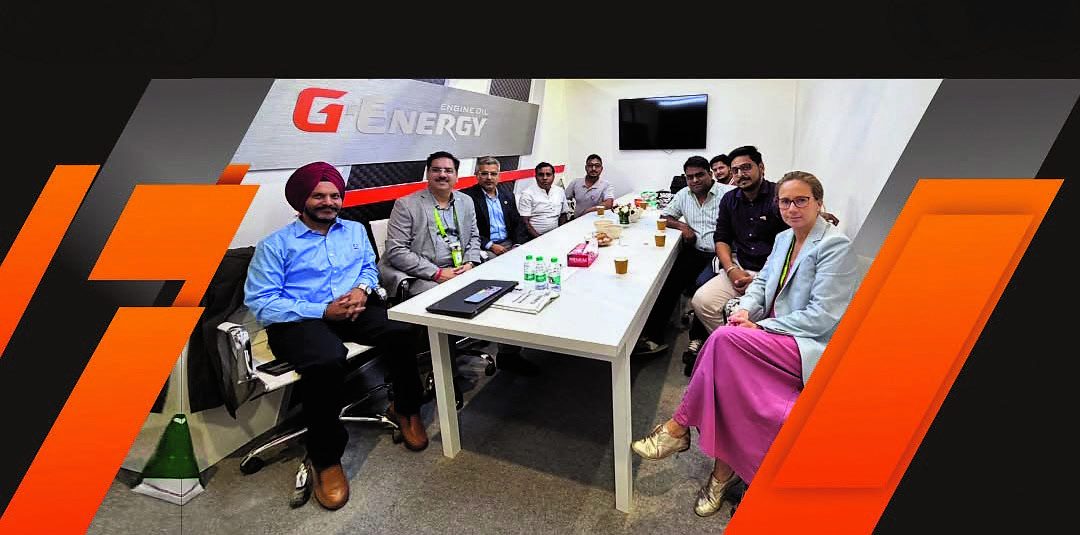
This gives customers confidence because the testing is being conducted at a laboratory they trust, rather than at a laboratory selected by us.
We are confident in the quality of our products and have successfully completed such tests in the past. There is also significant technical support from Gazprom. Its R&D team continues to participate in seminars and customer visits in India and meet customers to understand their requirements.
We share the requirements with the Russian R&D team, evaluate our existing technology, and determine whether we can match the requirements. If a specific requirement cannot be met with our existing portfolio, we can initiate a development project.
How are you addressing India-specific R&D and formulation requirements?
India has very demanding operating conditions. Equipment is often operated under high loads and challenging conditions, and overloading is also common. Therefore, India-specific formulation and R&D are important.We have a very experienced team in India. I have been in the lubricants industry for almost 30 years. I started my career with L&T after engineering, followed by around 20 years with Shell and about five-and-a-half years with GS Caltex. Similarly, members of our team have worked with companies such as Castrol, Total and other leading organisations. Our production team also brings significant industry experience. This gives us the local knowledge required to develop and manufacture products specifically for the Indian market.
In addition, we have access to Gazprom's R&D facility in Russia, which specialises in lubricants designed for extreme operating conditions. There is considerable collaboration between the Indian and Russian teams. We share market insights, discuss product requirements, and review our formulations.
Importantly, we are not only testing formulations based on Russian or Gazprom base oils but are also evaluating Indian base oils so that we can respond to specific customer and OEM requirements. If an OEM requires a particular base oil and additive package, we can evaluate those combinations and develop products accordingly.
Is co-engineering with OEMs part of your future strategy?
Yes. We see that as the next stage of our development. The first step is to establish the product base required by the Indian market and the second is to expand our R&D and co-engineering capabilities.Instead of simply offering an existing product, we can work with an OEM to understand its specific requirements and jointly develop a lubricant that meets those needs.
The Indian lubricants market already has several established players. How do you plan to differentiate ENSO?
We understand that as a new entrant in a market with several well-established players, we need a differentiated proposition. One important approach is key-account management. We identify the right accounts, understand their requirements, and offer solutions that are commercially viable and technically appropriate.The proposition is not simply about offering a lower-priced lubricant. It is about demonstrating overall cost savings through longer drain intervals, improved equipment performance, lower wear and tear and potentially longer equipment life. Our approach is therefore to engage with customers as a solution provider rather than simply as a lubricant supplier.
What is your strategy for building your business across India?
India is experiencing strong economic and industrial growth, and many global companies are looking at expanding their presence here. Gazprom has similar aspirations for the Indian market. At ENSO, our immediate objective is to complete the product portfolio required for the Indian market and I would say that 70-80% of the portfolio is already in place. By the end of the year, we expect to have the complete range required by the industry.Once the portfolio is ready, our focus will shift towards customers and channel partners. This is where partnerships with industry organisations and media platforms can play an important role in building awareness of the ENSO brand. We need to reach OEMs, equipment users and other stakeholders and communicate that there is an emerging brand with the right expertise, team, and product portfolio.
What are the challenges for ENSO in India?
We understand the scale of the challenge, particularly because we are entering a market with several established players. If the current geopolitical and sanctions-related constraints ease, we will be in a position to pursue more aggressive growth targets, particularly in the OEM segment.India will remain our immediate priority. Once we establish a strong presence here, the experience and market understanding gained can also support expansion into the wider Indian subcontinent and other South Asian markets.