Paras Chowatia Managing Director Sharp Ply Group
What improvements do Sharp Ply solutions offer in terms of construction speed, safety, ease of erection, labour productivity, and overall project cost?
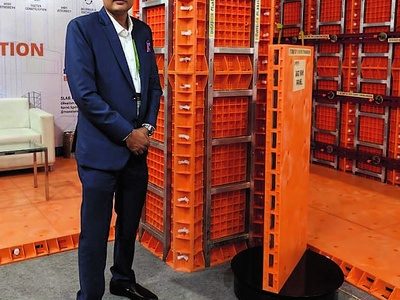
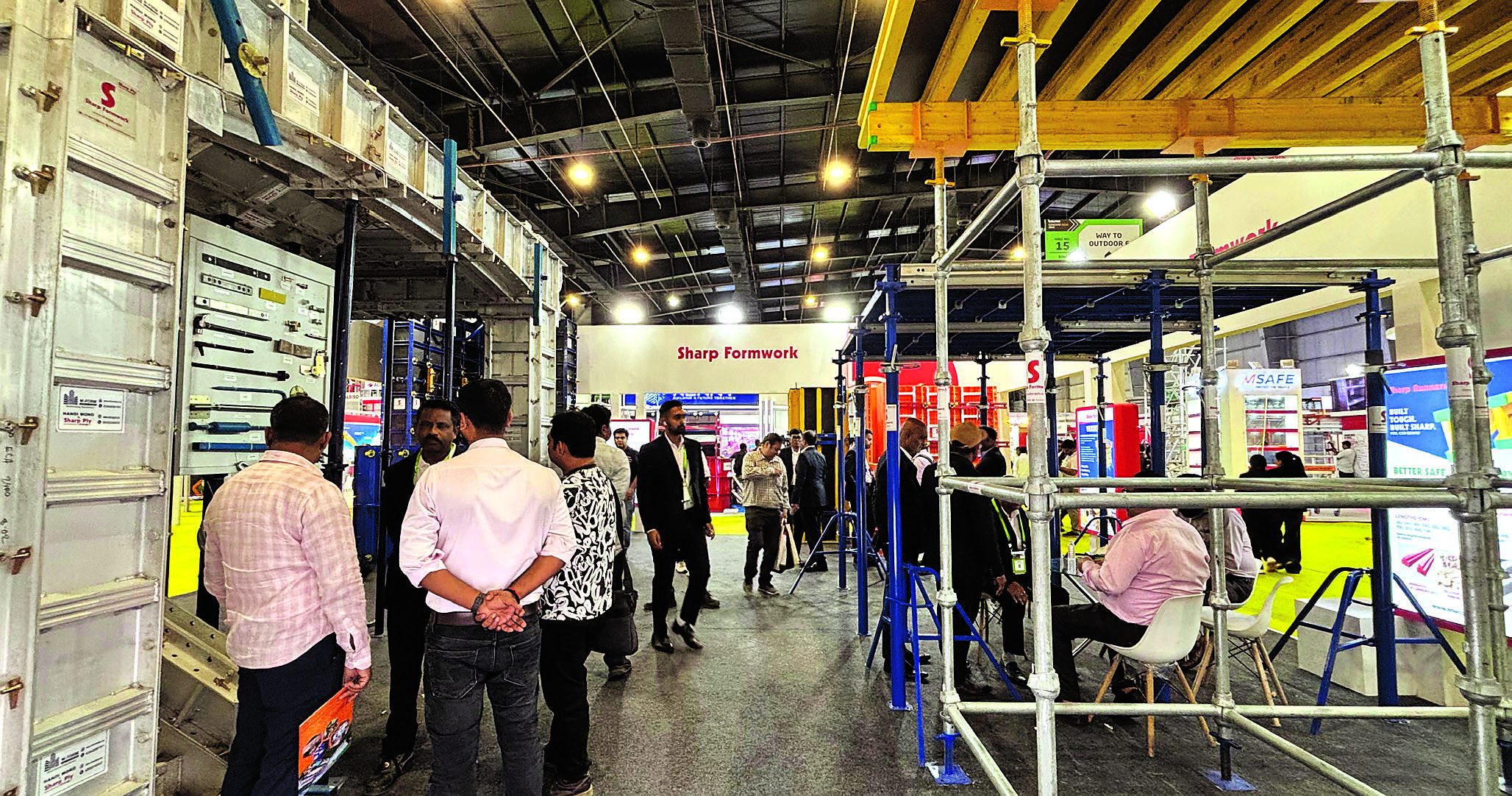
Sharp Ply’s engineered formwork and scaffolding solutions are designed to build faster, safer, and smarter. Our portfolio includes Handi Speedy, Drop Head Slab Formwork, Variflex, Aluminium Monolithic Formwork, Vertex 60 Column Formwork, and Sharp Ring Form for circular structures.But our approach goes beyond supplying panels. We engineer the complete construction cycle—from erection and concreting to striking, shifting and reuse. The result is higher productivity, reduced labour dependency, faster cycles, better concrete finish and lower lifecycle cost. Our philosophy is simple: formwork is not an expense item, it is a productivity tool.
With steel, aluminium, timber/plywood, plastic and composite formwork systems offering different advantages, how should contractors evaluate the right system?
There is no universally best formwork material. The right solution depends on the project’s geometry, repetition, cycle time, labour availability, finish requirements and expected reuse.Steel offers strength and durability. Aluminium offers light weight, speed and repeatability. Plywood provides flexibility and adaptability, while plastic and composites offer advantages in specific applications.
But contractors should look beyond the initial cost per square metre and evaluate: Investment + Labour + Cycle Time + Finish + Reuse + Lifecycle Cost. The future is also moving towards hybrid solutions, combining the strengths of different materials. At Sharp Ply Group, our focus is not on which material is the cheapest, but on which system delivers the best construction cycle for a given project?
Safety during erection, concreting, striking and dismantling remains a major concern. What digital tools are being incorporated to enhance safety in the newer systems?
Modern formwork should provide safe access, working platforms, edge protection and controlled erection and striking sequences, reducing dependence on improvisation.Digital technology takes this further. BIM, 3D modelling, QR/RFID tracking and digital planning can help optimise quantities, identify clashes, track material and improve cycle planning. Our vision is to move from simply supplying formwork to providing data-driven formwork planning and management. Ultimately, technology should answer four site questions: What do I need? Where is it? When do I need it? And can I execute it safely?
How are modularity and engineering helping Sharp Ply Group deliver customised solutions while keeping them cost-effective, practical and reusable?
We believe standardisation and customisation must work together. Construction is rarely completely standard. Geometry, floor heights, architectural features and structural requirements often change. So, we use standard modular components wherever possible and engineer customised components wherever necessary. This gives the contractor three benefits: Speed through standardisation. Precision through engineering. Value through reuse.Whether it is modular wall and column formwork, Variflex, aluminium systems or specialised solutions like Sharp Ring Form, our objective is to engineer a system that works efficiently at project sites. This is why Sharp Formwork is a one-stop formwork solutions provider— from shuttering plywood and beams to modular formwork, aluminium systems, scaffolding and customised engineering. Our philosophy is: We don’t sell formwork by the kilogram or by the square metre. We engineer a construction cycle.