
How do you see customer expectations changing as regards machine performance, operating cost, uptime, fuel efficiency, etc and what solutions is Hyundai offering to meet the requirements?
Customers increasingly seek equipment that combines high productivity with lower fuel consumption. This makes fuel efficiency an important focus of our product development as fuel is a significant operating cost. In fact, our overall approach is to offer application-specific machines that deliver the right combination of productivity, reliability, fuel efficiency and reliable operating performance.This was visible at bauma CONEXPO INDIA, where we showcased a diverse range of equipment across major categories, including excavators, wheel loaders, and forklifts --- all of which are diesel- operated. A key highlight was the introduction of three important products, each developed to address specific applications and customer requirements. They included the HX33A, a new mini excavator designed primarily for the agriculture and land development sector. As mechanisation increases across this sector, there is growing demand for compact and versatile equipment that can save time, reduce manual effort and improve productivity. The machine is also being developed and customised to meet specific customer requirements.
Also on display was the R145L, designed for quarry and mining applications, where performance, durability, reliability and uptime of machines are critical as they need to perform reliably for long hours in demanding conditions.
Another highlight was the HL655A wheel loader segment ––– our new global serial offering in the 5.5-tonne-class. Equipped with a fuel-efficient BSV electronic engine and a 5.5 m³ coal bucket, it is particularly suited to coal and port applications involving movement of large volumes of material. Its large bucket enables more material to be moved in each cycle, helping enhance productivity while reducing the number of cycles required.
Mini excavators are gaining increasing attention among contractors and rental companies in India. How do you see this segment evolving and what is Hyundai’s strategy for this market?
The mini-excavator segment is developing in India, and contractors are increasingly considering mini excavators as part of their fleets. For example, a contractor operating a fleet of around 30 machines may consider adding four or five mini excavators. While a wheel loader is a multipurpose machine, a mini excavator can perform certain applications more effectively, particularly where compact size, manoeuvrability and precision are important.The cost of wheel loaders has also increased, while mini excavators can command similar or, in some cases, higher rental rates. We are therefore evaluating this segment closely. We have already launched a new 3.5-ton machine and will continue introducing more products to the market. We currently have models such as the HX30Az, HX33A and HX35Az.
What is Hyundai’s roadmap for electric machines in India?
Currently we are in the study, preparation and development phase as there are several aspects that we need to evaluate. The development of electric mini excavators is also an important area, as customers increasingly look for solutions suited to applications where lower emissions, lower noise and operation in sensitive or confined environments are expected.At present, only a few electric mini-excavator models are available in India, but we have several models at our company in Korea. These include a 1.7-ton, a 6-ton and a 7-ton electric model. As the Indian market develops, we will continue to assess customer requirements and consider bringing some electric models into India.
Beyond the initial purchase price, what factors should customers consider when evaluating the long-term value and overall cost of ownership of construction equipment?
Customer experience and support are very important. Once customers experience our machines and the support we provide, many of them come back to us. If you look at the market over the last several years, there have been players who have grown very quickly and then declined. Hyundai has focused on consistent growth rather than short-term increases –– the reason why we have been growing steadily.Customers also need to consider factors such as downtime and maintenance costs, including the cost and availability of filters and other maintenance requirements, rather than looking only at the initial purchase price.
Quality remains our most important focus. As we approach our 20th year in India, our objective is to maintain and sustain the quality of our products and provide customers with equipment that helps them earn from their machines.
How is Hyundai strengthening its service network and support capabilities to keep machines performing in the field?
Indian customers are increasingly looking for reliable performance, fuel efficiency and strong after-sales support, while also showing greater interest in technology and connected machines. Machine uptime is critical, and customers need quick access to service and parts support when equipment is working on a project.We have around 40+ dealers and a very wide network across India. We have people available across the network, with service support in locations at approximately every 50–75 km. This enables us to respond to customers and minimise downtime.
We are continuously strengthening our service and support network in India. Our approach is to understand local customer requirements and provide high-quality products backed by the right support. We are also working on a new system that we plan to introduce in the future. It is part of our effort to further strengthen customer support.
Our three new products reflect this approach: the HX33A for agriculture, the R145L for quarry and mining, and the HL655A for mining, coal and port operations. Our message is simple—we want to provide the right machine for the right application, while building long-term partnerships with Indian customers.
India is a highly competitive and demanding market. We see significant opportunities to strengthen our R&D and widen our product portfolio, and to be number one in all areas, which means enhancing our customer support, integrating technology, and ensuring product quality and reliability.
Connected technologies and telematics are increasingly becoming part of equipment ownership. How is Hyundai helping customers use these technologies more effectively?
Customers receive alerts when there is a major issue with the machine. The system generates the relevant information and alerts the service or maintenance team so that appropriate action can be taken.We are also seeing increasing use of telematics by owners for monitoring fuel consumption, identifying sudden changes in fuel levels, and preventing issues such as fuel theft. We have introduced local-language support, including a Hindi interface, making the technology more accessible to operators and customers.
We have started an Uptime Centre as part of our efforts to support machine availability and improve customer understanding of connected technologies. Customers receive alerts when there is a major issue with the machine, and the information is also displayed in our Hi-Track system so that the relevant team can respond. We are explaining these capabilities to our users and customers so that they understand how the technology can support machine operation and uptime.
To reduce power losses and improve output per liter of fuel, we use a computer-aided control and programming system that senses the operating load and optimises the engine accordingly. The technology is designed to reduce fuel wastage by allowing the engine to adapt quickly to the operating conditions. As a result, the machine can avoid unnecessary energy consumption and improve productivity and fuel efficiency.
How do you view the Indian market and its growth opportunities for Hyundai, particularly in mining and quarrying, and how are you supporting customers as the market evolves?
The Indian market is not an easy market. It is highly price-competitive and involves very demanding working conditions. Machines developed in Korea initially faced some challenges when they were brought into India because of the long working hours and the operating conditions.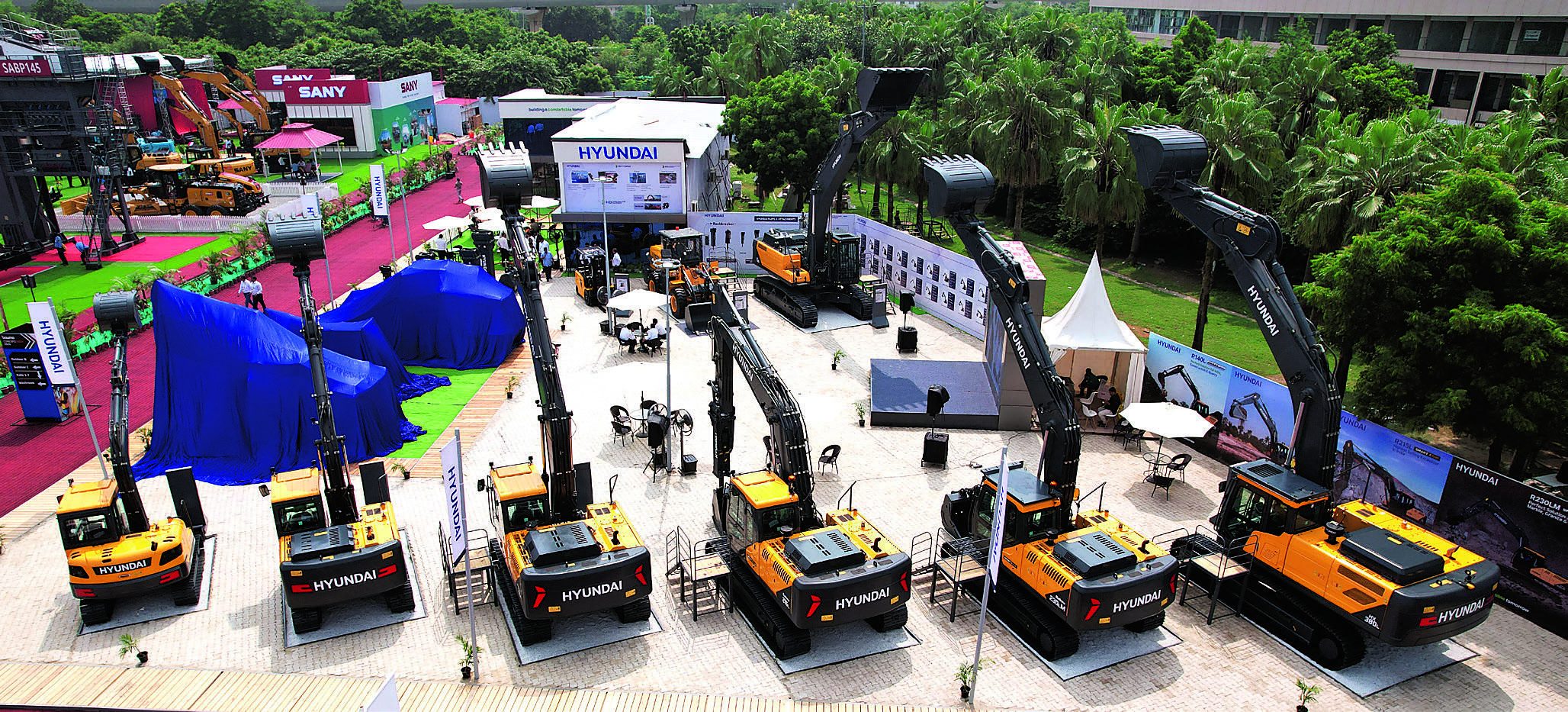
However, once a machine is proven in India, it demonstrates that it can perform in demanding conditions. This experience also helps us develop machines that can be used in other markets. Today, our 20-ton excavators are being exported and are receiving a good response in the Middle East and Africa.
The excavator market is growing strongly in India, particularly in mining where we have seen significant growth, and are responding with new products. We are currently in the No.2 position in the Indian market for excavators and while we are present across the country, we are particularly strong in west India.
As the market grows and customers look at ways to invest in equipment, financing has become an important consideration. Although we do not have our own financing vertical, we have tie-ups with several financial service providers to support customers.
Hyundai is also addressing the shortage of trained operators by continuously training and certifying operators. We have a learning and development program and training center at our Pune plant where operators from our dealers come to undergo training.
Global component manufacturers are increasingly looking at India for local manufacturing. How can Hyundai support international suppliers that want to establish manufacturing operations in India?
If a global supplier establishes manufacturing operations in India, it can benefit both the supplier and the OEM. We cannot directly invest in such companies or provide financial support, but we can provide knowledge and guidance on how they can invest in India and even connect them with potential business partners. We can also support such initiatives indirectly through technology and other areas.Local manufacturing can improve price competitiveness as well as quality and can reduce lead times. Instead of importing components from countries such as Korea, sourcing them locally can provide advantages in terms of cost and availability. For us, a supplier establishing a facility in India can therefore be a win-win situation, provided the supplier is competitive on price and maintains the required quality.
As Hyundai Construction Equipment approaches its 20th year in India and enters a new phase, what is your vision for the company’s growth, and what would you like to convey to Hyundai customers and the construction equipment industry at large?
Next year will mark our 20th year, and we see it as the beginning of a new era and a new phase for the company in India. We will announce our new vision and our investment plans to customers and other stakeholders as part of our celebrations.India is a growing market, and we see significant opportunities to strengthen our R&D and product development capabilities in the country. Our ambition is to become number one across all areas not just in terms of market share, but also by strengthening our products, customer support, technology, quality, and overall market presence.
In addition, we are exporting machines from India to international markets, including the SAARC nations, the Middle East, Africa, and other parts of Asia. The response from these markets has been very encouraging.
Quality will continue to be our most important focus. We want to maintain and sustain the quality of our products and continue providing equipment that enables our customers to earn from their machines. Our objective is to continue growing steadily and to become “The One” across all areas of our business.