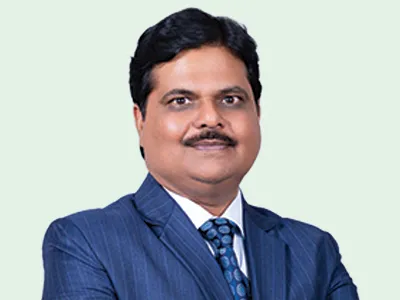
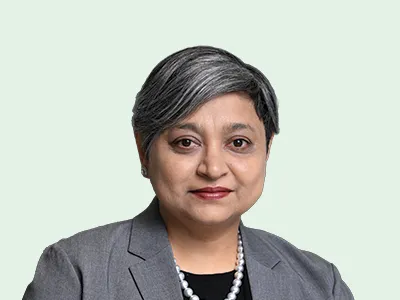
Priti Patel, Vice President, Construction Federation of India (CFI) & Chief Business Transformation Officer, Tata Projects, shares her views on adopting best construction practices, talent development, and the reforms needed for a dispute resilient construction ecosystem.
Delivering world-class infrastructure today requires far more than engineering excellence—it demands integrated planning, balanced risk allocation, and seamless coordination across the entire project lifecycle. How can India's construction ecosystem evolve to adopt these best practices and consistently deliver projects faster, safer, and to global quality standards?
India’s construction ecosystem is maturing rapidly, but to truly deliver world-class outcomes we need to tighten the fundamentals. DPRs must evolve into executable design documents, not just paper reports disconnected from ground realities. Our bidding system also needs reform—quality and competence-based selection (QCBS) should take precedence over the lowest-cost (L1) approach, which often compromises safety and sustainability.Globally, infrastructure leaders place top-down emphasis on safety and sustainability as non-negotiables, and India must embed these into every contract and boardroom discussion. If we combine integrated planning, collaborative execution, and fair risk allocation with executable DPRs, QCBS-driven bidding, and an unwavering focus on safety and sustainability, we can consistently deliver projects that are faster, safer, and benchmarked to global standards.
India's expanding infrastructure pipeline will require not only a larger workforce but also a new generation of highly skilled engineers, project managers, equipment specialists, and digital construction professionals. How can the industry transform talent development to bridge critical skill gaps and build future-ready organisations capable of delivering increasingly complex infrastructure projects with greater productivity, quality, safety, and execution excellence?
India’s infrastructure pipeline is expanding at a pace that demands not just more people, but sharper skills. We need to reimagine talent development by making engineering education more practical—linking classrooms with live projects so DPRs and execution realities converge. Industry must invest in digital construction skills—BIM, AI-driven scheduling, IoT-enabled safety—so our workforce is future-ready.
At the same time, structured apprenticeship programs and continuous learning pathways can groom project managers and equipment specialists for complex delivery. Recruitment and bidding should prioritize quality and competence, not just cost, ensuring safety and sustainability are non-negotiable.
With a top-down focus on capability building, India can bridge skill gaps and build organizations that deliver infrastructure with productivity, quality, and execution excellence. It is important for both industry and academia to collaborate on these critical initiatives which will have a generational impact on the infrastructure development of our nation.
With integrated planning, collaborative execution, and fair risk allocation with executable DPRs, QCBS-driven bidding, we can deliver projects that are faster, safer, sustainable, and benchmarked to global standards.
Construction disputes continue to delay infrastructure projects, increase costs, and lock up valuable resources despite improvements in project planning and contract management. In your opinion, what reforms in contract conditions, procurement practices, risk allocation, project management, and stakeholder coordination are needed to build a more predictable, and dispute-resilient construction ecosystem?
Disputes in infrastructure projects often arise from contract ambiguities, misaligned expectations, and uneven risk allocation rather than outright deficiencies. DPRs must evolve into executable design documents that reflect ground realities, reducing scope gaps that trigger conflict. Clearer risk-sharing mechanisms and digitized project management can minimize uncertainty, while structured stakeholder coordination builds trust. Importantly, arbitration must be strengthened—not just as a forum for dispute resolution but through timely execution of awards, so outcomes are decisive rather than prolonged. By embedding fairness in contracts, competence in procurement, and efficiency in dispute resolution, India can create a more collaborative, predictable, and dispute-resilient construction ecosystem.bauma CONEXPO INDIA has become one of the most influential platforms for the construction equipment and infrastructure industries. What are your expectations from the 2026 edition?
bauma CONEXPO INDIA 2026 must go beyond being a showcase—it should become a catalyst for transformation. My expectation is that it drives technology transfer by spotlighting digital construction, automation, and sustainable equipment that can be adopted at scale. The platform should deepen business partnerships by connecting global OEMs, Indian contractors, and financiers in structured matchmaking sessions. Equally important is policy dialogue—bringing regulators, industry leaders, and innovators together to align on standards, approvals, and incentives.Finally, the exhibition must foster industry collaboration through workshops on safety, sustainability, and lifecycle asset management, ensuring these are treated as boardroom priorities, not compliance checkboxes. If bauma CONEXPO can institutionalize these outcomes, it will accelerate India’s infrastructure journey—making projects faster, safer, greener, and globally benchmarked.