CREDAI
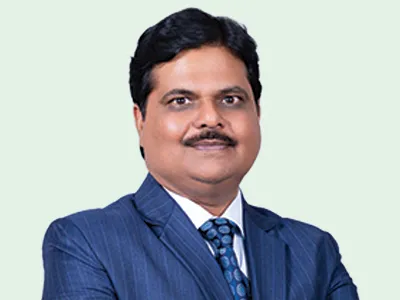
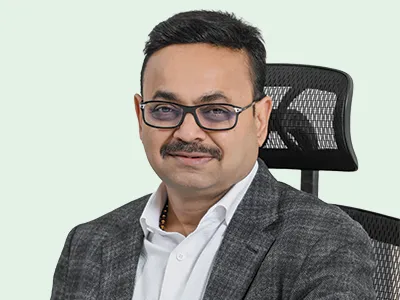
Shekhar Patel, President, CREDAI National, shares his views on building a more resilient, future-ready, and globally competitive sector, impact of automation on productivity, worker safety, cost efficiency, and overall project economics.
India's real estate sector is entering a new phase where project quality, speed of execution, resource efficiency, and cost competitiveness are becoming equally important. From CREDAI's perspective, what should be the next strategic priorities for India's real estate ecosystem?
For a long time, growth in Indian real estate was measured by the number of projects launched. Increasingly, it will be measured by how efficiently those projects are delivered. That calls for closer collaboration across the entire construction value chain. Developers cannot achieve better outcomes without reliable contractors, skilled consultants, technology partners, equipment manufacturers, and a policy environment that encourages faster decision-making. Productivity is not created by any one stakeholder in isolation; it is the result of planning, coordination and timely execution across every stage of a project.India's urban development ambition is among the largest in the world. It requires a construction ecosystem that is capable of delivering at scale without compromising quality or efficiency. It will require wider adoption of modern construction technologies, continuous investment in workforce skills and faster, more predictable regulatory processes. The opportunity before the industry is not simply to build more, but to build better, faster, and with greater consistency. That is what will define the next phase of Indian real estate.
The industry continues to face rising construction costs, labour shortages, increasing compliance requirements, and pressure to deliver projects on time. How critical will greater mechanisation, automation, and advanced construction equipment be in transforming project delivery?
Manual labour is the backbone of the real estate industry; a steady flow of trained employees is needed at all levels. Skill development has to be a strategic goal for the expansion of the sector and to enable it to significantly contribute to the Viksit Bharat Abhiyan. To this end, we have outlined a plan for training 5 lakh construction workers in the next five years with an estimated investment of ₹400 crore across 25 cities to build a future-ready workforce in sync with the changing needs of the industry.Project delivery must also adapt to increased development volumes, tighter timeframes and better-quality standards. Mechanisation is not a substitute for labour; it is a means of empowering labour. Modern equipment offers more precision, less rework, more consistency and enables projects to be completed faster. But true value is unlocked by technology only when it is backed up by a qualified crew trained to operate modern equipment, adopt better building practices and perform more securely and effectively on site.
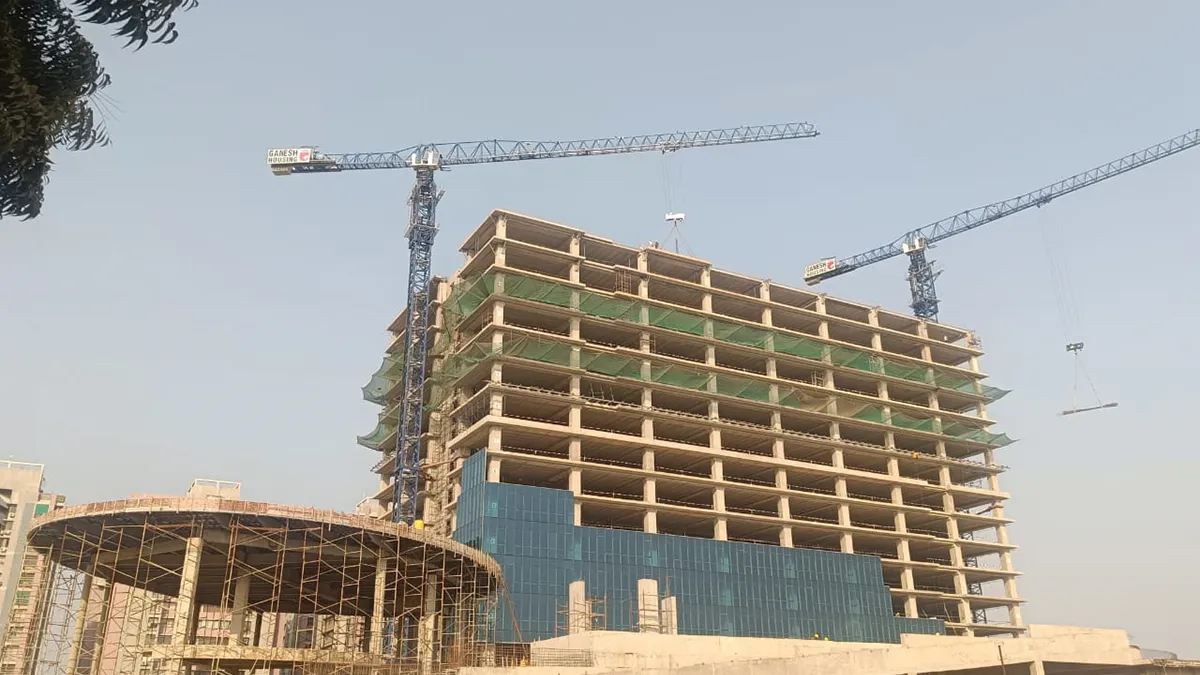
The true change will come from a combination of manpower, sophisticated equipment and focused execution. Mechanisation and automation will certainly improve productivity, but their biggest contribution is consistency. Projects become easier to plan, quality becomes easier to control, and sites become safer. The objective is not to replace people with machines, but to allow both to complement each other.
Despite the proven benefits of industrialised construction and advanced construction technologies, adoption across India's real estate sector remains uneven. What policy interventions, financing mechanisms, procurement reforms, and industry initiatives are needed to accelerate their adoption across projects of all sizes?
Every stakeholder agrees on the value of modern construction technologies today. The challenge is making them viable across projects of different sizes. Large developers generally have greater flexibility to invest, while smaller projects often work within tighter financial constraints often struggle. Cost is only part of the picture. Developers also need trained operators, easier access to equipment through leasing, and greater confidence in newer construction methods.Until these become more accessible, adoption will continue to be uneven. Better financing, skill development and supportive regulations can help bridge that gap. Technology becomes mainstream when it is practical to deploy, not simply attractive to discuss.
How do you see AI transforming project planning, construction, quality assurance, asset management, customer engagement, and decision-making?
Artificial Intelligence is often discussed as though it will transform construction overnight. That is unlikely. The industry already has the information. The problem is that it is spread across different systems and often reviewed only after something has gone wrong. Every project generates data on procurement, scheduling, costs, quality and sales, but much of it remains fragmented or is reviewed only after a problem has surfaced. If project teams can see those patterns earlier, many problems can be addressed before they affect cost or timelines.That is why the potential is significant. CREDAI's recent report estimates that AI could improve productivity by 20 to 50 per cent, increase sales velocity by 30 to 50 per cent and reduce project launch timelines by nearly 30 per cent. Even if actual gains vary from project to project, the direction is clear.
Construction, however, is still a business of judgement. Site conditions, regulatory approvals and market realities rarely follow a fixed algorithm. AI can strengthen decision-making, but experience will continue to determine the final decision.
Project delivery must adapt to increased development volumes, tighter timeframes and better-quality standards. The true change will come from a combination of skilled manpower, sophisticated equipment and focused execution.
Do you believe India's existing arbitration and dispute resolution framework is adequately serving the construction industry? What legal, contractual, and institutional reforms are needed to make dispute resolution faster, more predictable, cost-effective, and less disruptive to project delivery?
Arbitration takes time, but that’s hardly why construction projects fail. Once an issue is in arbitration, the damage has already been done. Unresolved business difficulties, poor paperwork, changes in project scope or delayed clearances sometimes go unaddressed for months until they finally turn into legal fights.Most conflicts are simpler to prevent than to resolve. Many arguments might be avoided in the first place by better contracts and timely decisions during execution of projects and clearer distribution of tasks. When disputes do occur, faster arbitration, more mediation and sector-specific expertise can help keep projects moving rather than leave them stuck in lengthy proceedings. For the building sector, assurance is often as valuable as the final decision.
bauma CONEXPO INDIA has emerged as one of the world's leading platforms for showcasing advanced construction equipment, automation, digital construction, and sustainable technologies. What would you encourage CREDAI members to look for while visiting the exhibition?
Events like bauma CONEXPO INDIA are important for the industry since people witness the technology in action. Construction decisions are a big investment. There’s no alternative to analysing equipment, talking to manufacturers and understanding how different solutions work in real project settings.Visitors should not judge a machine by its size or a technology by its novelty. The most relevant question is whether it can accelerate building, improve quality, increase safety, or make better use of resources. And these are the results that eventually impact project performance.
Online platforms provide an opportunity to learn from global practices and exchange ideas with colleagues. For an industry that's changing fast, the real measure of any technology is not how spectacular it looks on an exhibition stand, but whether it helps to produce better projects when it gets to the building site.