Construction Federation of India
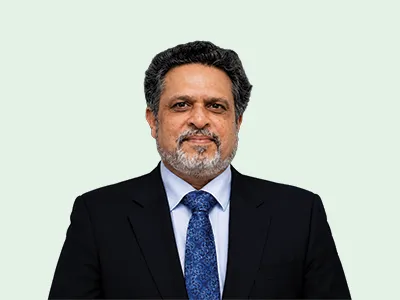
MV Satish - President, Construction Federation of India (CFI) & Advisor to CMD, L&T Ltd, shares his views on the opportunities and challenges facing the EPC and construction industry.
What are the biggest opportunities and challenges facing the EPC and construction industry in delivering projects at the speed, scale, and quality envisioned under the Viksit Bharat mission?
India’s infrastructure opportunity is becoming broader. The government has allocated around ₹12.2 lakh crore in capex for 2026–27 to support the Viksit Bharat vision through infrastructure, manufacturing, and future-ready growth. It also includes high-speed rail, large water treatment plants, semiconductor fabs, and data centers. The Mumbai–Ahmedabad bullet train is already under execution, while multiple semiconductor projects and major urban developments like Amaravati and Dholera are moving ahead as future-growth platforms.
These projects are important because they represent a shift from conventional civil works to highly complex, technology-intensive infrastructure. For EPC firms, the challenge is to deliver them with world-class engineering, tighter project controls, sustainability, and faster execution. So, the opportunity for India is not just to build more, but to build smarter, greener, and more future-ready.
The biggest challenge facing the EPC and construction industry is to deliver projects with world-class engineering, ensuring tighter project controls, use of advanced equipment, and following well-defined technical standards and best practices.
Which structural and policy reforms do you believe are most critical to improving project execution?
Priority areas for immediate reform include DPR finalization and project preparedness before award, a transition from L1 to QCBS-based tendering, fast-track arbitration and dispute resolution, and fair contractual risk allocation.What capabilities must Indian construction companies develop to compete with the world's leading EPC firms and expand their global footprint?
Countries like the UK, Germany, Singapore, and the Nordics are ahead of India in BIM adoption, digital maturity, and sustainable construction practices. For example, UK surveys show BIM use is now around 71–73%, while Germany and the Nordic region are pushing stronger digital and low-carbon construction systems.India must improve in engineering excellence, project management, technology adoption, risk management, and innovation to reach that level. We need wider use of precast, BIM, AI, digital project controls, and sustainability-led design instead of relying mainly on conventional site execution. If we build these capabilities, Indian EPC firms can match global standards in quality, speed, and predictability.
Many developed economies have improved construction productivity through standardisation, industrialisation, digital integration, collaborative project delivery, advanced construction equipment, and well-defined technical standards and best practices. In your opinion, what are the key structural barriers preventing India's construction industry from achieving similar productivity gains?
India’s biggest productivity barrier is not just equipment, but fragmentation — weak standardisation, uneven digital adoption, skill gaps, and poor coordination across projects. To match developed countries, we need a full framework of technical standards, execution guidelines, quality assurance, and modern methods like precast and modular construction.BIM, digital workflows, and data-driven project controls should become routine, not optional. Government and industry bodies must work together on model standards, pilot projects, and large-scale training. If we do this, India can move toward an industrialised, efficient, and globally competitive construction sector.