Indian Demolition Association
Fazrulla Basha, Chairman, Indian Demolition Association, informs that the focus in demolition projects has changed from using brute-force to precision engineering with complete safety, thanks to scientific planning, use of advanced technologies, world-class equipment, engineered methodologies, and skilled contractors. But these capabilities need to be the norm and not an exception if demolition has to become a truly specialized sector.

India's demolition industry is poised for significant growth. How prepared is the country, and what changes are needed?
As Indian cities urbanize rapidly, redevelopment is becoming increasingly common. With rising urban density and ageing infrastructure, scientific demolition is essential for the safe removal of these structures.In the past two decades, the demolition industry has made significant progress. Although there are newer technologies, many projects still use traditional demolition methods. We now have world class equipment, engineered methodologies for demolition and skilled contractors but these capabilities need to become the norm in the industry and not the exception. To transform demolition into a truly specialised sector, India needs recognition of demolition as a distinct engineering discipline, national standards and codes specifically for demolition engineering, mandatory engineering-based demolition planning, skilled manpower through structured certification programmes, greater adoption of advanced machinery and digital technologies, and stronger regulatory oversight and safety compliance.
The future of demolition is not about breaking structures—it is about engineering their safe, systematic, and sustainable removal.
How is the industry adopting scientific planning and advanced technologies?
Demolition today is more than tearing down buildings. Engineering investigations, structural assessments, risk assessments and detailed demolition sequencing form the basis of every project. More and more projects are now adopting advanced techniques and equipment, including diamond wire sawing and wall sawing, controlled dismantling methodologies, high-reach demolition equipment, hydraulic crushers, shears and pulverisers, drone surveys, remote-controlled demolition equipment, and implosion techniques.These technologies are especially useful in congested urban areas where vibration control, dust suppression, noise reduction and protection of adjoining structures are essential. The focus has changed from brute-force demolition to precision engineering, enabling projects to be completed safely with the least possible impact to surrounding infrastructure.
Safety remains the cornerstone of demolition. What measures are required?
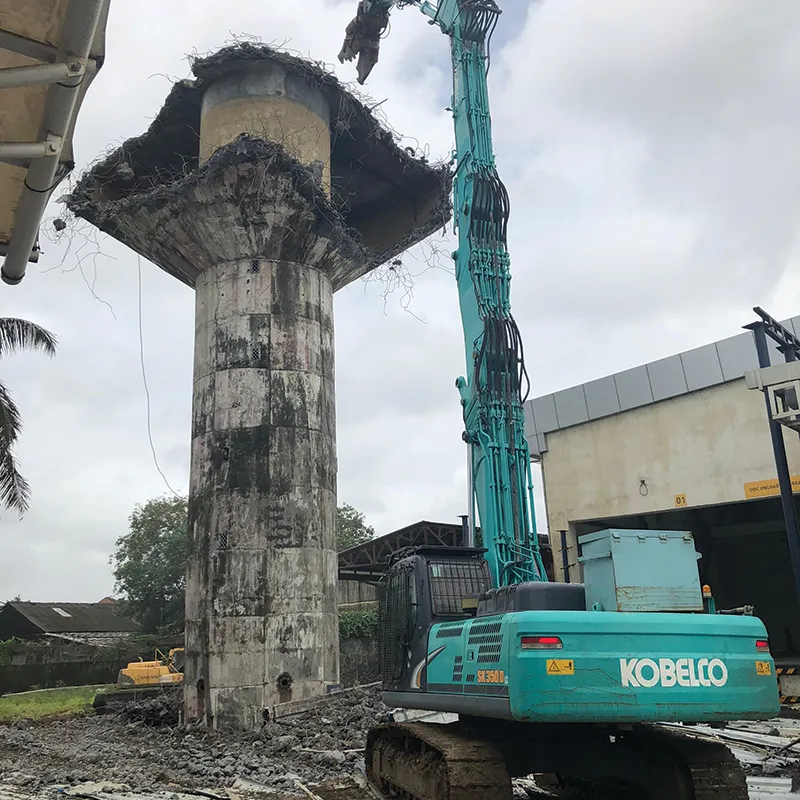
The Indian Demolition Association is actively working to strengthen the industry’s safety culture by organising technical conferences and workshops, conducting knowledge-sharing sessions, promoting international best practices, collaborating with equipment manufacturers, encouraging the adoption of engineered demolition methodologies, and working towards standardised guidelines and skill development.
Our long-term objective is to make scientific demolition synonymous with safe demolition.
How can scientific demolition improve C&D waste management?
Construction and Demolition waste should no longer be viewed as waste. It should be recognized as a valuable resource in circular economy. Demolition sites have materials which can still have value like concrete, steel, bricks, aggregates, wood, glass, doors, fittings and other reusable components. With good planning, segregation and processing these materials can be reintroduced into the construction cycle rather than landfill. Indeed, Indian best practice assessments indicate that around 80–90% of C&D waste can be reused after processing in applications such as landscaping, earthworks and civil engineeringHowever, technology alone is insufficient. Stronger implementation of C&D Waste Management Rules, investment in recycling infrastructure, and owner awareness are equally important. Sustainable demolition will become a key pillar of India's green infrastructure movement.
The future lies in integrated project delivery where engineering, technology, safety, and sustainability work together.
How can India build a collaborative demolition ecosystem?
India can create a strong collaborative demolition ecosystem only when demolition is treated as a professional, multi-disciplinary activity and not merely as the removal of a structure. The first step is to get all stakeholders on one platform: government authorities, developers, architects, structural engineers, demolition contractors, equipment manufacturers, recyclers, waste processors, consultants, workers and local communities. India’s C&D sector is composed of a multitude of actors, so collaboration and capacity-building must be pervasive across this value chain. And demolition planning should begin during project conception rather than after construction contracts are awarded. The future lies in integrated project delivery where engineering, technology, safety, and sustainability work together.Which emerging technologies will shape the future?
The next decade will fundamentally transform demolition through technology. Some of the most influential developments include high-reach demolition excavators, remote-controlled demolition robots, intelligent hydraulic attachments, diamond cutting technologies, AI-assisted demolition planning, drone-based inspections, structural monitoring sensors, and real-time safety monitoring.Artificial Intelligence will improve planning and risk prediction, while robotics will significantly reduce human exposure to hazardous environments. Although equipment costs remain high today, increased adoption will gradually improve affordability and accessibility. The future demolition site will be smarter, safer, more data-driven, and considerably more sustainable.
What are the objectives of the IDA Conference at bauma CONEXPO INDIA 2026?
I see the IDA Conference at bauma CONEXPO INDIA 2026 as a platform to shape the future of India’s demolition and recycling industry, a platform that brings the entire ecosystem together to make the sector safer, more scientific, sustainable and tech-driven. Our objectives are to promote scientific demolition practices; provide insights into the BIS code for demolition through an address by our Chief Guest; discuss and present complex demolition case studies from India; facilitate knowledge exchange between Indian and international experts; build industry capabilities; encourage skill development; promote safety and sustainability; and foster collaboration across the construction ecosystem.We believe that continuous knowledge sharing is the fastest way to elevate the Indian demolition industry to global standards.
What policy reforms and collaborations are essential for future growth?
India has tremendous potential to become a global leader in scientific demolition. To achieve this, we require national demolition standards and codes, certification systems for demolition contractors, skill development programmes, research and innovation initiatives, incentives for the adoption of advanced equipment, strong enforcement of safety regulations, improved C&D waste recycling infrastructure, and greater collaboration between industry and academia.International collaboration will continue to play an important role. Learning from mature demolition markets while adapting those practices to Indian conditions will accelerate our growth.
The Indian demolition industry is entering a defining decade. We visualize an industry that is known and respected worldwide for engineering excellence, uncompromising safety, technological innovation, environmental responsibility, and highly skilled professionals.
With joint efforts, we can turn demolition from a routine construction activity into a modern engineering discipline that supports India’s infrastructure dreams with accuracy, sustainability and professionalism. Through collective effort, we can transform demolition from a conventional demolition activity into a modern engineering discipline—one that contributes to India’s infrastructure aspirations with precision, sustainability and professionalism.