Highways Investor Association
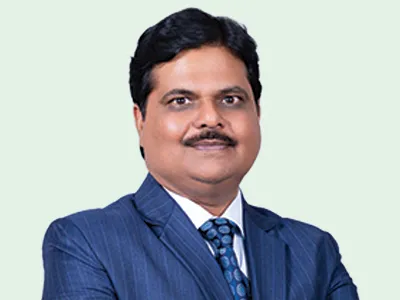
Dr. Zafar Khan - President, Highways Investor Association (HIA) and Executive Director & Joint CEO, Vertis Infrastructure Trust, gives his perspective on strategic priorities for India's highway ecosystem, adoption of safer road design, intelligent transport systems, connected mobility solutions, data-driven safety interventions, and enforcement mechanisms in delivering a seamless road experience.
How can policymakers, investors, concessionaires, contractors, consultants, and technology providers work together to develop a highway network that is not only world-class but also safer, smarter, more resilient, and sustainable?
India's highway sector has achieved remarkable success in expanding its network. The next phase, however, is not about building more roads—it is about creating greater value from the assets we have already built.As network expansion gradually matures, our focus must shift to building highways that are designed to last. Future investments will increasingly be directed towards capacity augmentation, rehabilitation, and maintenance. This makes construction quality, lifecycle performance, and durability paramount. Every new highway should be built to the highest international standards, ensuring it remains safe, resilient, and efficient for decades with minimal lifecycle costs.
Alongside this, our strategic priorities should include asset optimisation, road safety, digital transformation, climate resilience, and sustainable financing. Technologies such as AI, digital twins, predictive maintenance, C-V2X, and intelligent traffic management can transform highways into connected mobility corridors rather than mere transport routes.
This transformation requires collaboration across the ecosystem. Policymakers must provide stable, forward-looking regulations; investors should continue supporting long-term capital; concessionaires need to embrace lifecycle asset management; contractors and consultants must deliver world-class engineering and innovation, and technology providers should enable interoperable digital solutions.
India has already demonstrated that it can build highways at an unprecedented pace. The next decade presents an even greater opportunity—to build highways that match the best in the world in quality, safety, resilience, and user experience. Success will not be measured by kilometres constructed alone, but by the long-term value these assets create for the nation and future generations.
HIA has welcomed the Government's decision to constitute the National Road Safety Board. Beyond strengthening institutional governance, how do you envision the Board accelerating the adoption of safer road design, intelligent transport systems, connected mobility solutions, and data-driven safety interventions?
The constitution of the National Road Safety Board is a significant step towards making road safety a core governance priority rather than a compliance exercise. It provides an opportunity to create a unified, data-driven framework that brings together engineering, enforcement, technology, emergency response, and policy under one strategic vision.The Board can play a transformative role by driving the adoption of forgiving road design, AI-enabled safety audits, Intelligent Transport Systems (ITS), connected vehicle technologies such as C-V2X, and real-time crash analytics. Standardising safety performance indicators, promoting evidence-based interventions, and encouraging predictive analytics will help shift the focus from reactive accident response to proactive risk prevention.
Highway investors and concessionaires have an equally important role to play. As long-term asset owners and operators, they are uniquely positioned to embed safety throughout the asset lifecycle—from design and construction to operations and maintenance. Investments in intelligent traffic management, incident detection systems, black spot mitigation, emergency response, and continuous safety monitoring should become integral to asset management rather than standalone initiatives. Road safety should also become a measurable performance outcome within concession agreements, with incentives linked to safety improvements and service levels.
As Highways Investor Association (HIA), we are committed to working closely with policymakers, regulators, technology partners, and all stakeholders to support this national mission. Our members collectively manage and operate a significant portion of India's highway network, providing practical insights from the ground. We would be pleased to collaborate with the National Road Safety Board in shaping policy, sharing global best practices, piloting innovative technologies, and developing scalable solutions that make India's highways safer for every road user. Ultimately, the success of the Board will not be measured by the policies it formulates, but by the number of lives it helps save.
India is gradually moving towards Multi-Lane Free Flow (MLFF) tolling and digitally integrated highway operations. From an investor's perspective, what opportunities and challenges do you foresee in implementing barrier-less tolling?
MLFF is much more than a new tolling technology, it is the foundation of a digitally connected highway ecosystem. It offers significant benefits by improving traffic flow, reducing congestion and emissions, enhancing user experience, and generating valuable data for better asset management.From an investor's perspective, however, revenue assurance is the single most important factor for successful implementation. This requires reliable vehicle identification, strong enforcement, and seamless integration with FASTag, Vahan, and other digital platforms.
A critical policy issue is the recovery of unpaid VRN-based toll transactions. For MLFF to succeed at scale, the responsibility for recovering unpaid tolls should rest with the Government through a robust statutory enforcement mechanism, rather than individual concessionaires. This will eliminate revenue uncertainty and strengthen investor confidence.
At Highways Investor Association (HIA), we are committed to working closely with the Government to develop practical policy frameworks and implementation models that balance user convenience with commercial sustainability. With the right combination of technology, enforcement, and policy support, India can build one of the world's most efficient and seamless digital tolling ecosystems.
Many stakeholders believe the industry should move beyond awarding projects based primarily on the lowest construction cost towards procurement models that emphasise lifecycle performance and long-term value. How can procurement and concession frameworks better incentivise construction quality, durability, safety, sustainability, and efficient asset management?
India's highway sector is entering a new phase where success should no longer be measured by the lowest construction cost, but by the lowest lifecycle cost and highest asset performance. As network expansion matures, future investments will increasingly focus on maintenance, rehabilitation, and capacity augmentation, making construction quality more critical than ever.In my experience, there is a clear correlation between the concession model and long-term asset quality. BOT projects generally deliver the highest quality, as investors own and operate the asset until concession maturity and therefore have a direct incentive to build for durability and lifecycle performance. HAM and Annuity projects fall in the middle, while EPC projects, with only a limited Defect Liability Period (typically five years), naturally have a greater focus on construction completion than long-term asset performance.
Going forward, India should encourage greater participation through PPP models, where the developer's long-term financial interest is aligned with the quality and performance of the asset.
Procurement and concession frameworks should therefore reward quality, durability, safety, sustainability, and operational performance rather than just the lowest bid. This can be achieved through lifecycle costing, performance-based specifications, measurable service-level KPIs, longer accountability for asset performance, and incentives linked to road condition and safety outcomes.
Ultimately, we need to shift from awarding projects to the lowest-cost bidder to selecting partners who deliver the highest long-term value. Highways should be built to international standards, designed to last for decades, and managed as strategic national assets rather than short-term construction projects.
Infrastructure Investment Trusts (InvITs), Toll-Operate-Transfer (TOT), and asset monetisation programs are emerging as key financing mechanisms for India's highway sector. What policy reforms would further strengthen long-term domestic and international investment in highway infrastructure?
India has successfully established InvITs, TOT, and asset monetisation as credible platforms for attracting long-term domestic and global capital into the highway sector. The participation of pension funds, sovereign wealth funds, and global institutional investors reflects strong confidence in India's infrastructure growth story and policy direction.To sustain this momentum, the next phase of reforms should focus on policy stability, regulatory certainty, and bankable concession frameworks. Investors value predictable cash flows more than high returns. Timely dispute resolution, balanced risk allocation, stable taxation, streamlined approvals, and technology-enabled revenue assurance—particularly with the transition to MLFF—will further strengthen investor confidence.
Going forward, India should also expand the role of public-private partnerships (PPP). Assets developed under long-term concession models such as BOT have consistently demonstrated superior lifecycle performance because the developer remains invested in the quality and performance of the asset throughout the concession period. A renewed focus on PPPs will not only improve asset quality but also reduce the long-term fiscal burden on the Government.
At Highways Investor Association (HIA), we believe India is well positioned to become one of the world's most attractive destinations for infrastructure investment. With continued policy reforms and close collaboration between Government and industry, the highway sector can mobilise significantly greater domestic and international capital to support the next phase of India's infrastructure transformation.
We need to shift from awarding projects to the lowest-cost bidder to selecting partners who deliver the highest long-term value. Highways should be built to international standards, designed to last for decades, and managed as strategic national assets rather than short-term construction projects.
Despite significant progress, highway projects continue to face execution challenges related to project planning, utility shifting, environmental clearances, financing, stakeholder coordination, supply chain management, and construction execution. How can better planning, mechanisation, real-time project monitoring, performance-driven execution, and collaborative decision-making improve execution efficiency?
In my view, the most significant challenges are often those that arise before construction begins—particularly land availability, utility shifting, statutory clearances and coordination among multiple stakeholders. When these issues are unresolved at the start, they create cascading impacts on schedules, financing, contractor mobilisation and ultimately asset performance.The answer lies in improving project readiness before award and creating stronger coordination mechanisms throughout execution. Technology can help significantly through GIS-based planning, digital twins, drone-based progress monitoring, BIM, automated quality control and real-time dashboards. Mechanisation and modern construction equipment can improve productivity and consistency, but technology is most effective when supported by sound planning and clear accountability.
We should also encourage more collaborative decision-making, with faster escalation and resolution of issues rather than allowing them to remain unresolved for extended periods. A project should be managed as an integrated system, with all stakeholders focused on the same outcome, timely delivery of a high-quality, safe and durable asset.
As India's highway network expands and matures, maintenance and asset preservation are becoming just as important as new construction. How can India transition towards a proactive, technology-driven, and performance-based asset management framework that enhances safety, extends pavement life, improves user experience, and reduces lifecycle costs?
India's highway sector is entering a new era where asset management will become as important as asset creation. As network expansion slows, the focus must shift from building more roads to preserving and optimising the value of existing assets.The transition requires moving from reactive maintenance to predictive, technology-driven asset management. AI, digital twins, pavement health monitoring, drones, IoT sensors, and data analytics can help identify deterioration early, optimise maintenance interventions, and significantly reduce lifecycle costs while improving safety and user experience.
Equally important is a shift in policy. Maintenance contracts should move towards performance-based frameworks with clearly defined service-level KPIs linked to pavement condition, ride quality, safety, and response times, rather than input-based maintenance.
There is also a need to create a dedicated asset preservation policy. Today, maintenance often receives lower priority than new construction, whereas globally, preserving existing assets delivers far greater economic value than rebuilding deteriorated infrastructure. Adequate funding for periodic maintenance and timely overlays can significantly extend pavement life and reduce overall lifecycle costs.
From an investor's perspective, highways should be managed as long-term infrastructure assets, not construction projects. At HIA, we believe that combining technology, performance-based maintenance, and long-term private sector participation will enable India to build a highway network that is safer, more durable, and comparable with the best in the world.
Which global best practices do you believe India should adopt to develop highways that are resilient, future-ready, and capable of supporting next-generation mobility?
India has the opportunity not just to catch up with global best practices, but also to set new benchmarks by combining world-class engineering with digital innovation and sustainable financing. The next generation of highways must be resilient, intelligent, and user-centric.We should adopt global best practices in lifecycle asset management, performance-based maintenance, digital twins, AI-driven inspections, Intelligent Transport Systems (ITS), connected mobility (C-V2X), and climate-resilient design. Equally important is building highways to international quality standards so that they are designed to last for decades with minimal lifecycle interventions.
Globally, countries have also demonstrated the value of strong public-private partnerships (PPP), where long-term investors are responsible for the performance of the asset throughout its lifecycle. This creates a natural incentive to invest in quality, innovation, and preventive maintenance. India should continue strengthening PPP models to complement public investment and improve long-term asset performance.
Finally, we must move towards an integrated corridor management approach, where highways are planned not just as transport infrastructure but as connected economic corridors supporting seamless tolling, road safety, logistics, EV charging, renewable energy, and real-time traffic management.
India has already shown the world how to build highways at scale. The next ambition should be to build the world's smartest, safest, most resilient, and most sustainable highway network, creating a model that other countries aspire to follow.
Which emerging technologies and equipment innovations do you believe will fundamentally transform highway construction in India over the next decade and what policy, procurement, financing, and industry changes will be necessary to accelerate their adoption?
Over the next decade, I expect the greatest transformation to come from the convergence of advanced equipment, automation, data and artificial intelligence. Intelligent machine control, automated and semi-automated construction, drone-based surveying, digital twins, BIM, IoT-enabled equipment and AI-driven quality and asset monitoring can significantly improve productivity and reduce variability. For investors, the real opportunity is to use technology to deliver better project economics: faster construction, fewer defects, improved safety, lower material wastage and longer asset life.To accelerate adoption, procurement frameworks need to become more outcome-oriented and allow contractors and concessionaires greater flexibility to deploy innovative technologies. Financing models should recognise the lifecycle savings generated by technology, while standards and specifications should be updated to accommodate proven innovations.
The industry also needs greater investment in skills and digital capabilities. The next generation of highway development will require collaboration among infrastructure companies, equipment manufacturers, technology providers, policymakers and financial institutions.