Crane Owners Association of India
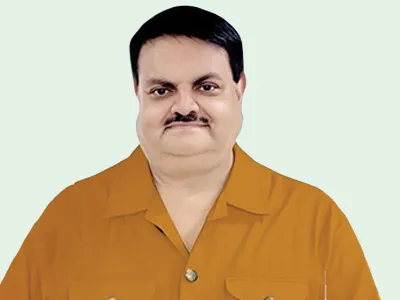
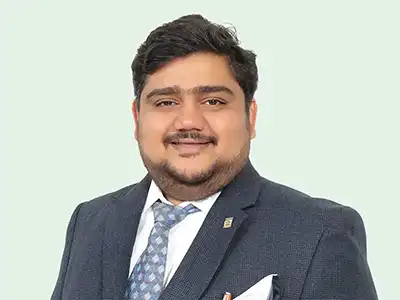
Bajranglal G. Agarwal, President, Crane Owners Association of India (COAOI), discusses what’s transforming lifting requirements in India, the need to establish a comprehensive National Lifting Code, the reforms needed to improve project quality and safety, and the initiatives COAOI is taking to strengthen professional competency across the lifting ecosystem.
Modern infrastructure projects increasingly involve heavy precast components, modular construction, long-span bridges, high-rise buildings, metro systems, renewable energy installations, and large industrial facilities. How are these changing construction practices transforming lifting requirements in India, and what new capabilities will crane owners need to remain competitive?
The scale and complexity of Indian infrastructure have undergone a massive paradigm shift. With the Union Budget 2026-27 proposing an extraordinary public capital expenditure of ₹12.2 lakh crore, representing an approximately 9% increase over the previous fiscal year, we are seeing projects executed at a size and speed never before witnessed in our nation's history.This massive public investment is driving the adoption of heavy precast segments, massive modular assemblies, and mega-scale industrial projects. Naturally, our lifting requirements have evolved from standard support tasks to highly complex, heavy-lifting engineering marvels.
The Indian crane rental industry has aggressively stepped up to this challenge. Historically, Indian projects relied almost entirely on foreign agencies and crews for super-heavy lifting operations. Today, that dependency does not exist. Indian crane owners have proactively built world-class fleets, acquiring heavy-duty crawler and all-terrain cranes of up to and exceeding 2000 MT capacity. To remain competitive, crane owners are shifting focus from simply supplying a machine, to becoming end-to-end engineering partners capable of delivering integrated lift plans, assessments, and specialised heavy-transport logistics.
India still lacks a comprehensive National Lifting Code governing lift planning, crane selection, ground assessment, rigging practices, inspections, and competency requirements. What role can COAOI play in working with BIS, government agencies, project owners, and industry stakeholders to make this a reality?
The time for a comprehensive, legally enforceable National Lifting Code is long overdue. At COAOI, we strongly advocate that crane selection, ground bearing capacity assessments, and rigging design should no longer be treated as just site activities; they must be respected as formal, critical engineering disciplines across all Indian project sites, regardless of size.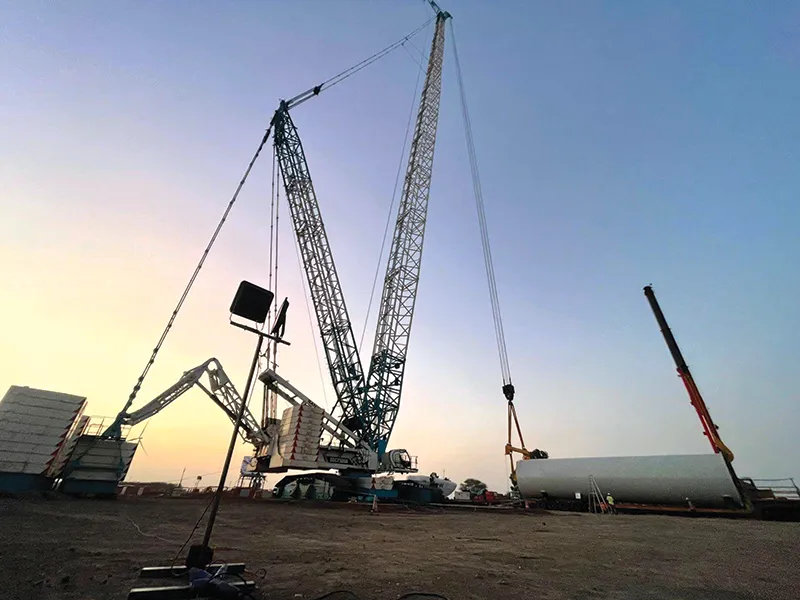
COAOI is willing to collaborate with the CII, BIS, MoRTH, other agencies, central ministry divisions, and premier project developers. Our association is prepared to serve as a key technical resource for supplying field data, establishing safety benchmarks, and integrating proven global standards into a localised framework tailored specifically to the unique operational challenges of India. It must be a collaborative effort.Despite significant investments in modern crane fleets, crane services are frequently awarded primarily on the basis of the lowest rental cost. Do you believe procurement practices should place greater emphasis on technical competence, equipment condition, safety records, engineering expertise, and lifecycle value? What reforms would you recommend to improve project quality and safety?This touches upon one of the most painful realities of our industry today. In India, there has been a concerning influx of unreliable operators who import deeply aged, poorly maintained used machinery, and represent them on paper as modern, high-quality assets.
Because their initial capital outlay is negligible, these operators offer unsustainably low rental rates that owners of genuine, state-of-the- art, and highly yielding fleets simply cannot match under standard business practices. When project procurement teams willfully stick to the outdated L1 mentality, they inadvertently award contracts to these low-tier, substandard machines.
This practice is directly responsible for avoidable site accidents, project delays, and severe safety compromises. We need an immediate, systemic change in procurement mindset across all domains- public and private. We strongly recommend that major developers and public sector undertakings implement a strict, transparent pre-qualification mechanism. Tenders must be evaluated on a Quality and Cost-Based Selection model rather than pure L1, heavily weighing technical competence, past safety records, verified equipment maintenance logs, and the age and origin of the machinery.
Rising equipment acquisition costs, higher financing expenses, increasing compliance requirements, and intense pressure on rental rates are making profitability a growing concern for crane owners. How can the industry strike a balance between competitive pricing, sustainable business operations, and continued investment in modern equipment, safety, technology, and skilled manpower? What changes in procurement practices and industry collaboration would help create a healthier and more sustainable crane rental ecosystem? To establish a healthy, sustainable ecosystem, we must tackle the root causes that are squeezing our margins. First, as discussed, shifting from an L1- focused procurement model to a technical-merit model will naturally allow safety-compliant and technologically superior operators to charge a fair, sustainable premium.
Second, our local industry faces severe pressure from certain foreign OEMs dumping low-cost machinery into India. This practice floods the market, artificially decreases rental prices, and discourages capital investment in genuine, highly durable, and safer equipment.
To address this, we highly welcome the Government of India’s initiatives, such as the proposed Scheme for Enhancement of Construction and Infrastructure Equipment, designed specifically to foster domestic, high-tech manufacturing and check unfair trade practices. True balance will only occur when there is an equal playing field, allowing local owners to service their debts comfortably, invest in continuous safety compliance, and dedicate resources to training skilled operators.
Emerging sectors such as offshore wind, nuclear power, semiconductor manufacturing, giga factories, green hydrogen, data centres, and large industrial facilities demand highly specialised lifting solutions. How prepared is India's crane industry to support these sectors, and where do you see the biggest opportunities for future growth?
The Indian crane rental sector is incredibly agile, showing a remarkable ability to keep pace with the instant demands of these fast evolving, high-tech industries. When a new project type or greenfield stream emerges, our members immediately align themselves on their toes to procure specialised, high capacity machinery predominantly imported from international markets, including major global hubs and leading Chinese manufacturers.The growth potential here is staggering, particularly in the green energy space. By the end of fiscal year 2025-26, India's installed wind capacity reached a historic high, surpassing 56 GW. In tandem with the government’s ambitious target of achieving 100 GW of wind energy by 2030 and the Ministry of New and Renewable Energy's specific target of establishing 30 GW of offshore wind installations by the same year, the potential along India’s vast 7,600 km shoreline is also immense.
Our sector is ready to support this monumental transition. By mobilising ultra-heavy capacity cranes at short notice, we are not just enabling clean energy infrastructure but are also generating immense direct and indirect employment opportunities for operators, technical professionals, riggers, and mechanical engineers across all regions and manufacturing corridors.
How critical are scientific lift planning, proper crane selection, ground bearing capacity assessment, outrigger support design, rigging practices, and competent supervision in ensuring safe and successful lifting operations? What are the most common mistakes you continue to observe on Indian project sites, and what practical measures should project owners, consultants, contractors, and crane rental companies adopt to improve safety, reliability, and performance?
Paying thorough attention to technical details ranging from ground bearing capacity and outrigger support design to rigging configurations is non-negotiable. These engineering assessments must happen at the planning desk before a crane is ever mobilised to the job site.The biggest bottleneck we face in India is the sheer speed at which our infrastructure sector has exploded over the past few years. This exponential pace of project execution has outrun our talent pipeline, resulting in a temporary but severe shortfall of formally trained crane operators, qualified riggers, supervisors, and safety-focused engineers.
On many active project sites, we still observe avoidable, basic mistakes, such as inadequate ground preparation, poor outrigger placements, or a lack of real-time supervisor coordination. While these gaps are a by-product of rapid development, the industry is steadily self-correcting. We must mandate that project developers involve crane rental companies during the early stages of site design to ensure that access roads, ground compaction, and spatial clearances are engineered properly to handle the heavy weights involved.
OEM-certified refurbishment is a massive, untapped market opportunity. We need global OEMs and local lifting leaders to collaborate on setting up such centers that would help create a safe, reliable path for extending the lifecycle of cranes in India.
A significant portion of India's crane fleet has been in operation for many years, while mature lifting markets follow well-defined standards for crane inspection, periodic certification, fitness evaluation, load testing, refurbishment, life extension, and retirement of ageing equipment. Do you believe India needs a more structured regulatory framework for managing the entire lifecycle of cranes?
We have seen very promising changes in this area over the past few years. A majority of major developers and PSU project sites now inspect and impose a strict limitation on the deploying older unfit machinery.The industry also has a general rule of limiting the use of machinery older than 10 years old. However, we must apply this rule with technical nuance rather than a blanket ban. It is my firm view that exceptional European, American, and Japanese equipment- from renowned OEMs such as Liebherr, Terex-Demag, Manitowoc, Tadano, and Kobelco are built to such high structural and metallurgical engineering standards that, with proper maintenance, they can safely operate at peak performance on any site for 20 years or more. Applying a strict 10-year limit on these premium assets is economically counterproductive and raises capital costs unnecessarily.
Instead of simple age-based limits, we should focus on standardised, rigorous physical safety checkpoints. This includes comprehensive pre-deployment inspections, periodic third-party testing, non-destructive testing (NDT) of structural welds, and strict adherence to maintenance logs. Additionally, professional, OEM-certified refurbishment is a massive, untapped market opportunity in India. We need major global OEMs and local lifting leaders to collaborate on setting up formal, certified refurbishment centres, creating a safe, reliable path for extending the lifecycle of cranes in India.
How do you see digital technologies such as telematics, AI, predictive maintenance, and remote diagnostics improving safety, equipment utilisation, productivity, and business performance in India over the next decade?
The next decade will completely rewrite the operational playbook of the Indian crane industry. We are transitioning into a highly technical, data-centric era where real-time digital insights will be the core source of strategic decision-making for any successful business owner.Modern cranes are already rolling off assembly lines loaded with onboard computers, remote diagnostics, telematics, and direct cloud connectivity. This allows us to track load stresses, detect minor hydraulic anomalies before they cause a failure, and plan precise lifts using 3D digital simulation software.
However, to unlock the true power of this digital wave, we need a shift in the OEM business model towards data transparency and data democracy. All critical telematics and diagnostic data points generated by a machine should be easily and transparently accessible to the crane owners who bought them. Restrictions on data sharing or closed diagnostic portals only prevent us from optimising fleet management, predicting maintenance needs, and ensuring maximum safety. True innovation relies on open collaboration.
Today's lifting operations require not only skilled crane operators but also qualified lift planners, rigging engineers, supervisors, and safety professionals. How can the industry address this growing skills gap, and what initiatives is COAOI undertaking to strengthen professional competency across the lifting ecosystem?
As an industry, we must openly admit that the demand for skilled heavy-lifting talent has far outpaced our traditional vocational training methods. We cannot bridge this gap with quick, temporary fixes; we need a structured, institutionalised approach.To achieve this, the COAOI is actively lobbying relevant Central and State Government authorities for the allocation of a dedicated land parcel. Our goal is to establish a state-of-the-art, Physical Training and Excellence Academy dedicated solely to the lifting and heavy transport industries.
This facility will feature modern simulators, hands-on rigging yards, and structured engineering certification programs designed to produce a steady stream of highly qualified, certified crane operators, rigging supervisors, and safety professionals. COAOI is actively seeking partnerships with like-minded international academies and OEMs to bring this project to life. This is a vital national initiative, and it can only reach fruition through strong, ongoing public-private partnerships.
bauma CONEXPO INDIA has evolved into a platform for technology, innovation, knowledge exchange, and industry collaboration. What message would you like to share with the construction fraternity on leveraging this platform to build a safer, smarter, and more efficient lifting ecosystem?
Exhibitions like bauma CONEXPO INDIA are absolutely vital to our collective progress. It is a phenomenal, massive socialising platform where like-minded professionals across the entire construction and infrastructure spectrum gather under one roof. It is a space where new ideas are seeded, innovations are nurtured, and long-term business collaborations are forged. For crane owners, this is a prime opportunity to directly evaluate emerging global technologies, share challenges with OEMs, and adopt world-class safety practices.My key message to the construction fraternity is simple: Leverage this platform to prioritise Quality, Safety, and Technological Innovation over cheap compromises. Let us use this time to build a smarter, safer, and more efficient lifting ecosystem that can comfortably support India's rapid infrastructure growth. To the organizers of bauma, I also put forward a formal request urging you to design and organise dedicated, specialised sub-platforms, forums, and networking events that cater specifically and exclusively to the rental and lifting service agencies. By highlighting the unique challenges and opportunities of the rental community, we can drive far more focused, high-impact changes across our entire sector.