
The project, one of the most ambitious rail initiatives in Uttarakhand, aims to enhance connectivity across key towns including Devprayag, Srinagar, Rudraprayag, Gauchar and Karnaprayag. It will cover 12 stations, including Yog Nagari Rishikesh, Shivpuri, Byasi, Devprayag, Janasu, Maletha, Srinagar, Dhar Devi Ji, Tilani, Gholtir, Gauchar and Karnaprayag.
With over 83% of the alignment passing through tunnels, the project is among the most complex engineering works undertaken by Indian Railways. It is expected to significantly improve regional connectivity, boost tourism and support economic development in Uttarakhand while incorporating environmentally responsible infrastructure practices.
Spanning 125 km, the project is designed as an all-weather, landslide-resilient corridor, with approximately 104 km (83%) of the alignment running through tunnels. It comprises 16 main tunnels and 12 escape tunnels, along with 19 major bridges and 38 minor bridges, reflecting its engineering scale and complexity.
Advanced Tunnel Boring Machines (TBMs), including ‘Shakti’ and ‘Shiv’, are being deployed to enable safe and efficient excavation through complex Himalayan geology, marking a significant milestone in mechanised tunnelling in India’s mountain railway infrastructure.
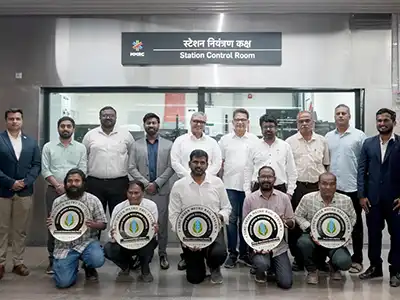
As part of its sustainability-focused approach, RVNL will construct all 11 proposed station buildings in accordance with the guidelines of the Indian Green Building Council (IGBC). The station designs will incorporate a range of green building features aimed at enhancing energy efficiency, reducing environmental impact, and improving passenger comfort. These include energy-efficient LED lighting systems, solar power utilisation, optimised natural lighting, rainwater harvesting systems, low-flow water fixtures, eco-friendly construction materials, and scientific waste management practices. Special emphasis is also being placed on improved ventilation and indoor environmental quality.
The adoption of IGBC standards is expected to reduce the carbon footprint of railway infrastructure in the region while promoting sustainable construction practices in the Himalayan ecosystem. This initiative aligns with Indian Railways’ broader vision of developing environmentally responsible and future-ready infrastructure, while also setting a benchmark for integrating sustainability into infrastructure projects in challenging terrains.
Beyond environmental benefits, the initiative is expected to enhance operational efficiency and lifecycle sustainability of station infrastructure, while offering improved passenger amenities and comfort.
Shri Saleem Ahmad, Chairman & Managing Director, RVNL, said, “The adoption of green building concepts for the Rishikesh–Karnaprayag Rail Link project reflects RVNL’s commitment to delivering infrastructure that is not only technically robust but also environmentally friendly. As we execute projects in ecologically sensitive regions, it becomes imperative to integrate sustainability into every stage of development. Through this approach, RVNL is contributing to long-term value creation for Indian Railways while reinforcing the role of infrastructure in supporting sustainable growth.”