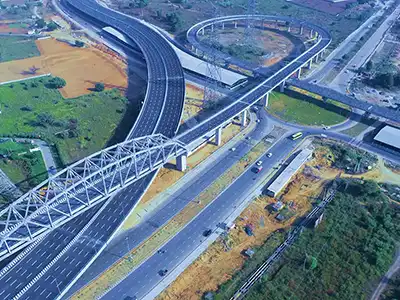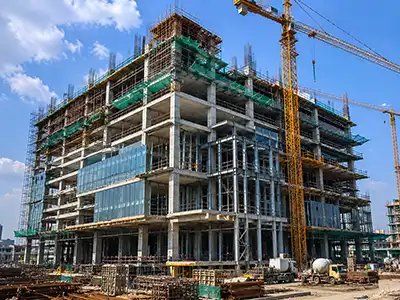
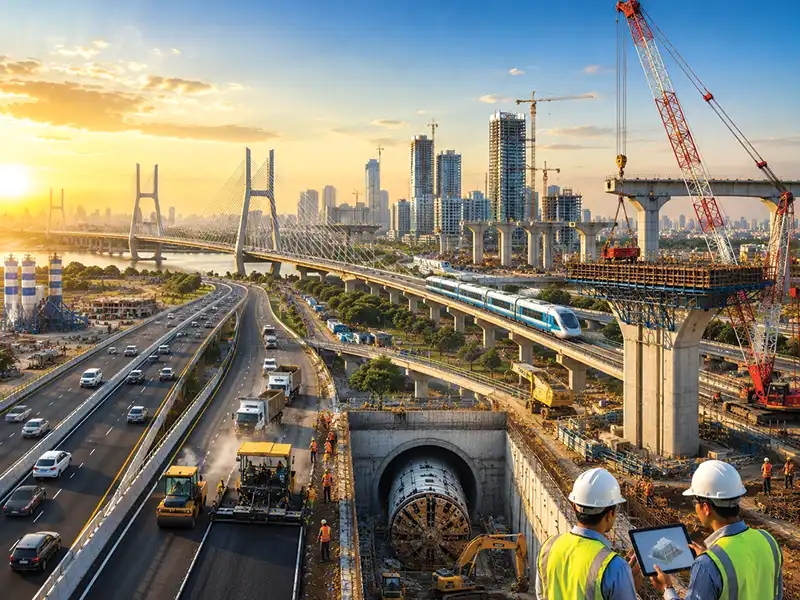
What does it take to achieve this balance? Which innovations are delivering measurable improvements in productivity, quality, safety, cost efficiency, and long-term asset performance? And what lessons can be drawn from projects that are already setting new benchmarks?
NBM&CW invited over 70 leading stakeholders across India's infrastructure ecosystem including developers, contractors, consultants, equipment manufacturers, technology companies, and material suppliers, to share their views on the above. Together, their perspectives offer a compelling cross-section of ideas, innovations, and best practices that are accelerating project delivery while shaping the next generation of infrastructure development in India.
Tata Hitachi
Sandeep Singh
Sandeep Singh
Larsen & Toubro
Sabyasachi Nayak
Sabyasachi Nayak
India's infrastructure sector is at the cusp of a transformative era, fuelled by significant investments in highways, railways, airports, ports, urban development, and mining. As the scale and complexity of projects continue to increase, the industry faces a critical challenge: delivering infrastructure faster without compromising quality, safety, sustainability, or cost efficiency.Along with speed and scale, infrastructure projects must demonstrate that sustainability and productivity can work in tandem to create lasting economic, operational, and environmental value, and support resilient asset performance.
Sandeep Singh
Managing Director
Tata Hitachi
However, execution speed is phased into two parts: pre-construction and construction. In the pre-construction phase, timely land acquisition, seamless right-of-way availability, and expeditious regulatory approvals from multiple authorities are fundamental prerequisites for keeping projects on track. Delays in these areas can have a cascading impact on execution schedules, irrespective of the capabilities of contractors or the equipment deployed.
In the construction phase, mechanization and use of advanced construction equipment are among the most significant enablers of productivity. Modern machines offer higher performance, greater precision, enhanced reliability, and improved fuel efficiency, enabling contractors to execute projects with greater speed and consistency. As infrastructure projects become larger and more demanding, technology-enabled equipment is playing an increasingly vital role in enhancing operational efficiency and improving overall project economics.
Infrastructure development involves a complex ecosystem of project owners, contractors, consultants, suppliers, and regulatory agencies. Effective coordination, supported by digital project management platforms and real-time monitoring systems, helps streamline workflows, optimize resource deployment, and facilitate faster decision-making, thereby minimizing execution bottlenecks.
Another key driver of successful project delivery is the growing adoption of data-driven decision-making. The ability to monitor equipment utilization, machine health, maintenance schedules, and project progress in real time provides actionable insights that enable proactive interventions. This not only minimizes downtime and delays but also helps control costs and improve overall project outcomes.
Finally, sustainability must be viewed not as a compliance requirement but as a core pillar of infrastructure development. The use of fuel-efficient equipment, predictive maintenance practices, optimized machine utilization, and environmentally responsible construction methodologies can significantly reduce both emissions and operating costs.
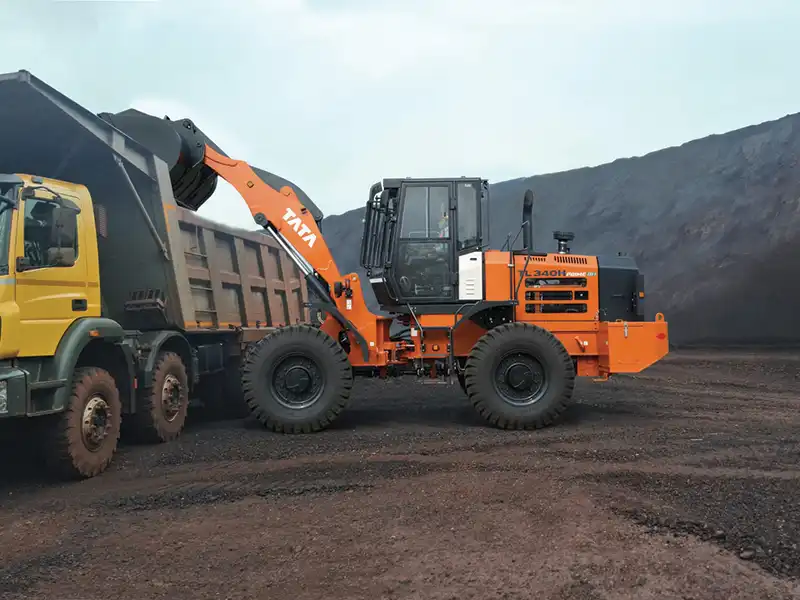
Advanced hydraulic excavators and earthmoving equipment that offer superior fuel efficiency and productivity enable contractors to move larger volumes of material in less time while consuming fewer resources. Across road construction, mining, and infrastructure projects, such machines and technologies have contributed to faster earthwork execution, lower operating costs, and improved sustainability outcomes.
However, technology alone cannot deliver project success. Reliable aftermarket support and service responsiveness play an equally important role in ensuring equipment availability and operational continuity. At Tata Hitachi, our extensive dealer footprint and customer support infrastructure ensure that machines remain productive throughout their lifecycle, helping customers maximize uptime and maintain project schedules even in remote and demanding operating environments.
The industry is also witnessing growing adoption of lifecycle support solutions such as Annual Maintenance Contracts (AMCs), and uptime assurance programs which allow contractors to manage equipment health, reduce ownership costs, improve machine reliability, and focus on project execution rather than maintenance-related disruptions. By shifting from reactive repairs to planned maintenance, customers can achieve greater operational efficiency.
The EX2500 demonstrates world-class engineering and contributes to sustainable mining by extending equipment life while maintaining productivity with over 120,000 operating hours. Such exceptional longevity minimizes the need for premature equipment replacement, reduces lifecycle resource consumption, and maximizes return on investment for mining customers.
The EX210LC Prime E Electric with Electric Conversion Kit is a low-emission machine powered through a tethered electric system. It eliminates diesel consumption, reduces carbon emissions, noise levels, and operating costs. As an environmentally responsible alternative, it supports India's transition towards greener infrastructure development and decarbonized construction sites.
The Solar Panel Lifter Attachment has been developed to support rapid deployment of utility-scale solar power projects across India. By enabling safe, precise, and efficient handling and installation of solar panels, the attachment improves productivity while minimizing manual handling risks.
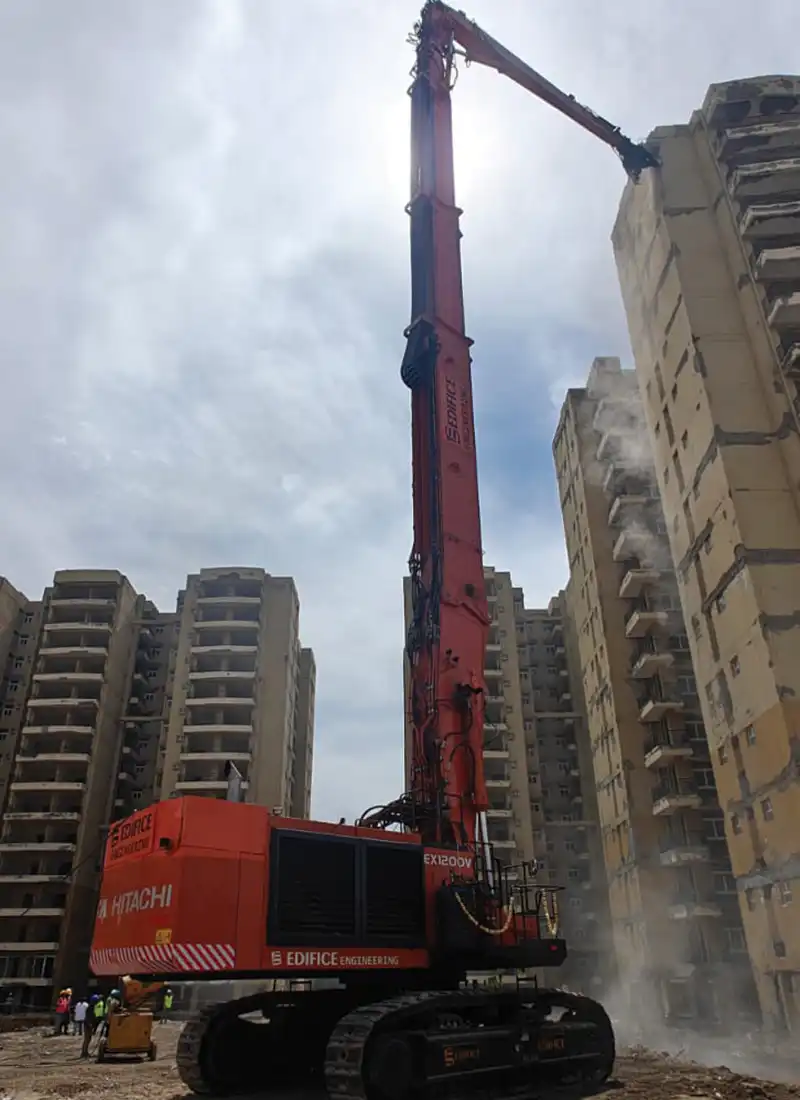
The EX1200V integrated with a specialized high-reach demolition attachment has emerged as one of Asia's tallest demolition machines, capable of safely demolishing structures up to approximately 51 meters (around 17 floors). It enables controlled, precision demolition while keeping operators at a safe distance as per compliance with the stringent regulatory requirements for high-rise demolition projects.
At Tata Hitachi, we have seen significant value being created through our digital solutions – ConSite and INSITE. ConSite leverages machine data and predictive analytics to continuously monitor equipment health and identify potential issues before they lead to breakdowns. This enables proactive maintenance, improves machine availability, and reduces unplanned downtime. INSITE, our advanced fleet and asset management platform, provides customers with real-time visibility into equipment utilization, fuel consumption, location, and performance metrics. These insights empower contractors to make informed decisions, optimize resource deployment, and improve productivity across project sites.
The future of infrastructure lies in leveraging innovation not only to build faster but also to build safer, more efficiently, and with a strong focus on long-term quality, reliability, and sustainability. Advances in equipment technology, digitalization, connectivity, and predictive maintenance are reshaping how infrastructure is built across India. Organizations that successfully embrace these will be better positioned to deliver projects that are efficient, resilient, and future-ready.
India's journey towards Viksit Bharat 2047 will require infrastructure that is delivered at speed, but not at the expense of quality, safety, sustainability or lifecycle value. The challenge is not merely to build more roads, bridges, railways and urban corridors. It is to create durable assets that support economic growth for decades while using public resources responsibly. In my experience, the decisive advantage in large transportation projects rarely comes from accelerating construction activities in isolation. It comes from building readiness before mobilisation and integrating engineering, procurement, execution and asset management through a disciplined delivery system.Technology cannot replace sound engineering judgement, but it can provide the transparency and intelligence required for faster, safer and more accountable decisions.
Sabyasachi Nayak
VP & Head – Engineering & Design Centre, RBF SBG, Transportation Infrastructure IC
Larsen & Toubro
The first requirement is clarity of the employer's needs. Ambiguities in scope, design criteria, specifications, interfaces and contractual responsibilities must be identified early. Where contracts provide an initial clarification period, contractors should use it rigorously. The period between the Letter of Acceptance and the Notice to Proceed is equally valuable for both authorities and the EPC agencies. Topographic surveys, geotechnical investigations, utility mapping, material testing and constructability reviews can be initiated during this window, while critical engineering interfaces are resolved with the client and its representatives.
Project governance must also be established before mobilisation. The Engineer, Authority Engineer or the Project Management Consultant, should be on board early, with a clearly defined approval matrix and time-bound decision-making process. Land acquisition, removal of encroachments, utility shifting, tree-cutting permissions and statutory clearances should be substantially progressed in advance. EPC contractors can support implementation on the ground, but authorities are often better positioned to coordinate with government agencies.
Reliable baseline information should also be shared with all bidders. In lumpsum or EPC contracts, interpretation of the data may remain the contractor's responsibility, but realistic bidding is impossible without credible survey and investigation inputs. Changes in scope are inevitable; their impact becomes damaging only when decisions are delayed. Variations must therefore be assessed quickly through transparent contractual mechanisms, supported by effective escalation and dispute-avoidance processes. Standard Operating Procedures for design, execution, quality, safety and environmental management are equally important. Speed should be the outcome of preparedness and standardisation, not the result of bypassing controls.
Innovation is now improving infrastructure delivery across the asset lifecycle. The change begins with data collection. LiDAR, drone surveys, ortho-imagery and Ground Penetrating Radar are improving the speed and accuracy of terrain modelling and utility identification. Advances in geotechnical drilling, sampling and laboratory testing offer a more realistic representation of ground conditions, enabling better-informed decisions on foundations, embankments, retaining structures and slope-stability measures.
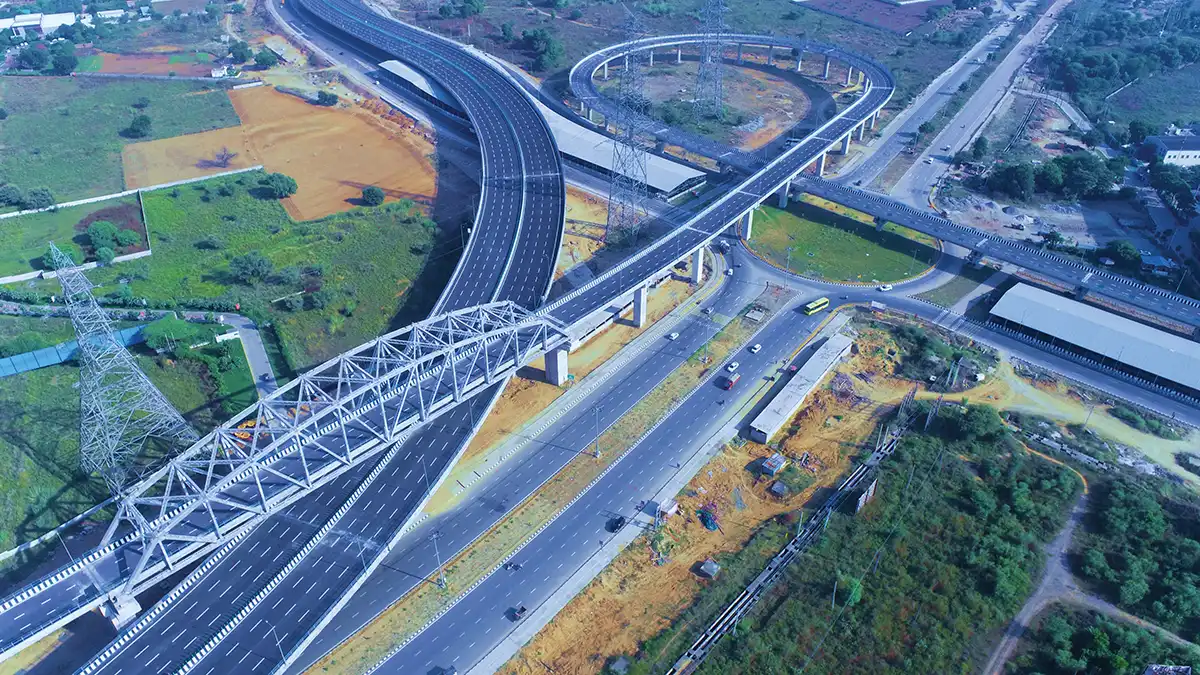
High Speed Interchange at Dwarka Flyover.
Digital engineering has transformed the design environment. Three-dimensional models and analytical software increasingly work together, allowing engineers to visualise structural behaviour, identify clashes and test alternatives before construction. Application Programming Interfaces and parametric modelling make repetitive design iterations faster and more consistent. Building Information Modelling, combined with a Common Data Environment, enables multiple disciplines to collaborate on a coordinated model with improved revision control, transparency and traceability. These tools also strengthen value engineering by allowing alternatives to be compared with greater speed and accuracy.
Construction itself is becoming more industrialised. High-capacity piling rigs, precast components, segmental bridge construction, full-span launching systems, modular formwork and mechanised track laying are improving productivity while reducing site congestion and dependence on scarce skilled labour. The Mumbai-Ahmedabad High-Speed Rail corridor illustrates the scale of this transition. Its 40-metre full-span prestressed-concrete box girders weigh about 970 tonnes each, and NHSRCL states that full-span launching can enable progress up to ten times faster than segmental construction.
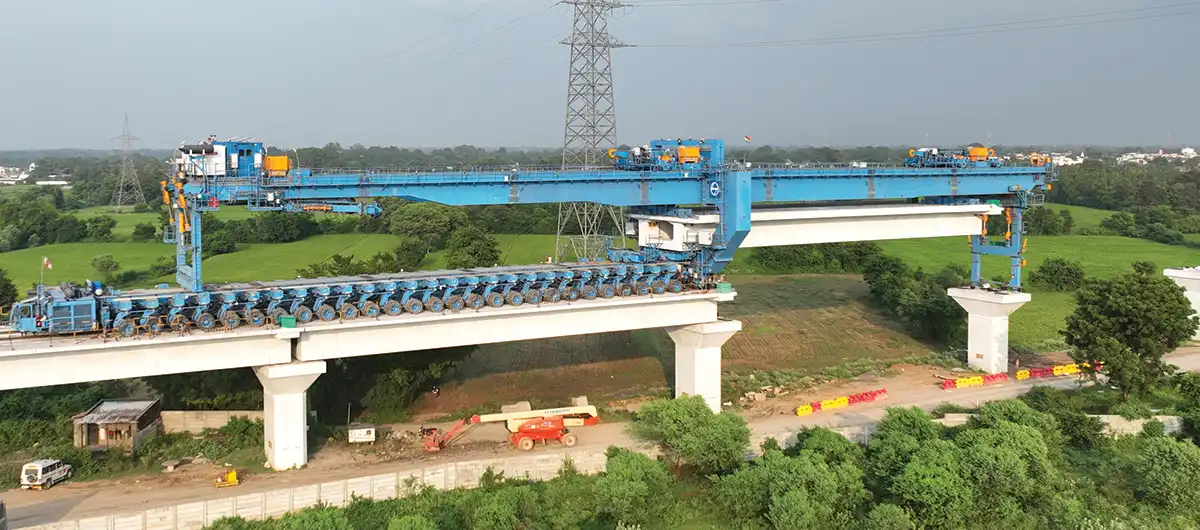
Full Span Erection @ Mumbai - Ahmedabad High Speed Rail
The Delhi-Ghaziabad-Meerut RRTS corridor provides another relevant example. NCRTC has adopted low-maintenance precast ballastless slab-track technology suitable for a design speed of 180 kmph. The use of precasting reduces in-situ work, manpower deployment and inconvenience along operational roads while improving consistency and quality control.
Innovation must also improve sustainability and lifecycle performance. Atal Setu in Mumbai demonstrates how complex engineering solutions can support both mobility and environmental considerations. The 21.8-km link includes seven orthotropic steel-deck spans ranging from 90 to 180 metres, along with measures intended to reduce disturbance to flamingo habitats. The Eastern Peripheral Expressway is another example of disciplined project delivery: the 135-km corridor was completed in about 500 days against a scheduled target of 910 days and incorporated eight solar-power plants with a combined capacity of 4 MW.
Project-management innovation is equally significant. ERP platforms, Primavera P6, Integrated Project Management Systems, digital dashboards and Common Data Environments provide real-time visibility of schedules, resources, approvals and constraints. This is particularly valuable for long corridors and multi-location projects, where delayed decisions in one area can affect the entire construction sequence.
The next frontier is lifecycle management. Sensors, Bridge Health Monitoring Systems and digital twins can track structural response, generate alerts when thresholds are crossed and support predictive maintenance. New materials - including ultra-high-performance concrete, fibre-reinforced systems, stainless-steel reinforcement, geosynthetics and advanced waterproofing solutions - can also improve durability when adopted after proper due diligence, testing and method validation. Technology cannot replace sound engineering judgement, but it can provide the transparency and intelligence required for faster, safer and more accountable decisions.
For Viksit Bharat 2047, the objective should not merely be to create more infrastructure. It should be to deliver assets that are faster to build, safer to operate, easier to maintain, and more resilient throughout their service life. This calls for dependable data, early stakeholder alignment and a culture in which quality and safety are treated as productivity enablers rather than compliance obligations. Technology is the enabler; disciplined engineering judgement remains the foundation.
Volvo CE India
Dimitrov Krishnan
Dimitrov Krishnan
RDSO - Ministry of Railways
Qazi Mairaj Ahmad
Qazi Mairaj Ahmad
In developing critical national infrastructure, India is building a wide variety of infrastructure elements at a rapid pace for roadways, railroads, metros, seaports, airports, mining, urban centers, and for renewable energy.Predictability is essential for speed of execution of large infra projects. They will progress more quickly when planning, equipment capability, material shipment, operator ability, and maintenance support are all aligned.
Dimitrov Krishnan
Managing Director
Volvo CE India
Contractors will need greater mechanisation, improved fleet performance, and machinery that operates dependably in very harsh job site conditions as the timelines for completing infrastructure projects are becoming more stringent. But to increase speed, you cannot simply deploy more machines; rather, you must deploy the correct machines, ensuring that they continue to be productive, and have reduced breakdowns.
Cost efficiency also has to be measured over the machine’s lifecycle, and not only at the time of purchase. Fuel consumption, maintenance, uptime, operator productivity, and resale value, all influence project profitability. Sustainability fits into the same equation. A fuel-efficient machine lowers operating cost and emissions.
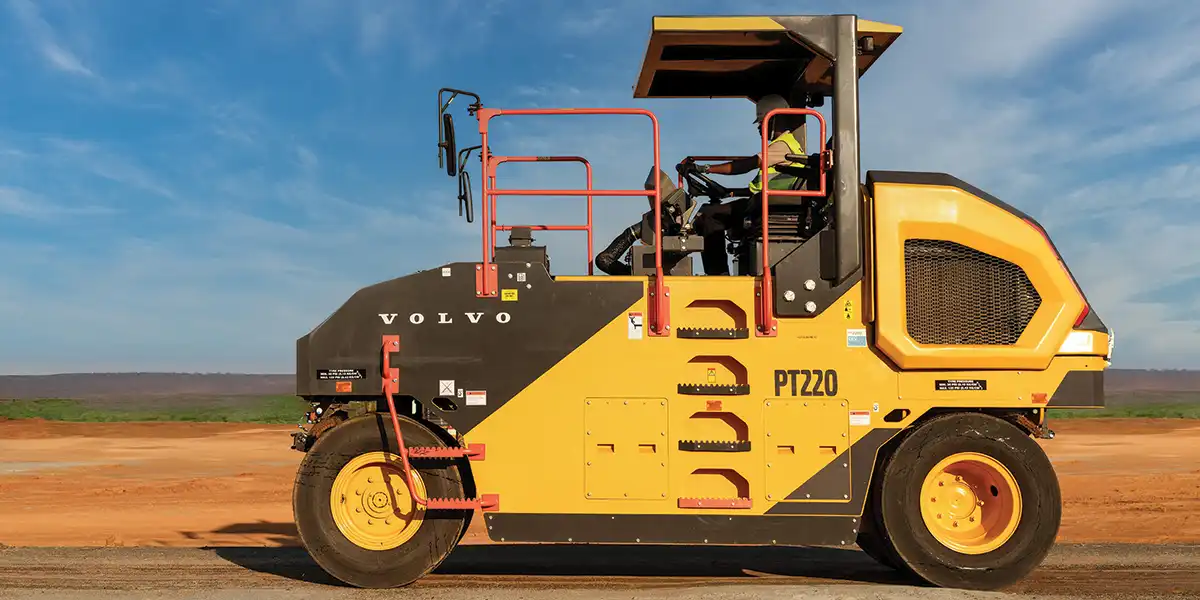
Ultimately, quality infrastructure needs disciplined execution: better planning, mechanisation, skilled operators, preventive maintenance, connected machines, and strong service support so that projects can be delivered faster without compromising safety, quality, or long-term asset performance.
Innovation in construction equipment is improving project execution by increasing productivity, uptime, safety, and fuel efficiency. One clear example is telematics: Platforms such as Volvo CE's CareTrack allow customers to monitor fuel use, idle time, machine health, productivity and service needs. This helps fleet owners move from reactive repairs to planned maintenance, reducing stoppages and improving machine availability on critical infrastructure projects.
In road construction, soil, asphalt and pneumatic tyre compaction equipment are improving compaction quality and durability, and reducing the need for rework. Technologies such as variable frequency compaction and efficient rolling direction help maintain consistent quality while reducing the time and fuel required to complete projects.
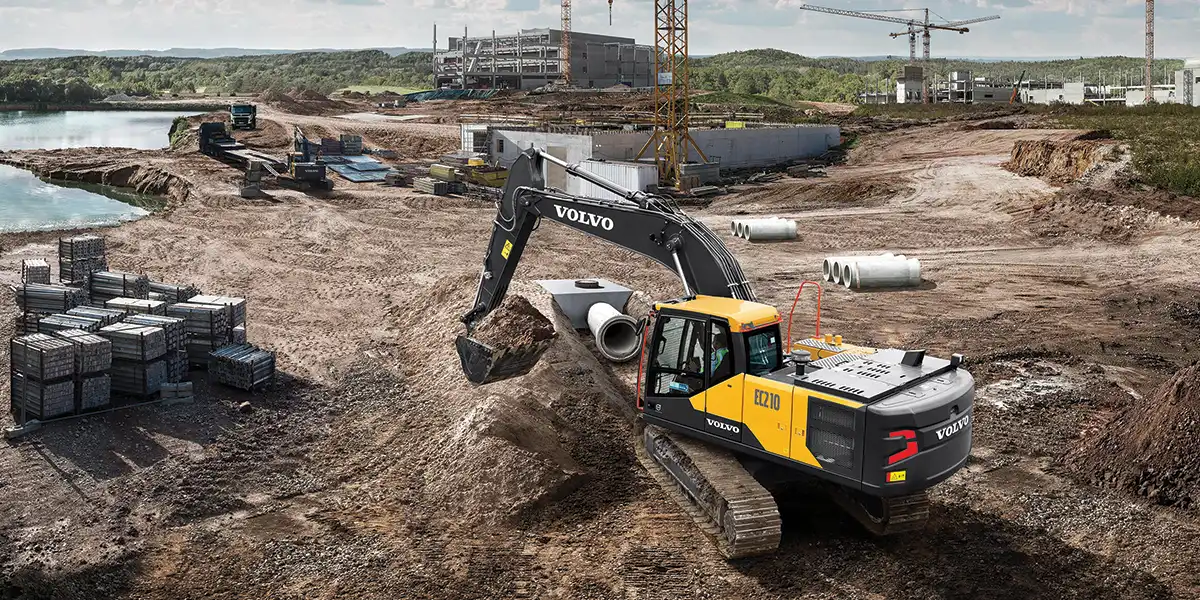
Excavators are also becoming more versatile through advanced hydraulics and a wide range of attachments. A single machine can support excavation, trenching, breaking, quarrying, loading and material handling, improving utilisation across different stages of a project. For instance, the Volvo EC480 excavator equipped with a Breaker Rock Management System (BRMS)/hydraulic rock breaker is an effective solution in areas where rock excavation is challenging and the use of blasting is restricted or prohibited due to safety or environmental considerations. In such applications, Volvo excavators serve as reliable carriers for a range of hydraulic attachments, enabling efficient rock breaking while maintaining productivity, safety and compliance with project requirements.
Volvo CE has introduced electric construction equipment in India and innovative business models such as Equipment-as-a-Service (EaaS) to reduce the initial adoption barrier for customers. However, the transition will remain application led. For mainstream infrastructure projects, the biggest immediate gains will continue to come from fuel-efficient machines, connected technologies, operator training, and preventive maintenance.
As India embarks on an ambitious journey to realize the Viksit Bharat 2047 vision, the Research Designs & Standards Organisation (RDSO) is spearheading transformative initiatives to revolutionize the railways sector. With a focus on innovation, sustainability, and operational efficiency, RDSO is driving the development of world-class infrastructure at an unprecedented pace and scale.Under the leadership of Minister of Railways, RDSO is fostering a culture of innovation and continuous improvement with a commitment to sustainability and development of eco-friendly technologies and green practices.
Qazi Mairaj Ahmad
Additional Director General
RDSO – Ministry of Railways
Central to RDSO's mission is its emergence as a Centre of Excellence, benchmarked against global leaders such as RTRI (Japan), KRRI (South Korea), and DLR (Germany). Through strategic collaborations with industry partners and academic institutions, RDSO is pioneering cutting-edge technologies that are transforming the railways landscape.
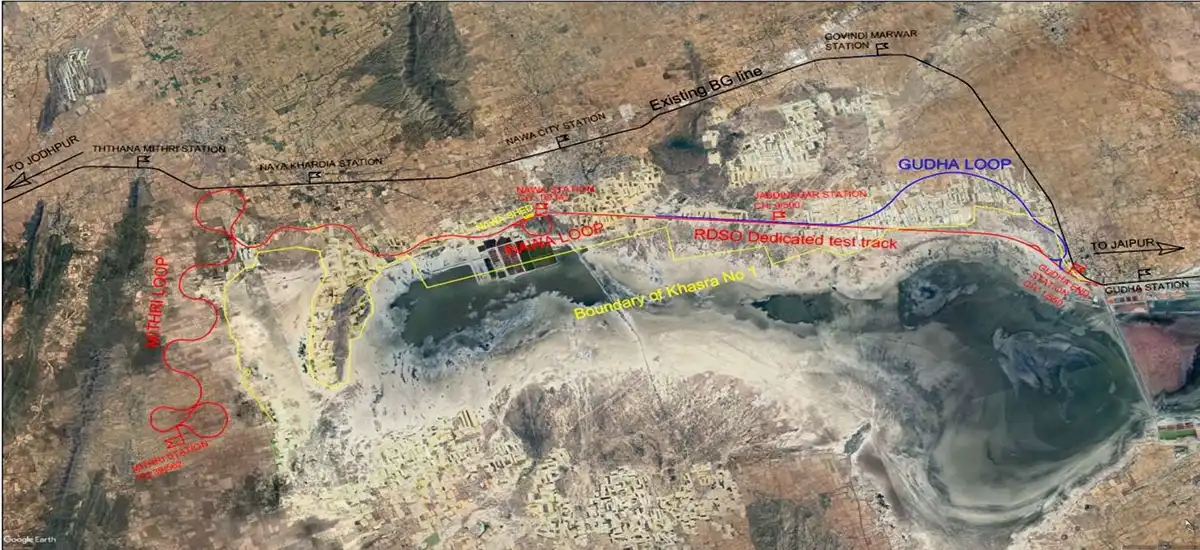
RDSO’s Dedicated Test Track near Phulera at NWR
RDSO's commitment to sustainability is evident in its development of eco-friendly technologies and green practices. The organization has been a pioneer in developing bio-toilets, solar-powered coaches, and regenerative braking systems, significantly reducing the railways' carbon footprint. The upcoming Hydrogen Train Facility at Jind and the Dedicated Test Track at Phulera in NWR further underscore RDSO's leadership in promoting environmentally responsible infrastructure development.
In addition to its technological innovations, RDSO has been instrumental in developing robust quality assurance frameworks and safety standards. The implementation of the KAVACH Automatic Train Protection System on over 1,465 kilometers has contributed to an 80% reduction in accidents. RDSO's collaborative research initiatives with premier institutions are also paving the way for predictive maintenance and risk mitigation strategies.
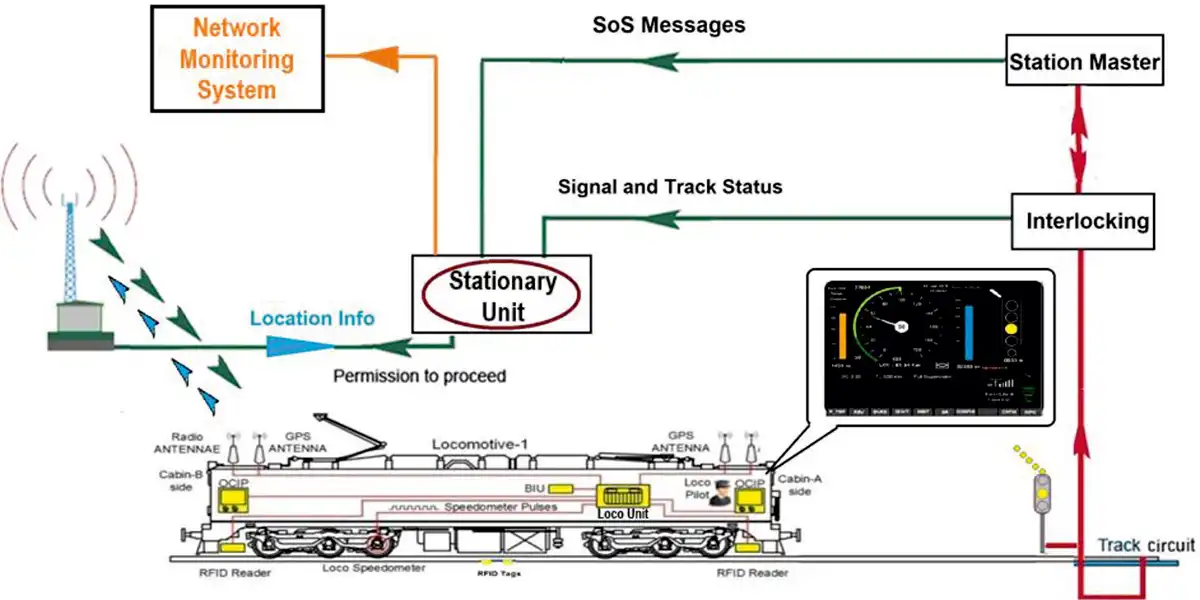
Automatic Train Protection Kavach: RDSO's innovations
In the realm of safety and reliability, RDSO has been at the forefront of implementing robust quality assurance frameworks and developing advanced monitoring systems. The deployment of the Integrated Track Management System (ITMS) and the Online Monitoring of Rolling Stock (OMRS) System has enabled real-time tracking and predictive maintenance of railway assets, significantly enhancing operational efficiency and safety.
RDSO, spearheading Indian Railways, is already delivering on its commitment to decarbonisation and sustainability:
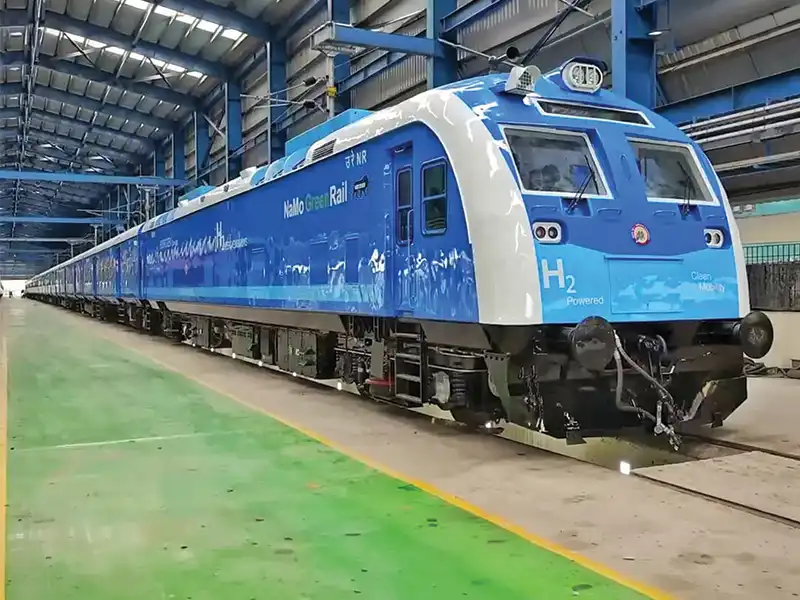
Hydrogen Fuel Cell Train: RDSO's sustainability initiatives
- Net Zero Carbon Emitter target by 2030 — among the most ambitious of any large national railway.
- ~98% of the broad-gauge network electrified; roughly 45,000 route-km electrified in the past decade.
- As of late 2025, about 812 MW solar and 93 MW wind commissioned for traction, plus ~1,600 MW of Round-the-Clock renewable (solar + wind + storage) tied up. The pathway requires ~30,000 MW of renewable capacity by 2029–30.
- Dedicated Freight Corridors (Eastern complete, Western advancing) projected to cut ~457 million tonnes of CO2 over 30 years through modal efficiency.
- India's first hydrogen-powered coach trial (ICF Chennai, 2025) — developed under RDSO specifications. Flag this as RDSO's direct fingerprint on next-generation clean traction.
As India enters a new era of infrastructure development, RDSO's pioneering role in driving innovation, sustainability, and operational efficiency will be crucial in realizing the Viksit Bharat 2047 vision. By setting new benchmarks for quality, safety, and project execution, RDSO is transforming the railways landscape and paving the way for a more connected, sustainable, and prosperous future.
Terex India
Jaideep Shekhar
Jaideep Shekhar
Sany Group
Deepak Garg
Deepak Garg
India's infrastructure sector is entering one of the most transformative phases in its history. With significant investments being made across roads, railways, airports, ports, urban development, water management, and energy infrastructure, the country's ambitions under the Viksit Bharat 2047 vision are clear. However, the challenge before the industry is no longer just about building more infrastructure—it is about delivering projects faster, at greater scale, while ensuring quality, sustainability, and cost efficiency.Viksit Bharat is about creating infrastructure that improves lives, strengthens economic growth, and enhances national competitiveness. With the right combination of technology, collaboration, and execution focus, Indian infrastructure sector is well-positioned to deliver on this vision.
Jaideep Shekhar
Vice President & Managing Director
Terex India
From my experience, successful infrastructure delivery begins with getting the fundamentals right. While policy support and funding provide the necessary foundation, project outcomes are ultimately determined on the ground. Timely availability of materials, efficient equipment utilisation, skilled manpower, effective logistics, and coordination among stakeholders all play a critical role in maintaining project momentum. Delays and cost overruns are often the result of inefficiencies in these areas, making planning and execution discipline more important than ever.
One of the most significant changes we are witnessing today is the growing adoption of mechanisation and technology-driven processes. Infrastructure projects depend heavily on the timely supply of quality aggregates and manufactured sand (M-Sand). Any inconsistency in material quality or availability can directly impact construction schedules and project costs. Modern crushing, screening, and washing technologies are helping contractors produce high-quality materials consistently and at scale, enabling more predictable project execution.
At Terex, we are seeing this shift across a wide range of infrastructure, mining, and quarrying applications. Contractors are increasingly investing in advanced material processing solutions that improve throughput, reduce rehandling, and ensure consistent product quality. Modern washing systems, for example, are helping producers manufacture high-quality M-Sand while maximising water recovery and reducing dependence on natural sand resources. This not only supports infrastructure development but also aligns with the industry's growing sustainability objectives.
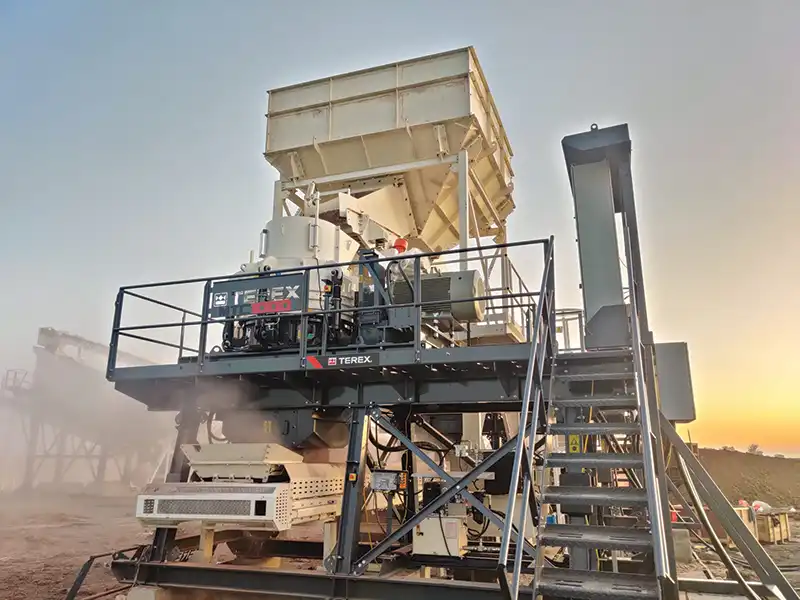
The industry is also embracing more modular, mobile, and energy-efficient equipment solutions. Modular plants can be installed and commissioned significantly faster than conventional fixed installations, allowing operations to begin sooner and reducing project startup timelines. Mobile and wheeled equipment provide greater flexibility, enabling contractors to adapt quickly to changing site conditions and project requirements. Similarly, hybrid and electric-powered solutions are helping reduce fuel consumption and operating costs while supporting sustainability goals.
Sustainability is no longer viewed as a separate objective; it has become an integral part of infrastructure development. Resource efficiency, water conservation, and energy optimisation are increasingly influencing project decisions. Technologies that enable higher levels of water recycling, reduce waste generation, and improve energy efficiency are becoming essential tools for contractors seeking to balance productivity with environmental responsibility.
However, technology alone cannot deliver the desired outcomes. The industry must continue investing in operator training, technical skills, and knowledge sharing to ensure that advanced equipment and digital solutions are utilised to their full potential. Equally important is stronger collaboration across the ecosystem. Equipment manufacturers, contractors, consultants, project owners, and policymakers all have a role to play in improving project execution and driving innovation adoption.
India has both the vision and the capability to establish global benchmarks in infrastructure delivery. As we move towards Viksit Bharat 2047, success will depend on our ability to combine ambitious planning with execution excellence. By embracing mechanisation, digitalisation, sustainable technologies, and skill development, the industry can deliver infrastructure that is faster to build, more reliable in performance, and better suited to the needs of future generations.
India is entering a defining phase of infrastructure development. With unprecedented investments in highways, metro rail networks, airports, ports, mining, renewable energy and industrial corridors, the country is laying the foundation for long-term economic growth. While the pace of development has accelerated significantly, the true measure of success is no longer how quickly projects are completed, but how efficiently they are executed while ensuring quality, safety, sustainability and long-term value.Speed of construction and project delivery should never come at the cost of durability or sustainability; the objective should be to build infrastructure that delivers value for decades.
Deepak Garg
Managing Director
Sany Group (India & South Asia)
In my view, maintaining this balance requires a combination of advanced technology, engineering excellence, skilled manpower, and a strong focus on lifecycle performance.
Technology has become one of the biggest enablers of this transformation. Modern construction equipment has evolved far beyond being a mechanical asset. Today's machines incorporate advanced hydraulic systems, intelligent work modes, automation features, and GPS-enabled machine guidance that enable contractors to improve productivity while maintaining precision and consistency. These innovations help minimise rework, optimise resource utilization, and reduce overall project costs, allowing infrastructure to be delivered faster without compromising quality.
Another key driver of execution efficiency is better planning and project management. Digital tools are enabling project teams to monitor progress more effectively, optimise equipment deployment and improve coordination across multiple work fronts. Better visibility and data-driven decision-making reduce delays, improve resource utilisation and enhance execution quality throughout the project lifecycle.
One of the most significant shifts shaping our industry today is the growing adoption of electric construction equipment. Sustainability is no longer viewed only through the lens of environmental responsibility—it has become a business imperative that delivers measurable operational benefits. Electric equipment offers lower operating costs, reduced maintenance requirements, quieter operations and zero tailpipe emissions, making it an ideal solution for projects where productivity and environmental performance must go hand in hand.
At SANY India, we are developing one of the country's most comprehensive portfolios of electric equipment across multiple industry segments. Our electric excavators enable cleaner and quieter operations for urban infrastructure and industrial projects. In mining, electric dump trucks and large electric excavators help customers improve operational efficiency while reducing fuel consumption and emissions in demanding applications.
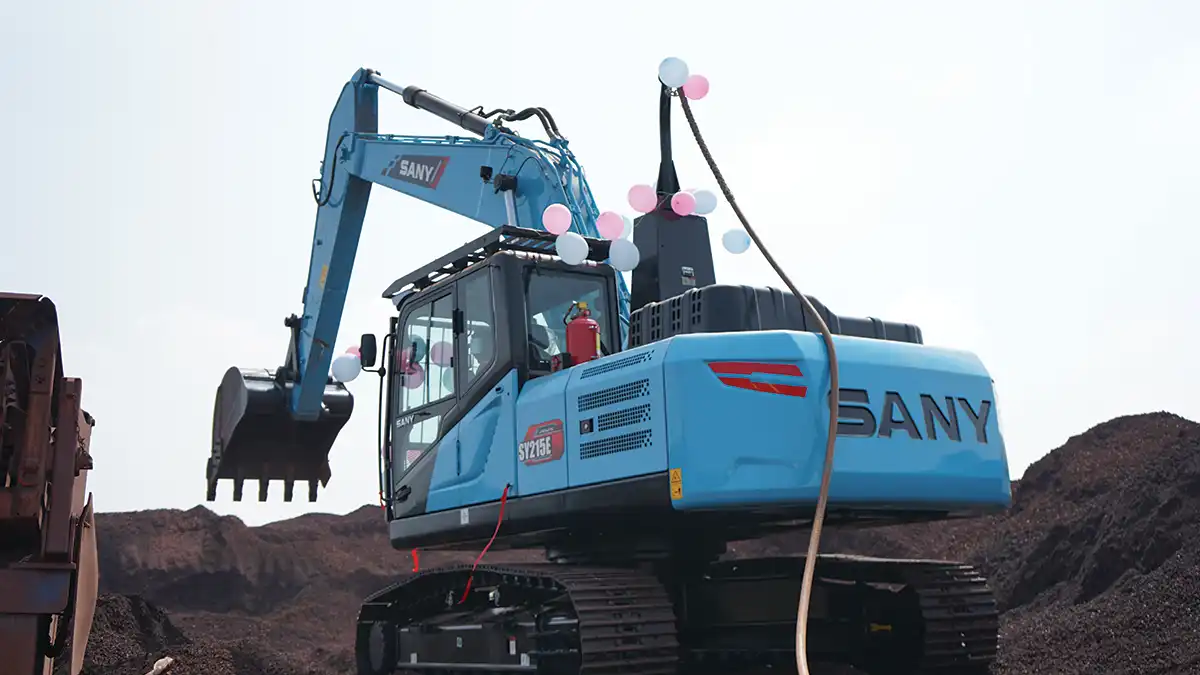
Similarly, the port and logistics sector is witnessing a rapid shift towards cleaner equipment. Electric terminal tractors, reach stackers, and material handlers are supporting ports in improving cargo handling efficiency while contributing to more sustainable operations. In warehouses and manufacturing facilities, electric forklifts are enabling businesses to achieve higher productivity with lower maintenance requirements.
The aerial work platform segment is also rapidly adopting electric scissor lifts and telescopic boom lifts, particularly for indoor construction, industrial maintenance, and warehousing applications, where low noise, operational efficiency and zero emissions offer significant advantages. Together, these innovations demonstrate that sustainability and productivity are no longer separate objectives—they are complementary drivers of modern infrastructure development.
Innovations are also enhancing construction quality and reducing project timelines. Advanced rotary piling rigs are enabling faster and more accurate foundation construction for metro rail and urban infrastructure projects. Modern cranes equipped with intelligent safety systems are improving lifting precision for complex infrastructure developments, while next-generation road construction equipment is delivering superior compaction quality with fewer operating passes, resulting in faster execution and lower lifecycle maintenance costs.
Equally important is the role of advanced manufacturing and localisation. Precision manufacturing, stringent quality processes and increasing localisation of components not only ensure product reliability but also improve equipment availability, strengthen after-sales support and reduce the total cost of ownership for customers. This aligns closely with India's vision of becoming a global manufacturing hub while supporting the nation's infrastructure ambitions.
India's infrastructure journey will continue to demand faster execution, but speed alone cannot define success. The future belongs to solutions that combine innovation, sustainability, engineering excellence and customer-centricity to create assets that deliver value throughout their lifecycle.
At SANY India, by combining advanced technologies, world-class manufacturing and continuous innovation, we remain committed to supporting India's journey towards becoming a global infrastructure powerhouse.
Welspun Michigan Engineers
Saurin Patel
Saurin Patel

Puzzolana Machinery
Abhijeet Pai
Abhijeet Pai
Delivering infrastructure at the scale envisaged under Viksit Bharat requires an integrated, outcomes-driven execution model where speed is achieved without compromising quality, sustainability, or cost efficiency. The focus is not just accelerated delivery, but predictable and lifecycle-optimized performance.Achieving execution speed in large infrastructure projects requires a synchronized approach that integrates planning, sustainability, technology, and financial discipline to deliver infrastructure that is fast, efficient, and future-ready.
Saurin Patel
Managing Director
Welspun Michigan Engineers
The most critical factor is integrated design-to-delivery planning. Early alignment across engineering, procurement, and construction enables parallel execution, reduces rework, and eliminates downstream bottlenecks. This approach improves schedule certainty and optimizes resource utilization, particularly in complex infrastructure projects.
Embedding sustainability within execution is equally important. Material optimization through fly ash utilization and efficient concrete design reduces cement consumption and associated carbon emissions. Construction waste recycling minimizes environmental impact, while water stewardship measures such as optimized mix designs and rainwater harvesting reduce dependency on external resources. These interventions not only enhance environmental outcomes but also improve lifecycle cost efficiency.
Standardization and modularization further enhance speed at scale. Repeatable design frameworks and pre-engineered solutions allow faster deployment across geographies while maintaining consistent quality. This reduces engineering time and execution variability.
Another key enabler is strong in-house capabilities complemented by global partnerships. Internal expertise ensures execution control and quality assurance, while partnerships bring access to advanced technologies and best practices. This combination reduces interface risks and accelerates mobilization.
Supply chain discipline and structured contracting are also critical. Well-defined EPC frameworks with clear allocation of responsibilities across project components enhance accountability and coordination. Engaging specialized partners improves efficiency and adherence to timelines.
The increasing use of digital tools such as BIM and real-time dashboards provides visibility into schedule, cost, and risks, enabling proactive decision-making and better control over execution.
Innovation plays a central role in delivering infrastructure that meets the scale, quality, and sustainability aspirations of Viksit Bharat. At Welspun Enterprises, innovation spans engineering, construction methodologies, digital systems, and delivery models, creating measurable improvements across execution and lifecycle performance.
A key driver is the adoption of advanced engineering and process technologies. Integrated system design, combining optimized hydraulics, treatment processes, and system efficiency, enhances performance, ensures regulatory compliance, and improves long-term asset reliability.
Digitalization is transforming project execution. Tools such as BIM, digital dashboards, and data-driven monitoring platforms provide real-time visibility into project performance. This improves decision-making, enhances transparency, and enables timely interventions, ensuring better control over schedule, cost, and quality.
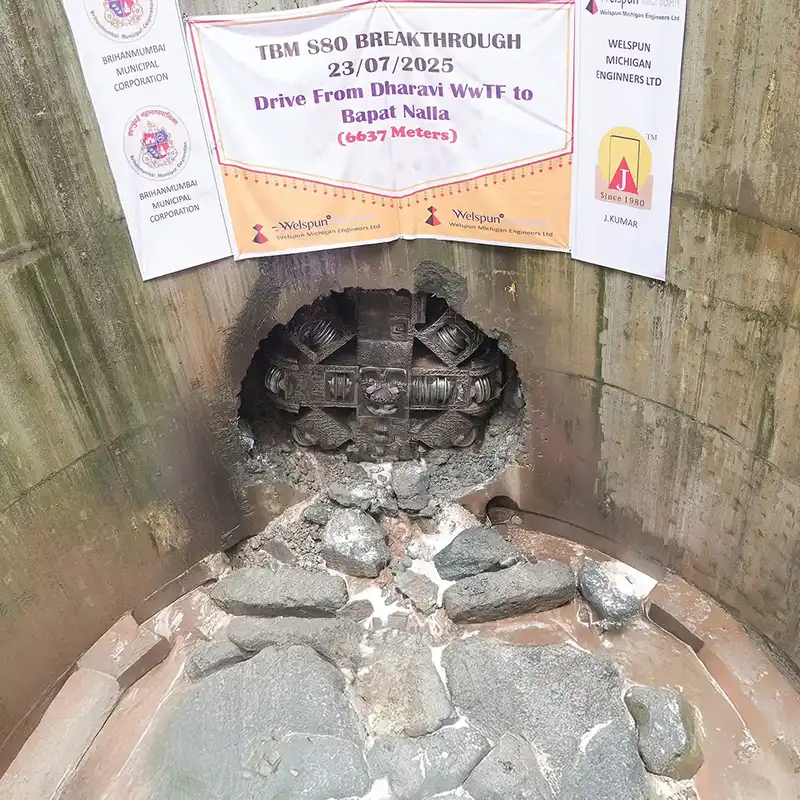
Mechanization and advanced construction methodologies are significantly improving outcomes, particularly in urban environments. Techniques such as tunnelling, micro-tunnelling, and trenchless construction enable faster execution with minimal surface disruption. These approaches also enhance safety by reducing manual intervention and improving control in high-risk conditions.
Innovation in materials and construction practices contributes to both quality and sustainability. Advanced admixtures enable low water-cement ratio concrete, improving durability while reducing water consumption. Increased use of alternative materials and recycling practices helps lower resource intensity and embodied carbon.
Beyond construction, digital monitoring and predictive maintenance are redefining lifecycle performance. Smart systems enable early fault detection, optimize energy consumption, and improve asset uptime, ensuring long-term operational efficiency.
Innovation is also evident in delivery and business models. Moving toward integrated EPC + O&M or platform-based approaches creates accountability for long-term performance rather than just project completion. This ensures focus on durability, efficiency, and lifecycle cost optimization.
Importantly, these innovations also improve safety and environmental performance. Mechanization reduces human exposure to risk, while digital monitoring enhances compliance and risk visibility, strengthening overall HSE outcomes.
In conclusion, innovation at Welspun Enterprises represents a holistic transformation that integrates engineering excellence, advanced technologies, and forward-looking business models. This approach ensures that infrastructure is delivered faster, operates more safely, and performs efficiently over its lifecycle.
Maintaining execution speed in large infrastructure projects requires a combination of strategic planning, reliable equipment, efficient supply chain management, and skilled project execution. High machine uptime, timely availability of spare parts, and strong after-sales support are critical to avoiding delays.Innovations, advanced features, and new technologies in machines are helping infrastructure projects achieve faster execution, better quality control, enhanced sustainability, and lower lifecycle costs.
Abhijeet Pai
President
Puzzolana Machinery
At the same time, adopting fuel-efficient and sustainable technologies, optimizing resource utilization, and ensuring strict quality control help balance productivity with environmental responsibility and cost efficiency.
Effective collaboration among stakeholders, combined with the use of digital monitoring tools, further enhances project performance and delivery timelines.
Innovations in crushing and screening technology are accelerating infrastructure development across India. High-capacity crushers, mobile plants, automation, and real-time monitoring help contractors improve productivity, maintain consistent aggregate quality, and reduce operating costs.
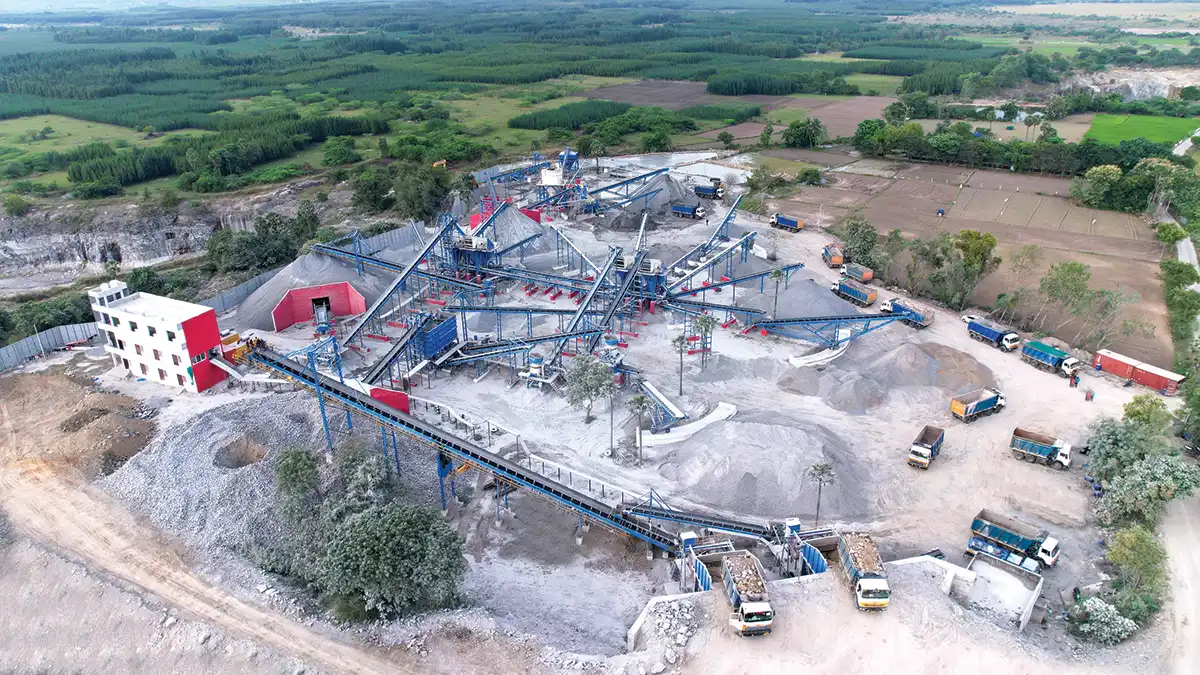
Mobile crushing plants enable on-site aggregate production for highways, railways, and irrigation projects, reducing transportation costs and project delays. Automated controls optimize crusher performance, improve quality and minimize downtime.
Modern equipment also incorporates advanced safety features, dust suppression systems, and fuel-efficient technologies, supporting safer and more sustainable operations. Additionally, recycling construction and demolition waste through advanced crushing and screening solutions reduces landfill dependency and conserves natural resources.

PWD - Manipur
Rubee Kongbrailatpam
Rubee Kongbrailatpam
Wirtgen India
Ramesh Palagiri
Ramesh Palagiri
Pre-emptive preparation is one of the key factors in pre-construction activities such as land acquisition, resettlement, preliminary surveys, and engineering designs. These prerequisites should be closed before mobilisation, as they often become major causes of project delays and cost overruns.Speed, scale and quality are determined through proper preparation, an innovative design, delivery and lifecycle stewardship — and are achievable even in India’s most logistically demanding terrains.
Rubee Kongbrailatpam
Additional Chief Engineer
PWD - Manipur
In areas of heavy rainfall and difficult terrains, such as Northeast India, the working season window is very short and rains are usually a major cause of project delays. Hence, a proper plan well suited to the project site is crucial to properly utilise the working season window.
Since sourcing of construction materials is a challenge for project work in remote areas, procurement must be planned well to ensure timely availability of the materials as per the project’s schedule. Proper supervision by a well-qualified team is essential to keep the project on track and to maintain quality in construction. A good maintenance plan for the project after completion ensures long-term asset performance. Sustainability must be engineered at the concept stage, as changes and additions during construction become costly.
Innovations in engineering go a long way in making the project execution easier and sustainable. New materials and construction techniques, along with mechanization, have not only resulted in lesser use of scarce construction materials, but have also aided in faster completion of projects. For instance, the ongoing construction of rigid pavement of 547 km in Imphal is highly material intensive as preparation of the pavement base and laying of concrete requires huge quantities of stone aggregates.
The Full Depth Reclamation (FDR) technique was proposed to reclaim the existing base by rehabilitating it into a new stabilized foundation through mixing it with stabilisers and relaying it using an FDR machine. This resulted in faster execution and saving of 50% of stone aggregates in base preparation, while the strength of the base layer is also enhanced.
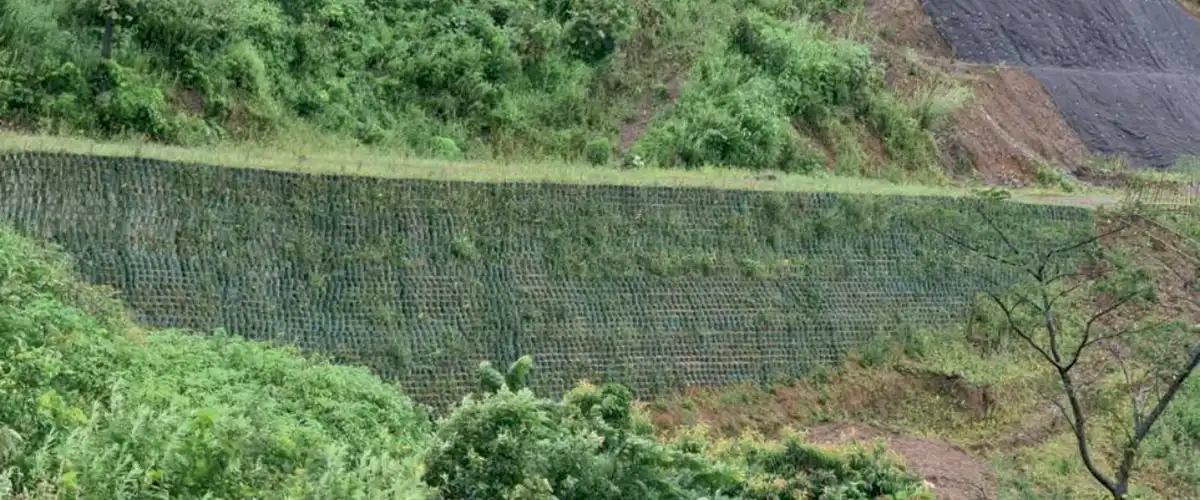
Another example is the use of geosynthetics in a greenfield road construction project on a hilly terrain. Construction of retaining structures using reinforced cement concrete was a challenge due to low soil bearing capacity and limited accessibility. Reinforced soil wall construction was proposed on a trial stretch using soil and geosynthetics as reinforcement. This innovative design not only saved scarce construction materials, but also turned out to be a good solution for fragile, hilly terrains. It was also very cost-effective as local soil was used for the construction. The solution was sustainable, and also allowed timely completion of the project.
Achieving the right balance between speed, quality, sustainability, and cost efficiency is not a trade-off—it is the outcome of adopting a holistic, technology-driven execution framework. As India accelerates towards the Viksit Bharat 2047 vision, the most critical enablers include end-to-end mechanization and advanced equipment, digitalization and smart project planning, a skilled workforce and training ecosystem, sustainable construction practices, a collaborative ecosystem with policy support, and a lifecycle cost perspective rather than focusing only on the initial cost.Innovation is the cornerstone of transforming infrastructure delivery, enabling the industry to move from conventional, time-intensive practices to precision-led, technology-driven execution.
Ramesh Palagiri
Managing Director & CEO
Wirtgen India
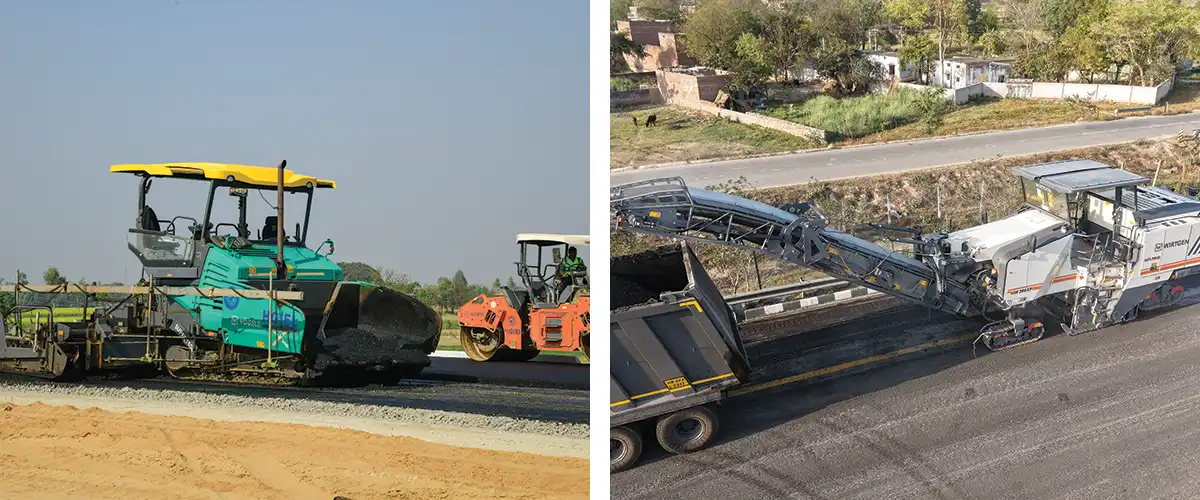
Across the road construction ecosystem, several innovations are already demonstrating measurable impact on speed, safety, quality, sustainability, and lifecycle performance. These include intelligent machines and automation for precision execution, cold recycling and sustainable road construction technologies, high-capacity milling and paving solutions for faster execution, telematics and digital fleet management, advanced compaction technologies for quality assurance, enhanced operator safety and ergonomics, and an integrated solutions approach, all of which are helping improve execution efficiency, quality control, lifecycle performance, sustainability, and reducing project timelines and costs.
Northern Indian Railways
Dr. Alok Kumar Bhargava
Dr. Alok Kumar Bhargava
Kobelco Construction Equipment
Moses Eddy
Moses Eddy
The age of artificial intelligence requires not only innovation, but accountable innovation. A nation that develops Governance Intelligence Engineering as a sovereign capability will possess a strategic advantage in public trust, digital governance, institutional resilience, and responsible technology leadership.
Dr. Alok Kumar Bhargava
Chief Engineer (General)
Northern Indian Railways Govt. of India
Execution Speed with Readiness Discipline
India’s journey towards Viksit Bharat 2047 is fundamentally an infrastructure journey. Railways, highways, bridges, logistics corridors, metro systems, station redevelopment, industrial clusters, smart cities, energy networks and digital platforms are no longer isolated assets; they are national productivity systems. The new infrastructure challenge is not only to build more, but to deliver faster, safer, greener, more cost-effectively and with assured lifecycle quality.In large infrastructure projects, speed should not be confused with haste. True speed comes from readiness. A project enters the fast lane only when its critical dependencies are mature: land availability, statutory permissions, utilities, approved drawings, contract clarity, site access, funding, safety plans, quality protocols and stakeholder coordination.
Many delays arise because execution starts before readiness is complete. This creates rework, contractual disputes, variation claims, idle machinery, fragmented progress and public inconvenience. Therefore, the most important factor for speed is a readiness-gate system. Before a project is physically accelerated, it must be administratively, technically, financially and contractually ready.
Governance Intelligence Engineering for Mega Projects
My research area—Governance Intelligence Engineering—directly addresses this gap. Infrastructure projects today generate massive data from planning systems, DPRs, BIM models, drones, dashboards, contracts, inspection records, site reports, quality tests, safety observations, financial progress and equipment deployment. These are not merely documents; they are enterprise telemetry signals.When these signals are captured, normalized and analysed, they can provide early warnings on delay, weak evidence, poor sequencing, quality deviation, cost stress or safety exposure. This is the shift from passive monitoring to active governance intelligence.
For Viksit Bharat, mega projects need a control layer where project telemetry is converted into decision intelligence. The system should answer: Is the project ready? Is the sequence correct? Is quality evidence complete? Are safety controls active? Is cost variation justified? Are AI-generated recommendations explainable? Is the responsible officer validating critical decisions?
Human-Centered AI Accountability
Technology is transforming project delivery. AI-enabled dashboards, digital twins, GIS-based planning, drone monitoring, sensor-based inspection, automated progress measurement and predictive analytics can greatly improve execution certainty. However, AI must support accountability, not dilute it.Human-centered AI accountability means that algorithmic alerts, risk scores and recommendations must remain explainable, reviewable and attributable. In public infrastructure, an AI warning may identify abnormal delay, material risk, quality variation or safety deviation, but the decision to release payment, approve variation, clear execution or modify sequence must remain with an accountable human authority. This creates the right balance: machine speed with human responsibility.
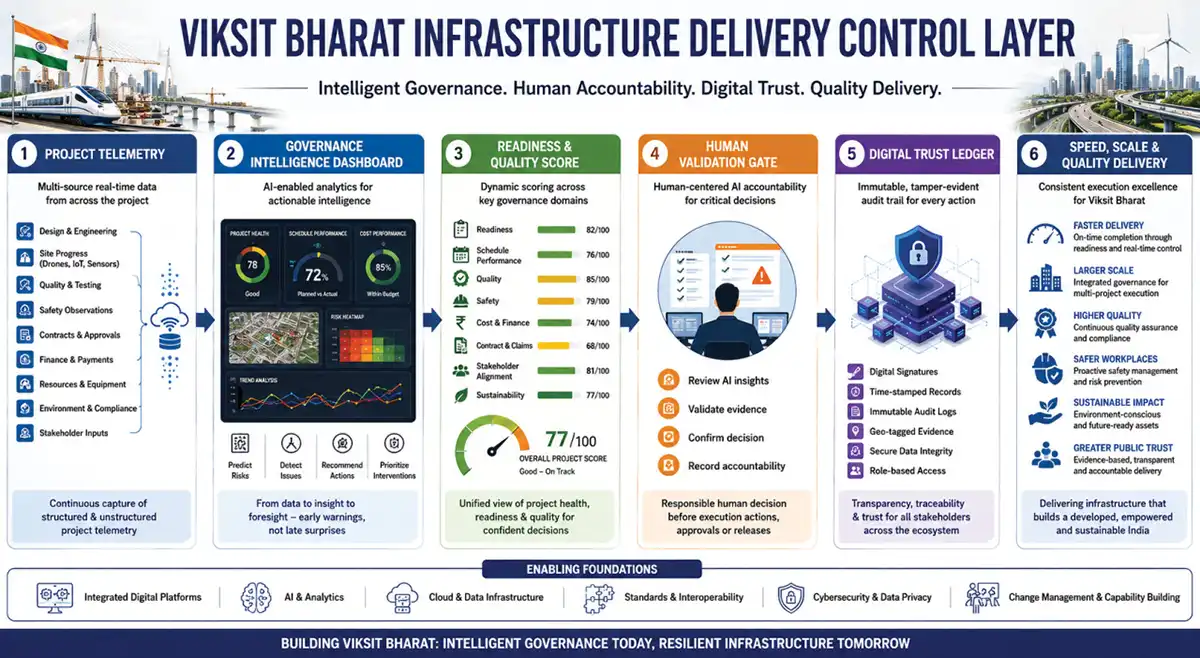
Figure-1: “Flow: Project Telemetry → Governance Intelligence Dashboard → Readiness & Quality Score → Human Validation Gate → Digital Trust Ledger → Speed, Scale & Quality Delivery”
Digital Trust Infrastructure
The future of project delivery also depends on digital trust infrastructure. Every important decision in an infrastructure project—approval, inspection, variation, extension, safety clearance, payment, testing, commissioning or handover—should leave a transparent and verifiable digital trail.Authenticated approvals, digital signatures, tamper-evident audit logs, geo-tagged progress records, drone-based evidence, sensor records and immutable project ledgers can significantly improve transparency between government agencies, contractors, consultants, auditors and citizens. This approach reduces ambiguity. It protects honest decision-making. It also improves dispute resolution because decisions are supported by traceable evidence.
Innovation in Engineering and Construction
Engineering innovations are already improving delivery outcomes across India. Mechanized bridge construction, precast elements, modular construction, mechanized track works, advanced survey systems, drone-based monitoring, integrated project dashboards, digital measurement books and contract-management platforms are reducing manual dependency and improving transparency.In railway and transport infrastructure, mechanized execution and digital monitoring can compress timelines by improving resource utilization, avoiding repeated site visits and enabling faster corrective action. Drone progress photography, for example, provides visual evidence of actual site progress. BIM and 3D models reduce design conflicts before execution. Precast and modular systems improve quality by shifting work from uncertain site conditions to controlled production environments.
Sustainability is also becoming integral. Use of fly ash, GGBFS, recycled aggregates, low-carbon materials, energy-efficient construction practices, optimized logistics and lifecycle-based design can reduce environmental burden while improving long-term asset performance.
Quality and Safety as Execution Multipliers
Quality and safety should not be treated as speed breakers. They are speed multipliers. Poor quality causes rework. Weak safety causes stoppages, investigations and reputational loss. In contrast, a strong quality-assurance and safety-governance system enables smooth, predictable and uninterrupted execution.The future lies in real-time quality governance: test records, material traceability, inspection checklists, non-conformance reports, safety observations and corrective actions should be digitally integrated with project dashboards.
The Viksit Bharat Delivery Model
The emerging infrastructure delivery model may be summarized as:Readiness → Telemetry → Governance Intelligence → Human Validation → Digital Trust → Speed, Scale & Quality.
This model integrates engineering, technology, project management, AI accountability and institutional governance.
Viksit Bharat will not be built only through higher capital expenditure. It will be built through better delivery intelligence. India needs infrastructure systems that can combine speed with readiness, scale with coordination, quality with evidence, AI with accountability and construction progress with digital trust.
Governance Intelligence Engineering, Human-Centered AI Accountability, Digital Trust Infrastructure and Enterprise Telemetry Governance can together become the next-generation control layer for delivering India’s infrastructure vision with certainty, transparency and national confidence.
Dr. Alok Kumar is the author of TrayiVani: Eternal Verses on Peace, Silence and Discernment and The Inner Engine Trilogy, and the inventor of The Inner Engine Framework.
Successful execution of a project depends on four critical factors: effective planning, mechanisation, skilled manpower, and technology adoption. Delays caused by equipment downtime, inefficient resource utilisation, workforce shortages, or project rework can significantly impact both cost and project outcomes. Therefore, maintaining execution speed is not simply about accelerating activity on-site; it requires a holistic approach.India’s infrastructure ambitions are among the most significant globally. Achieving them will require an ecosystem-wide commitment to innovation, operational excellence, and continuous capability development.
Moses Eddy
Director
Kobelco Construction Equipment
One of the most important drivers of execution efficiency is mechanisation. The transition from labour-intensive methods to advanced construction equipment has improved productivity, consistency, and predictability across infrastructure projects. Modern machines enable faster excavation, material handling, and site preparation while maintaining accuracy and quality standards.
Equally important is the training of skilled operators and technicians who can maximise machine productivity and ensure safe operations. As India’s construction equipment industry continues to expand, investment in workforce capability will remain a key enabler of project success.
Technology adoption is another critical factor. Digital tools such as telematics, remote diagnostics, predictive maintenance, and fleet monitoring systems are helping project teams move from reactive to proactive decision-making. Digital tools like Kobelco-Assist (K-Assist) provides real-time visibility into machine utilisation, fuel consumption, operating behaviour, and maintenance requirements, enabling better asset management and reducing unplanned downtime.
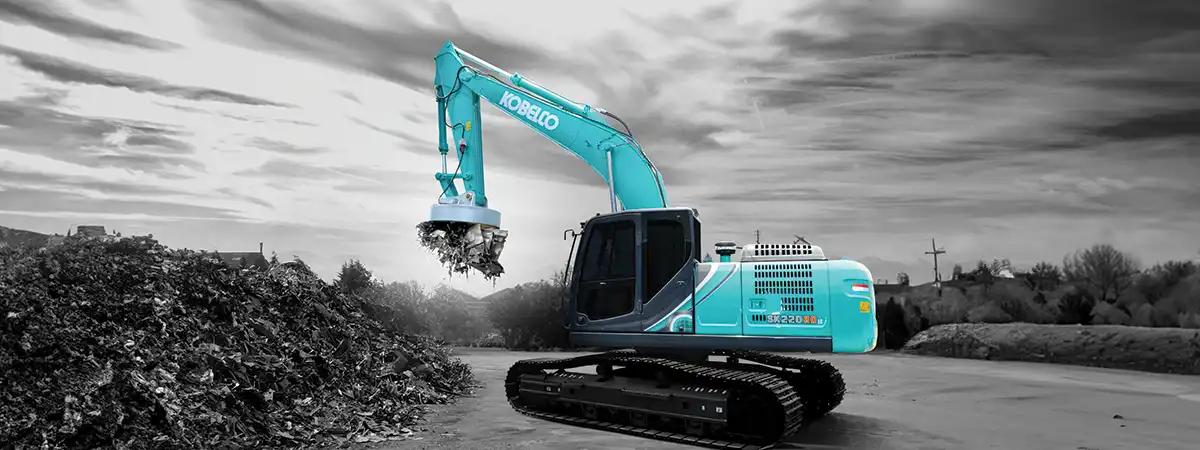
Innovations in construction equipment are already delivering measurable improvements in project execution. For example, modern excavators equipped with intelligent hydraulic systems, fuel-efficient operating modes, and telematics platforms help improve productivity while lowering operating costs.
The Kobelco SK380XDLC-10, widely deployed across infrastructure and road construction projects in India, delivers typical output of up to 150–200 m³ per hour, depending on the application. Its Arm Regeneration System and ECO Mode optimise hydraulic performance and reduce fuel consumption, helping project teams improve operational efficiency and stay sustainable while controlling costs. GEOSCAN telematics enables real-time equipment monitoring, GPS tracking, and predictive maintenance, reducing unplanned downtime and supporting better fleet utilisation. Advanced filtration systems and hydraulic monitoring further contribute to machine reliability and lifecycle performance.
Sustainability must also be viewed as an integral component of infrastructure delivery rather than a separate objective. Fuel-efficient equipment, lower-emission technologies, predictive maintenance practices, and circular economy initiatives such as certified pre-owned machines help reduce environmental impact while improving lifecycle value. Responsible resource utilisation, waste reduction, and improved equipment efficiency contribute directly to both sustainability goals and cost optimisation.

Nish Earthmovers
Tarun Datta
Tarun Datta
CFlo World Limited
Manish Bhartia
Manish Bhartia
India’s infrastructure push under Viksit Bharat 2047 is not about building more — it is about building faster, safer, and with certainty on quality, cost, and sustainability. Having witnessed the sector evolve from manual to mechanical to tech-driven execution over 35 years, I believe the difference between intent and outcome now rests on four fundamentals:If we enforce transparency and accountability, mandate inter-agency coordination, scrutinize tenders, and bind contractors and engineers to 10-year asset performance, we will do more than build infrastructure, we will build trust.
Tarun Datta
Owner
Nish Earthmovers
Personal accountability across the chain: Execution speed collapses when responsibility is diffused. From JE to Chief Engineer, each level must have defined KPIs and be answerable for slippages. The Delhi Metro under Shri E. Sreedharan institutionalized this with daily targets, weekly reviews, and zero tolerance for deadline drift. The result was that projects were delivered ahead of schedule and within budget.
Integrated inter-departmental planning: The ‘dig-fill-dig’ cycle is a national inefficiency. Roads are built, then excavated for water, power, and sewage utilities. A unified GIS-based utility corridor plan plus a mandatory 3-year ‘no-dig’ clause post-construction can end this. Pune’s ‘one dig’ policy is a start; scaling it nationally will save thousands of crores and public frustration.
Tender and execution discipline: L1 bidding without technical vetting invites delays and rework. Abnormally low bids must trigger scrutiny. Contractors who miss deadlines should be barred from new tenders until pending work is complete. This shifts focus from winning bids to delivering assets.
10-year post-completion ownership: If contractors and supervising officials are responsible for structural performance for a decade, quality becomes the default. Lifecycle costing will replace lowest initial cost, reducing maintenance burden and freeing capital for new projects.
Innovations are also driving faster, safer, higher-quality delivery. For example, replacing manual concreting with boom placers and batching plants cut our slab cycle from 21 to 10 days. When paired with 4D BIM on a metro station, we detected over 200 clashes before casting, thereby avoiding three months of rework and ₹4.2 cr in cost overruns.
Real-time telematics on excavators and pavers on a 40-km highway project reduced diesel use by 14% and lifted machine uptime from 68% to 89%. That alone compressed the schedule by six weeks and cut emissions.
Advanced materials like high-performance concrete with corrosion inhibitors used in coastal bridges has extended maintenance cycles from 5 to 12+ years. Cold mix technology lets us build rural roads during monsoons, adding four productive months annually.
Drone surveys and AI-based cube test analytics can now flag deviations in hours; not weeks. On a housing project, drone orthomosaics caught a 30mm slab error on Day 2. Corrected immediately, it prevented a 45-day delay that would have cascaded across five floors.
Though technology is available in India, the gap is its adoption and accountability. Speed without quality creates liability; and quality without speed loses relevance. Viksit Bharat 2047 demands both.
India is in its largest phase of infrastructure expansion to date, and the priority has shifted from building more to delivering faster, at lower cost, with assured quality and lower resource use. As a modular wet processing equipment manufacturer, our technology gives producers engineered sand solutions, turning quarry and mining rejects and waste streams (such as construction and demolition waste) into specification-grade sand and aggregate. Material quality and supply are among the clearest levers on whether a project moves quickly or stalls.A country that engineers its construction materials rather than mining them will build faster and better while conserving the natural resources it will still need in 2047.
Manish Bhartia
Global CEO & Managing Director
CFlo World Limited
On large projects, a common and avoidable cause of delay sits on the materials side: variable quality and unreliable supply of natural sand and aggregate. River sand is finite, its extraction damages riverbeds, and its supply and price are unpredictable. When the input is inconsistent, downstream quality and timelines become inconsistent too.
The first of these is material certainty at the source. When the feed is properly tested and the processing technique is well controlled, the output meets IS 383:2016 consistently from one batch to the next, and that reliability is what allows contractors to plan and execute with confidence rather than absorbing the cost and time of rework further down the line.
Equally important is the standardisation that comes from how the processing equipment itself is designed. A modular plant that is fully assembled and performance tested in our factory before it is dispatched arrives on site as a known quantity, commissioning far more quickly and performing exactly as it was designed to, because every unit is governed by the same fixed quality and acceptance protocol. The effect is a much shorter gap between the point at which project owner invests and the point at which they have reliable, saleable output.
The third factor only becomes fully visible over time, and that is lifecycle performance. Lower water consumption, well-controlled fines, and durable specification-grade material together reduce the whole-life cost of an asset, which is why quality is best judged over the full working life of what is built rather than at the single moment of commissioning.
The most significant change in our field is the shift from extracting natural sand to engineering it. Wet processing converts quarry and mining rejects, and increasingly construction and demolition waste, into manufactured sand and aggregate that meet IS 383:2016. Material that was previously stockpiled or dumped becomes specification-grade construction material.
The opportunity in waste recovery is substantial. India currently recovers close to one percent of its construction and demolition waste, compared with roughly seventy percent in the United States and ninety percent in parts of Europe. The Extended Producer Responsibility framework now coming into force changes the economics of dumping, and the processing technology to recover this material already exists and is in operation.
CFlo plants installed across India, take quarry and mining rejects and C&D waste as feed and produce washed, specification-grade sand, recycling the majority of their process water and returning a consistent product to the construction supply chain. With more than 500 installations across 18 countries, the technology is proven at scale.
For the developers and contractors building Viksit Bharat, our contribution is reliable engineered material from waste, and standardised modular plug & play tech that commission quickly and run predictably.

NH Wing, PWD - West Bengal
Rajib Chattaraj
Rajib Chattaraj
CASE Construction Equipment, APAC & India
Puneet Vidyarthi
Puneet Vidyarthi
The proven path for transforming from a developing to a developed country is long-term sustainable economic growth for which the first step is building a robust infrastructure. Historically, infrastructure development is a deliberate, massive state-led catalyst designed to lower business costs, unify markets, and move goods at maximum speed.Core engineering is what transforms a nation's natural geography into an organized, productive, and safe environment where businesses can scale, commerce can flow, and citizens can thrive.
Rajib Chattaraj
Former Chief Engineer
NH Wing, PWD - West Bengal
Construction of the Transcontinental Railroad in the 19th century acted as America's first major economic multiplier. The Eisenhower Interstate Highway System launched by the Federal-Aid Highway Act of 1956, was the largest public works project in American history at the time. By creating a seamless network of high-speed highways, the US drastically reduced logistics and freight costs for manufacturing. It also triggered a massive economic ripple effect: it birthed the modern logistics industry, fuelled the automotive and oil sectors, and created the suburban economy.
Post-War Reconstruction and Borderless Integration following the devastation of World War II, Europe used infrastructure to simultaneously rebuild its shattered cities and bind its nations together to prevent future conflicts. Initial Western European growth was driven by rebuilding fundamental supply lifelines—deepwater ports (like Rotterdam), heavy rail, and coal/steel production facilities. As the European Union formed, the infrastructure strategy shifted from national to continental. Europe invested heavily in high-speed rail (like the French TGV and German ICE) and unified freight corridors. By standardising rail gauges, signalling systems, and highway networks across borders, Europe maximized the efficiency of its ‘Single Market.’
Japan faced with mountainous terrain and a lack of natural resources, post-WWII, used highly strategic, dense infrastructure to optimize its limited space and power an export-led boom. The Shinkansen (Bullet Train, 1964) launched right before the 1964 Tokyo Olympics, was a geopolitical statement and an economic masterstroke. By connecting Tokyo, Nagoya, and Osaka at high speeds, it created a hyper-efficient ‘megalopolis’, and allowed executives, engineers, and workers to move across the industrial heartland effortlessly –– drastically increasing white-collar productivity and saving millions of man-hours.
In the 1960s, South Korea's infrastructure development was aggressive, highly centralized, and built ahead of demand. The state built the infrastructure first, knowing it would force industrial clusters to grow around it.
The Gyeongju Expressway (1970), connecting Seoul to the major port city of Busan, is widely considered the backbone of the ‘Miracle on the Han River’. Built under intense political scepticism, it instantly connected the capital's labour with the country's main maritime export gateway.
Along the Industrial Complexes and Specialized Ports highway corridor and the southern coast, the government built massive, specialized infrastructure zones such as Pohang for steel production and Ulsan for shipbuilding and automotive assembly. By pairing heavy industrial complexes directly with deep-water ports and dedicated power grids, South Korea transformed itself from a recipient of foreign aid into a dominant global exporter of heavy machinery and electronics in less than three decades.
In all the above examples, core engineering, specifically civil engineering, played a massive role in building and reshaping these developed nations. In China, if the political and financial mechanisms are the brains behind its infrastructure boom, civil engineering is the muscle. China's civil engineering sector had to evolve from a low-tech, labour-intensive industry in the 1980s into a hyper-advanced, industrialized force. Civil engineers didn't just build projects; they fundamentally rewrote the rules of structural scale, material science, and construction speed.
To replicate this in India, a level playing ground is needed to attract good brains and students to study core engineering branches. There should be parity in pay and perks across the engineering branches, which is presently not there. The best brains of the country should be encouraged to opt for the Infrastructure Development Industry.
So, students opting for core engineering should not face disparity in pay, perks, and job stability. Industry leaders and experts should interact in the universities and discuss real-life problems as well as the solutions and the engineering students should be assigned to solve industry problems as a part of their curriculum.
The core engineering curriculum is also needed to be updated as per the latest industry demand, and it should be dynamic. Proficiency of Industry-consultancy is also required for the faculties apart from proficiency of research paper publication. Fortunately, in the recent selection of branches of engineering in the top IITs, Civil Engineering has got a huge jump in the ranking, which is a silver lining towards building Viksit Bharat.
As India moves ahead with the Viksit Bharat 2047 vision, infrastructure projects are being executed at a much larger scale and under tighter timelines. At the same time, contractors are facing rising equipment costs, project delays, and pressure to maintain productivity while controlling operating expenses. In such an environment, maintaining execution speed depends on equipment reliability, fuel efficiency, operator productivity, and faster service support. There is also growing focus on reducing rework, improving machine uptime, and ensuring consistent performance across applications such as highways, urban infrastructure, and road construction.Maintaining execution speed of projects requires equipment that can deliver faster, have higher uptime, reliability, lower fuel consumption, safer operations, and faster service support.
Puneet Vidyarthi
Head - Brand Marketing
CASE Construction Equipment, APAC & India
To support these evolving requirements, CASE India is focusing on intelligent technologies, connected equipment, and localized manufacturing that improve operational efficiency on site. Machines such as the 952NX vibratory compactor and 450NX Tandem Vibratory Compactor help improve compaction precision and reduce rework through intelligent compaction technology and ICV monitoring, helping reduce passes by up to 20%. Across earthmoving applications, machines such as the CX220C LC excavator and backhoe loaders such as the 770NX, 770NX Magnum, and 851NX are designed to deliver higher productivity, lower fuel consumption, and improved uptime through electro-hydraulic controls, intelligent hydraulics, ECO modes, telematics, and predictive maintenance support.
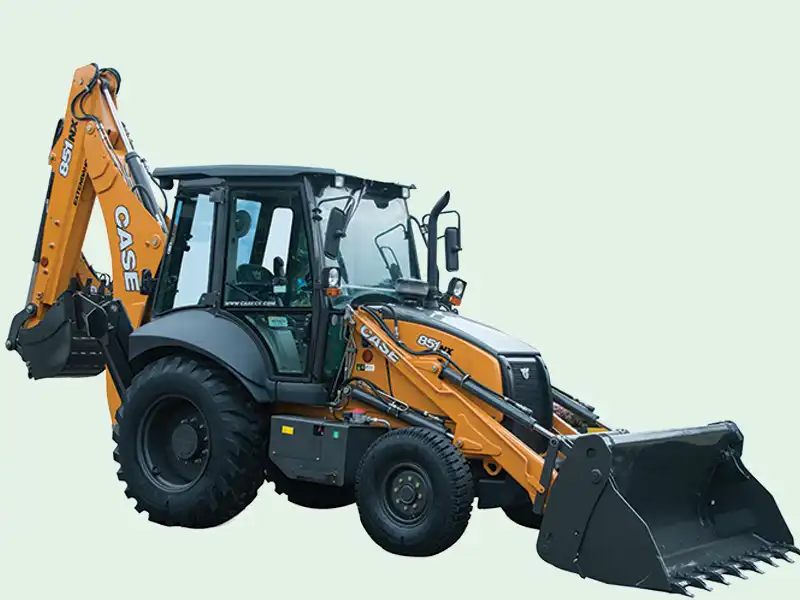
Infrastructure projects today require equipment that can deliver faster execution, higher uptime, lower fuel consumption, and safer operations across demanding working conditions. We are integrating technologies such as the CASE Intelligent Hydraulic System and myCASEConstruction Telematics across our equipment range to help operators improve productivity and manage projects more efficiently. Advanced hydraulics help improve machine response and fuel efficiency, while connected monitoring solutions provide real-time visibility on machine health, fuel usage, idle time, and service requirements, helping reduce unplanned downtime and improve lifecycle performance. In addition, ergonomic cabins, better visibility, easier controls, and durable machine components support safer operations and more consistent output across infrastructure projects.
This is further supported by our service and support ecosystem, which plays an important role in maintaining productivity across sites. With a network of over 70 dealers and over 215 touchpoints across the country, we are able to provide faster service response and better parts availability, including in remote operating conditions. We are also strengthening operator readiness through initiatives such as our COCO Brandstore in Tiruchirappalli and skill development programs through our CSR initiatives like Hunar, Project Vijeta and Project Shilpi. Together, these efforts are helping operators improve equipment utilisation, reduce lifecycle costs, and maintain project timelines more effectively.

Precast Manufacturing Association
Suresh C Tripathi
Suresh C Tripathi
Manitou South Asia
Manish Kulkarni
Manish Kulkarni
To bring the client, contractor, funding agency, and other stakeholders onto a common platform, adopting the ‘Single Source of Truth’ concept is essential for transparency and informed decision-making. Implementing a BIM platform such as BEXEL Manager as a Common Data Environment (CDE) has proven highly effective in this regard.By delivering projects of higher quality, with less waste, faster execution, and improved productivity, industrialized construction and precast technology are transforming the way the world builds.
Suresh C Tripathi
ED -AEPL &
Director, C-Probe Technologies
Precast Manufacturing Association
Organisations such as L&T have adopted BIM at the corporate level across multiple projects, integrating digital engineering tools, project controls, business intelligence, and analytics to enhance collaboration, management visibility, and decision-making. By creating a connected digital ecosystem that supports planning, execution, monitoring, and continuous improvement, L&T has reaped significant benefits across its mega projects through improved project execution, operational efficiency, and better decision-making.
Similarly, HSCC has adopted the BEXEL Manager platform for project management and benefited from improved transparency, coordination, and decision-making. Harnessing the full potential of BIM can significantly contribute to the nation’s infrastructure growth. CPWD has also taken positive steps in this direction by mandating BIM for projects.
The increasing complexity of projects have now made it essential to adopt new technologies like prefab and precast. Offsite construction method shifts the mindset from the traditional site-based work to factory-based working. In my 40 years of work in the construction domain, I have always treated these technologies as a part of the solutions to clients. But experimenting with new technologies requires proper domain knowledge. The Precast Manufacturing Association of India has been successful in bringing precast manufacturers within the construction ecosystem through technical knowledge sharing and collective efficiencies in plant utilisation.
Precast technology offers improved quality, time and resource utilization along with safety. For example, by using precast technology, construction of the Supercast Golf village Towers (G+21 with 3 basements) was completed at about 10% lesser cost than in-situ construction.
As India builds the next generation of cities, housing, industrial facilities, and infrastructure, technologies such as precast / modular construction and smarter planning will enable predictable execution and scalable growth. The future of infrastructure will not be defined by how fast we build, but by how efficiently, sustainably, and safely we build.
In my startup company C-Probe Technologies, we introduced (made in India) Maturity Meters that empower quality engineers in concrete testing by giving real KYC (Know Your Concrete Concept) which aids in decision making (based on scientific data) at project sites. L&T was our major supporter in a project of Mission 96 of CIDCO where our technology helped in faster decision making and in improving the slab cycle time. We were given ‘The Most Innovative Technology’ award in 2024 by the World of Concrete for our Maturity Meters.
India’s rapid infrastructure expansion across highways, metros, railways, airports, and urban projects demands a massive paradigm shift in how we approach large-scale project delivery. While the nation has access to cutting-edge global technologies, the slow adoption of mechanization and digital planning continues to burden the sector with execution bottlenecks, safety liabilities, and severe cost overruns.Infrastructure delivery in India must move from a traditional execution model to an industrialised construction model that leverages mechanisation, digitalisation, automation, and sustainability, to achieve faster execution, superior quality, lower lifecycle costs, and greater long-term asset performance.
Manish Kulkarni
Managing Director
Manitou South Asia
To maintain rapid execution speed without compromising on quality, environmental sustainability, or long-term cost efficiency, we must prioritize three critical factors: structured mechanization, predictive asset management through telematics, and strategic workforce upskilling ecosystem. Relying on outdated manual methods or basic, single-purpose equipment on increasingly complex infrastructure sites inevitably compromises structural integrity and prolongs project timelines. True efficiency is achieved only when data-driven planning and highly specialized, multi-functional machinery are integrated seamlessly into the project design from day one, transforming chaotic construction sites into streamlined, predictable operational ecosystems.
Another key factor is early collaboration among project owners, consultants, contractors, equipment providers and technology partners. Infrastructure projects are becoming increasingly complex, and success depends on creating a connected ecosystem where information flows seamlessly across all stakeholders. Data-driven project management supported by predictive analytics can help identify bottlenecks, optimise resource allocation, and reduce costly rework. At the same time, sustainability should not be viewed as a separate objective but as an integral part of project execution. The use of energy-efficient machinery, low-carbon construction practices, and optimised logistics can reduce environmental impact while also lowering lifecycle costs.
Skill development is equally crucial. Investments in advanced technologies and equipment can only deliver results when operators, engineers and project managers are adequately trained to use them effectively. Therefore, continuous workforce upskilling must accompany technological adoption. Furthermore, standardisation of processes, timely procurement strategies and strong supply-chain management are essential to avoid disruptions that frequently impact project schedules and budgets.
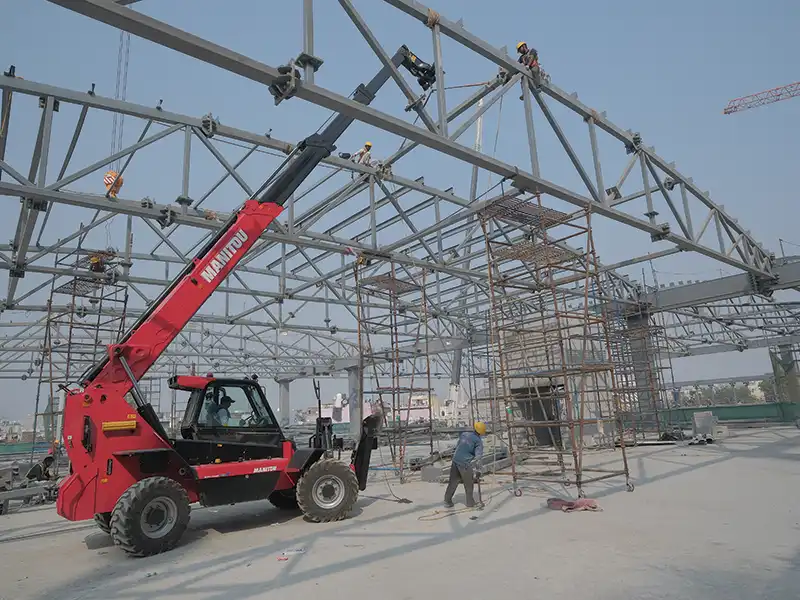
In a rapidly urbanizing India, infrastructure developers face the compounding challenges of congested urban sites, tight deadlines, and rising material costs, making traditional single-use machinery increasingly obsolete. At Manitou, we are actively tackling these inefficiencies by shifting the Indian infrastructure mindset from basic lifting tools to highly versatile, intelligent, and sustainable equipment.
A prime example of this innovation in action is the strategic integration of our connected, multi-functional telehandlers (MXT 840 and MXT 1740) and advanced aerial work platforms and scissor lifts (8 meter to 12 meter range) into major Indian metro rail projects and high-profile airport expansion hubs. Traditionally, these sites rely on a chaotic mix of multiple traditional machines - such as pick-and-carry cranes, and scaffolding - which increases congestion, heightens safety hazards, and drives up fuel consumption. By deploying a single telehandler equipped with quick-interchange attachments like buckets, crane hooks, material baskets and forks, project developers have consolidated multiple operations into a single asset.
This versatility not only reduced machinery clutter on dense urban job sites but also slashed equipment idle times and shortened critical structural assembly timelines by up to 20%. So, by incorporating smart technological features like automatic attachment recognition, dynamic load charts, and precise proportional controls, modern telehandlers ensure that operators remain strictly within safe operational limits. This precision placement protects both the labor force and the raw materials, significantly reducing structural damage and rework during the critical assembly phases.
Finally, consolidating multiple operations into a single, intelligent machine yields massive dividends for project sustainability and long-term lifecycle performance. Replacing a fleet of traditional, single-use machines with a multi-functional asset drastically slashes overall fuel consumption and localized carbon emissions. Through the MyManitou app, contractors and fleet owners can remotely monitor machine health, track utilisation, access maintenance information, receive service alerts, and manage their equipment fleet more effectively.
This connected-machine ecosystem helps reduce unplanned downtime, optimise machine deployment, improve preventive maintenance planning, and maximise asset productivity across multiple project sites. Fundamentally, extracting greater value from every asset is the foundation of operational excellence –- driving lower lifecycle costs, enhanced equipment longevity, and sustainable growth.

Rithwik Projects
C R Rithwik
C R Rithwik

HD Hyundai Construction Equipment India
Anand Dulariya
Anand Dulariya
As India accelerates toward the Viksit Bharat 2047 vision, the infrastructure sector faces a critical imperative: delivering larger, more complex projects faster while maintaining uncompromising standards of quality, safety, and sustainability. In our experience, there are three critical factors for balancing speed, quality, sustainability, cost efficiency in large infrastructure projects and determining their successful delivery: Rigorous Pre-Planning and DPR Quality: Investing heavily in detailed pre-planning and site investigation before construction begins is non-negotiable. The Ministry of Statistics and Programme Implementation (MoSPI) study on infrastructure projects valued over Rs.150 crore underscores that robust planning and scheduling are the most significant attributes affecting productivity, with a relative importance index of 0.79. Projects with comprehensive Detailed Project Reports (DPRs) experience fewer design changes, minimal work, and 20% - 30% reduction in cost overruns.Mechanization improves productivity, safety, and quality, consistency, lean construction reduces wastage and variability in site operations, risk management prevents costly delays – all of which together address India's productivity challenges.
C R Rithwik
President - Operations
Rithwik Projects
Stakeholder Coordination and Commitment Culture: The most significant management practice affecting construction productivity in India is stakeholder coordination (Relative Importance Index: 0.91). Moving from calendar dates to actual commitments, implementing the Last Planner® System – creates accountability and reduces variability. The Tadipatri to Muddanur road project (Under NH 67) in Andhra Pradesh was completed approximately 6 months ahead of schedule due to effective stakeholder management. We were able to secure 100% land from the state government and NHAI/MoRTH within three months of the work getting awarded.
Lean Construction and Risk Management Embedded Early: Lean construction principles improve workflow, reduce process waste, and optimize entire systems rather than isolated parts. Embedding risk management culture from concept to commissioning prevents costly delays.
In India's tunnelling and infrastructure sector, projects that adopt early geotechnical risk assessment, commitment-based scheduling and proactive stakeholder alignment that typically reduce the average project delays by 15–30% compared to traditional approaches. In our tunnelling projects – including the Rs.2,099 crore Kharghar-Turbhe Tunnel Road in Maharashtra, daily coordination meetings, and proactive risk identification approaches helped minimize average project delays significantly.
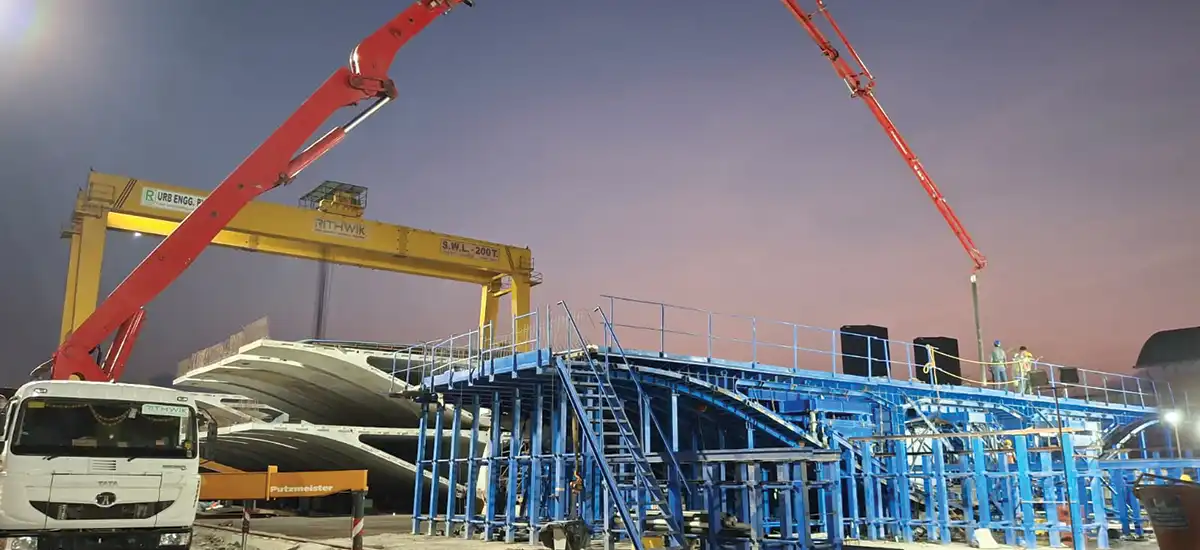
India's infrastructure sector is rapidly adopting transformative innovations for execution, quality, safety, and lifecycle performance. For complex projects, BIM adoption can reduce average delays to 39 months, cut construction costs by up to 30%, and lower maintenance costs by 20%. 5D BIM enables clash detection, 4D scheduling, and cost management, delivering 20–30% reduction in cost overruns. Rithwik Projects integrates BIM across tunnelling and highway projects to identify conflicts early, minimize rework, and control costs from the design phase.
Virtual modelling and Digital Twins enable predictive maintenance, extending asset lifespan while lowering long-term expenses. Automated carbon accounting facilitates environmentally friendly design decisions with measurable ecological performance. On our hydroelectric projects like the Sunni Dam, digital tools enhance value throughout the asset lifecycle. Our renewable energy portfolio, including solar projects and Chatti Bariatu Coal Mining, leverages mechanized installation for faster execution with superior quality assurance.
Significant attributes include the ability to handle crises, social skills of key managers, and timely payments. Investing in training and development for skill enhancement directly impacts productivity. The organization’s dedicated workforce of talented professionals reflects our commitment to continuous capability building.
The measurable outcomes from RPPL's portfolio demonstrate these principles in action with concrete, measurable achievements:
RVNL Package-6 Tunnel (Rishikesh–Karanprayag Railway Line, Uttarakhand): Rithwik Projects achieved a breakthrough on Package-6 of this prestigious ₹16 billion railway tunnel project, executing 837 meters of tunnel excavation in a single month—an incredible productivity rate that significantly outperformed other competitors on the project. This milestone earned an official appreciation letter from Mr. Pradeep Gaur, then Chairman & Managing Director of RVNL, for "Exceptional Progress in Tunnel Excavation and RCC lining". Out of 38 planned tunnel breakthroughs across the 213 km project, Rithwik completed 28 breakthroughs, with Pkg-6 achieving the highest RCC lining progress as of November 2024.
Mydukur–Badvel Section of NH-67 (Andhra Pradesh): Rithwik Projects successfully completed 4-laning of the 40.39 km long Mydukur–Badvel section (km 585.930–628.555) of NH-67 under the Bharatmala Pariyojna on Hybrid Annuity Mode (HAM). Awarded in August 2022 with expected completion by April 2025, the project was delivered ahead of schedule, demonstrating RPPL's execution capability in highway infrastructure. During the execution, new materials such as GFRP (Glass Fibre Reinforcement Polymer), New Jersey Crash Barrier casted with SP15 Pavers were introduced confirming quality delivery across all project phases.
Our other portfolio highlights include:
- 27 years of execution (1999–2026): Delivered irrigation, roads and highways, hydro power, and tunnel projects across India.
- Approximately Rs. 20,000 Crore plus orders including 53% from public sector companies (NMDC, NTPC Ltd, NHPC, etc.) under 25-year contracts, reflecting sustained client trust.
- Tunnelling projects: RVNL's Obulavaripalle – Venkatachalam tunnel and Rishikesh - Karanprayag Package 6 Project showcase technical expertise in complex underground construction.
India's infrastructure sector is undergoing a transformative phase, driven by ambitious national development goals with a strong focus on connectivity, logistics efficiency and economic growth. As project scales increase and delivery timelines become more demanding, maintaining execution speed while ensuring quality, sustainability and cost efficiency has become a critical challenge. Successfully balancing these objectives requires a combination of advanced technology, effective project management, skilled resources and strong collaboration among stakeholders.Projects that integrate planning, execution, monitoring and maintenance into a unified framework are significantly better positioned to achieve schedule certainty, cost control and long-term asset performance.
Anand Dulariya
Head - Brand Dealer Development & Exports
HD Hyundai Construction Equipment India
The most critical factor for maintaining execution speed without compromising quality is adopting a lifecycle-based approach to project planning and execution. This begins with detailed project preparation, accurate site investigations, efficient design coordination and proactive risk management.
Execution delays often arise not from construction activities themselves but from inadequate planning, design changes, material shortages or equipment downtime. As a result, digital project monitoring, integrated planning systems and real-time decision-making have become essential tools for modern infrastructure delivery.
In large infrastructure projects, machine downtime directly affects productivity, project schedules and costs. Contractors today increasingly rely on telematics-enabled equipment, predictive maintenance solutions, and comprehensive fleet management services to maximize machine uptime.
Rather than following traditional reactive maintenance practices, equipment manufacturers and contractors now collaborate closely to monitor machine health in real time, identify potential issues early and schedule maintenance proactively. This approach significantly reduces unexpected breakdowns and improves overall project efficiency. The shift from repairing equipment after failure to predicting and preventing failures has become a major driver of lifecycle cost optimization across infrastructure projects.
Innovation is transforming how infrastructure is delivered in India. The widespread adoption of intelligent construction equipment equipped with GPS guidance, machine control systems, telematics and IoT-enabled diagnostics has enhanced precision, reduced rework, improved fuel efficiency, and ensured consistent quality across project sites.
Advanced motor graders and soil compactors equipped with machine guidance systems achieve design specifications with greater accuracy, minimizing material wastage and reducing the number of passes required to complete a task.
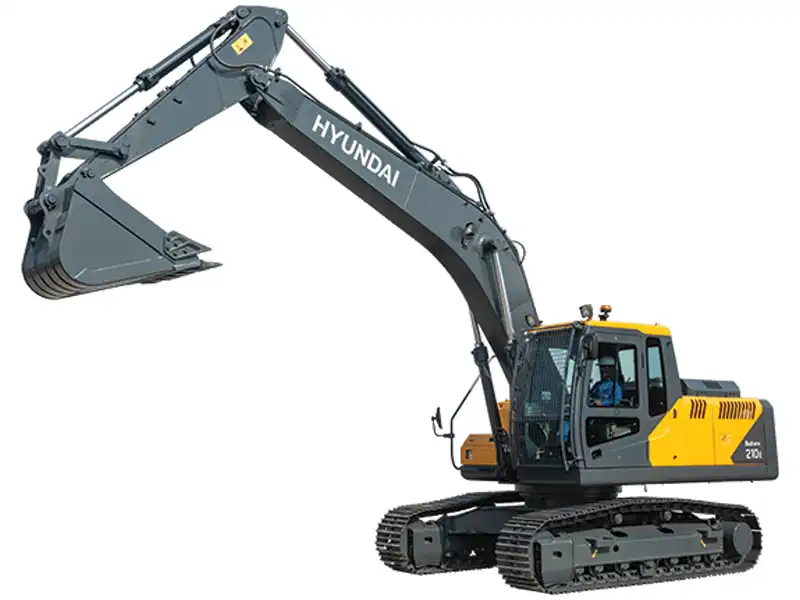
These technologies have played an important role in accelerating execution across India's expanding highway, expressway and urban infrastructure programs.
Digital construction management platforms are enhancing project execution by providing centralized visibility into project progress, resource utilization, equipment performance and quality metrics. Real-time dashboards enable faster decision-making and help stakeholders identify and address issues before they impact schedules.
Sustainability is another area where innovation is delivering measurable benefits. Modern construction equipment is becoming increasingly fuel-efficient through advanced engine technologies, optimized hydraulic systems, hybrid solutions and electrification.
Such innovations demonstrate that speed and sustainability can be achieved simultaneously through technology-led execution.
A notable industry trend is the growing emphasis on predictive maintenance and aftermarket support. Original Equipment Manufacturers (OEMs) are increasingly functioning as long-term technology and service partners rather than merely equipment suppliers.
Through connected machine platforms, remote diagnostics and on-site service support, OEMs can monitor equipment health and provide timely interventions before failures occur. This improves machine availability, enhances productivity and enables contractors to optimize lifecycle operating costs. As infrastructure projects become larger and more complex this collaborative partnership model will continue to be a key enabler of project success.
As India moves toward its vision of a developed nation by 2047 the integration of digital networks and intelligent machinery is vital. Automation and sustainable practices will deliver the next generation of world-class infrastructure.
Future project sites will operate as fully connected and data-driven ecosystems. AI decision-making alongside autonomous equipment and zero-emission tech will redefine field operations. These breakthroughs ensure faster delivery with unmatched precision and site safety.
Resilient high-quality infrastructure directly lowers national logistics costs. It accelerates supply chain velocity and strengthens overall economic productivity. Forward-thinking organizations that unify execution speed with deep operational efficiency will lead the market and actively shape the industrial destiny of India all the way to 2047.
ICOLD
Devendra Kumar Sharma
Devendra Kumar Sharma

Sinoboom
Susan Xu & Sunil Jain
Susan Xu & Sunil Jain
Traditional construction methodologies are rapidly yielding to smart, data-driven engineering. India’s unique and challenging topography, from the fragile, young fold mountains of the Himalayas to the complex basaltic formations of the Deccan, demands customized innovation. We need to work on construction of smart infrastructure by integrating artificial intelligence (AI) into our construction practices.India stands at a defining moment in its development trajectory by bringing a revolution in infra construction, whose execution relies entirely on technology, speed, scale, and quality.
Devendra Kumar Sharma
President
International Commission on Large Dams (ICOLD)
Water resources and dam engineering is the mission of ICOLD. Today, innovation in these areas is a pre-requisite for safety and sustainability. We are witnessing a massive shift toward Smart Dams and digitized infrastructure. The integration of real time structural health monitoring, Internet of Things (IoT) sensors, and satellite based early warning systems, ensures that our assets remain resilient against extreme climate events. Furthermore, adoption of advanced materials such as fiber-reinforced polymers, geogrids, and high performance eco-concrete are redefining the lifespans of our structures while minimizing their carbon footprint.
Delivering megaprojects on time is critical for avoiding time and cost overruns and for unlocking economic value early. The modern mantra for speed is mechanization and pre-engineered solutions. In dam and hydro-tunnelling infrastructure, the deployment of advanced Tunnel Boring Machines (TBMs) and automated slip-form shuttering have significantly accelerated excavation and lining processes. Similarly, the widespread adoption of Roller Compacted Concrete (RCC) dams and rockfill concrete dams technology has revolutionized dam construction timelines. RCC allows for continuous, high-volume concrete placement, compressing schedules that once took a decade into just a few years. Speed, however, must not be driven by haste, but by logistical planning and digital project management platforms like BIM.
The sheer scale of India’s push for infrastructure is unprecedented. From building massive roads and tunnels in high altitude regions, metro rails, mega hydroelectric projects, river linking projects, to the continuous execution of Dam Rehabilitation and Improvement Project (DRIP) – one of the largest dedicated dam safety initiatives in the world –– the scale of operations is staggering.
Managing infrastructure at this magnitude requires robust institutional frameworks and an unwavering focus on lifecycle asset management. At ICOLD, we emphasize that building a large asset is only 20 to 25% of the challenge; maintaining its functionality and safety over the next century is the remaining 75 to 80%. India’s ability to concurrently manage thousands of kilometers of highways, hundreds of hydropower projects, and vast water conveyance networks demonstrates an extraordinary maturation of its domestic engineering capability.
While innovation, speed, and scale drive progress, quality is the anchor that guarantees sustainability and public trust. An asset built quickly and at scale is a liability if it compromises on quality and safety. It also loses public’s trust in engineers.
In hydro infrastructure, strict adherence to international quality standards, rigorous non-destructive testing, and uncompromising third-party audits are vital. Quality also extends to environmental and social safeguards. Our structures have to harmonize with local ecosystems, incorporate sediment management techniques such as advanced under-sluice gates, and ensure downstream safety through robust Emergency Action Plans (EAPs).
As Bharat accelerates its journey toward becoming a global economic powerhouse, the construction industry must invest heavily in capacity building, ensuring that our engineers, technicians and operators are fully aware of international best practices and digital age skills.
India's infrastructure story is entering a defining phase. From highways to metro rail networks, airports and industrial corridors to logistics parks and manufacturing plants, the scale of development underway across India is unprecedented.Across the Indian market, there is growing recognition that speed, scale, and quality must go hand in hand. Achieving this balance requires greater mechanisation, workforce development, and technology adoption.
Susan Xu
CEO & Founder
Sinoboom
The Government's Viksit Bharat 2047 vision has created strong momentum across the construction and infrastructure sectors, supported by India's position as the world's fastest-growing major economy. However, the challenge facing project owners, contractors, and EPC companies is no longer simply building more infrastructure. The focus is increasingly on delivering projects on time while maintaining quality, safety, and long-term asset performance.
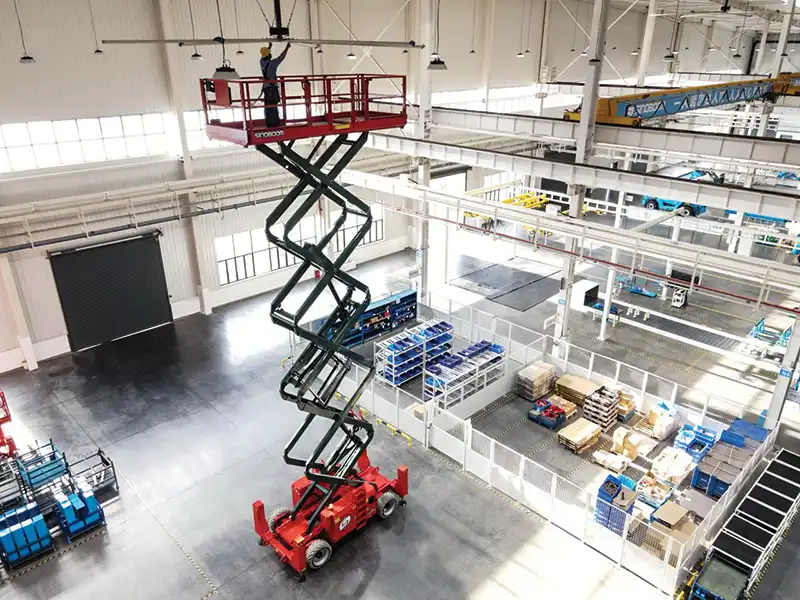
Whether metro rail projects, airport developments, industrial facilities, or commercial construction projects, organisations that invest in planning, workforce training, and mechanised equipment, consistently achieve better outcomes in productivity, safety, and quality.
India's construction industry has historically relied heavily on labour-intensive methods. However, the scale and complexity of today's projects are accelerating the shift towards mechanisation. India will need to grow by an average of 7.8% over the next 22 years to achieve its aspiration of reaching high-income status by 2047.
At Sinoboom India, we have seen increasing demand from rental companies, contractors, and industrial customers seeking equipment solutions that improve productivity while reducing dependence on manual processes. This trend is evident across infrastructure, warehousing, manufacturing, and industrial maintenance.
One area where mechanisation is delivering measurable benefits is Work at Height. Traditionally, many Indian projects have relied on scaffolding and conventional access methods. While these approaches remain common, they often require significant labour resources and longer setup times.
We are now seeing increasing adoption of Mobile Elevating Work Platforms (MEWPs) as contractors seek safer and more efficient alternatives. In the December quarter 2025 alone, India's economy expanded by 7.8%, demonstrating the strength of domestic demand.
From Sinoboom India's experience working with customers nationwide, organisations are increasingly recognising that MEWPs not only improve safety outcomes but also contribute directly to productivity and project efficiency. Reduced setup time and improved access enable project teams to complete work faster while maintaining high Safety standards.India's infrastructure ambitions can only be realized through safer work practices, modern access solutions, and greater mechanization that minimize risks, accelerate execution, and unlock new levels of productivity and efficiency.
Sunil Jain
Senior Consultant (SAARC)
Sinoboom India
As infrastructure projects become larger and more complex, modern access equipment is improving productivity, safety, and project delivery. Boom lifts and scissor lifts provide faster, safer access to elevated work areas while reducing downtime. The growing adoption of electric access equipment is also supporting India's sustainability goals, particularly in urban projects and indoor environments where low-noise, zero-emission operation is increasingly valued.
Manufacturers, rental companies, contractors, and project owners all have a role to play in strengthening safety culture, workforce development, and the adoption of modern construction methods. Investment in operator training will be just as important as investment in new technologies.
As India's infrastructure ambitions continue to expand, the access equipment industry will play an increasingly important role in supporting safer, faster, and more efficient project delivery. Recognising this opportunity, Sinoboom India is continuing to invest in the market through expanded local support capabilities, including the establishment of a new Sales and Service Office in Mumbai.
Following its participation at EXCON 2025, the company will also exhibit at bauma CONEXPO India 2026, where Susan Xu, Founder and CEO of Sinoboom, will again visit India, reflecting the strategic importance of the country within Sinoboom's global growth plans.
India has a unique opportunity to demonstrate how speed, scale, quality, and safety can be achieved together. By embracing mechanisation, modern access solutions, and a stronger safety culture, the industry can help build the resilient, sustainable, and world-class infrastructure needed to realise the vision of Viksit Bharat 2047.
Jyoti Structures
Amit Dutta
Amit Dutta
Action Construction Equipment
Manish Mathur
Manish Mathur
Large infrastructure projects are often judged by how quickly they are completed, but speed is usually the result of preparation rather than acceleration.As India accelerates infrastructure development, execution excellence will increasingly become the differentiator. Scale is important, but predictability and disciplined delivery are what ultimately determine a project’s success.
Amit Dutta
COO
Jyoti Structures
Projects perform best when engineering, procurement, logistics, stakeholder management, and execution planning are aligned before mobilisation begins. The more issues that are addressed upfront, the fewer disruptions teams face during construction. Early attention to approvals, right-of-way acquisition, and stakeholder coordination is equally important. In our sector, delays are often linked to access, clearances, and site readiness rather than construction activity itself.
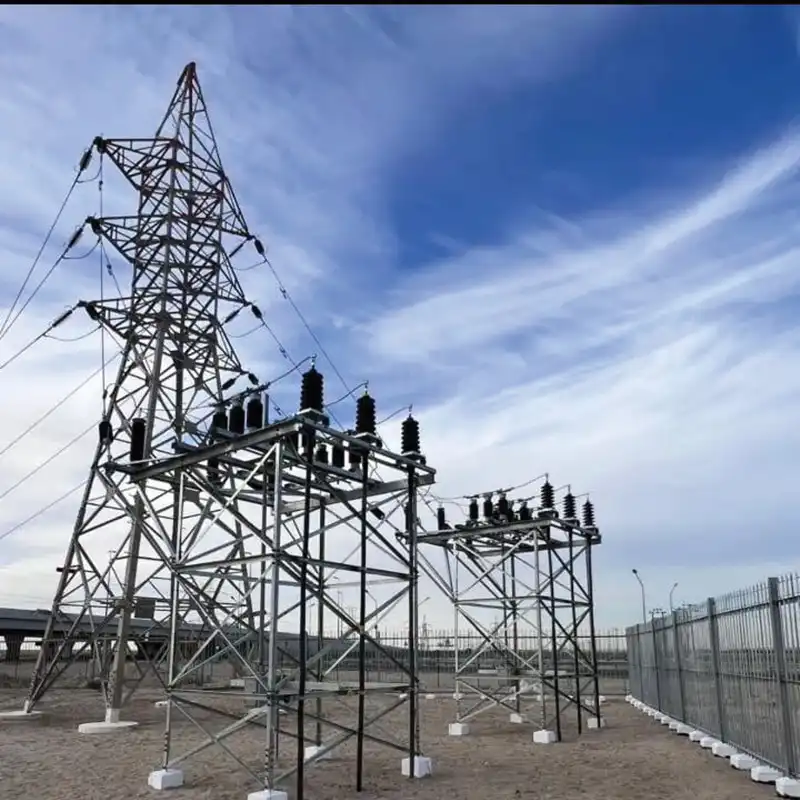
Innovation creates the greatest value when it improves execution outcomes rather than simply introducing new technology. Tools such as LiDAR, drones, and digital monitoring platforms are helping improve planning accuracy, site visibility, and decision-making. LiDAR-based surveys enabled more informed decisions on tower spotting and foundation planning, reducing uncertainty before construction began.
Innovation is also evident in engineering methodologies, fabrication processes, and project management practices that improve productivity, strengthen quality control, and enhance execution reliability.
In our experience, the greatest benefits come when technology is combined with strong engineering fundamentals and practical execution expertise. As infrastructure projects become larger and more complex, this combination will be critical for delivering projects at the speed, scale, and quality required for a Viksit Bharat.
Maintaining execution speed without compromising quality, sustainability, or cost efficiency requires an integrated approach anchored in three pillars: digital-first project delivery, mechanised construction, and disciplined project governance.As India accelerates toward Viksit Bharat 2047, organisations that integrate technology, engineering expertise, and execution discipline into a unified delivery model will be best placed to meet the scale and speed the country's infrastructure agenda demands.
Manish Mathur
CEO – Cranes
ACE - Action Construction Equipment.
Digital-first delivery, encompassing data-driven planning, real-time monitoring, and predictive analytics, enables faster, better-informed decision-making and early identification of risks before they translate into delays or cost overruns. Mechanised construction and advanced materials improve productivity, quality consistency, and worker safety simultaneously, reducing dependence on manual processes that are inherently variable.
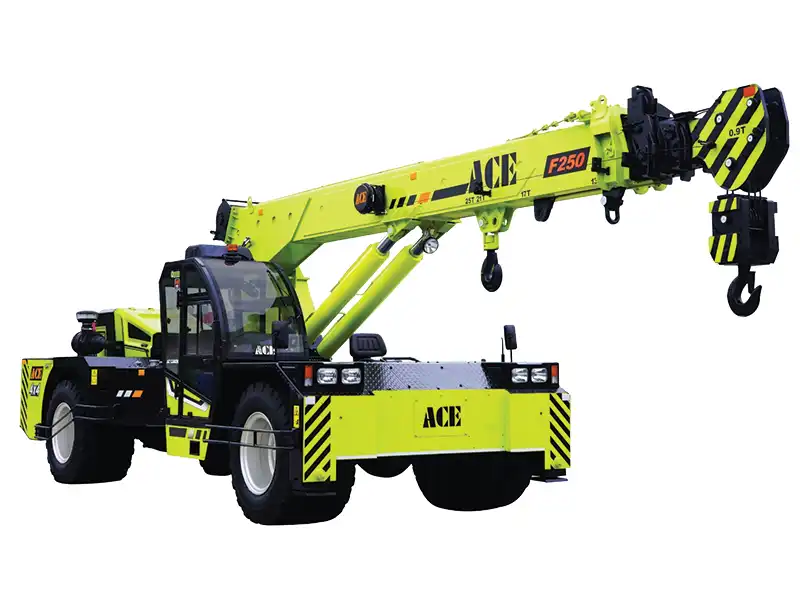
Innovations across the infrastructure sector are meaningfully improving delivery outcomes by enabling greater speed, precision, and predictability at every stage of the project lifecycle.
Digital engineering tools, including BIM, GIS-based planning, drone surveys, AI-enabled site monitoring, and real-time project management platforms, are helping teams identify risks earlier, optimise resource allocation, and maintain decision-making continuity across complex, multi-stakeholder projects. For instance, drone-based surveys, for instance, have compressed site inspection timelines from weeks to days, while improving accuracy and auditability. Mechanised construction equipment and advanced materials have simultaneously accelerated execution and raised quality and safety benchmarks, reducing reliance on labour-intensive processes prone to variability. Data-driven asset management and predictive maintenance are extending infrastructure service life and reducing lifecycle costs, shifting the focus from reactive repair to proactive performance management.
The compounding effect of these technologies, when deployed in an integrated manner rather than in isolation, is creating the foundation for infrastructure delivery that is not only faster but more resilient, sustainable, and aligned with India's long-term development ambitions.
Conmat Heavy Industries
Premraj Keshyep
Premraj Keshyep

PMDCS
Subrata Das
Subrata Das
India's infrastructure sector is undergoing an unprecedented transformation, driven by ambitious investments in roads, railways, metros, airports, ports, and urban development. In the Union Budget 2026-27, the Indian government increased the capital expenditure (capex) outlay for infrastructure to ₹12.2 lakh crore, showing its growing focus on infrastructure.Projects that consistently succeed are those that integrate technology, planning, quality assurance, sustainability, and skilled execution into a unified project delivery framework.
Premraj Keshyep
Founder & Director
Conmat Heavy Industries
While project timelines have become more aggressive, maintaining execution speed cannot come at the expense of quality, sustainability, or cost efficiency. In my view, achieving this balance requires a combination of advanced technology, meticulous planning, skilled manpower, and effective project management.
The first critical factor is the adoption of mechanized and automated construction processes. Traditional methods often lead to inconsistencies, delays, and higher dependence on manual labor. Modern construction equipment and automated systems help ensure predictable output, improved productivity, and consistent quality standards.
Secondly, planning and supply chain integration play a decisive role. Delays in material availability, equipment deployment, or logistics can significantly impact project schedules. A well-coordinated ecosystem involving contractors, equipment manufacturers, material suppliers, and project owners is essential to maintain momentum throughout the project lifecycle.
Quality control must also be embedded into the construction process rather than treated as a post-construction activity. Real-time monitoring, digital tracking systems, and automated batching and mixing technologies help ensure that specifications are consistently met from the very beginning. This minimizes rework, which is often one of the largest contributors to project delays and cost overruns.
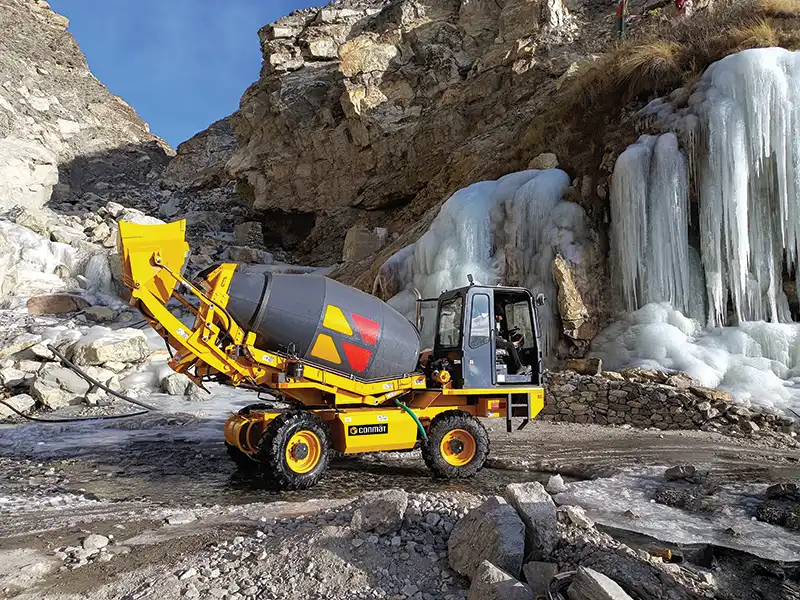
Finally, workforce capability remains a key success factor. Even the most advanced technologies deliver optimum results only when operated by trained personnel. Continuous skill development and adherence to safety standards are essential for improving productivity, reducing accidents, and ensuring smooth project execution.
In the concrete construction equipment sector, advancements in automation, digitalization, IoT connectivity, and intelligent machine design are helping contractors deliver projects faster, safer, and with higher levels of quality and sustainability.
At Conmat Heavy Industries, we have witnessed firsthand how technology-driven equipment can significantly improve execution efficiency. Today, our entire product range is IoT-enabled, with more than 12,500 machines operating globally and connected through a centralized monitoring system. This enables real-time tracking of machine performance, preventive maintenance schedules, operator behavior, and productivity metrics. Such visibility helps minimize unplanned downtime, improve asset utilization, and ensure uninterrupted operations at project sites, ultimately reducing project delays and operating costs.
A notable example is our CSLM BS-V Self-Loading Mixer, equipped with the Smart i-CON module. This advanced module offers real-time machine monitoring, cloud-based data management, geo-fencing, and predictive maintenance capabilities. By providing actionable insights to equipment owners and project managers, it enhances machine uptime, improves operational control, and supports timely project completion. Features such as BS-V compliance, automation, ergonomic controls, and fuel efficiency further contribute to productivity while meeting evolving environmental standards.
Our batching plants, equipped with advanced SCADA-based control systems and the Smart iCloud Asset Management System, ensure precise batching, consistent concrete quality, and seamless remote monitoring of operations. Customers can access real-time production data, batch reports, inventory status, and asset performance from a centralized platform. By integrating quality control directly into the production process through automation and analytics, these solutions reduce material wastage, minimize rework, enhance operational efficiency, and improve the long-term durability and lifecycle performance of infrastructure assets.
As India's infrastructure ambitions continue to expand, innovation will remain a key enabler of progress. By combining digital intelligence, automation, quality assurance, and sustainable engineering, modern construction equipment is helping the industry achieve faster project delivery, enhanced safety, superior quality, and long-term value creation for all stakeholders.
India's infrastructure sector has demonstrated remarkable capability in delivering roads, railways, metro systems, tunnels, dams, hydropower projects, and water and urban infrastructure on an unprecedented scale. As we progress towards the Viksit Bharat 2047 vision, the challenge is no longer limited to creating infrastructure capacity; it is to deliver projects faster while ensuring that these assets remain durable and perform reliably throughout their intended design life.To achieve the speed, scale, and quality for building a truly Viksit Bharat, we need to integrate better equipment and technologies with appropriate specifications to mitigate pitfalls, ensure monitoring, quality, and lifecycle-focused project governance.
Subrata Das
Advisor
PMDCS
From over three decades of experience across tunnels, hydropower projects, dams, barrages, and water infrastructure, one lesson stands out: speed and quality are not competing objectives. They can be achieved together when projects are supported by adopting the highest standards of execution discipline, construction methodologies, and quality management systems.
One of the most critical success factors is integrating constructability and execution planning into the project development stage itself. Delays due to setbacks and quality issues and cost overruns often originate long before construction begins, arising from inadequate risk assessment, insufficient consideration of risks due to construction methodologies, and failure to update guidelines, construction specifications, and contract conditions as required to safeguard against the evolving risks associated with the technologies planned.
The second critical factor is the effective integration of mechanization and technology with quality control. India is not behind in using advanced construction equipment, digital tools, automation, IoT-based monitoring, and data-driven project management systems. These technologies have undoubtedly improved productivity and decision-making. However, the real challenge today is not the availability of data and productivity but also identifying which data actually influences durability and long-term objectives.
For example, anyone can monitor fuel consumption and equipment productivity in real time. Yet, the same technology is not always focused on continuously monitoring the causative parameters that influence tunnel collapse, overbreak, ground weakening in tunnels or barrages, subsidence, support effectiveness, concrete durability, or long-term asset performance. In many cases, we monitor deformation, seepage, stresses, etc., which are consequences after they occur, rather than the measurable factors that cause them. This has resulted in catastrophic failures and extensive rectification during the early years of commissioning. Future digital transformation must therefore focus not only on data collection for short-term purposes but also on engineering-led decision support and meeting long-term objectives.

A practical example can be seen in tunnel construction through the adoption of automated hydraulic drill jumbos. Compared to conventional equipment, this equipment reduces cycle time and improves drilling accuracy, excavation profile control, and productivity. In a tunnel project where such systems were deployed, although tunnel overbreak was reduced by only about 1.6%, the extra concrete required in tunnel lining due to overbreak was reduced by nearly 20%, and construction time was saved.
The resulting benefits included lower material consumption, reduced risk, improved quality, and keeping project costs within budget. Despite knowing these gains well, implementation had to be enforced by continuous follow-up rather than spontaneously done through rigorous equipment calibration, drilling accuracy verification, operator competency development, and upgraded SOPs for the execution, surveying, and mechanical teams. Here, the contract conditions, specifications, and terms of payment play an important role and need to be updated, and quality basic control procedures should not remain an unpriced obligation so as to keep contractors motivated at all times.
Similarly, in barrages constructed in alluvial plains, high-end hydraulic drilling rigs, mechanized batching plants, improved placement systems, and optimized construction logistics have significantly enhanced the production rates of secant piles for cutoff walls. These innovations have certainly reduced construction time. However, long-term durability and lifecycle performance continue to depend on every small factor, even though it may not be a payable item. For example, the maximum possible deviation of the piles installed by the drilling rig (within its tolerances and under varying ground resistance conditions) can lead to gaps between the primary and secondary piles, depending on the depth. Such gaps can potentially create seepage paths that may trigger piping below the foundation even before the barrage is commissioned. To mitigate this risk, a 3D visualization tool for detecting the deviation of each primary and secondary pile, along with standard mitigation guidelines, should be available to site supervisors so that corrective measures can be implemented in real time.
As India adopts modern construction technologies and equipment, there is an equally important need to modernize work specifications, fail-safe quality assurance frameworks, and monitoring requirements in contract documents. In several instances, project specifications and quality control practices have not evolved at the same pace as advances in mechanization. Greater emphasis is required on process-based quality assurance while using high-end, high-productivity, easy-to-use equipment. Quality control monitoring should include all potential errors or defects that highly productive equipment and methodologies can create, along with their consequences throughout the project lifecycle, rather than merely focusing on the completion of an activity for short-term milestones.
The next leap in infrastructure delivery will not come only from better machines, AI tools, BIM models, or digital dashboards. It will come from integrating these technologies with appropriate specifications to mitigate possible pitfalls, engineering-led monitoring, process-based quality assurance, and lifecycle-focused project governance. This integrated approach will enable India to achieve the speed, scale, and quality necessary for building a truly Viksit Bharat.

Hailstone Innovations
Williams RJ
Williams RJ

Dilip Buildcon Limited
Satyanarayan Purohit
Satyanarayan Purohit
India's infrastructure sector is entering a phase where speed of execution is no longer the sole measure of success. The real challenge is delivering projects faster while simultaneously ensuring quality, sustainability, and commercial viability. Achieving this balance requires a holistic approach that combines planning, technology, and operational excellence.The future belongs to organizations that can integrate productivity, sustainability, and innovation into a single execution framework to build world-class infrastructure.
Williams RJ
Managing Director
Hailstone Innovations
From my experience, the first and most critical factor is front-end project planning. Delays and cost overruns are often traced back to inadequate planning, inaccurate demand assessment, or poor resource allocation. Detailed project preparation, backed by realistic timelines and risk evaluation, creates the foundation for efficient execution.
The second factor is the deployment of high-performance equipment and modern technologies. Infrastructure projects today operate under immense pressure to meet deadlines and quality standards. Reliable crushing, screening, and material processing solutions equipped with automation, remote monitoring, and predictive maintenance capabilities help ensure continuous production, reduce downtime, and improve overall project efficiency.
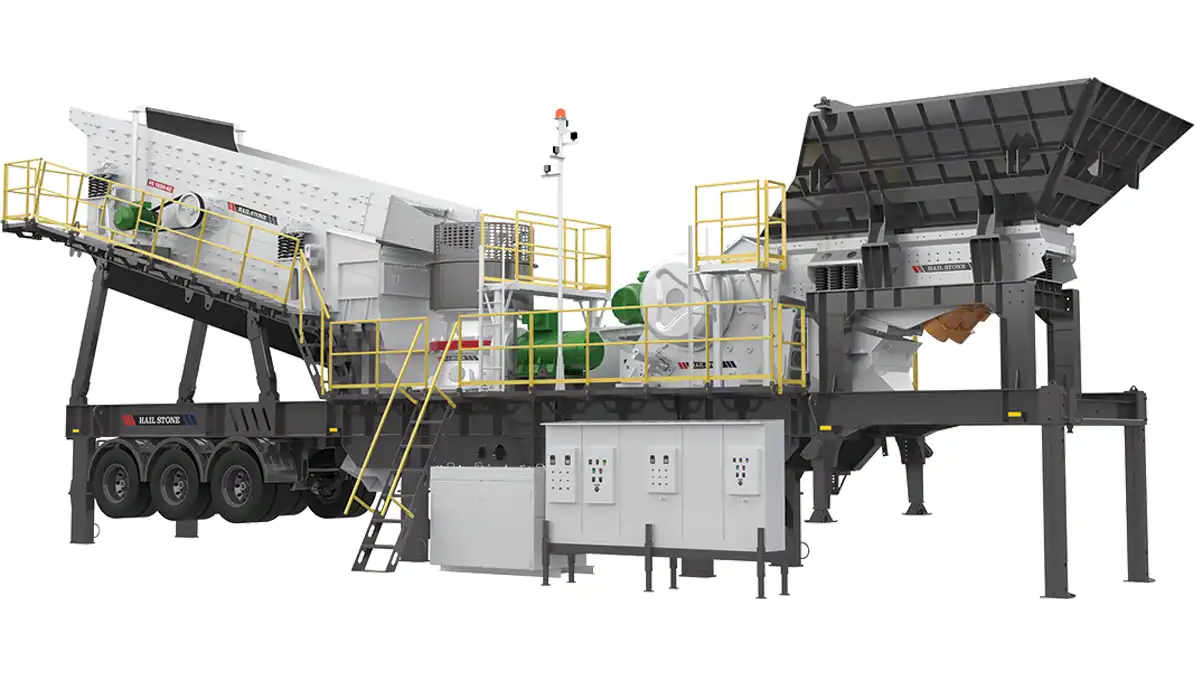
Equally important is the availability of quality aggregates and construction materials. Infrastructure assets are only as strong as the materials used to build them. Consistent material quality directly influences structural performance, project durability, and lifecycle costs.
Sustainability must also be viewed as a business imperative rather than a compliance requirement. Energy-efficient equipment, water conservation measures, and optimized resource utilization contribute to both environmental responsibility and operational savings.
Finally, successful infrastructure delivery depends on strong collaboration among project owners, contractors, equipment manufacturers, consultants, and policymakers. When supported by skilled manpower and a shared commitment to excellence, projects can be delivered faster without compromising quality or long-term value.
Innovation has become one of the strongest enablers of infrastructure development in India. As project sizes increase and timelines become more demanding, the industry is increasingly relying on advanced technologies and intelligent equipment to improve execution efficiency, quality, and sustainability.
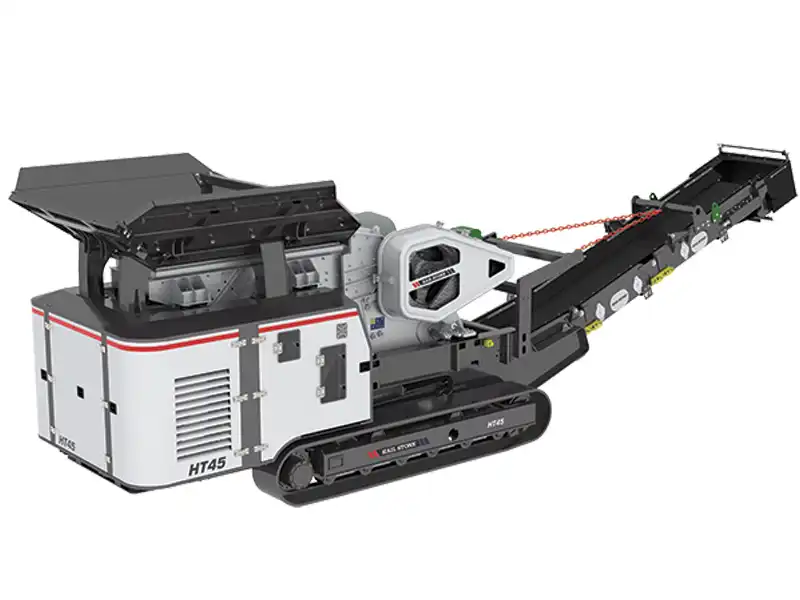
We are also witnessing a shift towards energy-efficient and hybrid-electric solutions that help reduce fuel consumption and operating costs, while supporting environmental goals. These innovations are particularly valuable in large-scale projects where material processing operations run continuously, and even marginal efficiency improvements can generate substantial savings over the project lifecycle.
A practical example can be seen in several highway, mining, and infrastructure projects where advanced crushing and screening plants have helped contractors achieve higher production rates with improved product consistency. Automated process controls ensure better gradation, reduced wastage, and enhanced quality assurance, ultimately contributing to stronger and more durable infrastructure assets.
Another noteworthy advancement is the adoption of modular and semi-mobile plant designs. These solutions significantly reduce installation and commissioning time, allowing operations to commence much faster than conventional fixed installations. This flexibility is especially beneficial in remote project locations where speed of deployment is critical.
Looking ahead, the integration of artificial intelligence, IoT-enabled diagnostics, and predictive analytics will further transform infrastructure execution. These technologies will enable smarter decision-making, better asset management, and more sustainable operations.
Ultimately, innovation is no longer confined to machinery alone. It is reshaping the entire project delivery ecosystem helping the industry build infrastructure that is faster to execute, safer to operate, more sustainable, and designed to deliver long-term value.
In my experience, speed, quality, sustainability, and cost efficiency are not separate objectives. If a project is properly planned and executed, all four can be achieved together.The best infrastructure projects are built through timely decisions, collaborative execution, and a lifecycle approach that maximizes long-term performance and value.
Satyanarayan Purohit
Vice President & Head of Department
Dilip Buildcon Limited
The most important factor is thorough preparation before starting construction. Delays in land acquisition, utility shifting, approvals, design finalization, and stakeholder coordination invariably affect project schedules and increase costs. I have observed that projects where these issues are addressed upfront generally perform much better during execution.
The second factor is engineering-led decision making. Value engineering, constructability reviews, proper material selection, and timely technical decisions play a major role in improving productivity and reducing rework. Engineering decisions taken during the design and planning stage often determine the long-term quality and maintainability of the asset.
The third factor is strong coordination among all stakeholders. Large infrastructure projects involve authorities, consultants, contractors, utility agencies, local administration, and communities.
The fourth factor is mechanization. Modern construction equipment, automated batching plants, intelligent asphalt plants, slipform pavers, and advanced earthmoving equipment have significantly improved productivity while maintaining consistency in quality. Mechanization also improves safety and reduces dependence on manual interventions.
The fifth factor is integrating sustainability into project execution rather than treating it as a separate activity. Sustainability initiatives often improve long-term performance while reducing lifecycle costs.
In our projects such as Wardha–Butibori, Yavatmal–Wardha, Lucknow–Sultanpur, and the Zuari Bridge, we extensively used Ground Granulated Blast Furnace Slag (GGBS) as a replacement for cement, in some cases up to 50 percent. Apart from reducing the carbon footprint, it improved durability, reduced heat of hydration, and enhanced long-term concrete performance.
Similarly, plastic waste was utilized in bituminous layers of service roads, providing a sustainable solution for waste utilization while conserving natural resources.
Innovation today is not limited to construction technology alone; it extends across engineering, project management, sustainability, and lifecycle asset management. Mechanization has been one of the biggest contributors to improved project delivery. Modern asphalt plants, sensor-controlled batching plants, slipform pavers, intelligent compaction equipment, and high-capacity construction machinery have significantly improved productivity and quality consistency. These technologies have enabled project teams to execute large quantities of work within shorter timeframes while maintaining stringent quality requirements.
The Zuari Bridge project in Goa is a good example of how advanced engineering and specialized construction methodologies can help deliver complex infrastructure. Marine construction, cable-stayed bridge technology, specialized erection systems, and stringent quality controls were essential for successful execution under challenging site conditions.
Similarly, the Chenani–Nashri Tunnel project demonstrated the benefits of modern tunnelling technology, advanced ventilation systems, intelligent monitoring systems, and integrated safety measures. The project has significantly improved connectivity and reduced travel time while enhancing safety and operational efficiency.
Digital technologies are also helping improve project execution and monitoring. Drone-based surveys and inspections are increasingly being used for topographical surveys, progress monitoring, quantity verification, and inspection of difficult-to-access locations. These technologies improve accuracy and enable faster decision-making.
One area where significant value can be created is lifecycle asset management. Infrastructure should not only be constructed efficiently but also maintained efficiently throughout its service life.
At the Pune–Solapur Highway project, Cold In-Place Recycling was adopted as a rehabilitation methodology. By reusing existing pavement materials, the requirement for fresh aggregates and bitumen was substantially reduced, transportation movements were minimized, and rehabilitation was completed more efficiently. The approach improved sustainability while reducing overall lifecycle costs.
Similarly, at the Chandikhole–Bhadrak Highway project, micro milling technology was used to rectify surface irregularities and restore ride quality without undertaking extensive pavement reconstruction. The intervention minimized traffic disruption, reduced material consumption, improved user comfort, and helped extend pavement life.
From a project management perspective, regular monitoring, digital reporting systems, structured review mechanisms, and timely decision-making have become increasingly important. Early identification of risks and prompt corrective action help maintain project schedules and prevent cost escalation.
Going forward, I believe the biggest opportunity for the infrastructure sector lies in combining engineering excellence, mechanization, sustainability, digital monitoring, and lifecycle asset management. India has demonstrated its capability to build infrastructure at scale. The next step is to ensure that these assets continue to perform safely, efficiently, and sustainably throughout their design life while delivering maximum value to users and the nation.
Ammann India
Dheeraj Panda
Dheeraj Panda
Specialized Engineering Services
Z.A. Khan
Z.A. Khan
Anyone who has spent real time on large infrastructure projects knows that the tension between speed, quality, and cost plays out every single day on site. The projects that consistently deliver on all three tend to share a few things in common.Localised manufacturing, predictive maintenance, and fuel-efficient equipment are what determine whether a project finishes within budget and continues to deliver value long after handover.
Dheeraj Panda
Managing Director
Ammann India
Equipment capability is the starting point. High-capacity asphalt plants outputs ranging from 120 to 260 tonnes per hour, with modular foundation free designs, mean teams can mobilise quickly and keep operations running without interruption. When you are working to aggressive deadlines, every hour of downtime has consequences. Digital control platforms reduce that risk by taking variability out of continuous mixing and paving operations.
But speed means nothing if what you are building does not last. Quality must be built into the process from the start. Advanced plant control systems handle precise material proportioning automatically. Intelligent compaction technologies give operators real time density readings, reducing rework and producing pavements that perform over time.
Sustainability has also changed character. It used to be treated as a constraint that added cost and complexity. That is no longer the case. Using Reclaimed Asphalt Pavement, warm mix asphalt technologies, and industrial byproducts like steel slag and fly ash reduces emissions and conserves resources whilst also bringing material costs down. The environmental and economic arguments now point in the same direction. On cost, the conversation goes wrong when it starts with the purchase price. The real economics live in the lifecycle.
The projects that execute well on all these fronts are the ones where these decisions were made together at the planning stage, rather than in silos. When that happens, speed, quality, and cost efficiency stop working against each other.
India is building at a pace that few countries have attempted, and the technology available to support that ambition has advanced significantly. Across project sites today, the shift from labour intensive conventional processes to smarter, connected systems is already well underway.
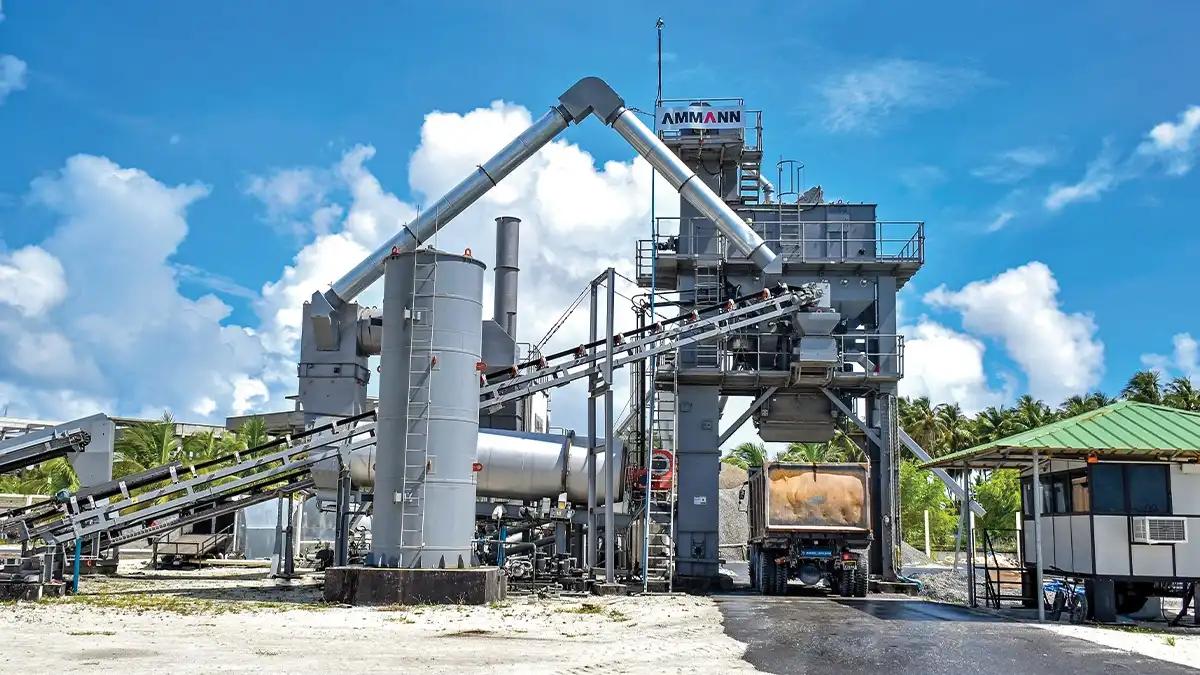
The Ganga Expressway project illustrates what is now achievable. Three Ammann VT 180 asphalt plants produced over 20,105 metric tonnes of bituminous concrete in a single 24-hour period, enabling the construction of 34.24 lane kilometres in one day. That was not simply a matter of putting more machines on site. It came from modular foundation free plant design and advanced automation working together, keeping operations running with minimal downtime and consistent mix quality throughout.
Digital quality control has changed the dynamic on site in practical ways. When plant control systems handle aggregate dosing, material metering, and temperature regulation automatically, mix quality stops depending on individual judgement calls and becomes consistent by design. Paired with intelligent compaction technologies giving operators real time density readings, rework reduces significantly and pavement performance improves over the long term.
Safety has advanced considerably as well. Features like 360 degree camera systems, collision avoidance, and automated braking are now standard on well-run construction programmes. The use of advanced simulators, where operators train in a virtual environment before working on live projects, has also made a real difference. Workforce readiness improves and sites carry less risk.
The sustainability picture has shifted in ways that matter commercially. Reclaimed Asphalt Pavement utilisation at up to 60 per cent, moving toward 100 per cent, cuts both environmental impact and material costs. Warm Mix Asphalt technologies lower production temperatures by 50 to 60 degrees Celsius, reducing fuel consumption by around 25 per cent. Electric rollers and hydrogen ready burners are already in use on Indian project sites today.
Predictive maintenance has also changed how contractors manage their fleets. When AI enabled platforms can identify potential failures before they occur, the breakdowns that derail schedules and inflate costs become far less frequent, and total cost of ownership comes down across the board.
What all of this adds up to is straightforward. Technology has reached a point where delivering quickly and delivering properly are no longer in conflict. Given the scale of what India needs to build over the coming years, this matters a great deal.
India's journey towards becoming a developed nation (Viksit Bharat) by 2047 is being powered by one of the largest infrastructure development programs in the world. From highways and expressways to bridges, logistics corridors, airports, rail networks, and urban infrastructure, the scale of investment is unprecedented. However, as infrastructure ambitions grow, success can no longer be measured merely by the number of projects completed or kilometres constructed. The real challenge lies in delivering infrastructure with speed, scale, quality, safety, and certainty.Engineering certainty has emerged as a critical success factor for project delivery. It is achieved through rigorous planning, sound engineering, technology-enabled execution, integrated safety practices, and uncompromising quality standards.
Z.A. Khan
Managing Director
Specialized Engineering Services
Today's infrastructure projects involve multiple stakeholders, complex interfaces, stringent timelines, evolving regulatory requirements, and rising public expectations. Delays, design changes, utility conflicts, safety concerns, and construction risks can all significantly impact outcomes. As a result, engineering certainty has emerged as a critical success factor for project delivery.
From our experience, certainty begins long before construction starts. It is established during project planning, feasibility assessments, engineering investigations, and design development. Comprehensive topographical surveys, geotechnical investigations, hydrological studies, traffic assessments, and constructability reviews help identify risks early and enable informed decision-making. The earlier uncertainties are addressed, the greater the likelihood of successful project execution.
Technology is increasingly transforming how infrastructure projects are planned and managed. Digital surveys, GIS-based planning, drone-assisted inspections, Building Information Modelling (BIM), and real-time monitoring systems give project teams better visibility and control over progress. Digital twins are emerging as a particularly powerful enabler, creating live, data-rich virtual replicas of physical assets that allow teams to simulate scenarios, monitor structural health, and predict maintenance needs well before issues arise on site. Norway's Randselva Bridge (Pics) offers a striking example: the project progressed for four years without a single traditional drawing, with BIM serving as the digital backbone for collaboration and decision-making.
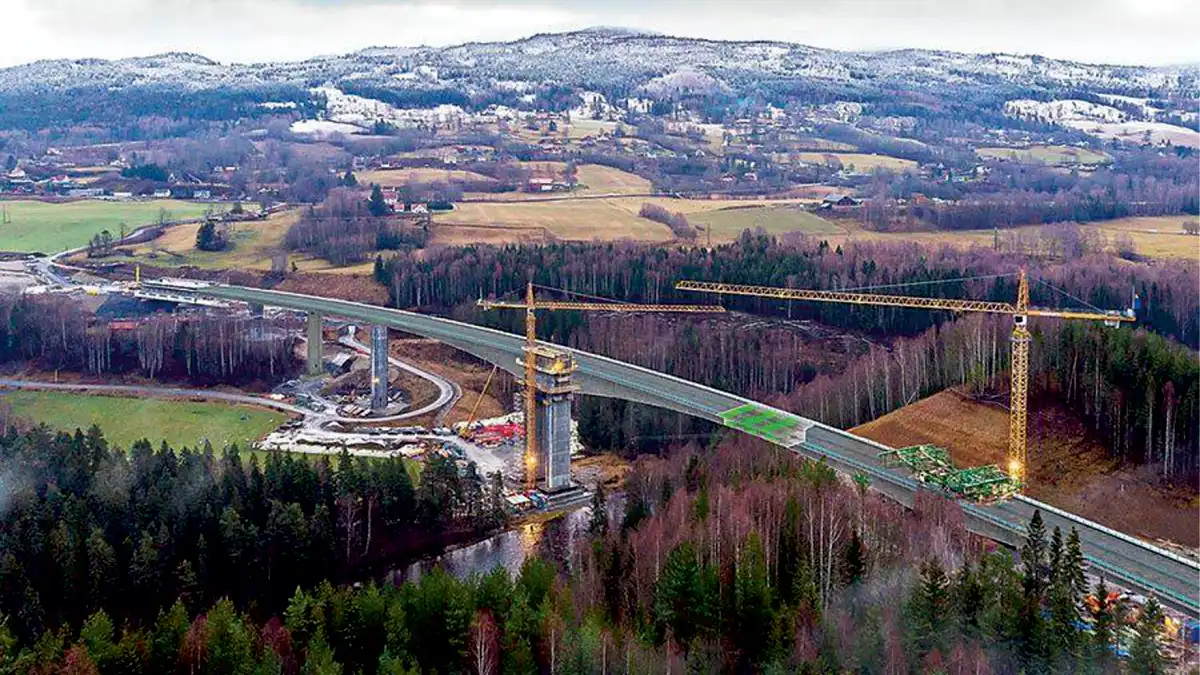
Used alongside BIM and IoT-based sensors, digital twins extend certainty beyond design and construction into the operational life of an asset, helping owners make informed, proactive decisions throughout its lifecycle. Together, these tools improve collaboration, enhance accuracy, reduce rework, and support proactive risk management throughout the project lifecycle. SESPL specializes in delivering this engineering rigor across diverse infrastructure asset classes — from highways and expressways to bridges and urban transit corridors.
Road safety is another critical dimension of engineering certainty. Infrastructure projects should be judged not solely by their completion dates but by their ability to provide safe, reliable mobility throughout their service life. Experience has shown that integrating Road Safety Audits at the planning, design, construction, and pre-opening stages significantly improves outcomes — proactively identifying and mitigating safety risks, preventing costly retrofits, and enhancing both user safety and operational performance.
For bridge and highway projects, hydrological resilience and climate adaptation are becoming increasingly important. Extreme weather events, shifting rainfall patterns, and environmental challenges require engineers to adopt forward-looking design approaches. Thorough hydrological assessments, resilient drainage systems, and climate-responsive engineering solutions all contribute to the long-term reliability of infrastructure assets.
Quality assurance during construction remains equally important. Independent inspections, systematic material testing, adherence to specifications, and continuous supervision ensure that engineering intent is effectively translated into physical assets. Strong quality management systems help maintain consistency while minimizing defects and future maintenance requirements.
Equally important is collaboration among clients, consultants, contractors, and regulatory authorities. Successful infrastructure delivery depends upon transparent communication, timely decision-making, and a shared commitment to project objectives. When all stakeholders work within a framework of accountability and technical excellence, projects are more likely to achieve their intended outcomes.
As infrastructure investment continues to accelerate, the industry's focus must shift from measuring kilometres constructed or structures completed to evaluating certainty in delivery and performance. Engineering certainty is achieved through rigorous planning, sound engineering, technology-enabled execution, integrated safety practices, and uncompromising quality standards. The infrastructure assets being developed today will serve generations to come. By embedding certainty into every stage of project development — from concept to commissioning — the industry can deliver infrastructure that is not only completed on time and within budget, but also safe, resilient, sustainable, and capable of supporting long-term economic growth.

Escorts Kubota Limited
Sanjeev Bajaj
Sanjeev Bajaj
Supreme Infrastructure
Pankaj Prakash Sharma
Pankaj Prakash Sharma
India is experiencing a transformation in how it delivers infrastructure. At the same time, maintaining execution speed while ensuring quality, sustainability, and cost efficiency in delivering large infrastructure projects, is most critical. One of the most important elements to consider at the start of any infrastructure project is proper planning so that its execution is more efficient and effective.The foundation of faster, safer, and more sustainable infrastructure delivery lies in meticulous planning, skilled manpower, and responsible construction practices, supported by advanced equipment, automation, and digital technologies that enhance productivity, improve quality, shorten project timelines, reduce costs, and ensure long-term asset performance.
Sanjeev Bajaj
Chief Officer
Construction Equipment Business Division
Escorts Kubota Limited
In today's world, digital planning tools along with technologies like digital dashboard displays and sensor devices are allowing construction companies to see their project in 3-D and undertake real-time monitoring of its progress and also make any adjustments, if required. The use of modern machinery and construction technology like prefabrication and modular construction are improving project scheduling and providing uniform quality across the project.
Sustainability is being considered for every infrastructure project. Using recycled building materials, energy efficient design and construction methodology ensures that the asset can be maintained for a longer term and its operation is more cost-effective.
Also important for the success of a project is having a skilled workforce. Giving them proper training on the project and the technology being used is vital. When you have all the elements of a project pre-planned, including the technology, mechanization for increased productivity, following sustainable practices, and have fully trained workers, the project’s construction and delivery will be efficient.
Extensive utilization of EKL High-End Cranes across prestigious project sites stands as a testament to their exceptional lifting performance, reliability, and safety-focused design language in addition to prompt customer support.
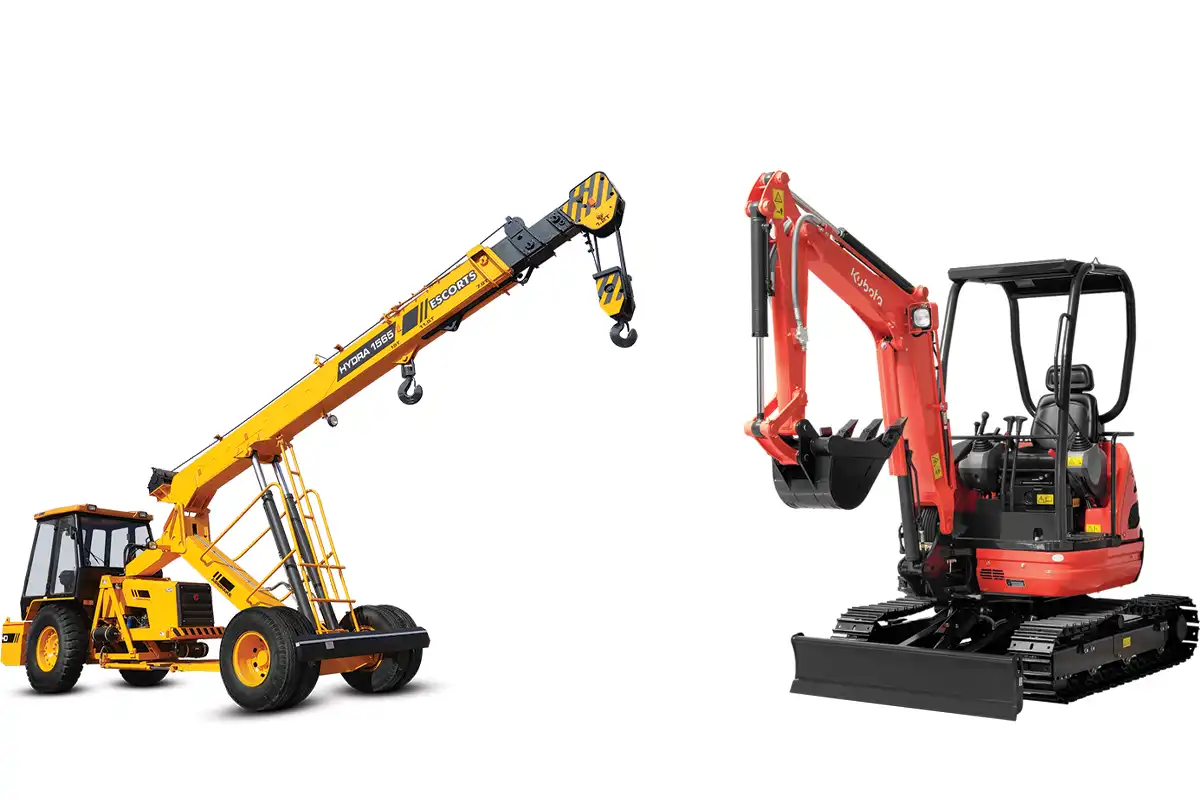
Key project segments are – Power Plants & Refineries, Metro & Bullet Train Projects, Water Pipeline & Irrigation Projects. These, along with many other esteemed corporate clients, have expressed high levels of satisfaction with EKL products and after-sales support, consistently choosing EKL as their preferred partner for repeat purchases. The superior lifting capacity and unmatched reliability of EKL High-End Cranes significantly reduce cycle times, enabling faster project execution and timely (often ahead-of-schedule) completion. Additionally, advanced safety features tailored for sensitive and high-risk project environments further enhance site safety and workforce protection.
Escorts Kubota is leading the way in this transformation with its line of mini excavators and cranes. Mini excavators provide precision grading and trenching capabilities, resulting in less rework and more valuable time for the project. Manual digging has been replaced by mechanized processes, allowing contractors to utilize even non-skilled labour for skilled work and improve accuracy in time-critical projects.
On the lifting front, Escorts Kubota cranes feature state-of-the-art safety systems, including real-time load monitoring, automation, and safe working environments. These systems enhance job site safety, as well as productivity, when working on complicated projects such as elevated structures or metro tube systems. Well-trained operators backed by our technology are able to complete lifting tasks with minimal manual assistance and without incident.
Overall, our equipment provides clear benefits, including faster project completion rates, increased quality control, reduced lifecycle costs through predictive maintenance, and greater sustainability due to fuel-efficient designs. With the company’s commitment to innovation and safety, Escorts Kubota ensures that infrastructure projects throughout India are delivered on time with increased reliability and performance standards.
In infrastructure development, delivering projects at speed without compromising on quality requires meticulous planning, integrated project management, and strong execution capabilities. This also includes early-stage optimisation, efficient resource deployment, and real-time project monitoring. All these factors are critical for reducing delays in project execution and also for improving productivity.India’s infrastructure sector is undergoing a significant transformation, and the driving factor is the adoption of technology for project planning, design, quality control, and execution.
Pankaj Prakash Sharma
Director
Supreme Infrastructure
When technology, skilled manpower, mechanization, and proactive risk management work together, speed, quality, safety, and cost efficiency become complementary objectives rather than competing priorities. Backward integration also ensures quality control and supply chain reliability.
Digital project monitoring, BIM-enabled planning, drone-based site surveillance, advanced construction equipment, and automated quality control systems have hugely improved project visibility and decision-making. Mechanization has improved execution speed by reducing dependence on manual processes and minimising the variability in quality. Project management practices have evolved with real-time tracking of progress, resources, and risks enabling faster corrective actions.
These advancements not only improve construction efficiency, safety, and performance, but also enhance the long-term durability and lifecycle value of infrastructure assets, supporting the nation's vision for sustainable and resilient development.
At Supreme Infrastructure, we have consistently invested in integrated construction capabilities, including in-house quarries, crushers, RMC plants, and asphalt production facilities. This backward integration has enabled greater control over material quality, improved supply chain efficiency, and reduced project execution risks. Across our road, bridge, building, and water infrastructure projects, the use of mechanized construction equipment, centralized monitoring systems, and optimized construction methodologies has helped enhance productivity and improve delivery performance. We have observed significant gains in operational efficiency through better resource utilization, reduced material wastage, and improved quality consistency. These measures contribute not only to timely project completion but also to stronger long-term asset performance and sustainability outcomes.
SCHWING Stetter (India)
VG Sakthikumar
VG Sakthikumar

BKT
Viren Rodrigues
Viren Rodrigues
Balancing execution speed, quality, sustainability, and cost efficiency in massive infrastructure projects relies on four critical, interconnected pillars:Innovations in construction equipment are shifting India’s infrastructure paradigm away from traditional, manually intensive methodologies toward highly automated, rapid, and sustainable execution.
VG Sakthikumar
Chairman & Managing Director
SCHWING Stetter (India)
Intelligent Automation & Digital Twins: Using advanced CAN-bus telematics (via Trackunit®) and integrated SCADA systems to transition from reactive fixes to predictive maintenance. This keeps heavy machinery running at maximum capacity and reduces unplanned site downtime by 20–30%.
Complete Localized Engineering: Designing and manufacturing highly indigenized, high-capacity machinery—such as the massive 56-meter boom pump—specifically optimized for local truck chassis and project scales. This significantly lowers the initial Total Cost of Ownership (TCO) and minimizes foreign exchange dependencies.
Single-Platform & Modular Equipment Logistics: Deploying consolidated solutions like the FBP (Truck Mixer Pump) or mobile, foundation-free batching plants. By combining mixing, transport, and pumping onto a single chassis, contractors eliminate equipment redundancy, reduce job site congestion, and sharply cut transportation overheads.
Alternative Powertrains & Circular Economics: Transitioning to green propulsion such as battery-electric transit mixers (eRMC) and hybrid boom pumps that switch to cheap, zero-emission grid power on-site (saving 15% in energy costs). This is coupled with closed-loop concrete recycling plants that recover aggregates and slurry to lower raw material expenditures by up to 20%.
Modern machinery targets project delivery across five critical axes:
- Execution Efficiency & Timeline Reduction: Large-scale infrastructure projects like India’s national expressways and High-Speed Rail (HSR) corridors dictate unprecedented concrete pouring volumes. Heavy equipment scales this via twin-shaft mixers with high-output batching plants.
Real-Life Impact: On complex linear projects like the Mumbai Trans Harbour Link (MTHL) or the Samruddhi Expressway, specialized, barge-mounted or mobile foundation-free batching plants facilitated continuous, large-scale structural pours. This high-capacity automation drastically minimizes execution cycles compared to conventional site set-ups. - Quality Control & Performance Tracking: Advanced infrastructure requires high-performance concrete grades (ranging from M70 to M100) mixed with additives like microsilica and Ground Granulated Blast-furnace Slag (GGBS). Achieving structural homogeneity requires precise, digitally metered mixing cycles. Real-Life Impact: Modern self-loading mixers (SLMs) and batching plants employ automated SCADA controlled digital systems. By measuring exact admixture dosing, aggregate weights, and drum RPMs electronically, the machinery guarantees absolute mix consistency. This eliminates operator errors, ensures adherence to strict design mix specifications, and passes real-time batching logs directly into enterprise ERPs for full quality traceability.
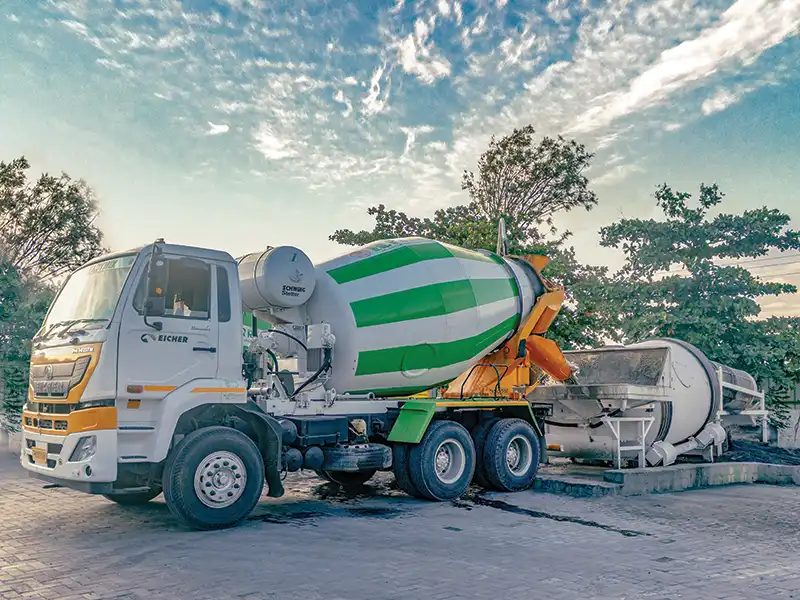
- Structural Innovations & Safety: Constructing rapid transit systems in high-density urban corridors presents immense spatial constraints. Innovations like long-reach articulated boom pumps allow single-side pumping or rapid vertical distribution without disrupting street-level operations.
Real-Life Impact: During Metro Rail Projects across India (e.g., Chennai, Mumbai, and Delhi metros), compact boom pumps (like 36-meter to 47-meter units) handled cast-in-situ concrete for pile caps, piers, and cross-heads in tight urban right-of-way. For underground segments, specialized stationary concrete pumps execute long-distance, high-pressure horizontal pumping—sometimes exceeding 1,000 meters—to line deep tunnels and lay internal tracks smoothly and safely. - Lifecycle Performance & Maintenance: Unexpected equipment breakdown stalls the entire logistics chain of an active job site. Equipment manufacturers counter this by transitioning machinery from passive mechanical units into IoT-connected, smart fleet ecosystems.
Real-Life Impact: Integrating CAN-bus telematics directly onto heavy pumps and mixers allows fleet managers to monitor hydraulic pressure, oil temperature, and engine stress markers remotely. This shifts maintenance from a reactive model to proactive, predictive scheduling, cutting unexpected breakdown downtime on critical project sites by 20% to 30%. - Sustainability & Alternative Powertrains: With Indian infrastructure guidelines stringently enforcing lower carbon footprints and cleaner urban operations, equipment design has fundamentally transitioned toward alternative energy and compliance with CEV Stage V emission norms.
Real-Life Impact: The introduction of specialized hybrid boom pumps allows contractors to drive to a site using a standard internal combustion engine, then switch to the local precast yard or project grid power for active pumping operations. This hybrid capability eliminates localized diesel emissions entirely while delivering up to a 15% reduction in overall energy expenditure. Similarly, the commercial deployment of fully electric transit mixers (eRMCs) and closed-loop concrete recycling systems enables massive infrastructure projects to reclaim leftover aggregates and slurry, drastically minimizing environmental impacts.
India's infrastructure sector is entering a transformative phase, driven by large-scale investments in highways, mining, construction, logistics, and industrial development. Advanced radial tyre technology, improved tread designs, and next-generation rubber compounds will continue to play an important role in enhancing cut resistance, traction, heat dissipation, and overall productivity. The ongoing transition from conventional bias-ply tyres to radial tyres is already helping operators achieve lower rolling resistance, better fuel efficiency, improved traction, and longer tread life.As India continues its infrastructure journey, we believe the greatest opportunity lies in creating smarter, more efficient, and more sustainable mobility solutions that help customers achieve higher productivity and long-term operational success.
Viren Rodrigues
Head of Mining & Agri Business
BKT
At the same time, sustainability is becoming a defining factor for the future of the industry. The next generation of OHT solutions will increasingly incorporate renewable and sustainable materials, resource-efficient manufacturing processes, and circular economy principles. At BKT, sustainability is deeply embedded in our long-term strategy. In FY 2024-25, 32% of our raw materials were renewable, while more than 98% of process waste was recycled. We continue to invest in renewable energy, sustainable material development, and process optimization to further reduce our environmental footprint without compromising product performance.
Another major area of innovation is electrification. As electric and alternative-fuel machinery gains momentum across mining and construction applications, tyres will need to evolve to meet new performance requirements. BKT's R&D teams are actively tracking global electrification trends, working closely with OEM developments, and expanding our range of e-ready tyres with reduced rolling resistance to support the next generation of equipment.
Looking ahead, smart tyre technologies will also play an increasingly important role. Enhanced monitoring capabilities, predictive maintenance solutions, and data-driven performance insights have the potential to help operators further reduce downtime, improve safety, and optimize fleet efficiency.
Our approach is to stay ahead of these evolving requirements by combining advanced engineering, sustainability-focused innovation, and close collaboration with customers and OEM partners. By doing so, we aim to deliver solutions that not only meet today's operational demands but also support the future of India's infrastructure growth story.
Co-creation is central to our innovation strategy. Guided by our ‘Growing Together’ philosophy, we collaborate with OEM partners to design application-specific tyre solutions that address real-world challenges in construction, mining, and earthmoving environments. Insights from the field help us continuously refine tread patterns, compounds, and construction technologies across our portfolio of over 3,600 SKUs, ensuring that every product is engineered to deliver optimum performance, safety, and efficiency.
One of the most significant outcomes of this approach is our EARTHMAX range of All Steel Radial tyres. Developed in response to the growing need for higher durability, stronger load-bearing capacity, improved heat dissipation, and superior traction, the EARTHMAX range reflects years of intensive R&D, deep market understanding, and precision engineering. They have been specifically designed for demanding mining and earthmoving applications, helping operators reduce downtime, improve productivity, and maximize machine uptime under the toughest working conditions.
We have also expanded our portfolio with solutions such as the rubber tracks, engineered to provide outstanding traction, stability, and smooth handling across both paved and uneven terrains, ensuring consistent productivity in challenging operating environments.
As equipment technology evolves, BKT is also preparing for the future of mobility. We have introduced e-ready tyres and are expanding our range with new tyre sizes featuring reduced rolling resistance to support the efficiency requirements of modern electric equipment.
Beyond product innovation, BKT's strong foundation of vertical integration, from in-house carbon black manufacturing to advanced R&D and testing capabilities, enables us to maintain stringent quality standards and accelerate innovation cycles.
Every BKT tyre is developed with a deep understanding of field challenges and engineered to maximize traction, minimize downtime, optimize fuel efficiency, and extend service life. At BKT, tyres are not just components; they are performance enablers that help customers achieve operational excellence.
Additionally, the Off-Highway Tyre industry is entering an exciting phase of transformation, driven by advancements in infrastructure development, equipment technology, sustainability, and electrification. At BKT, we are preparing for this through sustained investments in research and development, advanced radial tyre technology, sustainable materials, and manufacturing excellence. We are also closely monitoring industry trends such as electrification and automation, ensuring our product portfolio evolves alongside the changing needs of OEMs, contractors, and fleet operators.
By combining deep field insights, engineering expertise, and strong vertical integration, we are well-positioned to support the next phase of growth across construction, mining, and infrastructure sectors. As India continues its infrastructure journey, we believe the greatest opportunity lies in creating smarter, more efficient, and more sustainable mobility solutions that help customers achieve higher productivity and long-term operational success.

Tadano Cranes India
Abhijeet Narote
Abhijeet Narote

Trimble
Harsh Pareek
Harsh Pareek
The Indian infrastructure landscape is undergoing a monumental shift, propelled by nationwide mega-initiatives like Gati Shakti and the National Infrastructure Pipeline. Executing complex engineering marvels - ranging from dense urban metro links to elevated bridges - requires a fundamental shift in how project velocity and site safety are engineered. To deliver these assets predictably, the industry must transition away from legacy material handling toward structured mechanisation and smart heavy lifting.Using high-capacity, technology-driven equipment with intelligent control systems, precise hydraulics, and versatile chassis designs allows project teams to operate faster while maintaining strict safety standards.
Abhijeet Narote
Head – Sales
Tadano Cranes India
Apart from delivering these assets viz. Metro Bridges and Elevated Road Bridges, one of the most important concerns is maintenance of these assets. Tadano’s Bridge Inspection Unit’s viz, BT-200, BT-300 & BT-400 are the unique machines used for the maintenance of elevated road bridges.
Also, Aerial Work Platforms viz like AT-200S having unique features like maximum platform loading capacity of 1000 kg, maximum platform height of 19.7 m, maximum working radius of 11.2 m and maximum working height of 21.7 m have unique applications in metro bridges.
The Tadano AT-146TE is a specialized truck-mounted aerial work platform designed specifically for live-line (live wire) maintenance and electric wire work. It acts as a critical engineering asset to prevent accidental power outages during nearby construction, excavation, and utility upgrades.
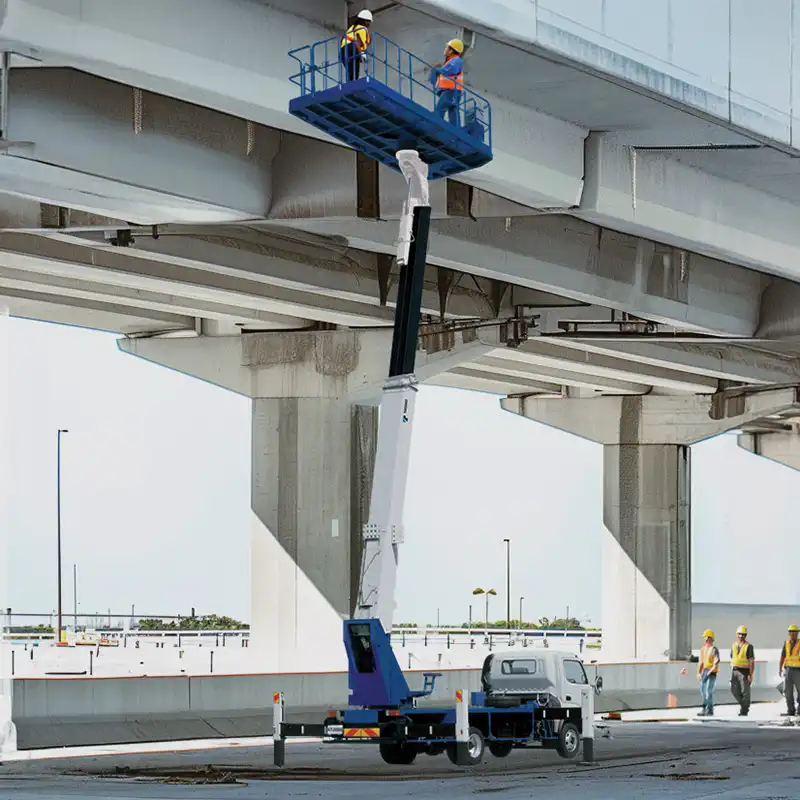
- Engineered Pre-planning & Constructability: Delays rarely originate at the moment of a lift; they stem from fragmented layout designs. Transitioning to precast concrete modules and pre-fabricated steel segments enables rapid assembly while ensuring factory-controlled fabrication quality.
- The Technology: Relying on basic equipment or low-capacity "pick-and-carry" units severely bottlenecks tight urban projects and limits productivity. Upgrading to high-uptime, purpose-built mobile machinery like Tadano’s Loader cranes both Stiff boom cranes and Knuckle boom cranes accelerates site turnover.
- Lifecycle Asset Management: Cost efficiency should be calculated based on the total cost of ownership rather than initial procurement outlays. Highly reliable machinery ensures consistent field availability, reducing long-term financial risks caused by structural rework and unscheduled site downtime.
- Urban Infrastructure & Restrictive Site Conditions: Constructing metro networks and elevated roadways requires working in congested, active traffic zones with tight structural clearances.
Tadano Loader cranes feature compact configurations for loading, unloading and transportation of materials from one place to another place with single machine. Operators can position cranes safely on narrow roads without completely closing public corridors. This eliminates the need for extensive site preparation, protecting existing underground utilities, and saving valuable project days. - Industrial and Downstream Heavy Infrastructure: Large industrial sites like expanding oil refineries, fertilizer companies, etc involve high-capacity tasks within densely packed operational areas. Here, heavy-duty rough terrain units, such as the Tadano GR-1450EX, use robust six-section telescopic booms to manage heavy loads over obstacles without requiring extensive setup space or auxiliary assembly cranes.
Accelerating India's infrastructure development requires moving past legacy methods and embracing high-capacity, technology-driven mechanisation. Incorporating intelligent control systems, precise hydraulics, and versatile chassis designs allows project teams to operate faster while maintaining strict safety standards. Investing in premium lifting equipment reduces total project risk, helping the industry build reliable, future-ready infrastructure across the country.
Maintaining execution speed while ensuring quality, sustainability, and cost efficiency increasingly depends on creating certainty earlier in the project lifecycle rather than trying to recover performance during execution. The first critical factor is front-loaded planning because decisions taken early in design carry the largest consequences later. Investing in accurate 3D models, constructible workflows, and clash detection during planning helps identify conflicts before construction begins, preventing the expensive rework that compresses schedules and inflates costs.Speed and quality are not competing goals; the projects that move the fastest are usually the ones that resolve problems before they reach the site.
Harsh Pareek
Vice President - Direct Sales Asia-Pacific
Trimble
Solutions such as Tekla Structures allow project teams to create constructible models that connect engineering, detailing, fabrication, and site execution from the earliest stages of delivery. As projects become larger and more complex, the ability to simulate execution digitally before work starts becomes increasingly valuable.
The second factor is establishing a connected flow of information across stakeholders. Large infrastructure projects involve multiple disciplines, contractors, consultants, fabricators, and site teams, and fragmented information remains one of the largest contributors to delays. A shared digital environment where teams work from the same project data significantly improves coordination, reduces communication gaps, and creates greater confidence in decision making. Platforms such as Trimble Connect increasingly support this collaboration by enabling stakeholders across design offices, fabrication facilities, and construction sites to work from continuously updated project information.
Measurement and visibility form the third critical pillar because teams cannot improve what they do not track. Real-time visibility into project progress, equipment utilisation, productivity, and site conditions allows teams to correct course while intervention is still relatively inexpensive. Connected workflows increasingly allow project leaders to move from reactive management toward predictive decision making.
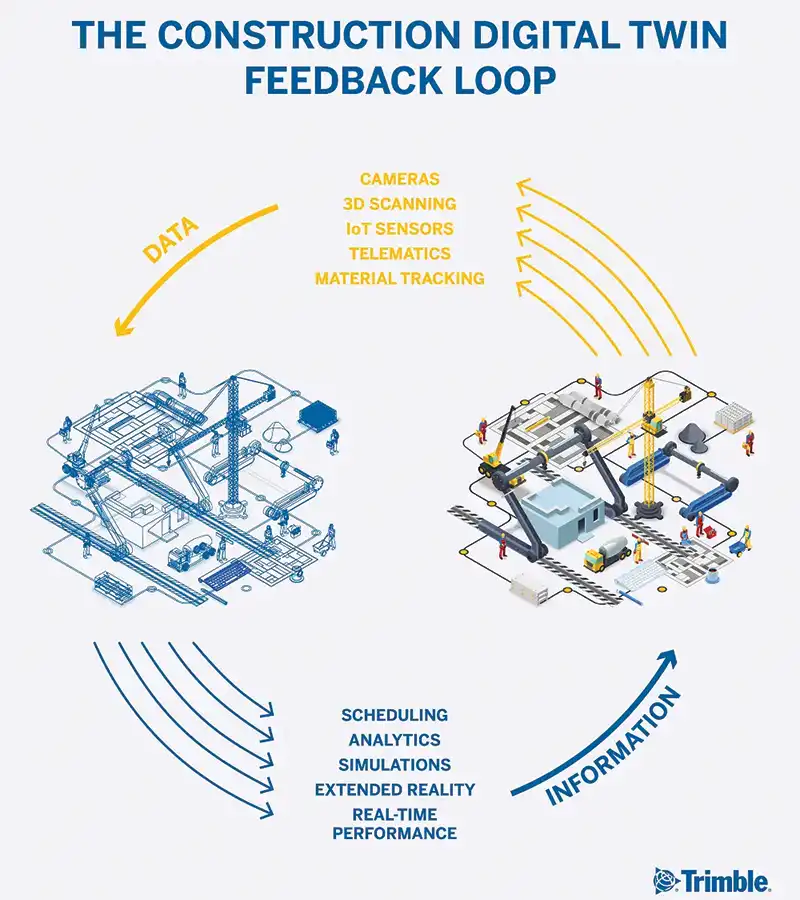
A major change we are seeing in India now is a transition from documents to digitally connected data, and its usage is widely observed on the large linear projects. Technologies such as Building Information Modeling, constructible modeling, reality capture, machine control, common data environments, and connected field workflows are changing how teams plan, collaborate, and manage project delivery.
On the Kanpur-Lucknow Expressway, a 63-kilometre access-controlled highway, GNSS-based automated machine guidance was deployed on graders, pavers, and compactors; this was the first project in India where the technology was acknowledged and mandated by NHAI on those machines. Real-time 3D control held slope alignments and layer thicknesses to design intent, which improved quality and reduced material wastage, rework, and on-site errors, while giving the authority continuous visibility into execution. The corridor is expected to cut travel time between the two cities from around two hours to under forty minutes, although the more durable gain is the predictability built into how it was constructed.
The pattern holds well beyond any single site, and the measurable outcomes are now well documented. Independent studies of BIM-led delivery report project timeline reductions of roughly 20% and cost reductions of around 15%, alongside fewer design errors and requests for information; the Get It Right Initiative estimates that avoidable rework costs the UK and Ireland between £10 and £25 billion a year, equivalent to as much as a quarter of project cost. The relevant lesson for India is that these losses are largely preventable and captured at the design and coordination stage rather than recovered later.
On collaboration and lifecycle performance, connected platforms are what make this continuity possible. Cloud collaboration through Trimble Connect, structural modelling in Tekla, and field tools that feed progress data back into the model allow a project to be planned, built, and then managed as one continuous record across every stakeholder. That record does not end at handover; a reliable digital twin supports maintenance and asset planning across the decades an asset is actually in service, which is where most lifecycle cost genuinely sits. Adoption across the sector remains uneven, although teams tend to progress fastest when they adopt connected workflows incrementally, prove the value on a single project, and build from there. For projects expected to deliver Viksit Bharat at the required speed and scale, the progression from isolated tools to connected delivery is what turns digital technology from a pilot into a dependable advantage.
Normet India & Middle East
Dhyanendra Tripathi
Dhyanendra Tripathi

GR Infraprojects
Dr. R.K. Khali
Dr. R.K. Khali
In underground construction, speed and quality go hand in hand. Project success depends on five key enablers: early technology adoption, high levels of mechanization, robust ground control, skilled workforce development, and data-driven decision-making. Together, these factors improve operational efficiency, minimize delays, strengthen safety and quality outcomes, and create greater certainty in project execution.Delivering infrastructure at speed without compromising quality demands advanced technologies, mechanization, digitalization, and integrated solutions that enhance productivity while reducing costs and risks.
Dhyanendra Tripathi
General Manager - Project Operations
Normet India & Middle East
Advanced mechanization, digital quality control, and innovative ground engineering solutions are also transforming underground infrastructure delivery. To cite a few cases:
At Mumbai Metro Line 3's Sahar Road Crossover Cavern, Normet introduced India's first Permanent Sprayed Concrete Lining (PSCL) system with sprayed waterproofing membranes and an innovative "drained regulating layer" to manage groundwater ingress. This eliminated the need for conventional cast-in-situ secondary lining across the cavern arch, significantly simplifying construction, accelerating execution, and ensuring a long-term serviceability aligned with the project’s requirements. The solution enabled safer, faster, and higher-quality construction while effectively managing challenging groundwater conditions.
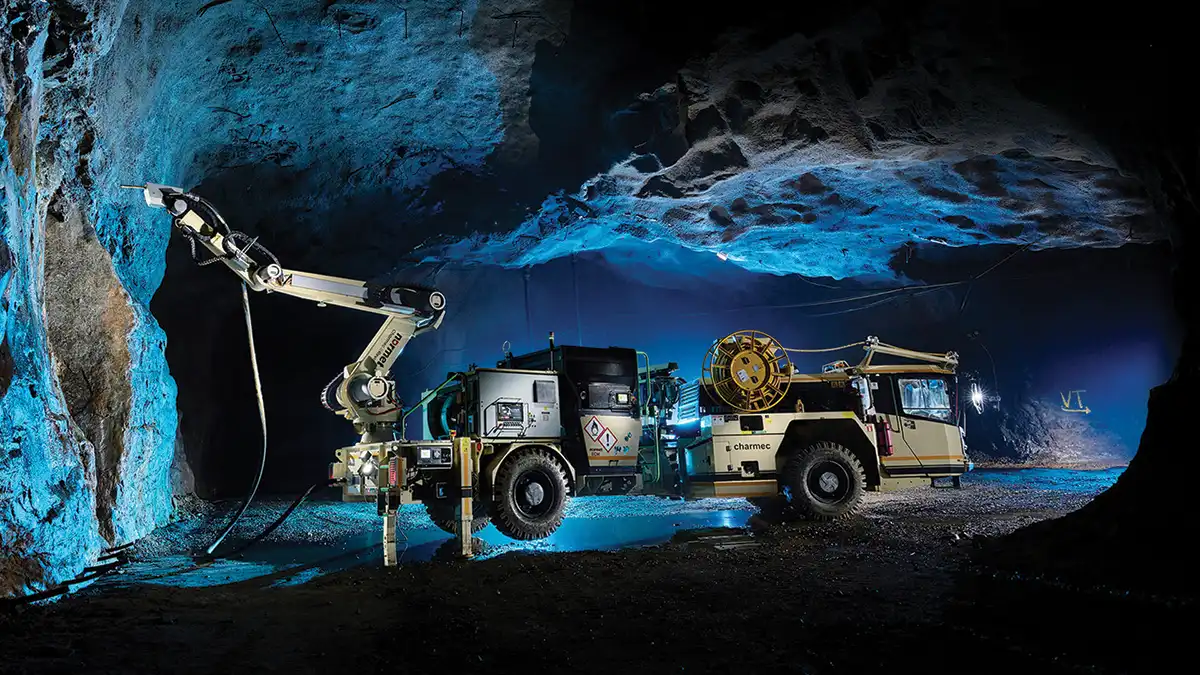
Similarly, at Katra Tunnel No. 1, advanced ground control and water ingress management technologies enhanced tunnel stability and construction reliability.
In mining, Hindustan Zinc leveraged Normet's mechanized spraying, charging, and digital process technologies to improve safety, productivity, and asset performance.
These examples demonstrate how innovation-driven underground solutions deliver superior productivity, reduced lifecycle costs, enhanced safety, and sustainable infrastructure outcomes.
At the same time, digital-enabled mining and construction are transforming productivity through predictive and condition-based maintenance. IoT platforms and remote monitoring provide real-time insights into equipment health, utilization, and operational bottlenecks, reducing unplanned downtime and maximizing asset availability. Normet Technologies such as SmartScan, Connected Fleets, and Remote Monitoring Centres are driving a new era of intelligent underground operations, where faster, data-driven decisions enhance productivity, reliability, and project performance.
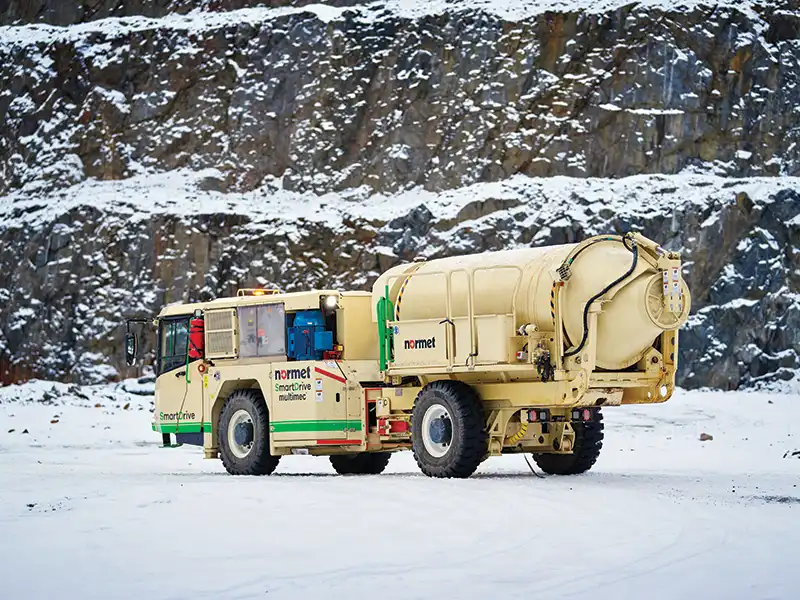
Normet's REVO automated explosives charging system enables remote, precise, and controlled charging operations, reducing workforce exposure while improving charging accuracy, process consistency, and operational efficiency–– proving that enhanced safety and higher productivity can go hand in hand.
Sustainability is rapidly becoming a project imperative. Battery-electric underground equipment is reducing emissions, improving air quality, and lowering ventilation demand. Combined with advanced construction chemicals, injection systems, and rock reinforcement technologies, these solutions enhance asset durability, reduce lifecycle maintenance costs, and deliver more resilient, ESG-aligned infrastructure.
For over 16 years, Normet has partnered with India's mining and tunnelling sectors, supplying more than 500 underground machines for metro rail, highway, hydropower, and mining projects. The establishment of Normet's Centre of Excellence and manufacturing facility at Mahindra World City, Jaipur, represents a significant contribution to the Government’s ‘Make in India’ initiative. The facility serves as a global hub for equipment manufacturing, service rebuilds, R&D, and technical training––supporting domestic infrastructure requirements while exporting world-class underground equipment to international markets.
India is undertaking one of the most ambitious infrastructure development programmes in the world. Expressways, dedicated freight corridors, high-speed rail systems, hydropower projects, underground structures, metro networks, and strategic tunnels are reshaping the country’s economic landscape. As India advances towards the vision of Viksit Bharat 2047, the challenge is no longer limited to creating infrastructure assets; it is about delivering them faster, safer, sustainably, and with predictable quality and cost outcomes.The benchmark for success in India’s infra construction industry must evolve from kilometres constructed or megawatts installed to reliability, resilience, safety, environmental responsibility, and lifecycle value.
Dr. R.K. Khali
VP - TAI & Senior Vice President
GR Infraprojects
The scale of the opportunity is reflected in the Government’s sustained infrastructure push. Public capital expenditure has increased more than six-fold over the last decade, reaching over ₹12.2 lakh crore in FY 2026-27. Simultaneously, initiatives such as PM Gati Shakti have transformed project planning by integrating infrastructure development across multiple ministries through a common digital platform, reducing coordination gaps and improving execution efficiency.
From my experience in delivering hydropower, railway tunnelling, and underground infrastructure projects across challenging Himalayan and geologically complex terrains, five factors consistently distinguish successful projects from delayed ones: planning excellence, proactive risk management, mechanization, digital integration, and workforce capability.
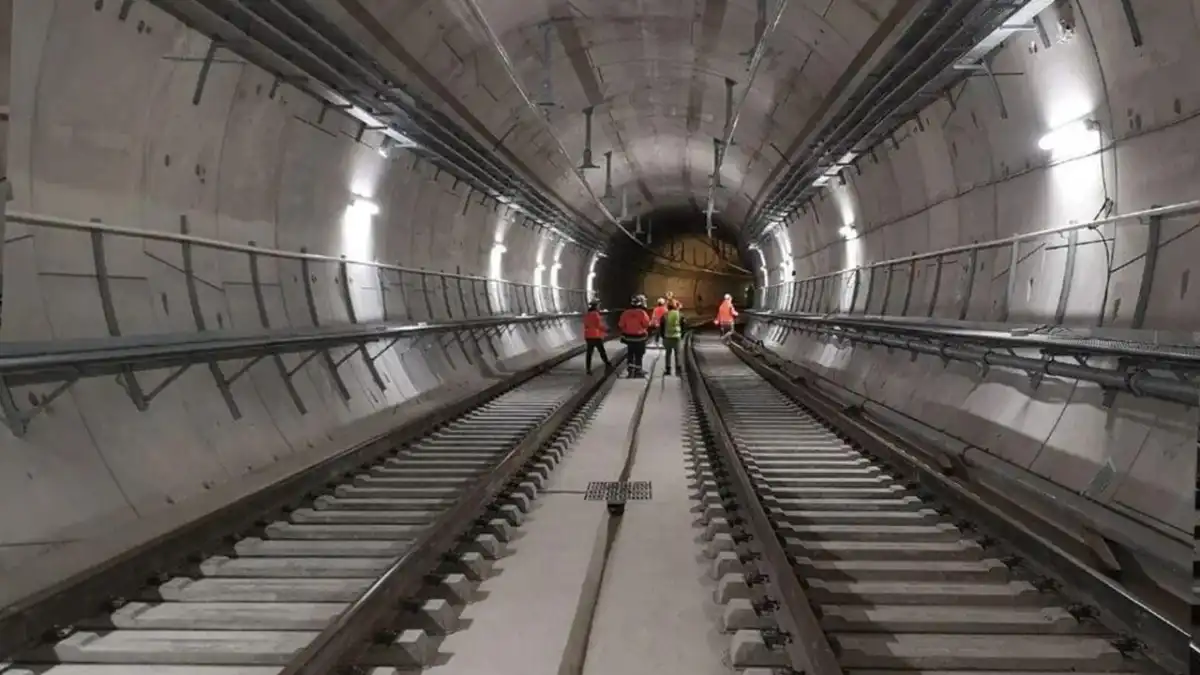
The most important factor is front-end planning. Infrastructure projects rarely fail during construction; they encounter difficulties because of inadequate investigations, unforeseen geological conditions, land constraints, utility conflicts, or delayed decision-making. Comprehensive geotechnical investigations, constructability reviews, risk assessments, and stakeholder alignment before execution significantly improve schedule reliability and cost certainty.
Secondly, project execution must be driven by risk anticipation rather than risk reaction. Modern infrastructure projects operate in increasingly uncertain environments characterised by geological variability, climate-related disruptions, environmental sensitivities, and supply-chain challenges. The ability to identify risks early and implement timely mitigation measures often determines whether a project achieves its milestones.
Technology and mechanization have become the principal drivers of productivity improvement. Building Information Modelling (BIM), drone-based surveys, LiDAR mapping, digital quality management systems, and real-time monitoring platforms are transforming project planning and control. In underground construction, advanced drilling jumbos, robotic shotcrete systems, digital survey instruments, and instrumentation-based monitoring are significantly improving excavation rates, support optimisation, safety performance, and construction quality.
The impact of these approaches is visible in several ongoing projects. At the 2,880 MW Dibang Multipurpose Project in Arunachal Pradesh, one of India’s largest hydropower developments, construction is being undertaken under extremely challenging geological, climatic, and logistical conditions. Successful execution demands continuous geological assessment, adaptive support systems, advanced monitoring, and meticulous construction planning to maintain progress while ensuring safety and quality.
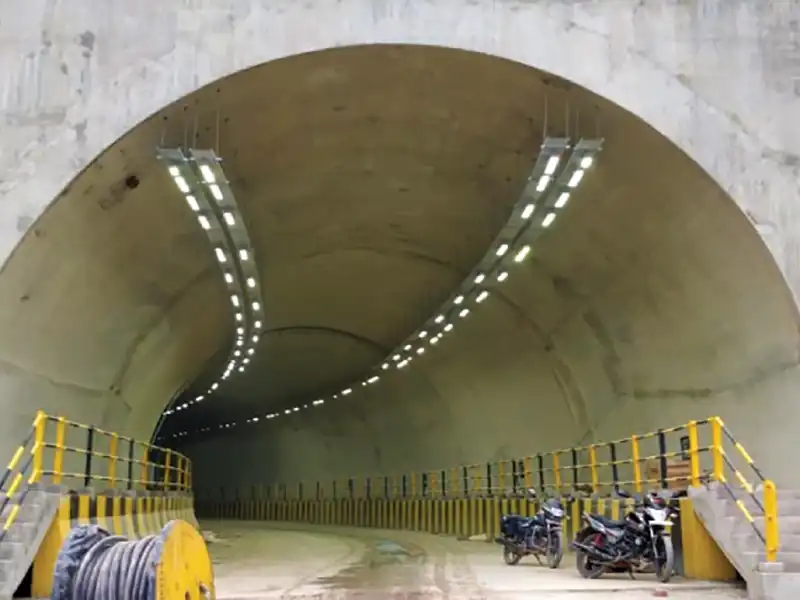
Another critical lesson emerging from major infrastructure projects is that sustainability and productivity are not competing objectives. Sustainable construction practices including optimized excavation profiles, efficient material utilization, slope stabilization, water management systems, and reduced carbon-intensive operations often result in lower lifecycle costs and improved asset resilience. The most successful projects increasingly evaluate performance not merely in terms of construction speed, but through the entire lifecycle of the infrastructure asset.
Equally important is the human dimension. Sophisticated equipment and digital technologies can only deliver results when supported by competent engineers, skilled operators, and a strong safety culture. Continuous training, knowledge management, leadership development, and workforce engagement remain fundamental to achieving world-class infrastructure delivery. As India moves towards becoming a developed nation, the future of infrastructure will be defined by the intelligent convergence of engineering excellence, digital technologies, mechanization, sustainability, and disciplined project management.

Vector Consulting Group
Anantha Keerthi
Anantha Keerthi

Curetec Shanghai
André Dienst
André Dienst
To enable speed, quality, and cost efficiency in project construction and delivery, the first factor is rigorous upfront planning. In large infrastructure projects, delays that surface during construction are often not execution failures but planning gaps discovered late – whether related to scope definition, land acquisition, design, or stakeholder alignment. Every successful project shares a common trait: exceptional rigour during the planning stage, before a shovel hits the ground.When there is proper planning and execution predictability, the benefits enhance schedule reliability, resource utilisation, and cash flow management, enabling faster and smoother project delivery.
Anantha Keerthi
Senior Partner
Vector Consulting Group
Projects such as the Hong Kong Mass Transit Railway (Hong Kong), the Golden Gate Bridge (USA), and the Delhi Metro Phase I (India), by resolving critical uncertainties before execution, progressed with fewer disruptions and remained closer to their planned timelines and budgets. Since the DPR serves as the blueprint for execution, its quality largely determines how much uncertainty is transferred into the execution phase.
The second factor is execution discipline. Once execution begins, maintaining speed requires a shift in focus from project billing management to project flow management.
A less visible but deeply damaging force within contracting organisations is what can be called ‘turnover bias’ –– the tendency to manage projects around financial reporting cycles rather than actual completion. When project managers open multiple work fronts simultaneously or prioritise high-value items to meet quarter-end billing targets, execution becomes fragmented.
Manpower keeps shuttling between open work fronts because the complete material kit and design kit for a logical stretch are rarely available at the same time. This creates a vicious cycle: incomplete work fronts pile up, supervision gets diluted, rework increases, costs escalate, and the project falls further behind schedule.
The antidote is a shift to flow-based project management, where the goal is the rapid, sequential closure of work rather than maximising the amount of work that is simultaneously open.
However, the most common causes of delays are neither random nor uncontrollable; they are structurally predictable. Our survey of large infrastructure firms identified four primary stall factors: land and right-of-way issues (33%), approval and decision delays (33%), financial and funding gaps (21%), and scope/design gaps (13%).
Consider the cascading impact: a contractor wins a project based on a weak DPR. Land or utility conflicts surface mid-execution. Manpower and equipment sit idle, cash flows stall, subcontractors go unpaid, lenders tighten funding, and the project enters a spiral of claims and arbitration.
For a hypothetical ₹5,000 crore highway project, a delay of just two years can erase 44% to 62% of the project’s expected economic value, wiping out ₹2,200-₹3,150 crore through deferred benefits, additional supervision costs, financing charges, and inflation-driven cost overruns. The path forward requires changes not only in execution but also in the pre-execution phase:
Ensure robust pre-planning (DPR stage):
- Shift DPR contracts from fixed-price models to Time-and-Material models so that consultants are compensated for thorough investigation and rigour rather than being penalised for uncovering complexity.
- Establish pre-construction war rooms with all key stakeholders - land, finance, utilities, and environment authorities - to resolve issues before tendering, not after project award.
- Treat DPR preparation as a standalone execution project managed by a Project Management Office (PMO), with clear accountability, cadence, and defined ownership.
Switch to flow-based management for rapid execution on site:
- Limiting concurrent work fronts and restricting the number of simultaneously open sites (limit work-in-progress) within a project based on the availability of key resources, particularly supervisors.
- Removing value-based procurement targets to enable a stronger focus on complete kit (the full assortment of materials required for execution).
- Using daily active management systems to identify and resolve issues that obstruct workflow.
Infrastructure delivery has always been a race against two competing imperatives: speed and quality. In tunnel lining production, bridge beam manufacturing, railway infrastructure, and large-scale precast concrete pipe manufacturing, the gap between these two imperatives is where projects are won or lost - and where concrete curing technology has quietly become one of the most decisive variables in the equation.When the production engineer and the project engineer are aligned on curing as a strategic variable, and not a utility cost, the result is timely infrastructure delivery.
André Dienst
Managing Director
Curetec Shanghai
At Curetec Shanghai, we have spent over a decade working at the intersection of thermodynamic engineering and precast concrete production. What we have learned –– from the tunnels beneath China's megacities to the railway corridors of its western highlands and the pipe yards of suburban Sydney –– is that curing is not a passive step in the production cycle. It is an active engineering process that, when properly controlled, compresses cycle times, improves structural performance, reduces energy consumption, and ultimately determines whether a project delivers on its promises.
"In concrete, the first 12 hours decide over the next 100 years." This principle is widely recognized across the precast industry, and it underpins every system we design and every project that we commission.
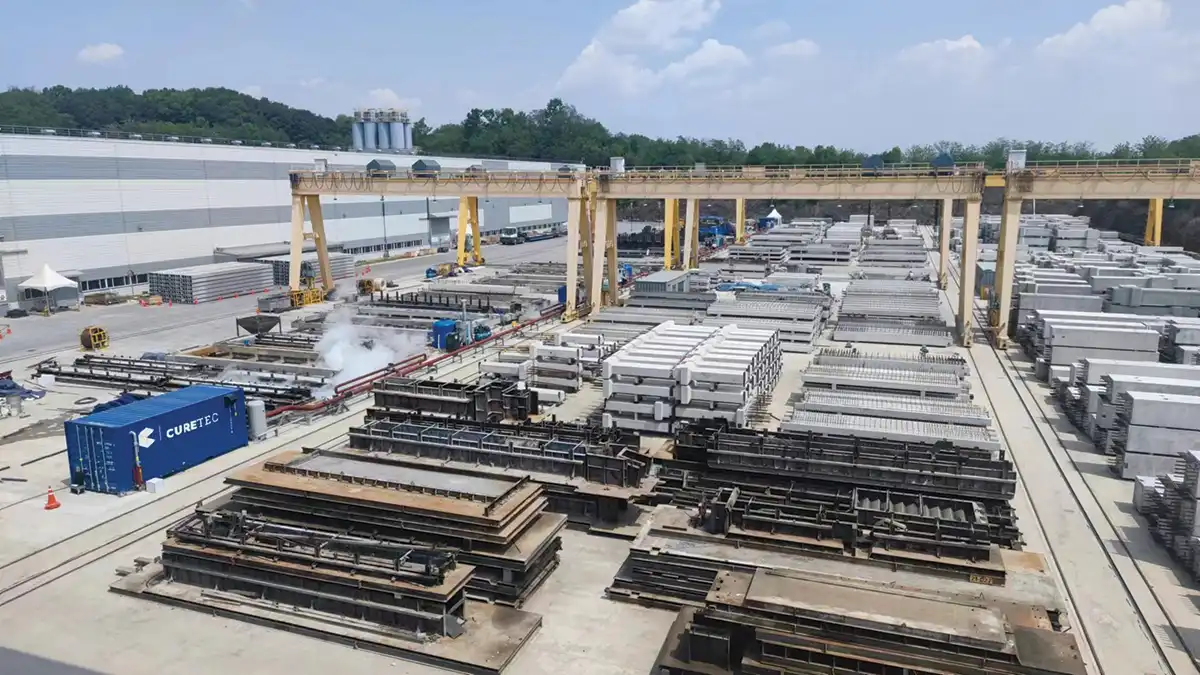
The most critical factor in large infrastructure projects is cycle time predictability. A precast segment plant or sleeper facility that cannot reliably hit its daily production targets does not just fall behind schedule; it creates cascading cost overruns across the entire project supply chain. Controlled thermal curing, driven by real-time monitoring and intelligent temperature management, is one of the most direct levers available to production engineers for addressing this challenge.
When we partnered with Shanghai Tunnel Engineering Co. (on what became the largest tunnel segment production plant in Asia), the core engineering challenge was exactly this: maintaining consistent early-strength development across a very high daily output of reinforced concrete segments, while keeping energy costs and thermal gradients (which cause micro-cracking, if poorly managed), fully under control. Our vapor-based curing systems, integrated with automated temperature monitoring, allowed the facility to achieve reliable demoulding strengths within controlled cycle windows, day after day, at an industrial scale.
In railway infrastructure, the durability stakes are even higher. For the Shudao high-speed rail project in western China, part of the broader railway corridor connecting China's interior to its western regions, we delivered curing systems for both track slabs and for prestressed concrete sleeper production lines.
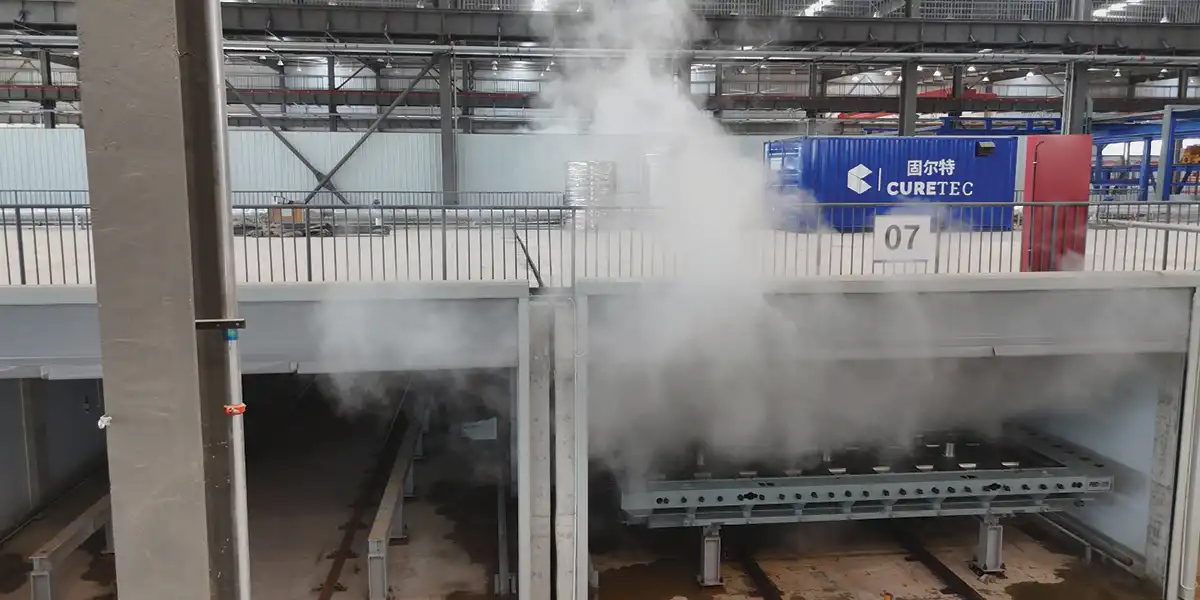
Prestressed elements are particularly unforgiving: thermal gradients during curing can compromise prestress transfer, introduce residual stresses, and shorten service life. Precision curing here is not an operational nicety; it is a structural requirement. The systems we deployed allowed production teams to maintain tight temperature profiles across the full curing cycle, supporting both the output volumes demanded by the project timeline and the long-term performance requirements of high-speed rail infrastructure.
At Humes Blacktown, a division of Holcim Australia near Sydney, we delivered a turnkey curing solution for large-scale dry-cast concrete pipe production. Beyond cycle time, the project highlighted another dimension of sustainable infrastructure delivery: energy efficiency at scale.
Dry-cast pipe curing presents a different thermal management challenge compared to wet-cast precast, and our approach, integrating CureSteam vapor generation with the CureControl platform for real-time process management, significantly reduced energy consumption per unit produced while maintaining the concrete quality standards required for critical drainage and water infrastructure.
India's infrastructure ambition under the Viksit Bharat 2047 vision is extraordinary in its scale. Tunnel projects, metro extensions, high-speed rail corridors, water infrastructure - all of them depend on precast concrete production at volumes and velocities that leave no margin for inconsistent curing practice.
The technology to deliver faster, more reliably, and more sustainably is available and proven at scale. The remaining challenge is adoption: integrating precision curing thinking into project specifications, procurement frameworks, and production facility design from the outset, rather than treating it as an afterthought.
The projects where we have seen the greatest impact are invariably those where the production engineer and the project engineer are aligned on curing as a strategic variable, not a utility cost. This alignment, more than any single technology, is what turns infrastructure ambition into infrastructure delivery.

Vikas Sharma Global Infratech LLP
Vikas Sharma
Vikas Sharma

Revomac Industries
Jigar Patel
Jigar Patel
The key to successful infrastructure delivery lies in maintaining the right balance between execution speed, quality, safety, sustainability, and cost efficiency. Some of the most critical factors include strong project planning and risk management, efficient regulatory approvals and stakeholder coordination, robust supply chain and procurement management, and integrated project monitoring and governance systems.To deliver complex projects on schedule and within budget, the industry is turning to a powerful combination of advanced project management, digital monitoring, and automation.
Vikas Sharma
CEO & Founder
Vikas Sharma Global Infratech LLP
In addition, the adoption of digital technologies, mechanization, and advanced construction practices plays a significant role in improving execution efficiency and reducing delays. Equally important are strong quality control, safety, and sustainability practices throughout the project lifecycle.
Ultimately, execution excellence can be achieved through proactive planning, technology adoption, and effective collaboration among all stakeholders involved in the project.
Innovations in engineering, construction methodologies, mechanization, digital technologies, and project management practices are playing a transformative role in improving project execution, quality, safety, productivity, and the long-term performance of infrastructure assets in India. Technologies such as Building Information Modelling (BIM) and digital engineering are helping improve planning accuracy, coordination, and design efficiency while significantly reducing rework and project delays, as demonstrated in several projects executed by the Delhi Metro Rail Corporation.
Similarly, the adoption of precast and modular construction techniques in projects undertaken by the National High Speed Rail Corporation Limited has helped accelerate construction activities and reduce overall project timelines. Mechanized construction practices, advanced equipment, and digital project monitoring systems implemented in projects by the National Highways Authority of India are also improving productivity, quality control, and operational efficiency.
In addition, the use of drones, AI-based analytics, and digital project dashboards is enabling real-time project monitoring, faster decision-making, and better risk management across large infrastructure projects. Sustainable construction practices and resource-efficient technologies are further helping improve environmental performance, optimize resource utilization, and enhance the lifecycle performance of infrastructure assets.
Precast Construction & Advanced Engineering: Shifting fabrication from the chaotic environment of a live job site to a controlled factory floor completely changes the math on project timelines and quality control. Utilizing precast modular elements typically reduces structural construction timelines by 25% to 40% compared to cast-in-place methods. Factory-controlled environments achieve tighter tolerances, leading up to 60% reduction in on-site rework and material waste. On-site labor requirements decrease by roughly 30%, mitigating the impacts of localized skilled labor shortages.
Digital Twins & AI-Driven Project Management: Real-time data stream integration allows project managers to pivot from reactive firefighting to proactive, predictive scheduling. Implementing Building Information Modeling (BIM) integrated with AI-driven scheduling (4D/5D BIM) yields an average of 5% to 10% savings on total project costs by eliminating spatial conflicts before breaking ground. AI-powered predictive analytics reduce project delays by 15% to 20% automatically flags logistical bottlenecks and supply chain risks weeks in advance.
Drone Surveys & Autonomous Digital Monitoring: Traditional surveying methods that used to take weeks can now be completed in a matter of hours, providing unprecedented visibility into daily operations. Drone-based aerial mapping and volumetric analysis improve surveying productivity by up to 400%, cutting down data collection time from days to hours. Real-time stockpile monitoring via drones reduces discrepancies in earthwork volumes to less than 1–2%, preventing costly subcontractor disputes over material quantities.
IoT Safety Ecosystems & Mechanization: Safety and productivity are fundamentally linked; a safer site is a more efficient, predictable site. Wearable IoT sensors and AI-enabled CCTV monitoring can reduce reportable safety incidents and near-misses by 35% to 50% through real-time proximity alerts around heavy machinery. Deploying IoT telematics for predictive maintenance on heavy machinery reduces unplanned equipment downtime by 15% to 20%, keeping critical path activities moving smoothly.
Integrating these advanced technologies is no longer an experimental luxury; it is a baseline requirement for maintaining a competitive edge. By anchoring project delivery in quantifiable data, the industry is proving that smarter building directly equates to better business.
India's infrastructure sector is expanding rapidly, and the challenge today is not only to build faster but also to deliver projects with consistent quality, sustainability, and cost efficiency. In my view, the most critical factors for achieving this balance are proper planning, standardization, technology adoption, and efficient resource management.As infrastructure and real estate development continue to grow across India, automation and modern manufacturing technologies will play a vital role in delivering faster, more sustainable, and higher-quality construction solutions.
Jigar Patel
Managing Director
Revomac Industries
Project delays are often caused by inconsistent material supply, labor dependency, quality issues, and rework. To overcome these challenges, the industry must increasingly adopt automated processes and standardized construction materials. Automation helps reduce human error, improves productivity, and ensures uniform quality throughout the project lifecycle.
Quality control is equally important. Infrastructure assets such as roads, housing projects, industrial developments, and urban utilities are expected to perform reliably for decades. Therefore, using high-quality and standardized construction materials is essential to avoid maintenance issues and lifecycle costs.
Sustainability should also be integrated into every stage of project execution. The use of eco-friendly materials, optimization of raw material consumption, and reduction of construction waste can significantly improve both environmental and economic performance. Modern construction technologies enable better utilization of resources while minimizing wastage.
Advancements in concrete product manufacturing and automation have significantly transformed the construction industry over the past decade. As a manufacturer of automatic brick and block making machinery, we have witnessed how modern technology is helping manufacturers, contractors, and developers improve productivity, quality, and sustainability.
Today's automatic block-making plants are equipped with advanced batching systems, PLC-controlled operations, automated material handling, and precision vibration technology. These systems ensure accurate raw material proportioning, consistent compaction, and uniform product strength, resulting in superior-quality concrete products.
A practical example can be seen in the production of concrete blocks, paver blocks, kerbstones, and fly ash bricks. Compared to traditional manufacturing methods, automated plants can achieve significantly higher production capacity while maintaining consistent quality standards. This enables faster material availability for construction projects and helps reduce project timelines.
Automation also improves resource utilization by minimizing material wastage and reducing rejection rates. Precise batching systems ensure optimum use of cement, aggregates, and other raw materials, contributing to cost savings and sustainability. Additionally, the growing use of fly ash and other industrial by-products supports environmentally responsible construction practices.
Modern machinery also reduces dependency on manual labor and improves operational efficiency. Manufacturers benefit from better productivity, lower operating costs, and improved quality consistency. High-strength and dimensionally accurate concrete products further enhance construction speed, reduce mortar consumption, and improve long-term asset performance.

Sri Lotus Developers & Realty
Anand Pandit
Anand Pandit

Elematic India
Shridhar Rao
Shridhar Rao
People often think execution speed is all about how quickly construction happens on site. In reality, much of a project’s success is decided long before the first brick is laid. This becomes even more relevant in a city like Mumbai, where redevelopment projects rarely follow a standard path. Every site has its own set of challenges, whether it is working within a tight footprint, coordinating with existing residents, or navigating various approvals along the way. Often, what keeps a project moving smoothly is not how quickly problems are solved, but how early they are anticipated.That is why pre-planning is critical. Having strong supervision, clear reporting systems, and well-coordinated teams help in identify potential issues early and keep execution on track.Better planning and stronger coordination amongst stakeholders help in moving projects forward smoothly, and digital tools like BIM also enable teams to resolve design and coordination conflicts before construction begins.
Anand Pandit, CMD
Sri Lotus Developers & Realty
Technology is also strengthening the planning process. Tools such as BIM allow teams to visualise projects in detail, identify clashes, and resolve potential conflicts well before execution begins. Combined with robust supervision and reporting mechanisms, this improves decision-making and reduces disruptions during construction.
Modern construction systems and equipment have helped improve efficiency on site, but the bigger difference is in coordination. Large projects involve architects, consultants, contractors, and execution teams working together over several years. When everyone is aligned from the start, it becomes much easier to maintain timelines, quality standards, and safety on site.
This is particularly relevant in luxury housing, where expectations are far higher than they were a decade ago. Buyers notice the details. Whether it is the quality of finishes, design execution, how well a development will hold up over time, or the overall experience of the home, there is very little room for compromise. Better planning and stronger coordination help ensure that those expectations are met while keeping projects moving forward smoothly.
As the nation advances toward its Viksit Bharat 2047 vision, the construction sector faces a defining challenge: how do we build more, faster, without compromising quality, sustainability, or cost discipline?India's Viksit Bharat journey demands infrastructure that is built at scale, delivered on time, and designed to last. Today, precast and industrialized construction is the best proven solution available.
Shridhar Rao
Sales & Marketing Director
Elematic India
At Elematic, we believe the answer lies in a fundamental shift — from site-based, labor-intensive construction to a manufacturing mindset. The most critical factor enabling speed alongside quality is the industrialization of the construction process through precast concrete technology.
Traditional cast-in-situ methods are inherently inefficient — they are weather-dependent, labor-intensive, prone to material wastage, and difficult to quality control at scale. In contrast, precast construction moves production into a controlled factory environment, enabling consistent quality, precise tolerances, parallel workflows, and dramatically faster site assembly. This is not merely a technology upgrade; it is a structural transformation of how India builds. Three factors stand out as essential:
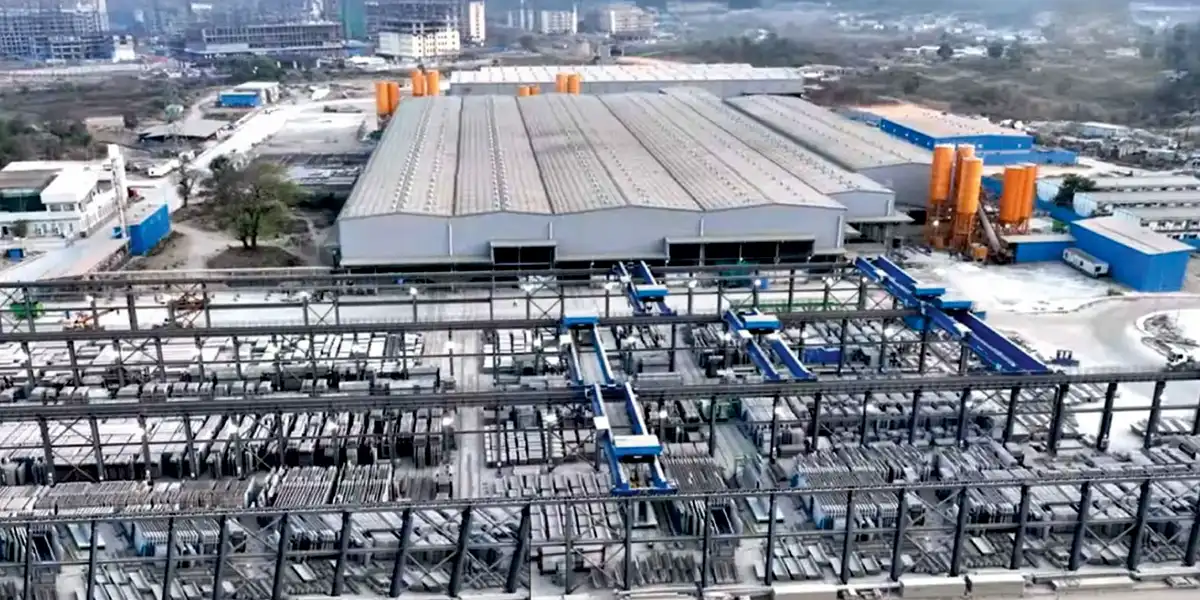
CASL Precast Plant at Suraksha City, Vasai, Mumbai
Standardization and digital integration: Precast elements designed with BIM and managed through plant control software eliminate rework, reduce material waste, and enable real-time production tracking. Digital workflows bridge design, manufacturing, and delivery — compressing timelines that would otherwise extend projects by months.
Workforce productivity and safety: Precast construction requires up to 50% less on-site labour compared to conventional methods, translating directly into lower overhead costs and more predictable scheduling. The shift to a controlled factory environment significantly reduces exposure to the hazards of open construction sites — working at heights, adverse weather, and heavy material handling — making the process inherently safer for workers. This dual benefit of improved productivity and a stronger safety culture directly strengthens overall project economics.
Holistic supply chain approach: Speed is only sustained when equipment, materials, training, and service support are aligned. Elematic's integrated turnkey model — covering plant design, machinery supply, installation, operator training, and ongoing service — ensures that our customers can ramp up production quickly and maintain it reliably.
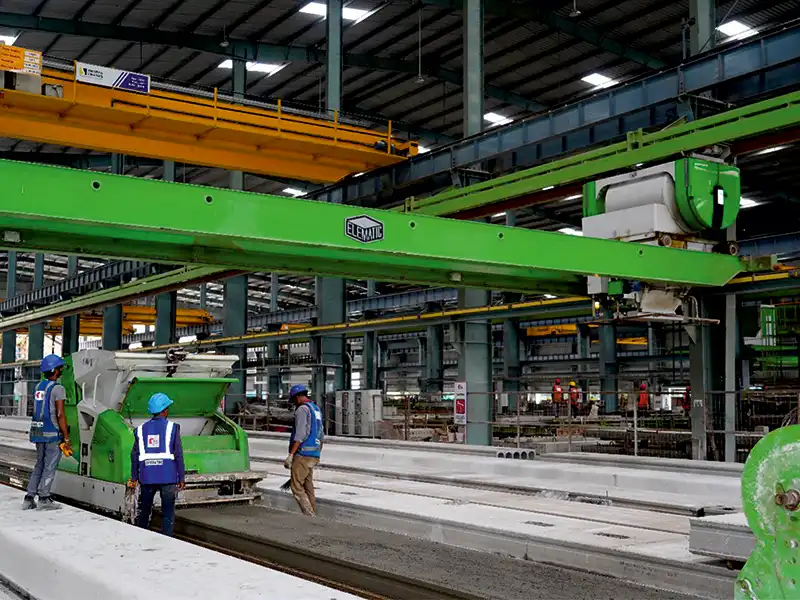
My Home Grava, Hyderabad – Asia’s tallest precast commercial towers
MyHome GRAVA, Hyderabad, India's largest commercial building built entirely with precast technology, spans 45.53 acres and will eventually house approximately 250,000 professionals in state-of-the-art IT towers. The entire structure, every slab, wall, beam, and column, is manufactured in a factory and assembled on-site. Compared to cast-in-situ construction, the project saves approximately 14,300 tons of CO2, while achieving delivery timelines that conventional methods simply could not match.
The Galaxy Building, Hyderabad, developed by Aurobindo Realty using Elematic technology, became India's tallest office building built with precast technology at 105 meters, completed on schedule in mid-2020. The developer noted construction speed was twice that of traditional methods, with dramatically reduced on-site labour requirements.
The Naya Raipur Housing Project was faced with a tight deadline for a large-scale government housing project. The BSBK Group commissioned Elematic to set up a precast plant. What typically takes 6–7 months was achieved in record time, with the plant operational and producing elements within the project's demanding schedule.
Elematic has also collaborated with Suraksha city Vasai in Mumbai in constructing affordable housing apartments where 23 storey building towers are constructed in Precast. Elematic remains committed to equipping India with the technology, knowledge, and partnerships to make the Viksit Bharat vision a reality.
Bhadra Group
Sarveshaa SB
Sarveshaa SB
TH Company India
Satyabrata Misra
Satyabrata Misra
From highways and metro networks to residential townships, commercial developments, and industrial corridors, the scale of construction underway across the country is remarkable. As urbanisation accelerates and economic aspirations grow, the focus is evolving from building faster to building smarter and more efficiently.Projects that invest in meticulous planning, stakeholder alignment, opportunity assessment, and governance frameworks are well positioned to achieve execution certainty and operational excellence.
Sarveshaa SB
Chairman & Managing Director
Bhadra Group
Today, success in infrastructure development is measured by the ability to deliver projects that combine execution speed with quality, sustainability, safety, and long-term operational value. Achieving this balance calls for a strategic blend of disciplined project management, engineering innovation, advanced technologies, and lifecycle-focused thinking.
One of the most valuable lessons emerging from large-scale infrastructure delivery is that speed and quality can work together seamlessly. The foundation for this balance begins with comprehensive planning during the earliest stages of a project. Decisions made during design and execution influence maintenance efficiency, energy performance, and operational effectiveness.
Large infrastructure developments bring together multiple stakeholders, extensive supply chains, regulatory processes, financing considerations, and significant resource mobilisation. Strong project controls, combined with continuous monitoring and transparent decision-making, enable teams to remain focused on delivery objectives while maintaining high quality standards.
Alongside planning, technology is becoming a defining force in modern infrastructure development. Building Information Modelling (BIM) and Virtual Design Construction (VDC) have transformed the way projects are designed, coordinated, and executed. By creating detailed digital representations before construction begins, project teams can enhance design coordination, optimise material utilisation, strengthen stakeholder collaboration, and improve overall project efficiency.

Another transformative trend is the growing adoption of prefabrication and modular construction methodologies. Industry experience shows that prefabrication can optimise material utilisation while accelerating project delivery timelines. Components manufactured off-site can be assembled efficiently on-site, enhancing productivity and supporting streamlined execution. As India advances towards ambitious infrastructure goals, modular construction is set to play an increasingly important role in improving efficiency and scalability.
Material innovation is also shaping the future of infrastructure. High-strength concrete, recycled steel, fly ash bricks, low-emission glass, and low-carbon cement are enabling developers to create structures that are durable, efficient, and environmentally responsible. Infrastructure assets are designed to serve communities for decades, making durability and resilience essential considerations. Sustainable materials help deliver both outcomes while creating long-term value.
Mechanisation represents another important driver of productivity. Advanced lifting systems, automated concrete placement technologies, and specialised construction equipment are enhancing consistency, efficiency, and workplace safety. By supporting precision and operational excellence, mechanisation is helping construction organisations deliver projects with greater effectiveness and responsibility.
Green building practices, renewable energy integration, rainwater harvesting, greywater recycling, and circular design principles are increasingly becoming standard features of modern developments. Energy-efficient buildings and green-certified developments consistently demonstrate enhanced operational efficiency and stronger long-term value creation.
As India continues its infrastructure transformation, the path ahead will be defined by an integrated approach that combines engineering excellence, technology adoption, sustainability, and disciplined execution. The objective is to create infrastructure that is resilient, efficient, future-ready, and capable of delivering enduring value to communities and the economy.
India’s infrastructure ambitions under Viksit Bharat 2047 demand construction materials that support speed, safety, sustainability, consistent quality and cost efficiency. TH Sand Washing Plants are engineered to meet these priorities by helping infrastructure developers produce reliable, high-quality manufactured sand while improving project execution and long-term plant performance.By using Sand Washing Plants which combine engineering strength, localized manufacturing, sustainable water management, and have proven site performance, infrastructure developers can produce high-quality manufactured sand efficiently, reliably and sustainably.
Satyabrata Misra
Country General
Manager
TH Company India
The plants have a robust, safety-focused design for dependable continuous operations with inbuilt flexibility that suits feed material and site conditions. Modular units are built to stock for faster readiness and shorter project lead times. Digital monitoring systems give improved control, consistency and operational visibility. Conservation of natural resources is enabled through higher sand recovery and water recycling, while energy-efficient electrical components support lower operating costs and sustainable performance.
Together, our Sand Washing Plants are a future-ready solution for developers seeking reliable output, better productivity, reduced operating costs, and consistent compliance with demanding construction requirements.
Across highways, railways, metros, airports, ports, urban infrastructure and industrial projects, the quality of sand directly influences concrete performance, durability and project outcomes. TH Sand Washing Plants provide a technologically advanced route to producing high-quality M-Sand with consistent grading, low silt content and improved usability for modern construction applications.
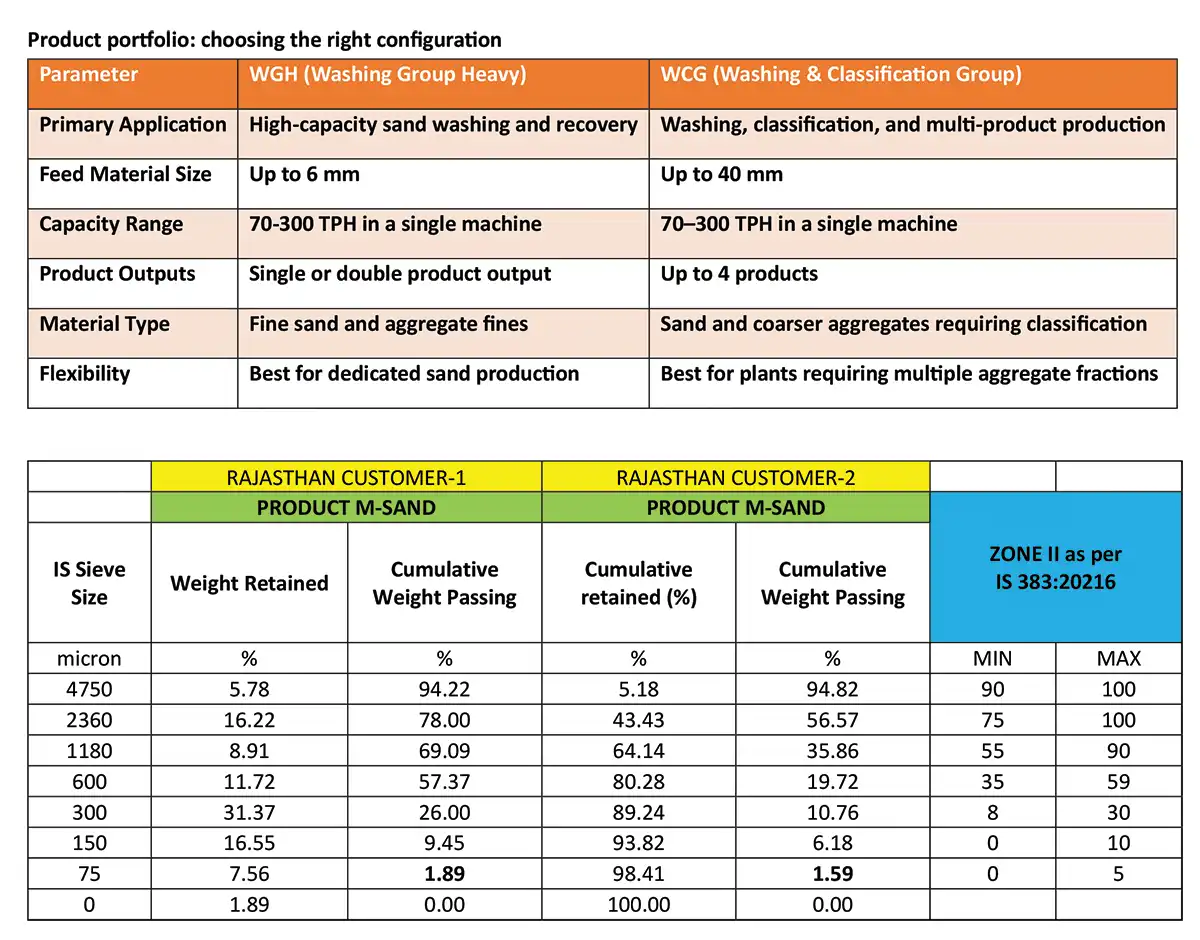
To support faster project delivery, select components of TH’s WCG & WGH modular sand washing compact units are manufactured and maintained in stock. Each order is then reviewed against feed material characteristics and site-specific operating conditions, with required modifications incorporated before dispatch. This balances speed with customization, ensuring that every plant is aligned with market demand as well as operational performance needs.
While TH’s core technology originates from Spain, the plants are manufactured in India in support of the Make in India initiative and the national vision for self-reliant infrastructure growth. Critical components are sourced from TH Company headquarters in Spain to maintain European-equivalent quality and performance, while most of the manufacturing and assembly is carried out in India.
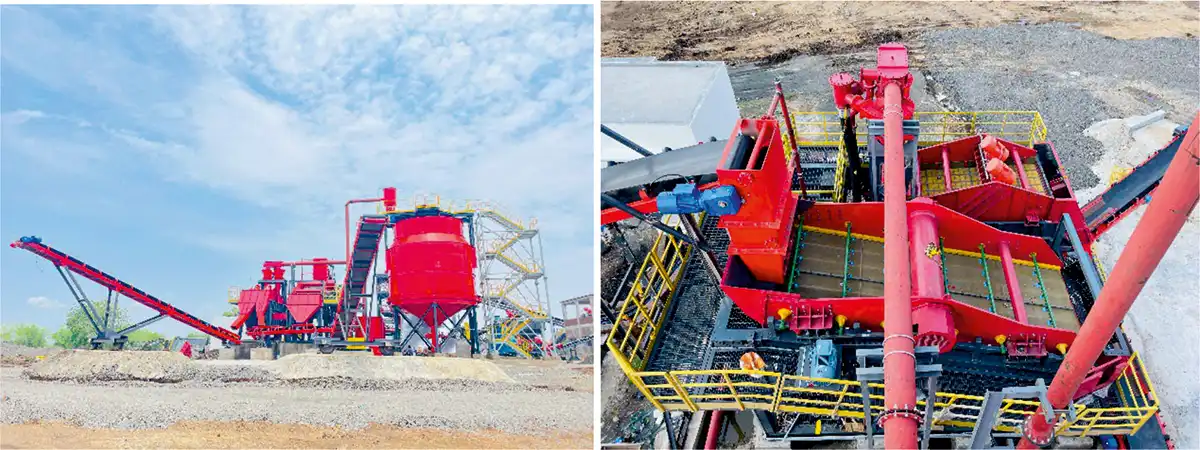
Site Photo: WCG model - ARPI Infratec, Solapur, Maharashtra
At the heart of the solution is advanced washing, classification and fine-particle separation technology. TH plants use hydrocyclone, hydrosizer, and high-efficiency dewatering systems to deliver washed sand with controlled gradation, low moisture and reliable product consistency. This improves concrete performance and enhances the usability of the final sand output at site.
Designed for continuous operation, TH plants help maintain a steady supply of quality sand and support adherence to demanding project timelines. Automated controls, mechanized processes and remote digital monitoring improve safety and operational consistency while reducing manual intervention. Engineered for sustainability, the plants maximize sand recovery, reduce waste, optimize water and resource use, and deliver dependable service life of more than 10 years.
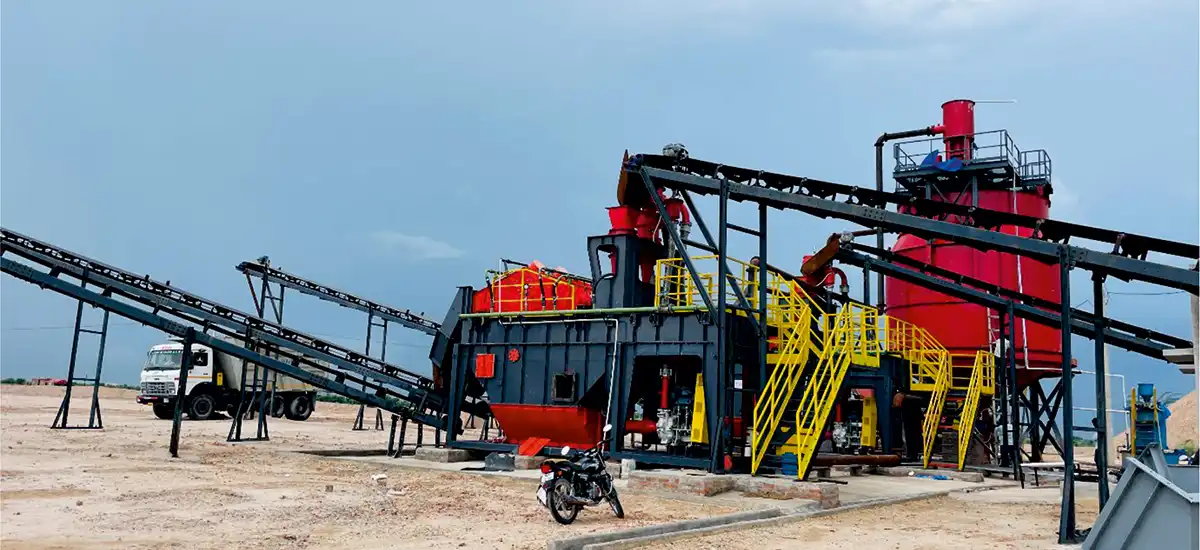
Site Photo: WGH Model - OM Minerals, Jhajhu, Rajasthan
Complementing the washing portfolio is TH’s NK-CL Lamella Cum Paste Thickeners that strengthen the sustainability proposition through efficient solid-liquid separation. Using advanced flocculation and sedimentation technology, they support mining, aggregates, steel, food processing and recycling applications with superior clarification, underflow solids concentration of 50%–60% depending on feed material, and more than 90% water recovery. Their compact design, PLC-controlled automatic operation and easy maintenance help deliver reliable, cost-effective performance.
The S.R. Minerals plant at Bharuch, one of TH Company’s advanced silica sand installations in India, demonstrates the capability of an integrated wet-processing solution. The plant processes 100 TPH of ROM through a multi-stage circuit: grizzly feed screening removes material above 70 mm, the minus 70 mm fraction is washed in a rotary scrubber, and a sizing trommel removes oversize material. The minus 4 mm fraction is then processed through a hydrosizer and two stages of hydrocyclones to produce high-quality foundry sand. Depending on requirements, the system can produce one grade of foundry sand and construction sand. High-frequency dewatering screens recover final products at the required moisture, while TH’s Paste Thickener enables more than 90% water recovery for closed-circuit reuse. The final product is supplied across Gujarat and different regions of Maharashtra.
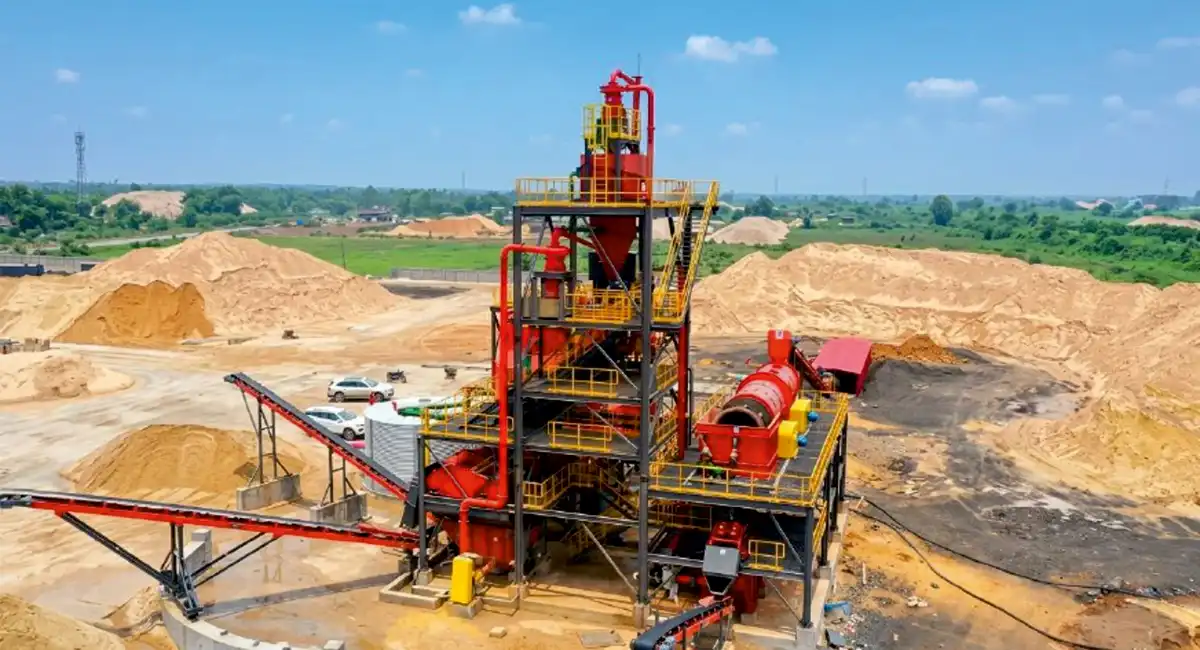
Site Photo: S.R. Minerals, Bharuch, Gujarat
With a washing portfolio comprising WCG & WGH Compact Sizing & Washing Plants, TL Washing Trommels, CH Hydrosizers and Complete Washing Plant Solutions, TH Company offers a complete range of solutions for modern infrastructure, aggregates and industrial mineral processing requirements. The portfolio brings together hydrocyclones, hydrosizers and paste thickeners for precise washing, classification and water recovery; modular and scalable plant design for quicker deployment and future expansion; sustainable resource utilization through higher recovery, reduced waste, and closed-circuit water reuse; safety-driven engineering for dependable and operator-friendly performance; and digital operational control for visibility, consistency, and improved decision-making.

RIB Software India
Ravi Kumar
Ravi Kumar
Dhuleva Group
Anuj Mehta
Anuj Mehta
The Indian construction sector’s ambition to deliver infrastructure at speed, scale, and quality is intensifying the demand for faster execution, despite persistent challenges. The sector faces two choices: endure the fragmented workflows, cost overruns, rework, and lifecycle visibility, typical of traditional processes, or, embrace digitally enabled, connected project delivery. Leading AEC firms have responded by adopting CostX – RIB Software’s unified costing platform that integrates takeoff, estimating, and carbon tracking – and embedding it into project planning, costing, and execution.As India scales its infrastructure ambitions, the ability to deliver projects faster without compromising quality or cost efficiency will define industry leaders.
Ravi Kumar
Sales Director – India
RIB Software India
The key requirements for maintaining speed without compromising quality and cost efficiency are early-stage accuracy and downstream continuity. Large infrastructure projects often experience disconnect between design, quantity takeoff, and estimating. The separation between these processes force project teams to spend valuable time reconciling data, increasing the risks of delay and error. Crucially, the cost impacts of design changes are often discovered too late.
In this space, an integrated digital estimating and takeoff platform like CostX can be transformative. It integrates 2D and 3D takeoff with estimating in a single environment, so that teams can generate quantities directly from drawings and models, maintain a live link between scope and cost, and instantly assess the financial impact of changes. This continuity accelerates decision-making and reduces the need for manual intervention.
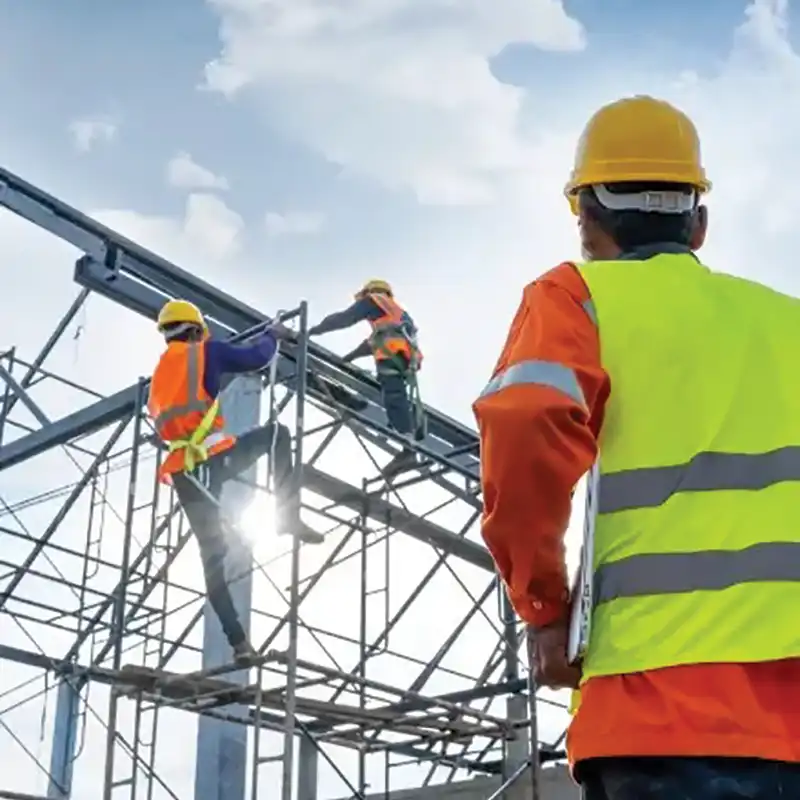
Multi-user workflows in CostX enable even distributed project teams to collaborate seamlessly on estimates and revisions, working simultaneously, in parallel. This is an essential capability for projects operating at scale.
The impact is measurable: for example, automated quantity extraction reduces takeoff time by up to 50-70%, accelerating preconstruction timelines – that means faster takeoff cycles. Connected estimating reduces errors, leading to tighter cost control and fewer overruns – this improves cost accuracy. Also, the shared estimating environment ensures that commercial, design, and delivery teams are aligned from the outset – enhancing collaboration. These efficiencies are critical, given that even small discrepancies in large infrastructure projects can scale into significant cost and schedule impacts.
On sustainability and lifecycle performance, CostX enables better visibility into material quantities and cost implications early on in a project. Teams can make more informed decisions around resource usage and design optimization, which supports both environmental goals and long-term asset value.
Stakeholder collaboration is another key opportunity for transformation. Traditional workflows create silos between teams as they rely heavily on spreadsheets and disconnected tools to communicate and coordinate. In a connected environment like CostX, processes and people are unified around a single source of cost truth – this helps reduce friction and improves stakeholder coordination.
The way that digital technologies are reshaping infrastructure delivery in India is by improving accuracy, collaboration, and lifecycle visibility. The transition to data-driven, model-based environments is achieved by teams using tools like CostX to extract quantities directly from BIM models and drawings. This eliminates duplication and reduces discrepancies.
Leading contractors and consultants that have adopted digital estimating solutions are reporting faster turnaround times on bids and revisions. They're finding that improved data consistency has reduced the need for rework, and there’s stronger alignment between design intent and project execution.
Solutions like RIB CostX that connect design, quantity takeoff, and estimating into a unified workflow, enable construction teams to transition into the next phase of infrastructure growth. By gaining the transparency, speed, and control required for modern infrastructure delivery, the construction sector can achieve the vision of Viksit Bharat with connected, more predictable, smarter, and faster builds.
Effective delivery of infrastructure depends on proper planning, sound project management, and efficient stakeholder coordination. Use of technology for project monitoring and to provide up-to-date information on its progress and how the various resources have been used, incorporation of sustainability and quality management at the beginning of the project, are also important for a project’s successful completion.Planning for the projects’ timelines, design development, timely approval processes, monitoring progress, and supply chain management, will ensure that they are delivered within budget and without any delays.
Anuj Mehta
Director
Dhuleva Group
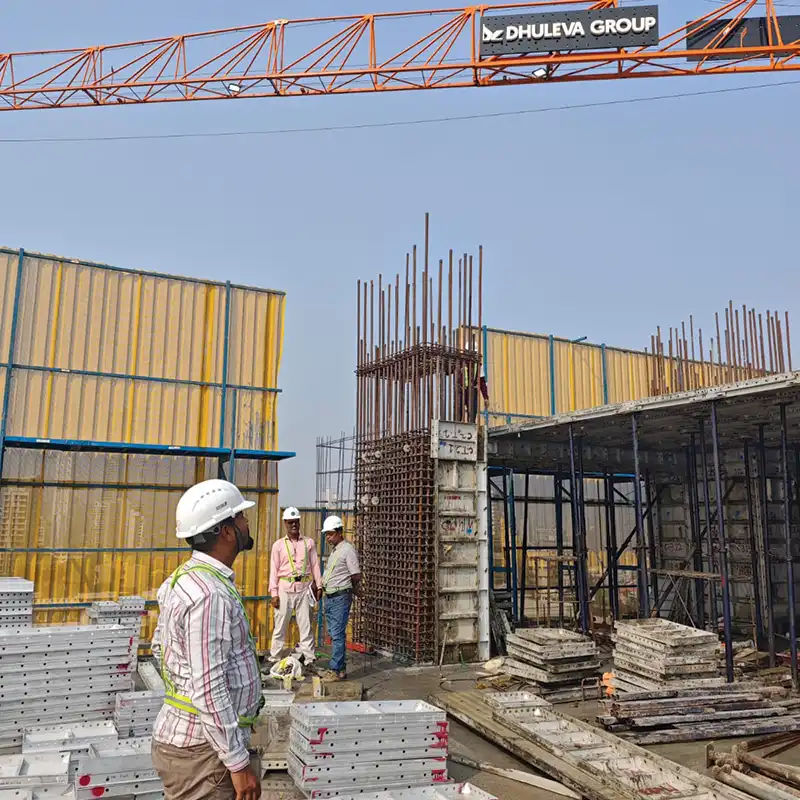
Precast construction and module technologies have increased the construction speed of infrastructure projects without compromising their quality. Metro rail projects in Delhi and Mumbai have made extensive use of precast segments and Tunnel Boring Machines (TBMs).
Other advancements like digital management software, drone monitoring, artificial intelligence monitoring systems, high-performing concretes, and recycled construction material have led to more sustainable projects, improved asset performance, lower lifetime costs, and better safety practices.

TK Elevator India
Ravikrishnan Srinivasan
Ravikrishnan Srinivasan

Gainwell Commosales
Manav Kohli
Manav Kohli
As India's cities continue to urbanize and infrastructure projects such as airports, metro systems, and transit hubs expand, the greatest opportunity lies in developing smarter, more connected, and sustainable mobility solutions. For India's rapidly growing infrastructure and real estate sectors, our elevatoring systems address key challenges such as urbanization, increasing building heights, high passenger volumes, and the demand for smarter building operations.TK Elevator is redefining the future of vertical mobility with innovations such as the TWIN elevator system, AGILE, and MAX.
Ravikrishnan Srinivasan
CEO & Managing Director
TK Elevator India
Our recent innovations have focused on making vertical transportation smarter, more reliable, and more sustainable. Through connected digital solutions and predictive maintenance technologies, we leverage real-time data and remote diagnostics to identify potential issues before they impact operations, helping building owners and facility managers improve uptime, enhance reliability, and optimize maintenance costs.
We have also enhanced passenger experience and traffic management through intelligent destination control systems, which reduce waiting and travel times in high-rise buildings. In parallel, our energy-efficient drives, regenerative technologies, and smart operating modes help developers achieve sustainability goals while lowering the lifecycle costs of their elevator and escalator systems.
The next generation of vertical transportation will be driven by digital connectivity, predictive maintenance, AI-powered traffic management, energy-efficient technologies, and seamless integration with smart building ecosystems, enabling optimized space utilization, lower energy consumption, higher uptime, and enhanced operational efficiency.
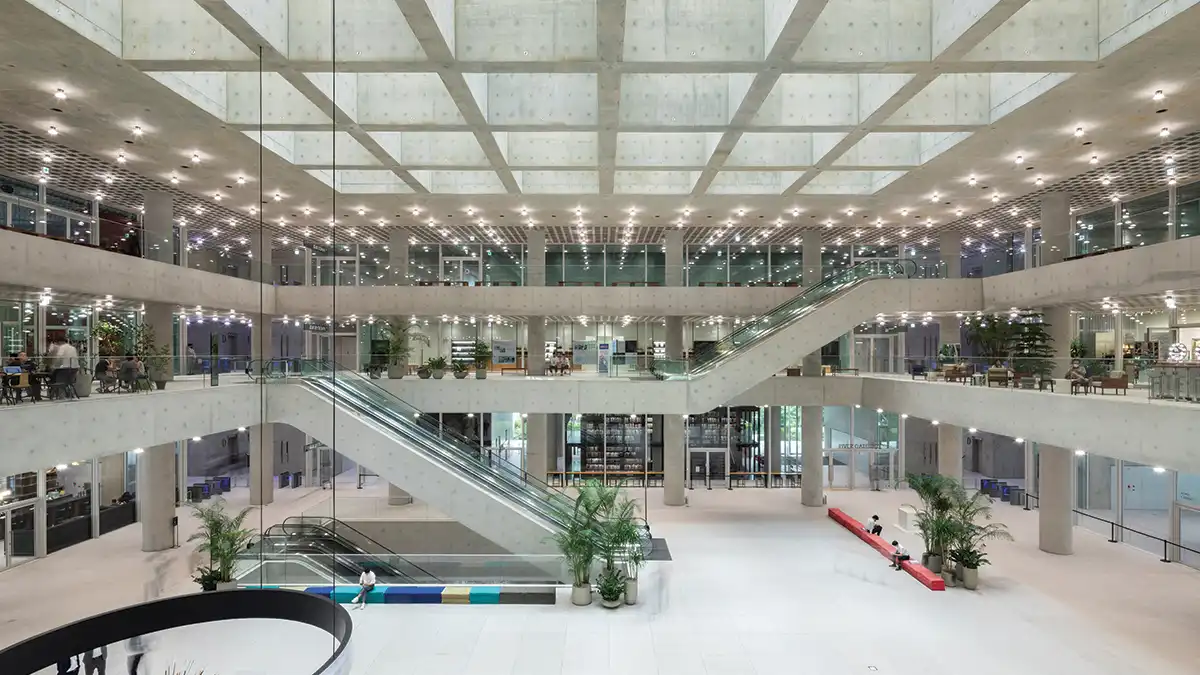
At TK Elevator India, we have taken significant steps toward shaping the future of vertical mobility by introducing innovations such as the TWIN elevator system, which features two independent cabins operating within a single shaft to maximize space utilization and transport capacity in high-rise buildings, while AGILE, our advanced destination control system, optimizes passenger flow and reduces waiting times in busy commercial and mixed-use developments.
Complementing these innovations is MAX, TK Elevator's cloud-based predictive maintenance solution, which leverages real-time data and analytics to improve reliability, minimize downtime, and enable proactive maintenance. Together, these technologies are helping raise industry standards by delivering greater operational efficiency, enhanced passenger experience, improved sustainability, and smarter building management across India's evolving real estate and infrastructure landscape.
One of the biggest challenges that India's elevator and escalator industry has yet to fully solve is ensuring consistent modernization and maintenance of aging vertical transportation systems across the country. While new installations increasingly incorporate smart, connected, and energy-efficient technologies, a significant portion of the existing installed base still operates with outdated systems that can impact safety, reliability, energy performance, and user experience.
Maintenance quality across the market also remains uneven, with building owners and facility managers often highly price-sensitive when selecting providers. In some cases, prioritizing lower-cost options can compromise service quality, affecting both safety and asset performance.
Addressing this challenge will require greater adoption of predictive maintenance, digital monitoring, modernization solutions, and stronger adherence to evolving safety standards. It will also require closer collaboration among manufacturers, building owners, facility managers, and regulators to ensure that vertical transportation infrastructure remains safe, efficient, and future-ready throughout its lifecycle.
Large infrastructure projects in India are rarely derailed by a single failure. More often, they bleed slowly, quietly through accumulated delays, equipment downtime, rework, and the kind of cost overruns that only become visible when it's too late to correct course. I've seen it enough times to know that execution speed and quality aren't competing priorities. They fail or succeed together, and usually for the same reasons.The question of how technology is changing infrastructure delivery in India isn't abstract anymore. The evidence is showing up on actual project sites, in actual timelines, and in quality outcomes that were genuinely difficult to achieve five years ago.
Manav Kohli
CEO & Executive Director
Gainwell Commosales
The first is planning –- not just on paper, but with genuine alignment across all stakeholders before work begins. When contractors, equipment providers, and project managers are working from the same playbook from day one, you cut out the mid-project recalibrations that quietly destroy timelines. It sounds obvious but it's less commonly practised than it should be.
Equipment reliability is the next critical variable, and one that's often underestimated until it becomes a crisis. A grader or excavator sitting idle on a highway project for three days isn't a maintenance issue; it's a schedule problem. Cat® Customer Value Agreements address this head-on: next-day parts, two-day repairs, proactive condition monitoring. The goal is predictable uptime, which ultimately determines whether total cost of ownership stays manageable across the life of a project.
Where I think the biggest shift is happening right now is in digital visibility. Our SITECH team has deployed 3D Automated Machine Guidance and Control technology on a NHAI highway project, centimetre-precise, satellite-linked, with real-time monitoring dashboards that eliminate the dependency on manual site inspections entirely. The solution ranked first among 31 participants at the 5th NHAI Hackathon 2026, and NHAI has since mandated it across 3,000 km of projects in FY 2026-27. This kind of institutional endorsement tells you this isn't a pilot anymore.
Skilled operators are a constraint the industry doesn't discuss candidly enough. Through our training programmes for hydraulic excavator, backhoe loader, truck technician, we've built a certified workforce pipeline. Precision on the machine matters as much as the machine itself.
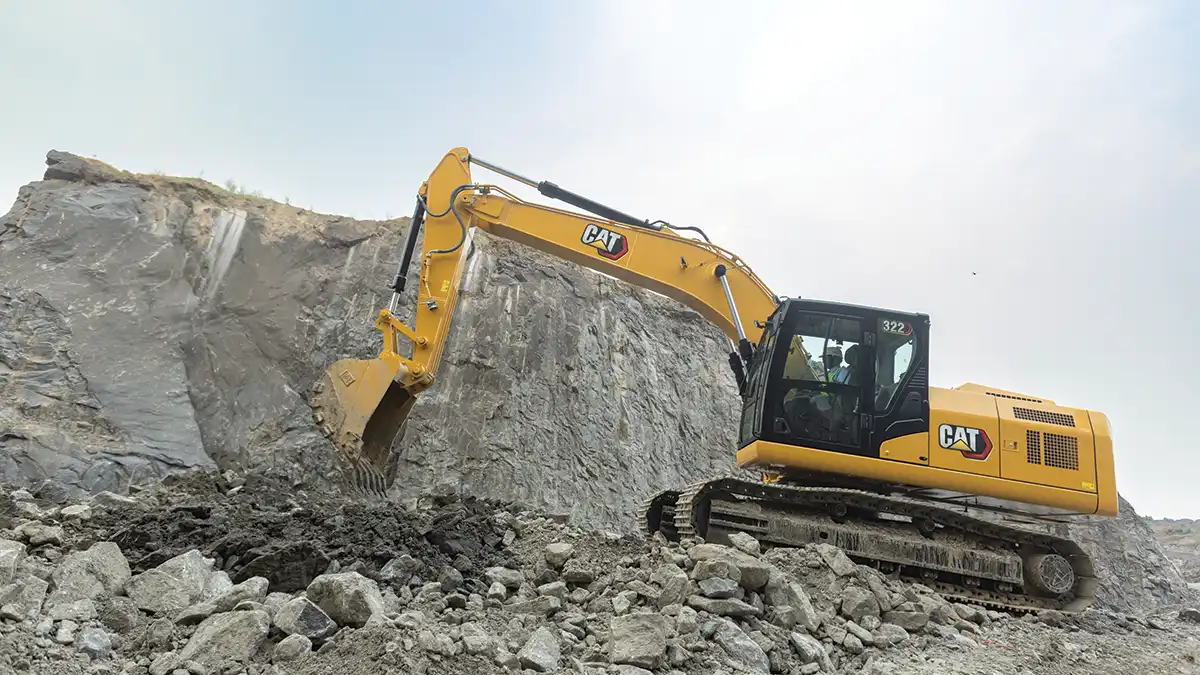
And on cost efficiency, lifecycle thinking over lowest bid, every time. Cat Certified Rebuild extends machine life at a fraction of replacement cost. It's not a compromise; it's the smarter financial decision.
The most significant shift we're seeing is in how digitally integrated the entire customer journey has become. When a contractor comes to us with a requirement today, our AI-powered tools assess that need and recommend the most suitable solution — not through a catalogue exercise, but through intelligent matching of machine specifications to project parameters. Once the decision is made, parts and equipment can be ordered directly through the CAT Central App, removing the friction that traditionally slowed procurement cycles.
Post-deployment, the same digital ecosystem continues to deliver value. Through Vision Link, customers get real-time visibility into three dimensions that matter most on a live project: machine health, utilisation, and productivity. The platform tracks how many hours each machine has worked, monitors fuel consumption, flags component wear before it becomes a breakdown, and aggregates equipment history alongside site conditions. Maintenance decisions shift from fixed schedules or gut feel to data-driven intelligence — the difference, for a contractor running a large highway package, between a managed project and one that's perpetually behind.
What this creates, end-to-end, is an integrated value chain. Customer requirement comes in, the right solution is identified, procurement happens online, and then health, utilisation, and productivity are monitored continuously — all within a connected system that compresses turnaround time at every stage.
On sustainability, Gainwell was ahead of the curve on emission compliance — our Cat 424 Backhoe Loader and Hindustan 2021F Wheel Loader were BS5 ready before the regulatory mandate, and CPCB 4 compliance for our engines followed the same pattern. Lower emissions and better fuel efficiency reduce operating costs meaningfully over a machine's lifetime.
A customer today can come to Gainwell for a genset, an excavator, and a condition monitoring plan, and get all of it from one place, backed by a single service network. On a large infrastructure project, that's a meaningful reduction in coordination risk. Complete solutions for growth — increasingly, that's what the market is asking for.

Doosan Bobcat India
Aneesh Kunnummal
Aneesh Kunnummal

ACM Construction Machinery
Sachin Patil
Sachin Patil
India's infrastructure story has moved from vision to velocity. Bharatmala Pariyojana, the National Infrastructure Pipeline, and Viksit Bharat 2047, are all active mandates, funded by record public capital expenditure, with real deadlines and machines on the ground. The challenge now is not scale; it is execution.Speed, quality, and cost efficiency are not competing priorities; they are the outcome of the right choices: the right mechanisation, the right equipment, and the right partner.
Aneesh Kunnummal
Head - Sales, India & SAARC
Doosan Bobcat India
Working closely with contractors across road construction, urban infrastructure, ports, and industrial projects, three factors consistently separate projects that deliver from those that don't.
Mechanisation is the foundation. The single greatest contributor to execution delays in India is still over-reliance on manual labour for tasks that demand precision, consistency, and round-the-clock productivity. Mechanised equipment does not just accelerate output; it standardises quality across every cycle.
At Bobcat India, there is a solution for every ground breaker on site. The portfolio of backhoe loaders, skid-steer loaders, mini excavators, air compressors, light towers and forklifts, covers every critical stage of a construction workflow. A Bobcat backhoe loader working three shifts, for instance, delivers compaction and trenching outputs that would take multiple manual crews multiple days, with zero variability and zero rework risk.
Mechanisation is the baseline for any contractor serious about MoRTH quality norms, DPR timelines, and NHAI milestone payments. Right equipment for the right application is equally critical. One of the most underappreciated inefficiencies in Indian infrastructure execution is equipment misapplication. In Tier 1 cities, construction happens within live, congested environments, where every square meter matters. Large conventional machines congest traffic, demand road closures, and slow everything around them. Multiple units of Bobcat machines, because of their compact footprint, can be deployed simultaneously on the same site, working in parallel, finishing faster, without creating additional traffic disruption. The result is faster execution, lower site costs, and a smaller footprint on city life.
Reliability, uptime, and total cost of ownership complete the picture. Contractors often evaluate equipment on purchase price alone - a calculation that consistently understates real project costs. Machine downtime on a critical-path activity costs far more in penalty clauses and milestone slippage than any saving made at procurement.
Bobcat equipment is built to global standards, performing consistently across all weather conditions, terrains, and shift intensities, backed by a strong dealer network that minimises mean time to repair — a non-negotiable for EPC contractors working under BOT or HAM concession structures.
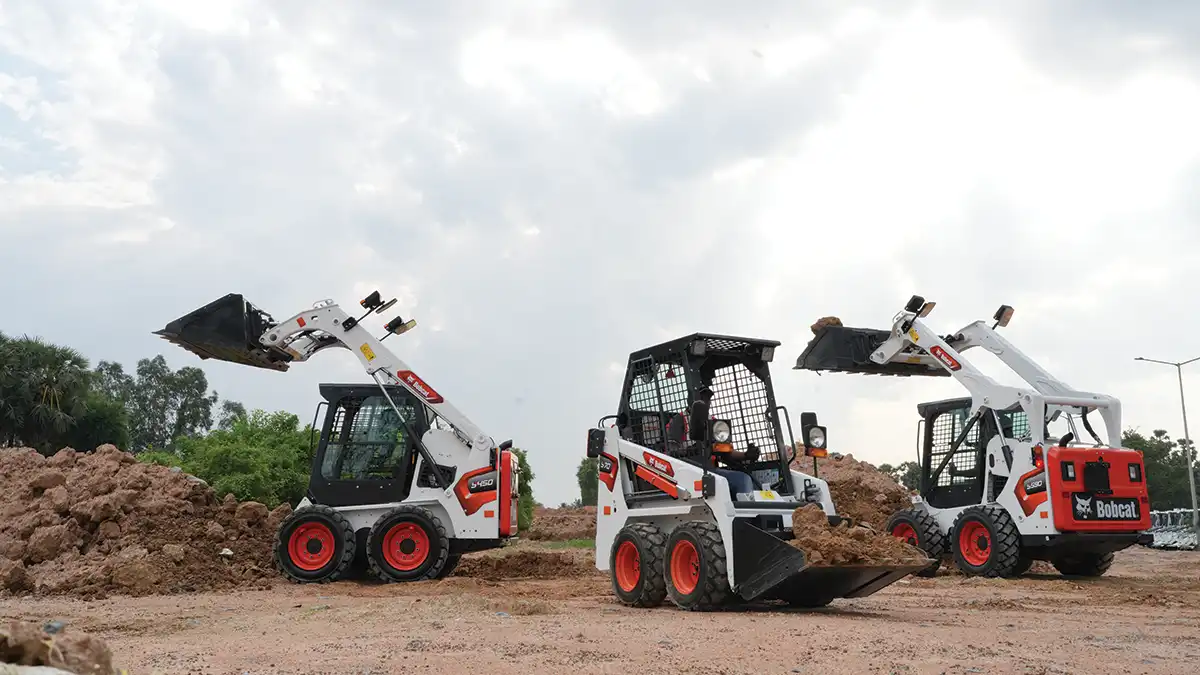
Innovation in construction equipment has advanced considerably, and the impact being seen on Indian project sites can be seen in measurable execution performance. Metro station construction, flyover foundations, and underground utility corridors demand machines that can manoeuvre in confined, densely populated spaces without disrupting adjacent structures or live traffic. Deploying Bobcat's SSL and MEX range on such projects has allowed contractors to maintain aggressive daily progress targets in environments where a conventional machine would be operationally impossible. The downstream benefit is significant — shorter work windows, less community disruption, faster lane restoration, and materially improved site safety records.
The universal attachment ecosystem adds another dimension of productivity. A single Bobcat skid-steer loader can switch between augers, hydraulic breakers, trenchers, buckets, pallet forks, and sweeper attachments — making one machine capable of handling subgrade preparation, drainage trenching, signage post installation, and debris clearance, all on the same project. Contractors managing multiple packages across states have found this flexibility critical for optimising their equipment pool without capital-intensive fleet expansion. One machine, multiple applications, lower mobilisation costs, and significantly better asset utilisation.
CEV Stage V compliance goes beyond regulatory adherence. CEV 5 certified engines deliver superior fuel efficiency, directly lowering operating costs per project. Lower fuel burn means lower emissions, supporting the green infrastructure mandates that are becoming increasingly central to project approvals and ESG reporting.
Operator comfort and ergonomics, often underestimated in equipment evaluations, prove to be a meaningful productivity multiplier on long projects. Bobcat equipment is built with ROPS/FOPS certified cabs, machine stability controls, and ergonomic seating designed to reduce operator fatigue over extended shifts. A less fatigued operator makes fewer errors, takes better care of the machine, and delivers more consistent output across a shift. For large EPC contractors managing hundreds of operators across multiple sites, this translates into measurable improvements in execution continuity, safety records, and workforce retention.
The portable power range, air compressors and light towers, addresses one of the most chronic bottlenecks on remote infrastructure sites. On rural highway stretches, tunnels, and transmission corridors where grid connectivity is absent or unreliable, Bobcat's portable power solutions have enabled continuous operations, ensuring that lighting, welding, equipment charging, and concrete batching can proceed independent of the grid. On Bharatmala Phase I stretches in remote districts, this has been the difference between maintaining shift productivity and costly work stoppages.
Taken together, compact equipment with versatile attachments, CEV 5 efficiency, operator ergonomics, and portable power, what emerges is a complete site solution. And that is what India's infrastructure execution demands right now.
India's infrastructure sector is witnessing unprecedented growth across highways, metro rails, airports, ports, industrial corridors, commercial buildings, and urban development projects. As project sizes become larger and timelines more demanding, the construction industry must focus not only on faster execution but also on maintaining quality, safety, sustainability, and cost efficiency. Achieving these objectives requires a greater shift towards mechanised construction and advanced material handling solutions.Modern infrastructure demands mechanised construction practices and equipment which enable contractors to improve productivity, maintain consistent quality, and deliver projects within schedule.
Sachin Patil
Managing Director
ACM Construction Machinery
Modern infrastructure demands modern construction practices. Although advanced technologies are readily available, mechanisation is still underutilised on many projects. Dependence on manual operations often results in inconsistent workmanship, labour shortages, material wastage, safety risks, and project delays. Adopting mechanised construction equipment enables contractors to improve productivity, maintain consistent quality, and deliver projects within schedule.
From our experience, successful infrastructure execution depends on five key factors: effective project planning, extensive mechanisation, skilled operators, preventive equipment maintenance, and continuous quality monitoring. When these elements work together, contractors can significantly reduce rework, optimise resource utilisation, minimise downtime, and improve overall project performance.
One of the most critical operations in reinforced concrete construction is reinforcement processing. ACM's Bar Cutting Machines, capable of cutting reinforcement bars up to 40 mm diameter, deliver accurate and consistent cuts with minimal material wastage. Likewise, ACM's Bar Bending Machines bend reinforcement bars up to 40 mm diameter, ensuring precise reinforcement geometry that enhances structural integrity while reducing manual effort and improving productivity.
As high-rise construction continues to expand, efficient vertical transportation has become essential for maintaining uninterrupted project progress. ACM's Twin Cage Passenger and Material Hoists are designed for safe and efficient movement of manpower and construction materials. Built with a heavy-duty round tube mast measuring 650 × 650 × 1508 mm, each cage has a 2-ton lifting capacity and can operate up to 300 metres. Powered by imported motor-gearbox systems, the hoists are available in 40, 60, and 90 metres per minute lifting speeds to suit diverse project requirements. Equipped with world-class safety systems and advanced busbar technology, they ensure reliable operation, enhanced safety, and reduced downtime on construction sites.
For projects requiring efficient transportation of construction materials and reinforcement steel, ACM's Wire Rope Multi-Functional Hoists provide a dependable solution. With a net lifting capacity of up to 750 kg, a lifting speed of 30–35 metres per minute, and a 12 mm high-strength wire rope, these hoists enable safe and efficient movement of materials across multiple floors, helping contractors improve productivity while reducing manual handling.
In modern machines, advanced safety features such as overload protection, emergency braking systems, limit switches, safety interlocks, and intelligent control systems minimise operational risks while ensuring uninterrupted project execution. In addition, smart diagnostics and preventive maintenance capabilities help contractors maximise equipment availability, reduce unexpected breakdowns, and optimise operating costs.
Mechanisation also contributes directly to sustainable construction. Precision-engineered equipment reduces steel wastage, improves energy efficiency, optimises resource utilisation, and minimises unnecessary equipment idle time. These improvements not only reduce project costs but also contribute to environmentally responsible infrastructure development.
At ACM Construction Machinery, our focus is on helping contractors execute projects faster, safer, and with greater precision. As infrastructure development continues to accelerate across India, wider adoption of mechanised construction will play a crucial role in improving execution efficiency, enhancing quality, and delivering durable infrastructure that meets global standards.
Neptune Industries
R.V. Panchal
R.V. Panchal

Columbia Machine Engineering
Dilip Sharma
Dilip Sharma
The successful execution of large urban infrastructure projects depends on achieving the right balance between speed, quality, sustainability, and cost efficiency. While project timelines are often a key performance indicator, delivering projects quickly should never come at the expense of long-term durability, operational performance, or environmental responsibility.Successful infrastructure projects are built on a foundation of effective planning, technological innovation, quality assurance, sustainable practices, and efficient resource management.
R.V. Panchal
CMD
Neptune Industries
One of the most critical factors is integrated project planning and coordination. Infrastructure projects involve multiple stakeholders, including consultants, contractors, equipment suppliers, manufacturers, and project owners. Delays frequently arise due to poor communication, supply chain disruptions (affecting suppliers of building materials), and inefficient resource management.
Another important factor is the use of standardized and high-quality construction materials. Consistent material quality reduces rework, minimizes construction errors, and improves overall project reliability. The increasing adoption of prefabrication and precast construction technologies has further enhanced project execution by allowing components to be manufactured in controlled environments and assembled efficiently on-site.
Neptune is providing prefabricated wall panel manufacturing technology with a daily plastered finish to speed up construction projects while delivering qualitative results.
Sustainability has become equally important in modern infrastructure development. The use of recycled materials, energy-efficient equipment, and waste reduction strategies helps reduce environmental impact while supporting long-term cost efficiency.
Advancements in concrete product manufacturing, automation, robotics, and modern construction machinery are transforming the infrastructure and real estate sectors by improving productivity, quality, sustainability, and overall project efficiency. As project complexity increases and timelines become more demanding, technology-driven solutions are enabling manufacturers and contractors to achieve better results with greater consistency.
Modern concrete manufacturing technologies such as automated batching systems, intensive mixers, precision dosing equipment, and computerized production controls ensure accurate raw material proportioning and uniform product quality. These advancements significantly reduce material wastage, improve strength and durability, and minimize rejection rates. In many modern production facilities, automated systems have contributed to productivity improvements of 20–40 percent while maintaining superior quality standards.
Precast and prefabricated construction methods have become increasingly popular due to their ability to accelerate project execution. Manufacturing components in controlled factory environments improves dimensional accuracy, enhances quality control, and reduces dependence on weather conditions and site labor. Many infrastructure projects have reported reductions in construction timelines of up to 30 percent through the adoption of precast technologies.
Automation and robotics are further enhancing manufacturing efficiency. Automated material handling systems, robotic plastering / bricklaying solutions, and intelligent production controls streamline operations, reduce manual intervention, and improve workplace safety.
Modern construction machinery, when equipped with telematics, GPS guidance systems, sensor-based monitoring, and predictive maintenance technologies, is improving project execution. Real-time equipment monitoring allows contractors to optimize machine utilization, reduce downtime, and improve maintenance planning.
India is currently witnessing one of the fastest infrastructure growth phases in its history. From highways and metro rail projects to smart cities and affordable housing, the scale of development is massive. However, the real challenge is not just building faster, but building smarter, sustainably, and with long-term quality. Delays in project completion often happen due to inconsistent material supply, poor quality control, and excessive dependency on manual processes. When projects rely on outdated technology, execution speed automatically suffers.Companies that adopt automation and advanced manufacturing practices early will have a significant advantage in delivering high-quality infrastructure faster and more sustainably.
Dilip Sharma
President & Director
Columbia Machine Engineering (I) Pvt. Ltd.
The construction industry is now moving toward higher automation and precision-based manufacturing. One of the biggest advancements has been in automated concrete block, paver, and precast production systems. Modern machines produce higher volumes with consistent strength, finish, dimensional accuracy. This consistency is extremely important for infrastructure projects where quality variation can lead to delays and maintenance issues in the future. Reduced wastage due to the automated processes helps project contractors maintain timelines while controlling costs.
Another important factor is standardization. Precast and concrete products manufactured under controlled plant conditions provide better consistency compared to conventional site-based methods. This reduces rework, improves installation speed, and ensures long-term durability of the structure.
Sustainability is also becoming a decisive factor. Modern concrete technologies now allow the use of recycled materials, fly ash, and optimized cement usage without compromising strength. This not only lowers environmental impact but also reduces production cost over time.
In India, labour availability and retention continue to be major concerns for manufacturing plants and construction sites. Automated handling and cubing systems have reduced dependence on manual labour. Plants run continuously with minimal interruptions, and there are noticeable improvements in plant uptime and dispatch efficiency. Smart controls and digital monitoring systems provide operators with real-time production data, helping improve process control, reduce downtime, and optimize energy usage.
Another major impact is on project timelines. Since precast and concrete products are manufactured in controlled and automated environments, production can continue irrespective of site conditions, manpower unavailability, or weather disruptions. This allows contractors to execute projects faster and with greater predictability.
Finally, skilled manpower and after-sales support remain equally important. Even the best machinery delivers results only when supported by proper training, maintenance, and technical guidance.
Ultimately, modern concrete manufacturing technology is no longer just about increasing production capacity. It is about creating a complete ecosystem that improves efficiency, consistency, sustainability, and profitability. This shift is helping infrastructure and real estate developers complete projects faster while achieving better quality and operational efficiency.

Arisinfra Solutions
Ronak Morbia
Ronak Morbia

Torsa Machines
Gopi K More
Gopi K More
In recent news, India has overtaken the US to become the world’s second-fastest-growing construction market. The country is expected to contribute 14.1 percent of the world’s construction growth by volume between 2020 and 2030. (Source: Fundamental State of the Project Economy 2026). From rapid urbanisation leading to housing demand, the rise of GCCs in metropolitan cities and also in tier-1 &-2 cities to infrastructural upgrades and industrial expansions, there is a boom in the real estate industry, and consequently, in the construction industry.It is imperative now to make construction enablement more streamlined, unified, and compliant through full-stack platforms that allow project-wide visibility and predictability across the project lifecycle.
Ronak Morbia, CMD
Arisinfra Solutions
However, meeting this swelling demand is not only a matter of building more but also of building better. In this context, procurement has long been treated as the backbone of construction, determining cost, schedule, and availability of materials. But as projects grow in size and complexity, only a procurement-centric approach and fragmented decision-making around them are not sufficient by themselves. The industry must now adopt connected systems that improve predictability and visibility for improving execution quality and project delivery.
Procurement Is only the beginning. Procurement determines whether materials are delivered on time, projects are within budget, and if developers can keep their momentum through the construction cycle. Over the past decade, the process has digitalised considerably, improving supplier discovery, pricing transparency, and procurement efficiency. However, for reasons such as fluctuating costs of raw materials and supply chain disruptions, the construction industry is still riddled with many hurdles that affect delivery timelines and developers’ credibility.
At present, India's central sector infrastructure projects carry a revised cost of ₹42.79 lakh crore, with cumulative cost overruns of ₹5.66 lakh crore. (Source: MoSPI April 2026 Flash Report). Similarly, the housing sector has 5.08 lakh units stalled across 1,981 projects in 42 cities.
Notably, the root cause of the impediments and interruptions affecting timely completion of these projects are remarkably similar. Both include piecemeal decision-making, gaps in funding, approval bottlenecks, inefficient execution, and limited visibility across stakeholders. Such challenges arise when procurement, finance, execution, and governance operate in silos rather than as an integrated delivery framework.
Each stage in construction affects the next. Therefore, instead of treating procurement, financial management, approvals, on-ground execution, and sales as standalone functions, developers need to adopt platform-grade capabilities to get a 360-degree visibility into the project lifecycle. This allows for faster, better-informed decision-making and reduces the risk of downstream disruptions.
For developers, construction enablement through an integrated platform, means better cost control, healthier cash flows, better insight into project performance, improved predictability of timelines and delivery outcomes, and the ability to scale operations without added complexity. Similarly, for lenders and investors, it provides better governance, real-time visibility of projects, and earlier identification of risks, thereby increasing confidence in the deployment of capital and execution of projects.
Contractors and suppliers benefit from improved productivity and resource utilisation, as well as clearer planning, more reliable material availability, and fewer disruptions during execution. For homebuyers, it brings greater accountability from developers and a higher likelihood of on-time project delivery.
Finally, a comprehensive platform-based construction management system incorporates sustainability into the project from the very start. It helps developers to stay compliant with ESG mandates by enabling optimal utilisation of resources and tracking compliance, while keeping overstocking, pilferage, rework, and wastage at bay.
Ultimately, platform-led enablement creates value across the entire project ecosystem linking capital, procurement, approvals, execution, sales, and customer management into a single operating model. This translates to more profit for developers, less risk for investors, more efficiency for delivery partners, and more confidence for end-users.
The vision of Viksit Bharat 2047 demands not only larger investments but also faster execution, superior quality, greater sustainability, and predictable project outcomes. While significant attention is often given to project design, financing, and construction methodologies, the foundation of every infrastructure project begins much earlier—with the production and processing of quality construction materials.The vision of Viksit Bharat will not be achieved by building more infrastructure but by building right the first time, at speed, at scale, and with uncompromising quality.
Gopi K More
Managing Director
Torsa Machines
Whether it is a national highway, a metro rail network, an airport runway, a hydropower project, a steel plant, or an industrial corridor, the quality of aggregates and manufactured sand ultimately determines the strength, durability, and lifecycle performance of the asset. Therefore, improving infrastructure delivery must begin at the source.
Historically, infrastructure projects have often faced a trade-off between speed and quality. However, sustainable development requires both. In my view, five factors are critical to maintaining execution speed while ensuring quality and cost efficiency:
Mechanisation and automation: Manual and semi-mechanised operations introduce variability, lower productivity, and increase safety risks. Modern crushing and screening plants with automated controls deliver consistent output while significantly improving production efficiency.
Quality at source: Defects identified during construction are expensive; defects originating from poor-quality aggregates are even more costly. Consistent gradation, shape, and material quality reduce wastage and improve downstream productivity.
Equipment reliability and uptime: Delays are frequently linked to equipment breakdowns and poor maintenance practices. Infrastructure projects require dependable machinery supported by strong after-sales service, preventive maintenance, and readily available spares.
Data-driven decision making: Real-time monitoring of production, fuel consumption, plant efficiency, and equipment health enables faster corrective action and improves project predictability.
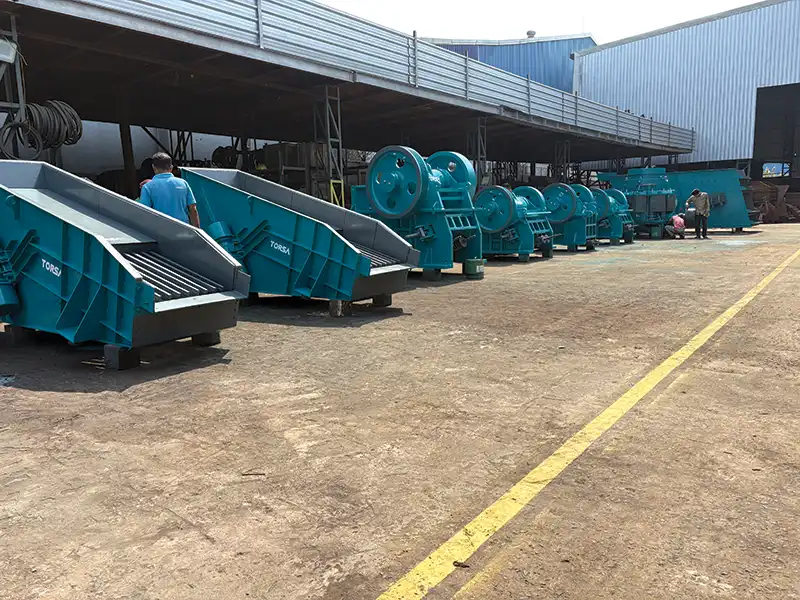
The infrastructure sector is increasingly embracing technologies that improve productivity and reduce lifecycle costs. In the crushing and screening industry, innovations such as advanced jaw crushers, cone crushers, vertical shaft impactors, high-efficiency screens, automated control systems, and remote diagnostics are transforming material processing operations. These technologies help achieve higher throughput, better product quality, lower energy consumption, and reduced operating costs.
A particularly important development is the growing adoption of manufactured sand (M-Sand). With natural river sand becoming increasingly scarce and environmentally sensitive, M-Sand has emerged as a sustainable alternative. Modern crushing and shaping technologies can now produce high-quality sand that meets stringent construction requirements while reducing pressure on natural resources.
Another area of innovation is plant mobility. Mobile and semi-mobile crushing solutions enable faster deployment near project sites, reducing transportation costs, lowering emissions, and accelerating project execution.
Across India, we have witnessed how modern aggregate processing solutions contribute directly to infrastructure development. In road construction projects, high-capacity crushing and screening plants have enabled contractors to maintain uninterrupted aggregate supply, helping meet aggressive project schedules. Consistent material quality has also improved pavement performance and reduced rework.
In railway and ballast production applications, precision screening systems have ensured compliance with stringent specifications, resulting in improved track stability and reduced maintenance requirements.
Similarly, in dam construction, urban infrastructure projects, and industrial developments, reliable material processing equipment has helped contractors achieve greater productivity while maintaining strict quality standards.
The benefits extend beyond construction timelines. Improved aggregate quality contributes to longer asset life, reduced maintenance costs, lower material wastage, and better sustainability outcomes over the entire lifecycle of the project.
As India moves towards becoming a developed nation, infrastructure delivery must evolve from a quantity-driven approach to a performance-driven approach. The future lies in integrating advanced equipment, digital technologies, predictive maintenance, automation, sustainable material processing, and skilled human capital into a unified ecosystem. Every stakeholder—from mine operators and aggregate producers to contractors, consultants, and policymakers—must work together to create infrastructure that is delivered faster, performs better, and lasts longer.

KTI-Plersch India
Prasad Sannagowder
Prasad Sannagowder
Power Build
R Haridoss
R Haridoss
The Viksit Bharat 2047 vision, backed by record public capital expenditure, has set in motion one of the largest construction waves the world has ever seen. At KTI-Plersch India, we see ourselves as partners in a fundamental shift in how India thinks about concrete, not merely as a material to be placed; but as a precision-engineered product whose performance begins long before it enters the mould.Viksit Bharat 2047 is a vision of lasting infrastructure — structures that serve India not for a decade, but for generations. Because the quality of what India builds tomorrow depends on the temperature of what is poured today.
Prasad Sannagowder
Managing Director
KTI-Plersch India
Fresh concrete temperature is one of the most consequential, and most overlooked, variables in large infrastructure projects. When ambient temperatures in states like Rajasthan, Gujarat, or Telangana climb above 42°C, unmanaged concrete arrives on site compromised. Accelerated hydration reduces workability, water demand rises, and long-term compressive strength can fall by 10–15%. The consequences are direct and measurable, failed cube tests, rework delays, cost overruns, and structures that require rehabilitation far ahead of their design life.
The solution is not to slow down; it is to control the thermal conditions under which concrete is produced and placed, so that quality and speed become complementary, not competing goals.
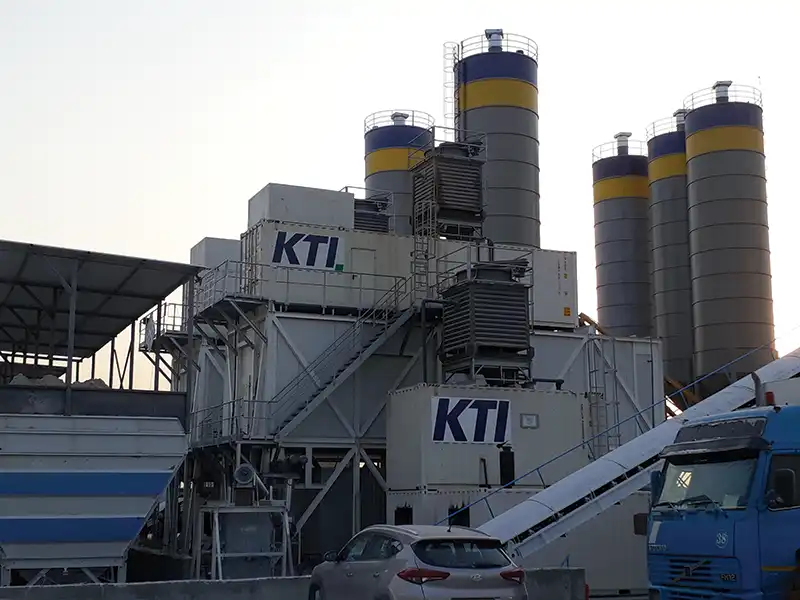
- Ice Water & Cold Water Plants: Supply mixing water at +4°C (cold water) or down to +0.5°C (ice water), the most readily integrated baseline measure for lowering fresh concrete temperature at the batching plant.
- Cold Air Systems & Silo Cooling: Since aggregates represent the largest mass fraction of any mix, pre-cooling them delivers maximum thermal impact, typically for precast and special concrete applications where mix water ratios are tightly restricted.
- Flake Ice & Plate Ice Plants: When demands are particularly stringent, a portion of mixing water is replaced by ice. Melting directly in the mixer, ice extracts heat with maximum efficiency, the most powerful cooling method available for mass concrete and high-performance applications.
- Automated Ice Storage & Conveying Systems: Available in fully automatic, semi-automatic, and mobile transport variants, our ice storage systems act as buffer capacity, delivering weighed, controlled ice doses to the mixer on demand, and eliminating human error across 24-hour operations.
KTI-Plersch India deployed a fully integrated, multi-stage cooling system to maintain a fresh concrete temperature of just 15°C — producing 5,000 m³ of tempered concrete per day. The installation comprised:
- 400 t of plate ice per day (2× PLIP120 + 2× PLIP80 plate ice plants)
- 720 m³ of chilled water at 4°C per day (2× CCWP352)
- 2× MIS75 mobile ice storage units (75 t each) for automated buffer supply
- 3,200 kW silo cooling at 2°C air temperature (4× CCAP800 with air washers)
- 4× CCWT 58 insulated water tanks completing the thermal supply chain.
Temperature-controlled concrete is also a sustainability imperative. Structures achieving their full 75- or 100-year design life without premature rehabilitation represent an enormous compounding saving in material, energy, and carbon. Combined with SCMs such as fly ash or GGBS, whose performance is only fully realised with active temperature control, KTI's systems enable contractors to reduce embodied carbon per m³ while extending structural lifecycle.
Yet adoption of concrete temperature control remains uneven across India's infrastructure contracts. We call on NHAI, MoRTH, CPWD, and state agencies to embed mandatory fresh concrete temperature limits into standard contract documents — with the cost provisions to meet them. We invite contractors and RMC producers to engage with KTI-Plersch India; not just to procure equipment, but to co-engineer thermal management strategies tailored to their project conditions and ambitions.
India's vision of becoming a developed nation by 2047 will be driven by world-class infrastructure. Today, we are witnessing unprecedented investments across roads, railways, metros, ports, airports, mining, and industrial projects. However, achieving speed and scale alone is not enough. The real challenge is delivering projects on time while maintaining quality, reliability, sustainability, and cost efficiency.The Make in India initiative and the vision of Viksit Bharat present a tremendous opportunity for Indian companies to develop world-class technologies and reduce dependence on imports.
R Haridoss
CEO
Power Build
In my view, one of the most critical factors in infrastructure execution is equipment reliability. Delays are often not caused by a lack of intent or funding but by unexpected downtime, maintenance issues, and lower productivity of construction and material handling equipment. Every hour of equipment stoppage affects project timelines, increases costs, and impacts overall efficiency.
This is where advanced power transmission solutions play an important role. A gearbox or geared motor may represent a small portion of the overall equipment cost, but its impact on performance is significant. Reliable drive systems help ensure continuous operation, lower maintenance requirements, reduced energy consumption, and improved equipment availability.
At Power Build, we have always believed that infrastructure growth requires dependable engineering. We have been supporting OEMs and end-users with helical geared motors, worm geared motors, helical bevel geared motors, shaft-mounted speed reducers, and customized power transmission solutions for construction equipment, conveyors, batching plants, crushers, material handling systems, mining applications, and various industrial processes.
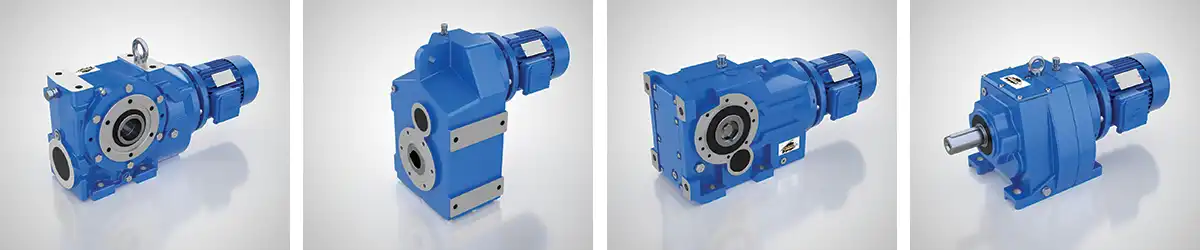
Our focus has always been on delivering long-term value rather than simply supplying products. We work closely with equipment manufacturers and customers to understand application requirements and provide solutions that maximize uptime and performance.
In one such application involving material handling equipment, the customer was facing frequent interruptions and increasing maintenance costs. Through proper application engineering and selection of suitable drive solutions, equipment reliability improved significantly, resulting in better uptime and lower maintenance interventions. Such improvements may appear small individually, but across large projects, they translate into higher productivity, reduced operating costs, and faster project completion.
Another important trend shaping the future is energy efficiency. As industries and infrastructure projects focus on sustainability, the demand for high-efficiency drive systems continues to increase. Energy-efficient geared motors and optimized power transmission systems not only reduce power consumption but also contribute to lower carbon emissions and improved lifecycle costs.
I strongly believe that India's infrastructure ambitions should be supported by strong indigenous manufacturing capabilities. At Power Build, we take pride in being a purely Indian company that has built a global reputation through engineering excellence, reliability, and customer trust, over five decades of manufacturing and over 2.5 million installations worldwide.
Speed, scale, and quality are not independent goals. They are interconnected, and achieving them requires reliable equipment, efficient technologies, and strong partnerships. As infrastructure projects become larger and more complex, dependable power transmission solutions will continue to play a vital role in building a stronger and more developed India.

Fairmate Prashita LLP
Jeevnesh Shah
Jeevnesh Shah
Arkade Developers
Amit Jain
Amit Jain
India is in the midst of one of the world's largest infrastructure expansion programs. From expressways and airports to metros, high-speed rail corridors, industrial parks, and smart cities, the scale and speed of development are unprecedented. However, the true measure of success is not just how quickly we build, but how well these assets perform over the next 50 to 100 years.The success of infrastructure is not measured by how quickly it is built, but by how long it performs. Durability and sustainability must become as important as speed and cost.
Jeevnesh Shah
Technical Director
Fairmate Prashita LLP
In my view, maintaining execution speed while ensuring quality, sustainability, durability, and cost efficiency, depends on three critical factors: the adoption of advanced materials, proper planning and execution, and a lifecycle approach to infrastructure development.
Traditionally, projects focused heavily on reducing initial construction costs and accelerating timelines. Today, the industry has recognised that durability and lifecycle performance are equally important. A highway or bridge that requires frequent repairs ultimately becomes far more expensive than one built with superior materials and long-term performance in mind.
This is where construction chemicals and advanced material technologies have transformed the industry. Over the last decade, high-performance concrete admixtures have significantly improved project execution. Modern superplasticizers and slump-retaining admixtures enable concrete to maintain workability for extended periods, particularly important in large infrastructure projects where concrete is transported over long distances or placed continuously.
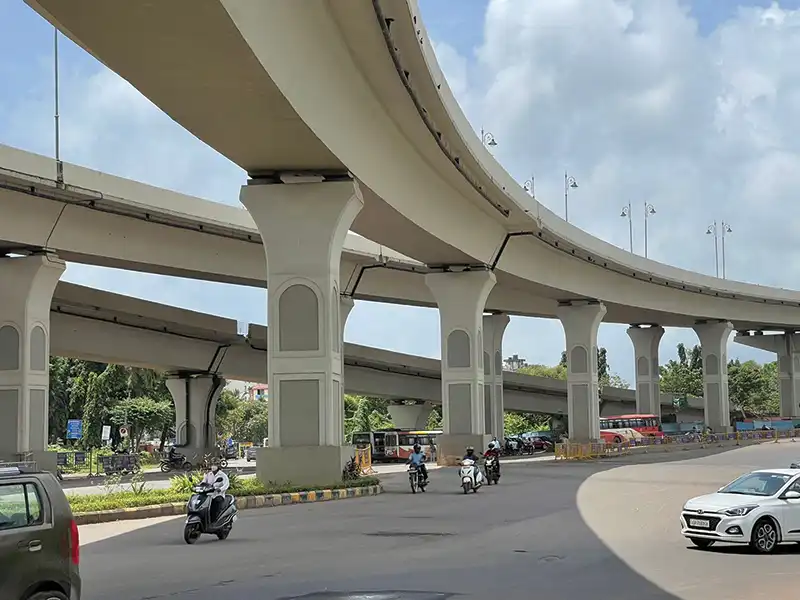
Similarly, waterproofing and durability enhancing technologies have become essential in extending the life of infrastructure assets. Water ingress remains one of the leading causes of concrete deterioration. Advanced crystalline waterproofing systems now create permanent protection within the concrete matrix itself, significantly reducing leakage, corrosion, and long-term maintenance requirements.
Protective coatings and anti-carbonation systems are also playing a major role in enhancing asset performance, especially in coastal and industrial environments where structures are exposed to aggressive conditions. By protecting concrete from chloride attack, carbonation, and environmental degradation, these technologies significantly increase service life and reduce lifecycle costs.
Another area witnessing remarkable progress is the development of thermal insulating and reflective coatings. Such solutions not only waterproof structures but also reduce heat absorption, thereby improving energy efficiency and contributing to sustainable construction practices. As India's infrastructure ambitions continue to grow, I believe the next generation of construction chemical solutions will be defined by four key trends.
First, sustainability will become a central driver of innovation. The industry will increasingly adopt low-carbon and environmentally responsible formulations that minimize environmental impact while maintaining high performance. Second, durability will take center stage. Future solutions will focus on extending the life of infrastructure assets and reducing maintenance interventions, thereby improving overall project economics. Third, smart material technologies will gain momentum. Advanced admixtures, self-healing systems, and high-performance repair technologies will help engineers deliver structures that are more resilient and capable of withstanding increasingly demanding environmental conditions. Finally, modern application practices and integrated construction systems will become increasingly important.

As India moves towards the vision of Viksit Bharat, the construction chemicals industry has a tremendous opportunity—and responsibility—to support this transformation. The infrastructure of tomorrow must be built faster, but more importantly, it must be built smarter, stronger, and more sustainably. The future belongs to technologies that combine speed with durability, performance with sustainability, and innovation with long-term value creation.
At Arkade, by getting all requisite approvals and meticulous planning prior to commencement of construction, ensures that our timelines are met. A well-crafted project roadmap, strong design coordination, timely approvals, and efficient procurement systems help eliminate delays and cost overruns. Our focus is to have efficient internal processes that allows faster decision-making while maintaining the highest standards of construction quality and transparency.Use of modern construction technologies translates into better project quality, superior safety standards, timely delivery, reduced maintenance concerns, and healthier living environments.
Amit Jain
Chairman & Managing Director
Arkade Developers
Another major factor is collaborating with the right consultants, contractors, and technology providers. It is much more collective than ever before. When we include project stakeholders early in this process, we can identify the key risk factors, ensuring smoother execution. Financial discipline and long-term perspective are also very important. We believe that sustainable growth comes from maintaining project timelines, customer commitments, and cost management.
Another critical element is rigorous project governance and real-time monitoring. Data-driven decision-making, regular review mechanisms, and proactive issue resolution help prevent small problems from becoming major delays.
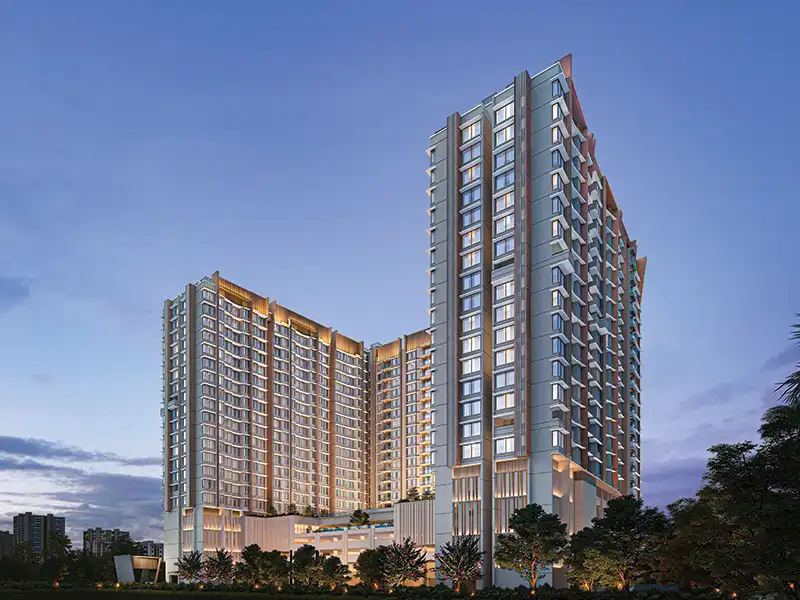
The Indian real estate sector is experiencing a profound transformation fuelled by technological innovations. Modern concrete technologies are empowering developers to improve construction speed with consistency while maintaining superior quality. This enhances overall productivity and reduces manual dependency, minimizes wastage.
Technologies such as Building Information Modeling (BIM) and digital project controls improve coordination among architects, engineers, and contractors, reducing errors, rework, and construction delays, which would possibly escalate costs, while ensuring a higher level of finish and detailing. Mechanized construction systems, including advanced formwork, high-capacity lifting equipment, and automated quality monitoring, help accelerate project timelines and achieve greater consistency in execution.
At the same time, smart building systems, high-performance building envelopes, efficient water and energy management solutions, and predictive maintenance technologies contribute to lower operating and subsequent maintenance costs, enhanced occupant comfort, and improved sustainability throughout the asset's lifecycle.
At Arkade, we have incorporated modern construction technologies and project management frameworks across developments such as in our project Arkade Eden, Malad (W), which was completed 9 months ahead of RERA date, while Arkade Rare Bhandup (W), launched in October 2024, is already 60% complete.
Luxury developments today are increasingly being positioned not merely as premium residences but as high-performance, future-ready assets that deliver enduring value, operational efficiency, and elevated lifestyle benefits over the long term.

Atul Projects
Aakash Patel
Aakash Patel

THM Huade Hydraulics
Varun Arora
Varun Arora
Collaboration between all stakeholders in the project, guided by sound data-based governance systems, is key to ensuring that projects are completed on time and with the desired level of quality, safety, and sustainability.
Aakash Patel, Director
Atul Projects
Ensuring fast execution for major infrastructure projects involves a holistic approach encompassing careful planning, robust governance, digital project management, and coordination with all stakeholders. Early project actions such as design verification, securing of land rights, environmental approval, and utility relocation must take place prior to construction work to avoid any holdups.
Equally crucial would be implementing an integrated project management system that ensures real-time tracking of milestones, costs, risks, and resources used in order to make well-informed decisions. It will be wise to conduct quality management throughout the construction process, using appropriate processes, testing, and monitoring measures rather than limiting quality management only to post-construction actions.
Projects will become sustainable and more cost-effective through efficient use of materials, local sourcing of materials, energy-saving design, and lifecycle costing, instead of just capital investment.
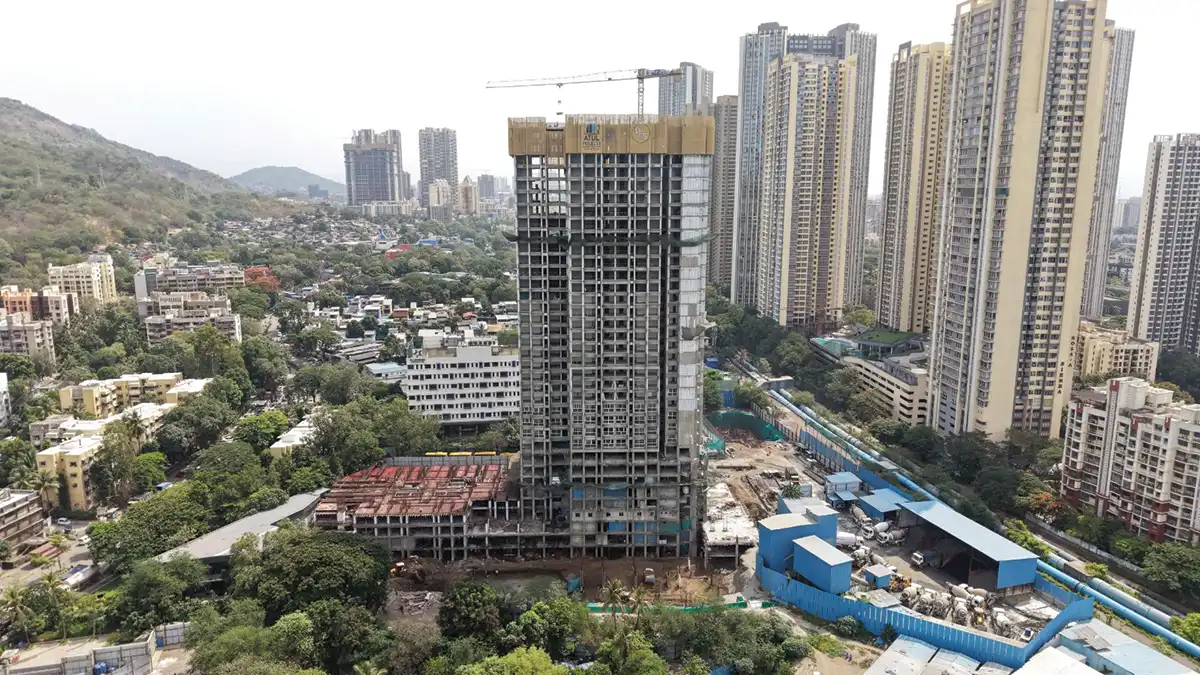
Advancements in engineering, construction technology, and project management have helped to increase efficiency and effectiveness in the development of infrastructure in India. Technologies like BIM (Building Information Modeling), drones, AI (Artificial Intelligence), IoT (Internet of Things), etc., help in better planning, real-time monitoring, and faster decision making.
Mechanized construction techniques, such as precast construction, advanced tunneling, and automation, are not only saving time but are also providing safety and quality of infrastructure. For example, the use of precast technique in the construction of metro rail tracks has fastened the process of construction and reduced the disruptions caused by it in urban areas, while drones have been used for monitoring progress in highways projects.
For three decades our work has been guided by a single problem: India’s construction and industrial OEMs were building world-class machines around imported hydraulic hearts, paying a premium in cost, lead time, and dependency. Our most significant push in recent years has been to close that gap — indigenising high-pressure electro-hydraulic components built on legacy technology we absorbed through Huade, and engineering them for Indian operating conditions: high ambient temperatures, dust, contaminated fuel, and duty cycles that punish equipment far harder than European spec sheets assume.If we build the ecosystem for making India a credible export base for hydraulics to the world, we will make Viksit Bharat worth building.
Varun Arora
Strategic Partnerships Manager
THM Huade Hydraulics
The results show up where OEMs feel pain. Load-sensing and variable-displacement designs that cut wasted flow have improved fuel and energy efficiency on the machines they power. Tighter contamination tolerance and better sealing have meaningfully extended service intervals — which, for a contractor, means fewer breakdowns on a site running against a deadline. And because we are heavily focused on manufacturing in India, an OEM no longer waits months for a replacement valve or motor; the spare is shipped from Ludhiana, Delhi, Ahmedabad or Belgaum.
On the road ahead to electrification and the next generation of drives, the biggest opportunity isn’t replacing hydraulics; it’s making them intelligent and integrating them with electric power. Pure-electric works for light payload machines, but for heavy off-highway equipment, hydraulics will remain the only practical way to move large loads for years to come. The real frontier is the hybrid drive — electric prime movers instead of engines feeding smart, electronically controlled hydraulic systems that deliver power only when and where the work demands it.
This requires a different kind of component — electro-hydraulics with embedded sensing, energy recovery on boom-down and braking, and controls that talk to the machine’s electronic architecture. We are positioning THM Huade squarely for this transition — investing in electro-hydraulic controls, building monitoring and instrumentation into our components so that machines can predict failure rather than suffer it, and developing electric drive systems for industrial and off-highway applications through dedicated and proven partnerships. The aim is for an Indian OEM to source a complete, intelligent, electrified drivetrain domestically.
The one challenge the industry still hasn’t solved: India can now make the headline component — the pump, the motor, the valve block — but the precision sub-tier beneath it remains thin. Specialised castings and forgings, high-grade seals, precision spools, proportional solenoids, sensors, and the metrology to qualify them at volume are still too dependent on imports. This is why true cost and quality leadership stays just out of reach. A finished component is only as reliable as its weakest bought-in part.
Getting there will take three things. First, patient capital — this tier needs investment that doesn’t expect a return in eighteen months. Second, OEMs and component makers committing to long-horizon offtake so a forging or seal specialist can justify the tooling. And third, skills: metallurgists, controls engineers, and machinists trained for hydraulic precision, not generic manufacturing.
Atmanirbhar Bharat gave the industry the will; what it now needs is the ecosystem to build that sub-tier so that India doesn’t just supply its own infrastructure boom but also of the world.
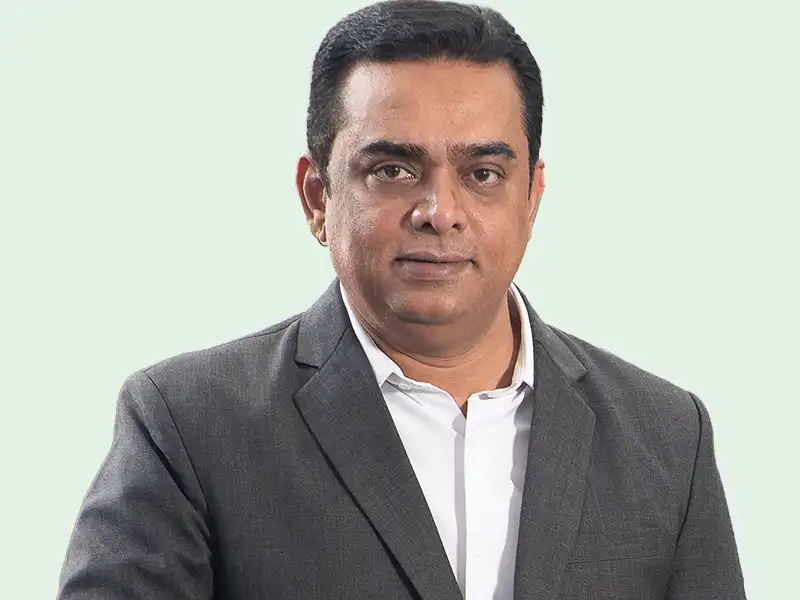
Mother India Forming
Santosh Venkatasubbaiah
Santosh Venkatasubbaiah

Hillson Footwear
Sachin Agarwal
Sachin Agarwal
As India advances toward its Viksit Bharat 2047 vision, infrastructure is being built at a scale and pace the country has not attempted before. Highways, metros, urban systems, and industrial corridors are all moving on tighter timelines and higher expectations. The equipment that builds them must keep up, which means it must be reliable, productive, and safe across long and demanding duty cycles.Building Viksit Bharat from the component up, because engineering decisions made at the component and sub-assembly stage decide a meaningful part of infrastructure quality.
Santosh Venkatasubbaiah
Director, Marketing & Sales
Mother India Forming Pvt. Ltd.
What is less visible is where that reliability begins. A machine performs on site only as well as its critical structural and formed components allow. Uptime, vibration behaviour, structural fatigue, and service life are shaped long before a machine reaches the field, in the engineering decisions made at the component and sub-assembly stage. This is the layer Mother India Forming works in, and it is where a meaningful part of India's infrastructure quality is decided.
Precision cold roll forming sits exactly where engineering meets production. In a roll-formed part, dimensional consistency determines how cleanly it fits into an assembly, how little secondary work it needs, and how predictably the finished equipment behaves. When parts behave identically the hundred-thousandth time as the first, OEMs can build machines that are predictable rather than variable. For contractors, that is the difference between equipment they can plan around and equipment they must buffer against.
Delivering this consistently is a joint effort with the equipment manufacturers we partner with. The most valuable work now starts before the drawing is finished, with our engineers helping optimise a profile for weight, strength, and manufacturability, prototyping quickly, and taking risk out of the program early. We bring roll forming, all-electric CNC bending, laser cutting, robotic welding, powder coating, and ready-to-fit assembly under one roof, which removes inter-supplier coordination and holds quality uniform across the build. Our ROPS/FOPS-compliant excavator cabin structures show how forming precision can make equipment lighter and stronger at once, without trading away operator safety.
There is a national dimension to this as well. By localising cabin and tubular assemblies that were once imported, while meeting the same global certifications, we help OEMs shorten supply chains, strengthen resilience, and build India's own capability to supply world-class components. That is what Make in India for the World looks like at the component level: not substitution for its own sake, but engineering depth built at home.
India now has a choice about the kind of manufacturing nation it becomes. The easy path is to remain the affordable option. The far more valuable one is to be known for engineering-led manufacturing, the place the work gets done right. Quality infrastructure for a Viksit Bharat will be built by reliable equipment, and that equipment is only as good as the precision engineered into the parts within it. That is the contribution we are committed to making, alongside the manufacturers who build the machines that build the nation.
Over the years, we have observed that customers are no longer looking for safety alone—they want footwear that provides protection, comfort, durability, and a professional appearance, even during long working hours in demanding conditions. Hence, our approach to innovation is driven by a clear understanding of the challenges faced by workers in construction, mining, and industrial environments.The industry has already made significant progress, but the next step is creating a safety culture where PPE is seen as an essential tool that protects workers’ health, productivity, and livelihood. When safety becomes a shared responsibility across all levels of an organization, meaningful change follows.
Sachin Agarwal
Managing Director
Hillson Footwear
Traditionally, safety footwear has been associated with protection and durability, but today's workforce—especially younger professionals entering construction, manufacturing, warehousing, and infrastructure sectors—want footwear that combines safety, comfort, style, and ease of use. Hence, the next generation of safety footwear will be lighter, more ergonomic, and visually appealing while continuing to meet stringent safety standards. Workers spend long hours on their feet, so reducing fatigue through improved cushioning, breathable materials, better fit, and lightweight construction will become increasingly important. We also see growing demand for safety footwear that looks and feels like a modern sneaker rather than a traditional industrial shoe.
When we talk about smart protection, we believe it is not only about advanced technologies but also about intelligent product design. Safety footwear should be lightweight, easy to maintain, comfortable for extended wear, and fully compliant with safety standards. The easier and more comfortable a product is to wear, the greater its acceptance among workers, ultimately improving workplace safety.
At Hillson, we are developing next-generation safety footwear that combines the look of stylish athletic sneakers with industrial-grade protection, durability, and all-day comfort. Our focus is on creating products that workers can wear confidently both on and off the job site. For instance, our Clawz CL 06 features a breathable microfiber upper that is lightweight, durable, and designed to improve airflow. This helps reduce heat build-up and discomfort, which are common concerns for workers and site supervisors who spend 10–12 hours on their feet. Similarly, the Clawz CL 07 combines premium suede microfiber leather with a modern aesthetic design, offering the protection of a safety shoe while maintaining the look and feel of a premium everyday shoe.
We have also invested heavily in comfort-focused sole construction and ergonomic insock technology to reduce foot fatigue and improve long-term wearability. In addition, several products within our Clawz range are certified to EN ISO 20345 S3 standards, ensuring compliance with internationally recognized safety requirements while delivering enhanced durability and protection.
Beyond safety shoes, we recently launched Hillson Plus, our next-generation rainwear gumboot range. Designed for wet and demanding work environments, it offers waterproof protection, superior grip, improved comfort, and modern styling. With products like Clawz and Hillson Plus, we are raising the bar by delivering safety solutions that combine protection, comfort, durability, and value—helping workers perform at their best every day.
One of the biggest challenges that India's construction industry has yet to fully solve is ensuring consistent PPE compliance at the worker level. While awareness of workplace safety has improved significantly over the years, there is still a gap between providing safety equipment and ensuring that it is used correctly and consistently on the job site.
During our interactions with construction companies, safety professionals, and procurement teams, we often hear a common concern: workers sometimes avoid wearing safety footwear because they find it uncomfortable, heavy, or unsuitable for long working hours. In many cases, footwear is removed during the workday, which increases the risk of preventable injuries.
Another challenge is the perception that safety products wear out quickly under demanding site conditions. Construction environments are extremely tough, and workers expect footwear that can withstand rough surfaces, heavy usage, and changing weather conditions without compromising comfort.
Addressing this challenge requires a collaborative effort. Manufacturers must continue developing lighter, more comfortable, and durable safety products. Employers need to invest in quality PPE rather than viewing it as a compliance requirement alone. Most importantly, supervisors and safety teams must play an active role in reinforcing safe workplace practices and ensuring PPE is worn consistently.

KONE India
Amit Gossain
Amit Gossain
India's rapid urbanisation presents a significant opportunity to transform vertical transportation from standalone elevators and escalators into intelligent, connected people-flow ecosystems across metros, airports, commercial buildings, and mixed-use developments.As India's infrastructure expands, the focus will increasingly shift from simply installing equipment to delivering connected, reliable, and sustainable mobility solutions that enhance the overall flow of people through buildings and public spaces.
Amit Gossain
Managing Director
KONE India
KONE India's recent innovations have focused on three key areas – digital connectivity, energy efficiency, and intelligent people flow management to address the evolving needs of India's rapidly urbanising cities.
The DX Class, the world's first digitally connected elevator series, along with KONE's 24/7 Connected Services, uses AI and real-time analytics to predict maintenance needs before failures occur. Today, nearly 80% of equipment faults are identified proactively, around 25% of issues are resolved remotely within two minutes, and downtime has been reduced by approximately 30%, improving reliability and safety.
On the sustainability front, KONE's regenerative drives, LED lighting, and intelligent standby modes can reduce elevator energy consumption by up to 70%, helping developers lower operating costs and meet green building goals.
KONE's Advanced People Flow solutions integrate destination control, access control, and monitoring systems to optimise passenger movement, reduce waiting times, and improve the overall user experience in high-traffic buildings.
These innovations address key challenges such as increasing urban density, ageing infrastructure, rising energy costs, and growing expectations around safety and efficiency. Their impact is evident across landmark projects, including the Jio World Centre in Mumbai, home to the world's largest passenger elevator, the First International Financial Centre, where KONE introduced India's first destination control system, and the Delhi Metro, where KONE has supplied elevators and escalators across multiple phases.
Together, these innovations have raised the benchmark for the industry by enabling developers to build smarter, more sustainable buildings while delivering safer, more efficient, and seamless mobility experiences for end-users.

KONE India is preparing for this future by investing in local innovation and testing capabilities, including its state-of-the-art Test Tower and R&D facilities at Sriperumbudur near Chennai, where high-speed elevators, escalators, and modernisation solutions are validated for Indian conditions.
The industry's biggest unresolved challenge is the large-scale modernisation of India's ageing elevator infrastructure. While new developments are adopting smart, connected technologies, a significant portion of the country's installed base still relies on older systems. According to KONE India, nearly 20–30% of India's estimated seven lakh elevators are around 25 years old and require modernisation.
Addressing this challenge will require a nationwide focus on upgrading existing elevators with smarter controls, enhanced safety features, predictive maintenance, digital connectivity, and energy-efficient technologies—while minimising disruption for building occupants. KONE's modernisation solutions demonstrate how legacy systems can be transformed to improve reliability, safety, accessibility, and connectivity while reducing energy consumption by up to 74%.
Going forward, the industry's success will be measured not only by how many new elevators it installs, but by how effectively it modernises the existing installed base to meet the safety, sustainability, and performance expectations of India's rapidly evolving urban landscape.