

Decoding India’s New Labour Codes
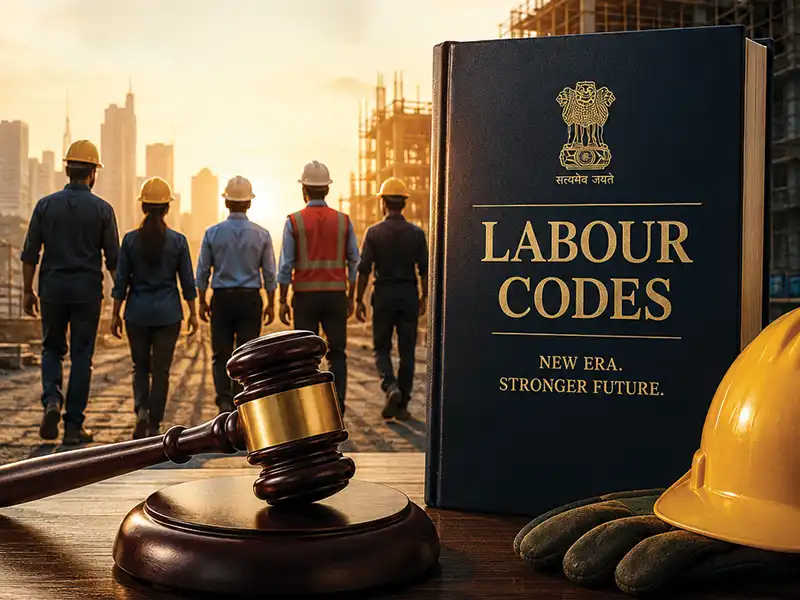
Having come into effect from April 2026, the new Labour Codes are transforming labour law discussions from routine compliance into a far more complex challenge involving interpretation, workforce structuring, and operational risk management. For industries like construction and infrastructure, which are largely dependent on contract labour, illiterate and casual migrant workers, and project-based employment, the unavailability of a skilled workforce only compounds the problem—the implications are particularly significant.
Yet, despite the intent to simplify labour regulation, implementation challenges remain considerable. Businesses continue to face uncertainty arising from varying state-level rules, payroll restructuring, workforce reclassification, and evolving complex, digitally based compliance requirements. Questions around worker classification, contractor accountability, overtime eligibility, gratuity, leave encashment, and safety obligations are just a few issues which are now becoming central business concerns rather than purely legal issues.
Industry observers believe that the long-term success of the Labour Codes will ultimately depend not only on legislation, but also on implementation clarity, administrative preparedness, and continuous engagement between all the stakeholders.
This article has attempted to present the views of all the stakeholders involved, on the Impact, Compliance, and Implementation of the New Labour Codes.
Published on:
08 June 2026
Published in: NBM&CW JUNE 2026
Share:
We Value Your Comment