
Digital Technologies Bridging The Gap Between Plan and Execution
In this article, we draw focus on technologies that have the potential to make infra construction projects more efficient, precise, and well-managed.
Projects don’t fail on paper—they falter on site. On most construction sites, the plan is rarely the problem. Drawings are detailed, budgets are approved, and schedules are in place. Yet, the real challenge begins when execution starts—when information is spread across spreadsheets, messages, site registers, and manual records. Visibility drops, decisions get delayed, and issues surface only when it is too late to correct them efficiently.
This gap between planning and execution is becoming more difficult to manage as projects grow in scale and complexity. Contractors are working within tighter timelines and margins, while also dealing with labour shortages, coordination challenges, and increasing compliance requirements.
In this environment, innovation is becoming essential. Digital construction technologies are accelerating a shift from reactive execution to predictive, data-driven decision-making, where risks can be identified early and addressed before they escalate into delays or cost overruns.
The conversation around construction technology has also evolved. It is no longer about what might transform the industry in the future—it is about what is already reshaping project delivery, often faster than organisations are able to adapt.
Across India, this shift is beginning to take shape. Automation, digitalisation, and data-driven systems are no longer confined to pilot projects or large infrastructure developments, but are gradually becoming part of everyday construction workflows—from planning and procurement to execution and asset management.
However, adoption remains uneven. While leading EPC players are investing in advanced technologies, a large part of the industry is still in the early stages. The real challenge, therefore, is not just access to technology, but its effective implementation on the ground. It is within this gap between planning and execution that digital technologies and AI-driven platforms are beginning to play a more critical role.
AI Moves from Experiment to Execution
Artificial Intelligence is no longer a futuristic concept in construction—it is being increasingly embedded within project management, design, and operational platforms, evolving from basic automation to intelligent decision support. Rather than replacing engineers or project managers, AI is being used to help teams make faster and more informed decisions, reduce uncertainty, and improve visibility across the project lifecycle.
AI is helping teams make faster and more informed decisions, reduce uncertainty, and improve visibility across the project lifecycle. At the execution level, AI-assisted coordination is also beginning to reshape pre-construction planning and site management. AI-driven site intelligence systems are also increasingly being used to automate progress tracking, monitor PPE compliance, detect execution deviations, and improve workforce visibility in real time.
Shreedhar Hungund cites a pharmaceutical manufacturing facility project where intelligent model coordination identified over 1,200 clashes across MEP and structural systems before construction began. He informs, “AI-assisted triage enabled engineering teams to prioritise the most critical issues within hours rather than weeks, helping the project begin with zero outstanding coordination conflicts.”
One of the most visible applications of AI is in predictive project management, where historical and real-time data is used to anticipate delays, cost overruns, and resource bottlenecks. This is particularly relevant in India, where project timelines are often impacted by external variables such as approvals, logistics, and workforce availability.
AI is also beginning to play a growing role in project optimisation and execution efficiency. This shift is becoming increasingly visible in real-world construction projects. Across asset-intensive industries, companies are increasingly deploying AI-led technologies to improve operational visibility, efficiency, and decision-making at scale.
Vedanta Group recently announced that it expects to unlock an additional USD 300–400 million in value over the next three years through deployment of AI, predictive analytics, automation, IIoT, digital twins, and intelligent manufacturing technologies across its operations. The company has already deployed more than 500 AI-enabled safety cameras and multiple AI-driven optimisation systems across mining, metals, energy, and manufacturing businesses—highlighting how industrial AI is moving beyond pilot projects to measurable operational impact.

While large industrial groups are leveraging AI for enterprise-wide operational optimisation, similar principles are also beginning to influence project-level decision-making in construction. In a recent case, Godrej Properties engaged Kaizen AI to identify efficiency improvements at its Godrej Trilogy project in Mumbai at a stage when planning, structural systems, and approvals were already substantially finalised.
Rather than proposing major redesigns, Kaizen AI focused on uncovering efficiencies within the approved framework, particularly across parking systems, common areas, and basement planning. By re-evaluating the parking strategy and optimising space utilisation within the existing footprint, the exercise reportedly enabled a nearly 20% reduction in construction area, increased parking capacity, reduced basement complexity, and improved EV readiness—while also lowering embodied carbon through reduced structural requirements.

The case reflects a broader industry shift in which AI is increasingly being used not only for planning and automation, but also for identifying hidden operational and economic efficiencies within real-world project constraints.
At a broader level, the industry is moving toward integrated digital ecosystems. Companies such as Siemens are developing industrial AI platforms that connect data across operations, enabling more coordinated and intelligent project execution. Similarly, companies like Trimble, through solutions such as Tekla, are integrating AI-assisted modelling, automated drawing generation, and real-time data exchange across design, fabrication, and site execution. By enabling a unified data environment, these platforms are helping reduce rework, improve accuracy, and accelerate project timelines.
In construction, the challenge is no longer planning — it is execution

This challenge is particularly visible across multi-location projects in India, where fragmented information often limits real-time decision-making. Citing the example of Suryam Developers, Dixit noted that the company, which operates across multiple sites, faced limited visibility into procurement, inventory, and on-site progress due to fragmented data spread across spreadsheets, messaging platforms, and manual records.
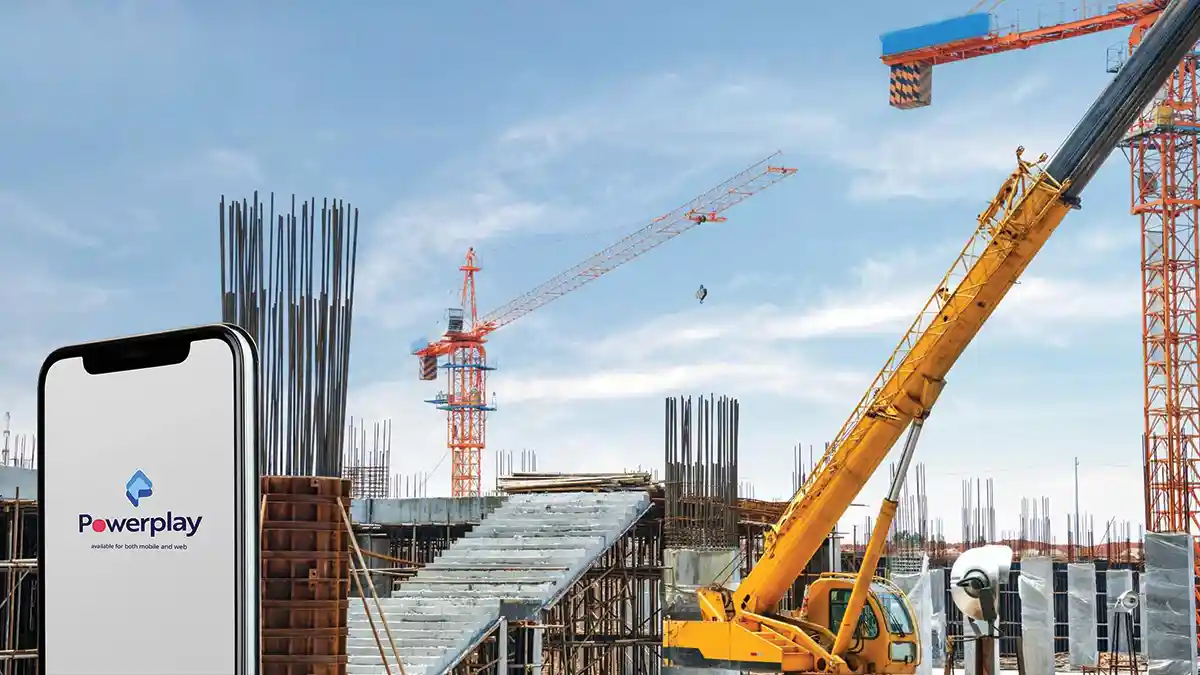
By implementing a centralised execution system through the Powerplay platform, the company was able to bring procurement, material tracking, and site updates into a single interface. This enabled real-time visibility and earlier intervention in project workflows. As a result, the organisation reported a 30% reduction in material cost overruns, along with significantly faster work order verification and improved control over subcontractor payments.
Suryam Developers is not an isolated case: across multiple projects, companies adopting structured digital execution systems are reporting tangible gains in cost control, project timelines, and operational efficiency. The key shift is not necessarily in how construction itself is executed, but in how information is captured, connected, and acted upon—moving the industry from delayed reconciliation toward real-time, proactive decision-making.
AI is Streamlining Construction Workflows
An equally important shift is taking place in how construction processes are managed and automated. They are reshaping how projects are planned, monitored, and controlled—moving beyond machinery to the systems that manage information, coordination, and decision-making.
“Most large contractors today have moved beyond Excel and basic scheduling tools to modern construction management platforms. The shift now is toward execution intelligence—where mobile based apps allow site teams to update work directly from the field, while leadership gains real-time visibility across schedules, quality, machinery, and resources. When one activity slips, intelligent systems who have auto-scheduler can automatically adjust dependencies and flag risks early, enabling teams to intervene before delays escalate. In fact, in practice, this shift is already delivering measurable results.
“Buildrun is reshaping how projects are planned, monitored, keeping cost and quality in control—moving beyond machinery to the systems that manage incident information, coordination, and decision-making.” He informs that in a project by Suncity Projects, the use of an execution intelligence system led to a 90% reduction in missed RFIs, an 85% improvement in team communication, and nearly a 40% increase in staff efficiency. Real-time tracking, automated workflows, and AI enabled reporting helped streamline coordination across teams and accelerate overall project completion.
“This transformation is becoming visible across multiple construction workflows, particularly in areas such as quantity take-offs, procurement, invoice validation, progress reporting, and compliance documentation. Tasks that once required manual input and cross-verification are now becoming automated, data-driven processes.”
AI enabled systems not only improve accuracy but also reduces human bias, disputes and rework during estimation and execution. Similarly, procurement workflows are becoming more streamlined, with material requirements triggered by project schedules or inventory levels, and approval processes routed digitally to minimise delays. Financial workflows are also becoming more robust. Automated systems can validate invoices against purchase orders, delivery records, and BOQs—flagging discrepancies before payments are processed. This reduces financial leakage and strengthens audit controls, particularly in large-scale projects.
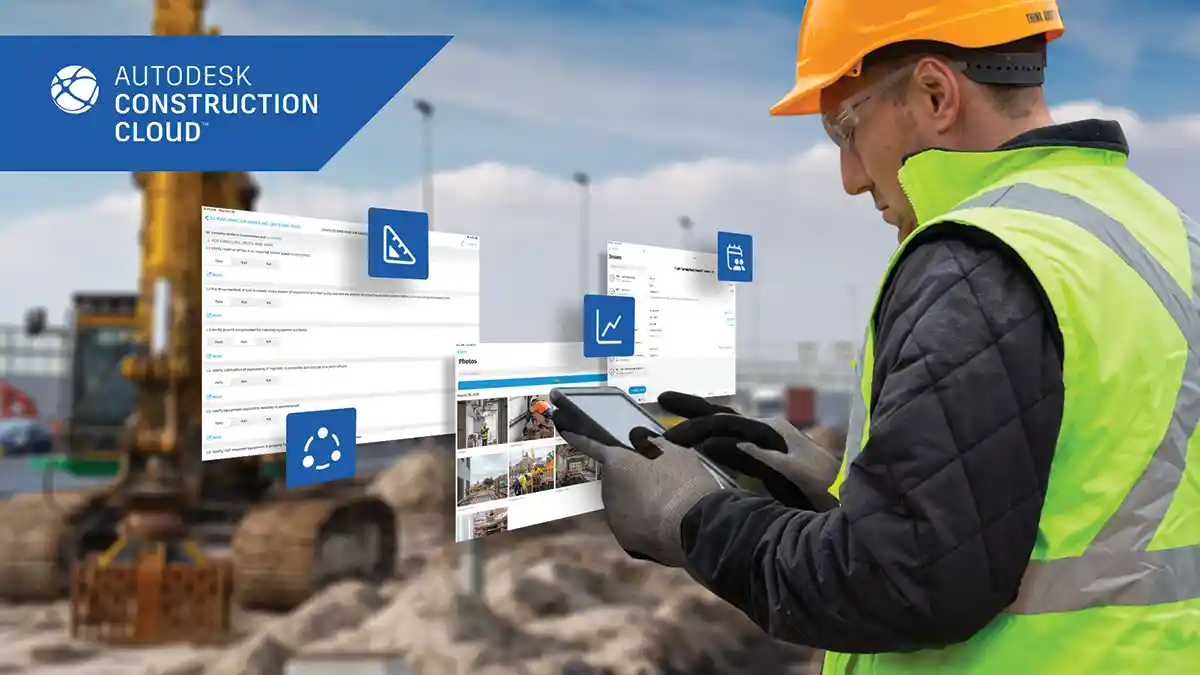
What makes this shift particularly significant is that progress reporting, once dependent on spreadsheets and manual updates, is evolving into a real-time process. Site data, images, and daily progress/delay reports are increasingly integrated into dashboards that provide real time visibility to stakeholders. At the same time, compliance documentation—from safety inspections to quality checklists—is being digitised and validated faster, improving governance without adding administrative overhead. In doing so, it marks a critical evolution for the industry, where efficiency gains are driven as much by intelligent workflows as by physical equipment.
Digital Twins: From Design Tool to Operational Asset
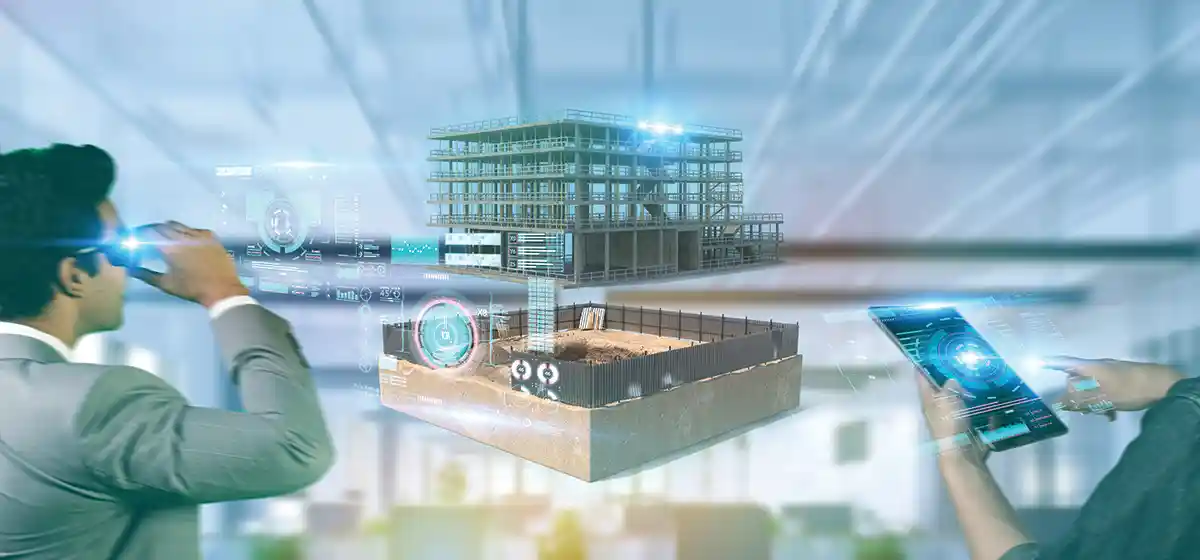
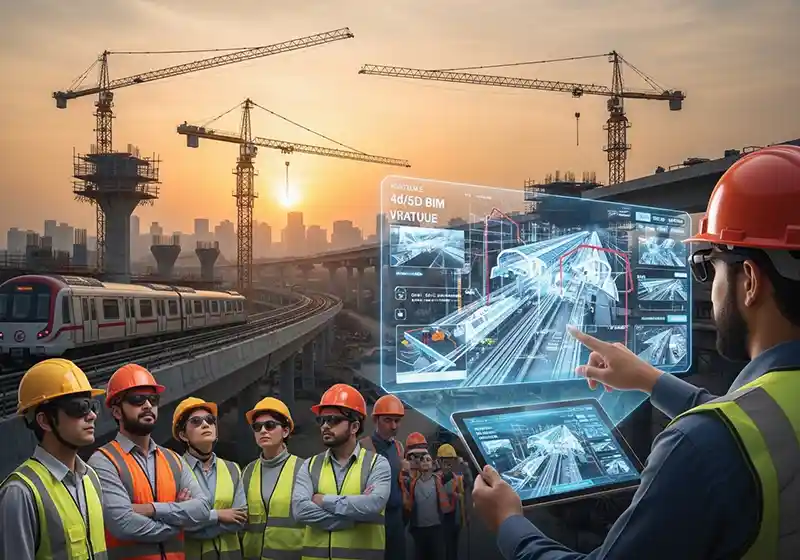
Digital twins are increasingly being positioned as the next step beyond Building Information Modelling (BIM), offering a dynamic and continuously updated representation of physical assets. As Trimble notes, digital twins are “living, automatically updated representations of physical assets.”Unlike static BIM models, digital twins integrate real-time data from sensors, equipment, and site activities, allowing project teams to monitor progress, simulate scenarios, and optimise decision-making across the project lifecycle.
As per Bentley Systems, the integration of live data enables stakeholders to make faster and more informed decisions in real time—shifting project management from reactive oversight to proactive, data-driven control.
Globally, the benefits of digital twins have been demonstrated in complex infrastructure projects. In India, adoption is still at a relatively early stage but gaining traction across sectors such as metro rail, airports, and large urban infrastructure.
At the same time, BIM continues to play a foundational role in this transition. As the structured digital representation of a project, BIM enables design coordination, clash detection, and accurate quantity estimation—forming the base on which digital twins are built.
The evolution toward digital twins is also being shaped by the need for greater localisation in design tools. Companies like Autodesk are introducing India-specific BIM solutions aligned with standards set by IRC, MoRTH, and Indian Railways, helping improve design accuracy, regulatory compliance, and coordination across stakeholders.

In practice, this means that while BIM supports better planning and coordination, digital twins extend that capability into execution and operations, bringing real-time visibility and continuous performance monitoring.
However, this transition is not without challenges. It requires integration of multiple data sources, alignment between design and execution teams, and investment in digital infrastructure.
The industry is therefore moving toward a convergence of design, data, and real-time insights—transforming projects from isolated construction efforts into long-term, data-driven assets.
Automation Across Construction: From Jobsite to Workflows
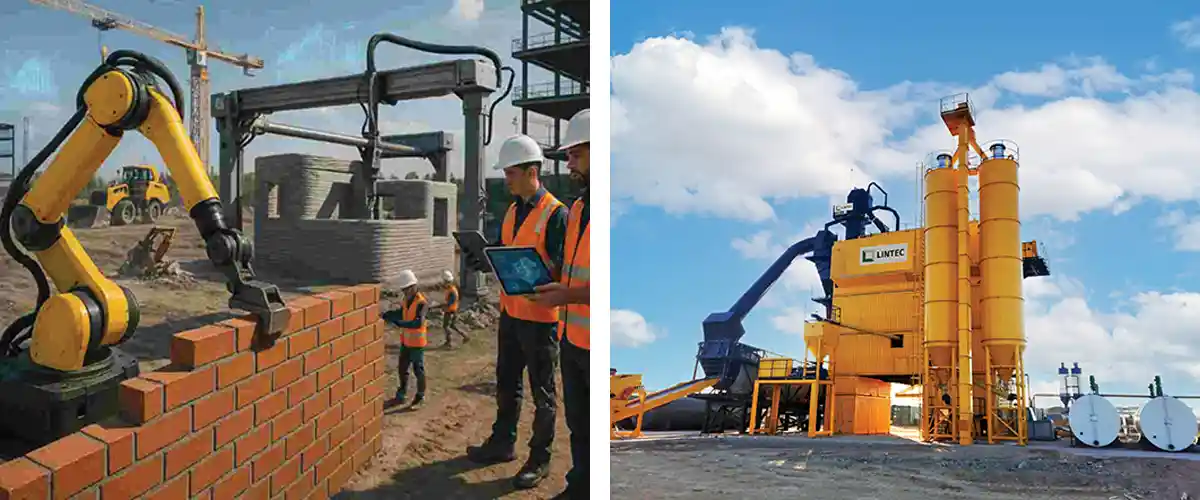
If digital twins are enhancing how projects are understood and managed, the next shift is visible on-site—where automation is beginning to reshape physical execution. While digital tools are transforming planning and coordination, automation is making its presence felt more visibly on the ground—directly influencing how construction activities are executed.From automated batching plants and material handling systems to robotics-assisted construction processes, the focus is increasingly on improving efficiency, consistency, and safety on-site. In India, where labour availability and skill levels can vary significantly across regions, automation offers a practical way to standardise processes and reduce dependency on manual intervention.
At the same time, the shift is not about workforce reduction, but about enhancing productivity. Industry experts note that automation is less about reducing workforce and more about improving productivity per worker. It allows teams to focus on higher-value tasks rather than repetitive operations.

Increasingly, automation is being viewed as a structural requirement rather than an optional upgrade, driven by rising operational costs, labour constraints, and growing expectations around quality and sustainability. Notes Jeffrey Ma, Chief Technology Officer at Lintec & Linnhoff, “True automation is not defined by technology alone, but by how intelligently it is integrated into operations.”
Cloud-Based Construction Platforms Replace Disconnected Tools
For decades, construction projects have been managed through a fragmented mix of spreadsheets, emails, and isolated software systems—an approach that often led to conflicting data, missed updates, and costly rework. That model is now rapidly giving way to cloud-based construction platforms that are redefining how information flows across projects.Rather than functioning as standalone tools, these platforms are becoming the digital backbone of project execution—bringing together budgets, schedules, documents, and communication into a single, continuously updated environment. In doing so, they are eliminating one of the industry’s most persistent inefficiencies: the lack of a reliable, shared source of truth.
At the core of this shift is the move from multiple versions of information to a centralised data ecosystem. Drawings, contracts, change orders, and site records are no longer exchanged as static files or email attachments. Instead, they are stored in unified platforms where updates are reflected in real time, ensuring that every stakeholder—from site engineers to project owners—are aligned with the most current project information.
This real-time visibility is transforming decision-making. Updates captured onsite—whether through mobile inputs, photos, or progress logs—are instantly accessible to teams across locations. Project managers can identify delays, cost deviations, or coordination issues as they emerge. The result is a shift from reactive management to continuous oversight.
As construction projects become more data-driven, real-time visibility is increasingly replacing delayed reporting and fragmented coordination. “The spreadsheet told you what happened last week. The cloud platform tells you what is happening right now and what is about to go wrong,” says Shreedhar Hungund of Desapex.
He cites a hyperscale data centre expansion project involving more than 60 MEP subcontractors working simultaneously across multiple floors, where a cloud-hosted Common Data Environment enabled real-time access to models, RFIs, and site observations for all stakeholders. A critical HVAC and structural coordination issue that could have triggered weeks of rework was identified and resolved within hours, significantly compressing the project decision cycle.
He informs that Desapex has also operationalised this approach through its Situational Awareness Room (SAR), which integrates live site camera feeds, 4D scheduling, BIM data, IoT-enabled monitoring, and AI-assisted progress tracking into a centralised command environment. By continuously comparing planned and actual site progress, the system enables project teams to identify deviations earlier, improve coordination, and strengthen proactive execution management. “SAR doesn't just report what happened on site; it narrows the gap between physical reality and digital intent to hours rather than weeks,” he says.
The benefits of connected construction environments are already becoming visible across large infrastructure projects globally. In one example, the Acciona EEI Joint Venture implemented Oracle Aconex for the Philippines’ Malolos–Clark Railway Project to standardise document management and improve collaboration across multiple stakeholders. According to the company, Oracle Aconex helped minimise project risks by improving transparency and accountability, enabling teams to identify and address potential issues before they escalated. The project reportedly achieved approximately 30% faster document approval cycles, along with reduced administrative effort and improved overall productivity.
Similar shifts are also becoming visible in India, particularly on large EPC and airport infrastructure projects where project coordination involves multiple contractors, consultants, and dispersed teams. A recent Autodesk Forma deployment by Larsen & Toubro on a major airport project integrated BIM models, documents, billing workflows, and progress dashboards into a connected cloud environment. The implementation reportedly helped improve transparency, reduce manual errors, and accelerate decision-making across the project lifecycle.
Collaboration, too, is becoming more fluid. Integrated communication tools, task tracking, and document annotation features allow engineers, consultants, and contractors to interact within the same platform. Queries that once took days to resolve can now be addressed in minutes, significantly improving coordination across complex, multi-stakeholder projects.
Equally important is the rise of mobile-first functionality. With site teams increasingly operating in dynamic and often remote environments, access to real-time data through smartphones and tablets is no longer optional. Cloud platforms enable field crews to update progress, log issues, and access drawings directly onsite, ensuring that execution remains aligned with planning—even in challenging conditions.
Ultimately, the impact of cloud-based construction platforms lies in their ability to reduce errors and improve accountability. By eliminating data silos and version conflicts, they minimise rework and provide clear audit trails across all project activities.
In this sense, cloud technology is not simply digitising existing processes—it is reshaping how projects are managed. Disconnected tools are giving way to integrated ecosystems, where information flows seamlessly, decisions are data-driven, and collaboration becomes continuous rather than episodic.
How IoT and Smart Sensors Improve Site Visibility
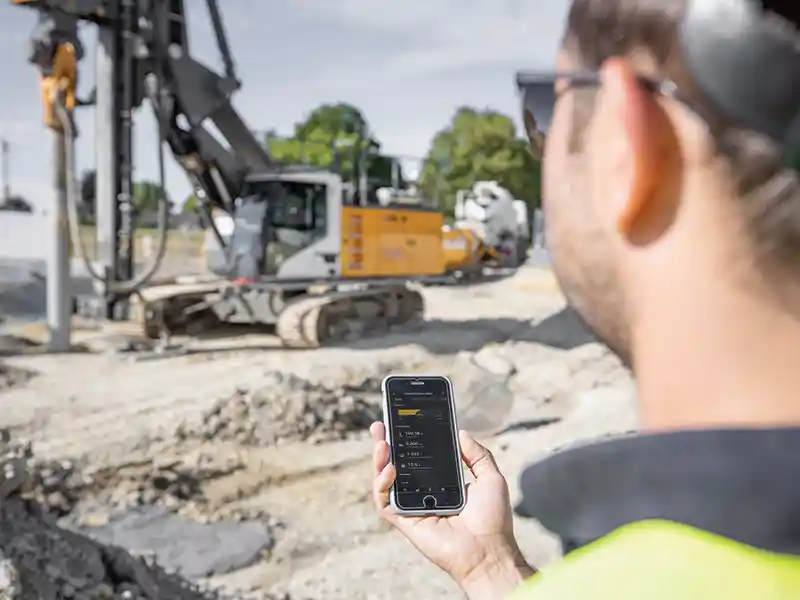
Construction sites have traditionally relied on manual reporting and periodic inspections to track progress and performance. This has often resulted in delayed insights and limited visibility into on-site conditions as they evolved. With the growing adoption of Internet of Things (IoT) technologies, that is changing rapidly.
As sensors become more affordable and easier to deploy, construction sites are being transformed into data-rich environments where information is continuously captured and analysed. Equipment usage, material movement, environmental conditions, and worker safety indicators can now be monitored continuously—without adding to the reporting burden on site teams.
This shift is replacing guesswork with data-backed insight. Equipment telematics now provide detailed information on utilisation, fuel consumption, machine health, and maintenance requirements, allowing project managers to identify inefficiencies such as idle time, fuel losses, or underutilised assets.



The shift to BS-V/CEV-V norms has further accelerated the adoption of low-emission technologies, fuel-efficient engines, and intelligent machine systems across our portfolio. At CASE, products such as our NX-Series backhoe loader such as the 770 NX Magnum, and 851 NX, vibratory compactors like 952 NX and 1107 NX, to crawler excavators as in CX220C and CX220C LC, where advanced electronics, intelligent controls, and the optimized FPT F28 engine to deliver lower emissions, improved fuel efficiency, and higher productivity. Looking ahead, we believe the next phase of construction equipment will be shaped by connected fleet ecosystems, predictive maintenance, intelligent diagnostics, and cleaner powertrain technologies, helping customers manage fleets with greater visibility, improve uptime, and achieve higher productivity in a more efficient and sustainable way.”
However, the value of IoT extends beyond equipment tracking. Material movement and inventory management are also becoming increasingly digitised through RFID tags, GPS-enabled logistics systems, and smart inventory monitoring. These technologies improve resource visibility and reduce delays caused by material shortages or misplaced assets.
IoT technologies are also playing a growing role in safety and environmental management. Wearable devices and site sensors can detect unsafe conditions, monitor worker activity, and measure factors such as dust, noise, and temperature. This enables proactive intervention, reducing the likelihood of incidents and improving compliance with regulatory standards.

One of the most significant advantages of IoT is the reduction in manual data collection. Automated data capture improves accuracy while allowing site teams to focus on execution rather than reporting. When integrated with cloud platforms and digital twins, this data becomes even more valuable, feeding into analytics systems that support faster and more informed decision-making.
The broader industry trend is increasingly moving toward connected fleets and intelligent monitoring ecosystems. Companies such as Volvo Construction Equipment, Tata Hitachi, Kobelco, and Escorts Kubota are integrating telematics, predictive diagnostics, and remote monitoring systems into their machines to improve equipment uptime, fuel efficiency, and project visibility. These systems are enabling contractors to move from reactive maintenance toward predictive, data-driven equipment management.
As a result, IoT is no longer seen as an advanced or optional technology. It is becoming a foundational layer of modern construction, providing the visibility and control required to manage increasingly complex and time-sensitive projects.
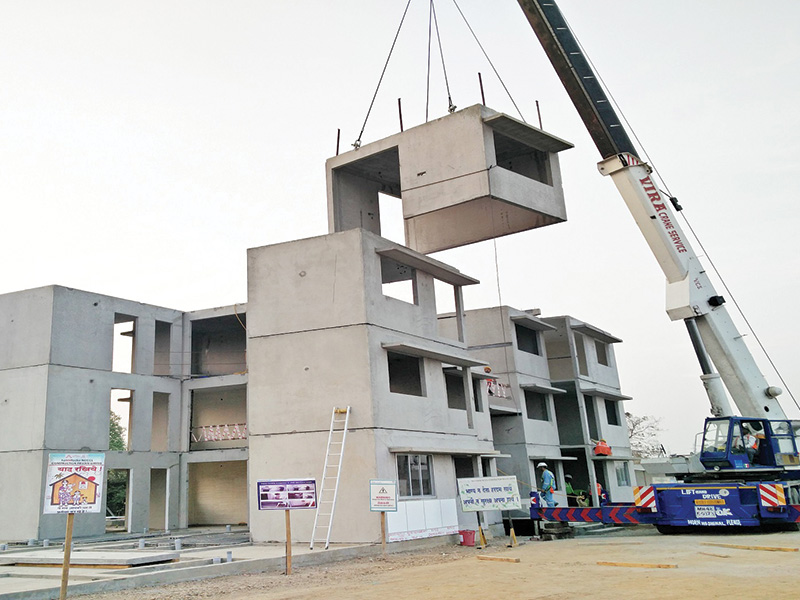
Modular and Offsite Construction Goes Mainstream
While modular and off-site construction have long been part of industry discussions, their adoption has often been limited to specific applications. That is now changing. Driven by cost pressures, labour shortages, and the need for faster, more predictable project delivery, modular construction is moving firmly into the mainstream.
At its core, this approach shifts a significant portion of construction activity from the jobsite to a controlled factory environment, where components or entire modules are manufactured and later assembled on site. What distinguishes the current phase is the level of technological maturity now supporting seamless integration between design, manufacturing, and on-site assembly.
Advanced design tools, particularly BIM, are enabling highly coordinated 3D models that resolve clashes early and align design with manufacturing requirements. This ensures that components are not only designed efficiently but are also optimised for production and assembly. As design data flows directly into manufacturing systems, precision improves significantly, reducing variability and ensuring consistent quality.
The shift is already visible across several large-scale Indian projects. One of the most prominent examples is the use of precast and modular methodologies in the Mumbai Metro and Delhi Metro expansion projects, where precast segmental construction enabled faster execution with reduced on-site disruption. According to industry experts involved in metro infrastructure delivery, factory-controlled precast production helped improve quality consistency while significantly accelerating erection cycles in dense urban environments.
Similarly, the healthcare sector has emerged as an important driver of off-site construction adoption. During the Covid-19 period, KEF Infra demonstrated the speed advantages of modular delivery through its integrated off-site manufacturing model for healthcare infrastructure. The company’s digitally enabled manufacturing facility in Krishnagiri supplied precast and modular components for hospitals, residential buildings, and institutional infrastructure using BIM-integrated workflows and automated production systems.
The adoption of modular systems is also expanding in commercial and industrial construction. Tata Projects has increasingly deployed precast and modular MEP systems across data centres, industrial facilities, and urban infrastructure projects to reduce site congestion and improve execution certainty. The company has highlighted that integrated digital engineering and off-site fabrication allow parallel workflows where manufacturing and site preparation progress simultaneously, significantly compressing project schedules.
Logistics, once a major challenge for modular construction, is also becoming more manageable. Digital planning tools and real-time tracking systems now support just-in-time delivery, route optimisation, and better coordination of site assembly. This reduces congestion, enhances sequencing, and minimises delays.
On-site execution benefits as well. With a substantial portion of work completed off-site, projects experience fewer weather-related disruptions, reduced labour dependency, and improved safety outcomes. At the same time, factory-controlled environments enable better quality control, standardised inspections, and reduced material waste—aligning modular construction with sustainability goals.
According to B.G. Shirke, one of the early pioneers of industrialised building systems in India, precast and factory-produced construction methods can reduce material wastage by nearly 20–25% while improving construction speed and structural consistency. Industry specialists increasingly view this approach as particularly relevant for affordable housing, institutional infrastructure, healthcare facilities, and urban redevelopment projects where scale and repetition improve manufacturing efficiency.
Perhaps the most compelling advantage is predictability. By enabling parallel workflows—where site preparation and module fabrication occur simultaneously—modular construction can significantly shorten project timelines. This makes it particularly attractive for sectors such as housing, healthcare, hospitality, and education, where speed and consistency are critical.
The broader industry ecosystem is also evolving rapidly to support this transition. Companies such as Elematic, which supplies automated precast production systems in India, note that digital integration between BIM, production planning, and factory automation is becoming increasingly important as developers move toward industrialised construction methods.
As standardisation improves and stakeholders gain confidence, modular construction is evolving from a niche alternative into a strategic delivery model—one that offers greater certainty and control in an increasingly complex construction landscape.
Sustainability Tech Shifts from Reporting to Action
Sustainability in construction is moving beyond compliance reporting to becoming an active, measurable part of project execution. While sustainability disclosures and ESG reporting have helped raise awareness, they have often had limited influence on day-to-day construction decisions. That dynamic is now changing.New technologies are embedding sustainability directly into planning and execution, enabling teams to measure, manage, and improve environmental performance in real time. Rather than tracking outcomes after project completion, companies can now monitor emissions, energy use, fuel consumption, and material impact continuously as projects progress.
This shift is particularly evident in the availability of live carbon and energy data. By integrating inputs such as diesel consumption, electricity usage, equipment telematics, and material logistics, digital platforms can provide real-time insights into a project’s environmental footprint. This allows project teams to identify high-impact activities early and take corrective action before inefficiencies escalate. The transition is increasingly visible across Indian construction and infrastructure projects.
Material selection is also becoming more data-driven. Digital tools now enable comparisons based not only on cost and performance, but also on embodied carbon and lifecycle impact. This allows designers and procurement teams to make more sustainable choices without compromising project requirements.

The materials sector is also leveraging technology to reduce environmental impact. UltraTech Cement has expanded the use of digital process optimisation, waste heat recovery systems, and low-carbon concrete solutions to improve energy efficiency and reduce emissions across manufacturing and construction applications. Similarly, Saint-Gobain has highlighted the growing role of digital simulation and lifecycle assessment tools in helping architects and developers evaluate thermal efficiency, daylight optimisation, and material impact during the design stage itself.
On-site operations are benefiting as well. Energy monitoring systems optimise power usage, while waste-tracking platforms provide insights into material consumption and disposal. Several metro rail and highway projects in India now use automated environmental monitoring systems to continuously track dust, noise, and air quality around construction zones.
Importantly, sustainability is no longer treated as a separate initiative. It is increasingly being integrated into core project management systems, ensuring that environmental considerations are embedded alongside cost, quality, and schedule metrics.
As expectations from clients, investors, and regulators continue to rise, the ability to demonstrate measurable sustainability outcomes is becoming a competitive advantage. The industry is moving from intent to impact—where sustainability is not just reported, but actively delivered through data-driven construction practices.
How Advanced Data Analytics Drives Smarter Decisions
Construction projects generate vast amounts of data, yet much of it has historically remained underutilised. Stored across spreadsheets and disconnected systems, this information has often been difficult to analyse in a meaningful way. That is now beginning to change.Advanced data analytics is enabling organisations to extract actionable insights from both historical and real-time data, transforming how decisions are made. Rather than relying solely on experience or intuition, project teams can now base their strategies on evidence and predictive analysis.
One of the key benefits of analytics is early risk identification. By comparing current project performance with historical benchmarks, systems can detect deviations in cost, schedule, or productivity before they escalate. This allows for proactive intervention, improving project outcomes.
The growing role of analytics is increasingly visible across infrastructure, industrial, and urban development projects in India. Companies are deploying AI-driven dashboards, predictive monitoring systems, and integrated project controls to improve planning accuracy and operational visibility.
According to Bentley Systems, infrastructure owners are increasingly using digital twins and analytics platforms to simulate project performance, monitor asset conditions, and improve lifecycle decision-making. The company has worked on several large infrastructure programs globally where real-time analytics enabled faster issue detection and improved operational planning.
A significant Indian example is the adoption of integrated digital engineering and analytics systems in metro rail and industrial infrastructure projects. Delhi Metro Rail Corporation has progressively expanded the use of BIM, digital project monitoring, and analytics-based coordination tools across its newer phases to improve schedule tracking, design coordination, and execution visibility across complex multi-agency works.
Recurring risks, such as procurement delays, resource bottlenecks, or design changes, can also be identified through pattern recognition. By analysing data across multiple projects, organisations can better understand where issues originate and how to mitigate them.
Cost forecasting is another area seeing significant improvement. Advanced models provide more accurate projections by analysing trends in productivity, change orders, and resource utilisation. This supports better financial planning and reduces the likelihood of budget overruns.
Industrial and infrastructure companies are also increasingly integrating predictive analytics into operations and maintenance. Siemens notes that AI-enabled analytics and predictive monitoring systems are helping project operators reduce downtime, optimise equipment performance, and improve resource efficiency through continuous data evaluation rather than periodic inspections.
Similarly, Larsen & Toubro has highlighted the growing role of integrated digital dashboards and BIM-linked project controls in improving schedule visibility, execution monitoring, and enterprise-level decision-making across large infrastructure projects.
Perhaps most importantly, analytics enables organisations to institutionalize learning. Instead of insights being lost after project completion, they are captured and applied across future projects, raising overall performance standards.
As the industry becomes more complex, the ability to combine experience with data-driven insight will be a defining factor. Companies that leverage analytics effectively will be better positioned to manage risk, improve efficiency, and deliver consistent results.
Workforce Technology Addresses Skills Gaps
Labour shortages remain one of the most pressing challenges in construction. An ageing workforce, combined with increasing project complexity, is placing pressure on organisations to deliver more with fewer skilled resources. Workforce technology is emerging as a critical enabler in addressing this challenge.Rather than replacing workers, these technologies are designed to enhance their capabilities, improve productivity, and ensure consistency across sites. Digital tools are transforming how workers are trained, supported, and managed throughout the project lifecycle.
Training and onboarding, for instance, are becoming more efficient through mobile-based learning platforms and digital modules. Workers can access role-specific training, safety instructions, and compliance requirements directly on their devices, reducing the need for lengthy classroom sessions.
Several Indian construction and infrastructure companies are increasingly investing in digital workforce development to address the industry’s widening skill gap. L&T EduTech has been working with engineering institutions and industry partners to develop technology-led training modules focused on construction, manufacturing, and infrastructure skills. The initiative combines digital learning platforms, simulation-based training, and industry-oriented certification programs aimed at improving workforce readiness.
Large contractors are also deploying digital tools to improve workforce coordination and safety across projects. Afcons Infrastructure has highlighted the growing use of digital project monitoring systems, mobile reporting tools, and technology-enabled safety practices across metro rail, marine, and tunnel construction projects to improve execution quality and workforce management in complex environments.
Augmented reality is also beginning to play a role in on-site execution. By overlaying digital instructions onto physical environments, it allows workers to perform complex tasks with greater accuracy and confidence. Remote expert support further extends this capability, enabling specialists to guide teams without being physically present.
According to Bosch, AR-assisted maintenance and remote support systems are increasingly helping industrial and infrastructure teams reduce downtime while improving operational accuracy. Industry experts note that such systems are particularly valuable in environments where access to highly experienced supervisors is limited.
Communication is another area which is seeing improvement. With construction sites often involving multilingual teams, digital tools that provide real-time translation and visual instructions help reduce misunderstandings and improve coordination.
At the same time, organisations are using technology to capture and preserve institutional knowledge. As experienced professionals retire, digital platforms ensure that their expertise is documented and accessible for future projects.
Workforce technology also contributes significantly to safety. Wearables, smart helmets, and connected monitoring systems can provide early warnings related to worker fatigue, hazardous gas exposure, unsafe movement, or restricted-zone entry. Companies such as KARAM Safety are increasingly integrating smart safety technologies and connected PPE systems into industrial and infrastructure environments to improve real-time safety monitoring.
Ultimately, the focus is shifting toward a human-centric approach—where technology supports workers in performing their roles more effectively rather than replacing them. In a constrained labour environment, this ability to enhance productivity, consistency, and safety will become an increasingly important differentiator for construction companies.
The Road Ahead: Bridging the Adoption Gap
The construction process itself may not be changing—but the way it is monitored, managed, and controlled certainly is. As projects become more complex and margins tighter, the ability to see clearly, decide early, and act in time will define success. Increasingly, this depends on how effectively organisations use data, integrate systems, and bridge the gap between planning and execution. In that sense, the future of construction will be shaped not only by how structures are built, but by how intelligently they are managed.ULCCS
Rohan Prabhakar, CGM Projects, ULCCS, discusses how workforce constraints, fragmented subcontracting practices, and cost-driven project models continue to challenge large-scale technology adoption in infrastructure construction, even as organisations explore AI, automation, ERP, and SAP-led workflow transformation.

What challenges is ULCCS facing in integrating AI, automation, and digital twins into their projects?
At ULCCS, the integration of AI into organisational workflow management is currently being explored with the support of AI experts. The objective is to simplify work procedures, reduce the time spent on clerical activities, and improve overall efficiency for engineering teams involved in project execution.At the same time, the industry is also facing increasing manpower challenges, particularly as younger generations show limited interest in construction-related job profiles. In response, we are evaluating opportunities to reduce dependency on both skilled and unskilled labour through small-scale robotic automation in selected infrastructure construction activities.
One of the major challenges in the infrastructure construction sector is the absence of structured certification requirements, regulatory enforcement mechanisms, or standardised skill regulations for the workforce and labour involved in project execution. Such requirements are generally applicable only to engineering professionals in terms of minimum qualifications and work experience.
As a result, the successful implementation of digital and automated technologies requires significant additional investment in training, monitoring, and process alignment by organisations that are willing to adopt such systems. This increases both the time and cost involved in technology integration, particularly in projects where workforce skill levels vary significantly.
What is the biggest day-to-day challenge site teams face when using digital or automated tools?
In large road infrastructure projects, one of the biggest challenges is accurately quantifying and linking daily work output with the corresponding deployment of manpower and machinery resources.Since project activities vary continuously across different work segments and construction stages, capturing real-time productivity data through digital systems becomes complex. This makes it difficult to establish precise correlations between resource utilisation and actual project output on a day-to-day basis.
Which one technology has delivered clear, measurable benefits for you so far, and what kind of improvement did you see (in terms of time, cost, or productivity)?
A customised ERP system introduced within our organisation delivered measurable improvements to a certain extent, but it could not provide a complete end-to-end solution, as its scope did not fully cover the entire project lifecycle and execution process. This was primarily due to our organisation’s agile and unique project management approach, where projects are executed directly with minimal subcontracting through an organically developed operational structure.Currently, SAP is being implemented across the organisation, with the objective of strengthening workflow integration and revising execution and monitoring processes in line with international industry standards.
What is the primary reason many projects in India still struggle to adopt these technologies at scale?
One of the primary reasons many projects in India still struggle to adopt these technologies at scale is that projects are often awarded primarily on the basis of the lowest bid rather than through a Quality and Cost Based Selection (QCBS) approach.As a result, contractors quoting the minimum project cost are awarded the work in most cases. These projects are then frequently subcontracted to local agencies operating on extremely cost-sensitive margins. Under such conditions, there is very limited scope for investing in advanced technologies, automation, or digital systems, as the primary focus remains on completing projects at the lowest possible cost with minimum deployment of manpower, materials, and machinery resources.
Eros Group
Avneesh Sood, Director, Eros Group, shares how BIM-led coordination and execution-focused digital deployment are improving planning accuracy, reducing rework, and enabling better control across complex multi-contractor construction environments.

What technologies (AI, automation, or digital twins) are you integrating into your projects?
AI, automation, and digital twins are being embedded selectively where they improve execution outcomes across our ongoing projects. The integration is largely anchored around BIM-led design coordination. AI-assisted scheduling, and drone-based progress tracking.At Eros Group, the focus has been on strengthening planning and monitoring frameworks through centralized dashboards and data-led decision-making. Our priority is to bring greater predictability into construction rather than deploy technology for its own sake. Over time, as these systems mature, the shift will be toward integrating them into a more unified digital ecosystem that supports both delivery efficiency and long-term asset performance.
In your experience so far, where have these tools fallen short on site, and what were the key reasons?
In practice, these technologies have not fallen short due to capability, but due to the ecosystem they operate in. On-site execution in India is still highly fragmented, and tools like AI or digital twins depend heavily on consistent data flows, standardised processes, and skilled manpower—areas where gaps persist.One of the most common challenges has been limited on-ground adoption. Site teams often continue to rely on manual workflows, which reduces the effectiveness of digital inputs. Interoperability is another issue, as multiple systems operating in silos dilute the benefits of an integrated digital stack.
At Eros Group, initial deployments showed that without adequate training and alignment across contractors, even well-designed systems tend to become reporting tools rather than decision-making engines.
The key takeaway is that technology implementation is not a plug-and-play exercise; it requires process discipline and workforce skilling, and cultural alignment. Until these areas are addressed, the full potential of these tools will remain only partially realised.
What is the biggest day-to-day challenge your site teams face when using digital or automated tools?
The biggest day-to-day challenge is not the availability of technology, but the consistency of its use on site. Construction sites operate in a fast-moving, pressure-driven environment, and digital tools often demand structured inputs, timely updates, and process discipline—which can be difficult to maintain amid shifting priorities.In practice, site teams struggle most with data entry and real-time updates. If information is not captured accurately or on time, the entire digital system loses relevance. There is also a clear gap between planning teams and execution teams. While digital tools are increasingly adopted at the management level, last-mile adoption at the contractor and subcontractor level remains uneven.
Additionally, limited training and high workforce churn mean that familiarity with these tools is not always consistent across teams. As a result, the effectiveness of digital platforms often becomes dependent on individual teams rather than being consistently embedded across the entire execution chain.
Which one technology has delivered clear, measurable benefits for you so far, and what kind of improvement did you see (in terms of time, cost, or productivity)?
BIM-led design and coordination is one technology that has delivered the most consistent, measurable benefits so far. Its impact is visible right from the pre-construction stage. By integrating architectural, structural, and MEP designs into a single coordinated model, BIM significantly reduces design conflicts and rework during execution.On projects where it has been implemented effectively, the improvement has been tangible, construction timelines have compressed by roughly 15-20%, while rework-related costs have come down in a similar range. Equally important is the improvement in decision-making. Site teams have far greater clarity on sequencing, material requirements, and potential risks before work begins, which enhances overall productivity.
The real value, however, lies in predictability. Instead of reacting to issues on site, teams are able to anticipate and resolve them during the planning phase. In a market where delays and cost overruns have historically been the biggest risks, that shift alone is a meaningful structural advantage.
What is the primary reason many projects in India still struggle to adopt these technologies at scale?
The primary issue is that technology adoption is still being treated as an add-on rather than a core operating model. In many projects, digital tools are introduced at the planning or management level, but they are not fully embedded into day-to-day site workflows.A key challenge is the disconnect between design, planning, and execution teams. While the front-end may be digitised, on-ground execution often continues in conventional ways, which breaks the continuity required for these tools to deliver full value. There is also a strong element of process resistance. Construction, by nature, is a relationship-driven and experience-led industry, and shifting to data-led decision-making requires a cultural transition that takes time. Also, the absence of standardisation across projects and vendors makes it difficult to scale any one technology uniformly. Until digital processes become the default rather than optional, adoption will remain selective rather than systemic.
Please share a project experience in implementing these technologies.
At Eros Sampoornam, the implementation of digital tools was approached in a focused, execution-led manner rather than as a full-stack transformation. During the planning and early construction phases, BIM-based coordination was used to align architectural and MEP drawings more effectively. This helped identify design overlaps early, reducing on-site rework. Alongside this, periodic drone-based monitoring was introduced to track construction progress and improve reporting accuracy.The most visible impact was on better timeline control and reduced coordination delays, particularly across multiple contractors working simultaneously. However, the experience also highlighted that benefits were strongest where site teams actively engaged with these tools. The key learning from the project was that targeted deployment rather than blanket adoption, delivers more reliable outcomes, especially when supported by consistent site-level usage and simplified workflows.
Sri Lotus Developers and Realty Limited
Paarth Chheda, President – Business Development, Sri Lotus Developers and Realty Limited, observes that the real challenge lies not in introducing more tools, but in making them work within the operational realities of India’s construction ecosystem.

How do you view AI, automation, and digital tools as enablers of more efficient and timely project deliveries?
If you look at how high-end projects are being delivered today, technology is no longer sitting on the sidelines; it is shaping decisions long before construction begins. In our case, the integration starts at the planning stage itself. Every project goes through rigorous market research and design analysis before it takes physical form.This is where AI-led and data-backed tools help refine layouts, optimise floor plate efficiency, and maximise critical design aspects such as panoramic views, ingress of natural light, and spatial flow, especially in coastal/sea-facing luxury projects. When dealing with sea-facing inventory, even marginal improvements in orientation or layout can translate directly into value.
Once the project moves on-site, the focus shifts from optimisation to coordination. BIM and digital project management platforms become the backbone for aligning architects, structural engineers, MEP consultants, and contractors within a continuously updated framework. Given the scale of our project developments across Juhu, Versova, Bandra, and other locations under a unified coastal strategy, this level of coordination becomes essential.
Automation in this environment is less about robotics and more about process discipline. Standardised reporting, procurement tracking, and milestone monitoring bring a level of predictability that traditional construction workflows often lack.
Where and why do these technologies fall short on-site?
The interesting thing about construction is that it resists uniformity. You can design the most sophisticated digital framework, but the site will always have the final say. Where these technologies tend to fall short is in the transition from system to site execution.Digital tools rely heavily on consistency—consistent data, standardised processes, and reliable inputs. However, construction ecosystems remain fragmented, with multiple contractors operating through different workflows. This often creates gaps in how information is captured, updated, and integrated into the system.
In dense urban environments such as Mumbai’s western suburbs, additional variables such as space constraints, regulatory dependencies, and logistical bottlenecks further complicate implementation. As a result, what we see in practice is partial success. Design and planning benefit significantly, while execution improvements happen selectively. Achieving a fully integrated end-to-end digital workflow is still an evolving process.
What are the biggest day-to-day challenges faced by site teams in using these tools?
On-site, the challenge is rarely about access to technology—it is about absorption and consistency in usage. Construction teams operate under pressure of time, cost, and quality. Introducing digital systems into this environment requires a behavioural shift. Instead of relying primarily on experience and instinct, teams are expected to log data, follow structured workflows, and respond to real-time dashboards.A luxury residential project also involves coordination among a wide network of design consultants, specialist contractors, façade experts, and services teams. Maintaining uniform standards of reporting and coordination across multiple stakeholders remains an ongoing challenge.
There are also practical realities such as connectivity limitations on-site, varying levels of digital familiarity, and the fact that construction activity continues even while teams are adapting to new systems.
Which technology has delivered clear, measurable benefits in terms of time, cost, or productivity?
BIM and integrated project monitoring systems have delivered the most measurable benefits so far. BIM has fundamentally transformed coordination processes. In high-end developments where design detailing is intricate and margins for error are minimal, BIM helps identify clashes well before execution reaches the site stage. This directly reduces rework, resulting in measurable savings in both time and cost.Project monitoring platforms, meanwhile, improve visibility across multiple ongoing developments. When executing several luxury projects simultaneously, real-time visibility into procurement, construction progress, and finishing stages enables faster intervention and more efficient resource allocation.
The gains may not always appear dramatic individually, but cumulatively they are significant—fewer delays, tighter execution, and better alignment between design intent and final delivery. In luxury real estate, that consistency is critical for protecting both project timelines and brand value.
Why do many ultra luxury projects in India still struggle to adopt these technologies at scale?
At the ultra-luxury end of the market, the challenge is nuanced. It is not about willingness to adopt technology, but about how far processes can be standardised without diluting the bespoke nature of the project.Luxury developments are inherently customised. Every site, layout, and design brief is different, and this level of customisation does not always align easily with rigid automation or standardised digital frameworks.
At the same time, the larger ecosystem surrounding a project—including contractors, vendors, and consultants—may not always operate at the same level of technological maturity. As a result, even when the developer is fully digitised, the effectiveness of implementation depends on the readiness of the entire execution chain.
What we are seeing, however, is a gradual shift. In high-value developments, where expectations around delivery quality, precision, and finish are significantly higher, technology is increasingly becoming part of the baseline rather than an optional enhancement.
The real evolution will come not from introducing more tools, but from making them work effectively within the operational realities of construction in India.
Enviro Infra Engineers Limited.
Manish Jain, MD, Enviro Infra Engineers Limited, shares how intelligent automation and centralized monitoring are bringing operational efficiency in the company’s next-generation water and wastewater infrastructure projects, and enabling smarter management

What digital technologies is the company using across its projects?
At Enviro Infra Engineers, we are adopting a phased and practical approach to integrating digital technologies across our projects. Automation and digital monitoring systems such as SCADA are already being deployed across our STP and wastewater infrastructure projects to enable real-time tracking of key operational parameters including flow rates, Biochemical Oxygen Demand (BOD), Chemical Oxygen Demand (COD), and energy consumption.At the same time, we are exploring applications such as predictive maintenance and process optimisation in select projects, while digital twin capabilities are currently being evaluated for future large-scale implementation.
Our approach to technology integration remains need-based and adaptive, ensuring that digital adoption aligns with project requirements, operational efficiency, and site realities.
Please share some of your projects where such technologies are being used.
While the industry continues to face adoption challenges, at Enviro Infra Engineers we have already moved beyond the pilot stage and are implementing advanced technologies across multiple projects. For example, in our ₹1,070 crore NTPC Battery Energy Storage System (BESS) project, we are deploying digital twin technology to model battery degradation and thermal performance. This allows us to estimate system life cycles and optimise performance even before physical execution begins, ensuring dependable 930 MWh capacity planning.Similarly, AI-based algorithms are being implemented in CETP projects to predict influent shocks by analysing incoming wastewater chemistry and automatically adjusting chemical dosing to maintain process stability and environmental compliance.
Under AMRUT 2.0 projects, we are also deploying automated valve systems using pressure-flow analytics to instantly detect leakages and improve water distribution efficiency through smart-grid-based monitoring.
However, while organisations like ours are moving toward advanced implementation, large-scale industry adoption still faces structural challenges. The issue is not the absence of technology, but rather cost sensitivity, lack of standardisation, and varying levels of industry readiness to embrace digital transformation at scale.
Which technology has delivered the best outcomes in terms of project cost and delivery?
For us, one of the most effective technologies has been the integration of SBR Automation with PLC-SCADA systems. By using real-time dissolved oxygen (DO) sensor readings to automate aeration and decanting cycles, we have achieved a 15–20% reduction in energy consumption, which is one of the largest operational cost components in STP operations.Under projects implemented through AMRUT 2.0 and the Jal Jeevan Mission, the system has also enabled monitoring of multiple decentralised plants through a centralised command centre. This has improved manpower productivity by nearly 30%, as engineers now visit sites primarily when the system identifies a specific irregularity rather than relying on routine manual inspections.
What are the challenges in implementing digital and automated technologies at project sites?
In our experience, the limitations of these technologies stem less from the technology itself and more from execution-level challenges on the ground. Tools like SCADA depend heavily on reliable, real-time data, but this is often affected by infrastructure gaps, sensor limitations, and connectivity issues, particularly in remote project locations.One of the key challenges is the lack of interoperability between advanced digital systems and the simpler field-level devices used by site teams, which can create disconnects between planning and execution workflows.
Harsh operating environments—especially in wastewater projects—can also affect the reliability and longevity of sensors and IoT hardware, leading to inconsistencies in data collection and system performance. As a result, projects still require a balanced combination of automation and manual intervention.
Another critical aspect is workforce adaptation. While digital tools improve efficiency and visibility, many personnel working in conventional EPC environments require additional training to effectively operate digital systems and interpret operational data. Increasingly, site teams are expected not only to manage mechanical and process-related activities but also to handle basic digital troubleshooting and monitoring responsibilities.
Overall, the challenge lies not in the availability of technology, but in creating a robust ecosystem comprising infrastructure readiness, system compatibility, skilled manpower, and reliable site-level execution.
Published on:
12 June 2026
Published in: NBM&CW JUNE 2026
Share:
We Value Your Comment