
ULMA Displays HWS (Perimeter Screen) and RKS Rail Climbing Formwork
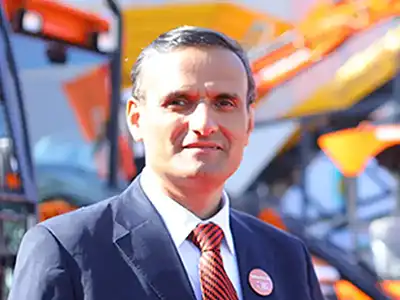
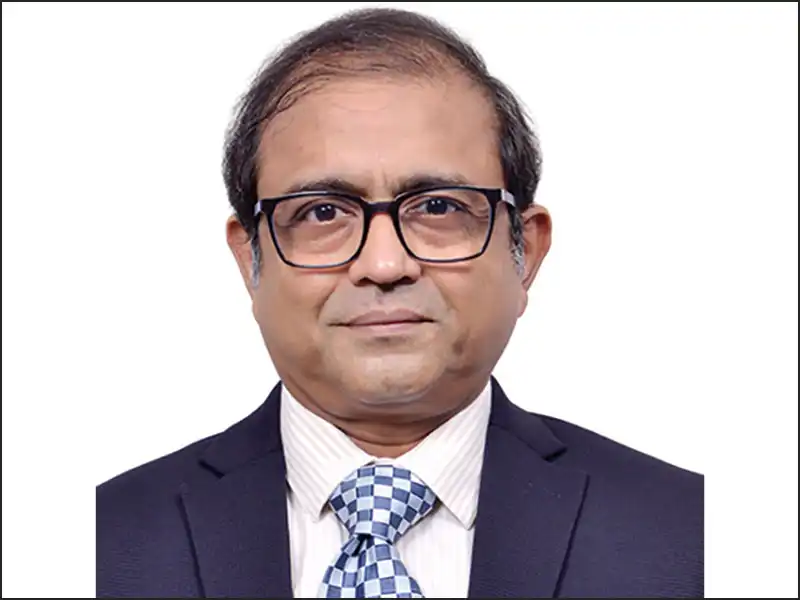 Surajit Ray, Managing Director
What demand trends are you observing in the formwork and scaffolding segment, especially as developers are increasingly bound to deliver projects on time?
There is increasing development of both residential and commercial buildings demanding timely completion to ensure recovery of investments by builders. Constructing the superstructure requires advanced formwork systems for both vertical and horizontal structures. Builders and contractors are enquiring for formwork solutions that can cater to varied slab thicknesses while minimizing cycle times. Moreover, architects and consultants are now designing buildings with composite structures where lift cores often require auto-climbing formwork systems capable of progressing the core by three to four levels ahead of the slab. This not only ensures quality construction but also enhances speed and reduces cycle time.
As architectural and structural designs become more complex, the need for tailor-made, innovative, and faster formwork/scaffolding systems is rising. How are you addressing the demand for more advanced, economical, and sustainable solutions?
There is a need for more advanced systems as regards their compatibility and durability of the material. The aim is to achieve durability while keeping an eye on earliest cost amortization. For designing modular panel systems for vertical structures, we strive to make the design such that the customer can re-use the panels for at least 10 to 15 years for all vertical structures like shear walls, columns, core walls, and retaining walls. This brings a lot of value to their investment.
We undertake a lot of research and development to come up with such innovations. They exemplify sustainability because they are essential for every building unless it is monolithic construction. Even in slab systems, ULMA has developed the ONADEK for flat slabs mostly used in commercial buildings and non-tower areas of residential projects. The system features formed steel profiled sections as primary and secondary forming grids equal to size of plywood and they are supported by props with drop-heads enabling early striking of formwork members. It is easy to use, efficient, and highly cost-effective. The system is sustainable and versatile too as they can adapt to any slab geometry.
What safety features does ULMA provide in its scaffolding and formwork systems to prevent accidents?

All our formwork systems come with safety railings and brackets. Safety concerns are integral to every project which customers are increasingly aware of now and will ensure that the scaffolding design includes all the important safety features. For example, our vertical panel systems include a pouring bracket, while our slab systems come with edge barriers.
We are providing hydraulic climbing perimeter screens for high-rises. This is now mandatory for high-rises in almost all major cities. Our hydraulic climbing safety perimeter screen covers three floors below the working level and extending two meters above it. This shield workers from potential hazards such as vertigo or strong winds. This also acts as fall arrestor of human beings and objects from the working level.
What R&D is undertaken by the company for the design of its formwork systems?
To make formwork components sustainable, research and development are primarily conducted at our headquarters in Spain. However, inputs are provided by our technical team of every subsidiary. Each country subsidiary of ULMA, along with its technical team, is responsible for tailoring the designs to meet the exact requirements of local customers.
While Spain leads the research and development efforts, the designs are adapted and refined to ensure they align with the needs of all countries. By incorporating minor variations, we fulfil regional preferences and standards specified by our customers.
In India, over the past 15 years, we have carefully listened to our customers. The components and products we deliver are well-researched, ensuring high-quality solutions. Innovation and improvement being a continuous process, this is led by our headquarters in Spain which helps to bring a global perspective to the products with local customization.
What training do you provide to workers for handling your complex scaffolding systems?
Whenever we deliver a scaffolding system or supply a formwork system (unless it is for a repeat customer), the first step is to train the workers at the site and we also conduct a training session for the customers’ engineers as well. This is because they are making an investment, and it is essential for them to understand how to use the system properly. We train them on how to apply the system to the structures, whether before or after the concrete is poured. Key safety measures that need to be implemented are also covered, including how to fix the safety items properly, how to strip and dismantle the system, and at the end of the project, how to clean and stack the components for future use.
We also provide a demonstration at the site on how to adjust the components. In this way, on-the-job training is carried out as well. Our site support engineers are actively involved in all these activities.
What would you say is the USP of ULMA systems?
Our HWS and RKS climbing systems mostly comprise of same type of components, though one system is designed for auto-climbing of building perimeter protection screen while the other is for automatic lift core climbing. The primary difference lies in the head attachment and we have developed two types of heads for these two different climbing systems. However, the mast, cylinders, and hoist are the same for both.
Hence our USP lies in delivering a system which can be utilized for more than one formwork solution. The climbing systems mentioned here are quite in demand, especially in cities which are experiencing intensive construction of high-rises at fast pace, where many projects require such technology.
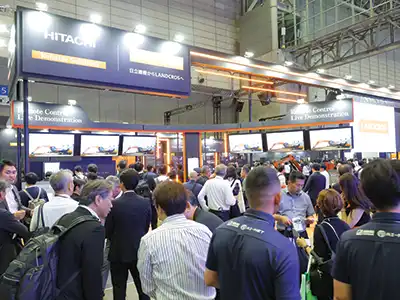
USP of our modular panel vertical formwork as exhibited in our stand – known as LGW and LGW-MP features 100% Russian Birch plywood fitted on to robust modular steel frames thus enabling the system to deliver excellent durability with high repetitions. Corner solutions are provided by every panel of LGW-MP thus eliminating any extra component for formation of corners of columns or core walls.
As for the ONADEK system, it’s a highly flexible system that offers economic advantages. Customers have the option to supply their own plywood, or we can provide it. The system is designed with a prop + drop-head system supporting large grids and can be designed to cater slab thickness up to 650mm. This flexibility and cost-efficiency are the primary USPs of the ONADEK system.
In your opinion, what are the prevailing issues or challenges in the formwork and scaffolding industry that need to be addressed?
The challenges we face primarily revolve around the cycle period and quality since there cannot be any compromise on these aspects. Customers are demanding more lightweight modular economical solutions. While weight depends on composition of the formwork components to sustain designed load, the cost depends on factors such as quality of material, engineering services and other on-site services.
These challenges arise due to stringent investment plans and cash flow constraints as customers need to complete their projects while maintaining quality and adhering to the cycle period. This often leads them to prefer materials with lesser durability but at a lower cost to complete their projects within budget.
As a result, the formwork market has become largely segmented. Being a Spanish multinational organization, we face the challenge of not being able to significantly alter our designs country to country. Instead, we maintain the same design worldwide. While this presents a challenge, we are still making efforts to adapt to specific requirement of customers while ensuring that our quality standards and efficiency of system remain intact.
How has FY2025 been for your company, and what is your outlook for the next three years?
FY 2025 has truly been remarkable in terms of market demand and project execution. Compared to the previous years, there has been significant growth in buildings and infrastructure, segmental construction of elevated carriage ways, urban & rural infrastructure. We are receiving enquiries from both bigger and smaller customers, with a greater focus on residential and commercial buildings.
Although we are not into monolithic construction, basements are almost always completed using our type of modular formwork systems, both vertical and horizontal. We are currently working on projects in the South and West regions of India.
It is evident that the construction market has not only surged but has also evolved to a completely different level of requirements during FY 2024-25 as far system formwork is considered. More contractors and builders are mandating that conventional methods cannot be used due to time & quality constraints. They are also seeking various contract modes like hire and/or buy-back.
This represents a significant step forward in further adoption of technology. Adoption of system formwork may be at slower pace, but steadily increasing day by day.
What are your expectations from the FY2026 budget in general and infra construction industry in particular?
The previous budget had core focus on infrastructure and housing and helped these two sectors to grow significantly. We still feel that much more can and needs to be done when it comes to housing. The construction sector is a major driver of the Indian economy, and with a focus on infrastructure and buildings, there is a lot of potential for growth in future. In the next budget, we look forward to further support for growth in construction sector. Post-Covid, there has been a tremendous surge in demand, and a balanced fiscal approach could boost volumes without causing significant revenue loss for the country. A budget with increased focus on infrastructure and construction, addressing all the inputs involved, could help unlock this potential.