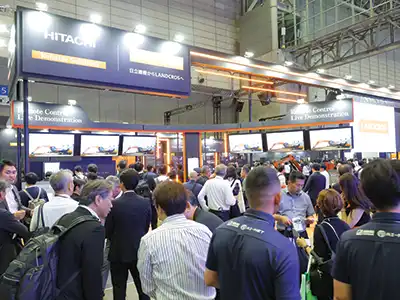

Teltronic Powering Mission-Critical Communications Across Mining, Mobility & Critical Infrastructure
We deliver secure, European-engineered, end-to-end mission-critical communication ecosystems designed to operate flawlessly in the world’s most demanding environments.
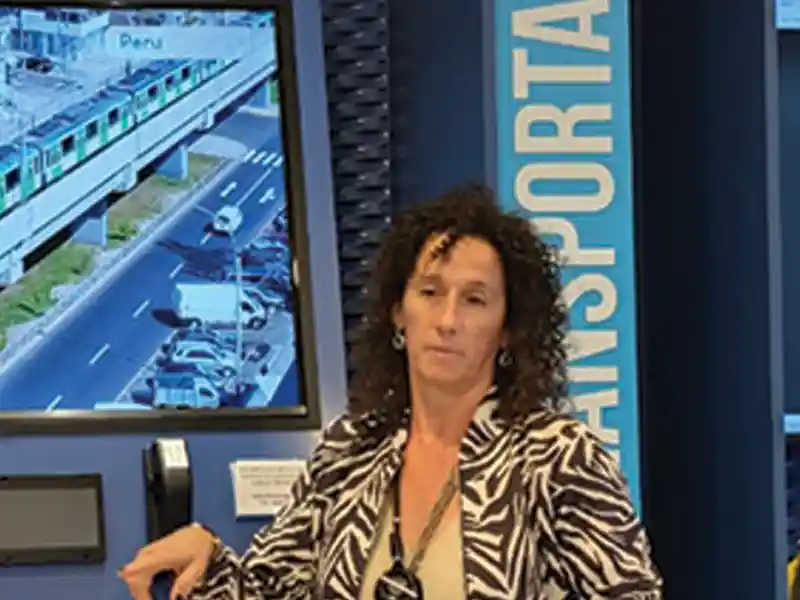
Cecilia Jordan, Market Development Manager (Industry 4.0) & Miguel Simon, Digital Marketing & Communication Manager, Teltronic
What is Teltronic’s ownership journey, core identity, and global presence as a mission-critical communications provider?
Teltronic brings 50 years of expertise in mission-critical communications, with its headquarters in Spain and a strong global footprint. The company operates subsidiaries in North America (USA and Canada) under the name PowerTrunk. Additional subsidiaries are based in Brazil with offices in São Paulo, Rio de Janeiro, Fortaleza and Bahia and in Mexico, supported by local sales departments in most other countries to serve worldwide deployments.A key differentiator for Teltronic is its identity as a European manufacturer—a critical factor for sectors such as public safety, transportation, and other sensitive industries, where customers prefer European over low-cost company technology providers. Teltronic always retained full autonomy in designing its product portfolio and manufacturing every solution in Zaragoza, Spain. Today, Teltronic is fully Spanish-owned once again, with all products developed and produced locally, reaffirming its engineering independence and European heritage.
What technologies, products, and end-to-end systems does Teltronic offer across industries?
Teltronic provides a complete, end-to-end mission-critical communication ecosystem that includes:- Network Infrastructure: Base stations, switches, and network systems delivering secure and reliable wireless coverage.
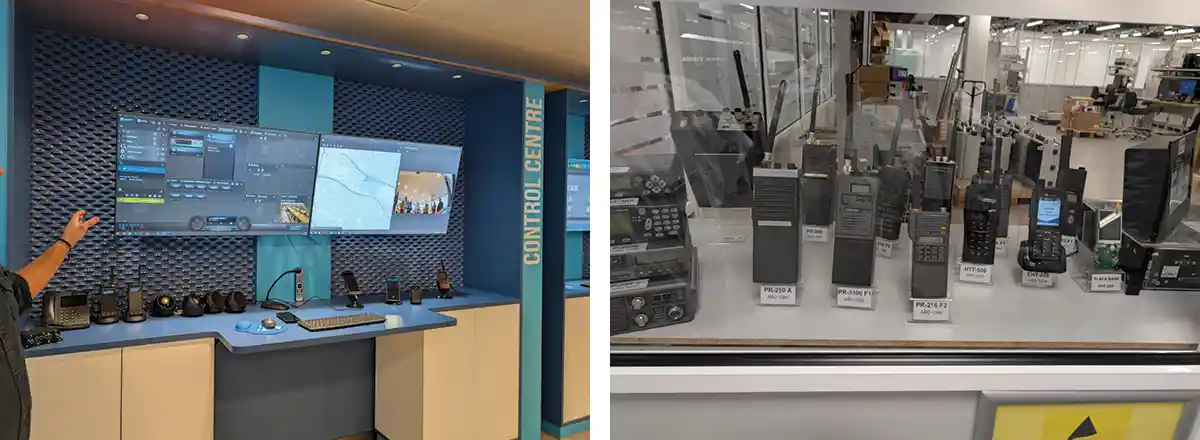
- Control Centre Solutions: Dispatch consoles and command systems enabling centralised coordination and real-time operational management.
- Devices: Handheld terminals, radios, rugged smartphones, vehicle-mounted systems, and on-board communication CPEs for trucks, machinery, trains, and heavy equipment.
While Teltronic develops software for public safety and transport operations, it does not create mining-specific applications because OEMs like Caterpillar, Komatsu, Epiroc etc already produce their own platforms. Teltronic’s role is to ensure that all their systems transmit data seamlessly and securely over its communication network.
As a full-cycle technology provider, Teltronic manages pre-sales consultation, system design, manufacturing, deployment, and long-term support, ensuring high availability and reliable performance in mission-critical environments.
How does Teltronic combine TETRA, 4G, and 5G, and what is the role of each technology?
Teltronic offers an integrated ecosystem incorporating:- TETRA (Terrestrial Trunked Radio): A globally trusted narrowband communication standard designed for mission-critical voice. It provides instant push-to-talk functionality, encrypted communication, priority/emergency calling, and exceptional reliability—essential for police, emergency services, and high-risk industries.
- 4G/LTE and 5G: Broadband technologies defined by 3GPP standards, enabling high-capacity services such as real-time video, analytics, AI applications, and high-speed data transfer.
What are Teltronic’s major global deployments, and how do private networks enable mission-critical communication in mining and other remote industrial environments?
Teltronic has developed projects in more than 60 countries worldwide. A major milestone was the NCRTC-RRTS project in India, its first deployment utilizing MCX (Mission Critical Services) over 4G, delivered in partnership with Indian Railways. Teltronic also supports communication networks for ports, airports, and mining operations, many of which have been running reliably for more than a decade, including extreme sites in Arctic regions.Mining environments, open-pit or underground, demand extremely reliable communication due to their harsh, high-risk nature. Operators rely on instant voice (push-to-talk), priority calling, emergency alerts, and integration with vehicles, fleets, and heavy machinery. Public mobile networks are rarely available in remote mining zones, making private networks essential.
The ideal mining communication architecture combines:
- TETRA for mission-critical voice, and
- 4G/5G for broadband data, including video, analytics, and automation.
How does Teltronic integrate its systems with mining automation, SCADA, IoT, and AI?

Teltronic’s private networks integrate with: SCADA systems; Autonomous haul trucks and drilling rigs; Robotized and tele-operated equipment; Industrial surveillance platforms; IoT sensors and AI-based predictive maintenance systems.
A key innovation is the MCX (Mission Critical Experience) platform, which seamlessly bridges TETRA with LTE/5G networks, enabling push-to-talk, group calling, and emergency alerts across all devices. Multi-mode rugged smartphones featuring both TETRA and LTE ensure uninterrupted communication as teams transition between environments and technologies.
What real-world case studies and integrated command-and-control capabilities best demonstrate Teltronic’s strengths in industrial and mining environments?
Several real-world deployments clearly demonstrate the robustness and adaptability of Teltronic’s solutions in industrial and mining environments. For instance, at Sierra Gorda in Chile, a long-standing customer transitioned from WiMAX to LTE to improve network reliability. A solar-powered mobile LTE network, reinforced with Cisco cybersecurity solutions, now enables real-time tracking, video surveillance, and continuous operational monitoring.In another demanding deployment at Agnico Eagle Mines in Canada’s Arctic Circle, extremely low temperatures necessitate highly resilient communication equipment. Here, trained local teams independently maintain network operations despite the harsh environmental conditions.
Additional projects for Rio Tinto in Australia and TANAP in the oil and gas sector further highlight how private LTE and TETRA networks support SCADA connectivity, infrastructure control, and workforce safety across diverse industrial settings.
These deployments are supported by Teltronic’s integrated Command and Control Center, which unifies TETRA, LTE, and MCX technologies within a single modular platform. From this centralized system, operators can coordinate voice communications in real time, monitor assets through tracking and geofencing alerts, receive automatic overspeed and restricted-zone notifications, and access live video feeds from fixed cameras and body-worn devices. The platform also integrates data from environmental, air-quality, pollution, and meteorological sensors. Together, this integrated approach demonstrates how private broadband networks are accelerating digital transformation while significantly enhancing safety, visibility, and operational intelligence across modern mining operations.
Published on:
09 January 2026
Published in: NBM&CW JANUARY 2026
Share:
We Value Your Comment