
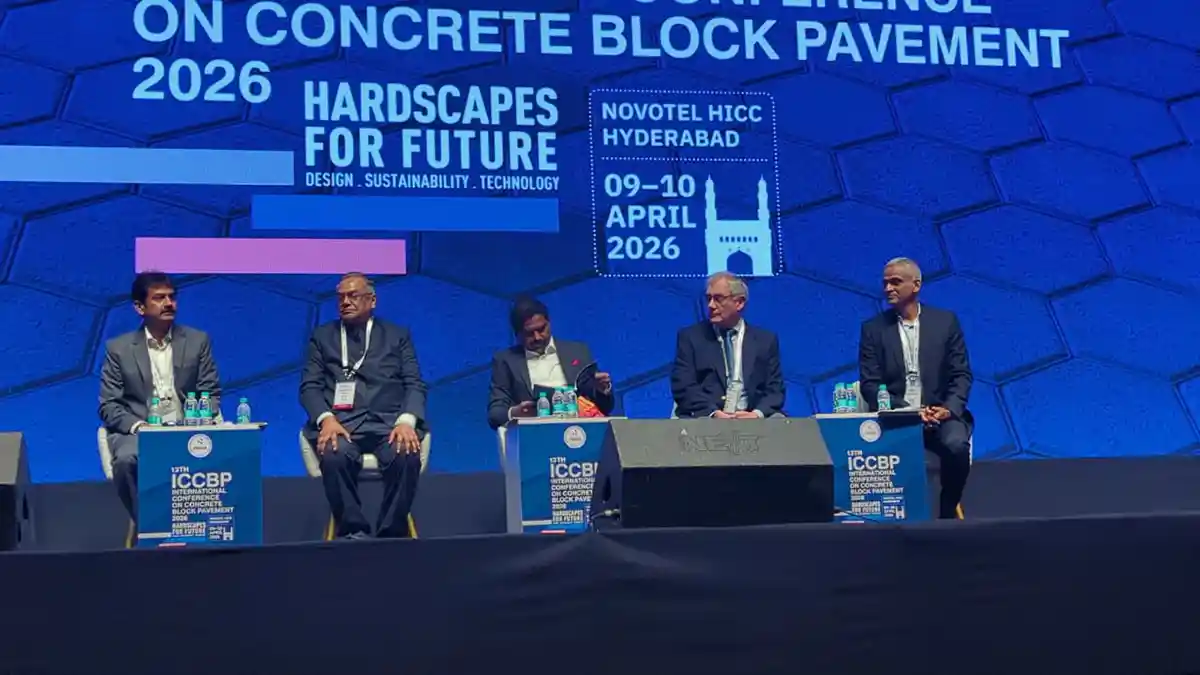
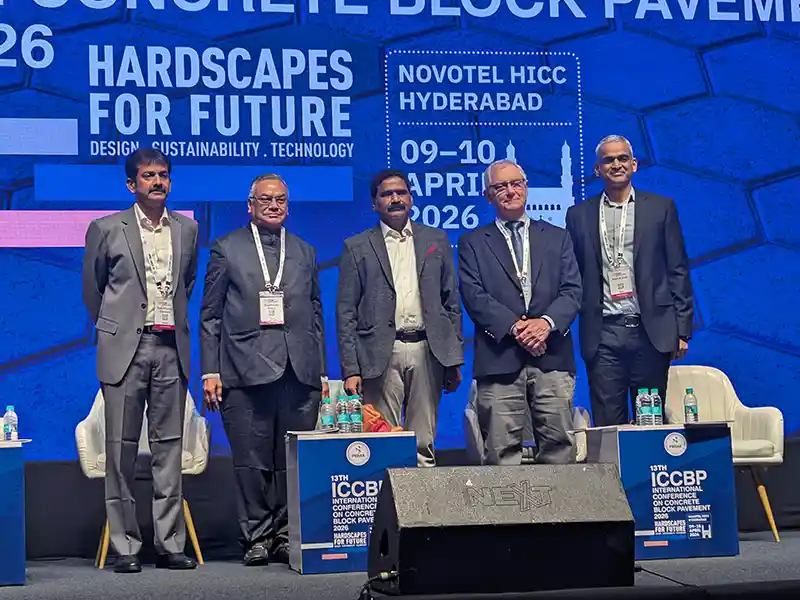
Key dignitaries included Chief Guest Sreedhar Reddy Koppula, President - NAREDCO Telangana, Sudhakar Mody, President - PBMA, Kali Prasad, Vice President - PBMA, David R. Smith, Chair – SEPT (USA), and Mehul Jain, Vice President - PBMA, along with other distinguished delegates from the industry.
The highlight of the inaugural session was the release of “Book of Abstracts,” by the Chief Guest. Delivering the welcome address, Sudhakar Mody extended a warm welcome to the audience, and acknowledged the support of David R. Smith for enabling the hosting of this global conference in Hyderabad. He emphasized that the conference would facilitate exchange of cutting-edge research, promote best practices, and strengthen industry collaboration.
Chief Guest Sreedhar Reddy Koppula addressing the gathering, emphasized the significance of hosting the conference in Hyderabad (also the first in India), calling it a milestone for the country’s construction sector. He highlighted the growing importance of sustainability and innovation in the construction industry and stressed the need to explore new applications of paving technologies, including rooftop cooling solutions, particularly relevant for cities like Hyderabad that experience extreme heat conditions. He underscored the importance of research presentations and technical discussions over the two-day conference, which would contribute significantly to advancements in construction practices.
Evolution of Concrete Block Pavement Technology
Presenting an in-depth perspective on the evolution of concrete block paving, Kali Prasad traced the origin and growth of the technology from ancient times to its modern-day applications. He informed that block paving was nearly 2,000 years old, and credited Roman engineering for constructing durable roads by laying stone blocks over pre-prepared foundations. These early modular pavements demonstrated the fundamental principle of strength through system design.Modern interlocking concrete block paving began to take shape in Europe during the post-World War II reconstruction period. Countries like the Netherlands and Germany required solutions that were fast, economical, and easy to maintain, leading to the development of machine-made interlocking concrete blocks. From the 1950s onwards, the technology evolved steadily, with advancements in standardized shapes, improved load distribution, growing research, and the adoption of mechanical production methods.
By the 1970s and 1980s, the technology had expanded to North America and other regions, eventually emerging as a scientifically engineered modular pavement system widely used in ports, airports, industrial yards, and core infrastructure. Today, in many developed markets, it is no longer viewed as an alternative but is recognized as a mainstream infrastructure solution.
Kali Prasad informed that the adoption of interlocking concrete block pavements in India began in the late 1980s and early 1990s. Initially, applications were limited to industrial flooring, township roads, petroleum outlet driveways, and small municipal works. During this period, specifications were evolving, and technical confidence was gradually being established, as the early skepticism among engineers and contractors on the durability of the technology gave way to growing awareness and acceptance. Today, the focus is now on speed and efficiency of installation—reflecting the remarkable transformation of the industry.
From modest beginnings, the application of concrete block pavements has now expanded to critical infrastructure such as airports, ports, smart cities, industrial corridors, metro-support infrastructure, and large logistics parks. And the technology is no longer considered an alternative, but a preferred paving solution. Rapid urbanization in India has accelerated adoption across municipalities, industrial sectors, and infrastructure projects.
“With the country developing at an unprecedented pace, demand for pavements that are durable, quick to deploy, easy to maintain, and environment friendly has increased significantly — making concrete block pavements highly relevant. While Europe represents maturity in this technology, India represents momentum, and this momentum has the potential to redefine the industry,” he said.
Highlighting industry advancements, he noted that the transition towards fully automated manufacturing plants, improved strength grades, quality systems, and has increased awareness among consultants and engineers. There is also a growing focus on permeable and climate-responsive pavements.
He acknowledged the role of industry bodies such as the Paver Block Manufacturers Association of India in promoting knowledge sharing and professional development, and credited the pioneers who, despite initial challenges, invested in technology, educated stakeholders, and demonstrated performance in real-world projects.
The coming decade will be transformative, with advancements expected in high-capacity manufacturing, performance-based pavement engineering, integration with smart utilities, and wider adoption of climate-resilient systems. “India is not only adopting global best practices but is also poised to contribute to shaping future trends in paving technology,” he said. “While global markets bring technical refinement, India contributes scale, ambition, and execution capability, enabling the development of pavements that are strong, sustainable, adaptable, and future-ready.”
Address by Chair, SEPT (USA)
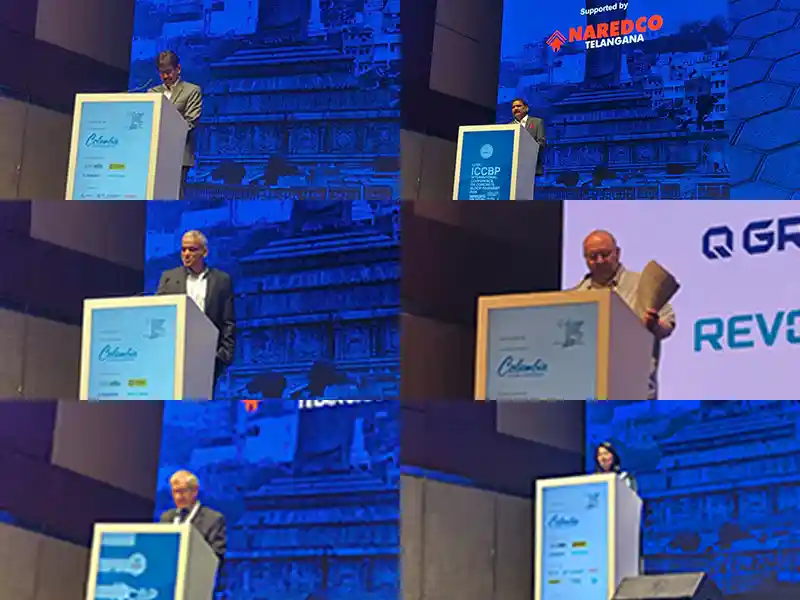
One of the key gaps observed globally is the varying level of expertise in pavement design. Countries with more advanced capabilities are better equipped to develop and communicate reliable design methodologies to engineers. For practicing engineers, confidence in design approaches is critical, as their professional reputation and client satisfaction depend on delivering durable and efficient infrastructure. A comprehensive approach, factoring in soil conditions, traffic loads, climate, and environmental considerations, is essential for long-term performance.
“There is a strong need to develop structured training programs focused on installation and construction practices, and to integrate them into educational systems. “Industry participation is crucial in this effort--by supporting training institutions, providing relevant materials, and showcasing the economic opportunities within the sector, more talent can be attracted to the field. However, building a skilled workforce is a long-term process that requires sustained commitment,” he said.
“India, in many ways, is ahead of several countries, with established material standards for paving blocks and defined structural design methodologies. However, like much of the world, the biggest challenge remains workforce availability. The industry needs more trained contractors who can execute projects correctly the first time, minimizing rework, costs, and delays. Addressing this skill gap will be key to ensuring quality, scalability, and the future growth of the sector,” he concluded.
Technical Sessions and Cultural Programme
The event featured a series of technical sessions with presentations by experts, researchers, and industry practitioners from India and abroad. The sessions addressed themes such as design methodologies, performance evaluation, sustainability, material innovations, and real-world case studies in concrete block pavement applications. These deliberations offered valuable insights into global best practices and emerging trends. A cultural evening provided delegates the opportunity to engage informally and strengthen their professional network.Vote of Thanks
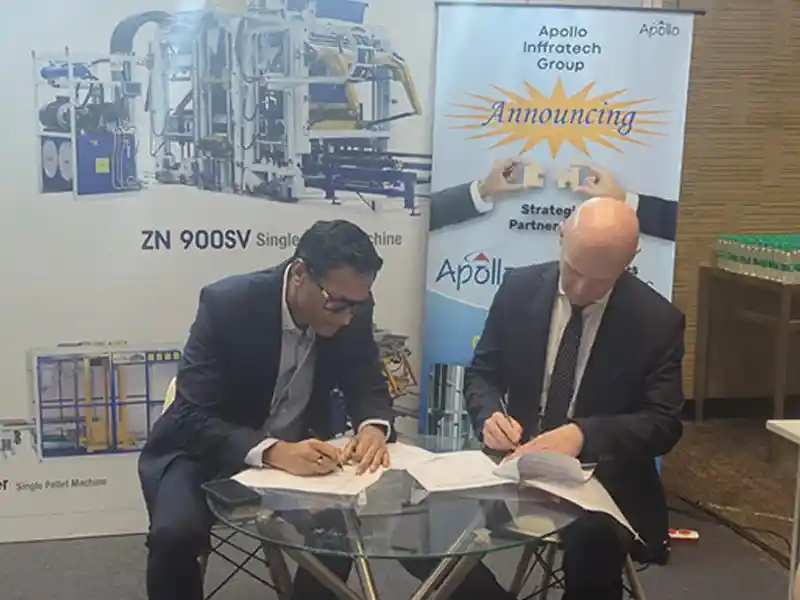
The vote of thanks was delivered by Mehul Jain who expressed gratitude to the participants, and special acknowledgment to David R. Smith for giving international exposure to the Indian paving industry. He also appreciated the efforts of the organizers and contributors who worked extensively over the past year to make the event a success.Curetec and Apollo Inffratech Announce Strategic Technical Partnership to Advance Curing Solutions in India at ICCBPOn the sidelines of the event, a significant collaboration was announced between Curetec, a global specialist in advanced concrete curing systems, and Apollo Inffratech, one of India’s leading manufacturers of concrete construction equipment. Under this technical tie-up, Apollo Inffratech will represent Curetec in the Indian market, combining global curing technology with local market reach.
Curetec is known for its project-specific, technology-driven curing solutions that enable controlled temperature, humidity, and air circulation to ensure consistent quality, durability, and faster production of concrete products across diverse applications. Apollo Inffratech brings strong manufacturing capabilities and a wide portfolio of construction equipment, catering extensively to India’s infrastructure sector.
The partners expressed optimism about the collaboration, highlighting India’s rapid infrastructure growth and the increasing demand for advanced, efficient curing technologies as key drivers for this strategic partnership. Initially, the curing systems will be supplied from Shanghai, with plans to localize manufacturing in India in the near future.
About ICCBP
As a premier international forum, it attracts global experts, industry leaders, policymakers, and academia, and is considered a strong platform for the exchange of technical knowledge, research insights, and best practices in the design, construction, and performance of concrete block pavements, strengthening global collaboration, and supporting the development of resilient, future-ready infrastructure.
A part of the long-standing international series, ICCBP focuses on addressing evolving challenges, emerging innovations, and sustainability-driven approaches in block pavement technologies.