The launch of GST (Goods and Services Tax) as midnight bash on June 30, 2017 would be a unique historical event. GST would be launched by the President in the august company of PM, FM, state CMs, former PMs FMs and many Union ministers in the Central Hall of Parliament at the mid night of June 30, 2017.
It would be country’s second tryst with its most comprehensive indirect tax reform to begin from July. The first being, India’s announcing its Independence in 1947, 60 years ago, at the stroke of midnight, granting full freedom and power to the country. And now after 60 years, with GST firmly placed, the moment has come in full circle when the country will witness full freedom from dual levies. It has taken 17 years to have a GST regime, having an across-the-board consensus on creating an investor–friendly tax regime.
“The world will witness a transformation and how we all have united for the implementation of GST,” said the PM, terming the rollout of the GST from July 1 as historic. Talking about this midnight bash, the FM said that the hour-long function to be held in the Central hall of the Parliament, will mirror the contribution made by all to have this revolutionary new tax regime. It will lead to rise in Central and state revenue as the size of economy grows, he added.

Introduction of GST is expected to fuel demand for professionals in various segments of economy and over one lakh immediate new employment, including services in specialized areas of retail, taxation, and accounting could be expected with an annualized job growth of 10-13%, says a reputed HRD agency.
Sharing its views on the prices situation with the author, CRISIL’s senior economist said that it would not have any serious impact on mass consumptive items as they have been priced at lower tax slab. We do not expect GST to have a significant impact on inflation and our inflation forecast for this fiscal would be at 4 percent, he maintains.
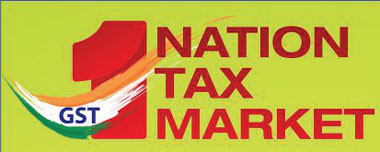
GST is a destination-based consumption tax system where tax is charged on value-added principle. It does away the current practice of direct and indirect taxes, right from the manufacturer to the final destination of sales or services. Taxes like VAT, Central Excise Duty, Sales Tax, Service Tax etc., have been merged in GST. It would be one tax for one nation, making the entire country a common market, envisaged to improve GDP.
There are over 140 countries using GST. While France being the first to implement this, India has opted to follow the GST model followed in Canada. Its benefits and spin off impact are rationalization of tax structure and elimination of tax over tax situation, reduction of cost of goods and services, automation of compliance procedure, minimizing the cost and increasing transparency, harmonizing the Centre and state tax system and positively impacting the GDP growth. It will impart a big boost to the infrastructure and manufacturing sector.

GST is a 4 tier tax structure at 5 percent,12% ,18%, and 28% slab. More than four-fifth of the goods and services would fall under GST rate and of 18% or below. A handful of services including transport of goods by road, rail, and financial leasing services, hire purchase could fall under the lowest GST rate of 5 percent.
To overhaul 80 check–posts for GST, the Road Transport ministry is considering a Rs.4,000 crore plan to ensure seamless flow of goods ahead of implementation of GST, including developing an app for it to link state barriers.
Healthcare, education, non-AC rail travel, metro, local train and religious travels have been exempted.
Advent of GST would promote new investment and lending opportunities with companies preferring to enter into the formal economy and access working capital from organized financial bodies rather than rely on money lenders. According to financial experts, this would shorten the working capital cycle and boost return on capital employed (ROCE). This is expected to benefit the building materials sector. In this sector, the higher the share of organized financial players like the banks and NBFCs, the lower is the working capital cycle, says the financial experts.
There is always a gap between the theory and its practice. How much ingenuity various stakeholders involved in the GST regime put to bridge this gap would make a vital difference in the seamless implementation of GST, while the initial jitters and short-term hiccups cannot be ruled out.