The Mumbai-Ahmedabad High-Speed Rail project is seen as the flagship of India-Japan infrastructure cooperation. How do you see the partnership growing?
Japan's high-speed rail expertise, developed through the Shinkansen network since the 1960s, has played a critical role in our country's economic development and remains one of the most successful examples of transportation engineering in the world.
As India explores additional routes and expands its transportation infrastructure, Japan remains ready to contribute its expertise and technology in whatever areas where we can add value.
At the same time, our broader objective is not limited to railway systems. We seek to share engineering know-how, project execution experience, and advanced infrastructure technologies that can support sustainable development and create long-term value.
What is the philosophy behind Japan's international infrastructure cooperation programs?
Our approach is based on the belief that infrastructure partnerships should not be viewed simply as technology exports. We consider them mechanisms for creating long-term benefits in partner countries.Technology transfer, technical advisory services, skill development, and local capability building are essential elements of successful cooperation. We believe that infrastructure development should help strengthen local industries and create sustainable growth opportunities.
We have seen this approach work effectively in several Southeast Asian countries, where infrastructure programs supported by Japan have encouraged the growth of local manufacturing, supply chains, and technical training, alongside project implementation. Similar models can play an important role wherever they contribute to project efficiency and local economic development.
Which Japanese technologies do you believe could be particularly relevant for India's infrastructure sector?
We believe advanced surveying systems and digital construction technologies could be highly relevant for India. Accurate surveying has become the foundation of efficient infrastructure delivery, while digital construction methods are transforming how projects are planned, executed, and monitored.This is particularly important for a country like India, where major infrastructure projects are being developed in diverse and challenging environments. From mountainous terrain and dense urban areas to coastal infrastructure, river crossings, underground metro systems, and underwater tunnel projects, accurate surveying and data collection form the foundation of successful project delivery. These technologies help improve planning, enhance safety, mitigate risks, and support efficient execution throughout the project lifecycle.
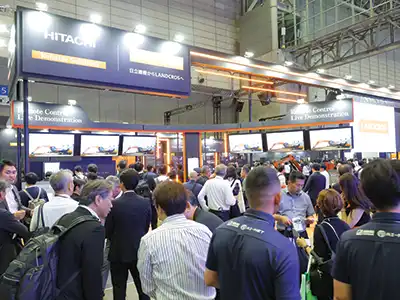
These technologies are increasingly integrated with intelligent construction equipment, automation and data-driven project management systems. Many of these innovations were showcased at the CSPI Expo, where construction machinery manufacturers, surveying specialists, and digital technology providers demonstrated solutions designed to improve productivity, safety, and project quality.
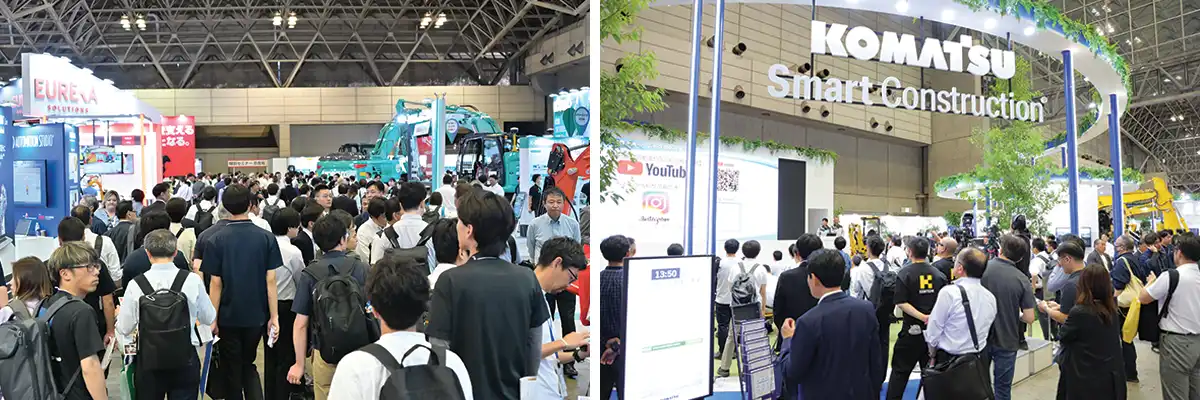
As infrastructure projects become larger and more complex, such technologies can play an increasingly important role in enhancing project efficiency, improving decision-making, reducing project risks, and supporting better overall project performance.
Japan is known for its expertise in disaster management and resilient infrastructure. What learnings could be relevant for India?
It is true that disaster resilience is an area where Japan has accumulated considerable expertise over many decades. Our experience in dealing with earthquakes, typhoons, and other natural hazards has driven significant advances in seismic engineering, disaster prevention, and resilient infrastructure design.These capabilities are becoming increasingly important as countries seek to develop infrastructure that can withstand both natural disasters and climate-related risks. For India, where major transportation and infrastructure projects are often undertaken in challenging geographic and geological environments, such knowledge can provide valuable insights into long-term infrastructure planning and risk mitigation.
Developing resilient infrastructure is no longer an option; it is becoming an essential component of sustainable development.
The future of Indo-Japanese collaboration lies in the exchange of technology, engineering expertise, advanced surveying, digital construction, and disaster-resilient solutions that can support India's infrastructure development.
Beyond government-level cooperation, what role can industry institutions and professional organizations play in strengthening India-Japan collaboration?
Government-to-government cooperation remains the foundation of major infrastructure initiatives, but industry institutions and professional organizations also play a very important role in facilitating technology exchange.Engineering associations, research institutions and industry bodies often serve as practical bridges connecting professionals, technology providers and project stakeholders. Through these networks, opportunities are created for technical visits, project observations and knowledge-sharing programs that allow engineers, contractors and infrastructure developers to experience technologies in real operating environments.
Exposure to active construction projects, research facilities, and advanced engineering applications often provides insights that cannot be gained through exhibitions alone. Such interactions help accelerate learning and encourage meaningful collaboration between industry participants.
As the CSPI Expo expands its international outreach, how do you see the future of India-Japan cooperation evolving?
As the CSPI Expo continues its efforts to attract greater international participation, industry-to-industry connections will become increasingly important. For countries such as India, where infrastructure development remains a national priority, stronger engagement with Japan's construction ecosystem could create opportunities that extend well beyond equipment procurement.The future of Indo-Japanese infrastructure cooperation is far broader than any single project. High-speed rail may be the flagship initiative, but the next phase of collaboration is likely to be driven by technology exchange, digital construction, advanced surveying, disaster-resilient engineering, and the sharing of practical expertise developed through decades of infrastructure innovation. As both countries pursue ambitious development agendas, these areas may well define the next chapter of the India-Japan infrastructure partnership.