Addressing the gathering, Smt Rupinder Brar, Additional Secretary, Ministry of Coal, Government of India, observed, “The future of India's mining sector lies in integrating advanced technologies such as AI, digital mine monitoring, underground mining solutions, coal gasification, and green mobility with policy reforms and skill development. These capabilities will strengthen resource security, improve ESG performance, and unlock new opportunities for domestic manufacturing and innovation.”
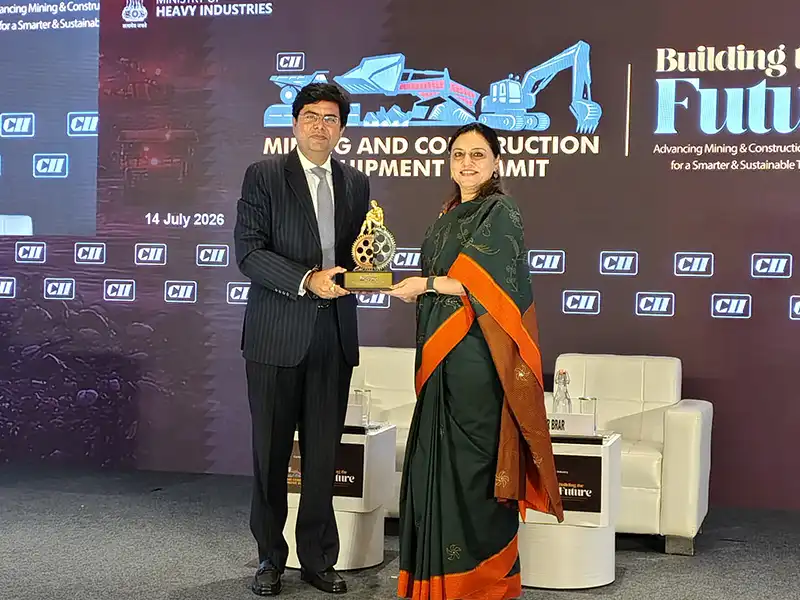
“Indonesia and India are natural partners in shaping the future of mining and industrial development. By combining Indonesia’s resource strengths with India’s engineering, manufacturing, and technological capabilities, we can build resilient supply chains, accelerate value-added manufacturing, strengthen energy security, and create a more sustainable and globally competitive industrial ecosystem for both our nations,” said Dr Satya Widya Yudha, Member, National Energy Council, Republic of Indonesia.
“The Indian Construction Equipment industry has achieved a new milestone, with exports growing by 31.5%, reflecting its resilience, entrepreneurial spirit, and growing global competitiveness. As Bharat advances its infrastructure and industrial ambitions, the sector must lead through innovation, intelligent technologies, lower environmental impact, and future-ready business models to strengthen its position as a global manufacturing hub,” said Vivek Bhatia, Chairman, CII Mining and Construction Equipment Division, and Managing Director & CEO, TKIL Industries.
Manojit Haldar, Managing Director & President, Sandvik Mining and Rock Technology India, informed that over the past decade, India has made remarkable progress. The GDP has grown, per capita income has improved, and India's influence on the global stage—from the G20 to other international forums—has strengthened considerably.
“The next decade, however, must be defined not just by growth, but by responsible growth. Our responsibility extends beyond adopting cutting-edge technology; it also includes investing in people, developing skills, fostering innovation, and building strong collaborations. Let us work together to power the future through technology, skilled talent, and meaningful collaboration—not only within India, but across the world.”
Manav Kohli, CEO & Executive Director, Gainwell Commosales, called attention to the quiet force driving India's infrastructure development. "The foundations of Viksit Bharat are being built by an industry that works behind the scenes, but its contribution is visible in every highway, mine, bridge, power project, and industrial corridor. As India races toward a US$30 trillion economy by 2047, the industry must build faster, mine deeper, and grow smarter through technology and sustainable practices.”
Moses Eddy, Director, Kobelco Construction Equipment India, stated, “India is a vast country, and it also serves global markets. In such an environment, speed is critical. The ability to quickly diagnose faults, troubleshoot issues, and return machines to operation can make a significant difference to project timelines and productivity. Intelligent equipment with advanced diagnostics and connected technologies will help improve operational efficiency and equipment uptime.”
He added, “However, intelligent machines alone are not enough. We also need people with the skills to operate, maintain, and manage advanced technologies. At Kobelco, we firmly believe that India represents the future. We are making substantial investments in state-of-the-art manufacturing facilities and advanced technologies. We also believe that energy-efficient equipment will define the future of the industry, and our product development is firmly aligned with that vision.”
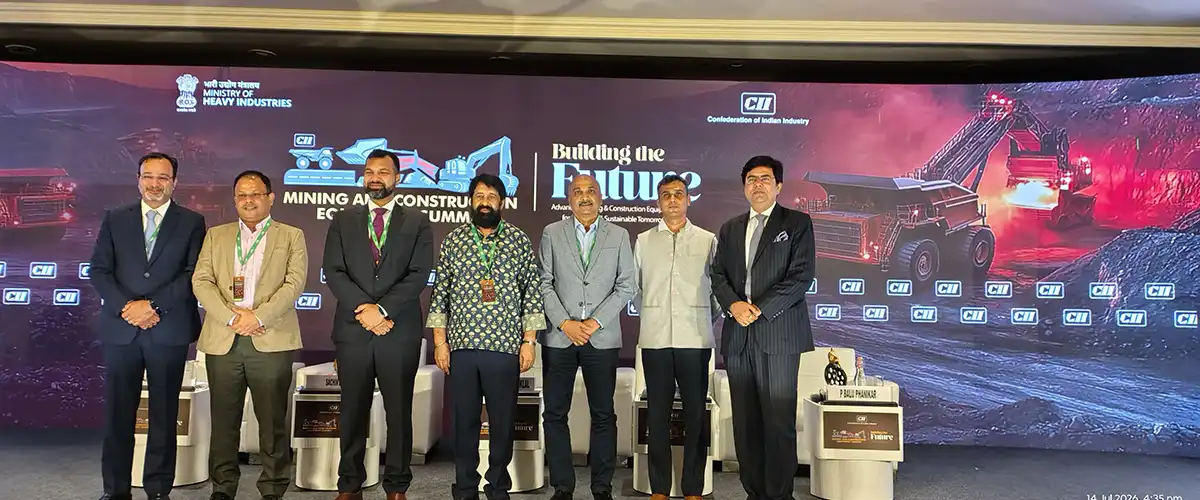
During the plenary session on 'Building the Future of India’s MCE Industry: Scale, Sustainability and Global Competitiveness' the panelists drew focus on strengthening domestic manufacturing, aligning policy and investment priorities, and enhancing India’s position in global value chains.
A session on 'Enabling Growth: Policy, Localisation and Global Competitiveness' highlighted that a robust policy and manufacturing ecosystem was critical to unlocking the next phase of growth for India’s MCE sector. Panelists discussed the regulatory and policy frameworks required to promote domestic manufacturing, drive localisation, and improve ease of doing business. Discussions were held on enhancing export competitiveness, addressing operational bottlenecks, and positioning India as a preferred global manufacturing destination for mining and construction equipment.
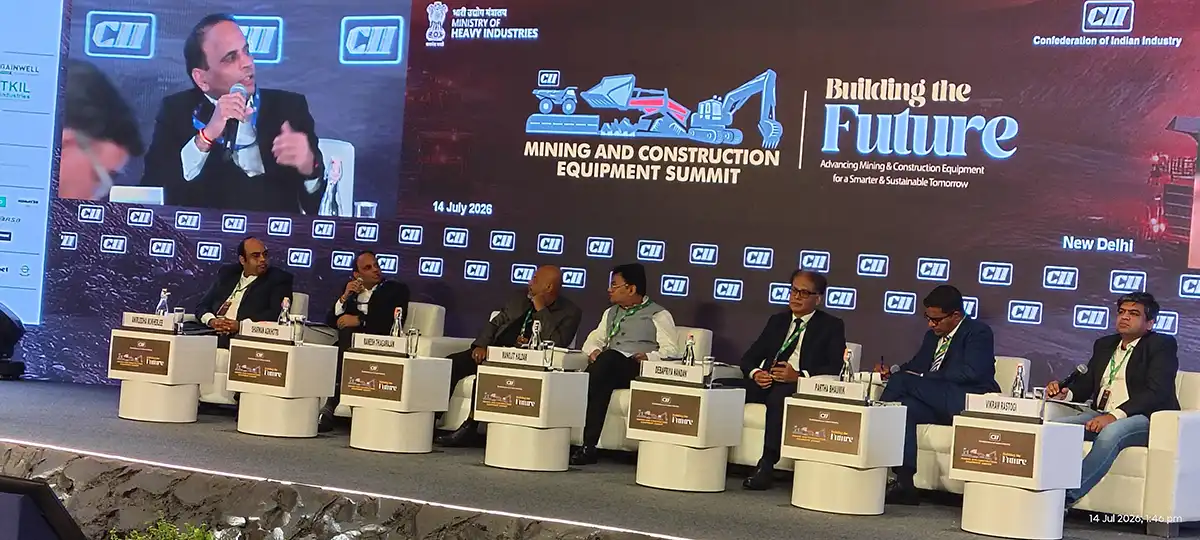
A panel discussion on 'Smart & Advanced Equipment: Digitalisation, Automation and AI' stressed on rapid advancements in technology for increasing the capabilities and performance of mining and construction equipment. Panelists discussed adoption of digitalisation, automation, IoT, and AI-driven solutions in the MCE sector, for improving productivity, safety, and cost efficiency, and emerging trends such as predictive maintenance, autonomous machinery, and the integration of Industry 4.0 in manufacturing and operations.
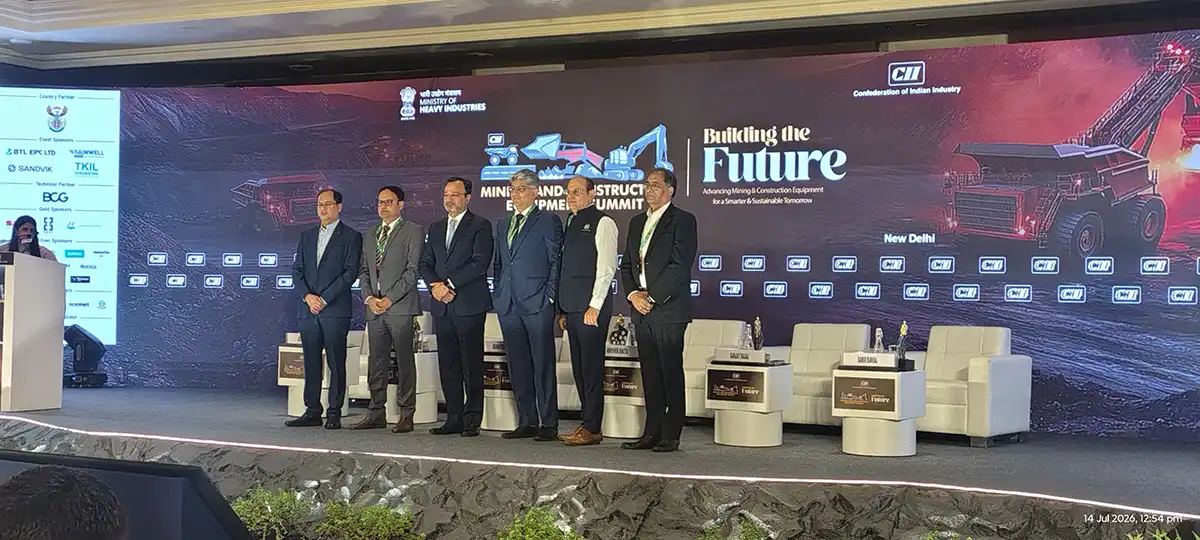
At a session on 'Green and Sustainable MCE Solutions' panelists shared pathways to build a future-ready MCE ecosystem through electrification, low-emission technologies, sustainable manufacturing, energy efficiency, circularity, and responsible mining and construction practices. Balancing growth, productivity, and competitiveness with sustainability priorities is the need of the hour. As India accelerates investments in infrastructure and mining, the mining and construction equipment sector needs to transition towards cleaner, smarter, and more sustainable operations.
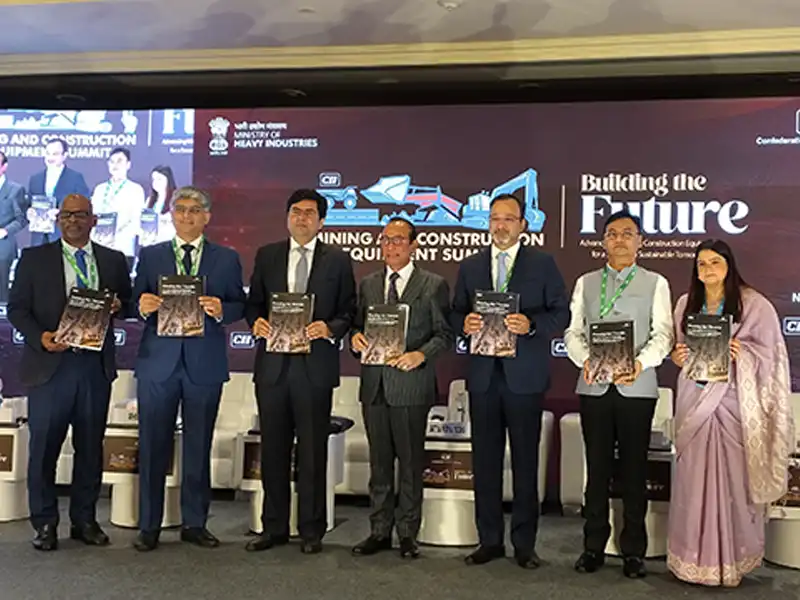
Released during the event, the CII–BCG knowledge report, Pressing the Throttle: How India’s Mining and Construction Equipment Industry Can Support Domestic Ambitions and Become a Global Force, identified four strategic priorities for accelerating demand in India's mining and construction equipment (MCE) industry:
- Infrastructure build-out: roads, railways, metros, ports, airports, urban and logistics systems.
- Manufacturing scale-up: PLI-led growth in semiconductors, defence, electronics, automobiles, renewables, and chemicals, with factory and warehousing infrastructure to support manufacturing. To lift manufacturing share to 25% under Viksit Bharat, the sector would need to grow faster than the wider economy and GDP growth.
- Critical minerals and resource security: coal and underground coal, iron ore and copper, and the lithium, cobalt, graphite, and rare earths needed for batteries, EVs, and electronics.
- Energy transition: solar and wind parks, transmission and grid infrastructure, storage, and green hydrogen, alongside continued baseload reliability.
The report highlighted a 10-point agenda to unlock the industry's potential, including promoting Make in India through targeted policy; strengthening fleet safety through scrappage and renewal; establishing a single, empowered nodal agency; protecting operators by curbing counterfeit components; developing the Tier-2 supplier ecosystem in clusters to build scale; making bold export moves by setting up subsidiaries in key geographies and building the network to boost exports; bringing in the best technology and steering the mining and construction industry towards automation and mechanisation; building on India’s engineering talent to deepen R&D and innovation; collaborating and co-investing to address the skilled operator gap; and enabling industry to bring technology with the government facilitating adoption.
The MCE sector, currently valued at over USD 18 billion and growing at a strong pace, is emerging as a key enabler of productivity, efficiency, and global competitiveness. The industry plays a critical role across mining, construction, power, transportation, logistics, and industrial development. Beyond its direct economic contribution, the sector is central to infrastructure creation, employment generation, technology adoption, and strengthening India’s manufacturing ecosystem. As the country progresses towards becoming a USD 5 trillion economy, the MCE industry is on the cusp of a major transformation, driven by large-scale infrastructure development, a renewed thrust on domestic manufacturing, and a global shift towards sustainability, digitalisation, and resource security.