- Long-term investor interest intact in road assets; though valuations will remain the key
- Low bank rates and delayed transmission of rate cuts by project lenders a major concern – divesting and refinancing HAM projects is going to be a challenging task
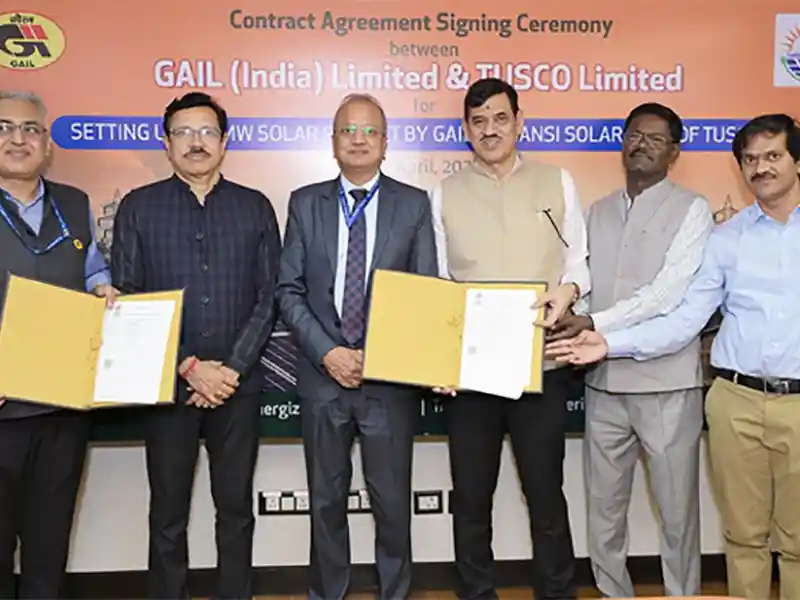
The session was moderated by Mr. Shubham Jain, SVP & Group Head, Corporate Ratings, ICRA and the experts who participated in the conference were Mr. R. K. Pandey, Member- Projects, NHAI, Mr. Shailesh Pathak, CEO, L&T IDPL and Mr. Supratim Sarkar, EVP & Group Head, SBI Caps.
The Ministry of Road Transport and Highways (MORTH) has initiated a slew of relief measures like shift from milestone based billing (typically ranging between 45-75 days) to monthly billing and release of retention money / performance security in proportion to the work already executed among others which has immensely supported the road contractors. As per an ICRA note, these initiatives have helped in reducing the cash conversion cycle while also getting the performance guarantees and associated margin monies released for the executed portion of the projects. In addition, MORTH and NHAI have also been making payments within 7-15 days post the bill certification by the independent engineer.
Speaking at the conference, Mr. Shubham Jain, SVP & Group Head, Corporate Ratings, ICRA said, “It is heartening to see positive and proactive steps taken by NHAI with an objective to strengthen the liquidity position of the road contractors and developers. This is also reflecting in the way in which road contractors have ramped up the execution efforts despite facing multiple headwinds post lockdown including reverse migration of labour. Notwithstanding the high cost of re-mobilising the labour, many contractors made special arrangements to facilitate return of labour due to improved cash conversion cycle from the NHAI / MoRTH projects.”
On Bharatmala Pariyojana (BMP) Phase –I
Till February 2020, a total of 246 road projects with an aggregate length of about 10,100 km were awarded under Bharatmala Pariyojana (BMP) Phase –I at a total cost of ₹2,38,413 crore. About 21% of BMP execution is completed as on March 31, 2020. The average cost of award under BMP stood at ₹23.80 crore per km which is 54% higher than initial estimated cost of ₹.15.52 crore per km.
On BMP Phase-I, Mr. R.K. Pandey, Member- Projects, NHAI, added “NHAI targets to complete BMP awarding by FY2023 and complete the execution by FY2025. The cost of BMP is expected to increase from ₹5.35 lakh crore to ₹8.8 lakh crore. For the current financial year, the awarding target is 4500 km of which 744 km has already been awarded and bids have been called for another 1100 km. NHAI tried to address the project delays caused due to delay in land acquisition by awarding only those projects wherein 90% of land is in actual possession of NHAI after 3H stage as against earlier practice of awarding contract when land acquisition was at 3D[1] stage.”
On outlook for M&A Activity in road sector
On outlook for M&A activity in road sector, Mr. Shailesh Pathak, CEO, L&T IDPL added, “Investor interest would always be there for operational road assets provided valuations are appropriate; would be keen on acquiring distressed projects or assets of developers, at the right price. Road Assets having established baseline traffic data of 2+ years provide greater comfort to investors especially in forecasting future traffic growth. Such assets would in turn get good value from long-term international investors with patient capital.”
Elaborating further on M&A in road sector, Mr. Shubham Jain, SVP & Group Head, Corporate Ratings, ICRA said, “The prevailing uncertainty due to Covid-2019 and the consequent impact on valuations could delay asset monetisation plan of NHAI – toll-operate-transfer (ToT) auctions and launch of infrastructure investment trust (InvIT). Depending on how quickly the normalcy is restored, these plans could take off by end of FY2021.”
On HAM Projects
The bigger risk that exists for HAM projects which remained unaddressed is the prevailing low bank rates adversely affecting their overall cash inflows. With the series of downward revisions in the repo rates in recent past, the bank rate reduced to 4.25% (historic low) from around 6.5-6.75% at the time when the many of the HAM projects were awarded.
On challenges faced by HAM projects, Mr. Supratim Sarkar, EVP & Group Head, SBI Caps added, “Both divesting and refinancing of HAM projects looks difficult under the current circumstances on account of the widening gap of MCLR and Bank rates. The developers might have to sell the projects at a loss if they were to sell now. Similarly, lenders would also shy away from lending at this juncture because unlike toll projects, there is no upside in HAM projects as a fixed annuity is given and lenders will have to rethink the DSCR levels at which they are willing to refinance.”
Elaborating further on HAM projects, Mr. Shubham Jain, SVP & Group Head, Corporate Ratings, ICRA said, “Sustained low interest rate regime is a challenge for operational BOT-HAM projects. The RBI bank rates are expected to remain at low levels to revive growth and mitigate impact of Covid-19 on the economy. Low bank rate would reduce the overall inflows for a HAM project thereby adversely affecting its debt coverage metrics and returns to the investors. The other problem is delayed transmission of reduced interest rates for the project loan (linked to MCLR of banks) whereas such transmission is immediate in case of the interest to be paid by the authority (linked to RBI bank rate).”