Our customized reutilising plants can transform challenging waste streams from fly ash and slag to sugar biomass and paper waste into usable building materials and alternative fuels.
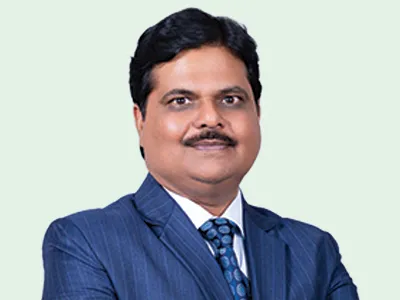
R.V. Panchal, CMD

In what ways are Neptune’s technologies contributing to India’s sustainable infrastructure and housing growth?
At Neptune Industries, we are creating globally competitive, inclusive, and sustainable technologies. Our focus is on precision, quality, and long-term environmental responsibility. Through advanced innovative alternate technologies, we are producing eco-friendly building materials. These solutions, along with converting industrial waste into green products, are aimed at reducing the carbon footprint while improving efficiency and affordability.There is demand for building materials, bricks, blocks, and modular construction and we are witnessing strong growth in three core segments: affordable housing, smart city development, and industrial infrastructure. These sectors require high-volume, high-strength materials that are produced consistently and efficiently. Neptune is addressing the demand with modular plant designs and fully automated brick and block machinery that minimize manual intervention while maximizing precision and productivity. Our “plug-and-produce” concept helps entrepreneurs and developers scale production quickly while maintaining sustainability and cost-effectiveness.
In India, as the demand for hollow block and concrete paver technology shifts toward high-tech, fully automated plants, Neptune has transitioned from semi-automatic systems to 5G Smart Technology automation lines. Our latest range of Vibro Compacting Block Machines uses intelligent controls and precision hydraulics for consistent compaction and surface finish. We’re also integrating robotic handling and palletizing systems, enabling faster cycle times, reduced manpower, and uniform product quality. This helps our clients meet global construction standards while improving profitability and sustainability.

How is Neptune integrating digital tools such as IoT, AI, and cloud-based monitoring to enhance productivity, efficiency, and lifecycle management?
Our new Neptune Smart Plant Platform leverages IoT sensors and AI-driven analytics to monitor machine health, energy consumption, and production efficiency in real time. Cloud-based dashboards allow clients to access performance data from anywhere, while predictive maintenance algorithms help reduce downtime. This digital transformation ensures that every Neptune plant runs smarter, cleaner, and more efficiently throughout its lifecycle.How is the company scaling its “waste-to-wealth” capability, and what long-term goals have you set for achieving circular economy and net-zero targets?
Neptune expanding its specialization into processing C&D, industrial and agro waste such as slag, sludge, ore fines, pellet waste, and residues from steel, sugar, and paper industries, to create sustainable building materials and fuels. This is one of Neptune’s strongest growth areas. Over the past few years, we’ve engineered customized reutilising plants capable of transforming challenging waste streams, from fly ash and slag to sugar biomass and paper waste, into usable building materials and alternative fuels.Our “Waste-to-Wealth” initiative is built on three pillars: resource recovery, product innovation, and circular manufacturing. By integrating automation, robotics, and advanced material handling, we’re scaling up capacity while maintaining zero-waste operations. Our long-term goal is to support industries and cities in achieving net-zero waste and carbon-neutral construction by 2035.
Our proprietary UHDP (Ultra High-Density Press) technology has become a benchmark in the industry. It represents a leap in material strength and sustainability. It applies ultra-high compaction pressure with precise moisture and density control, ensuring every product achieves superior strength, water absorption resistance, and dimensional accuracy. Unlike conventional systems, UHDP technology enables the use of industrial waste and alternate raw materials without compromising quality. We are now evolving it further with smart hydraulic control and digital compaction mapping, to deliver even greater consistency for next-generation, low-carbon building products.
Please highlight a project that best showcases Neptune’s turnkey capabilities, from design and engineering to commissioning.
A recent highlight is a greenfield Fly Ash Brick Plant for a major infrastructure developer, delivered on a turnkey basis — from concept to commissioning. Our scope included complete material handling, batching, hydraulic pressing, automation, and packaging systems. The client achieved over 25% cost savings, 30% higher production efficiency, and zero waste discharge, positioning their facility as one of the most sustainable in the region. This project perfectly represents Neptune’s philosophy — engineering innovation for sustainable growth.What new machine, digital module, or automation solution will Neptune be showcasing at EXCON 2025?
We will introduce a next-generation hydraulic press line with integrated digital intelligence, combining UHDP technology with smart automation, energy optimization, and remote diagnostics.We will also showcase our IoT-based Smart Plant Platform and recycling solutions for C&D and industrial waste. Our innovations underline Neptune’s commitment to Make-in-India, Build-for-the-World —driving sustainable, high-performance infrastructure and empowering industries to achieve a circular, carbon-neutral future.