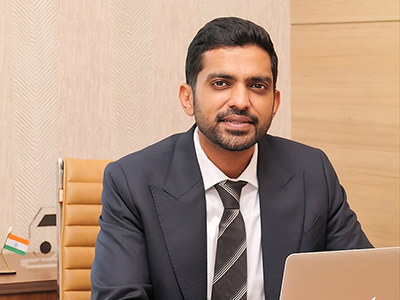
On a vessel at sea, safety is never abstract. A flicker in a control panel, an unusual sensor reading or a delayed response from a critical system can quickly determine whether a routine voyage remains routine."As India's maritime sector continues to grow, the decisions we make today will define how safely and efficiently the industry operates in the years ahead. Investing in technology, workforce training and operational discipline will not only strengthen safety outcomes but also enhance the sector's long-term resilience and stakeholder confidence."
Mohammed Hajee - CEO, Marine & Fire Safety, SHM Shipcare

For decades, the maritime industry has relied on one simple but essential principle: preparing for the unexpected. Scheduled inspections, preventive maintenance and regulatory compliance have long formed the backbone of that preparedness. However, as ships become smarter, ports more connected and offshore operations increasingly complex, the industry is entering a new phase—one in which risk management is no longer just about responding effectively but anticipating risks before they emerge. That is the bigger story unfolding across the maritime sector today. Technology is not replacing human judgment or operational discipline; instead, it is providing operators with greater visibility, faster decision-making and a better opportunity to prevent problems before they escalate.
A Sector Under Pressure
Traditionally, maintenance has followed fixed schedules, with equipment serviced at predetermined intervals or during planned dry docks, regardless of its actual condition. While this approach has served the industry well, it has also exposed operators to two costly outcomes: unexpected failures between inspections and the premature replacement of equipment that still has useful service life.
From Routine Checks to Real-Time Insights
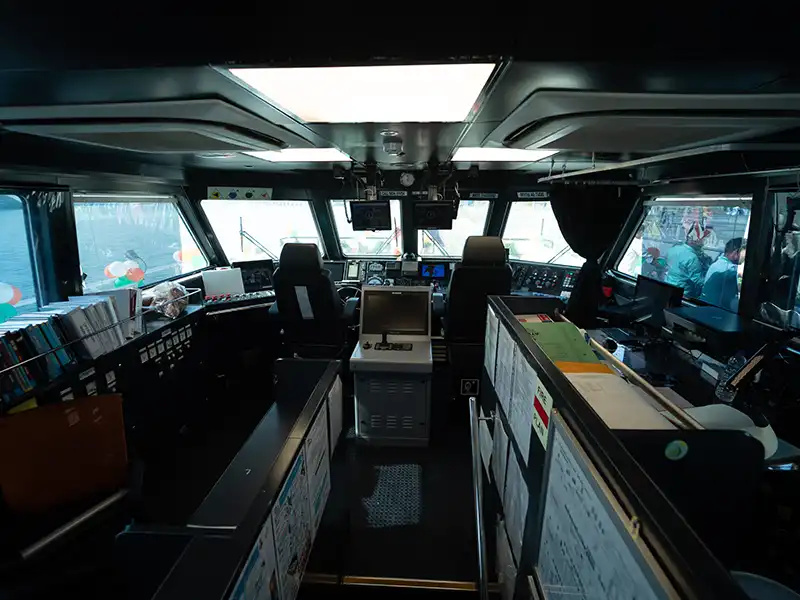
The rise of smart systems is transforming the daily rhythm of maritime risk management. Modern vessels are increasingly equipped with sensors that continuously monitor the condition and performance of engines, hull structures, ballast systems, firefighting equipment and other critical assets. This data can be analysed onboard and shared with shore-based teams almost instantly.The result is not simply more data, but more meaningful insights. Operators gain a clearer understanding of vessel health, enabling them to detect anomalies earlier and address issues before they escalate into operational disruptions. When information from multiple systems is integrated, the benefits become even greater. Rather than relying on isolated inspections, maritime teams can identify patterns and trends across an entire vessel or facility.
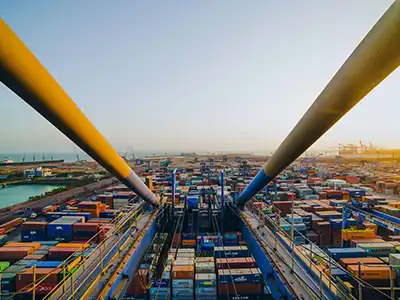
The same trend extends beyond ships. Ports and offshore facilities are increasingly deploying connected monitoring systems for berthing infrastructure, mooring systems and safety equipment. Continuous visibility enhances situational awareness and enables operators to respond more quickly to developing risks.
The most effective systems, however, are not those that simply collect data—they are the ones that convert data into timely and informed action.
Predictive Maintenance Becomes Practical
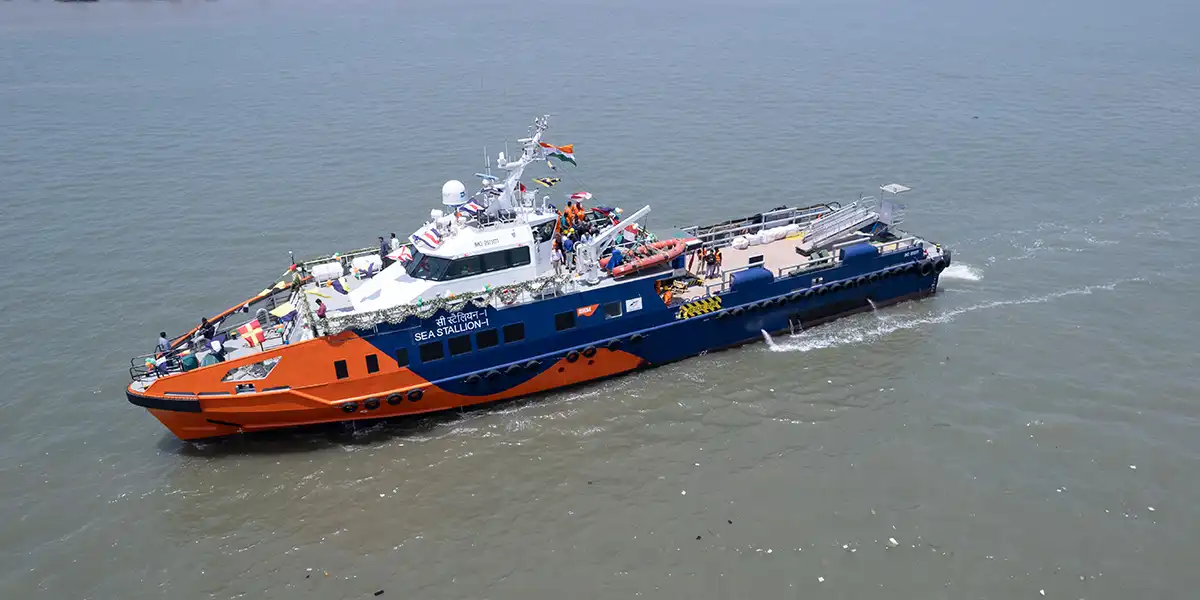
Among the most valuable outcomes of connected maritime systems is predictive maintenance. Rather than relying solely on fixed service schedules, operators can use real-time condition data to determine when maintenance is genuinely required.Predictive maintenance, powered by sensors, artificial intelligence and real-time analytics, enables teams to monitor the actual condition of equipment instead of waiting for failures or scheduled servicing. This condition-based approach reduces downtime, improves maintenance planning and avoids unnecessary replacement of components. It is particularly valuable for safety-critical assets such as firefighting systems, emergency generators, gas detection units and lifesaving appliances.
In a high-risk environment, the ability to identify early warning signs is invaluable. A small variation in vibration, pressure, temperature or system performance may appear insignificant on its own, but continuous monitoring can reveal the emergence of a fault long before it becomes critical. This gives operators the time to intervene with greater precision and minimal operational disruption.
For an industry built on preparedness, this represents a significant evolution. The objective is no longer simply to maintain equipment, but to understand its condition, performance and remaining life more accurately.
People Still Make the Difference
Even as systems become more advanced, maritime safety remains fundamentally people-driven. Smart technologies can provide visibility, but they do not make decisions. Their value depends on the ability of crews, engineers and shore-based teams to interpret the information accurately and respond effectively.That is why the human dimension of transformation is just as important as the technological one. As vessels and infrastructure become increasingly digital, the skills required to operate them are also evolving. Crew members must now be comfortable using monitoring platforms, interpreting condition-based data and working alongside increasingly automated systems.
The same applies across ports, terminals and offshore installations. Technology may improve operational performance, but people ultimately determine whether those improvements translate into safer outcomes. Training, emergency drills and continuous professional development therefore remain central to effective maritime risk management.
Cyber Risk Enters the Picture
Another important dimension of this transformation is cybersecurity. As maritime systems become increasingly connected, they also become more exposed. Navigation systems, communication networks, cargo management platforms, remote diagnostics and automated control systems are now frequently interconnected.While this connectivity improves efficiency, it also introduces new vulnerabilities. A cyber incident can disrupt not only data systems but also physical operations, personnel safety and business continuity. Cyber resilience can therefore no longer be viewed solely as an IT responsibility—it has become an integral component of operational safety.
Building resilience requires more than software. It demands secure system architecture, continuous monitoring, regular software updates, robust access controls, incident response planning and well-trained personnel who recognise that cyber risk is now an everyday operational concern. In today's smarter maritime environment, preparedness must encompass both the sea and the digital landscape.
Safety as a Culture
The organisations making the greatest progress are those that view safety as a culture rather than merely a compliance requirement. They maintain equipment based on its actual condition rather than convenience, conduct emergency drills regularly and encourage employees to identify and report potential risks before incidents occur.Technology plays an important role in enabling this approach, but it cannot replace strong leadership, accountability or organisational commitment. Ultimately, sustainable safety performance is built on culture rather than technology alone.
Looking Ahead
The future of maritime risk management is already taking shape. It is becoming more connected, more predictive and increasingly data-driven, enabling operators to identify risks earlier and respond with greater precision.Yet, despite rapid technological advances, the fundamentals remain unchanged. Long-term success will continue to depend on sound judgment, robust systems, skilled people and a culture that never stops preparing for the unexpected.