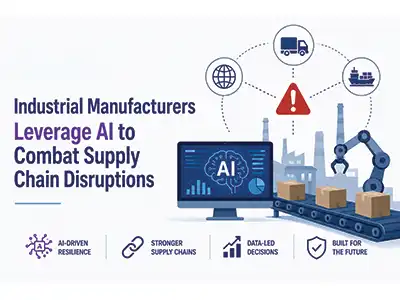
The report draws on insights from 258 technology leaders across 22 countries—spanning metals, advanced materials, aerospace, defense, and industrial products—to provide a comprehensive blueprint of the sector’s digital evolution.
The Supply Chain Imperative Modern manufacturing supply chains are no longer viewed merely as cost centers, but as strategic levers for long-term value creation. Facing unpredictable logistics and market volatility, 87% of manufacturing executives state that advanced technology will drive their future competitive advantage, while 80% confirm that recent tech investments have directly improved operational value.
Crucially, the report reveals that 49% of manufacturers have already deployed active AI use cases delivering tangible business value—significantly outpacing cross-sector averages. These use cases are heavily concentrated in predictive maintenance, real-time quality control, and supply chain optimization.
However, the transition to automated supply chains faces a significant hurdle: data integrity. 76% of executives highlighted unreliable data as the primary risk to successful AI implementation, emphasizing that a supply chain AI is only as good as the inventory, logistics, and vendor data feeding it.
The Indian Context: Accelerating Ecosystem Partnerships For India, these global insights strike a vital chord. Bolstered by government-led incentives and digital infrastructure push, Indian manufacturers are rapidly integrating their production systems with end-to-end digital supply chains. To overcome legacy infrastructure bottlenecking, local enterprises are prioritizing data integration, workforce upskilling, and cybersecurity modernizations.
S Sathish, Partner and National Sector Leader, Industrial Manufacturing, KPMG in India, commented, "Industrial manufacturing organizations are increasingly looking to leverage technology as a force multiplier aligned with business strategy to unlock significant value. In India, government incentives on digital infrastructure, coupled with rising adoption of AI, are creating a strong foundation for transformation. Organizations that invest in robust data foundations, scalable platforms, and workforce upskilling, while strengthening cybersecurity and ecosystem partnerships, will be best positioned to drive sustainable growth and resilience in a rapidly evolving global supply chain landscape."
Key Data Highlights:
- Rapid Scaling: 68% of manufacturers expect to deploy AI at scale across their operations within the next 12 months.
- The Data Hurdle: 76% identify poor or unreliable data as the top threat to AI efficacy.
- Unified Operations: 70% are adopting a centralized, IT-led model for AI implementation, with 87% prioritizing cross-functional collaboration between IT, risk, and supply chain business units.
- Securing the Network: 48% plan significant increases in cybersecurity investments over the next year to protect interconnected partner ecosystems.
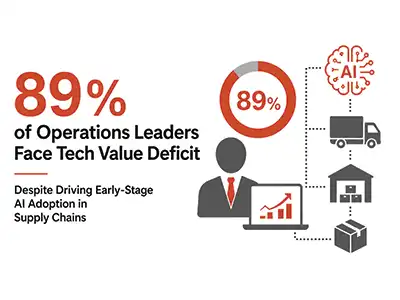
- Future of Work: 89% expect managing autonomous AI agents to become a critical workforce skill within the next five years.