MoRTH to Review Subcontracting Provisions for Highway Projects
Addressing the Tunnels and Bridges Conference, Union Minister for Road Transport & Highways Shri Nitin Gadkari said that his ministry would review the existing provisions governing the subcontracting of highway works to ensure that contractual requirements are strictly adhered to and that responsibility for quality and timely execution remains clearly with the principal contractor.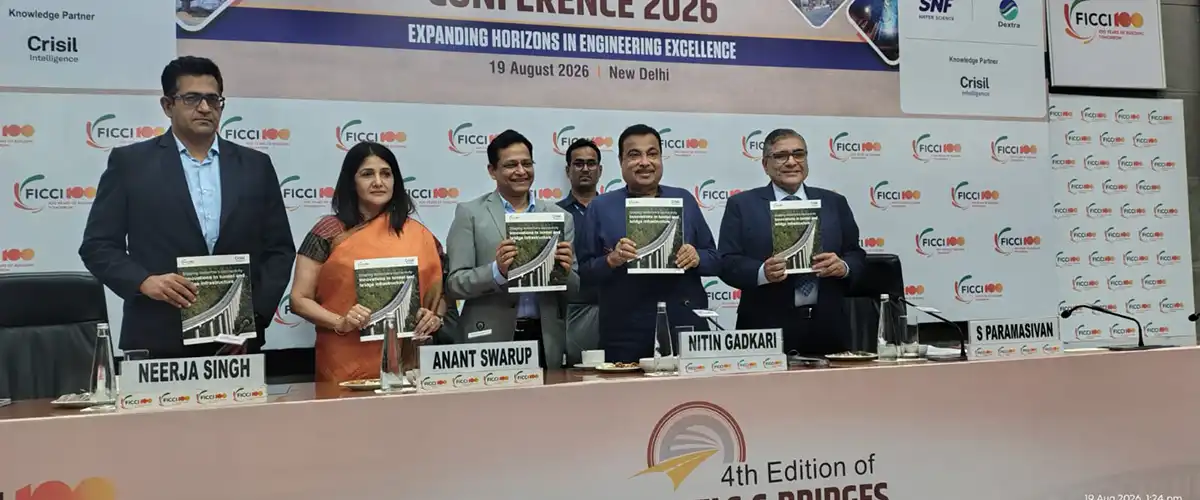
The Union Minister said the ministry was already assessing contractors based on their performance and had begun extending the exercise to consultants preparing Detailed Project Reports (DPRs), with tender eligibility proposed to be linked to such performance assessments. “Quality is the first priority, and cost comes after quality,” he said.
The Minister cited instances of contracts being awarded substantially below the estimated cost and subsequently being subcontracted through multiple layers, with each intermediary retaining a margin. He said Goods and Services Tax (GST) records could help trace such chains of subcontracting and identify instances where contractual requirements may have been breached.
The ministry is preparing tunnel tenders worth ₹2 lakh crore to ₹2.5 lakh crore. The Minister encouraged the industry to take the lead in domestic manufacturing of tunnel boring machines, whose capital cost he identified as a binding constraint. He also called for a technical session on ultra-high-performance concrete.
Industry Calls for Reforms in Project Award and Risk Allocation
S. Paramasivan, Chair, FICCI Committee on Roads & Highways and Managing Director, Afcons Infrastructure, raised four key industry concerns. He said the predominant use of L1, or lowest-bid, awards was resulting in tenders being priced 20 per cent or more below the estimated cost, putting commercial viability and execution quality under pressure.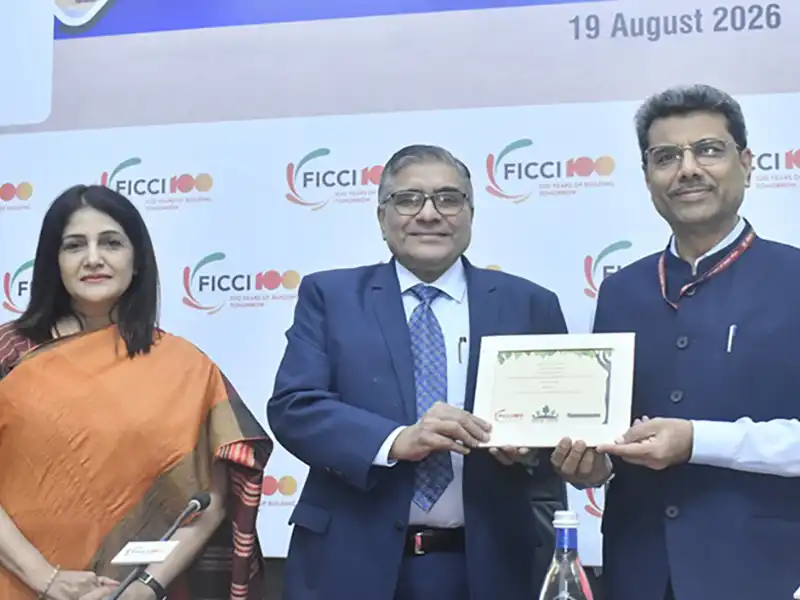
Paramasivan also called for land acquisition and clearances to be the responsibility of project authorities rather than contractors under EPC terms. He sought item-rate or equivalent provisions to compensate for verified geological variations in Himalayan tunnelling and called for the June 2024 procurement guidelines, which steer disputes above ₹10 crore towards mediation, to be reconsidered. He argued that institutional arbitration with time-bound procedures would be preferable to prolonged litigation in the courts.
Railway Expansion and Tunnelling
Rajesh Agarwal, Additional Member (Works), Railway Board, Ministry of Railways, highlighted the scale of India’s upcoming railway expansion programme.“Indian Railways has a 40,000-kilometre railway network that has to be expanded over the next five years, involving an investment of more than ₹5 lakh crore. It is not an easy task. An expenditure of ₹5 lakh crore within five years requires work worth more than ₹2 lakh crore annually. Only then can this level of expenditure be achieved and the targeted expansion in kilometres be realised,” he said.
Indian Railways plans to undertake 51 projects comprising 695 tunnels spanning 1,150 km, of which 326 km have already been completed, leaving more than 800 km of tunnelling, along with 410 mega bridges across important rivers such as the Ganga, Godavari and Krishna.
“It is not a joke; it is a real challenge, and we have to seriously think about how we intend to achieve it. This is the scope of the tunnelling and bridge projects being undertaken by Indian Railways,” Agarwal said.
Indian Railways’ tunnelling programme envisages completing the remaining work in phases: 50 km in 2026–27, 100 km in 2027–28, 150 km in 2028–29, 175 km in 2029–30 and 350 km in 2030–31.
He also stressed that safety must remain paramount. “Whatever technology or innovation we adopt, we must ensure that no life is lost during tunnelling. That is what needs to be ensured, and that is the most important criterion.”
Building an Indian Tunnelling Ecosystem
Col. Parikshit Mehra, Secretary—Tunnels & Safety, Government of Telangana, spoke on the need to build a stronger Indian tunnelling ecosystem. He said developing domestic capabilities in tunnel boring machines (TBMs), associated systems and specialised excavation equipment was essential. He questioned why India could not manufacture drilling jumbos and other equipment domestically and called for greater industry incentives to support indigenisation.He noted that not all tunnels are constructed using TBMs, with drill-and-blast methods continuing to be widely used. He emphasised the need to indigenise technologies and systems used in tunnelling, including ground investigation, geological and geotechnical interpretation, underground structural design, advanced construction materials, waterproofing, instrumentation, ventilation and firefighting, digital construction, inspection and asset management.
He stressed that equipment alone cannot address the challenges of tunnelling, as engineers must understand the rock and soil conditions in which they work. This is particularly important in India because of its highly diverse geology. Geological conditions in southern India can differ significantly from those in the Himalayas, with substantial variations occurring over relatively short distances.
A methodology that works effectively in one geological formation may be completely inappropriate only a few kilometres away, a situation frequently encountered in the Himalayas. Therefore, the future of Indian tunnelling must combine mechanisation with engineering expertise and judgement, making investment in skilled professionals equally important.
Policy, Investment and Strategic Partnerships
Business Session 1 focused on emerging opportunities in tunnel and bridge development under the National Infrastructure Pipeline, policy reforms, faster approvals and risk-sharing mechanisms for the efficient execution of projects. The session also explored ways to strengthen the tunnel and bridge ecosystem through advanced materials, specialised equipment and geotechnical solutions.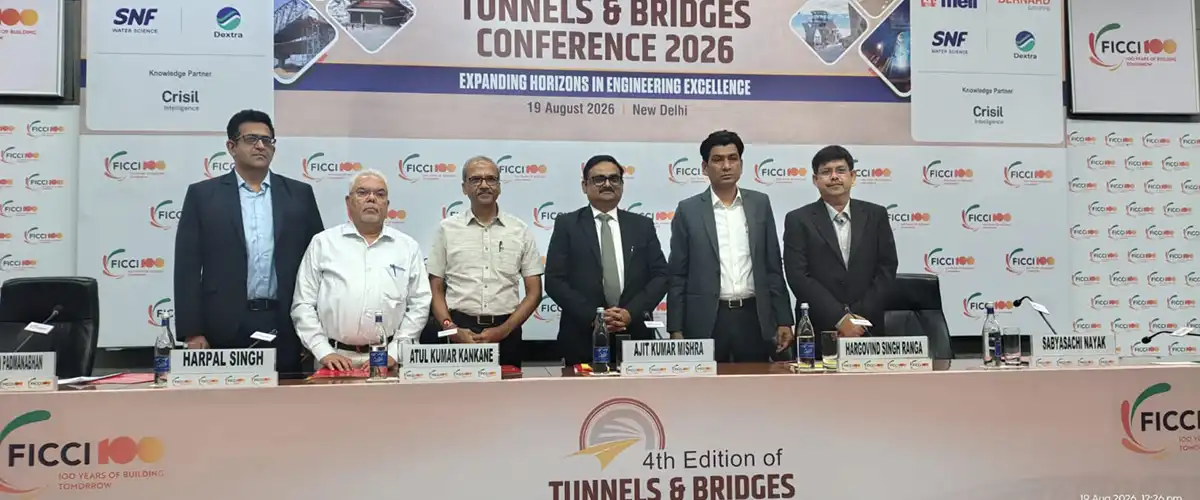
Ajit Kumar Mishra, Director (Works), IRCON International Ltd., highlighted the importance of balanced risk allocation in EPC projects. “The private sector is not even ready to take on EPC risks. When it comes to tunnels and bridges, risk management becomes critical, and these risks must be properly addressed during both the design and construction stages. The tussle over EPC and the appropriate transfer of risks between the employer and contractor will continue. However, one important step is to clearly define the rules of the game at the beginning in the tender documents.”
He further pointed to the FIDIC contract framework for underground construction, which addresses the Geotechnical Baseline Report. DMRC is also using a similar approach, under which specific geological conditions are defined as the baseline and variations from the established baseline can be appropriately compensated or accounted for in the contract.
“Greater adoption of this approach would encourage more balanced risk allocation rather than aggressively transferring all risks to the contractor. This could help the industry reduce disputes and accelerate construction.”
Engineering Excellence Through Technology and Innovation
Companies delivered presentations during the technical session on “Engineering Excellence: Advanced Technologies, Digital Construction & Geotechnical Innovations for Tunnels & Bridges,” highlighting applications across tunnelling, geotechnical engineering, slurry treatment, reinforcement, ventilation, safety and waterproofing.Mark Turtscher, Head of Geotechnical & Tunnel Engineering Division, BERNARD Gruppe ZT GmbH, presented “Real-World Insights from Tunnel and Bridge Projects Using Digital Tools and Technical Innovations.” Dr Gaurav Kumar, Business Unit Head (India & Middle East), SNF, presented a case study on the use of advanced chemistry for managing slurry treatment plants for TBM applications in high-speed railway projects.
Bhargav Jog, General Manager (Sales & Marketing), Dextra, highlighted GFRP applications in tunnel projects. Ajay Poddar, Managing Director, Syenergy Environics, presented on tunnel safety, ventilation and operational systems, while Pankaj Roy, National Lead – Specification, Sika India, discussed next-generation tunnel waterproofing systems.
Resilient, Smart and Sustainable Corridors
The final session, “Resilient, Smart and Sustainable Corridors,” focused on improving the speed and efficiency of tunnel and bridge projects through better planning, coordination and construction methodologies.Moderated by Dr Sanjay Rana, MD, Parsan Overseas, and chaired by Col. Parikshit Mehra, Secretary—Tunnels & Safety, Government of Telangana, the panel discussed managing complex ground conditions and construction risks in challenging terrains, including the Himalayas and seismic and coastal zones.
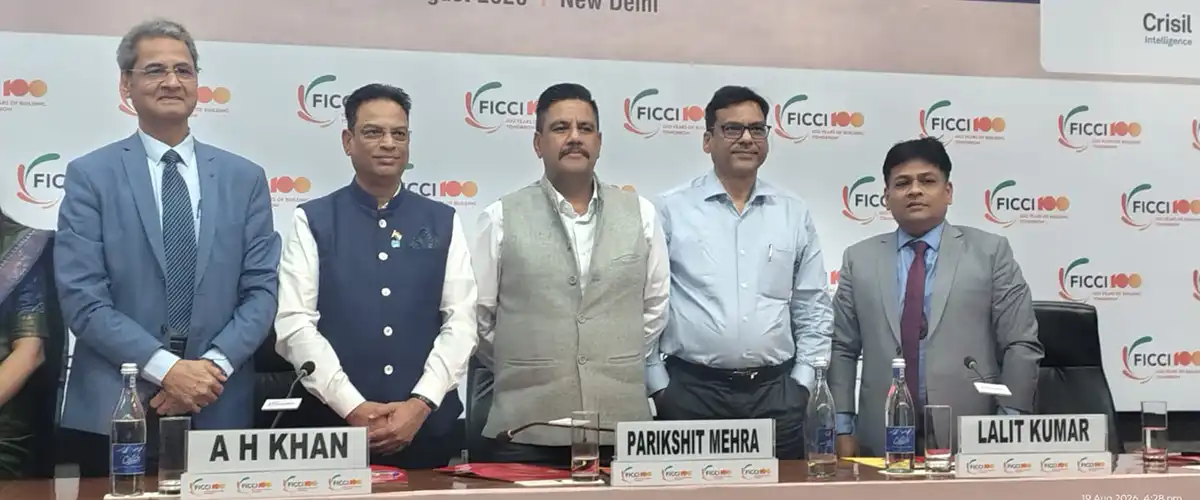
The panellists also explored ways to enhance construction productivity through advanced methodologies, mechanisation, precast and modular systems, and innovative tunnel and bridge construction techniques. The discussion further highlighted the importance of addressing on-ground construction challenges through technology adoption, data-driven decision-making and practical engineering solutions.
The conference highlighted the scale and complexity of India’s forthcoming tunnel and bridge development programme, while underscoring the need for stronger project planning, balanced risk allocation, improved contracting practices and greater domestic capability in specialised equipment and technologies.
With large-scale tunnelling and bridge programmes underway across highways and railways, the discussions reinforced that successful infrastructure delivery will depend not only on deploying advanced equipment and construction technologies, but also on sound engineering judgement, skilled professionals, safety and clearly defined responsibilities across the project lifecycle.
The conference provided a comprehensive platform for industry stakeholders to exchange perspectives on emerging technologies, safety, risk management, project execution and domestic manufacturing. The discussions reinforced the need for a balanced approach combining advanced equipment and construction methodologies with sound engineering, skilled professionals, effective risk allocation and sustainable practices to deliver safe, efficient and resilient tunnel and bridge infrastructure.
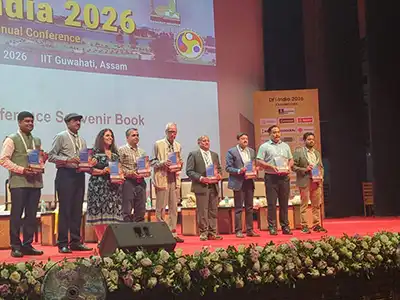
The FICCI-CRISIL Knowledge Report, “Shaping Tomorrow’s Connectivity: Innovations in Tunnel and Bridge Infrastructure,” was also released during the conference.