DFI’s 15th Annual Conference brings together the geotechnical and foundation engineering community to address evolving foundation challenges across India, from deep excavation and ground improvement to hillslope stability and complex ground conditions.
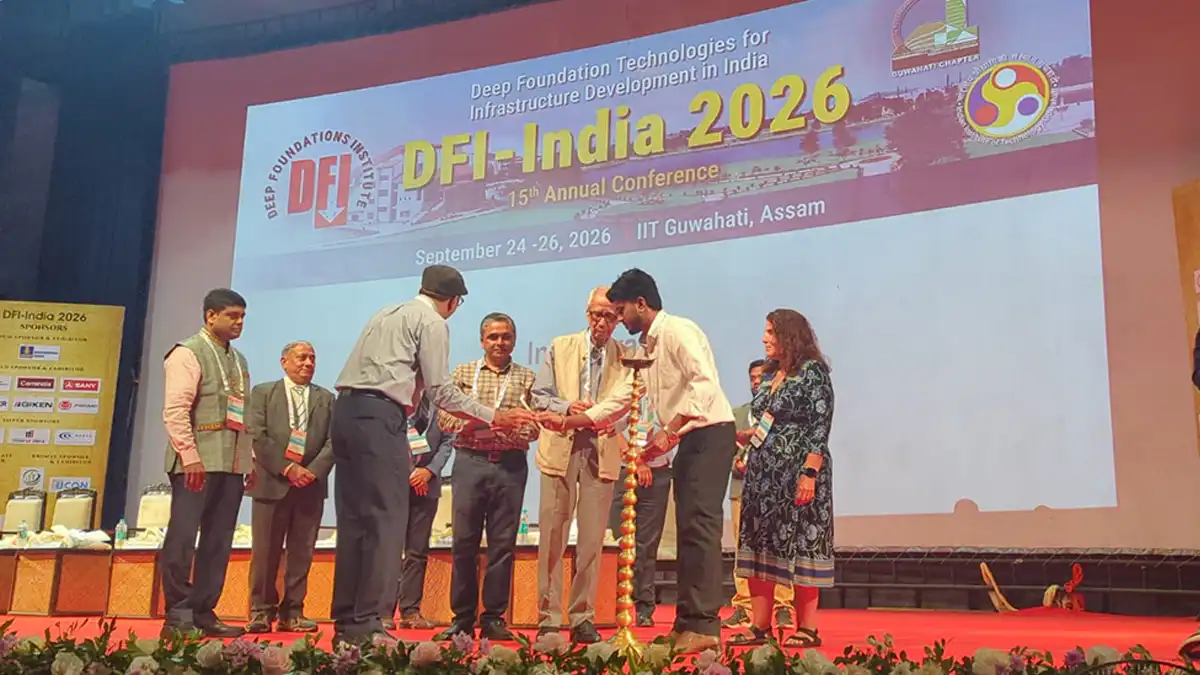
The DFI India 2026 conference on “Deep Foundation Technologies for Infrastructure Development in India” commenced on 24 September 2026 at IIT Guwahati, bringing together professionals from the foundation and geotechnical engineering fraternity, academicians, researchers, practicing engineers, contractors, consultants, technology and equipment providers, and other stakeholders from India and abroad.
Being held from 24–26 September 2026, the conference covers a broad spectrum of deep foundation technologies, design and construction practices, challenging ground conditions, sustainability and practical engineering solutions. While the program has a pan-India focus, the Guwahati venue has also brought the distinctive challenges of Northeast and hill infrastructure into sharper focus through dedicated sessions on hillslope stability, landslide mitigation and North-East infrastructure. The wider program reflects the diverse foundation requirements of infrastructure projects across India.
Looking Beneath the Superstructure
Welcoming the gathering, Dr. Arindam Dey, Conference Chair, recalled the words of Professor Karl Terzaghi, widely regarded as the father of soil mechanics, who observed that the sources of success or failure are often hidden deep beneath the ground because there is little glory in a foundation.Dr. Dey noted that while the superstructure is visible, the depth and performance of its foundation determine its stability. He said the conference provides an opportunity to examine the nuances of deep foundations and advancements in practice, with expert insights from professionals and practitioners.
He highlighted the conference program which features keynote lectures, technical paper presentations, discussions on current practices, and dedicated sessions on hillslope stability, landslide mitigation, Northeast infrastructure, and policy interventions. He also drew attention to the geographical setting of IIT Guwahati, which is surrounded by hills, valleys and a rich biodiversity.
DFI India’s Role in Advancing Foundation Engineering
In his presidential address, Dr. Sunil S. Basarkar, Chair, DFI India, outlined the organisation’s objectives and its role in advancing the Indian geotechnical and foundation engineering sector.DFI India was established in 2011 and incorporated in 2013 as a non-profit company. Its objectives include advancing standards through new and sustainable technologies, awareness initiatives, conferences and training programs, as well as empowering women in applied geotechnology and deep foundation segments.
Holding the annual conference in Northeast India was significant in view of the region’s rapid infrastructure development and complex geological and climatic conditions. He acknowledged the contribution of the DFI Executive Committee, Guwahati Chapter, organising and technical committees, advisors, speakers, authors, sponsors, exhibitors, participants, students and volunteers, and expressed confidence that the three-day program would facilitate technical learning, professional interaction and collaboration.
Engineering in the Northeast: Local Conditions, Wider Lessons
Dr. Sasanka Borah, Chairman, IGS Guwahati Chapter, described the event as a homecoming to IIT Guwahati and to a region where professionals have gained extensive practical experience. He pointed to the Northeast’s highly compressible soils, challenging geological conditions, rivers and varied terrain, which require solutions tailored to local ground realities. At the same time, he noted that the experience gained in addressing these conditions could offer lessons for infrastructure development elsewhere.He stressed the value of collaboration between DFI, IGS and other professional institutions, combining knowledge of Indian conditions with national and international expertise, and highlighted the role of IGS Guwahati Chapter, established in 2005, in connecting knowledge, research and local practice.
Encouraging young engineers and students to interact with industry experts, he described the conference as a practical classroom for understanding real-world technology and engineering, and emphasised that solutions should be technically sound, sustainable, economical and environmentally responsible.
IIT Guwahati Highlights Academic and Research Capabilities
Prof. Hemant B. Kaushik, Professor, IIT Guwahati, highlighted the major infrastructure opportunities emerging in the region and referred to major projects, including a bridge project extending for more than 1.5 km, as examples of the opportunities available to apply academic and technical knowledge to real-world infrastructure challenges.He noted that IIT Guwahati already has 21 academic departments and is now expanding into emerging areas, including undergraduate programs in data science and other interdisciplinary fields. He emphasised the importance of industry collaboration and invited delegates to explore IIT Guwahati’s state-of-the-art laboratories and research facilities, some of which offer unique capabilities.
DFI USA Outlines Global Programs, Workforce and Sustainability
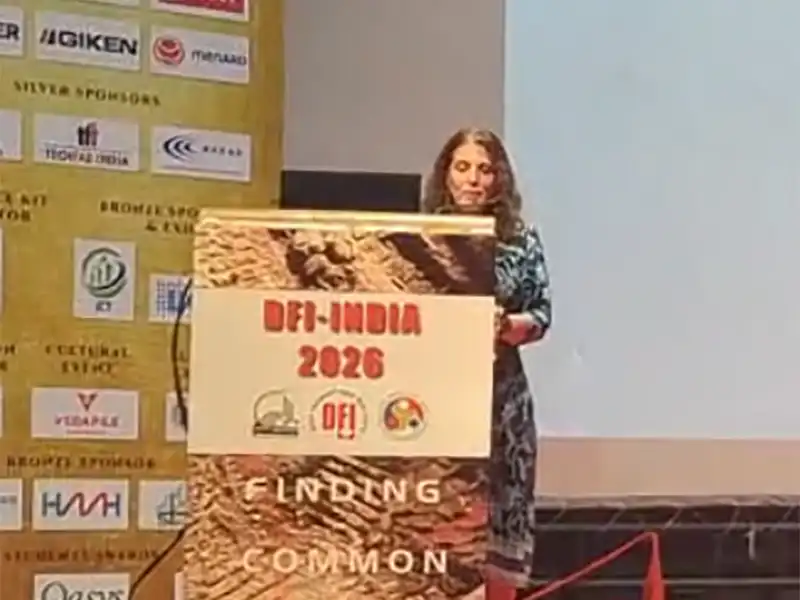
She shared details of DFI USA’s forthcoming 51st Annual Conference in Orlando from November 2–5, along with the Call for Abstracts for DFI 52 in Indianapolis in 2027. Other planned events include the International Conferences on Anchors and Deep Mixing and the International Foundation Congress and Equipment Expo. She referred to partnerships with organisations including ASCE, the Power and Utility Contractors Association and the International Association of Drilling Contractors.
Engler spoke about DFI’s University Ambassador Program, workforce and labour initiatives, and outreach to high school students to introduce them to foundation engineering and career opportunities. Sustainability is another area of activity, with DFI updating its tools and resources for contractors. An updated sustainability calculator is scheduled for release in December and is being converted into an online application, with webinars planned to support its use.
DFI India Lifetime Contribution Award 2026
A major highlight of the opening day was the presentation of the DFI India Lifetime Contribution Award 2026 to Prof. S. R. Gandhi. Announcing the award, Dr. Sunil S. Basarkar described it as one of DFI India’s distinguished honours, recognising sustained contribution and lasting impact on foundation and geotechnical engineering.Prof. Gandhi was recognised for his long-standing contribution to foundation engineering, academia and industry, as well as his contribution to the development of DFI India.
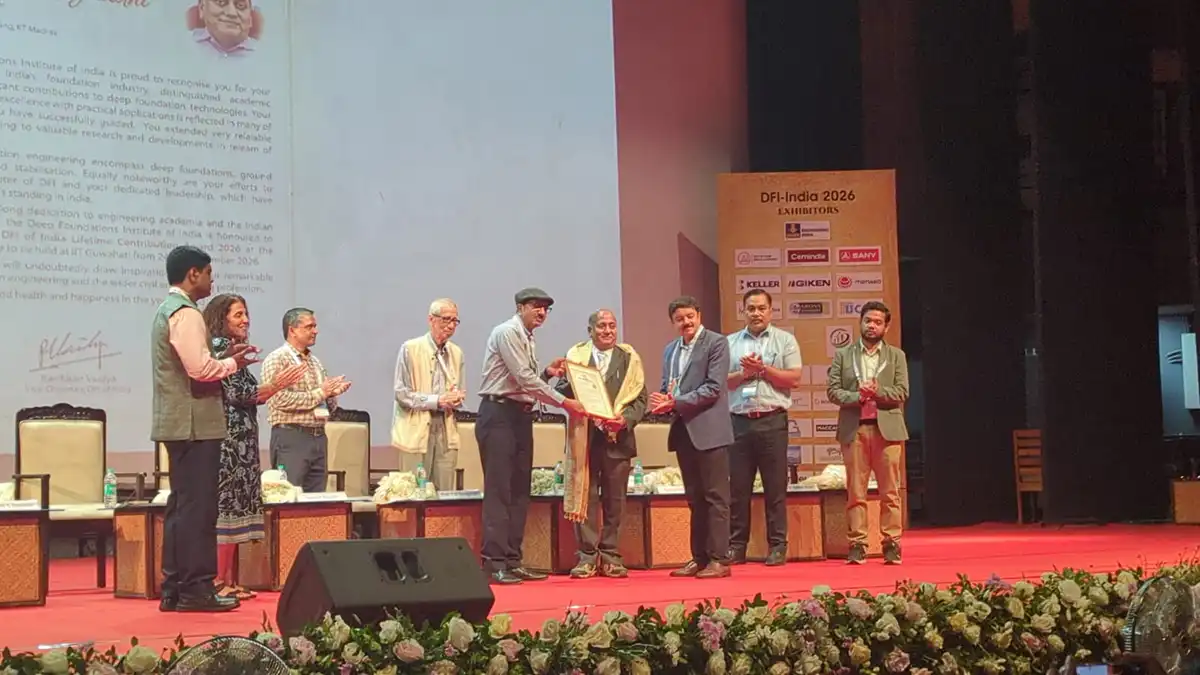
Presenting the citation, Ravikiran Vaidhya, Vice Chair, DFI India, described Prof. Gandhi as a distinguished academic and foundation engineering expert with more than four decades of association with IIT Madras. Progressing from Scientific Officer in the Department of Soil Engineering to Professor of Civil Engineering, he later served as Director of IIT Madras from 2016 to 2021 and continues to contribute to academia as a Visiting Professor.
His professional career has included work on major infrastructure and industrial projects across India, including ports, power plants, fertiliser plants, and steel industries. His areas of expertise include foundation system selection and optimisation, site investigation, special foundations, ground improvement and foundation performance monitoring. He has also contributed to assessments of earthquake and tsunami damage to critical infrastructure.
The citation highlighted his ability to connect academic research with practical foundation engineering applications and his contribution to establishing the DFI India Chapter.
Accepting the award, Prof. S. R. Gandhi expressed his appreciation to the DFI India leadership, organising team, members of the foundation engineering fraternity and delegates. He acknowledged the organisation’s efforts in bringing the profession together through its conferences, workshops and other professional initiatives, as well as its engagement with industry and academic institutions. He also thanked the DFI India community and its contributors for their continued efforts in strengthening the organisation and advancing the foundation engineering profession.
Importance of What Lies Beneath
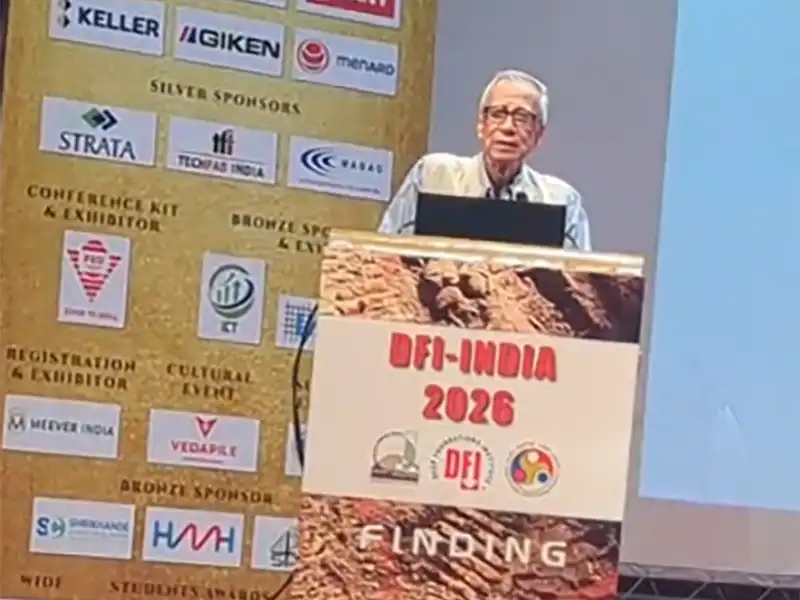
He welcomed the decision to hold the conference in the Northeast and emphasised the importance of exposing students, researchers and practising engineers to practical foundation engineering challenges. He observed that foundation engineering often receives less attention than structural engineering because the superstructure is visible, while the foundation remains hidden.
However, the foundation is equally important to structural performance and stability. Rehabilitation of a damaged superstructure can be difficult, but foundation failure can make the process considerably more challenging.
He stressed the importance of slope stability in the Northeast and Southeast Asia, given the region’s geographical and geological conditions, and called for greater research, knowledge sharing and professional collaboration.
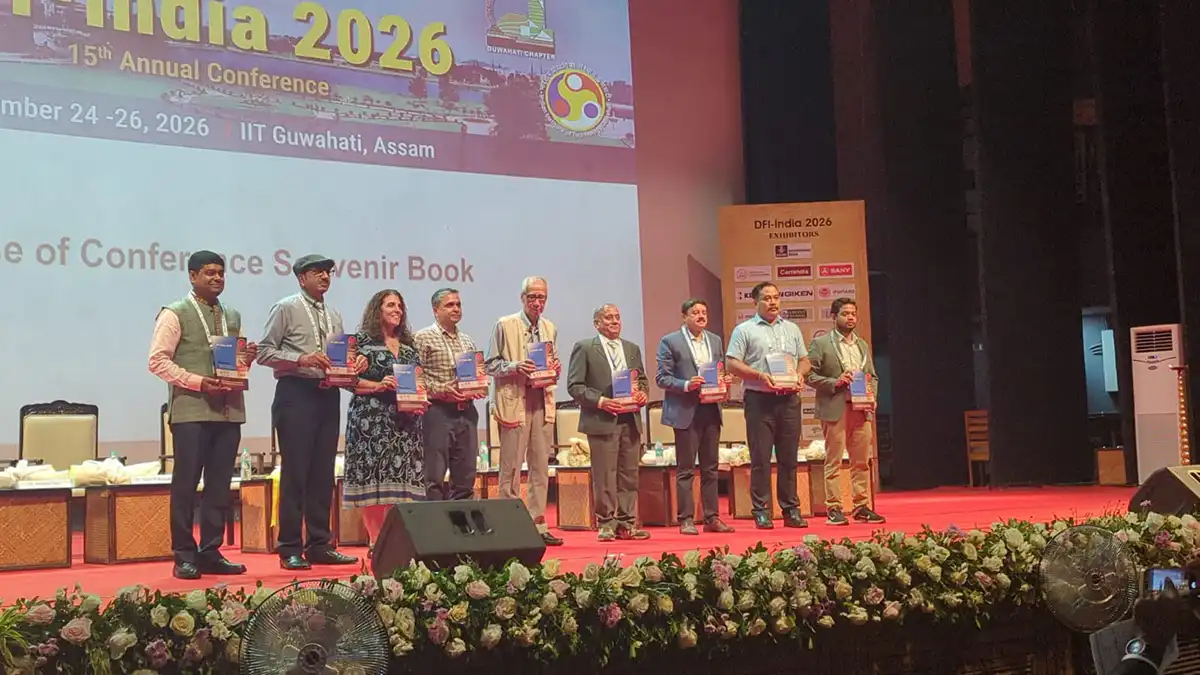
The conference souvenir was subsequently released during the program.
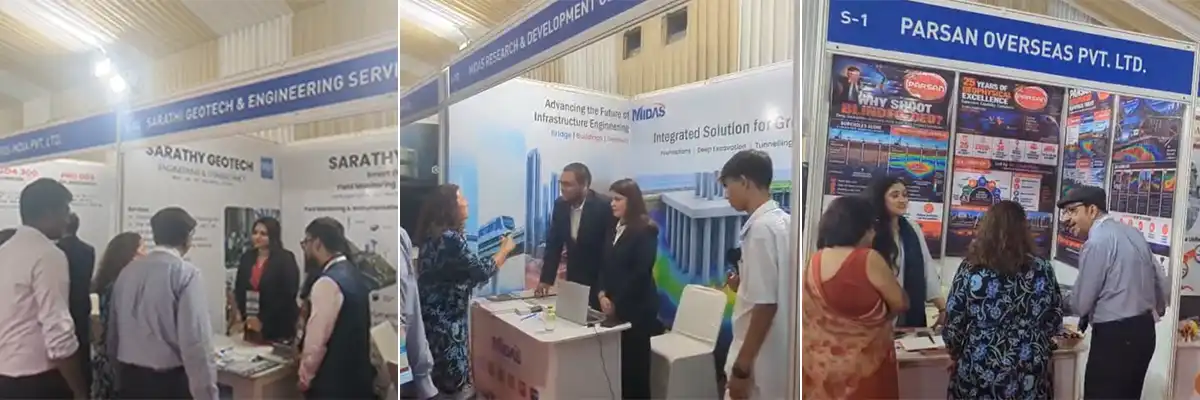
The inauguration of the exhibition saw dignitaries and conference attendees visiting the stalls and interacting with participating companies.
Technical Sessions and Corporate Presentations
The first plenary technical session was chaired by Prof. C. H. Solanki and Prof. Sreedeep S. In his presentation on ‘Constructability-Driven Foundation Selection for Marine and Nearshore Infrastructure: Lessons from Steel Driven and Cast In-Situ Pile Systems, Colin Smith, Head – Marine, Keller Ground Engineering India, addressed foundation selection and constructability considerations for marine and nearshore projects.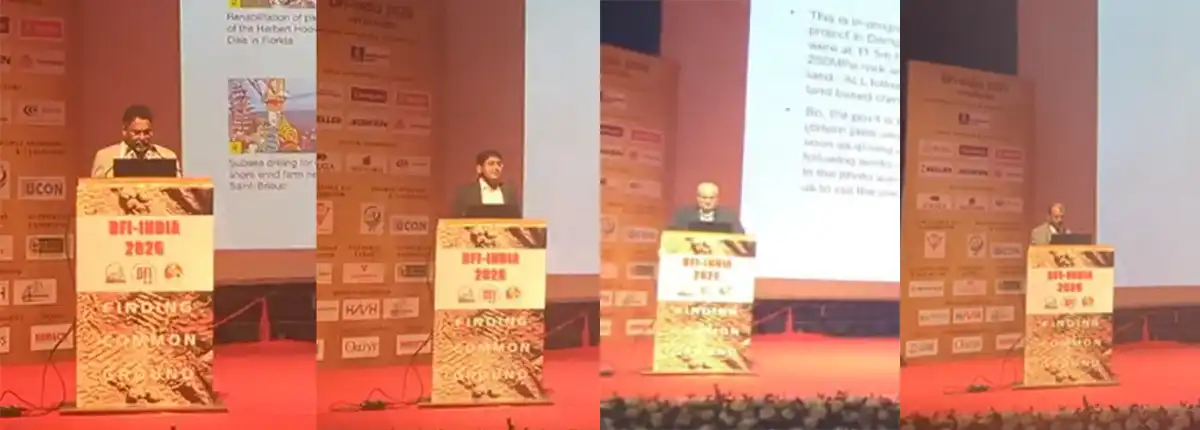
The session also featured corporate presentations by Bauer Engineering India and Cemindia Projects.
Dr. Suresh Gutta, Senior Geotechnical Engineer, American Geotechnical & Environmental Services, Inc. gave a presentation on ‘Design and Construction of Foundations in Karstic Geology,’ wherein he covered foundation challenges associated with karstic ground conditions.
A technical session on ‘Hillslope Stability and Landslide Mitigation, chaired by Dola Roychowdhury featured presentations by Freyssinet Menard India and Modern Hiring Services. Dr. Ratnakar R. Mahajan, Director – Technical Excellence, Maccaferri India, spoke on ‘Different Approach for Landslide Mitigation in Himalayan Region’; Atanu Adhikari, Chief Development Officer, Geoquest India, spoke on ‘Rehabilitation and Landslide Mitigation Using the World’s Tallest Reinforced Earth® Structure at Tindharia (NH-55) and Slope Stabilization at Z-Morh Tunnel, India,’ covering the Tindharia NH-55 and Z-Morh Tunnel applications.
Sumit Swar, Sr. Manager, TechFab India Industries, presented ‘Geohazard Mitigation Measures Over Vulnerable Hill Slopes: A Framework for Quality Control and Monitoring in Compliance with MoRTH Circular 305.15.’
North-East Hill Infrastructure: Concerns and Policy Interventions

The discussion examined the need to rethink infrastructure planning and design in the Northeast in response to changing climatic conditions and the region’s complex geological and environmental setting. The panel noted that design codes, guidelines and recommendations should evolve to account for future climate projections and emerging disaster risks, rather than being based solely on present-day conditions.
A key concern was the need for region-specific data and standards that incorporate local climate, geology and construction conditions. Such an approach could support more appropriate and context-sensitive engineering solutions, particularly for environmentally and geologically sensitive projects.
The panel also stressed the importance of two-way environmental assessment—understanding not only how infrastructure is affected by its surrounding environment, but also how construction and infrastructure development can alter environmental conditions. While such detailed studies may not be practical for every project, the discussion suggested that they should receive greater attention in sensitive locations.
Instrumentation, field monitoring and data-driven planning also emerged as important areas for strengthening infrastructure resilience. Rather than relying primarily on reactive monitoring after construction, the panel called for greater use of monitoring and climatic data during the planning and design stages to better understand regional behaviour and inform engineering decisions.
The discussion concluded with a call for integrated, multidisciplinary planning, bringing together different engineering disciplines and regional expertise to develop infrastructure that is technically appropriate, environmentally responsive and sustainable for the Northeast’s challenging conditions.