
India has the second-largest road network in the world, and a substantial portion of vehicular emissions is released directly on the road surface before dispersing into the environment. This creates an opportunity to explore innovative solutions that can capture or reduce pollutants directly at their source. Hence, there is a growing need to develop materials capable of absorbing or transforming pollutants emitted from vehicles directly on the road surface. Nanomaterials, with their unique properties, make them highly effective for developing advanced emission-absorbing pavement systems.

CSIR-CRRI Director Dr. Ch. Ravi Sekhar, stated, “Urban air pollution has become a major concern across the country. Nanotechnology allows us to develop advanced pavement materials with improved durability and performance. These materials can also have emission-absorbing and photocatalytic properties, which help reduce harmful pollutants in the air. Our goal is to take this research from the laboratory to real field applications.”
Dr. S. D. Attri, Member-Technical, Commission for Air Quality Management (CAQM), stated, “The infrastructure we build today must do more than just carry traffic; it must actively contribute to a cleaner environment. The research being conducted under the CSIR-CRRI Project on the Development of Innovative Materials for an Emission-Absorbing Pavement System is a critical step in this direction. Nanotechnology offers a vast potential for environmental applications by allowing us to manipulate materials at the atomic or molecular scale to create structures with unique functional properties. In the context of transportation, this technology enables the synthesis and characterization of nanomaterials that can actively neutralize pollutants. By integrating these advanced materials into our road networks, we can move towards a future where our pavements help purify the air.
These emerging nanotechnology solutions are essential for building smart systems that enhance the durability of our infrastructure while reducing its environmental footprint. I commend CSIR-CRRI for organizing this platform to bridge the gap between nanotechnology research and pavement engineering.”
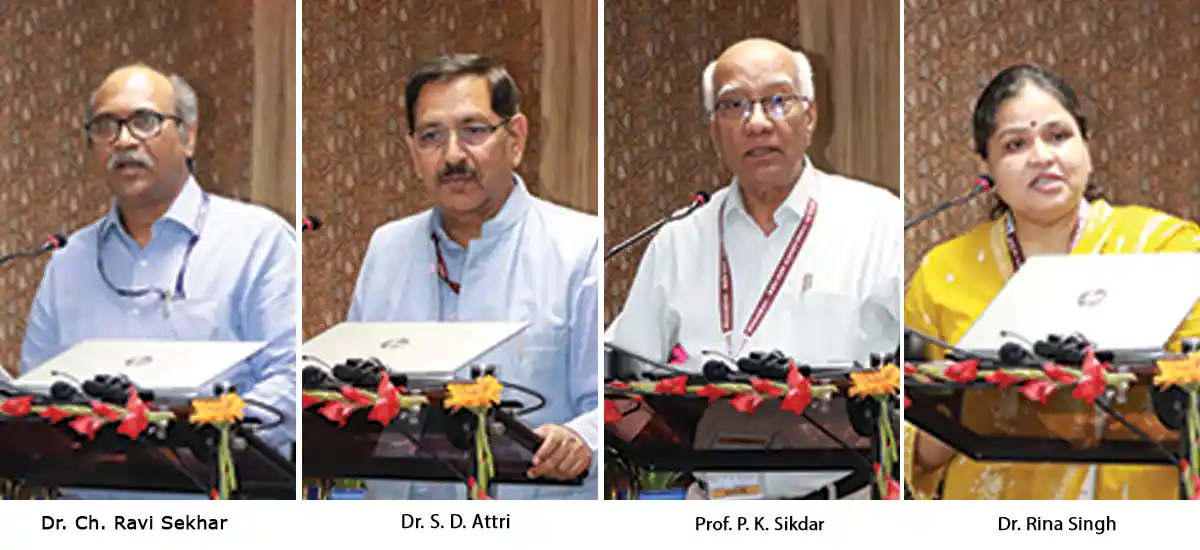
Prof. P. K. Sikdar, Advisor, International Road Federation (IRF) – India Chapter; Former Professor, IIT Bombay; and Former Director, CSIR-CRRI, informed that nanomaterials are characterized by their unique properties at the nanoscale. They encompass a variety of materials such as nanoclay, nanosilica, carbon nanotubes, graphene, nanofibers, and several others. Materials like graphene and carbon nanotubes have been found to have remarkable potential in improving pavement performance, particularly strength and durability.
Nanomaterials can reduce temperature susceptibility, oxidation processes, and UV degradation, and help absorb pollutants – a remarkable property of this technology. Another interesting feature is the self-healing property in bituminous mixes. With the use of nanomaterials, micro-cracks in pavements can heal automatically before they grow into larger cracks that may lead to failure. This extends the life of pavements, moving towards the concept of perpetual pavements.
Talking about the challenges in the use of nanotechnology, he said, “To achieve improved resource efficiency and reduced environmental impacts, the processes involved must be clearly understood. One of the primary obstacles is cost and scalability. Producing nanomaterials in large quantities can be expensive, especially in large-scale applications. Another concern relates to health and environmental safety, as some nanomaterials may pose risks if not handled properly. Therefore, these issues must be addressed carefully while using such materials for practical applications.”
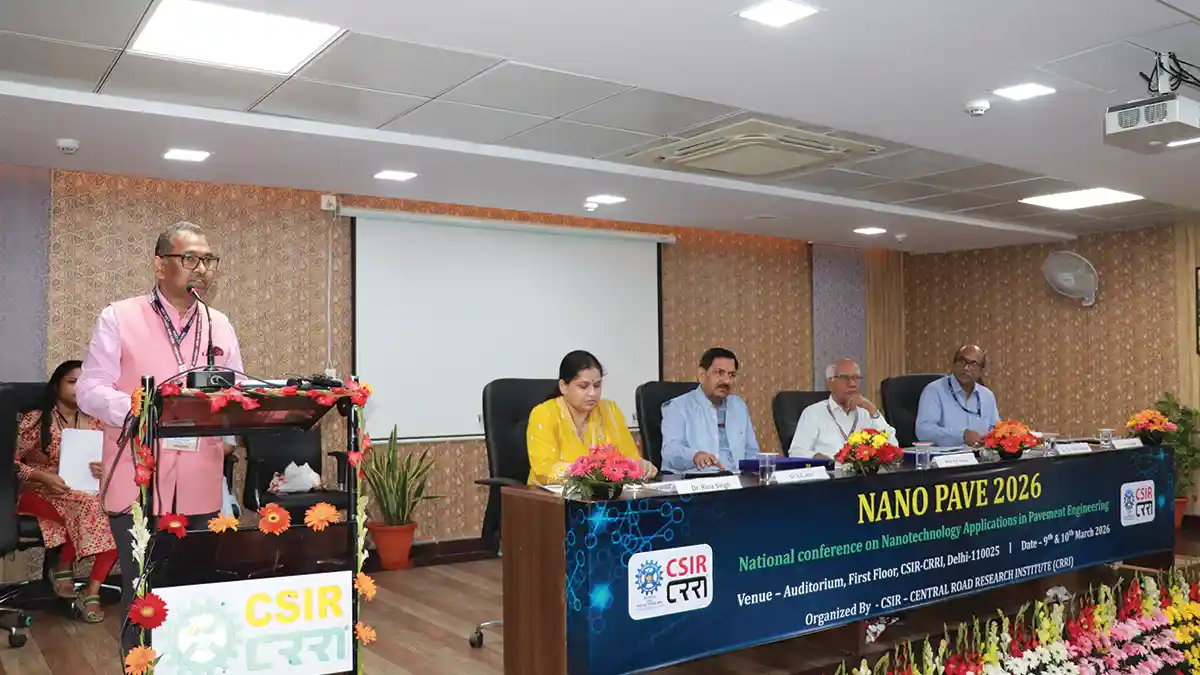
He added, “A collaboration amongst institutions like CSIR-CRRI, along with Indian Institutes of Technology (IITs), National Institutes of Technology (NITs), national laboratories, and industry partners, can help not only in improving pavements but also in reducing pollution through advanced materials. Along with industry participation, successful field implementation can be undertaken for realization of the full benefits of this technology.”
Dr. Rina Singh, Senior Principal Scientist, CSIR-CRRI, said, “Nanomaterials’ properties such as a high surface-to-volume ratio, photocatalytic activity, and improved mechanical strength, have the potential to transform conventional pavement materials into smart, multifunctional systems. The roads of the future may not only carry traffic but may also help improve the environment around them.”
She informed that several nanomaterials are available, but one of the most promising for this application is nano titanium dioxide (TiO2). When incorporated into pavement surfaces, TiO2 can convert organic compounds, volatile organic compounds (VOCs), and NOx into harmless substances through photocatalytic reactions. “This forms the core concept of our project. Therefore, the concept of emission-absorbing pavements represents a significant step toward developing smart, sustainable, and environmentally responsive transportation infrastructure.”
She concluded with the thought, “Perhaps the roads of tomorrow will not only connect cities and communities but will also quietly work every day to clean the air we breathe.”
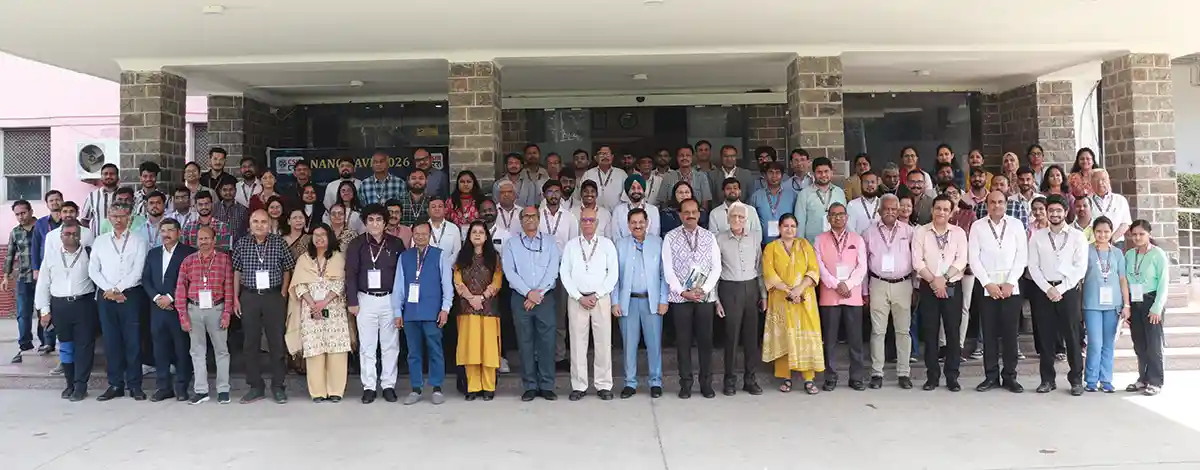
A panel discussion on Government and Industry Perspectives held on the second day of the conference brought forth the practical challenges of translating nanotechnology research into real-world pavement applications. The experts highlighted that while advanced materials such as graphene, carbon nanotubes, and nano-modified binders show significant promise in enhancing pavement durability and introducing functional properties such as pollutant absorption, most developments are still at the laboratory stage.
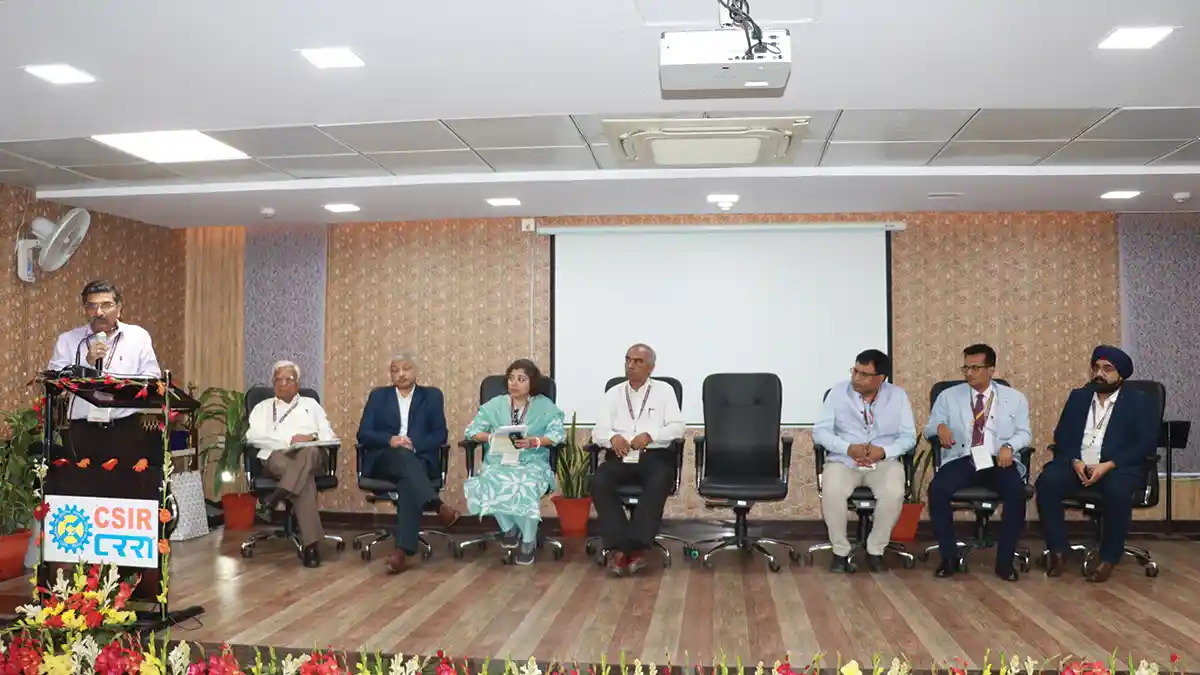
Representative from the Ministry of Road Transport and Highways noted that the government has established frameworks to encourage innovation, including pilot demonstrations of new technologies in highway projects before formal standards are developed. Industry experts emphasized the need for large-scale field trials, robust quality control, and lifecycle cost benefits to enable wider adoption. Speakers from implementing agencies also stressed the importance of collaborative mechanisms involving research institutions, industry partners, and policymakers to share risks during pilot projects and generate reliable performance data. The discussion concluded that ambitious pilot projects, supported by strong institutional coordination and technical validation, will be essential to bridge the gap between laboratory research and large-scale infrastructure deployment.
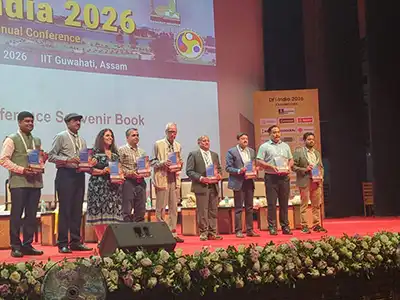
Technical sessions were held on Advances in Nanomaterials: Synthesis, Characterization, and Emerging Applications; Nanotechnology for Performance Enhancement and Durability of Transportation Infrastructure; and Emerging Nanotechnology Solutions for Sustainable and Smart Systems. The conference also unveiled the NanoPave 2026 and featured poster presentations.