Durability, Service-Life Prediction and Adaptation Strategies Under Climate Change
As climate change accelerates sea-level rise, extreme weather events, and aggressive marine exposure conditions, ensuring the durability and long-term performance of coastal and offshore concrete infrastructure has become a critical engineering challenge worldwide. In this article, Dr. (Prof.) S. B. Hegde examines how climate-resilient concrete technologies, low-carbon materials, climate-adjusted service-life prediction models, digital monitoring systems, and nature-based adaptation strategies can enhance the resilience, sustainability, and lifecycle performance of marine infrastructure. Drawing upon recent global research and perspectives relevant to India and Bangladesh, he presents actionable insights for engineers, infrastructure developers, and policymakers working towards more durable and sustainable coastal infrastructure under changing climate conditions.Abstract
Marine and coastal concrete structures like ports, bridges, seawalls and offshore platforms are vital for trade and community protection. Climate change — through rising sea levels, stronger storms, higher temperatures and combined chloride-sulfate-carbonation attacks — is accelerating degradation and shortening the expected 50–100-year service life of traditional designs.This review (2020–2026) examines low-carbon concretes (SCMs, LC3, geopolymers, UHPC) under IPCC scenarios, climate-adjusted service-life prediction, LCCA, digital twins, smart monitoring, protective systems and hybrid nature-based solutions (NbS). It highlights practical strategies that enhance resilience, cut emissions, and reduce lifecycle costs, with focus on India and Bangladesh. Actionable recommendations are offered for engineers and policymakers.
Introduction
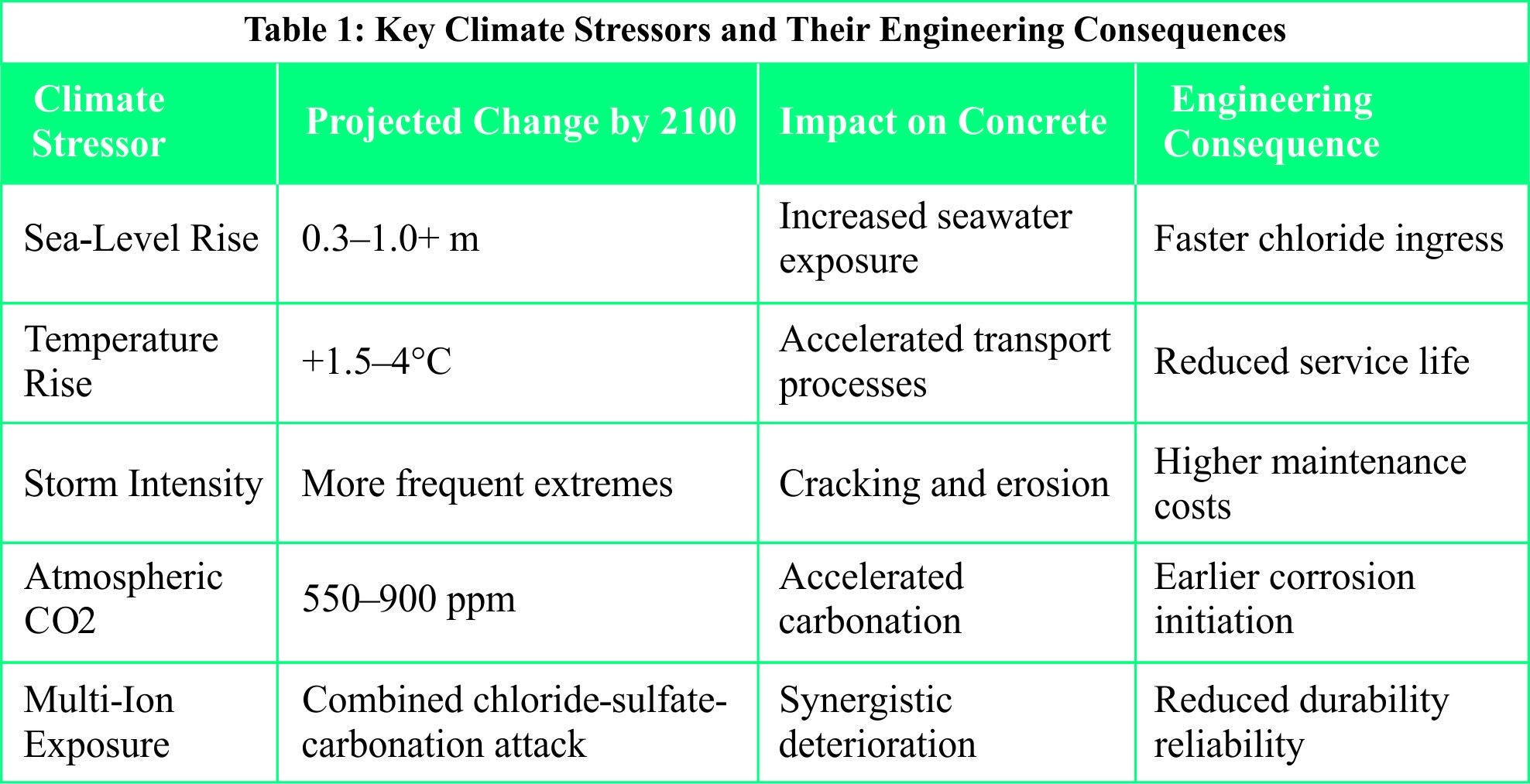
Marine and coastal infrastructure is one of the most valuable civil engineering assets worldwide. Ports handle 80–90% of global trade by volume. Bridges, seawalls, breakwaters and coastal facilities support economic growth, transportation, energy security, tourism and community protection. More than 40% of the world’s population lives within 100 km of a coastline and this number is growing.Climate change is making conditions far more severe. IPCC AR6 projects sea-level rise of 0.3–1.0+ m by 2100, temperature increase of 1.5–4°C, and more intense storms. These changes accelerate chloride ingress, sulfate attack, carbonation, cracking and steel corrosion. Structures designed for 50–100 years may deteriorate much earlier than expected.
The costs are enormous. Corrosion damages the global economy by over US$2.5 trillion annually. Marine maintenance often costs 2–5 times the original construction cost. Meanwhile, cement production contributes 7–8% of global CO2 emissions, pushing the need for low-carbon options like SCMs, LC3, geopolymers and UHPC.
Engineers now face a dual challenge: creating infrastructure that is both more durable under future climate conditions and more sustainable with lower emissions. This article reviews recent research (2020–2026) on climate-resilient concrete, with focus on India and Bangladesh.
Climate Change Stressors Affecting Marine Concrete Infrastructure
Marine concrete has always been exposed to aggressive environmental conditions. Chloride penetration, sulfate attack, cyclic wetting and drying, abrasion, erosion and biological activity have challenged engineers for decades.Climate change does not introduce entirely new deterioration mechanisms; rather, it accelerates existing mechanisms and increases their interactions. One of the most significant changes is the emergence of coupled deterioration processes. Future structures will increasingly experience simultaneous chemical, thermal, mechanical and environmental stresses, making durability assessment more complex than traditional approaches.
Rising Sea Levels and Increased Exposure
Sea-level rise is among the most visible and direct consequences of climate change for coastal infrastructure. IPCC projections suggest global mean sea-level increases ranging from approximately 0.3 m under low-emission pathways to more than 1.0 m under high-emission scenarios by the end of this century. From an engineering perspective, sea-level rise effectively shifts exposure zones upward. Structural elements that were previously subjected only to occasional seawater contact may become permanently submerged or exposed to more frequent wetting and drying cycles.The splash zone is particularly critical because it combines high chloride concentrations with sufficient oxygen availability, creating ideal conditions for reinforcement corrosion. As sea levels rise, larger portions of marine structures enter this highly aggressive exposure zone.
Recent modelling studies indicate that a sea-level rise of approximately 0.8 m could increase chloride exposure duration by 20–40% for many coastal structures. Consequently, corrosion initiation periods may shorten significantly, particularly in tropical and subtropical environments.
Temperature Rise and Accelerated Deterioration
Temperature strongly influences transport processes within concrete. Chloride diffusion, moisture migration, carbonation reactions and corrosion kinetics all accelerate with increasing temperature.Research indicates that chloride diffusion coefficients may increase by approximately 15–40% under projected climate warming scenarios. This occurs because elevated temperatures increase ionic mobility within pore solutions and accelerate moisture transport through capillary networks. In tropical coastal regions, concrete surface temperatures can already exceed 50°C during summer months.
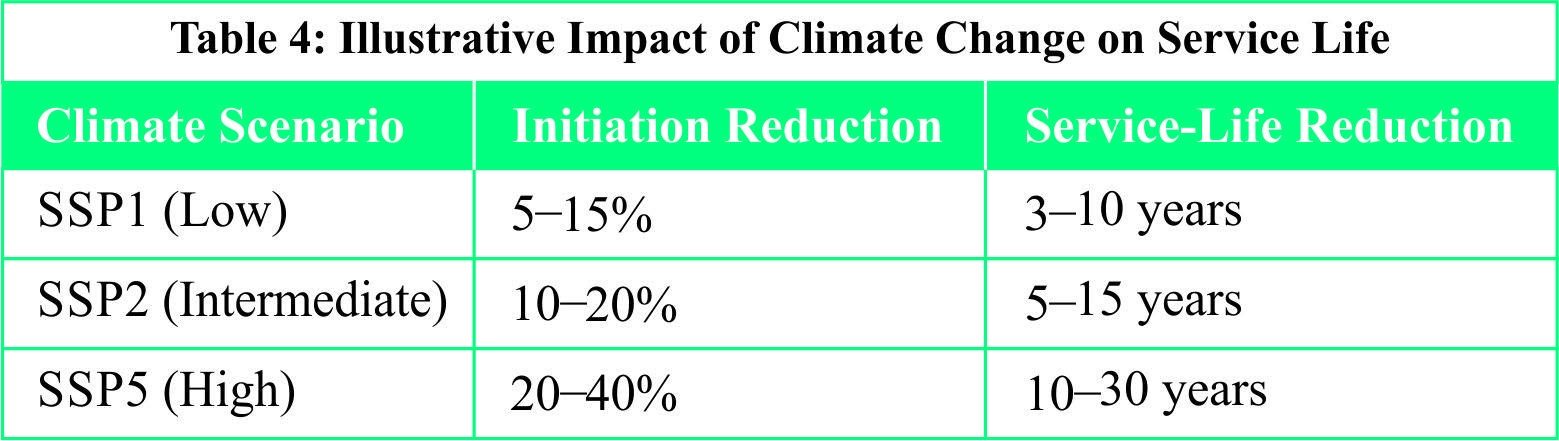
Under future climate scenarios, these temperatures may increase further, significantly accelerating deterioration processes. For a conventional reinforced concrete bridge designed for a 100-year service life, a 20–30% increase in chloride diffusion may result in corrosion initiation occurring 10–20 years earlier than originally predicted.
Intensified Storms and Mechanical Damage
Climate models consistently project an increase in the frequency and intensity of extreme weather events. Hurricanes, cyclones, storm surges and high-energy wave action subject coastal infrastructure to increased mechanical loading. Unlike purely chemical deterioration mechanisms, storm-related damage often creates pathways that accelerate other forms of degradation.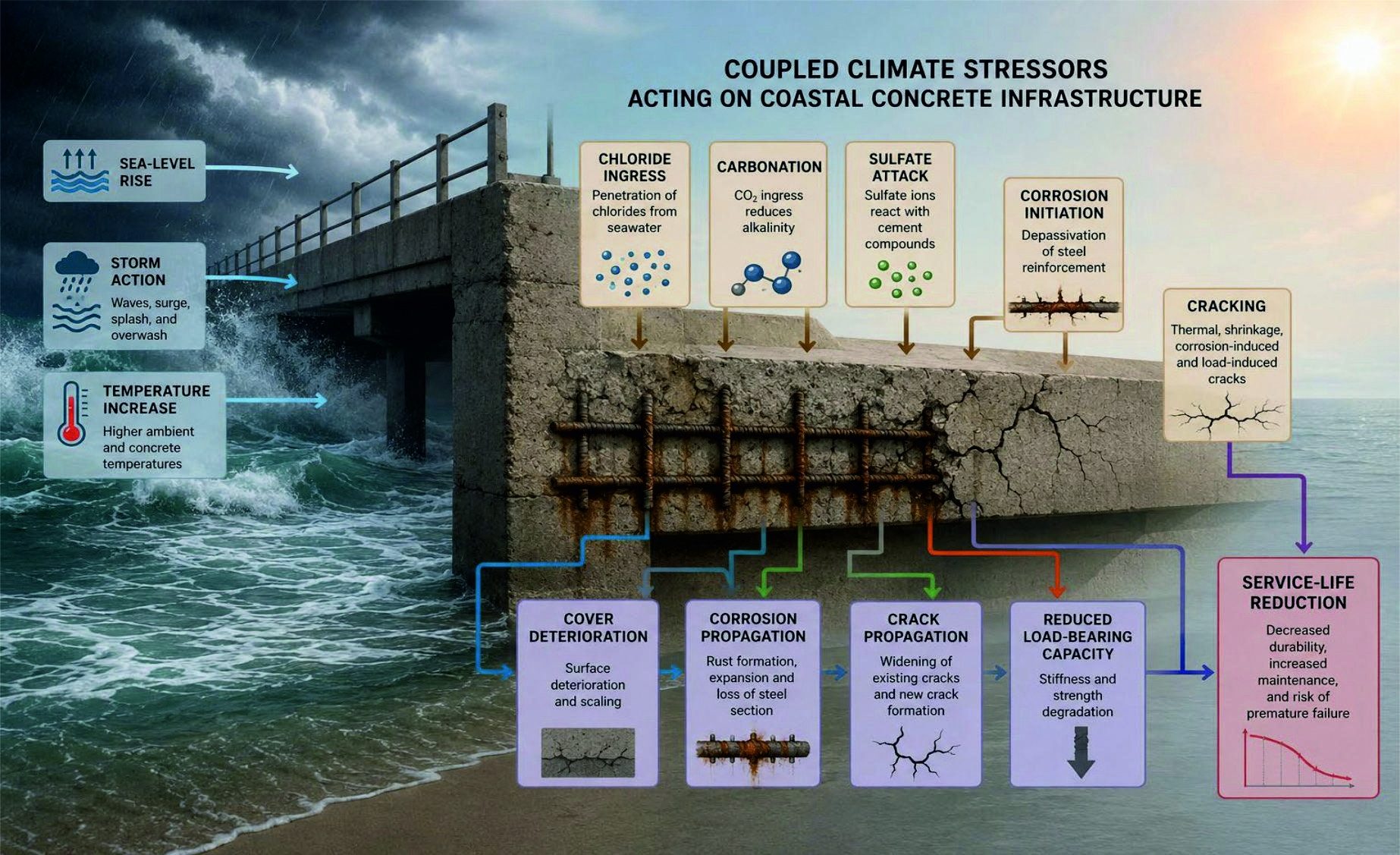 Figure 1: Coupled Climate Stressors Acting on Coastal Concrete Infrastructure
Cracks generated by impact loads, abrasion, fatigue, or thermal stress become preferential routes for chloride ingress and moisture penetration. Research shows that chloride transport through cracked concrete can be two to ten times faster than through intact concrete depending on crack width and connectivity. This explains why structures often exhibit accelerated deterioration following severe storm events even when visible damage appears relatively minor.
Multi-Ion Chemical Attacks
Marine environments expose concrete to multiple aggressive ions simultaneously. Chlorides initiate reinforcement corrosion, sulfates contribute to expansion and cracking, while atmospheric CO2 drives carbonation. Traditionally, these mechanisms were studied independently. However, recent investigations demonstrate that their interactions can produce deterioration rates significantly greater than those predicted by individual assessments.For example, cracking caused by sulfate attack can accelerate chloride penetration. Carbonation may reduce alkalinity and weaken reinforcement protection. Elevated temperatures further accelerate all these processes. This multi-ion interaction is increasingly recognized as one of the most important durability challenges for future marine infrastructure.
Degradation Mechanisms Under Coupled Climate Change Stressors
Traditional durability assessment focused on single mechanisms. Climate change causes multiple stressors to act together, producing faster damage than older models predict. This coupled effect is a major challenge. Existing codes based on historical data may underestimate risks.Chloride-Induced Reinforcement Corrosion
Chloride-induced corrosion is the leading cause of failure. Chlorides penetrate concrete and destroy the protective layer on steel. Rust expands 2–6 times, causing cracking and spalling. The splash zone is most aggressive. Climate change worsens it through longer exposure and 15–40% faster diffusion.Carbonation Under Future Conditions
Rising CO2 (425 ppm today, possibly 600–900 ppm by 2100) lowers concrete pH from 12.5–13.5 to below 9, removing steel protection. Low-carbon mixes with high SCMs need careful design. Future carbonation depth may increase 10–35%.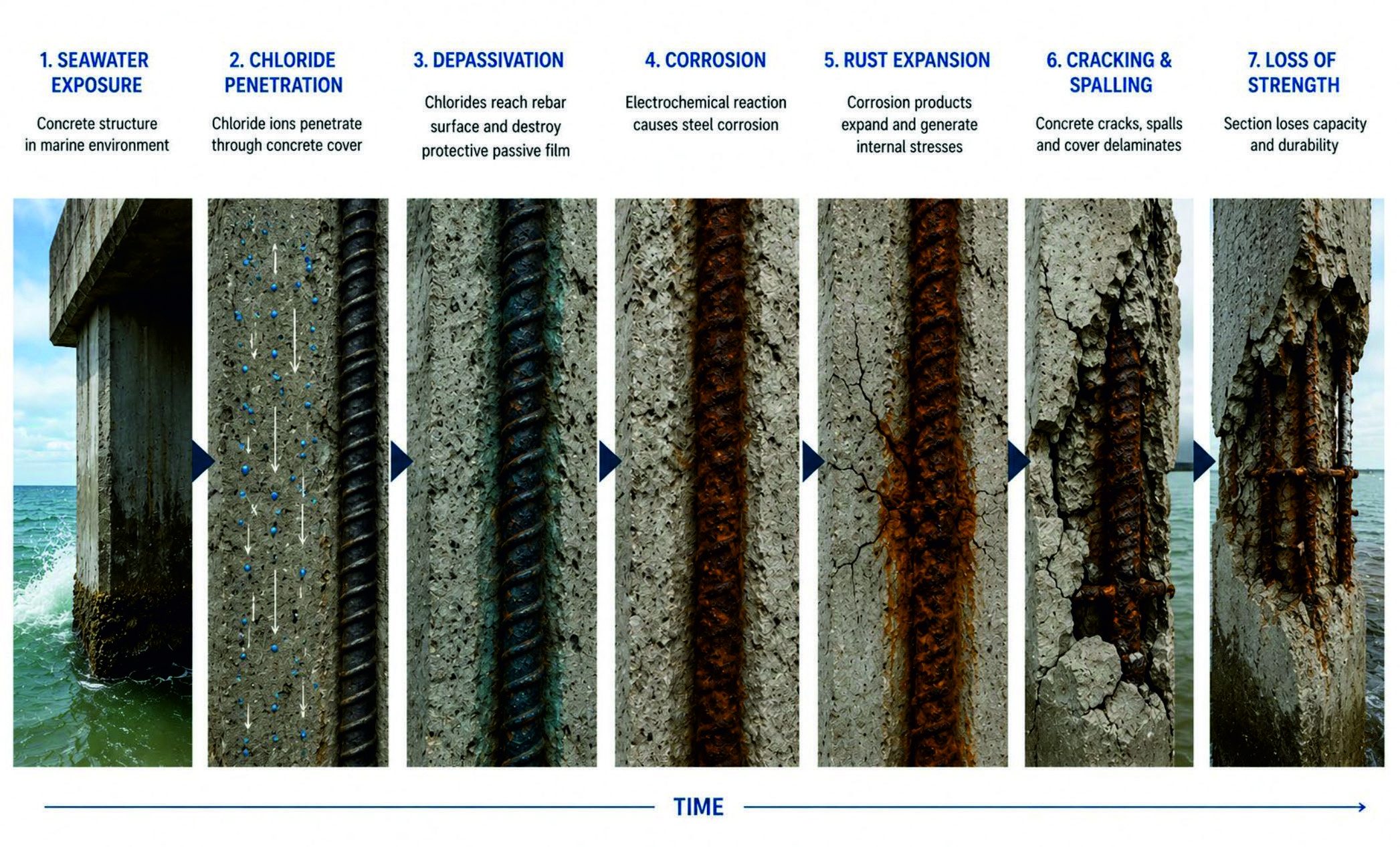 Figure 2: Chloride-Induced Corrosion Process
Sulfate Attack and Multi-Ion Interactions
Sulfates (2,500–3,000 mg/L) cause expansive cracking. Combined with chlorides and carbonation, damage is much faster. Higher temperatures accelerate all reactions.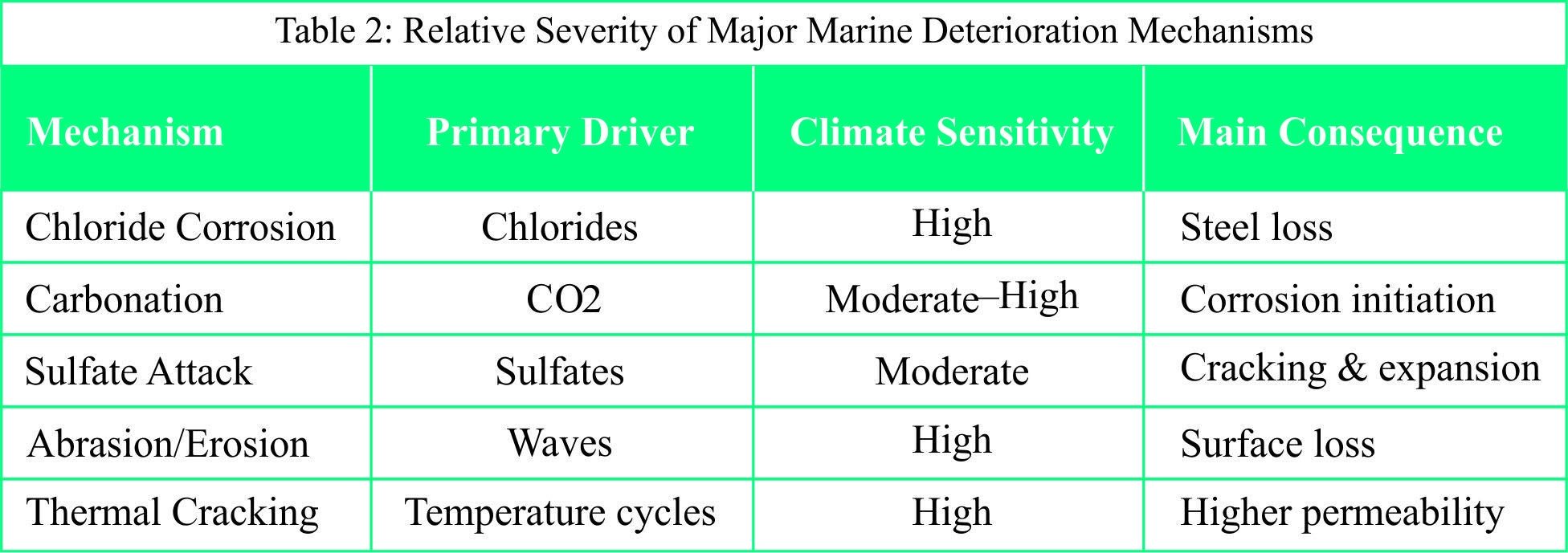
Crack Formation and Accelerated Transport
Cracks turn good concrete vulnerable. Chloride transport increases 2–10 times through cracks as small as 0.1–0.2 mm. Climate change increases cracking via storms, temperature cycles, and shrinkage.Engineering Implications
Future damage will rarely come from one mechanism. Combined effects may shorten 100-year service life by 15–30 years. This requires climate-adjusted design, advanced materials, and proactive strategies.Performance of Conventional and Low-Carbon Concrete Systems Under Marine Exposure
Low-carbon concretes must deliver high durability, low emissions, and economic viability.Conventional Portland Cement Concrete
OPC performs adequately but has higher permeability (chloride diffusion 5–15 ×10-¹² m²/s) and high CO2 emissions.Supplementary Cementitious Materials (SCMs)
Fly ash, GGBS, and calcined clay refine pores and reduce chloride diffusion by 30–70%. GGBS offers excellent sulfate resistance.LC3 (Limestone Calcined Clay Cement)
LC3 cuts emissions by 35–40% and shows strong chloride resistance. It is highly suitable for India due to abundant clay resources.Geopolymers and Alkali-Activated Materials
These use industrial wastes, reduce emissions by 50–80%, and show excellent marine performance (diffusion 1–5 ×10-¹² m²/s).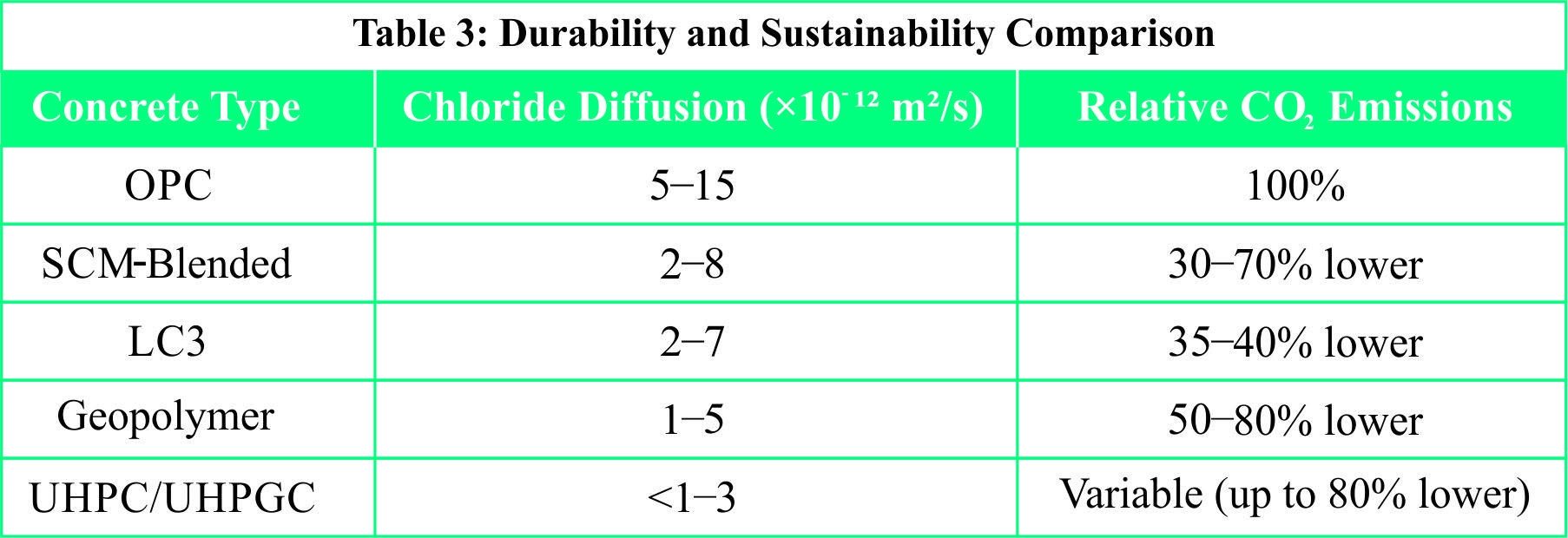
Ultra-High-Performance Concrete (UHPC) and UHPGC
UHPC provides >120 MPa strength and very low permeability. UHPGC adds low-carbon benefits with service life potential beyond 100 years.Engineering Perspective
Selecting materials based on service life, lifecycle cost, local availability, and specific exposure rather than initial strength or cost alone.Climate-Adjusted Service-Life Prediction and Reliability-Based Durability Design
Service-life design must now account for changing climate conditions.Understanding Service Life
Service life includes corrosion initiation (70–90% of total life) and propagation phases. Improving initiation resistance is most effective.Traditional Models
Fick’s Law shows that higher cover and lower diffusion greatly extend life. However, models assume constant conditions, which are no longer valid.Climate Change and Service-Life Reduction
Temperature increases diffusion by 15–40%. Sea-level rise and storms add more exposure and cracks.Example:
A 100-year tropical bridge may see initiation 15–25 years earlier under SSP2, requiring repairs 10–20 years sooner. Indian port structures face similar reductions of 12–22 years under high scenarios.Life-365 and fib Model Code
Life-365 evaluates mixes and climate effects. In Port of Brisbane-type studies, SCM mixes extended life and cut costs by ~35%. The fib Model Code uses performance-based and probabilistic methods for better reliability under uncertainty.
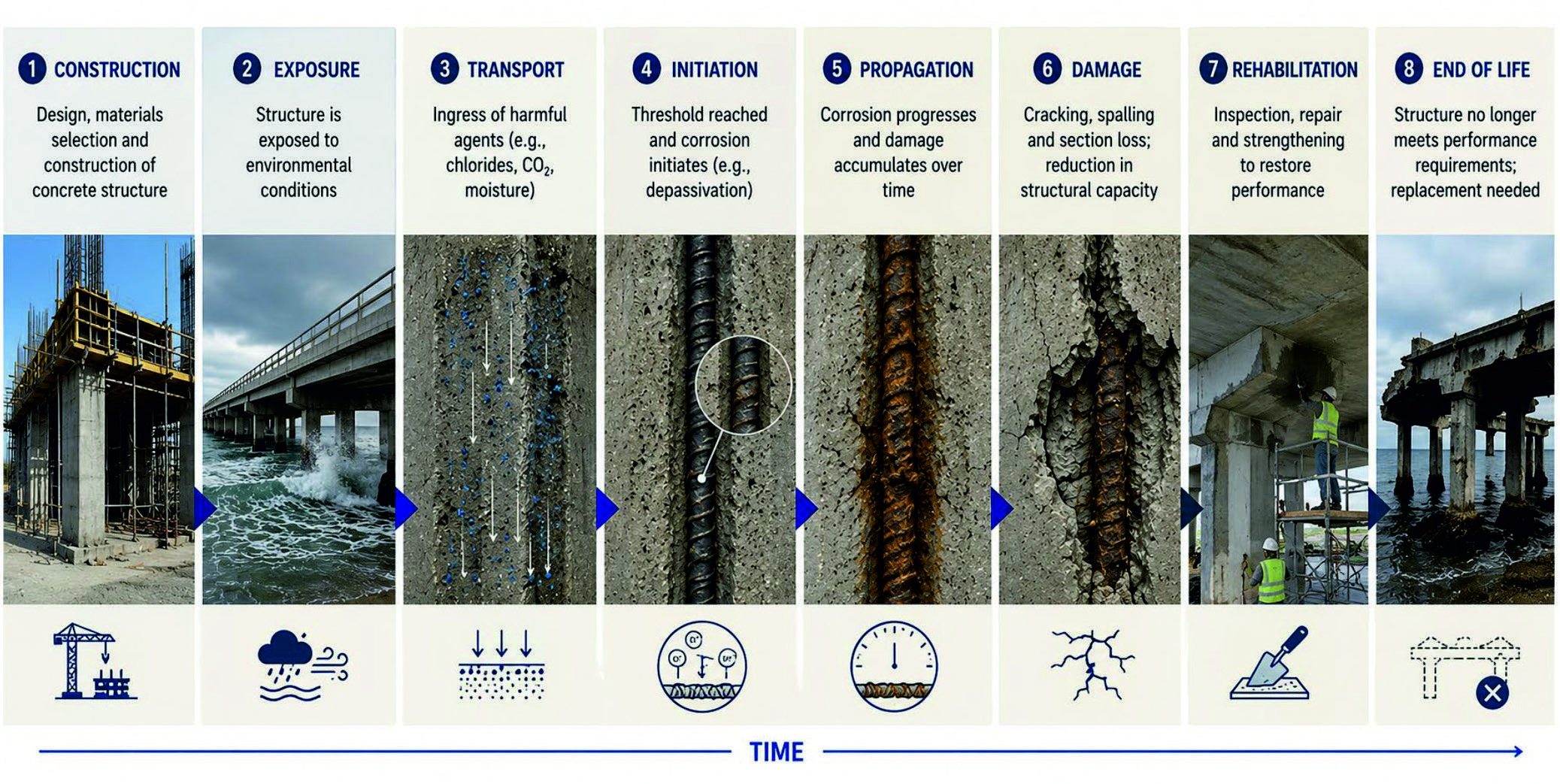 Figure 3: Typical Service Life
Climate-Adjusted Recommendations
Increase cover (60–75 mm), use low-permeability mixes, corrosion-resistant rebar (FRP/stainless), and monitoring. Design must be climate-adjusted, performance-based, and lifecycle-oriented.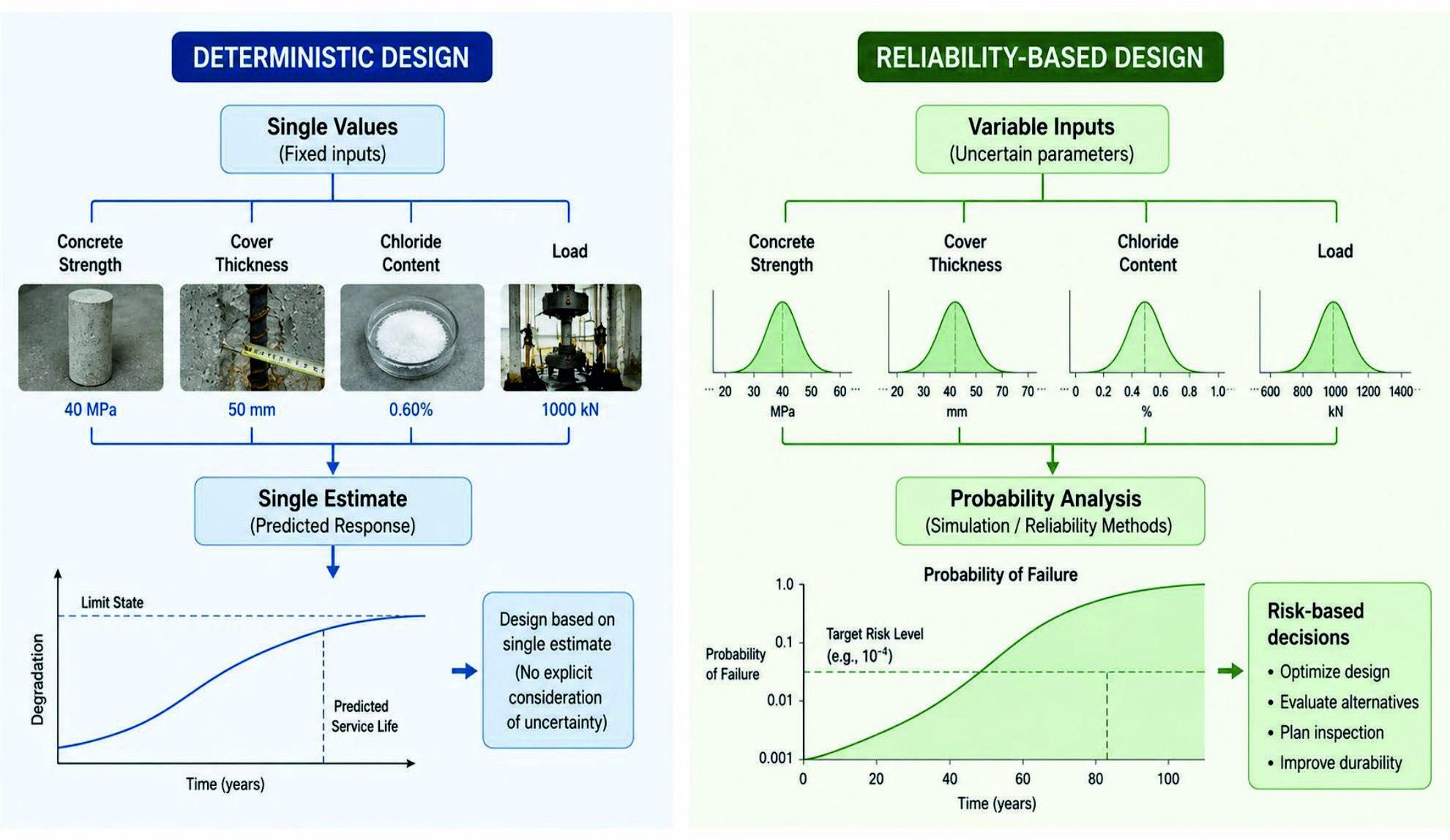 Figure 4: Deterministic vs Reliability-Based Design
Adaptation Strategies for Climate-Resilient Marine Infrastructure
Integrated strategies combine materials, protections, design, NbS, and monitoring. They can extend life by 20–75 years and reduce costs by 20–50%.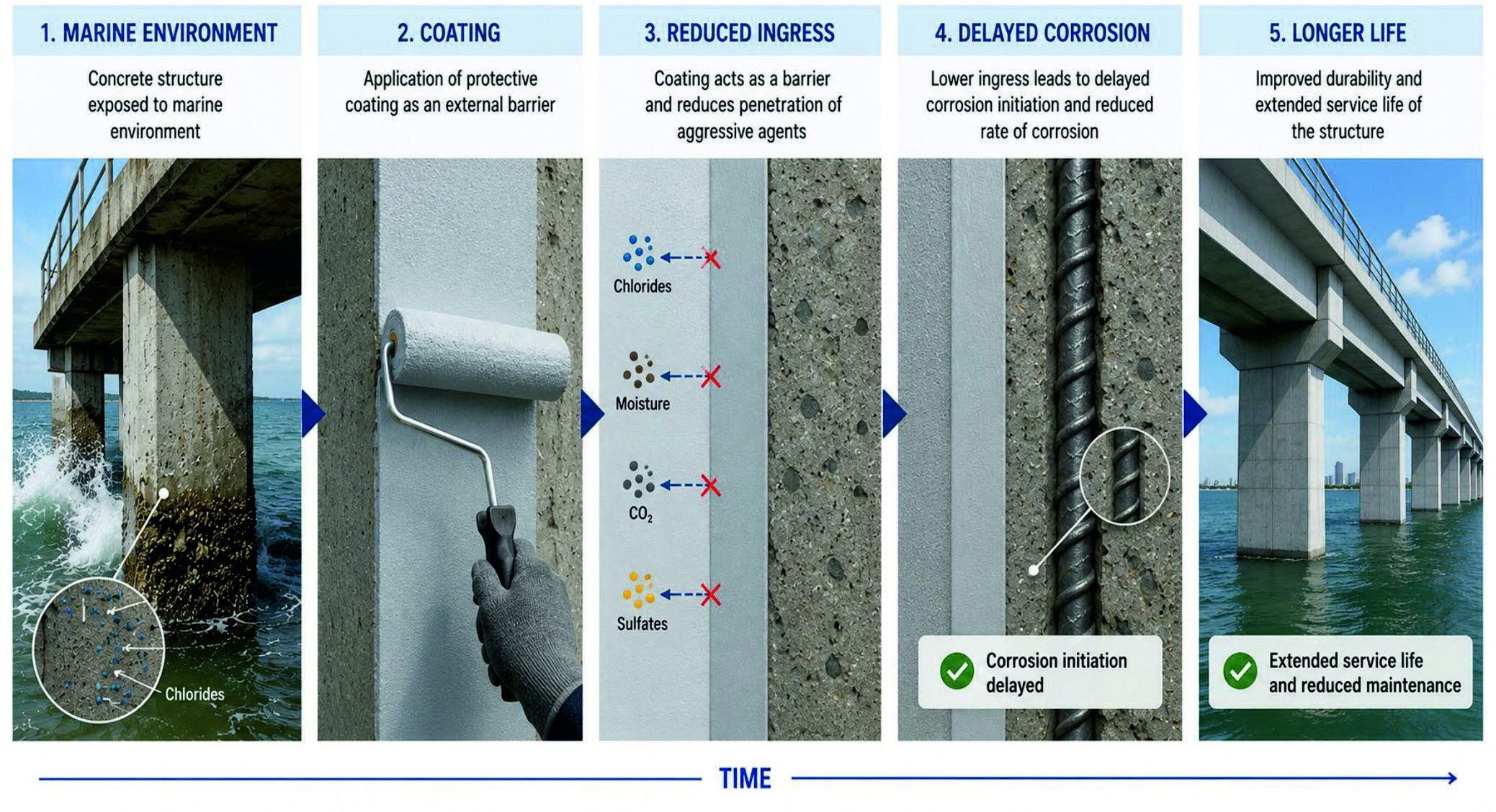 Figure 5: Protective Barrier Concept
Advanced Low-Carbon Systems
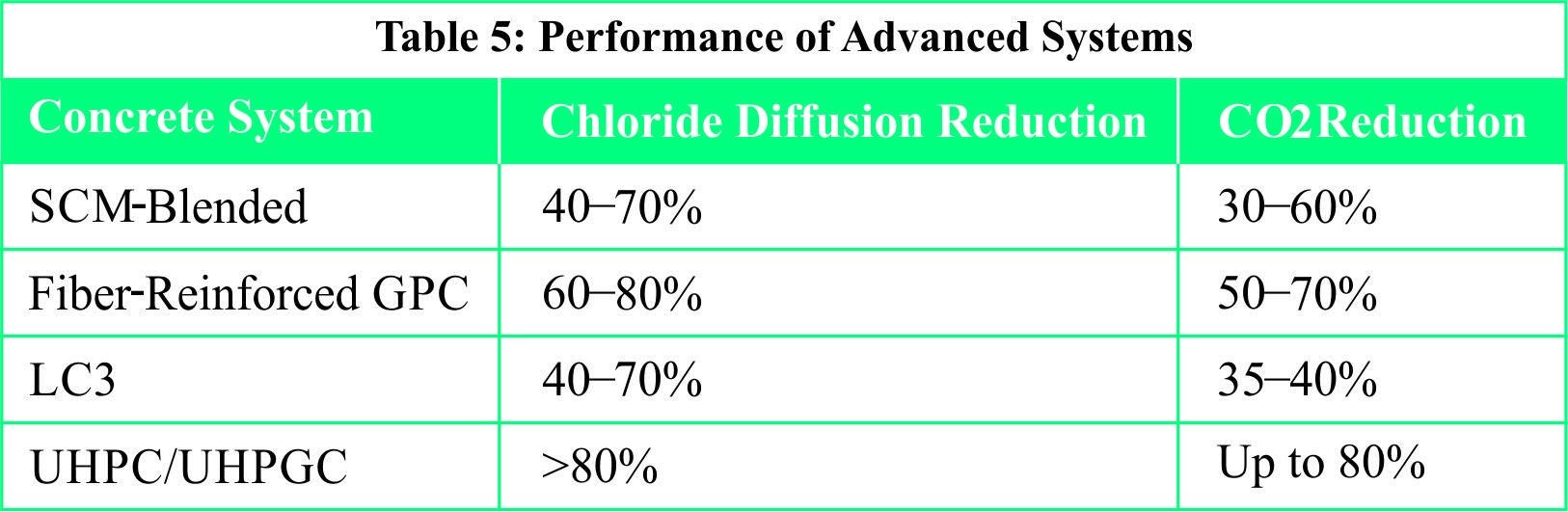
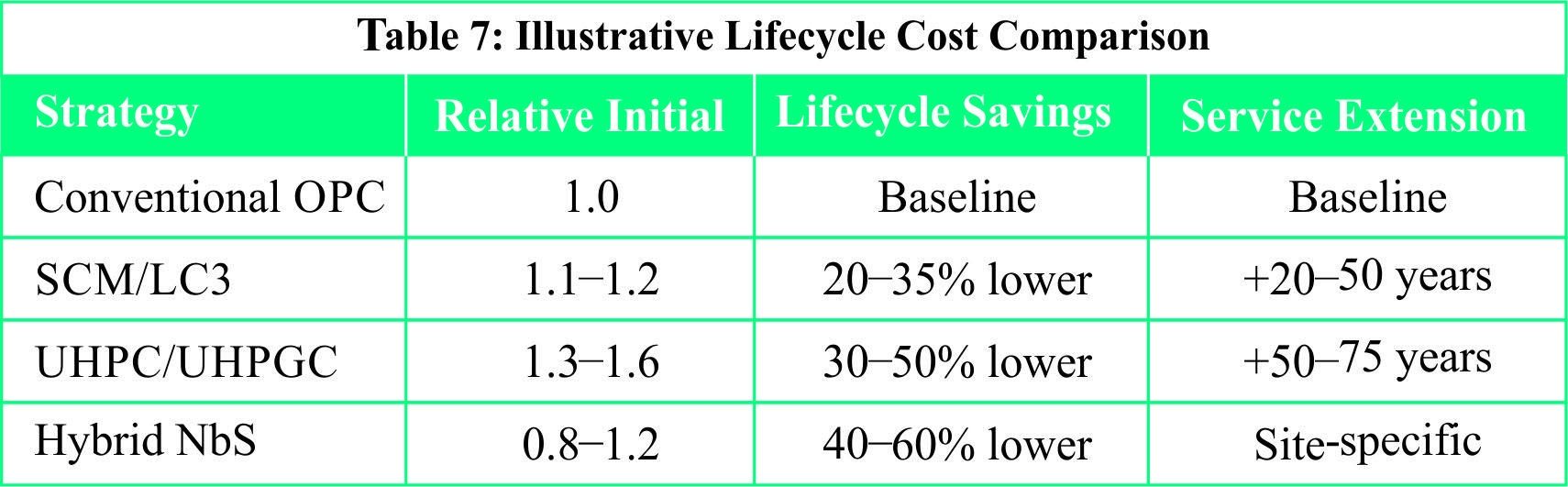
UHPC and UHPGC offer ultra-low permeability. Fibers control cracks from storms.
Surface Protection Systems
Geopolymer and superhydrophobic coatings reduce ingress up to 100 times. MICP enables self-healing. Silane coatings extend life 10–30 years.Nature-Based and Hybrid Solutions
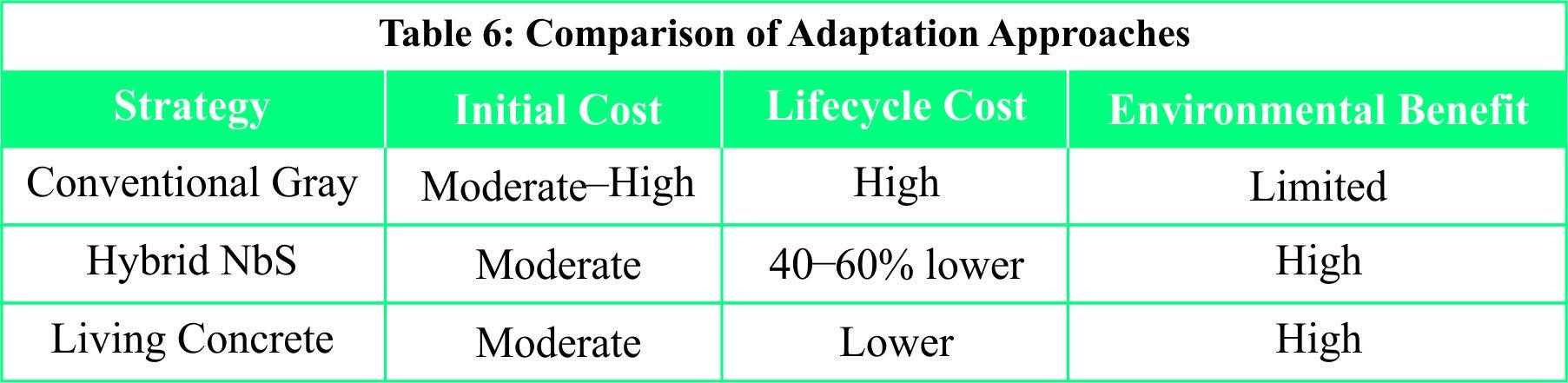
Hybrid systems (concrete + mangroves, reefs, living concrete) dissipate waves, adapt to rise, and provide biodiversity and carbon benefits. They save 40–60% in lifecycle costs.Structural Adaptations
Increase cover, use FRP rebar, and adopt modular designs.Applications
Ports (e.g., Brisbane) use UHPC + coatings. Bangladesh and Indian projects benefit from hybrids, LC3, and quality control.Lifecycle Cost Analysis (LCCA), Economic Benefits and Decision-Making Framework
LCCA considers all costs over the structure’s life. Climate change makes it essential as it can underestimate costs by 15–40%. Durable low-carbon options have higher initial costs but 20–60% lower total costs.Digital monitoring adds further savings of 15–40%. For India and Global South, LCCA supports investing in durability from the start.
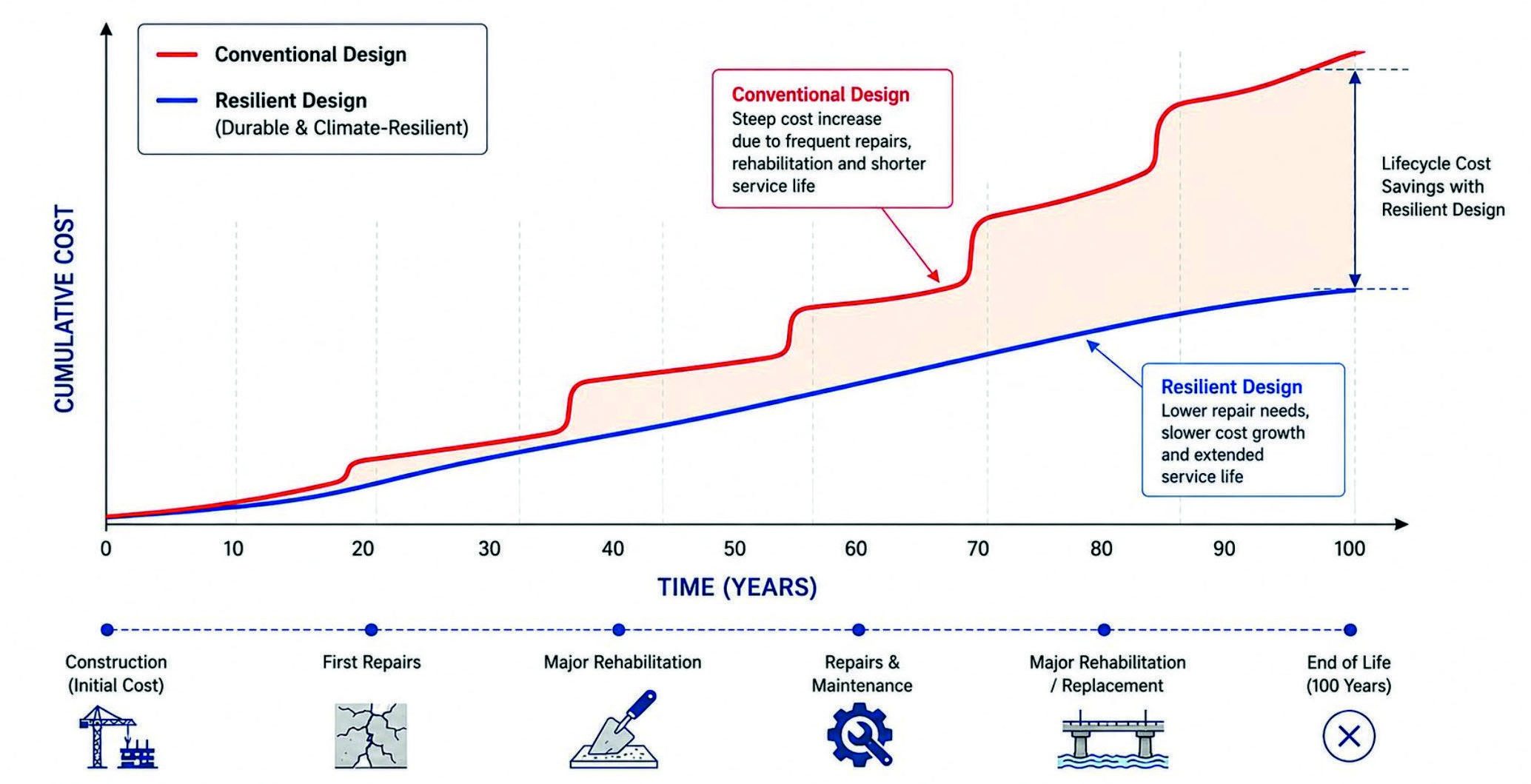 Figure 6: Typical Lifecycle Cost Behavior
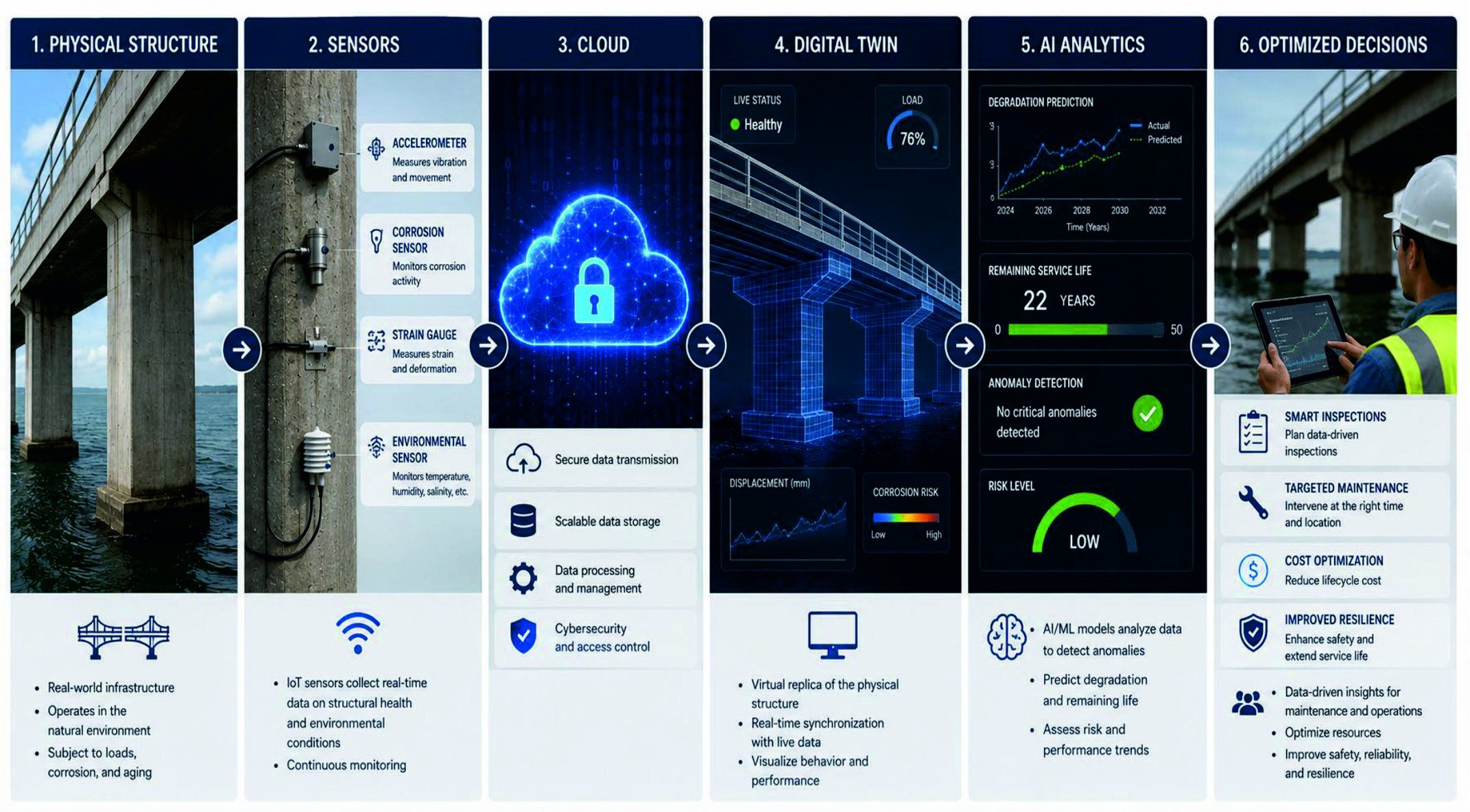 Figure 7: Digital Twin Framework
Digital Twins, Artificial Intelligence and Smart Monitoring
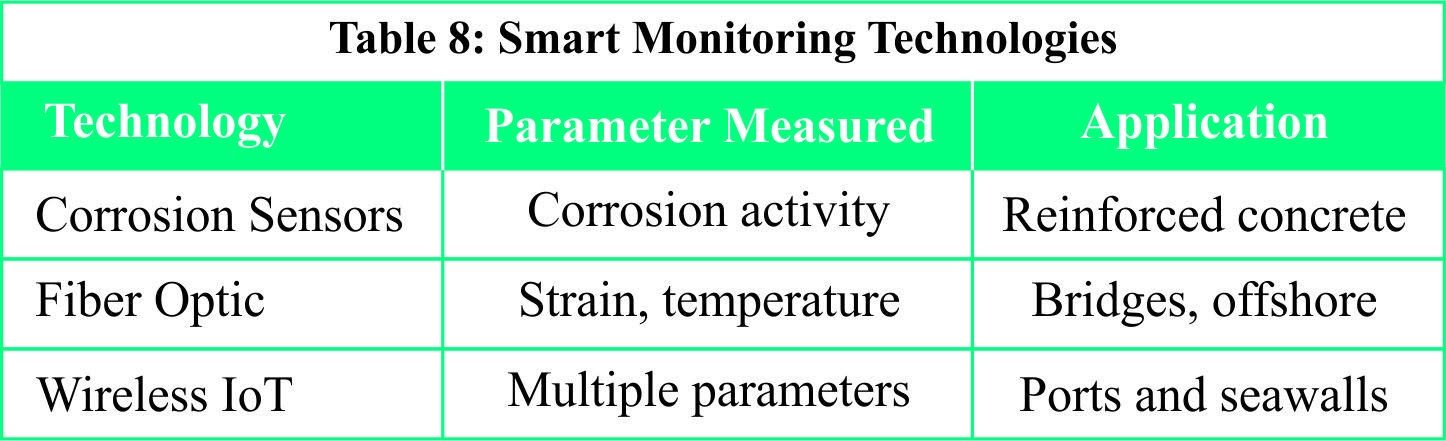
Smart systems shift from reactive to predictive maintenance. IoT sensors, SHM, digital twins and AI track corrosion, cracks and conditions in real time. They improve predictions and reduce maintenance costs by 15–40% and downtime by 20–50%.Global Case Studies and Lessons Learned
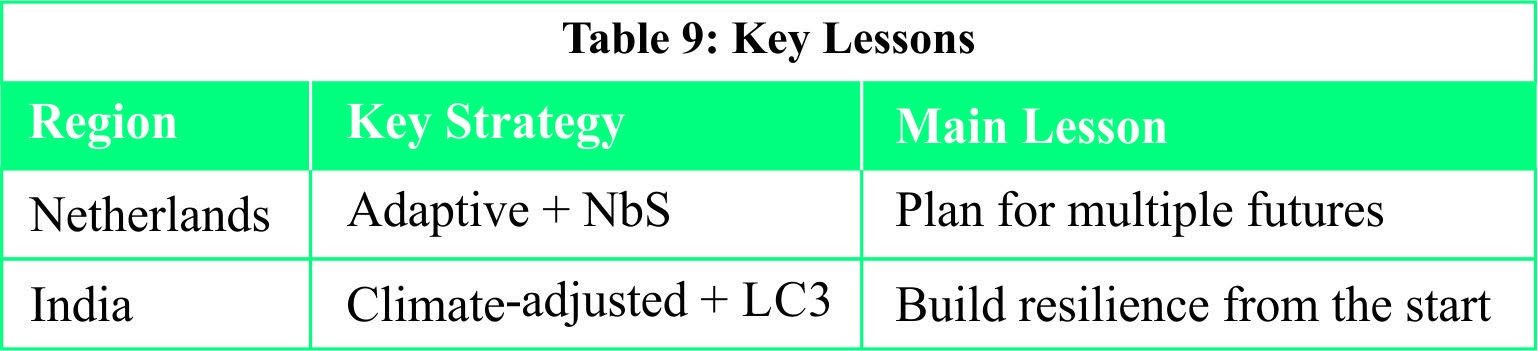
- Netherlands: Adaptive design with NbS for multiple scenarios.
- Singapore: High-performance concrete and strict quality control.
- Australia (Port of Brisbane): Advanced mixes, coatings, and monitoring.
- Bangladesh: Hybrid NbS and community approaches.
- India: LC3 potential in Mumbai, Vizhinjam, and eastern coast projects.
Challenges, Research Gaps and Future Opportunities
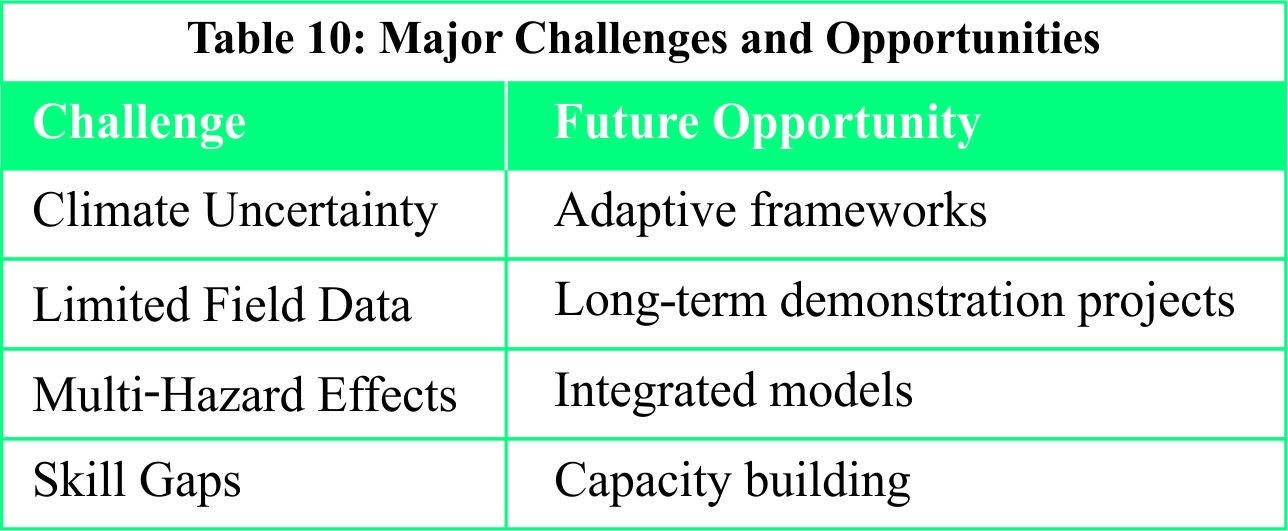
Challenges include climate uncertainty, limited long-term field data, coupled hazard models, regulatory lags, initial costs, and skill gaps.
Opportunities for India include LC3, NbS, digital tools and strong industry-academia collaboration.
Conclusions and Strategic Roadmap for Practitioners
Climate change demands new approaches. Low-carbon concretes, climate-adjusted design, LCCA, hybrid NbS, and digital twins can deliver durable, sustainable infrastructure.
Strategic Roadmap
- Use climate-adjusted modeling.
- Select LC3/SCM/UHPGC mixes.
- Apply LCCA for decisions.
- Use protective systems and smart monitoring.
- Adopt hybrid NbS.
- Build collaborations and capacity.
About the author:

References
- Barbhuiya, S., Rahman, M., & Al-Ameri, R. (2025). Structural performance and implementation challenges of high-performance and ultra-high-performance concretes. Journal of Building Engineering, 92, Article 110742.
- Castillo-Martínez, K. J., Rodríguez, J., & Morales, R. (2025). Developing coastal resilience to climate change using sustainable concrete. Journal of Marine Science and Engineering, 13(5), Article 575.
- Doussang, L., & Cyr, M. (2023). Durability performance of low-carbon concretes under aggressive environmental conditions. Construction and Building Materials, 385, Article 131527. https://doi.org/10.1016/j. conbuildmat.2023.131527
- Feng, D. C., Wang, W., Zhang, J., Wang, Y ., & Li, G. (2024). Climate change impacts on the risk assessment of concrete civil infrastructures: State-of-the-art review. ASCE-ASME Journal of Risk and Uncertainty in Engineering Systems, Part A: Civil Engineering, 10(1), Article 04023004.
- fib. (2021). fib Model Code for Concrete Structures 2020. International Federation for Structural Concrete.
- Global Center on Adaptation. (2025). National compendium on nature-based solutions for urban resilience in Bangladesh.
- Hagen, A., & Kristensen, P . (2024). Asset management, condition monitoring and digital twins for infrastructure systems. Structure and Infrastructure Engineering, 20(5), 611–628.
- Hu, Z. Z., Wang, Y ., & Zhang, X. (2025). The application and development of digital twin in marine engineering. Ocean Engineering, 320, Article 119428.
- IPCC. (2021). Climate change 2021: The physical science basis. Cambridge University Press.
- IPCC. (2022). Climate change 2022: Impacts, adaptation and vulnerability. Cambridge University Press.
- Life-365 Consortium. (2024). Life-365 service life prediction model (Version 3.2).
- Paxton, A. B., Theuerkauf, E. J., & Morris, R. L. (2024). Evidence on the performance of nature-based solutions interventions for coastal protection in biogenic, shallow ecosystems: A systematic map. Environmental Evidence.
- Scrivener, K. L., Martirena, F ., Bishnoi, S., & Maity, S. (2020). Limestone calcined clay cement (LC3): A low-carbon cement for sustainable construction. Cement and Concrete Research, 136, Article 106118.
- Scrivener, K. L., John, V. M., & Gartner, E. M. (2018). Eco-efficient cements: Potential, economically viable solutions for a low-CO₂ cement-based materials industry. Cement and Concrete Research, 114, 2–26.
- Smith, A. C., Brown, K., & Rahman, M. M. (2021). Nature-based solutions in Bangladesh: Evidence of effectiveness for coastal resilience. Frontiers in Environmental Science, 9, Article 737659.
- Thomas, M. D. A. (2022). Service life prediction of concrete exposed to chlorides. CRC Press.
- Vairagade, V. S., Patel, R., & Singh, A. (2025). Durability and service-life prediction of fly ash-based geopolymer high-performance concrete under extreme environmental conditions. Scientific Reports, 15, Article 27229. https://doi.org/10.1038/s41598-025-27229-w
- Wei, H. U., Li, Y ., & Zhang, C. (2025). Integrating digital twin technologies for Maintenance 4.0 in civil infrastructure. Building and Environment, 267, Article 112123. https://doi.org/10.1016/j.buildenv.2025.112123
- World Bank & Global Facility for Disaster Reduction and Recovery. (2026). A catalogue of nature-based solutions for coastal resilience. World Bank.
- World Bank. (2025). Mobilizing nature-based solutions for disaster and climate resilience. Results Brief.
- Alexander, M., Beushausen, H., & Dehn, F . (2021). Durability, service life design and sustainability of concrete structures. Springer.
- CSTEP . (2025). Nature-based solutions for climate adaptation in coastal urban areas: Full compendium. Centre for Study of Science, Technology and Policy.
- Flah, M., et al. (2026). Durability-informed life cycle assessment of concrete infrastructures. Renewable and Sustainable Energy Reviews, 231, Article 110029.
- Ghazy, M. F ., et al. (2025). A comprehensive review of limestone calcined clay cement (LC3): Performance, sustainable applications and research challenges. Journal of Building Engineering.
- Holcim Innovation Center. (2024). Ultra-high-performance concrete for coastal and marine infrastructure. Technical Series.
- Mott MacDonald. (2023–2026). Climate resilient concrete structures in marine environment – AsCAP Bangladesh
- Nguyen, Q. D., et al. (2020). Influence of calcined clay reactivity on the mechanical properties and chloride diffusion resistance of limestone calcined clay cement (LC3) concrete. Journal of Marine Science and Engineering, 8(5), Article 301.
- Ram, K., et al. (2022). Influence of low- to medium-kaolinite clay on the durability of limestone calcined clay cement (LC3) concrete. Materials.
- UNEP Finance Initiative. (2023). Nature-based solutions in oceans and coastal ecosystems.
- Feng, T., et al. (2025). Prediction methodology for the service life of concrete structures in marine environment: From materials to performance. Engineering.