Concrete has advanced by the use of admixtures—both chemical and mineral to meet the demands of modern construction. This article by Sasanka Dey (Concrete Technologist), GM – Head QC, JP AUTOCALVERS & CO., covers the different types of admixtures, their roles in improving concrete properties like strength, workability, and durability, and the need for proper testing and dosage adjustments to ensure optimal performance under varying conditions.

Why Use Admixtures in Concrete?
Admixtures are vital for modifying concrete to meet specific performance characteristics, such as enhanced compressive strength, improved workability, and increased durability. These additives help concrete meet the increasingly complex requirements of modern structures, where performance and longevity are essential.Admixtures can influence various concrete properties, including hydration rate, setting time, workability retention, water reduction, and air-entrainment. They also reduce permeability, improve segregation resistance, enhance surface finish, and boost overall durability, allowing concrete to withstand environmental challenges, such as freeze-thaw cycles.
Types of Admixtures
Admixtures are generally classified into two categories:- Chemical Admixtures: Accelerators, Retarders, Water-reducing agents, Superplasticizers, Air-entraining agents, etc.
- Mineral Admixtures: Silica Fume, Metakaolin, GGBS, Fly Ash, SCBA, Rice Husk Ash.
Chemical Admixture Specification
As per ASTM C494-19 & ACI 212.3R-16, 8 types of Admixtures are used as well as available in the market.Type A – Water reducing Admixture
Type B – Retarder Admixture
Type C – Accelerator Admixture
Type D - Water reducing & Retarder
Type E - Water reducing & Accelerator
Type F - HRWRA
Type G – HRWRA & Retarder
Type S – Special type of Admixture- (Colloidal Silica - nano-materials, size 10nm to 40nm, hence 0.01mic. to 0.04 mic.)
ASTM C260-16 it’s the specification of Air Entraining admixture used for protection against freezing and thawing effect into the concrete for very cold weather climatic condition.
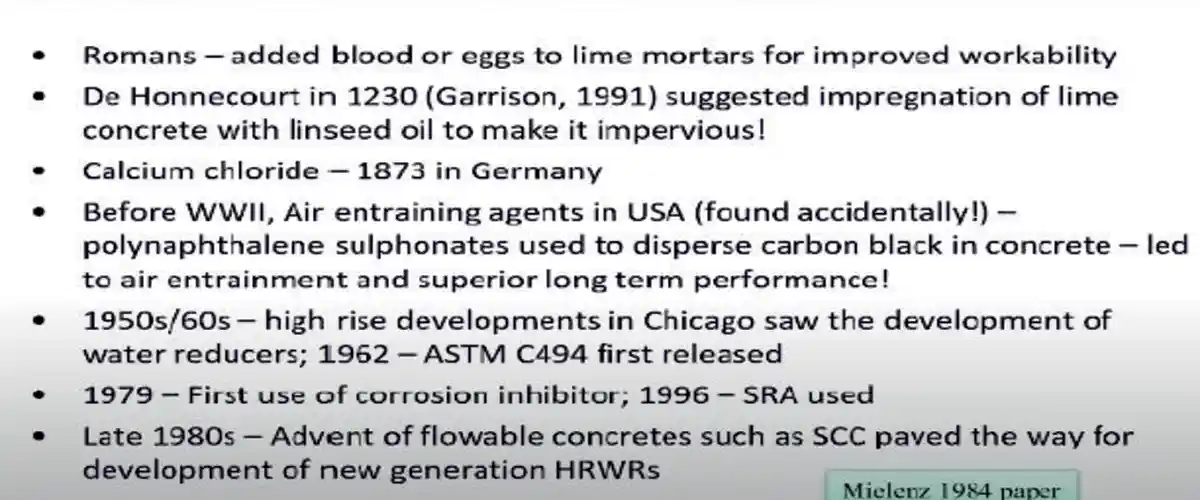
Historical development and usages of admixtures since long era
Special type of Admixture
There are several types of special admixtures according to their uses and applicability. They are as follows:- Corrosion Inhibitor (Corrosion Resistance) Admixture – used to protect rebars from corrosion.
- Anti-Washout Admixture – used for underwater concreting.
- Shrinkage Compensating Admixture – used to avoid any type of shrinkage in concrete.
- Viscosity Modifying Admixture – used in SCC and pumpable concrete.
- Rheology Modifying Admixture – used in SCC and pumpable concrete.
- Pumping Aids Admixture – used in pumped concrete, generally glycol-based.
- Latex Modifying Admixture (Styrene Butadiene Rubber – SBR) – used for water tightness and flexibility; sometimes used as an overlay on bridge decks.
- Chemical Waterproofing Admixture – used in concrete for protection against water intrusion. These are crystalline-based hydrophobic materials that fill the pores and form crystals, which prevent water permeation from outside the concrete. Due to this property, it is also called a crystalline waterproofing admixture (ASTM C-494-24).
- Chloride Resistant Admixture – used to prevent chloride ions from entering concrete and to enhance durability. However, fresh concrete may sometimes come in contact with chloride ions and react with cementitious compounds, which can increase permeability through interconnected porosity, thereby reducing the strength and durability of concrete structures. It is a CN-based product.
- Extended Set Controlling Admixture – Extended set-control admixtures (ESCAs) or hydration controlling admixtures (HCAs) are used to stop or severely retard the cement hydration process in unhardened concrete. They also help in longer hauling times and long-distance delivery periods. These types of admixtures are added to fresh concrete until the IST of concrete is reached.
- Colloidal Silica Based Admixtures – basically used for bridge deck slab overlays to prevent deterioration, increase durability, and enhance the service life of the substrate concrete, as per ASTM C494-24, Type S.
- WRA – Water reducing admixture
- Mid-range WRA – Mid-range water reducing admixture
- HRWRA – High-range water reducing admixture (category of superplasticizers)
- Accelerator Admixture – used for cold weather concreting or in some special cases
- Retarder Admixture – used to delay the setting time for a prolonged period of around 3–4 hours
- Air-Entraining Admixture – used in very cold climatic conditions to protect hardened concrete against freeze and thaw (F–T) effects
1st Generation – (LS/MLS) Lignosulphonate or Modified Lignosulphonate were first used, which prolonged the setting time, thereby delaying the setting. The W/C ratio used at that time in concrete was 0.50–0.60, along with water content >180 kg/m³.
2nd Generation – (SNF/SMF) Sulphonated Naphthalene Formaldehyde (used in hot weather) and Sulphonated Melamine Formaldehyde (used in cold weather) are used nowadays and were also widely used 15–20 years ago. These admixtures can delay or accelerate the setting time whenever required. They fall under the category of superplasticizers. The dosage is around 1.0% to 1.5% by weight of cementitious materials (CM).
The W/C ratio used at that time in concrete was 0.40–0.50, along with water content of 160–180 kg/m³.
3rd Generation – Generally, PCE (Polycarboxylate Ether) based admixtures are used as the third generation of admixtures. They provide very low water content and maintain slump retention for a longer period. These are primarily used for pavement quality concrete. The dosage is around 0.7% to 1.0% by weight of cementitious materials. The W/C ratio used at that time in concrete was 0.25–0.35, along with water content of 140–160 kg/m³.
4th Generation – Basically, modified PCE-based admixtures are now used for HSC/HPC or UHPC/UHPFRC concrete, where very low water content of around 130–140 kg/m³ or even less is used, and the W/C ratio is around 0.15 to 0.20. These are used in the production of superior or special types of concrete such as HSC, HPC, UHPC, UHPFRC, and RPC.
The dosage is around 2 kg per 100 kg of cementitious materials, or as per the manufacturer’s guidelines, or approximately 1.0% to 2.0% by weight of CM.
Set Control Regulator Admixtures
However, there are 5 types of set control regulatory admixture:- Type I- Gypsum
- Type II- CaCl2 and NaCl
- Type III- Na and Ka carbonates/ sodium silicate
- Type IV- LS/Gluconates based and sodium salts of carbolic acids
- Type V- TEA (Amine) and salts of formic acids
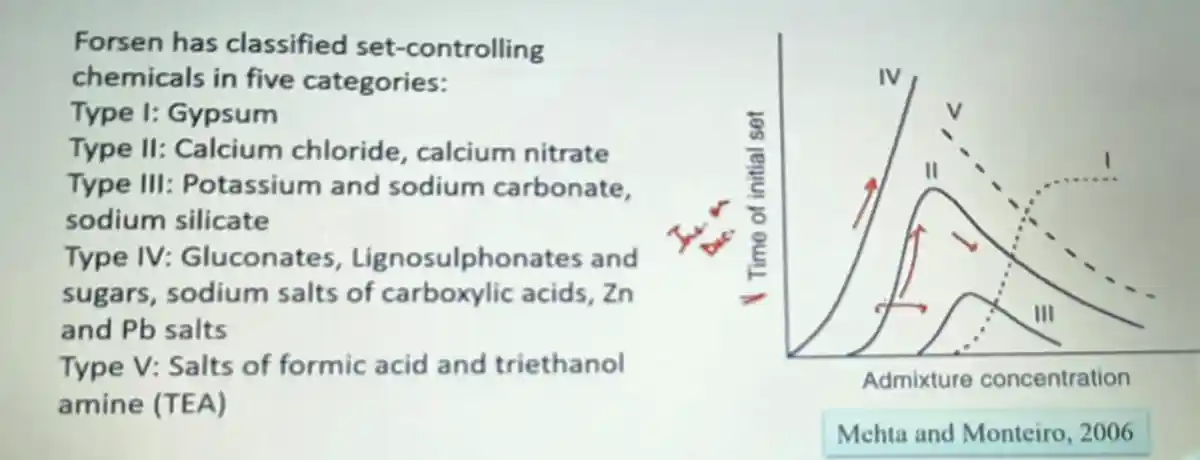
The time of initial setting depends on both the acceleration and retardation of the setting time of cement paste.
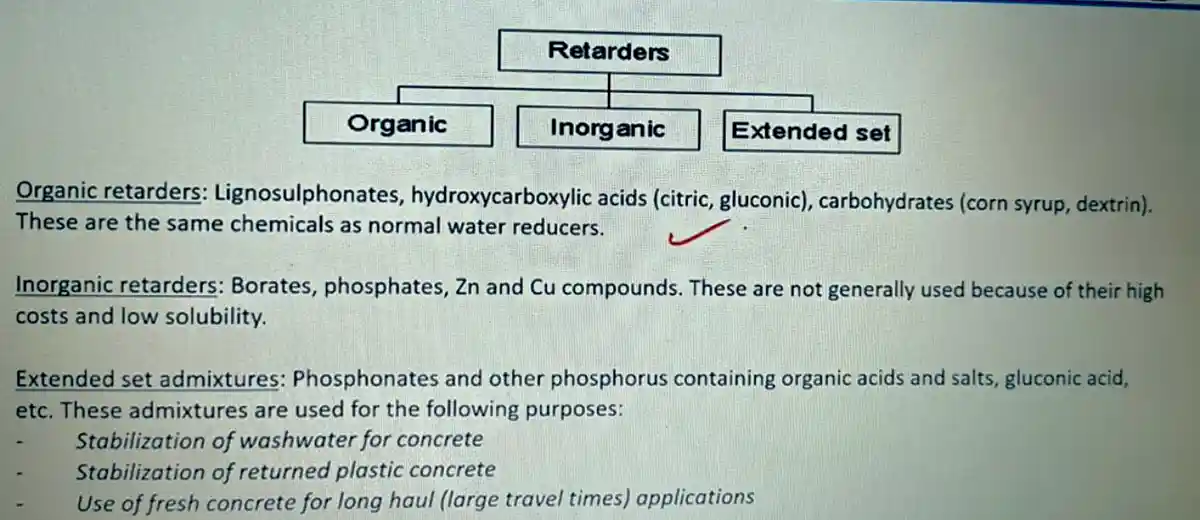
Retarder Chemical Admixtures
Retarder chemical admixtures are also subdivided into three categories:- Organic (lignosulphonates, hydrocarbolic acids, and carbohydrates)
- Inorganic (Zn and Cu-based admixtures)
- Extended set retarders (gluconate-based, phosphonates, and other phosphorus-based compounds).
Retarding Sugars Used for Admixtures-
Apart from this, retarding sugars (another type of ingredient for admixtures) are also subdivided into three categories: 1. Non-retarding (Trehalose), 2. Good retarders (Maltose, Lactose, Glucose), and 3. Excellent retarders (Sucrose).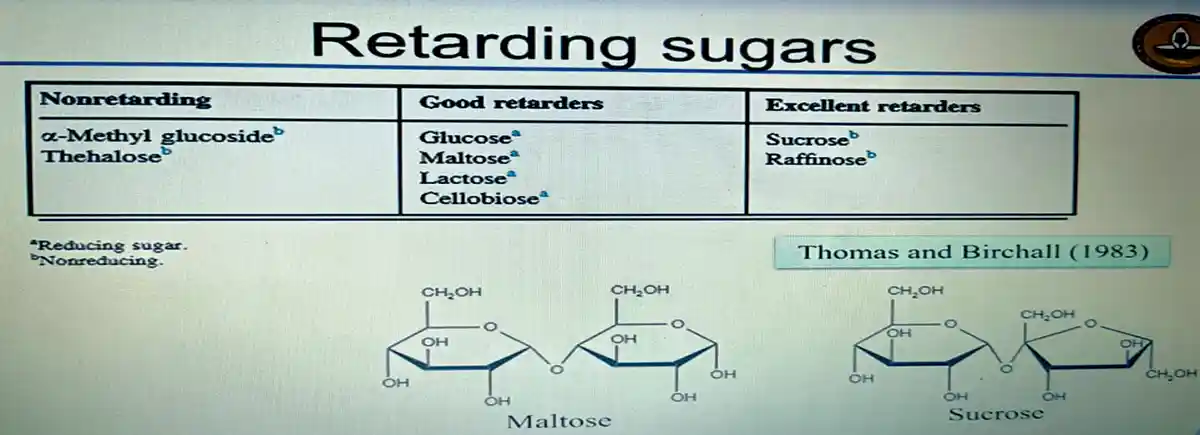
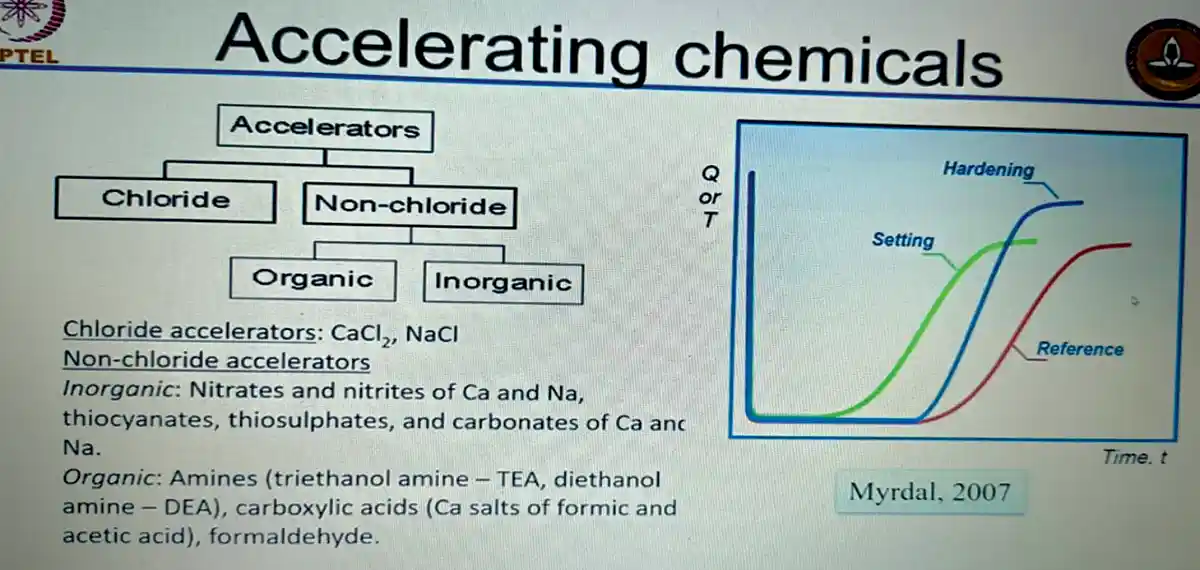
Accelerator Admixtures
Basically, there are two types of accelerator admixtures: chloride-based and non-chloride-based. Chloride-based admixtures include NaCl and CaCl2. Non-chloride-based admixtures are again of two types: organic (TEA/DEA) and inorganic (nitrates and nitrites of Ca and Na, and carbonates of Na and Ca).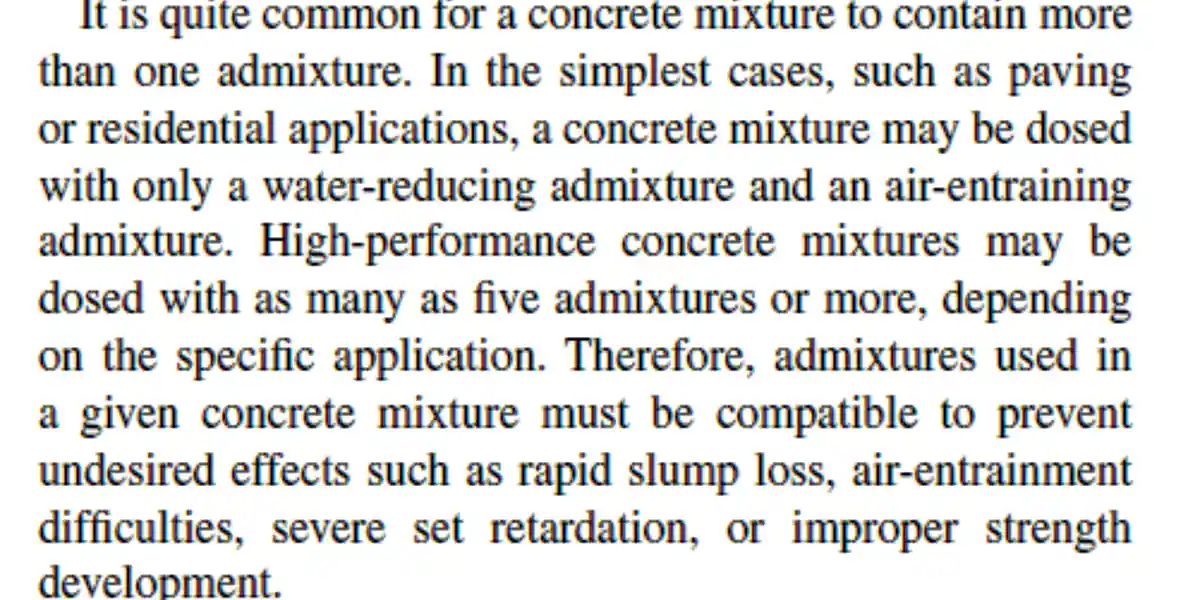
Water Reduction Content as per Different Types of Admixture Usage
As per BIS 9103:1999:- WRA – Reduces the water content up to 5%
- MRWRA – Reduces the water content around 8–10%
- HRWRA (SNF-based) – Reduces the water content around 20–25%
- UHRWRA (PCE-based) – Reduces the water content around 25–30%
According to ACI Report E4-22 on admixtures and their usage, for one type of concrete mix design we may use up to five or even more types of admixtures for different applications.
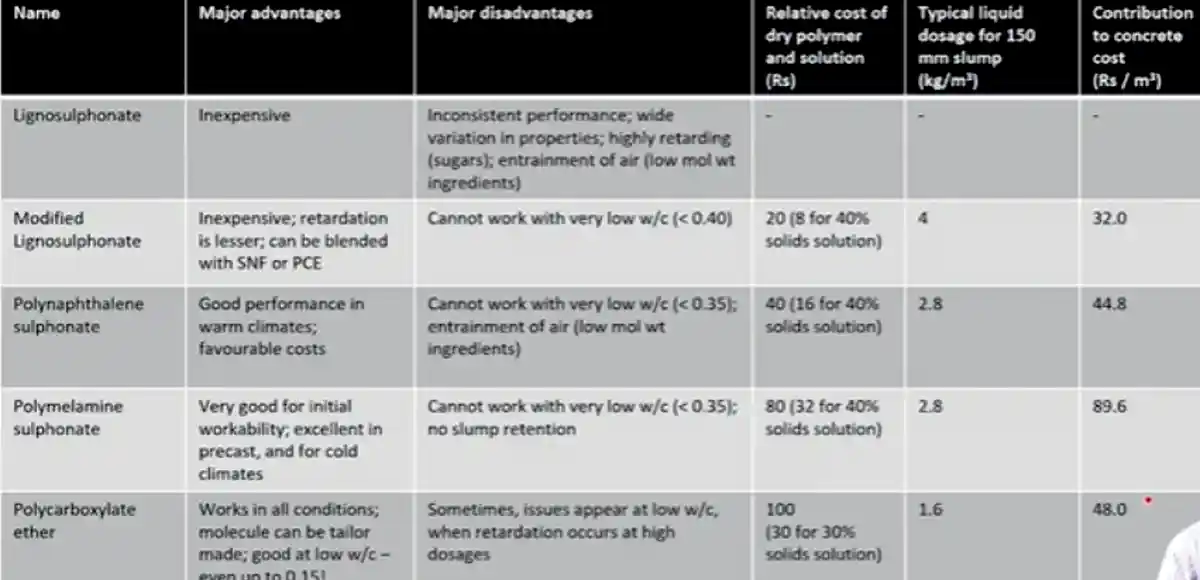
As per comparatively evaluation for diff. types of SP applications and dosages along with rates-
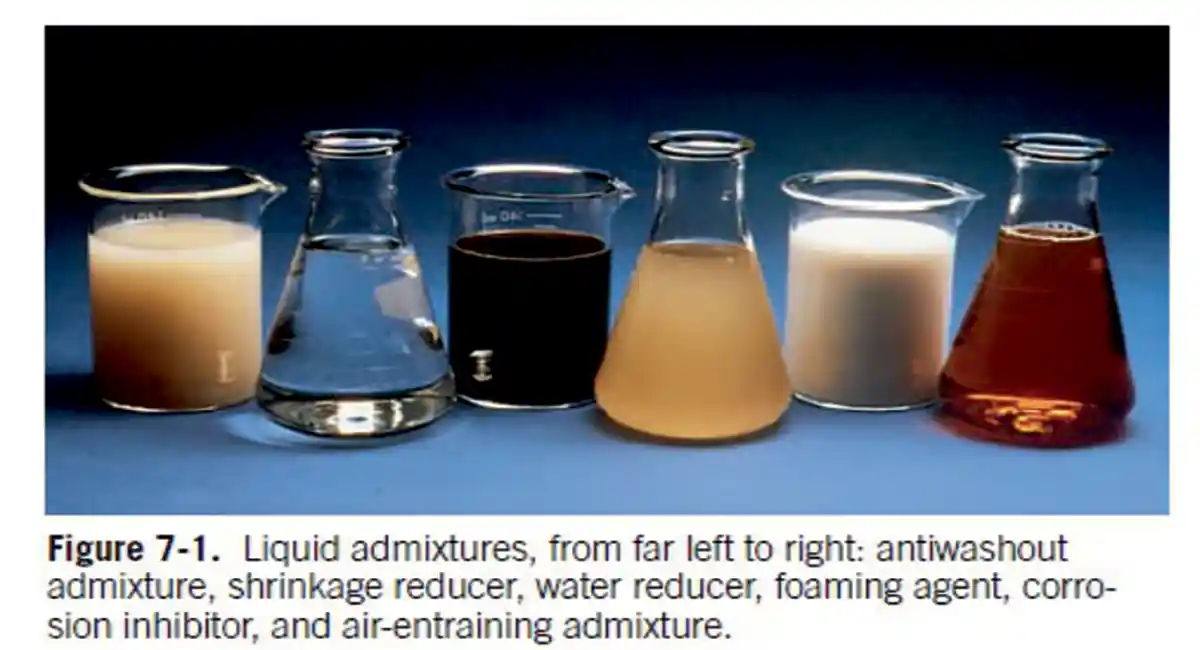
Why water reduction in concrete becomes beneficial with the application of chemical admixtures
- For a given workability, water demand is reduced, thus resulting in higher strength and increased durability.
- For a given W/C ratio and strength, workability can be increased.
- For a given W/C ratio, strength, and workability, the quantity of cement consumption can be reduced, which is a more economical way to produce modern concrete.
- Increase workability without increasing water content, or decrease the required water content at the same workability.
- Retard or accelerate the initial time of setting.
- Reduce or prevent shrinkage.
- Reduce segregation and bleeding.
- Improve pumpability.
- Reduce the rate of slump loss or enhance slump retention.
- Retard or reduce heat evolution during early hardening.
- Accelerate the rate of strength development at early ages by applying C-S-H nano seeding.
Admixture & Cement Paste Compatibility Testing
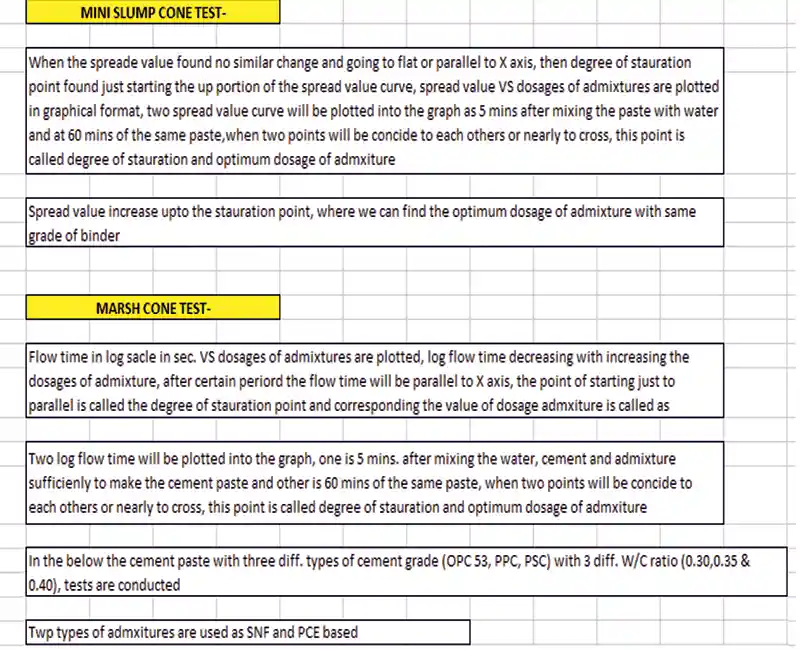
Admixture and cement compatibility needs to be ensured before starting any kind of project, especially for mass volume concrete works, as it is necessary to ensure that all the benefits of the admixture are achieved in the concrete mixture. For this purpose, Marsh cone or mini slump cone testing is required, as suggested by Aitcin (1998).For Marsh cone testing, a Marsh cone apparatus as per ASTM C939 is required. The admixture with cement paste, around 1725 ml, is collected in a cylinder with a capacity of about 2000 ml. The orifice of the apparatus is 12.5 mm in diameter, and the test is carried out following the standard Marsh cone testing methodology.
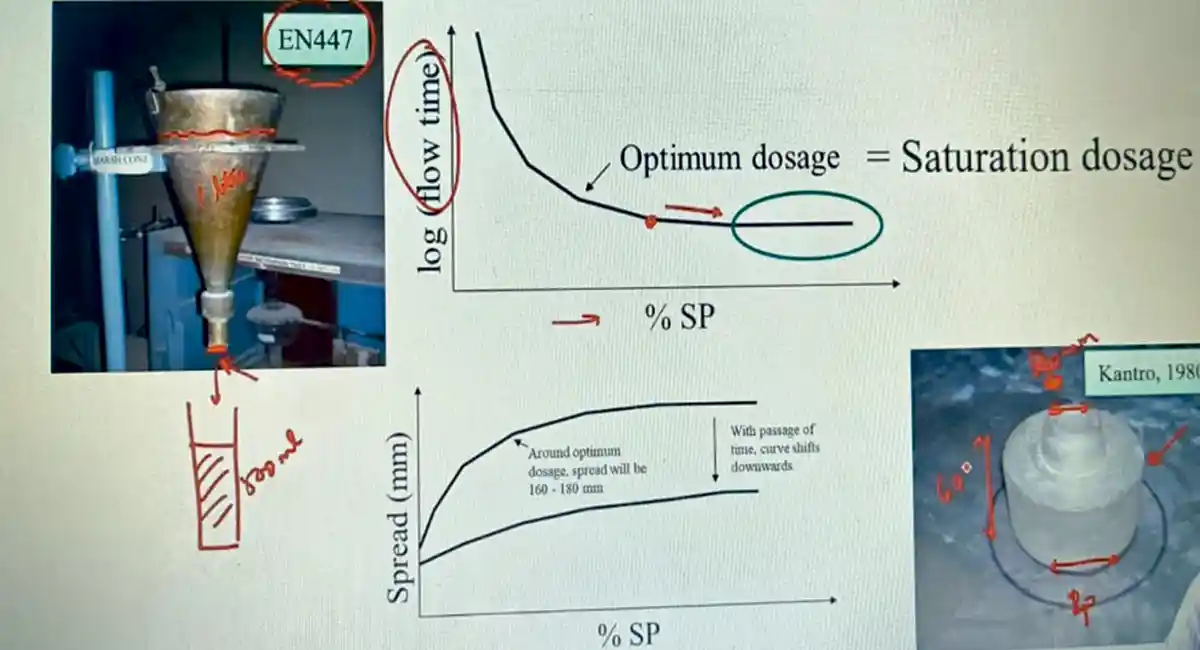
After 5 minutes and 60 minutes (after sufficient mixing of cement paste and admixture), the flow time along with the dosage of admixture should meet at a single point. This point is called the degree of saturation point, which also indicates the optimal dosage and compatibility. It is presented in a graphical format as log (flow time) vs. % concentration of SP dosage. If the two curves do not coincide with each other, it indicates incompatibility, and the cement, admixture, or both need to be changed.
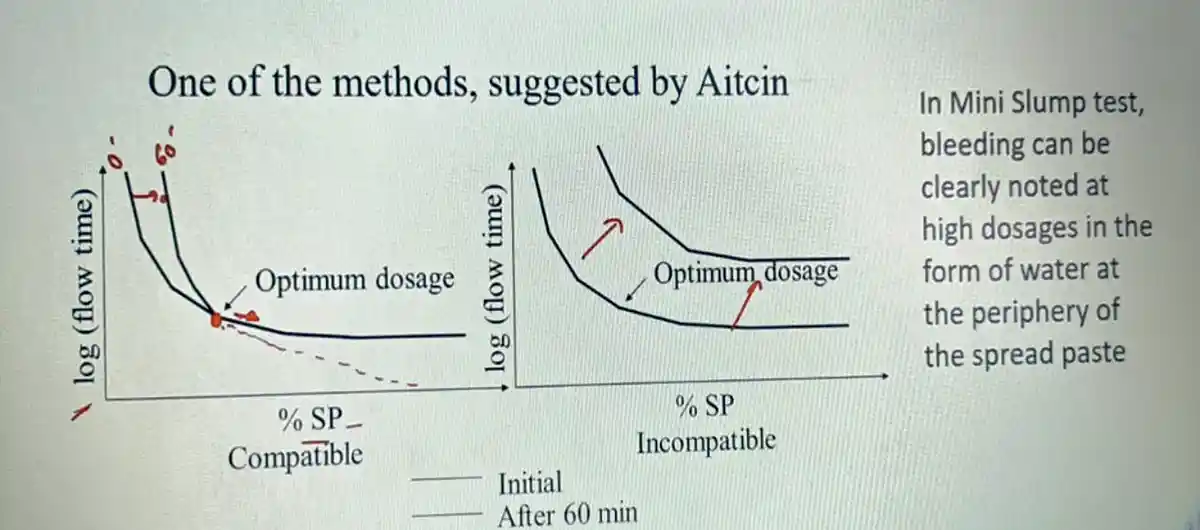
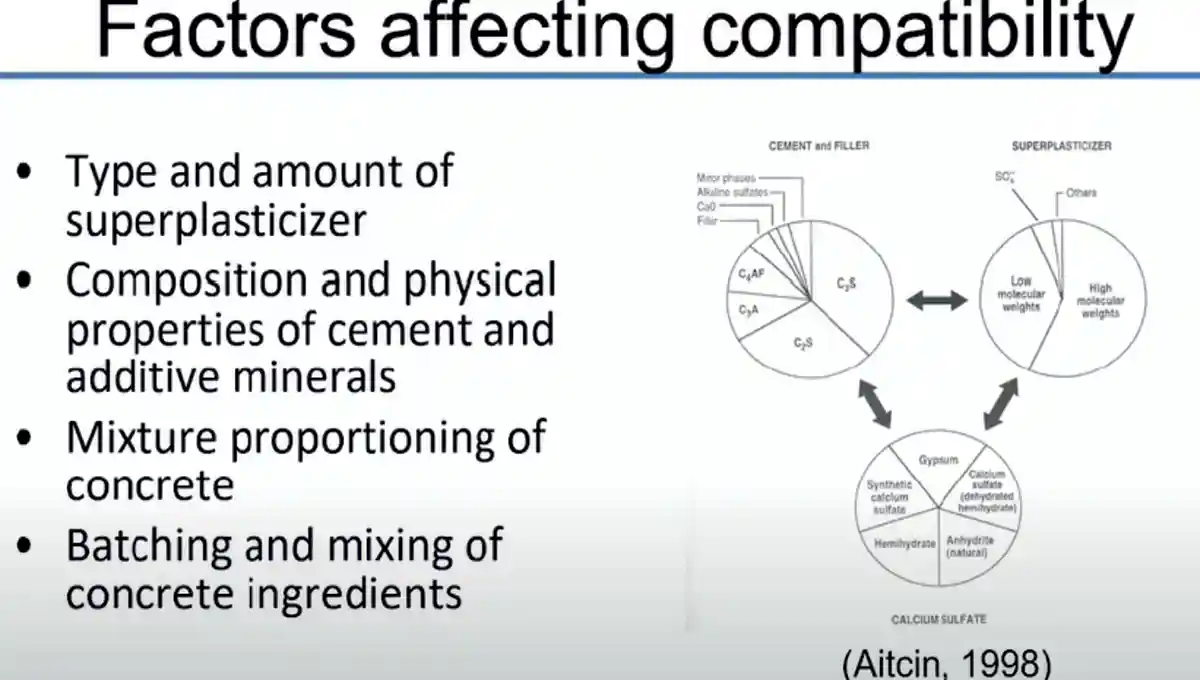
As per the above-mentioned method, these two curves show the compatibility of cement paste and admixture within 1.00 hour. Besides this, a few factors also affect the compatibility between admixture and cement, as given below.
Admixture Chemical & Physical Requirements as per ASTM C494M-19 & BIS 9103-1999
- Solid content test of admixture by the oven drying method.
- Density of admixture by hydrometer analysis.
- pH content by pH meter or pH scale.
- Maximum water content by mixing admixture into control mixed concrete.
- Compressive strength of admixture-mixed concrete and control mixed concrete.
- Workability retention for a maximum of 2 hours or as per project requirements.
- Relative durability and air content testing of admixture-mixed concrete used in cold weather concreting (air-entraining concrete).
Compressive strength testing is conducted as per ASTM C39-24, and as per BIS 516 Part 1, Section 1 (2021).
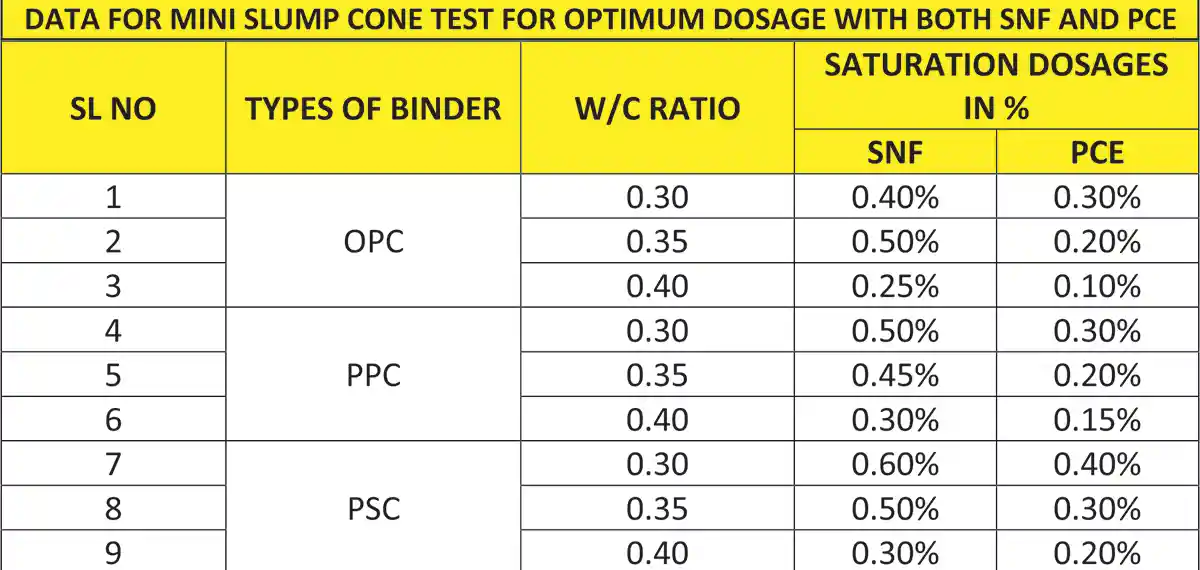
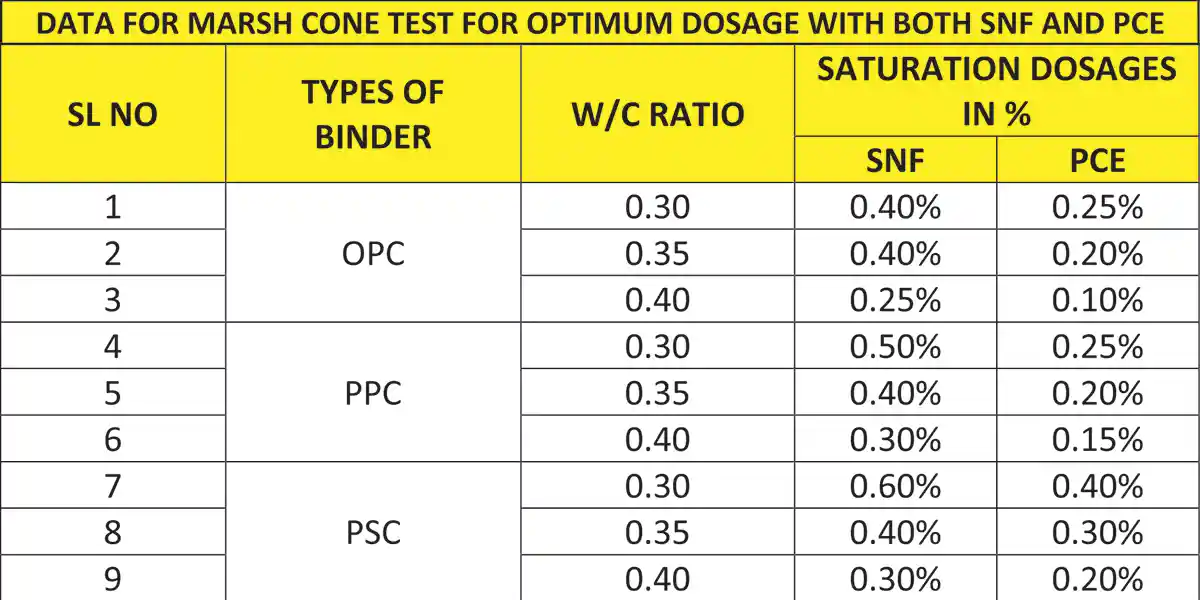
From this, if we select a W/C ratio of 0.35, then we will go for PCE at 0.2%–0.3%, and for SNF adopt 0.40%, after successfully conducting other trials such as workability, strength, and rheology of the mix.
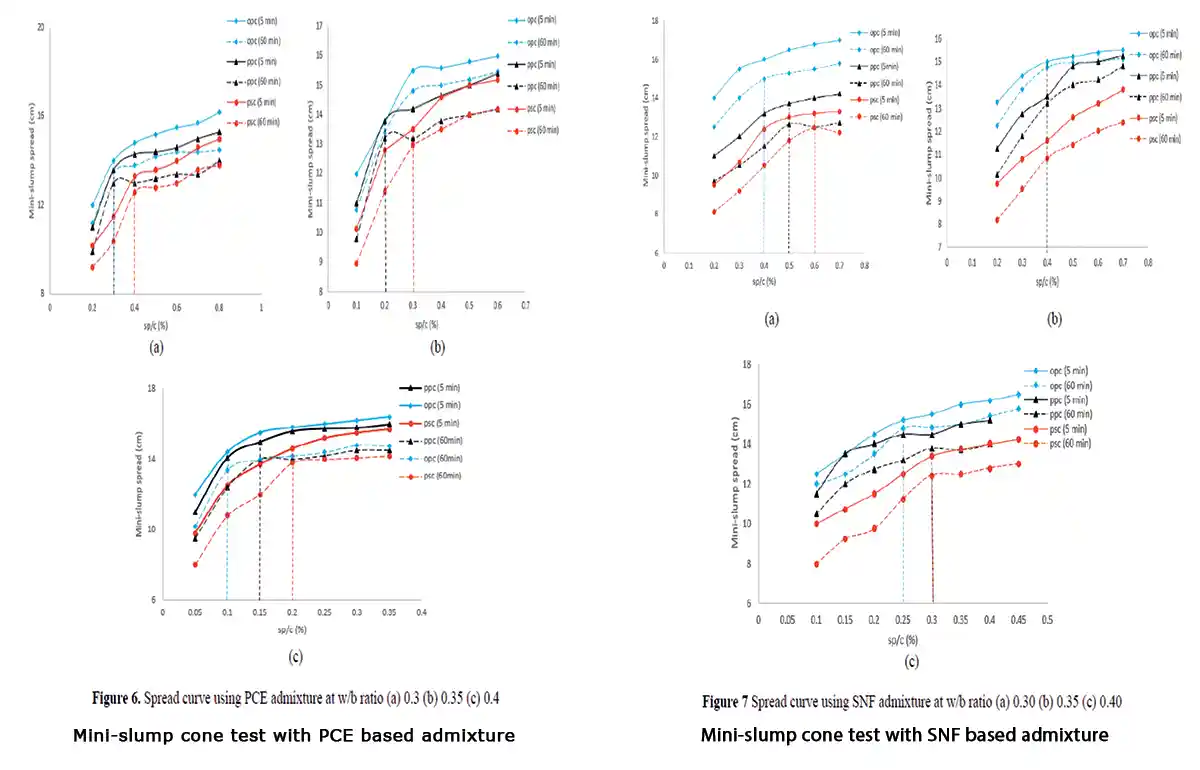
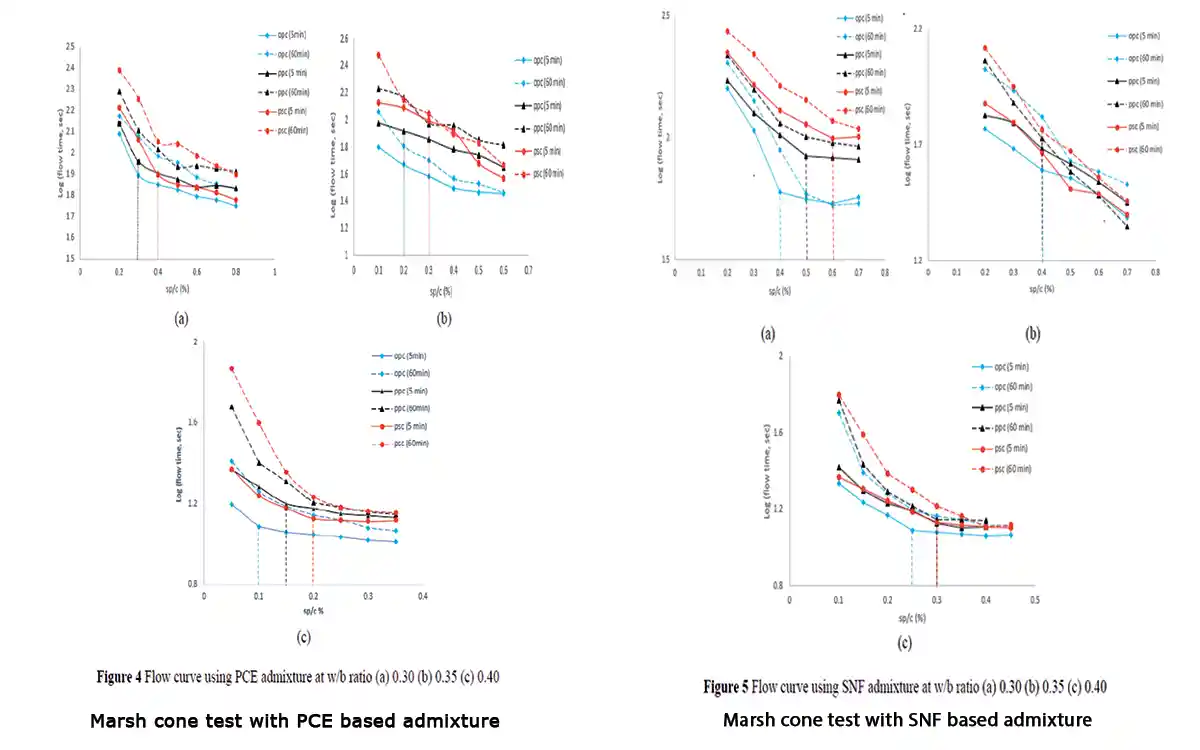
From both graphical format it is seen that, by both MSC test and MCT, SNF dosages required higher as compared to PCE
According to site requirement the grade of cement select, the corresponding optimum dosage of admixture w.r.t W/C ratio we can find from this results.
Mechanism of SNF and PCE-Based Admixtures
SNF admixtures work in cement paste through electrostatic repulsion or Coulombic repulsion (a mechanism developed by molecular formulation). Due to this repulsion, higher dosages of admixtures are required. This type of electrostatic repulsion can be measured by Zeta Potential in mV.PCE admixtures work through both electrostatic repulsion (by the trunk polymer) and steric hindrance or steric repulsion (by the additional side chains of PCE), developed through molecular formulation. Due to this mechanism, greater dispersion in cement paste can be achieved with a smaller dosage of admixture. In addition, the side chain length, graft density, and overall molecular weight modify PCE formulations to meet different requirements.
The following factors govern the optimum dosage of admixtures:
- For different W/C ratios, the dosage varies. For a lower W/C ratio, the dosage increases, and for a higher W/C ratio, the dosage decreases, as free water is available to provide fluidity in the system.
- The higher the fineness of the cement, the greater the dosage of admixtures required, as very fine cement particles adsorb admixture molecules.
- Temperature also affects the dosage of admixtures in cement paste. As temperature increases, the dosage of admixtures needs to increase to maintain steady workability retention over time.
- The optimum dosage of PCE-based admixtures is generally lower with the same binder compared to SNF-based admixtures due to their different working mechanisms, as discussed above.
- Flow time decreases with increasing W/C ratio, and vice versa.
Effects of Admixture–Cement Paste Incompatibility
Without compatibility between cement particles and admixtures, the following effects can be observed visually during testing:- Excess dosage of admixtures, beyond the saturation point, can lead to excessive bleeding or segregation of the cement paste.
- Excess dosage is uneconomical, as it increases the cost of the cement paste or concrete without providing additional benefits.
- Excess admixture can cause significant delay in the setting of cement paste and concrete.
- If cement paste and admixtures are not compatible, the rheology of the cement paste can be greatly affected, which may lead to bleeding and segregation.
- The same admixture does not produce the same fluidity for different types of cement, as this depends on the chemical structure of the admixture and the chemical composition of the cement. Therefore, for different grades of cement, compatibility must be determined as mentioned above.
Conclusion
Best Practices and Considerations for Admixtures in Concrete:
Before using any type of admixture in cement paste, it is crucial to assess its compatibility in a controlled laboratory environment prior to application on site. This ensures that the admixtures perform as expected and do not negatively affect the properties of concrete.Weather Impact on Admixture Dosages:
The dosage of admixtures must be adjusted according to temperature conditions. In hotter temperatures, admixture dosages typically need to be increased. Conversely, during colder weather, lower dosages should be used to prevent issues with slump retention. For winter conditions, lower dosages help maintain consistency, while higher dosages in summer are necessary to retain workability. PCE-based concrete exhibits less sensitivity to temperature fluctuations, making it a preferable choice for varying weather conditions.Interaction of Admixtures with Cement:
Admixtures interact with cement particles based on their molecular structures. Admixture molecules typically carry a negative charge, while cement particles have a positive charge. This causes the cement particles to attract the admixture molecules, resulting in a chemical reaction. PCE-based admixtures, which contain additional polymer chains, create steric repulsion and prevent excessive cement particle aggregation. This characteristic enables PCE to work effectively at lower dosages compared to SNF-based admixtures, which do not provide as much dispersion.Marketing Strategy for Admixtures:
To succeed in the market, the following criteria should be prioritized:- Cost Efficiency: Ensure that the cost per cubic meter remains economical.
- Rapid Dispersion: Admixtures should react effectively with cement particles in a short time to enhance production.
- Reduced Bleeding and Segregation: Improve the rheology of fresh concrete.
- Workability Retention: Admixtures should maintain workability for up to 3 hours.
- Stability: The admixture should remain stable across different pH levels and ensure consistent quality across multiple batches.
- Solid Content: The solid content of the admixtures should ideally be in the range of 30–40%, as excessive solids can affect performance.
Debunking Common Myths About Admixtures
- Water Reduction Limits: PCE-based admixtures can reduce water content by 27%–30%, but not beyond this range, as it is not practically possible to achieve greater reductions compared to control mixes.
- Strength Enhancement: Chemical admixtures are not direct strength enhancers. They work by reducing water content, which lowers the water–cement ratio, indirectly enhancing strength. Mineral admixtures such as silica fume and GGBS contribute to strength enhancement through pozzolanic reactions.
- PCE Dosage Limits: PCE-based admixtures should not exceed 1.00% dosage due to variations in solid content. It is crucial to adhere to the tolerance limits specified in IS 456:2000, Clause 10.3.3.
- Workability and Redosing: According to BIS 456:2000, Amendment 6-2024, the workability of fresh concrete can be re-adjusted by redosing admixtures if the slump is too low, provided it is done within the initial setting time (IST), which is typically 5–5.8 hours for most concretes.
- Slump Retention vs. Retarders: Slump-retention admixtures maintain workability over extended periods, while retarders delay the initial setting time, allowing more time for placing and finishing, especially in hot weather.
Achieving Optimal Concrete Quality
To achieve the best quality concrete, it is crucial to combine knowledge of both admixtures and concrete technology. By carefully selecting and using the right admixtures, we can enhance not only strength but also durability, providing a more sustainable and high-quality concrete solution.Admixture Molecule Formulations
- Water Reducer (WR) Molecules
- Slump Retention (SR) Molecules
- Hybrid Molecules
- WR/Hybrid Molecule Ratios
- Rheology Modifiers (VMA)
- Strength Accelerator Molecules
- Defoamers / Anti-Foaming Agents
- pH Adjusters / Biocides / Micro-air
- Salt Content (Hydroxy and Carbolic Acids)
Problems Occurring When SNF is Incompatible with Cement
- Bleeding and segregation start or appear in the initial phase after completion of mixing.
- Flash and false setting appear.
- Poor slump retention; the targeted slump at the specified time is not achieved after completion of mixing.
- Low early strength.
- Over-retardation or excessively delayed setting time due to higher dosages of SNF above the saturation point.
- Air entrainment is created in the system, which is not required.
Problems Occurring When PCE is Incompatible with Cement
- Sudden bleeding, which is not initially observed immediately after completion of mixing.
- Sudden post-slump drop after the initial stage.
- Dispersion time of PCE molecules/formulations is affected by interaction with cement particles.
- Poor slump retention due to an inaccurate WR/Hybrid ratio or lower SR molecules.
- Low early strength gain.
Cement Properties Influencing Admixtures
- C3A fineness – Finer C3A increases reactivity and surface area, accelerating interaction with admixtures, especially those sensitive to early hydration kinetics such as PCEs and retarders.
- C3A in cubic or orthorhombic form – Orthorhombic C3A (often stabilized by alkalis) is more reactive than cubic C3A. This affects admixture adsorption and sulfate demand and is important for admixture compatibility.
- C3A content and its reactivity – Higher C3A increases sulfate demand and early heat release. Reactivity influences admixture performance, especially in terms of dispersion and setting control.
- C3A/Gypsum ratio – This ratio governs ettringite formation and sulfate availability. Imbalances can cause flash set or poor admixture response.
- High solubility of gypsum – Highly soluble gypsum accelerates sulfate release, impacting ettringite kinetics and admixture timing.
- Alkali content in cement – Alkalis influence zeta potential, C3A stabilization (orthorhombic form), and admixture adsorption. High-alkali cements often show reduced PCE efficiency and faster slump loss.
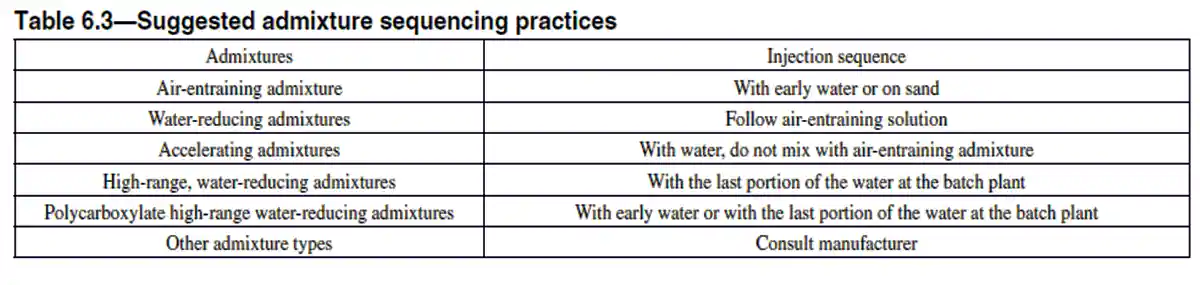
As per ACI guidelines on mixing the diff. types of chemical admixtures
Compatibility and Two-Part Admixture Use: In cases where SNF-based admixtures are incompatible with cement, it is advisable to use a combination of high-range water reducers (HRWR) and slump retainers/retarders. For PCE-based admixtures, when incompatibility occurs, using a blend of ultra-high-range water reducers (UHRWR) and slump retainer/retarder combinations can yield better results.
Basically, good-quality admixtures should always have the following three properties:
- When concrete is produced, it should be as free as possible from both bleeding and segregation.
- Very short dispersion time during mixing, so that it disperses quickly into the concrete and ensures uniform mixing.
- The minimum workability retention time should be at least 3 hours.
References:
- BIS 9103-1999 - Indian Standard Specification for Admixtures
- ACI 212.3R-16 - American Standard for Specifications of Admixtures
- ASTM C494M-24 - American Standard Specification for Admixtures
- BS-EN 934 - British European Standard Specification for Admixtures
- ASTM C260 - Air Entrained Admixture for Cold Weather Protection Against Freeze/Thaw
- ASTM C233 - Testing of Air-Entrained Concrete
- ASTM C1582 - Corrosion Inhibitor Admixtures
- ASTM C1017 - Producing Flowable Concrete with Admixtures
- AASHTO M194 - Specifications of Admixtures as per American Road Transport Authority
- AASHTO M154 - Air Entraining Admixture as per American Road Transport Authority