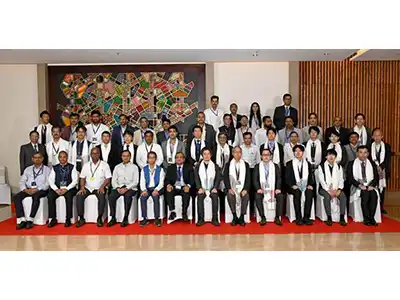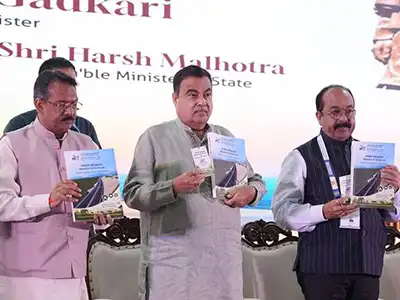
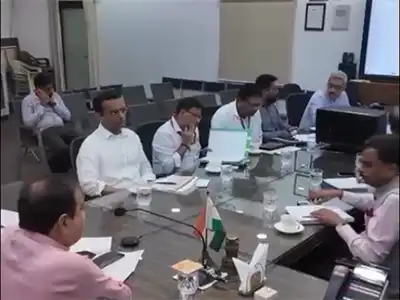
The conference was chaired by Justice A M Sapre (Retd.), Chairman, Supreme Court Committee on Road Safety. Shri Sanjay Bandyopadhyay, Member, Supreme Court Committee on Road Safety, and Shri Mahmood Ahmed, Additional Secretary (Transport), MoRTH, along with senior officials, attended the conference.
Discussions focused on strengthening road safety through e-enforcement, integrated data systems, safer vehicles, emergency response and district-level capacity building.
A key focus was the Zero Fatality District (ZFD) initiative, under which 100 high-fatality districts across 15 states have been identified for targeted interventions. These districts record more than 400 fatalities on average each year. The initiative combines engineering, enforcement, emergency care and road safety education based on the specific crash profile of each district.
The conference also reviewed the PM Rahat Scheme, which provides cashless treatment of up to Rs 1.5 lakh for up to seven days to road accident victims, irrespective of their insurance status. The scheme integrates eDAR of MoRTH with TMS 2.0 of the National Highways Authority of India and the 112 emergency helpline to improve coordination between transport, health and police authorities.
The Rah-Veer Scheme was also discussed as part of efforts to strengthen emergency response during the Golden Hour. Under the scheme, Good Samaritans who help seriously injured road accident victims reach a hospital are eligible for a cash award of Rs 25,000 per incident and a Certificate of Appreciation. The scheme also provides legal protection to Good Samaritans.
Another initiative discussed was the Sadak Suraksha Mitra (SSM) Programme, jointly conceptualised by MoRTH and the Ministry of Youth Affairs & Sports. The programme engages trained youth volunteers through the MYBharat platform, particularly in the country's 100 high-fatality districts. Volunteers support activities including crash scene coordination, data collection for road safety audits and public awareness campaigns.
The conference also highlighted the Data-Driven Hyperlocal Intervention (DDHI) framework, which aims to help District Road Safety Committees shift towards evidence-based road safety planning. The framework follows five stages: alignment, capacity building, intervention planning, implementation and impact assessment.
The conference emphasised that the five initiatives are interconnected, with community participation, data-driven planning, enforcement, emergency response and cashless treatment forming an integrated road safety framework.
States and districts were urged to conduct root-cause analyses of road fatalities, prepare time-bound action plans and develop District Road Safety Plans aimed at achieving India's target of reducing road fatalities by 50% by 2030.