
The projects, spread across 17 Central Ministries and Departments, have recorded cumulative expenditure of Rs 16.33 lakh crore, equivalent to 48.59% of their total revised cost. The data reflects progress across projects at various stages of implementation, with 647 projects, or approximately 38%, achieving more than 80% physical progress. Meanwhile, 312 projects, accounting for around 18% of the total, have crossed 80% financial progress.
The Transport and Logistics sector accounts for the largest share of the monitored projects, with 1,191 projects and a combined revised cost of Rs 16.05 lakh crore. Based on the Department of Economic Affairs' (DEA) Harmonized Master List of Infrastructure, the sector represents 69% of the total project count and 48% of the aggregate revised project cost.
Of the 1,731 projects under monitoring, 715 are classified as mega projects, with an original cost of Rs 25.89 lakh crore. The remaining 1,016 projects fall under the major project category, with a combined original cost of Rs 4.83 lakh crore.
The physical and financial progress data indicates that projects are concentrated at both the initial and advanced stages of implementation. While physical progress is higher than financial progress among projects in the 81-100% completion range, financial progress is relatively higher in the early stages, reflecting upfront expenditure requirements in project execution.
The Ministry of Road Transport and Highways accounts for the highest number of projects, with 982 projects, representing 57% of the total. Their combined revised cost stands at Rs 9.52 lakh crore, or 28% of the overall revised project cost.
The Ministry of Railways is monitoring 147 projects with a revised cost of Rs 3.14 lakh crore, while the Ministry of Coal has 122 projects worth Rs 2.22 lakh crore. The Ministry of Petroleum and Natural Gas is implementing 117 projects with a revised cost of Rs 4.42 lakh crore, and the Ministry of Power has 102 projects worth Rs 6.18 lakh crore.
The Ministry of Housing and Urban Affairs is monitoring 49 projects with a revised cost of Rs 3.41 lakh crore. The Department of Water Resources, River Development and Ganga Rejuvenation accounts for 38 projects worth Rs 2 lakh crore. The remaining 174 projects, with a combined revised cost of Rs 2.71 lakh crore, are spread across other ministries and departments, including Higher Education, Civil Aviation, Steel, Telecommunications, Health and Family Welfare, and Ports, Shipping and Waterways.
Sector-wise, Energy is the second-largest category, with 223 projects and a combined revised cost of Rs 10.95 lakh crore, accounting for 32% of the total. These projects cover oil and gas infrastructure, electricity generation, transmission and distribution networks, and energy storage systems.
Water and Sanitation accounts for 53 projects worth Rs 2.04 lakh crore, while Communication infrastructure comprises 31 projects with a revised cost of Rs 1.34 lakh crore. Social and Commercial infrastructure includes 81 projects worth Rs 0.97 lakh crore, covering areas such as education, healthcare, real estate, tourism, hospitality and wellness. The Others category comprises 152 projects with a combined revised cost of Rs 2.26 lakh crore, including projects in coal, steel, metals and mining.
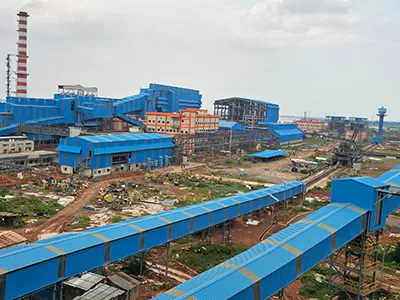
During August 2026, several infrastructure projects were commissioned. These included the six-lane greenfield Kandili-Aluru section of the NH-130-CD road, covering chainage from km 342.500 to km 365.033 under Package OD-8, at a cost of Rs 1,912.84 crore. Another commissioned project was the construction of mitigation measures for 10 landslides, one sinking zone and one minor bridge along NH-07 in Uttarakhand, between chainage km 368 and km 433, under Package 1. The project was undertaken by the Ministry of Road Transport and Highways at a cost of Rs 216.68 crore.
The Haldia-Panagarh Pipeline Project, implemented by the Ministry of Petroleum and Natural Gas, was also listed among the projects commissioned during the month, with a reported cost of Rs 1,107 crore.
MoSPI added 37 projects to the PAIMANA monitoring system in August 2026. These included 15 projects from the Ministry of Petroleum and Natural Gas, 10 from the Ministry of Road Transport and Highways, four each from the Ministry of Power and the Department of Higher Education, two from the Ministry of Steel, and one each from the Ministries of Coal and Civil Aviation.
Among the major additions were the WR-ER Inter Regional Network Expansion Scheme - Part A, valued at Rs 6,444 crore, under the Ministry of Power; the Additional Development of Ratna-I (ADR-I) project, valued at Rs 6,274 crore; and the Well Head Platforms for MB-OSN-2005/1, SD4 and BS-17 Field project, valued at Rs 5,519 crore, both under the Ministry of Petroleum and Natural Gas.
Another major addition was the construction of a road along the Bomdilla 9th Mile-Nafra-Lada section of the Frontier Highway (NH-913), Package 1, covering the 9th Mile-Nafra stretch, at a cost of Rs 1,273.44 crore. The project falls under the Ministry of Road Transport and Highways.
The PAIMANA project monitoring interface has been renamed PAIMANA-PROJ. MoSPI also launched PAIMANA-CRIP (Central Repository of Infrastructure Projects) in July 2026 as the underlying data repository. According to the ministry, nearly 80% of the data is updated through application programming interfaces (APIs), supporting standardised infrastructure monitoring and informed decision-making.
The monthly Flash Report covers Central Sector infrastructure projects costing Rs 150 crore and above. It draws on data reported by the concerned ministries and departments and covers selected categories and infrastructure subsectors from the DEA's Harmonized Master List of Infrastructure. The report does not cover the entire list and should be interpreted within the scope of its coverage and reported data.
MoSPI has scheduled the release of the Flash Report for September 2026 for October 26, 2026.