In a pioneering step towards sustainable infrastructure, CSIR-Central Road Research Institute (CRRI), in collaboration with Bharat Petroleum Corporation Limited (BPCL) and supported by the National Highways Authority of India (NHAI), launched India's first road trial using technical textiles made from end-of-life waste plastic.

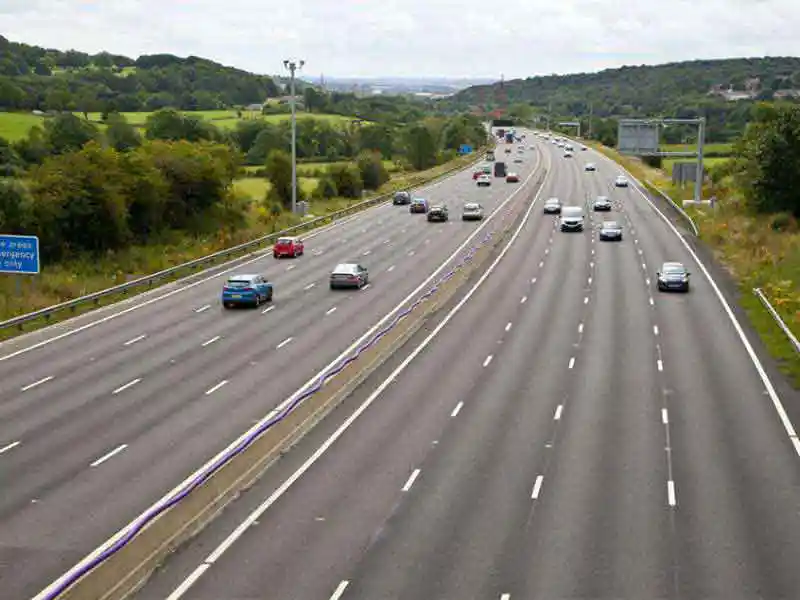
The trial commenced with the inauguration of a test road section on Loop No. 1 of the elevated DND-Faridabad-KMP Expressway. The event was graced by Dr. N. Kalaiselvi, Director General of CSIR and Secretary, DSIR, Prof. Manoranjan Parida, Director, CSIR-CRRI, and Shri Chandrasekhar N, Head–R&D Bharat Petroleum Corporation Limited.
The project involves the application of plastic-based Geocells and modules, developed through mechanical recycling of mixed and multilayered plastic waste, a category that is difficult to manage and largely excluded from Indian Roads Congress (IRC) guidelines. These recycled modules, with thicknesses between 4 to 8 mm, are laid in the granular subbase layer to enhance structural performance and durability of the pavement.

The trial section spans 160 meters and covers an area of 1,280 square meters, utilizing several tonnes of end-of-life plastic. This initiative demonstrates a scalable model for addressing the plastic waste crisis while improving road performance and supporting the Government’s Swachh Bharat Abhiyaan.
This innovative use of technical textiles in road construction marks a significant milestone in India’s efforts to integrate circular economy principles into infrastructure development.
Dr. Kalaiselvi, during her speech, applauded the CRRI team under the leadership of Prof. Parida for working on initiatives like giving end-of-life plastics a new lease of life, likening it to a rebirth, much like the phoenix. She noted that plastic, once considered beyond recovery, is now being repurposed through this innovative process. "I see this as a powerful addition to our integrated technological ecosystem," she said.
Prof. Parida congratulated the CRRI team and acknowledged the support of BPCL for this initiative. He remarked that while waste plastic and steel slag have previously been used in road construction, CRRI has now introduced a new application of end-of-life plastics.
Dr. Ambika Behl, Principal Scientist at CRRI, shared, “Our goal is to implement this solution across more national highways, especially at strategic locations. We are also planning trials with the Border Roads Organisation (BRO) and Military Engineering Services (MES), where road construction is typically very challenging. With the use of geocells, we can significantly save time, reduce costs, and benefit the environment.
Gagandeep Singh, Principal Scientist at CSIR-CRRI, stated, “We are gathered here to witness a breakthrough in plastic waste management, specifically, the upcycling of waste plastic using innovative technology and equipment. In upcycling, rather than merely recovering material, we focus on creating a final, high-value product. In this case, the end product is a technical textile called a geocell, which has direct applications in road construction and other infrastructure projects.”
Dr. V. Ravi Kumar from BPCL said, “The beauty of this concept lies in its ability to recycle end-of-life plastic, material that otherwise has no viable disposal route. To put it into perspective, in just 100 meters of road, we are able to utilize around 30 tonnes of waste plastic.”