
India Ratings Maintains Neutral Outlook for Transportation Infrastructure for FY27

Separately, electric bus concessions have a large order book, wherein deliveries within the next 18 months and adequate operations of large fleets are key monitorables.
"We expect a steady credit profile in the transport sector for FY27, given the comfortable coverages and internal liquidity. Traffic growth in transport infrastructure is comfortable across toll roads, airports, and ports. Hybrid annuity projects continue to be stable, despite delays in construction. While the project awards remained sluggish in the roads sector in 8MFY26, we expect the awards to pick up pace in 4QFY26. Airports awards in the public-private-partnership (PPP) mode will be positive," says Divya Charen C, Associate Director, Infrastructure & Project Finance Group, Ind-Ra.
Rating & Sector Outlooks
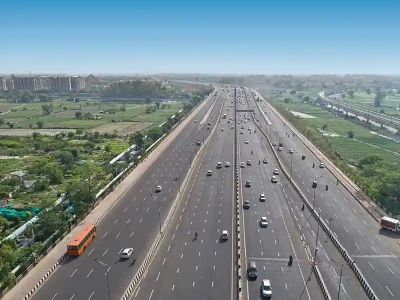
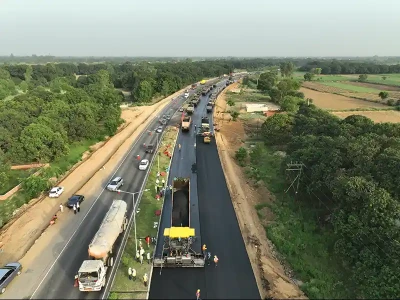
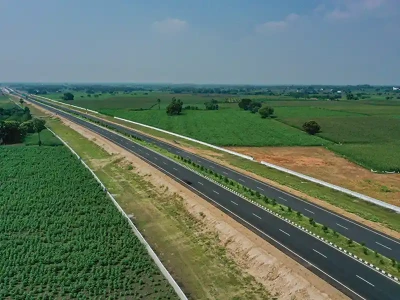
Stable Rating Outlook and Neutral Sector Outlook for Toll Road Projects: Ind-Ra has maintained a Stable rating outlook and a Neutral sector outlook for toll roads for FY27. The toll collection growth trend from national highways toll plazas is anticipated to moderate to 7%-7.5% yoy in the fiscal (FY26: 8%-9% anticipated), given the softening of the Wholesale Price Index (WPI). The growth in FY27 is likely to be backed up by 4%-4.5% yoy traffic growth. The aggregate toll income grew 9.0% yoy in 1HFY26 in Ind-Ra analysed portfolio and the overall growth is estimated to be 8.0% to 9.0% in FY26. The higher growth rate anticipated in FY26 is mainly driven by the favourable base effect, as FY25’s toll collections were impacted by the restricted traffic movements and deferred toll rate hikes caused by the general elections.Project awards under the BOT toll mode, which remained subdued between FY18-FY24 (below 5% of the total length awarded), are gaining traction recently. Nearly 8% of the project awards (by length) were under the BOT toll model in FY25. While the changes in the model concession agreement in 4QFY24 aim at enhancing risk-sharing to revive private participation, a successful shift from HAM to BOT remains to be seen.
National Highways Authority of India’s (NHAI, rated IND AAA/Stable) toll revenue grew at a CAGR of 17.4% in FY20-FY25, driven by traffic growth, toll rate growth with WPI increase, and addition of tollable length. The number of toll plazas grew at a CAGR of 14.6% during the corresponding period.
Stable Rating Outlook and Neutral Sector Outlook for HAM Road Projects: Ind-Ra has maintained a Stable rating Outlook and a Neutral sector outlook for HAM projects for FY27. HAM continues to be attractive, however there are emerging financial and operational risks. Continuing entry of new sponsors amid the rising construction risk is concerning with respect to timely project completion and quality of construction and maintenance, especially with the shrinking bid premium over NHAI cost. However, operational HAM projects exhibit stable annuity receipts without any major deductions. Of the INR4.64 trillion (project award cost) of HAMs awarded over the past 10 years, INR2.4 trillion are operational.
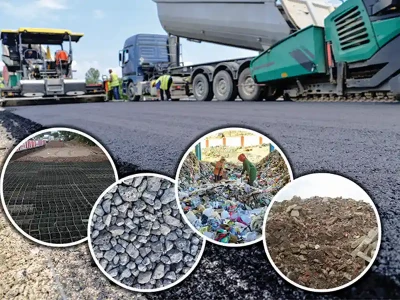
Construction risks remain elevated. Out of 198 under-construction projects analysed, 109 projects are likely to face delays of over three months. Issues in the availability of land and construction materials are the key reasons for the delay, along with unseasonal/excessive rainfall. Issues in the availability of construction materials include burrow area for lifting the embankment soil/ sub-grade materials, mining approval for aggregate quarrying, and inadequate supply of pond ash and fly ash. Nevertheless, ratings of projects where the delay is not attributable to the concessionaire have not been affected till date because of the timely decision to award an extension of time, descope, or making land available, benefitting the entire ecosystem of HAM players.
The large influx of new sponsors, post relaxed bidding norms and reduced project size, has resulted in stiff competition in bidding. Stability in the operational profile of HAM projects critically depends on adequate operations and maintenance and major maintenance (MM) activities. A lower MM reserve creation, enabling higher debt upsizing, could elevate the operational risk in the long term and make the project dependent on the sponsor’s (also the O&M contractor in many projects) ability to fund the shortfall in MM reserves.
Positive Rating Outlook and Improving Sector Outlook for Airports: Ind-Ra has maintained a Positive rating Outlook and an improving sector outlook for airports for FY27, driven by continued traffic growth and improvements in non-aeronautical yields. During the first 9MFY26, passenger traffic grew 2.8% yoy, following a robust 9.4% yoy increase in FY25. In FY25, the total passenger traffic surpassed 411 million.
Although monthly traffic was higher yoy in 9MFY26, domestic passenger growth rate moderated. This was due to reduced aircraft movements from July to September 2025 and December 2025, led by government-mandated safety checks following the Air India flight crash on 12 June 2025, challenges faced by India’s largest carrier due to staff shortages during the phased implementation of Flight Duty Time Limitation Rules, and weather-related issues. These factors resulted in grounding of fleet, delays, flight cancellations, and consequently, reduced aircraft movements.
Despite the recent softness in domestic passenger traffic growth, Ind-Ra expects the sector to remain resilient and growth-oriented. The commissioning of Navi Mumbai airport and the expected commissioning of Noida airport during 4QFY26 are anticipated to address unserved traffic and reduce congestion at existing airports. Ind-Ra expects the overall passenger traffic to grow 3.5% to 4.5% for FY26 and 8.0% to 10.0% for FY27 on back of lower base effect.
The passenger growth to the GDP multiplier for 9MFY26 was at 0.4x levels (FY25: 1.4x). Ind-Ra expects the multiplier to remain in the range of 1.1x to 1.3x levels for FY27, given the higher passenger base.
Airports operationalised under the UDAN scheme have shown a lower contribution at about 2.6% to the overall traffic during 9MFY26 than other airports. However, they have experienced a notable growth rate in air passenger traffic of nearly 30%. By January 2026, 76 airports have been brought into operation under the UDAN scheme. The scheme has also facilitated the operationalisation of 657 routes. These airports benefit from government support mechanisms, including viability gap funding, which reached INR44,723 million as of 2 January 2026.
The share of non-aeronautical revenue to the total operating revenue remained steady at around 46%, driven by increased spending on retail, duty-free, and food and beverage sectors. Significant capital expenditure is directed towards new terminals and commercial spaces. Ind-Ra believes there is substantial growth potential for non-aero revenue, considering its proportion in India is lower than major airports worldwide.
Stable Rating Outlook and Neutral Sector Outlook for Electric Buses: Ind-Ra has maintained a Stable rating Outlook and a neutral sector outlook for electric bus projects for FY27, while taking cognisance of delivery challenges in pending contracts. The rating Outlook reflects the satisfactory operational track record, adequate sponsor support, and expected pick-up of delivery of e-buses observed in the rated portfolio. While debtor days are comfortable for Ind-Ra rated entities, there were few instances of an elongated receivables period. The agency believes the formulation of a standard operating procedure for the Payment Security Mechanism and the compliance of states with essential requirements under the scheme are positive developments in the sector. Award activity under various schemes continues, and aggregation-based contracts awarded for several buses coordinated by Convergence Energy Services Limited are likely to provide scale advantage. It could augment the electrification of public transport authorities’ bus fleet. The ratings here continue to be driven by the counterparty profile and their payment track record. Idiosyncratic risk in the electric bus sector could be a pain point.
Ind-Ra expects the government policy initiatives, including demand incentives, to boost electric bus adoption. These measures aim to enhance public charging stations, build user confidence, address range anxiety, and improve bankability through payment security mechanisms. Additionally, the Production-linked Incentive scheme is expected to support the development of the overall electric vehicle ecosystem, benefiting the industry in the medium term.
Stable Rating Outlook and Neutral Sector Outlook for Sea Ports: Ind-Ra has maintained a Stable rating Outlook and a neutral sector outlook for seaports for FY27, supported by steady merchandise trade trends and improving cargo momentum. India’s exports remained broadly stable in FY24 and FY25, while imports continued to show resilience. The total merchandise trade reached USD909 billion by 9MFY26 (FY25: USD1,157 billion), indicating a healthy underlying demand. Cargo handling volumes strengthened to 1,090.7MMT in 8MFY26 (FY25: 1,593MMT), reflecting firmer activity across both major and non-major ports. Commodity trends remain supportive, with higher movement across key cargo categories such as containers, petroleum oil lubricants and coal, and fertilisers, offsetting softness in a few segments. Ind-Ra thus expects the total seaport throughput to grow around 5% yoy in FY27 (FY26: about 1,666 MTPA) to roughly 1,750MTPA. However, with shifting tariffs, evolving trade policies, and the ongoing Red Sea disruptions continuing to influence routing and volumes, any meaningful improvement will depend on how these external conditions unfold.
Published on:
30 January 2026
Share:
We Value Your Comment