With the lockdown imposed to halt the spread of the coronavirus (Covid-19), all economies worldwide are in the grip of recession and continue to live in a slowdown. Various governments have announced their Stimulus Packages, with varying degrees of effectiveness as per their requirements and felt needs. While the focus of the US package is on direct cash transfer to individuals and companies, the European Union is in favour of giving money to subsidize wages, which the experts term as a short-term measure to retain employees.
India's Stimulus Package
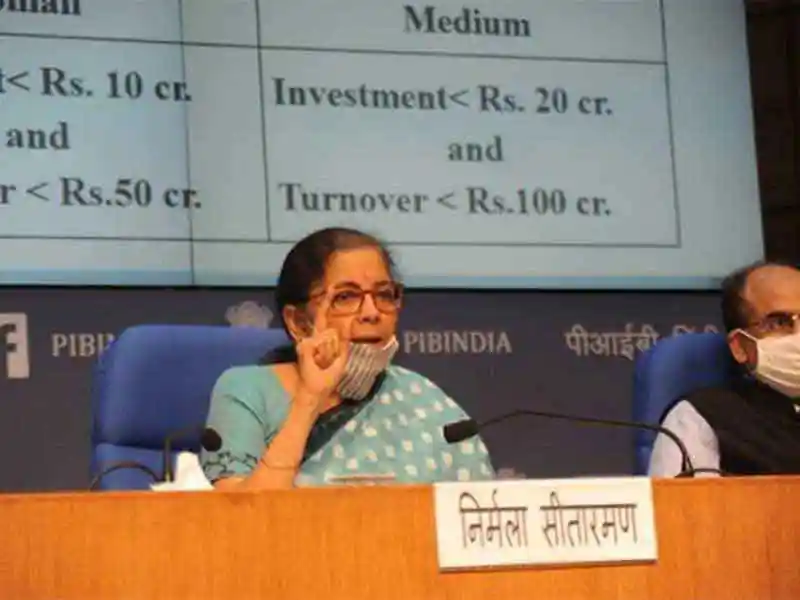
India too has announced its package, demonstrating a balanced approach as per its felt needs. Resurrecting the economy post covid-19, the Government has announced a Package amounting to ₹20 lakh crore, along with structural reforms aimed at addressing various groups. It has been applauded by the UN describing it as very substantial to reassure market sentiments and boost domestic demand and supply, apart from adding important liquidity enhancement measures. Already, over ₹60,000 crore has been spent on various welfare schemes with desired results.
Resource Crunch & Solution
Faced with severe resource crunch and limiting the extent of its Stimulus Package, the government is mulling various options to raise resources. To tide over this difficulty, it could ask RBI to monetize its assets and bridge government deficit. RBI could go for printing more currency to meet the emerging needs. It can go for market borrowings. But the experts warn that these measures could lead to a serious fiscal deficit and related pitfalls.
Suggestions on how to generate funds for the proposed package
Create a Vibrant Bond Market
The Government, RBI and SEBI need to establish a good corporate bond market to attract large scale investments for the infrastructure sector. With these funds at hand, a large supply of bond would start attracting domestic and overseas investors. The move would discourage financial institutions and banks funding for long gestation period projects and free up to ₹5 lakh crore of banks' exposure in the infra sector. Experts suggest that it is time to operationalize Credit Guarantee Scheme, as proposed in the last Budget, to facilitate freeing of money advanced by the banks. This could have a multiplier impact on various industrial and infrastructure activities in the country.
Create Massive Construction Work
The construction sector is an important hub multiplier for industries like cement, steel, concrete, etc. Huge amounts of work will increase demand for more commodities, goods and services, which will result in economic growth and promote more business, trade and commerce.
Construction of roads, highways and housing projects are urgent tasks that are awaiting action. Our national highways require expansion, doubling the road length, and expressways to enable free movement of a growing traffic.
Seamless connectivity is yet to be achieved under PMGSY to trigger structural transformation in rural India, as per a World Bank report The program seeks to establish 'farm to market' connectivity by providing access to all-weather roads to about 1,78,000 habitations across the country.
It is heartening to know that construction will begin soon in the strategic border areas. Responding to the urgent call of the BRO, the Centre has decided to move around 15,000 migrant workers through 15 special trains to BRO construction sites in Ladakh, J&K, Himachal Pradesh, and Uttrakhand, to assist BRO in completing over 61 road projects by December 2020.
Immediate action needs to be taken on the infra projects under the National Infrastructure Pipeline (NIP) with project planning, execution and implementation under public-private partnership (PPP).
Housing for All by 2020 as mandated by the government envisages construction of houses for the weaker section of society and affordable housing for others to the tune of 20 million and nearly two crore low-cost houses, standing at 30-40 million units. The Government has yet to start work on construction of houses to encourage home renting to alleviate the housing needs of the floating population / seasonal migrants. These measures would bring the much-needed buoyancy to the construction sector, help end recession, and generate job opportunities. An effective way to promote the Government's target of providing Housing for All by 2022 would be to tailor a pragmatic land acquisition policy, making land price affordable.
Economic Disruption
Amidst the unprecedented economic disruption, the government has to address the concerns of the displaced migrant workers, farmers, and the public at large. Moving with utmost sensitivity, it is ensuring direct transfer of money into the accounts of migrants and farmers, and providing free food grains. It is planning to tweak MGNRES to suit their felt needs, and is mulling long-term jobs for migrants who have returned to their home state. A few states have taken up the mammoth task of rehabilitating over 5 million migrants, assuring them with jobs, and are mapping the skill of more than 5 lakh migrants for assigning them to companies.
Economic Revival
India's economic revival would be faster among the emerging economies in Asia due to our strong economic and managerial fundamentals, cheap labour, and highest percentage of working population. It could, therefore, emerge as the most preferred investment destination. FDI inflow surged by 18 percent in 2019, with the accumulated FDI at a record $71 billion, at present. Complementing this is the new development enlarging the scope and coverage of MSMEs, making them more business oriented through greater ease of business to attract investments and create more job opportunities.
Gauging the Impact
The Government is gearing up to unlock the country in phases. With normal activities resuming, it is optimistic that there could be visible signs of its Stimulus Package making an impact and delivering its worth soon, contrary to the view that it would be quite a while, may be after the second quarter of the next fiscal, when the real impact would be felt.
For a quicker delivery of its outcome, the government could announce another holistic Package during July-August this year to mitigate the risks of the sustained period of relatively low growth, and remove the financial and socio-economic stress of the industry and public at large.