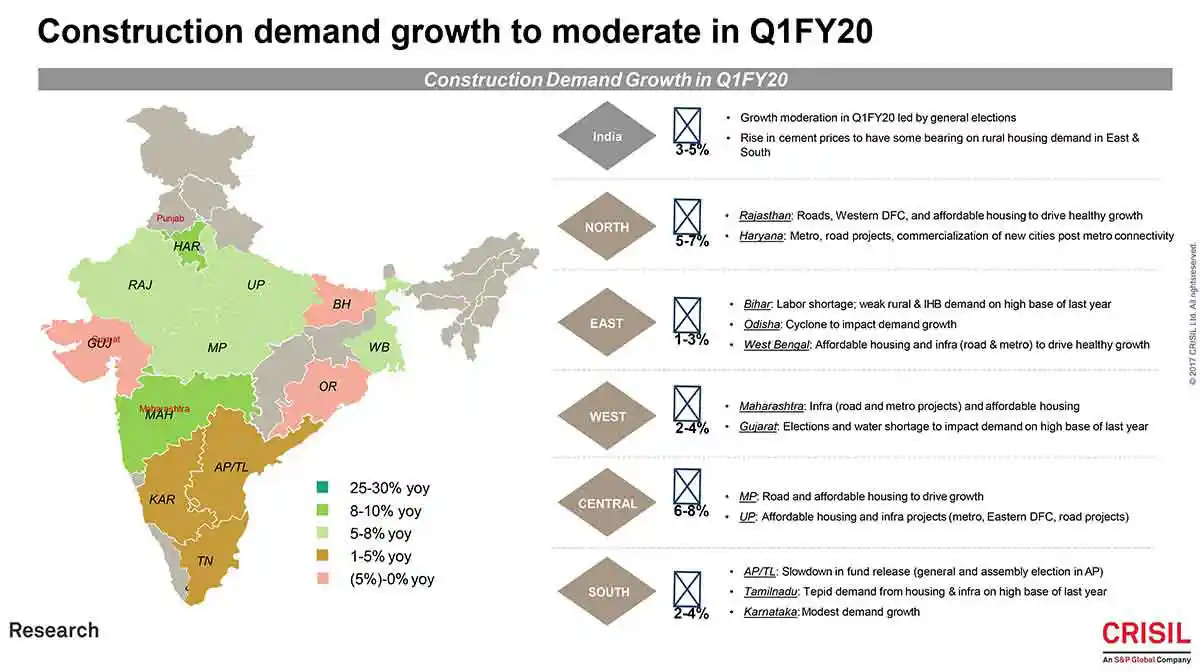
After six stellar quarters, cement demand growth – a proxy for construction activity in the economy – is set see a sharp ~500 basis points (bps) decline to 3-5% in the first quarter of this fiscal, compared with 9-10% in the January- March quarter of last fiscal. This would be because of a slowdown in construction activity ahead of general elections, labour shortage and delayed release of funds by the government.
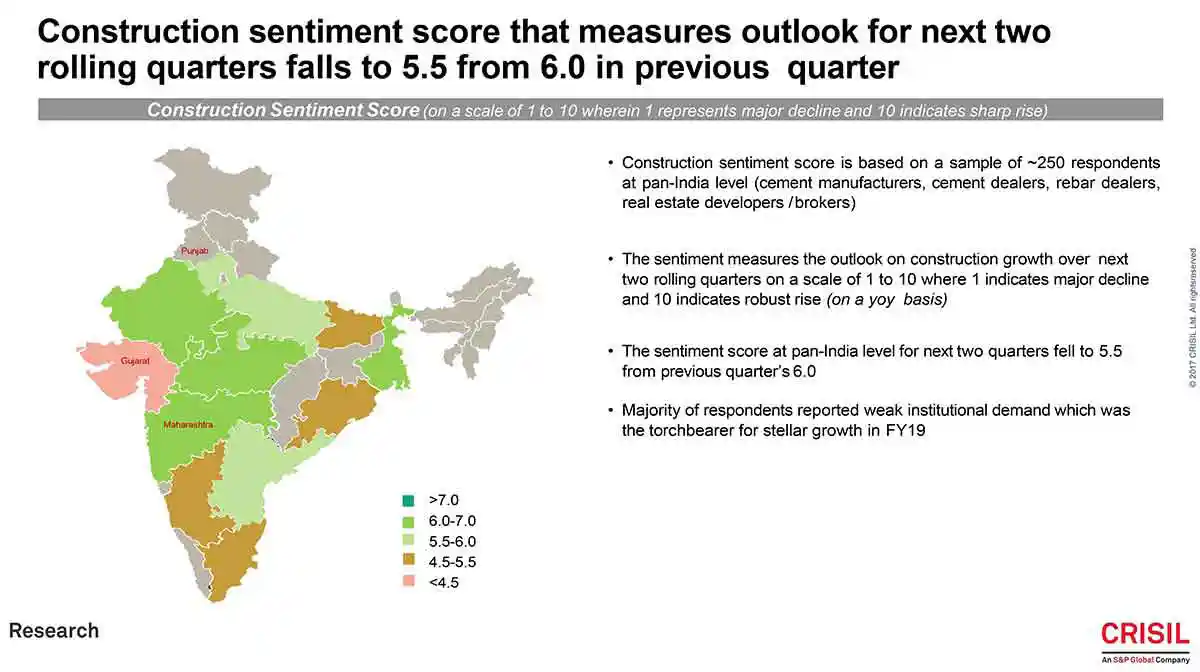
Based on a sentiment survey of 250 entities across construction value chain, it underscored four drags:
- Restricted release of funds for institutional projects
- Labour shortage in wake of elections
- A Rs 50-60 per bag increase in the price of cement in the January-March quarter, which weighed marginally on housing demand, especially in the rural and individual segments
- Waning of the low-base effect of last fiscal
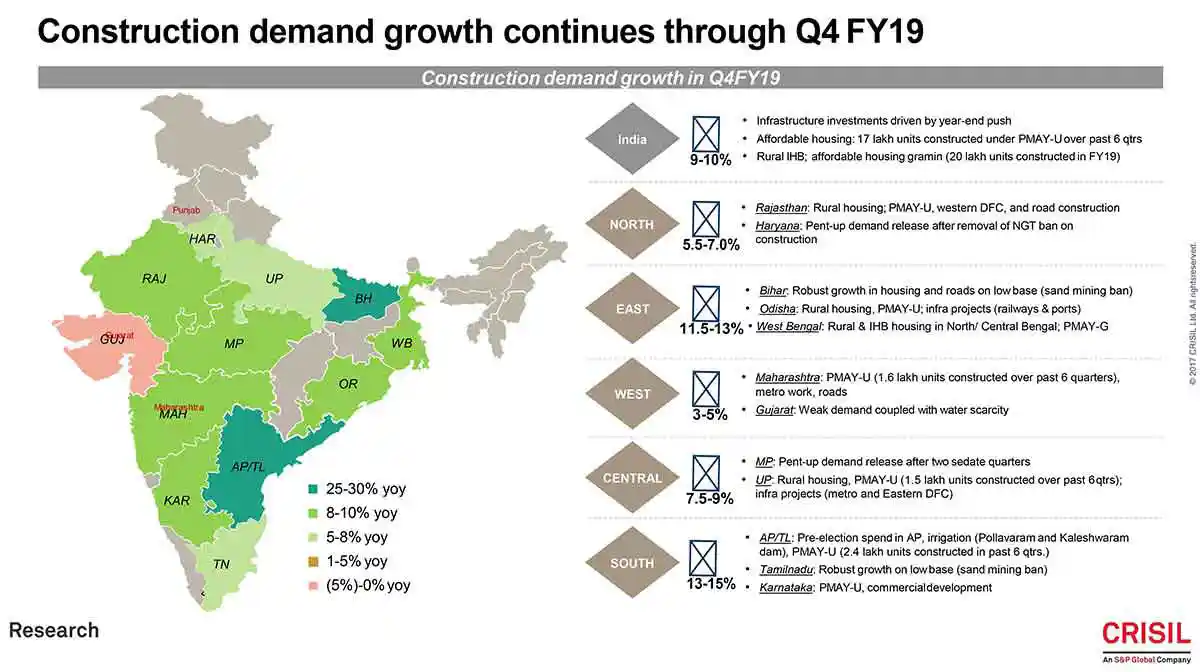
Says Hetal Gandhi, Director, CRISIL Research, "At 2-4%, cement demand growth would be the slowest in the east (Bihar, Odisha) and south (Andhra Pradesh, Telangana and Tamil Nadu) during Q1FY20. Northern and central stateswould provide some offset with demand growing 6-8%on-yeardriven by constructionof roads, metros, and affordable housing. In the west, while Maharashtra will continue to show healthy demandgrowth with state elections looming, Gujarat will be sluggish."
Things, however, are likely to improve in the second half of this fiscal.
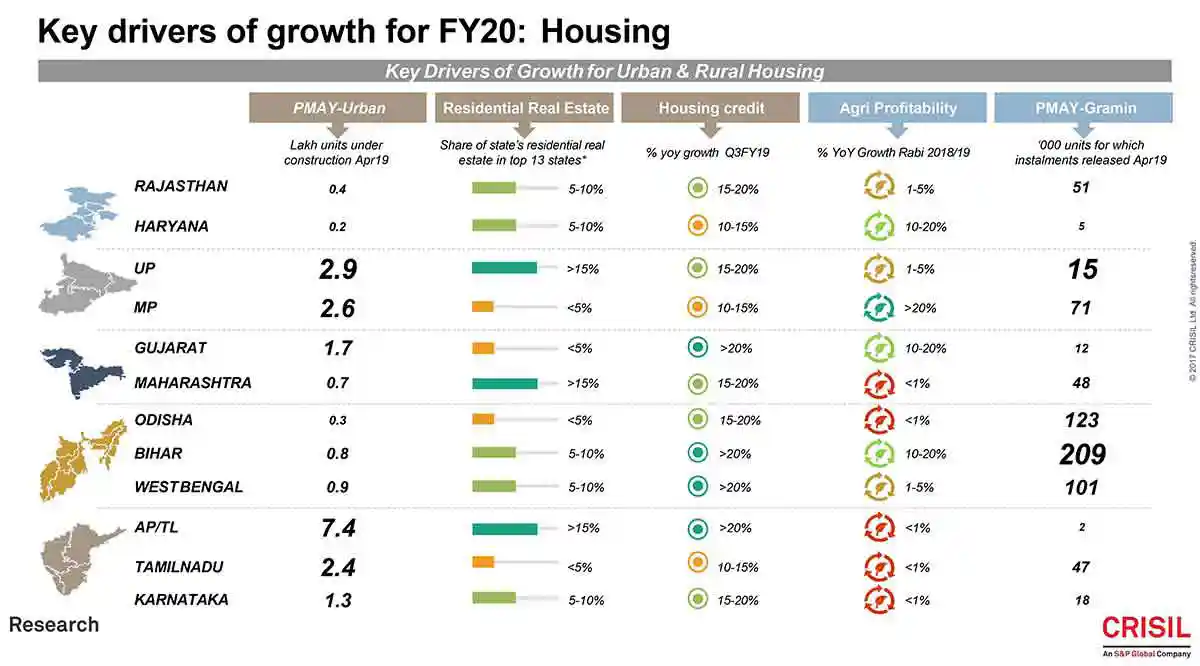
"In the second half, activity in the institutionalsegment wouldincrease, leading to a 6-7.5%growth in cement demand this fiscal," added Hetal Gandhi, Director CRISIL Research.
Around 25 lakh units are under construction as part of Pradhan Mantri Awas Yojana-Urban as of April 2019. Additionally, the Ministry of Rural Development has set a target of constructing 50 lakh housing units under the Pradhan Mantri Awas Yojana-Gramin this fiscal. Apart from these, ongoing roads, metro, and irrigation projects, especially in Maharashtra, Rajasthan, Madhya Pradesh, and Uttar Pradesh will spur demand.
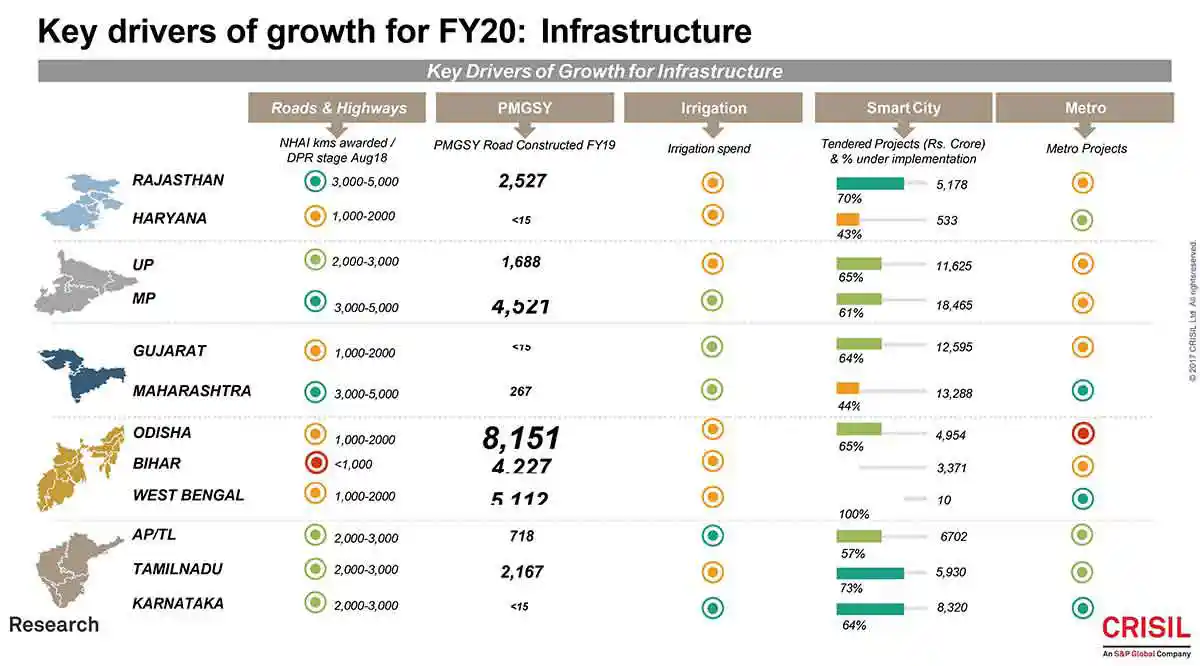
As for volume recovery, monsoon and rising fiscal deficit, including at the state level, will be the key monitorables.
And sustainability of the price hikes of Rs 50-60 per bag announced by cement manufacturers in February will be a function of how far demand revival goes.
Over the past six quarters, infrastructure and affordable housing push – including construction of 17 lakh housing units – ahead of the general elections, and pent-up demand following the lifting of sand mining ban in a few states, had boosted the construction activity.
That led to cement demand growing at a decadal high of 12% last fiscal. South India piloted this growth, reversing trends of several years, followed by the eastern and central regions. The development of Amravati as the capital city of Andhra Pradesh (AP), irrigation projects (Polavaram in AP and Kaleshwaram in Telangana), pre-election infrastructure spending, and the construction of 2.4 lakh housing units in the past six quarters drove a 30 -35% on- year growth in cement demand in AP-Telangana last fiscal.
Construction demand also revived in Tamil Nadu after the fiscal 2018 ban on sand mining was lifted.
In the east, cement demand was up 25-30% in Bihar and 12-14% in Odisha and West Bengal last fiscal. Rural housing, affordable housing (Biju Pucca Ghar Yojana in Odisha), and infrastructure projects (metro, ports and roads) helped.